Aglaonema Pictum Tricolor Care Guide: Complete Overview
Aglaonema pictum 'Tricolor'
Aglaonema Pictum Tricolor care: camouflage silver-green leaves, low to medium indirect light, water when top half dries, well-draining mix, division propagation. Toxic to pets.
Aglaonema Pictum Tricolor Care Guide: Complete Overview
Start with wateringThe most common care mistake for Aglaonema Pictum TricolorWatering guide →Aglaonema Pictum Tricolor care essentials
Light
low to medium filtered indirect light
Water
Water when top half of soil dries; very drought-tolerant.
Soil
Well-draining peat- or coco-based mix with perlite.
Humidity
average household
Temperature
18°C to 27°C (65–80°F); avoid cold drafts below 13°C (55°F)
Fertilizer
Feed lightly during active growth. kempercode=b574) at reduced strength with balanced liquid fertilizer and stop if the plant is stressed, newly repotted, or not actively growing.
About Aglaonema Pictum Tricolor
Aglaonema Pictum Tricolor has a upright growth habit.
| Detail | Information |
|---|---|
| Growth habit | Upright |
| Scientific name | Aglaonema pictum 'Tricolor' |
Aglaonema Pictum Tricolor Care Guide: Complete Overview
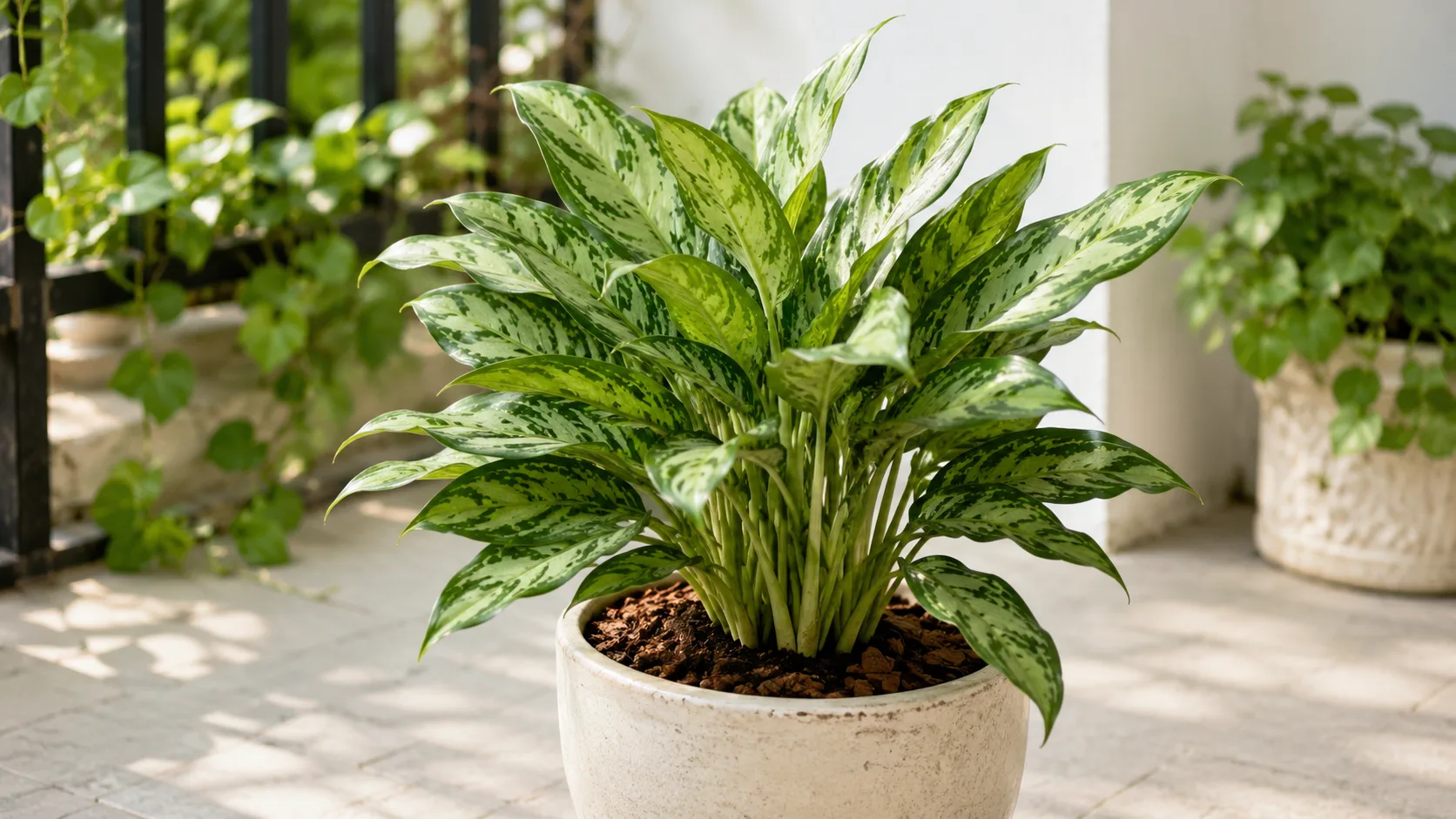
Aglaonema Pictum Tricolor - the cultivar Aglaonema pictum ‘Pictum Tricolor’ - is a compact Chinese evergreen built for genuinely dim interiors: dark green leaves feathered with silver along the veins, slow upright growth, and tolerance of office fluorescents and north-window light that would stall paler cultivars. It is not a plant that thrives in darkness, but among Aglaonema selections it is one of the most honest low-light workhorses in the trade. This page is the Pictum Tricolor care hub: quick defaults below, deeper topic guides linked throughout, and cultivar-specific biology you will not find on generic genus pages.
Author: sai-ananth · Reviewed by: LeafyPixels Review Board · Reviewed: 2026-06-15
For related Aglaonema Pictum Tricolor care, see Aphids on Aglaonema Pictum Tricolor.
Quick Care Summary
| Topic | Pictum Tricolor default | Deeper guide |
|---|---|---|
| Light | Low to medium filtered indirect light; office fluorescents OK | Light guide |
| Water | When top half of mix dries; slower in shade | Watering guide |
| Soil | Well-draining peat-based mix with perlite | Soil guide |
| Feed | Dilute balanced liquid monthly spring–fall | Fertilizer guide |
| Repot | Every 1–2 years in spring | Repotting guide |
| Propagate | Division at repot; stem cuttings | Propagation guide |
| Prune | Remove spent leaves and inflorescences | Pruning guide |
| Temp | 65–80°F (18–27°C); avoid sustained below 55°F | - |
| Humidity | Average household; watch dry winter air | Low humidity |
| Pets | Toxic - calcium oxalate crystals | ASPCA below |
Placement decision flow: Choose filtered light → check how fast the pot dries over two cycles → set water interval to that drying speed → keep the plant inaccessible to pets. If yellow leaves appear in a dim corner, check overwatering before moving or feeding.
What Aglaonema Pictum Tricolor Is
Aglaonema Pictum Tricolor is Aglaonema pictum ‘Pictum Tricolor’ - a ribbon aglaonema or Philippine evergreen cultivar within the Araceae family. Clemson Cooperative Extension lists ‘Pictum Tricolor’ under A. commutatum with dark green leaves and silver stripes; the North Carolina Extension Gardener Plant Toolbox describes the same shade-tolerant pattern. The parent species is native to the Philippines and northeastern Celebes (Sulawesi), per the Missouri Botanical Garden Plant Finder.
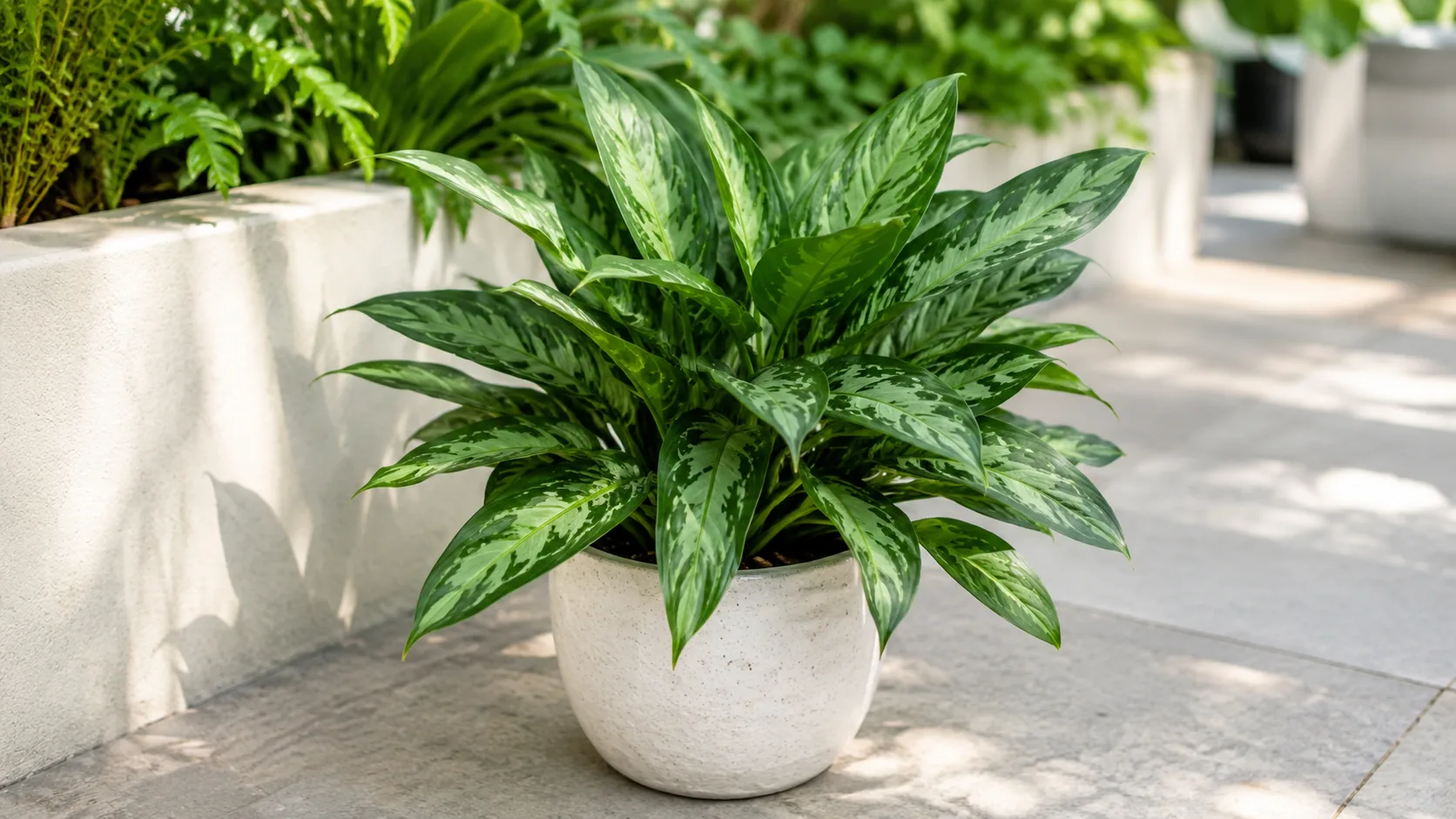
Indoors Pictum Tricolor forms an upright, compact clump roughly 1 to 2 feet tall and wide, with lance-shaped glossy leaves about 4 to 8 inches long. The silver markings run along primary veins on green tissue - decorative patterning, not pale sectors lacking chlorophyll. That dark base color is why Pictum Tricolor photosynthesizes efficiently in lower light than pink or cream-heavy hybrids.
Like other Aglaonema, Pictum Tricolor may produce a small creamy spadix inside a pale green spathe. Indoors, flowering is uncommon in low light and is optional for health - most growers remove inflorescences to direct energy into foliage, consistent with NC State houseplant guidance.
Cultivar Identification at the Nursery
Retail pots are often labeled only “Chinese evergreen.” Pictum Tricolor shows dark forest-green blades with subtle silver feathering along veins and a compact habit. Silver Bay has a broad silver center; Silver Queen is heavily marbled silver-gray; pink hybrids (Siam Aurora types) need brighter light to hold color. If the label is ambiguous, match leaf pattern - not pot size - before you buy. A mislabeled pink hybrid in a dim office will lose color fast; Pictum Tricolor will not.
Why Pictum Tricolor Works in Genuinely Low-Light Rooms
Chinese evergreens as a group are durable foliage plants. Clemson Extension calls Aglaonema one of the most durable houseplants, tolerating poor light, dry air, and drought better than many tropicals. Pictum Tricolor sits at the darker end of that range because its leaves are predominantly green with silver accents rather than large pale or pink sectors that need brighter light to maintain pigment.
The Royal Horticultural Society recommends filtered light for ‘Pictum Tricolor’ - bright filtered as ideal, with genuine tolerance for lower positions. That is not zero light: a closet with a lamp used ten minutes a day will not sustain any plant. But a north window, a spot several feet from an east window, or an office with all-day fluorescent or LED panels matches the niche Pictum Tricolor was bred for. UF IFAS EP160 documents commercial Aglaonema production specifically for low-light interior use.
Light Compensation and the Watering Link
University of Arkansas Extension notes Aglaonema’s light compensation point - where photosynthesis equals respiration - is around 10 foot-candles. The average interior room provides roughly 20 to 60 foot-candles; a good reading spot about 100; a shopping mall around 200. At the absolute minimum, an Aglaonema will not grow but will not die - it waits. Above that floor, Pictum Tricolor grows slowly, and slow growth is normal.
That biology drives the indoor rule Pictum Tricolor owners miss most: in low light, the plant uses less water. Watering on a summer schedule after moving the pot into a dim corner is the main reason Pictum Tricolor develops yellow leaves and soft stems. The roots suffocate in mix that cannot dry. Light and watering must be adjusted together - see the watering guide and not-enough-light guide when either factor shifts.
Pictum Tricolor’s dark green color can mask insufficient light longer than pale cultivars, so judge placement from new leaf production and soil drying speed, not leaf color alone.
Best Light for Aglaonema Pictum Tricolor Indoors
Pictum Tricolor performs best in low to medium indirect light - diffuse daylight without hot direct sun on the leaves. Clemson Extension distinguishes low light (heavily shaded indoor areas) from moderate light (bright indirect) and warns that direct sunlight scorches foliage. Practical winners: north or east windows, interior desks with sustained office lighting, or south/west rooms behind sheer curtains.
Too low: very slow or no new leaves over a warm season, leggy stems, mix wet two weeks or more - see not-enough-light and leggy growth. Too high: bleached tan patches, crispy margins, afternoon leaf curl. A full-spectrum grow lamp on a 10–12 hour timer beats accepting perpetual stagnation in a very dark room.
Window distance, seasonal shifts, grow-light specs, and the silver-pattern fade test are covered in the dedicated Aglaonema Pictum Tricolor light guide.
Watering Without Root Rot
Pictum Tricolor is drought tolerant and more often killed by kindness than neglect. Default: water when the top half of the potting mix has dried. In moderate indirect light that is often every 7 to 10 days in active growth and 10 to 14 days in winter - a starting point only. Clemson Extension advises testing the top 1 to 2 inches - dry means water, cold and damp means wait.
Water thoroughly until drainage runs free, then empty the saucer within 30 minutes. In a dim corner, the same volume that dried the pot in a week near a window may take three weeks in shade - yellow leaves with soft lower stems and sour mix usually mean overwatering, not thirst.
Grower check: In a north window at about 68°F (20°C), a 6-inch Pictum Tricolor pot in standard peat-perlite mix typically needs water roughly every 12 days in winter and every 8 to 9 days in late spring - always confirm with a finger or chopstick, not the calendar.
Chopstick tests, pot-weight cues, winter slowdown, and recovery from wet roots are in the Pictum Tricolor watering guide.
Soil, Pot, and Drainage
Pictum Tricolor wants well-draining potting mix with enough organic matter to hold moisture without waterlogging. Clemson Extension recommends a commercial soilless mix with extra humus; the Missouri Botanical Garden suggests a well-drained, peaty mixture for A. commutatum. UF IFAS EP160 notes commercial production media with 10 to 20% air space and pH 5.5 to 6.5.
At home: two parts quality houseplant mix, one part perlite, optionally fine bark for structure. Use pots with drainage holes; plastic retains moisture longer than terracotta - often preferable in low light where slow drying is already a risk. Go up one pot size at repotting only. Mix recipes, cachepot risks, and repot timing pair with the soil guide and repotting guide.
Humidity and Temperature
Pictum Tricolor tolerates average household humidity better than many tropical foliage plants. Clemson Extension states most Aglaonema grow well at low to moderate indoor humidity; the Missouri Botanical Garden notes A. commutatum tolerates atmospheric dryness indoors. Very dry winter air below about 30% relative humidity can encourage spider mites and brown tips. Pebble trays (pot above water line), grouping plants, or a small humidifier help without the fungal risks of heavy foliar misting.
Temperature sweet spot: 65–80°F (18–27°C) per Clemson. Avoid sustained exposure below 55°F (13°C); NC State flags chilling injury below about 50°F. Keep Pictum Tricolor off cold window glass in winter and away from AC vents blowing directly on the crown.
Fertilizer
Pictum Tricolor is not a heavy feeder. Once light, water, and soil are stable, a balanced liquid houseplant fertilizer at one-quarter to one-half strength monthly from spring through early fall is sufficient. UF IFAS EP160 warns that excessive fertilizer causes leaf edge burn in commercial production - the same salt pattern Clemson lists for Chinese evergreen.
Water before feeding, pause in winter and after repotting, and do not increase fertilizer when leaves yellow in low light - fix the water interval first (overwatering page). Slow-growing Pictum Tricolor in shade often needs half the feed frequency of a brighter specimen. Details: fertilizer guide.
Repotting and Root Health
Repot roughly every one to two years, or when roots circle drainage holes, water runs straight through, or mix smells stale. Best timing: late spring. University of Arkansas Extension advises delaying repotting until longer days of spring so conditions favor regrowth.
Go up one pot size, trim only circling or mushy roots, water lightly the first week, and skip fertilizer four to six weeks. Avoid repotting on day one after purchase unless mix is clearly failing. Leggy recovery via crown rerooting: repotting guide and pruning guide.
Propagation by Division and Cuttings
Reliable home methods: division at repotting and stem cuttings. UF IFAS EP160 states rooting cuttings and division of basal shoots are the main commercial propagation methods, with cuttings ideally carrying four to five leaves in well-aerated media at pH 5.5 to 6.5. Pictum Tricolor is often propagated from multi-stem clumps rather than abundant suckers.
Divide only clumps with multiple stems and attached roots; root cuttings warm at 70–77°F (21–25°C) in bright indirect light - expect several weeks. Step-by-step timing and failure modes: propagation guide.
Toxicity to Pets and People
Pictum Tricolor is not pet safe. All Aglaonema contain insoluble calcium oxalate crystals - the same irritant class as pothos and dieffenbachia. Treat Pictum Tricolor as a display plant on elevated furniture or in pet-free rooms.
The ASPCA lists Chinese evergreen (Aglaonema modestum) as toxic to dogs, cats, and horses, with signs including oral irritation, drooling, vomiting, and difficulty swallowing. The listing uses A. modestum as representative; the mechanism applies across the genus, including A. commutatum ‘Pictum Tricolor’. If ingestion is suspected, call ASPCA Animal Poison Control at (888) 426-4435 and your veterinarian.
For people, sap during pruning can irritate skin; wash hands after handling. Pictum Tricolor is ornamental - not food despite the “Chinese evergreen” common name.
Common Problems and Real Fixes
Diagnose from the roots upward: soil moisture first, then light, then pests, then fertilizer salts.
| Symptom | Likely cause | Pictum Tricolor-specific fix |
|---|---|---|
| Yellow lower leaves, soft stems, sour mix | Overwatering in low light | Dry pot; improve light or stretch interval |
| Crispy edges, light pot | Underwatering | Deep soak once; relearn drying speed |
| Stippling, fine webbing | Spider mites in dry winter air | Humidity + repeated soap treatment |
| Cottony axil clusters | Mealybugs | Alcohol swabs + isolation |
| Leggy stems, no new leaves | Not enough light | Brighter filtered spot or grow light |
| Black mushy roots | Root rot | Trim rot, fresh mix, withhold water briefly |
| Fading silver stripes | Low light pigment expression | Brightest filtered spot available - not fertilizer |
Do not stack repotting, fertilizing, and a new window in the same week. Fix one variable, wait two to three weeks for firm new growth, then trim old damage.
Healthy vs Stressed Pictum Tricolor - What to Look For
Use these field markers when judging placement - no photo required, but compare your plant to the descriptions:
Well-placed Pictum Tricolor (north window or bright office fluorescents): Compact upright stems with short spaces between leaves; firm, glossy new spears emerging from the center; crisp silver veining on dark green blades; pot dries to half-depth in roughly 7 to 14 days depending on season; one or two old lower leaves yellowing per year is normal senescence.
Stressed Pictum Tricolor (deep interior corner, no supplemental light): Long bare stems with leaves clustered at the top (leggy growth); soft silver pattern washed toward plain green; no new leaves across a warm month; mix stays wet 18+ days after watering; progressive lower yellowing with soft crown - often overwatering coupled with not enough light.
Sun-scorched Pictum Tricolor (direct hot window): Tan or bleached patches on leaves that do not green back; margins crisp on afternoons; move behind sheer or farther from glass immediately.
After any placement change, expect 2 to 4 weeks before new leaf size tells you whether the spot works - Pictum Tricolor responds slowly by design.
Buying Aglaonema Pictum Tricolor and the First Month
Choose plants with firm glossy new leaves, clean undersides, and neutral-smelling mix. Avoid sticky residue (pest honeydew), collapsed crowns, or widespread yellowing in a dim shop - chronic overwatering before sale.
First month: quarantine two weeks if pests are a concern; do not repot day one; learn how your pot dries in your light; change one variable at a time. Confirm multiple stems before purchase if you plan to divide later - single-stem youngsters are not ready.
Pictum Tricolor vs Other Aglaonema Cultivars
| Cultivar | Foliage | Low-light performance | Notes |
|---|---|---|---|
| Pictum Tricolor | Dark green with silver stripes along veins | Excellent - among the best for dim rooms | Compact, slow, classic office plant |
| Silver Bay | Broad silver center, green margins | Good - prefers slightly brighter filtered light | Larger leaves; color can wash in deep shade |
| Silver Queen | Heavy silver-gray marbling | Good - classic low-light cultivar | Can grow taller over time |
| Siam Aurora / pink types | Red or pink veins and margins | Fair - need brighter light to hold color | Poor choice for true low-light corners |
For a genuinely dim office, Pictum Tricolor or Silver Queen beats a pink hybrid. For a showier silver center in brighter filtered light, Silver Bay may look sharper. All share the same watering logic: match water to how the pot dries in that light level.
Seasonal Care Calendar
| Season | Light | Watering | Feed | Key tasks |
|---|---|---|---|---|
| Spring | Brightest filtered spot; acclimate moves slowly | Resume checks as growth picks up | Start monthly dilute feed | Repot or divide if needed |
| Summer | Filter harsh afternoon sun | Most frequent interval - still top-half dry rule | Continue light feed | Wipe dust from broad leaves |
| Fall | Maximize window light as days shorten | Gradually stretch interval | Taper by late fall | Bring outdoor plants in before chill |
| Winter | Supplement grow light if growth stalls | Slowest drying - often 10–14+ days | Pause unless actively growing | Keep off cold glass; watch spider mites |
Winter fails most often when summer watering rhythm continues in lower light - the mix stays waterlogged and yellow leaves follow.
Conclusion
Aglaonema Pictum Tricolor earns its low-light reputation as a dark-leaved A. commutatum cultivar with a low photosynthetic break-even point and genuine drought tolerance - not because it ignores light entirely. Judge success by firm new leaves and stable silver pattern, match water to how the pot actually dries in your room, and keep this calcium oxalate–containing plant away from pets. Use the topic links above for depth on any single subject; fix environment before fertilizer when something looks wrong.
When to use this page vs other Aglaonema Pictum Tricolor guides
- Aglaonema Pictum Tricolor overview - Canonical hub for this species - care topics and problems branch from here.
- Aglaonema Pictum Tricolor problems - Symptom-first path when you already know something is wrong.
Related Aglaonema Pictum Tricolor guides
- Aglaonema Pictum Tricolor watering
- Aglaonema Pictum Tricolor light
- Aglaonema Pictum Tricolor soil
- Aglaonema Pictum Tricolor propagation
- Aglaonema Pictum Tricolor fertilizer
- Aglaonema Pictum Tricolor repotting
- Aglaonema Pictum Tricolor pruning
- Yellow Leaves on Aglaonema Pictum Tricolor
- Brown Tips on Aglaonema Pictum Tricolor
- Root Rot on Aglaonema Pictum Tricolor
- Overwatering on Aglaonema Pictum Tricolor
- Underwatering on Aglaonema Pictum Tricolor
How to care for Aglaonema Pictum Tricolor?
How much light does Aglaonema Pictum Tricolor need?
low to medium filtered indirect light
- low to medium filtered indirect light - low to medium filtered indirect light.
When should you water Aglaonema Pictum Tricolor?
Water when top half of soil dries; very drought-tolerant.
- Check top 2 inches - Water when top half of soil dries; very drought-tolerant.
- Drain excess water - Water when top half of soil dries; very drought-tolerant.
What soil works best for Aglaonema Pictum Tricolor?
Well-draining peat- or coco-based mix with perlite.
- Well-draining mix - Well-draining peat- or coco-based mix with perlite.
Grower notes for Aglaonema Pictum Tricolor
What makes Pictum Tricolor different
Aglaonema Pictum Tricolor is a camouflage-pattern ribbon aglaonema with dark green leaves feathered in silver and light green along the veins. Unlike pink or white Thai hybrids, the dark green base photosynthesizes well in genuinely low light — north windows, interior desks, and office fluorescents. Direct sun scorches the foliage; deep shade slows growth but rarely bleaches the pattern the way pale variegation does.
Pictum Tricolor water note
Pictum Tricolor is drought tolerant and more often killed by overwatering than neglect. Water when the top half of the mix dries, then drain fully. In a dim corner the same pot may take two to three weeks to dry — stretch the interval instead of watering on a summer schedule. A heavy wet pot in low light is the main root-rot setup.
What matters most with Aglaonema Pictum Tricolor
Aglaonema Pictum Tricolor should be judged by compact form and crisp silver veining on new leaves, not fast growth. Ribbon aglaonemas grow slowly, so a short plant with firm crowns beats a leggy specimen pushed for height. The care checkpoint is simple: low to medium filtered indirect light. Pair that with well-draining peat- or coco-based mix with perlite, and avoid changing water, pot size, and placement all at once.
Best placement in a real home
Aglaonema Pictum Tricolor belongs where low to medium filtered indirect light is realistic all day — a north or east window, several feet from a sheered south window, or an office with sustained fluorescent or LED panels. Water when top half of soil dries. If the pot stays wet longer than expected, move the plant into slightly brighter filtered light or reassess the mix before watering again. Humidity target: average household. Temperature comfort zone: 18°C to 27°C (65–80°F); avoid cold drafts below 13°C (55°F).
Before you buy this plant
Choose Aglaonema Pictum Tricolor with firm glossy new growth, crisp silver veining on dark green blades, clean leaf undersides, and soil that does not smell sour or feel compacted. Be cautious if you see yellow lower leaves, sticky residue, collapsed crowns, or a pot that is wet in a dim shop. Cosmetic old-leaf blemishes are less worrying than weak roots or active pests.
First month after bringing it home
Do not repot Aglaonema Pictum Tricolor on day one unless the mix is failing or pests are obvious. Quarantine it, learn how fast the pot dries in your light, and keep care boring while it adjusts. Watch especially for yellow lower leaves and mix that stays wet 18+ days. If problems appear, correct moisture or light first rather than stacking fertilizer, repotting, and pruning together.
Safety note for Aglaonema Pictum Tricolor
Aglaonema Pictum Tricolor is not a plant to keep within reach of pets or children. Treat it as an inaccessible display plant. Use gloves if sap or plant tissue is irritating, and pick a pet-safe alternative for floor pots or low shelves.
How to tell Aglaonema Pictum Tricolor is settling in
If you plan to multiply it later, common methods include division at spring repotting. New spear leaves emerging with firm petioles and crisp silver veining — and a pot that dries to half-depth in roughly 7 to 14 days — are the best signs the plant has found its spot.
Is it pet safe?
Aglaonema Pictum Tricolor is toxic to cats and dogs.
Toxic - calcium oxalate crystals cause oral irritation.
Watering Aglaonema Pictum Tricolor
Water when top half of soil dries; very drought-tolerant.
Soil & potting for Aglaonema Pictum Tricolor
Well-draining peat- or coco-based mix with perlite.
Humidity & temperature for Aglaonema Pictum Tricolor
Aglaonema Pictum Tricolor prefers average household, though normal home humidity is usually fine. Keep temperatures around 18°C to 27°C (65–80°F); avoid cold drafts below 13°C (55°F).
| Detail | Information |
|---|---|
| Humidity | average household - normal home humidity is fine. |
| Ideal temperature | 18°C to 27°C (65–80°F); avoid cold drafts below 13°C (55°F) |
Fertilizer & pruning for Aglaonema Pictum Tricolor
Use feed lightly during active growth. kempercode=b574) at reduced strength with balanced liquid fertilizer and stop if the plant is stressed, newly repotted, or not actively growing. for Aglaonema Pictum Tricolor.
| Detail | Information |
|---|---|
| Fertilizer type | Feed lightly during active growth. kempercode=b574) at reduced strength with balanced liquid fertilizer and stop if the plant is stressed, newly repotted, or not actively growing. |
Common problems on Aglaonema Pictum Tricolor
Yellow Leaves
MediumLikely cause: Common on this plant type; confirm with recent watering, light, and root checks.
Quick fix: Inspect the plant and correct the most likely care stressor before stacking treatments.
Full fix guide →Brown Tips
MediumLikely cause: Common on this plant type; confirm with recent watering, light, and root checks.
Quick fix: Inspect the plant and correct the most likely care stressor before stacking treatments.
Full fix guide →Root Rot
MediumLikely cause: Common on this plant type; confirm with recent watering, light, and root checks.
Quick fix: Inspect the plant and correct the most likely care stressor before stacking treatments.
Full fix guide →Overwatering
MediumLikely cause: Common on this plant type; confirm with recent watering, light, and root checks.
Quick fix: Inspect the plant and correct the most likely care stressor before stacking treatments.
Full fix guide →Underwatering
MediumLikely cause: Common on this plant type; confirm with recent watering, light, and root checks.
Quick fix: Inspect the plant and correct the most likely care stressor before stacking treatments.
Full fix guide →Spider Mites
MediumLikely cause: Common on this plant type; confirm with recent watering, light, and root checks.
Quick fix: Inspect the plant and correct the most likely care stressor before stacking treatments.
Full fix guide →Mealybugs
MediumLikely cause: Common on this plant type; confirm with recent watering, light, and root checks.
Quick fix: Inspect the plant and correct the most likely care stressor before stacking treatments.
Full fix guide →Aphids
MediumLikely cause: Common on this plant type; confirm with recent watering, light, and root checks.
Quick fix: Inspect the plant and correct the most likely care stressor before stacking treatments.
Full fix guide →Leggy Growth
MediumLikely cause: Common on this plant type; confirm with recent watering, light, and root checks.
Quick fix: Inspect the plant and correct the most likely care stressor before stacking treatments.
Full fix guide →Slow Growth
MediumLikely cause: Common on this plant type; confirm with recent watering, light, and root checks.
Quick fix: Inspect the plant and correct the most likely care stressor before stacking treatments.
Full fix guide →Wilting
MediumLikely cause: Common on this plant type; confirm with recent watering, light, and root checks.
Quick fix: Inspect the plant and correct the most likely care stressor before stacking treatments.
Full fix guide →Drooping Leaves
MediumLikely cause: Common on this plant type; confirm with recent watering, light, and root checks.
Quick fix: Inspect the plant and correct the most likely care stressor before stacking treatments.
Full fix guide →Low Humidity
MediumLikely cause: Common on this plant type; confirm with recent watering, light, and root checks.
Quick fix: Inspect the plant and correct the most likely care stressor before stacking treatments.
Full fix guide →Not Enough Light
MediumLikely cause: Common on this plant type; confirm with recent watering, light, and root checks.
Quick fix: Inspect the plant and correct the most likely care stressor before stacking treatments.
Full fix guide →Fungus Gnats
MediumLikely cause: Common on this plant type; confirm with recent watering, light, and root checks.
Quick fix: Inspect the plant and correct the most likely care stressor before stacking treatments.
Full fix guide →Mold on Soil
MediumLikely cause: Common on this plant type; confirm with recent watering, light, and root checks.
Quick fix: Inspect the plant and correct the most likely care stressor before stacking treatments.
Full fix guide →Curling Leaves
MediumLikely cause: Common curling leaves pattern on Aglaonema Pictum Tricolor under indoor care stress.
Quick fix: Inspect roots, watering, light, and pests; adjust one variable and monitor new growth.
Full fix guide →Brown Leaves
MediumLikely cause: Common brown leaves pattern on Aglaonema Pictum Tricolor under indoor care stress.
Quick fix: Inspect roots, watering, light, and pests; adjust one variable and monitor new growth.
Full fix guide →Black Spots
MediumLikely cause: Common black spots pattern on Aglaonema Pictum Tricolor under indoor care stress.
Quick fix: Inspect roots, watering, light, and pests; adjust one variable and monitor new growth.
Full fix guide →Holes in Leaves
MediumLikely cause: Common holes in leaves pattern on Aglaonema Pictum Tricolor under indoor care stress.
Quick fix: Inspect roots, watering, light, and pests; adjust one variable and monitor new growth.
Full fix guide →Pale Leaves
MediumLikely cause: Common pale leaves pattern on Aglaonema Pictum Tricolor under indoor care stress.
Quick fix: Inspect roots, watering, light, and pests; adjust one variable and monitor new growth.
Full fix guide →Distorted Leaves
MediumLikely cause: Common distorted leaves pattern on Aglaonema Pictum Tricolor under indoor care stress.
Quick fix: Inspect roots, watering, light, and pests; adjust one variable and monitor new growth.
Full fix guide →Scale Insects
MediumLikely cause: Common scale insects pattern on Aglaonema Pictum Tricolor under indoor care stress.
Quick fix: Inspect roots, watering, light, and pests; adjust one variable and monitor new growth.
Full fix guide →Thrips
MediumLikely cause: Common thrips pattern on Aglaonema Pictum Tricolor under indoor care stress.
Quick fix: Inspect roots, watering, light, and pests; adjust one variable and monitor new growth.
Full fix guide →Whiteflies
MediumLikely cause: Common whiteflies pattern on Aglaonema Pictum Tricolor under indoor care stress.
Quick fix: Inspect roots, watering, light, and pests; adjust one variable and monitor new growth.
Full fix guide →Leaf Miners
MediumLikely cause: Common leaf miners pattern on Aglaonema Pictum Tricolor under indoor care stress.
Quick fix: Inspect roots, watering, light, and pests; adjust one variable and monitor new growth.
Full fix guide →Caterpillars
MediumLikely cause: Common caterpillars pattern on Aglaonema Pictum Tricolor under indoor care stress.
Quick fix: Inspect roots, watering, light, and pests; adjust one variable and monitor new growth.
Full fix guide →Nitrogen Deficiency
MediumLikely cause: Common nitrogen deficiency pattern on Aglaonema Pictum Tricolor under indoor care stress.
Quick fix: Inspect roots, watering, light, and pests; adjust one variable and monitor new growth.
Full fix guide →Iron Deficiency
MediumLikely cause: Common iron deficiency pattern on Aglaonema Pictum Tricolor under indoor care stress.
Quick fix: Inspect roots, watering, light, and pests; adjust one variable and monitor new growth.
Full fix guide →Magnesium Deficiency
MediumLikely cause: Common magnesium deficiency pattern on Aglaonema Pictum Tricolor under indoor care stress.
Quick fix: Inspect roots, watering, light, and pests; adjust one variable and monitor new growth.
Full fix guide →Potassium Deficiency
MediumLikely cause: Common potassium deficiency pattern on Aglaonema Pictum Tricolor under indoor care stress.
Quick fix: Inspect roots, watering, light, and pests; adjust one variable and monitor new growth.
Full fix guide →Calcium Deficiency
MediumLikely cause: Common calcium deficiency pattern on Aglaonema Pictum Tricolor under indoor care stress.
Quick fix: Inspect roots, watering, light, and pests; adjust one variable and monitor new growth.
Full fix guide →