Brown Tips on Pictum Tricolor: Water & Camouflage Checks
Quick answer
Brown tips on Aglaonema Pictum Tricolor are dry necrotic ends on dark green camouflage blades feathered with silver and light green veining—usually fluoride or salt in tap water, dry winter air near heaters, or brief drought in a brighter room. First step: inspect the tip of the newest fully opened spear leaf at the crown; if it is already browning, switch the next two waterings to filtered or overnight-aged tap water before you change humidity or feed.
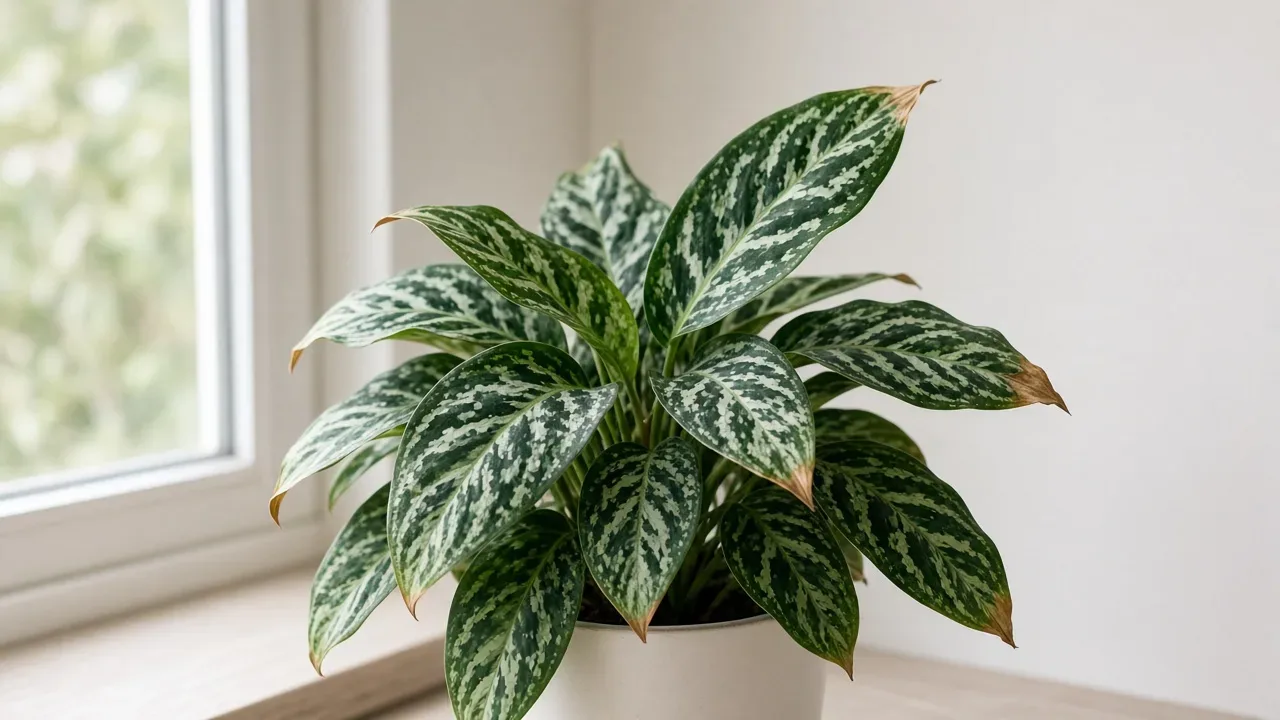
Brown Tips on Aglaonema Pictum Tricolor: Causes, Checks & Fixes
This guide covers brown tips on Aglaonema Pictum Tricolor. See also the general Brown Tips guide, watering, and light pages for this plant.
Brown Tips on Aglaonema Pictum Tricolor: Causes, Checks & Fixes
Quick answer
Brown tips on Aglaonema pictum ‘Tricolor’ mean the distal point of a camouflage-pattern ribbon leaf has turned dry and tan while the dark green base, silver veining, and light green feathering still look alive—not whole-leaf necrosis. For how tip burn works on houseplants in general, see our brown tips hub. On Pictum Tricolor, the dark green chlorophyll base keeps the plant looking healthy in low light while only the farthest spear tip necroses—so fluoride, salt, dry air, and brief drought all show at the leaf point first, often before you notice any other stress.
First step: look at the tip of the newest fully opened spear leaf with crisp silver veining at the crown. If that fresh blade is already browning, switch the next two waterings to filtered or overnight-aged tap water before you mist, fertilize, or repot.
When to use this page vs other Pictum Tricolor guides
| Pattern | Read next |
|---|---|
| Brown spreading down the whole blade or soft limp tissue | Brown leaves |
| Heavy wet pot, yellow lowers, sour smell | Overwatering |
| Light dry pot, cupped camouflage blades | Underwatering |
| Whole plant washed out, weak silver veining | Pale leaves |
| One-sided tan patch on window-facing side | Light guide — direct sun scorches this cultivar |
| Winter crisping near a heat vent only | Low humidity |
This page covers tip-only and margin-tip crisping on Pictum Tricolor camouflage foliage. Whole-blade browning follows a different moisture path.
What brown tips look like on Aglaonema Pictum Tricolor
Pictum Tricolor carries upright ribbon leaves with a camouflage pattern: dark green ground color feathered with silver and light green along the veins. Brown tips show at the pointed end of those blades:
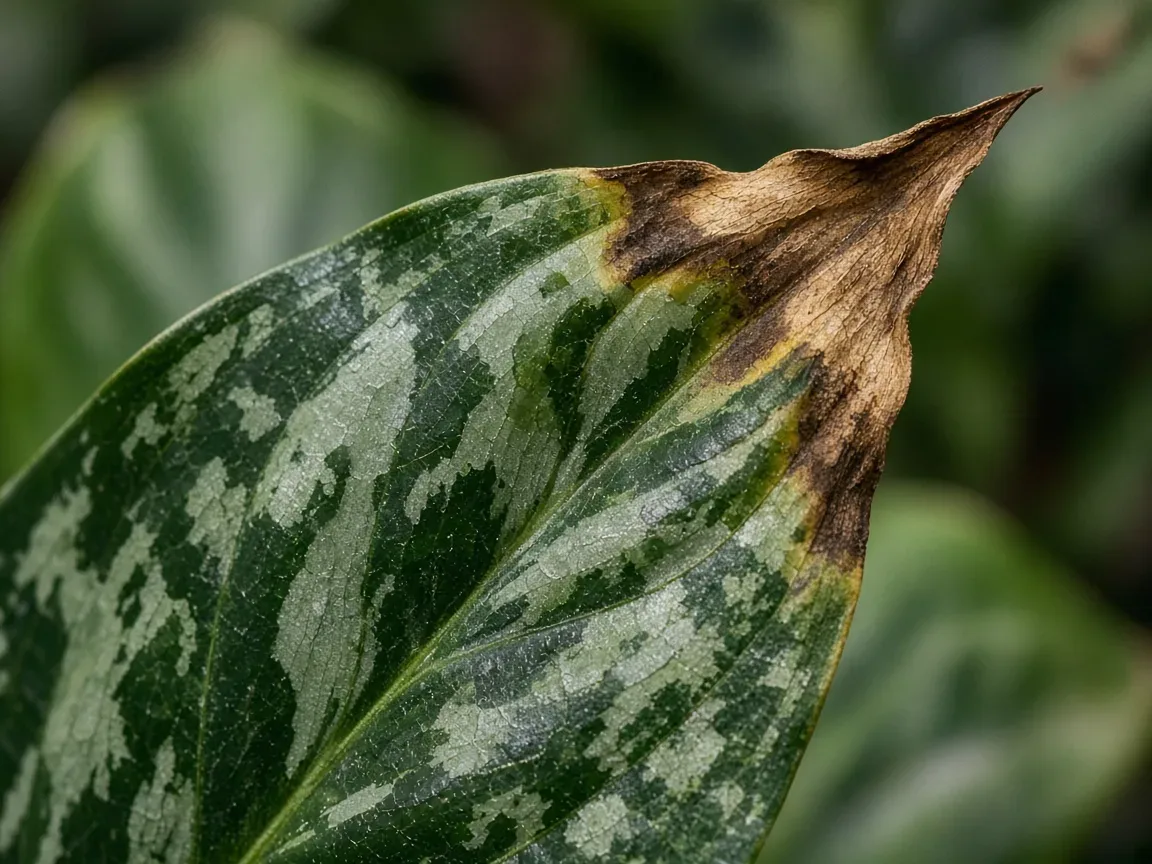
Dry tan tips on silver-veined spear points—the dead tissue will not re-green; watch whether the next crown leaf opens with a clean tip.
- Dry tan tip only, firm petiole, silver veining intact — Fluoride or salt accumulation, dry winter air, or normal aging on an older spear leaf.
- Brown tips on the newest crown spear within weeks of opening — Water chemistry or salt buildup in the mix, not humidity alone.
- Tips plus white crust on soil surface — Fertilizer salt residue; see the fertilizer guide.
- Crispy tips on outer blades only, clean newest leaf — Heater draft or low humidity on older tissue; see low humidity.
- Tips brown with cupped leaf and light dry pot — Drought in a brighter room; see underwatering.
Healthy Pictum Tricolor should show firm spear leaves with readable silver veining and pointed tips. Judge the newest two or three leaves, not only older blades at the base of the clump.
Camouflage veining read: tips vs pale washout
This section is Pictum Tricolor-specific and does not apply to pink Thai hybrids like Lady Valentine or broad round-leaf Maria.
- Tip burn stays distal to the silver stripe pattern—the veining looks crisp while only the point is papery tan.
- Pale leaves washout fades the whole camouflage pattern, including silver zones, without isolated crispy points.
- Fluoride burn often starts as a thin tan line at the very tip, then travels inward along the midrib—still with green and silver above the necrosis.
- Direct sun scorch on window glass creates one-sided tan patches on the exposed half of a blade, not symmetric tip-only crisping—see the light guide.
If silver veining is dull across the whole plant but tips are clean, start with light or nutrient pages—not this one.
The dark-green camouflage trap
Unlike pink or cream variegated aglaonemas, Pictum Tricolor’s dark green base photosynthesizes efficiently in genuinely low light—north windows, interior desks, and office fluorescents. That strength creates a diagnostic trap:
- The clump still looks “fine” from across the room because green tissue dominates the camouflage pattern.
- Only the farthest spear tip desiccates when fluoride accumulates or winter air dries margins.
- Owners assume the plant is healthy and keep watering on a summer schedule—or mist leaves instead of fixing water chemistry.
- Sequential new crown spears open with tan tips while lower leaves stay green, masking a chronic fluoride or salt problem.
Always walk to the crown and inspect the newest fully opened spear tip monthly. On this cultivar, that tip is the earliest warning before yellow leaves or root rot from stacked mistakes.
Newest spear-leaf tip test
Run this before changing humidity, fertilizer, or pot size:
- Find the newest fully opened spear leaf at the center of the clump—not a leaf still unfurling.
- Bend the tip gently. Papery dry tan that snaps = dead tip tissue (will not recover).
- If that newest leaf tip is already brown, switch watering water for the next two to four cycles—filtered, distilled, or tap water left in an open container overnight. Some houseplants are sensitive to fluoride or chlorine in tap water; aglaonemas are among them. Overnight rest reduces chlorine but not fluoride; filtered water addresses both.
- Watch the next leaf that opens. Clean pointed tip with crisp silver veining within four to eight weeks = water chemistry was the limiter.
- If new tips stay clean but only oldest outer spears tan, shift to low humidity fixes—pebble tray, grouping, or a small humidifier away from direct mist on foliage.
Existing brown tips do not re-green. Recovery means new spear leaves with intact points.
The low-light office fluoride build-up
Pictum Tricolor is drought tolerant and slow-growing in dim corners—the same pot may take two to three weeks to dry halfway. That rhythm plus municipal tap water creates a common failure mode:
- Plant sits in a north office or desk alcove where growth nearly stalls.
- Owner waters on a fixed weekly calendar because the plant “looks fine.”
- Fluoride and dissolved salts accumulate in the mix over months because transpiration is slow but watering continues.
- New spear tips brown while the heavy dark-green camouflage pattern hides the stress.
- Owner increases humidity or fertilizer, worsening salt load without fixing water quality.
Aglaonemas are sensitive to fluoride in tap water—brown leaf tips distinct from whole-margin crisping caused by low humidity alone often trace to fluoride accumulating in leaf tissue. Match irrigation to the watering guide half-pot dry-down check, not to a calendar or misting frequency.
Why Aglaonema Pictum Tricolor gets brown tips
Fluoride and salt in tap water
The most common cause of tips on new crown spears is fluoride or fertilizer salts accumulating in leaf margins over months of municipal tap water. Clemson recommends letting water stand 24 hours before use on fluoride-sensitive houseplants, and periodic drenching to leach salts from the potting mix. On Pictum Tricolor, burn starts at the spear tip and can travel down the silver-veined midrib—often mistaken for disease until you see the pattern on sequential new leaves.
Low humidity and heater drafts
The leaves may turn brown in very dry air or a drafty location. Winter heat vents and single-pane windows desiccate the thinnest leaf tissue first. Tips feel papery; the rest of the blade stays green with crisp camouflage veining. Usually affects outer leaves before the crown.
Underwatering in bright dry rooms
Pictum Tricolor moved closer to a sheered south window or near HVAC uses water faster than the same plant in a dim office. Repeated drought browns tips and may cup the spear leaf. The pot feels light; top half of mix is dusty dry. See underwatering if tips coincide with a light pot.
Direct sun scorch
This cultivar tolerates low light well but direct sun scorches the foliage. One-sided tan or brown at tips and margins on the window-facing half of blades points to light stress—not fluoride. Pull back from glass per the light guide.
Fertilizer salt buildup
Heavy or year-round feeding leaves white crust on the soil surface. Salt burn mimics fluoride—tips on multiple leaves, sometimes with margin burn. Flush the pot in spring with plain water before resuming feed per the fertilizer guide.
Natural aging on lower spears
One oldest spear leaf tanning at the tip while new silver-veined growth is firm is normal senescence on a maturing clump. Trim the dead tip edge with sanitized scissors if it bothers you, or remove the whole leaf once it is mostly brown per the pruning guide.
How to confirm the cause
Work through these checks in order:
- Newest spear tip — Brown on fresh crown leaf = water chemistry or salt. Clean crown, tan outer leaves = dry air or age.
- Half-pot skewer — Dry halfway with cupped spear and light pot = drought. Wet halfway with soft lower leaves = not a tip-only problem; see brown leaves.
- Water history — Recent return to tap water after filtered? Fluoride path. White soil crust? Salt path.
- Season and placement — Tips appeared after heat came on near a vent? Humidity path. One-sided tan on window glass? Scorch—see light guide.
- Underside scan — Stippling with webbing on new spears = spider mites before you assume moisture failure.
If two causes fit, fix water quality first when the newest leaf tip is involved—it is the most common driver of fresh tip burn on aglaonemas.
First fix for Aglaonema Pictum Tricolor
If the newest fully opened spear leaf already has a brown tip, switch the next two to four waterings to filtered, distilled, or overnight-aged tap water. Water thoroughly until drainage runs free, then empty the saucer within 30 minutes. Do not fertilize, repot, or mist heavily on the same day.
Only after that water correction:
- If outer tips only tan in winter, add humidity via pebble tray or humidifier—keep mist off foliage to avoid black spots.
- If the pot is light and mix is dry halfway down, soak once, then resume half-pot dry-down timing.
- If white crust rings the pot, flush with plain water twice and pause fertilizer for six weeks.
Change one variable, then read the next new spear leaf—Pictum Tricolor grows slowly, so give each correction four to six weeks before stacking another fix.
Step-by-step recovery
For fluoride or salt tip burn (new crown tips involved)
- Switch to filtered or rested water for at least four weeks.
- Water when the top half of mix dries; never on a calendar alone.
- Optionally flush the pot once with plain water equal to the pot volume, letting it drain fully.
- Trim dead tip edges with sanitized scissors if necrosis is purely cosmetic on otherwise green spears—wear gloves; aglaonema sap can irritate skin.
- Judge success by the next two new spear leaves opening with clean tips.
For dry-air tip burn (outer leaves only, clean crown)
- Move the pot two feet from heater vents and cold window glass.
- Add a pebble tray or small humidifier; aim for steadier humidity, not foliar soaking.
- Keep the existing half-pot watering rhythm—extra water does not fix dry air.
For drought tips (light pot, dry half-pot)
- Soak until water runs from drainage holes; discard saucer water within 30 minutes.
- Wait until the top half dries again before the next drink.
- If tips appeared near a bright south window, pull back to filtered light per the light guide.
Recovery timeline
- Water chemistry fix: New clean tips often appear on the next one to two spear leaves (roughly six to ten weeks in warm active growth; longer in dim offices).
- Humidity adjustment: Outer tip crisping usually stabilizes within two to three weeks once heat exposure stops; existing tan tips remain.
- Drought correction: Cupped spears relax within 24–48 hours after one proper soak; dead tip tissue stays brown.
Judge progress by new crown growth with crisp silver veining, not by old tan points you already have.
What not to do
- Do not mist Pictum Tricolor leaves daily to “fix” tips—wet foliage in dim offices invites fungal spots.
- Do not fertilize a plant showing fresh tip burn before water quality is corrected—salts worsen margin burn.
- Do not repot on day one unless the mix is failing or roots are soft on a heavy wet pot.
- Do not remove every spear with a tan tip if the blade is still mostly green—the plant needs leaf area in low light.
- Do not confuse brown leaves (soft whole-blade necrosis on wet mix) with tip-only crisping.
How to prevent it next time
- Use filtered or rested tap water if municipal supply is hard or tips recur on new growth.
- Water when the top half of mix dries—slower in dim offices, faster in bright rooms.
- Keep Pictum Tricolor away from heater vents, cold window glass, and direct sun in winter.
- Feed lightly in warm months only; flush salts each spring if you fertilize regularly.
- Inspect the newest spear tip monthly—it is the earliest Pictum Tricolor warning before whole leaves fail.
Related Aglaonema Pictum Tricolor guides
- Overview — Camouflage ribbon habit, low-light tolerance, and core care checkpoints.
- Watering — Half-pot dry-down timing for dim vs bright rooms.
- Brown leaves — When tip burn spreads into soft whole-blade necrosis on wet mix.
- Low humidity — Winter outer-tip crisping when the crown stays clean.
- Problems hub — Full symptom index for this plant.
Conclusion
Brown tips on Pictum Tricolor are distal stress on camouflage ribbon spears, not whole-plant failure—read the newest crown tip first, then water chemistry, then winter air. Dead tan points will not re-green; watch for clean tips and crisp silver veining on the next one or two new spear leaves as your success marker.
Related tool
Use the Plant Problem Diagnosis Tool to narrow causes for brown tips on this plant before changing multiple variables at once.