Brown Leaves on Aglaonema Pictum Tricolor: Water & Light
Quick answer
Brown leaves on Aglaonema Pictum Tricolor are necrotic tissue on camouflage-pattern ribbon blades feathered in dark green, silver, and light green along the veins—usually underwatering in bright rooms, overwatering root stress in dim corners, or fluoride brown tips spreading inward on municipal water. First step: probe whether top half of mix is dry or wet, and feel if brown tissue is crispy or soft.
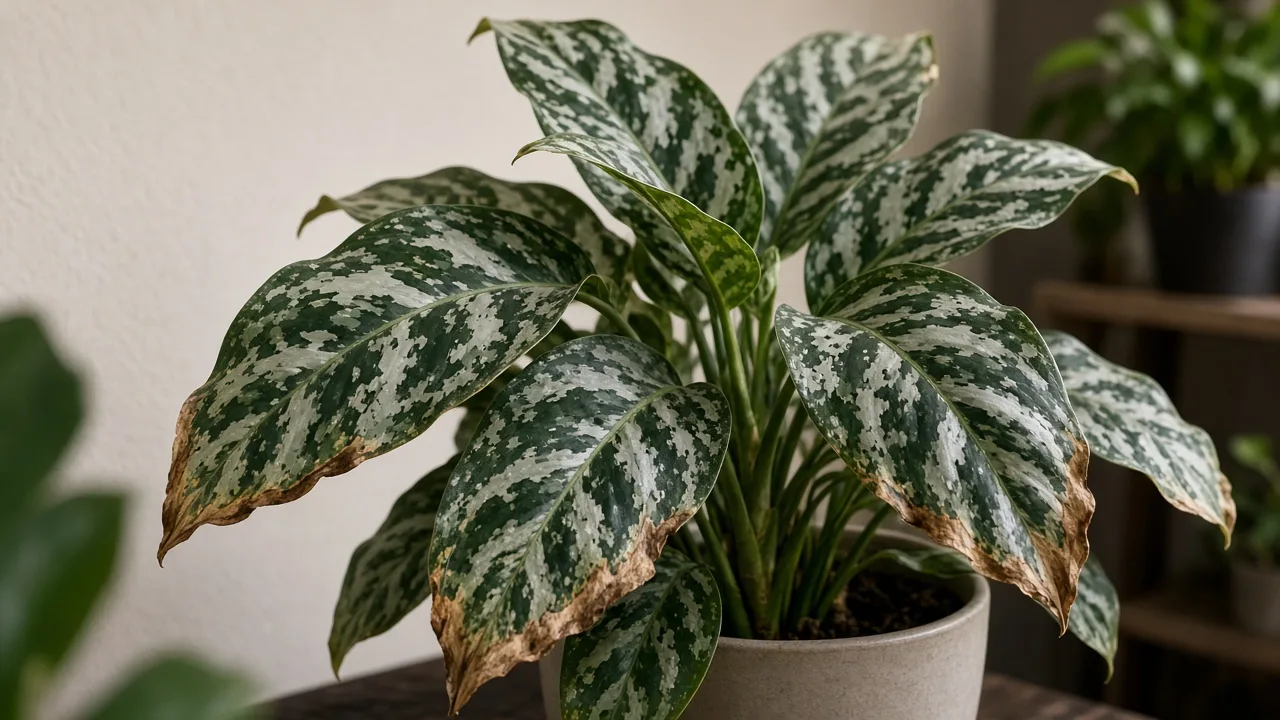
Brown Leaves on Aglaonema Pictum Tricolor: Causes, Checks & Fixes
This guide covers brown leaves on Aglaonema Pictum Tricolor. See also the general Brown Leaves guide, watering, and light pages for this plant.
Brown Leaves on Aglaonema Pictum Tricolor: Causes, Checks & Fixes
Quick answer
Brown leaves on Aglaonema ‘Pictum Tricolor’ mean dead or dying tissue on camouflage-pattern ribbon blades feathered in dark green, silver, and light green along the veins. On this cultivar, brown is almost always a moisture or water-quality signal—crispy brown on dry mix means thirst or low humidity; soft brown on wet mix means root oxygen loss from overwatering; tan patches on the window side mean sun scorch on pale variegation. See our brown leaves guide for universal mechanics.
First step: probe whether top half of mix is dry or wet, and feel whether brown tissue is crispy or soft.
When to use this page vs other Pictum Tricolor guides
| Pattern | Read next |
|---|---|
| Tips only, not whole leaves | Brown tips |
| Wet heavy pot, soft lowers | Overwatering |
| Dry light pot, crispy margins | Underwatering |
| Dark spots with yellow halos | Black spots |
| Whole plant limp | Wilting |
What brown leaves look like on Pictum Tricolor
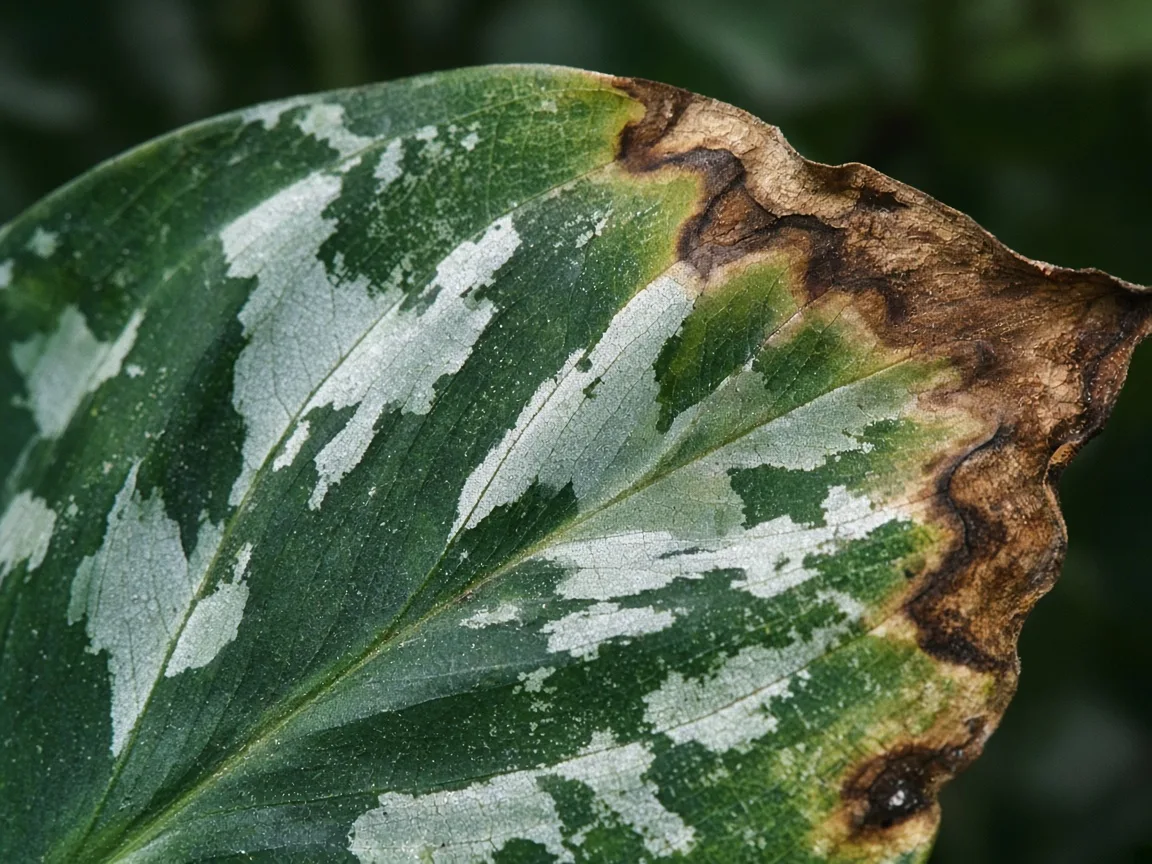
Brown necrotic tissue on Pictum Tricolor—note whether margins are crispy (dry) or soft (wet root stress).
Crispy brown (dry-side problems):
- Brown margins and tips on leaves while pot feels light
- Soil at top half is dusty dry; lower leaves crisp before uppers in bright rooms
- HVAC or heater drafts accelerate margin burn on broad blades
Soft brown (wet-side problems):
- Lower leaves turn soft brown-yellow while mix stays wet for days
- Pot feels heavy long after watering; no crisp edge—tissue collapses
- Often follows calendar watering in dim light without checking dry-down
Sun scorch on variegated tissue:
- Tan-to-brown patches on the window-facing side of blades only
- Direct sun scorches shade-adapted aglaonema leaves—pale variegation burns before green sectors
Fluoride and chlorine burn:
- Brown from tips inward on municipal tap water—common on Chinese evergreens with pale sectors
- Progresses slowly over weeks; see brown tips if margins alone are affected
The dark green base photosynthesizes well in genuinely low light, but a heavy wet pot in a dim office still browns lower ribbon leaves before the crown fails. Brown necrotic areas do not turn green again—recovery means the problem stops spreading and new leaves emerge clean.
Why Pictum Tricolor gets brown leaves
Aglaonema stores little water in thin stems compared with succulents, but still needs oxygen at the roots. Chronically wet peat mix in a dim corner—common when owners water on a schedule without checking top half—deprives roots of air and kills lower leaf tissue first.
Pictum Tricolor-specific brown patterns:
- Pale variegation shows scorch and fluoride burn before green tissue.
- A heavy wet pot in low light browns lowers while the crown still looks upright—early overwatering warning.
- Bright-room thirst browns margins when summer heat dries small pots faster than winter rhythm.
Underwatering is less common than overwatering on indoor Chinese evergreens, but a Pictum Tricolor pushed in strong filtered light without matching water will crisp edges.
How to confirm the cause
| Check | Crispy brown suggests | Soft brown suggests |
|---|---|---|
| Soil at top half | Dry—thirst or low humidity | Wet—overwatering |
| Pot weight | Light | Heavy days after water |
| Which leaves | Often margins/uprights in bright dry rooms | Lower leaves first on wet mix |
| Window side | Tan patch one-sided | Not sun—check roots |
| Water source | Fluoride tips spreading inward | Not water chemistry alone |
Probe with a finger or bamboo skewer at top half before repotting or fertilizing.
First fix for Pictum Tricolor
Match one correction to soil moisture: deep soak if top half is dry and tissue is crispy; stop watering if mix is wet and lowers are soft brown.
If tips browned first on tap water, switch to filtered, rain, or rested tap water for four weeks per brown tips guidance. Move back from direct window glass if one-sided tan scorch is present.
Do not fertilize brown plants until moisture rhythm stabilizes and new growth looks firm.
Step-by-step recovery
- Day 1 — Correct water once based on dry-down at top half. Empty saucers; confirm drainage holes are open.
- Week 1 — Remove fully brown leaves for hygiene. Keep partially green leaves if they still photosynthesize.
- Week 2–3 — Move to low to medium filtered indirect light if chronic slow dry-down caused wet-side brown—see light guide.
- Week 4+ — Judge by new leaves. Clean emerging blades with firm petioles mean the fix worked.
Severe root stress may need unpotting and trim per root rot if soft stems and sour smell appear.
Lookalike symptoms
| Pattern | Likely cause | Link |
|---|---|---|
| Tips only | Fluoride, low humidity | Brown tips |
| Soft lowers + wet mix | Root stress | Overwatering |
| Crispy margins + dry pot | Thirst | Underwatering |
| Dark spots, not uniform brown | Leaf spot | Black spots |
| Stipple + webbing | Spider mites | Spider mites |
Mistakes to avoid
- Soaking a heavy wet pot because leaves look “thirsty”—soft brown on wet mix needs dry-down, not more water
- Removing all brown leaves before fixing moisture—green tissue still supports recovery
- Fertilizing to “green up” stressed plants
- Ignoring water quality when pale sectors brown from tips inward
Recovery timeline
Correct moisture or water quality typically shows clean new leaves within two to four weeks. Root-stressed plants may need six to eight weeks after dry-down stabilizes. Pictum Tricolor pushes new foliage slowly—allow one full flush before judging.
Prevention
- Water when top half of mix dries; learn your pot’s dry-down speed in each season
- Use filtered or rested water if tips chronically brown on tap water
- Place at low to medium filtered indirect light; avoid direct afternoon sun on variegated blades
- Use well-draining mix per soil guide
- Empty saucers; never let pots sit in standing water
Related Aglaonema Pictum Tricolor guides
Conclusion
Brown Pictum Tricolor leaves are moisture and water-quality signals on camouflage-pattern ribbon blades feathered in dark green, silver, and light green along the veins—top half dry-down and filtered water beat guessing fertilizer. Match crispy vs soft texture to thirst or wet roots, then judge recovery by clean new crown growth.