How to Grow and Care for Aglaonema Pictum Tricolor
Learn how to grow Aglaonema pictum tricolor with bright indirect light, careful watering, airy soil, warmth, and practical advice for propagation and leaf problems.
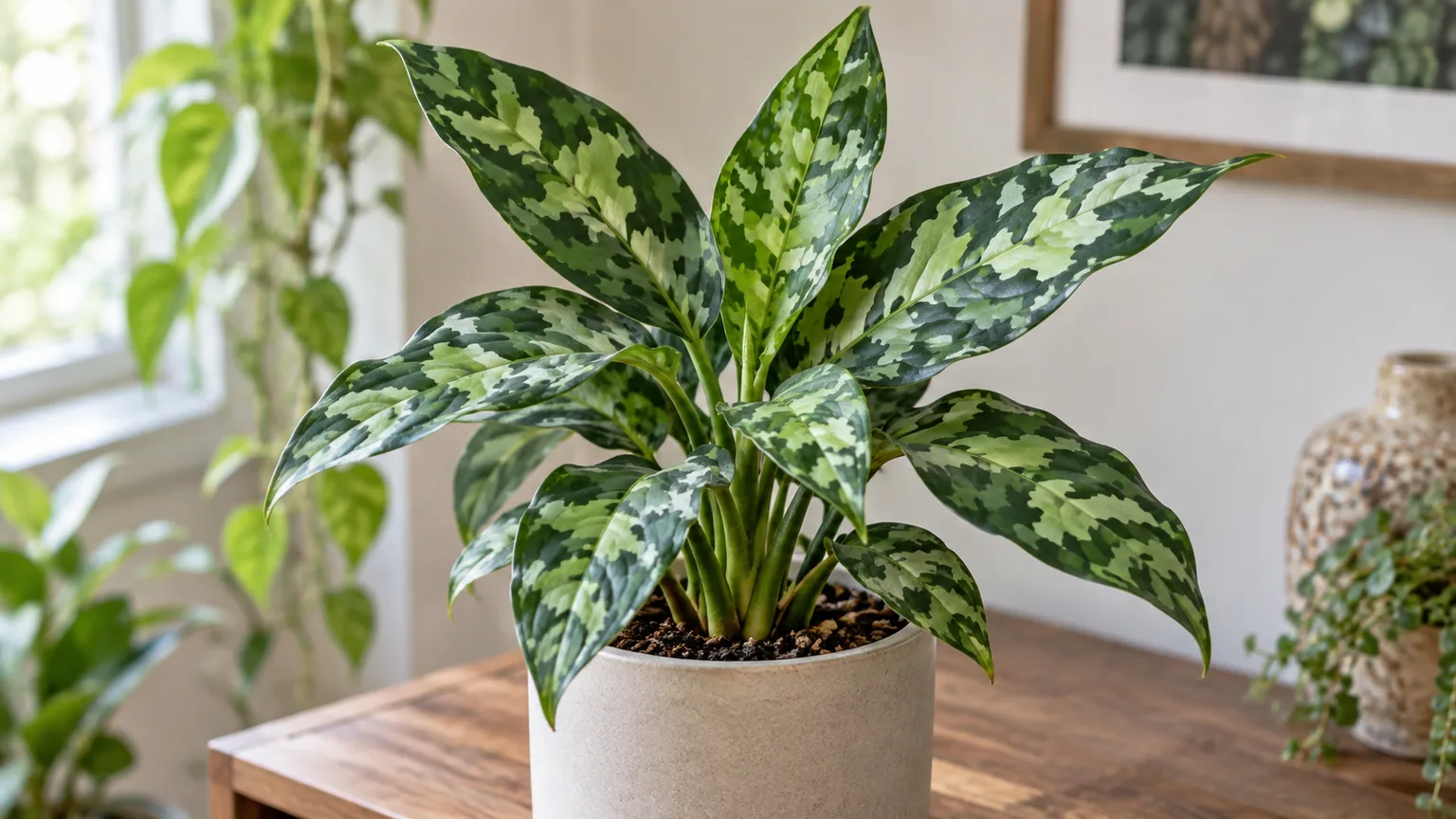
The camouflage plant grows best in a warm spot with bright, indirect light, a potting mix that holds some moisture but drains freely, and watering based on how quickly the root zone dries. Let the upper portion of the mix become partly dry, then water thoroughly and empty the saucer. The plant does not need a strict humidity target or a calendar-based watering schedule; both can lead you to overcorrect conditions that are already working.
The other key is to separate normal variation from a real problem. A new leaf may look lighter before it hardens, and the amount of contrast varies between plants.
Yellowing across several leaves, persistently wet soil, or a soft stem calls for a closer root and watering check. Use the sections below to change one factor at a time rather than moving the plant, increasing water, and adding fertilizer all at once.
Aglaonema Pictum Tricolor Care at a Glance
| Need | Practical starting point | What to watch |
|---|---|---|
| Light | Bright, filtered or indirect light | Long gaps between leaves can suggest too little light; bleached or scorched patches point to too much direct sun |
| Water | Water when the upper part of the mix has dried, then drain fully | Pot weight and moisture below the surface matter more than the day on the calendar |
| Mix | Moisture-retentive potting base with coarse aerating material | A mix that stays heavy and wet for days is too dense for the conditions |
| Temperature | A consistently warm room, away from cold drafts | Protect it from cold windows and sudden temperature swings |
| Humidity | Ordinary indoor humidity can work if watering and warmth are stable | Raise humidity only if the room is very dry and leaf edges keep crisping |
| Feeding | Diluted, balanced houseplant fertilizer during active growth | Pause when growth slows; flush or replace mix if salts accumulate |
Treat this as a starting framework, not a checklist that demands a gadget for every measurement. Window direction, season, pot size, and the material of the pot all affect how quickly the soil dries. One plant in a small plastic pot may need water sooner than a larger specimen in a ceramic container, even if both sit on the same shelf.
What “Tricolor” Means and How to Recognize the Plant
The familiar name Aglaonema pictum tricolor describes a highly patterned form sold in horticulture. Kew’s Plants of the World Online accepts Aglaonema pictum as the species name and records Aglaonema pictum var.
tricolor as a synonym, rather than listing it as a separate accepted species. Kew also places the species’ native range in Sumatra, including Nias, and describes it as a subshrub of wet tropical habitat. (Kew: Aglaonema pictum; Kew: tricolor synonym record)
For a plant owner, that naming nuance is useful when comparing labels and care advice. Online listings may use “tricolor,” “camouflage plant,” or A. pictum; the distinctive foliage is the same horticultural subject.
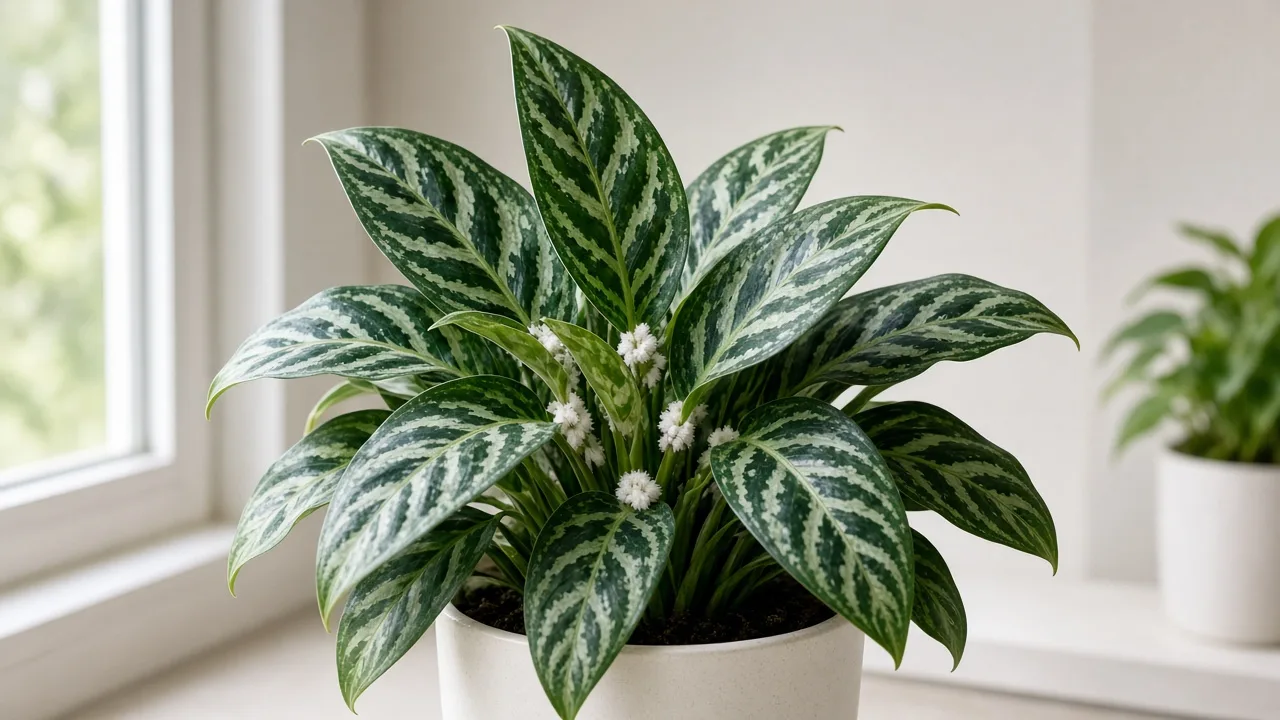
Its oval leaves typically carry irregular patches of several greens, giving a mottled, camouflage-like effect. The exact pattern is not a quality-control score: some leaves have broader dark fields, others look more finely speckled, and newly unfurled foliage can appear less defined until it matures.
Do not confuse a changing leaf with a plant reverting to a different species. Light affects how well the plant grows and how strong the pattern appears, but a single paler leaf can also be young growth, a natural variation, or the result of a recent move. Look at successive leaves and the plant’s overall growth before deciding its location is wrong.
Give It Bright, Indirect Light
Place the plant near a window where daylight is strong but the leaves do not sit in intense direct sun for long stretches. An east-facing window often provides gentle morning light; a south- or west-facing window may work if the plant is set back or filtered by a sheer curtain. In a dim room, move it closer to the brightest window rather than relying on a lamp across the room to compensate.
The practical test is what happens to new growth. If stems stretch, leaf spacing widens, or the plant produces very little new growth through its active season, it may be receiving too little usable light.
If leaves develop dry, pale patches on the side facing the glass, shift it out of the direct beam. Make one modest adjustment and observe the next leaves; damaged tissue will not turn green again, so judge the change by new growth.
This is a more variegated plant than many common green Chinese evergreens, so a dark corner that another Aglaonema tolerates may not be a good long-term position for it. “Low-light tolerant” means a plant may persist in less light; it does not mean all light levels support compact, vigorous growth. Epic Gardening likewise distinguishes brighter light for colorful varieties from the lower-light tolerance of greener forms. (Epic Gardening: Aglaonema care)
Rotate the pot a quarter turn every week or two if the plant leans toward the window, but do not keep moving it between rooms. Stable conditions make it easier to read its response. Also keep foliage from pressing against cold glass during winter nights; a bright window can still be a chilly location.
Water After the Potting Mix Partly Dries
Water when the upper portion of the mix has dried and the pot no longer feels freshly watered, while the root ball below remains faintly moist. Check with a finger or a clean wooden skewer near the edge of the pot; if the surface is dry but the skewer comes out cool and damp from deeper down, wait. In a small pot, the top inch may be a useful first check, but depth alone is not a universal rule because a deep pot can hold wet soil below a dry crust.
When it is time, pour water evenly over the mix until it flows through the drainage holes. Let the container drain completely, then empty any saucer or decorative cachepot.
This wets the root ball evenly and helps prevent pockets of dry mix that shed water along the sides. If water runs straight through while the center remains dry, soak the pot slowly in stages and check that the mix has not become compacted or pulled away from the container wall.
Do not leave the plant standing in water to imitate a tropical forest floor. Its habitat is humid, but a houseplant’s roots still need air in the potting medium.
A persistently heavy pot, sour-smelling mix, yellowing lower leaves, or soft roots are stronger reasons to inspect drainage than to keep adding water because a leaf drooped. Epic Gardening and Gardening Know How both emphasize moist but not waterlogged conditions for Aglaonema; the balance depends on the mix and room, not on a fixed number of days. (Epic Gardening; Gardening Know How)
Expect the interval to lengthen when winter light is lower or indoor temperatures drop, because the plant may use water more slowly. In brighter, warmer months it can dry sooner.
Check each time rather than blindly following “weekly” advice. If you are away, water thoroughly beforehand only if the mix is ready; a plant is safer in slightly drier soil for a short period than in a pot kept saturated for days.
Build a Moist but Airy Potting Mix
Choose a mix that can hold water around the roots without turning into a dense, airless block. A straightforward blend is two parts quality indoor potting mix to one part perlite, with a modest amount of fine orchid bark mixed in if the base soil is especially dense.
The base retains moisture and nutrients; perlite creates air spaces and helps excess water drain; bark adds structure and slows compaction. You do not need an exact laboratory ratio—the finished mix should feel springy, not muddy, when damp.
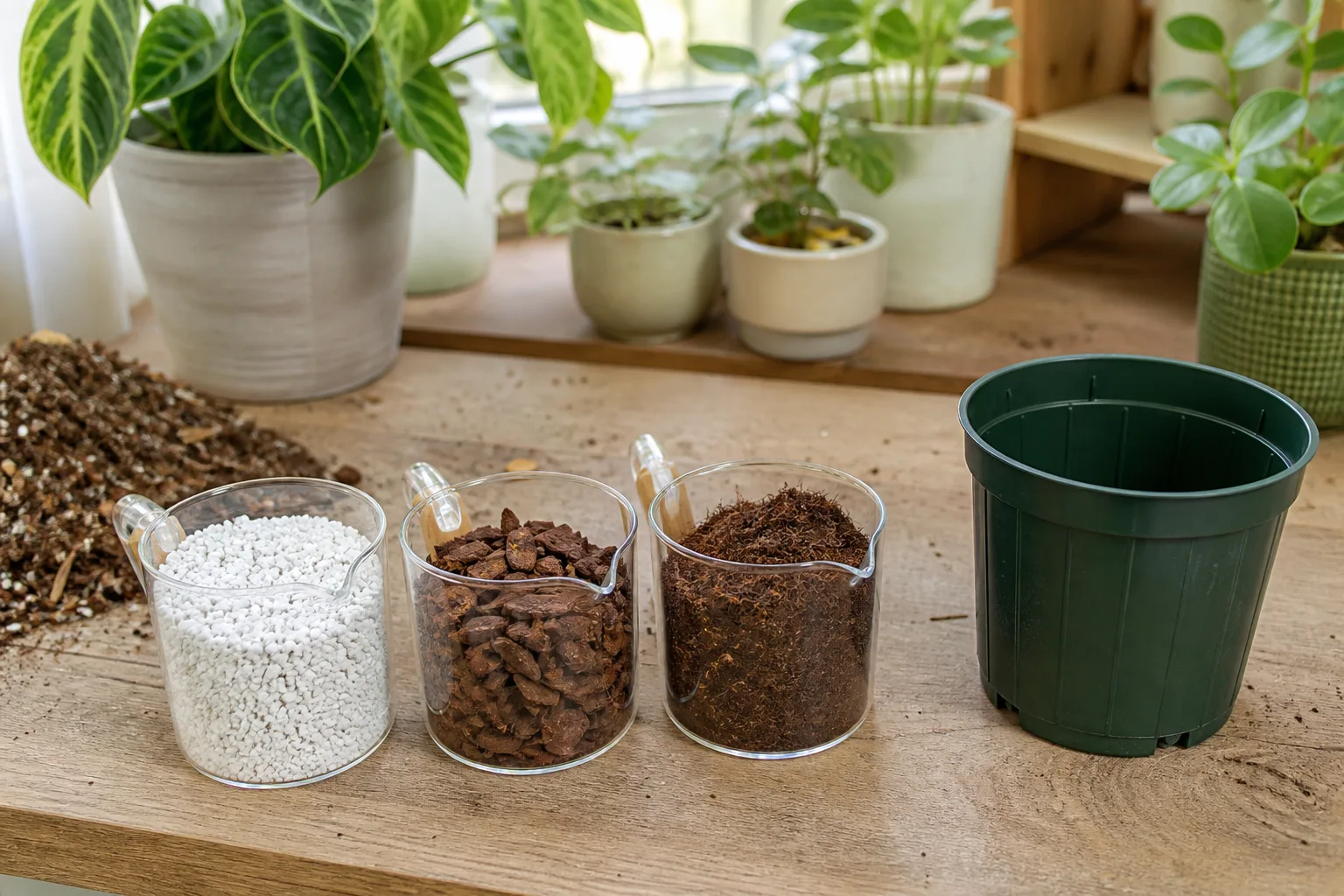
Test a small handful after wetting it. It should clump lightly when squeezed, then break apart when nudged; if it smears into a sticky mass, add more coarse material.
If water races through and the mix dries within a day in a warm room, the blend may be too coarse or the container may be too small. Adjust gradually when repotting, not by adding a layer of gravel at the bottom, which does not fix a compact mix and can leave water perched above the gravel boundary.
Use a pot with at least one open drainage hole. A nursery pot set inside a decorative cachepot is convenient because you can lift it out to drain. A very large container holds more unused wet mix around a modest root system, so choose a pot only slightly wider than the existing root ball when you repot.
Keep It Warm and Treat Extra Humidity as a Bonus
A warm, stable room is more important than trying to recreate a greenhouse. Aim for comfortable household temperatures, roughly the mid-60s to upper-70s Fahrenheit when possible, and keep the plant away from drafty doors, air-conditioning vents, and cold glass.
Horticulture references differ in their exact lower limit, so use a conservative rule: do not expose this tropical plant to chill or a sudden cold snap. Gardening Know How gives a warm growth range for Chinese evergreens and warns against cold conditions; Epic Gardening also recommends avoiding temperatures below about 60°F for Aglaonema. (Gardening Know How; Epic Gardening)
Humidity helps tropical foliage lose less moisture, but a fixed reading such as 65 percent is not a universal requirement for success in a home. If your room is comfortable and leaves remain firm, there is no need to buy a humidifier just to chase a number. If the air is very dry and new leaf edges repeatedly crisp despite appropriate watering, group plants loosely or use a room humidifier, keeping air moving and surfaces dry.
Misting is a poor long-term humidity strategy because its effect is brief and it can leave water sitting on foliage without meaningfully changing the room’s average humidity. Pebble trays are also limited: they may create a small local buffer, but they will not transform a dry room into a greenhouse. Avoid crowding leaves against a damp wall or placing the plant in a stagnant, enclosed cabinet unless you can monitor ventilation and temperature.
Fertilize Lightly While It Is Growing
Feed only when the plant is actively producing leaves. A balanced liquid houseplant fertilizer diluted according to its label—or more weakly if the plant is newly purchased, stressed, or in a fresh pre-fertilized mix—is a reasonable starting point in spring and summer. Do not pour fertilizer into a dry root ball; water first or apply it with a normal watering so concentrated salts do not contact dry roots.
More fertilizer will not force a denser camouflage pattern or compensate for low light. Excess salts can damage roots and create brown margins, while a plant that is not growing has little reason to receive regular feed.
Skip feeding during a cool, dim period when growth has paused. If you see a crust on the soil or repeated tip burn after feeding, stop fertilizing and flush the mix with plain water if drainage is good, or repot if the medium is badly compacted or salt-laden.
Some general Aglaonema care sources recommend feeding monthly or every few weeks during active growth, while other guides suggest less frequent, weaker applications. That variation is a reason to start conservatively and follow the fertilizer label, not to stack recommendations together. Epic Gardening advises a diluted balanced feed during the growing season; Gardening Know How describes Chinese evergreens as light feeders. (Epic Gardening; Gardening Know How)
Prune for Plant Health, Not Automatic Bushiness
Aglaonema pictum tricolor does not need routine pruning to stay healthy. Remove a fully yellow or dead leaf by following its stalk down to where it emerges and cutting with clean scissors. Do not remove several partly green leaves just to make the plant look tidy; those leaves still contribute energy while the plant replaces them.
If a stem is damaged or has become unattractively bare, you can trim it above a node and use a healthy section for propagation. Make a clean cut with a disinfected blade rather than tearing the tissue.
Pruning can change the plant’s silhouette, but it is not a guaranteed way to create a compact multi-crown clump; adequate light and a healthy root system matter more. Also, use gloves if the sap irritates your skin and wash tools after use.
A flower stalk is not automatically harmful. Indoor Aglaonema blooms are usually modest compared with the patterned foliage, so you can leave them or cut them off at the base according to preference. Removing a flower is optional, not a required maintenance step.
Repot When the Root Ball Needs More Room
Repot when roots circle densely around the root ball, emerge from drainage holes, or the mix has degraded so much that it stays soggy or repels water. A plant that has been in the same container for a couple of years may need fresh mix, but elapsed time alone does not mean it needs a larger pot. Slow-growing specimens often prefer a snug container, and moving them into a much bigger one increases the amount of damp soil the roots cannot use.
Choose a new pot just one size wider—often about an inch or two more in diameter—than the root mass. Ease the plant from its container, loosen only the outer roots that are tightly circling, and trim any mushy, dark roots with clean shears.
Set it at the same depth it grew before, fill around the root ball with fresh mix, and water enough to settle the medium. Empty the saucer and keep the plant in stable indirect light while it adjusts.
A little drooping after repotting can reflect disturbance, but continued decline is a cue to check moisture and root condition, not to fertilize immediately. Wait until you see active growth before resuming feed. If the old mix smells sour or roots are soft, remove compromised material and use a clean pot; if roots are firm and the plant is merely crowded, avoid stripping the root ball unnecessarily.
Propagate by Division or a Stem Cutting
Division is usually the least complicated way to make another plant because a separated shoot can already have roots. Stem cuttings are useful when pruning a leggy plant or when there are no separable rooted offsets, but they need a viable node and patience. Both methods are easiest when the plant is healthy and warm conditions support new roots; do not propagate a specimen already suffering from rot or pests.
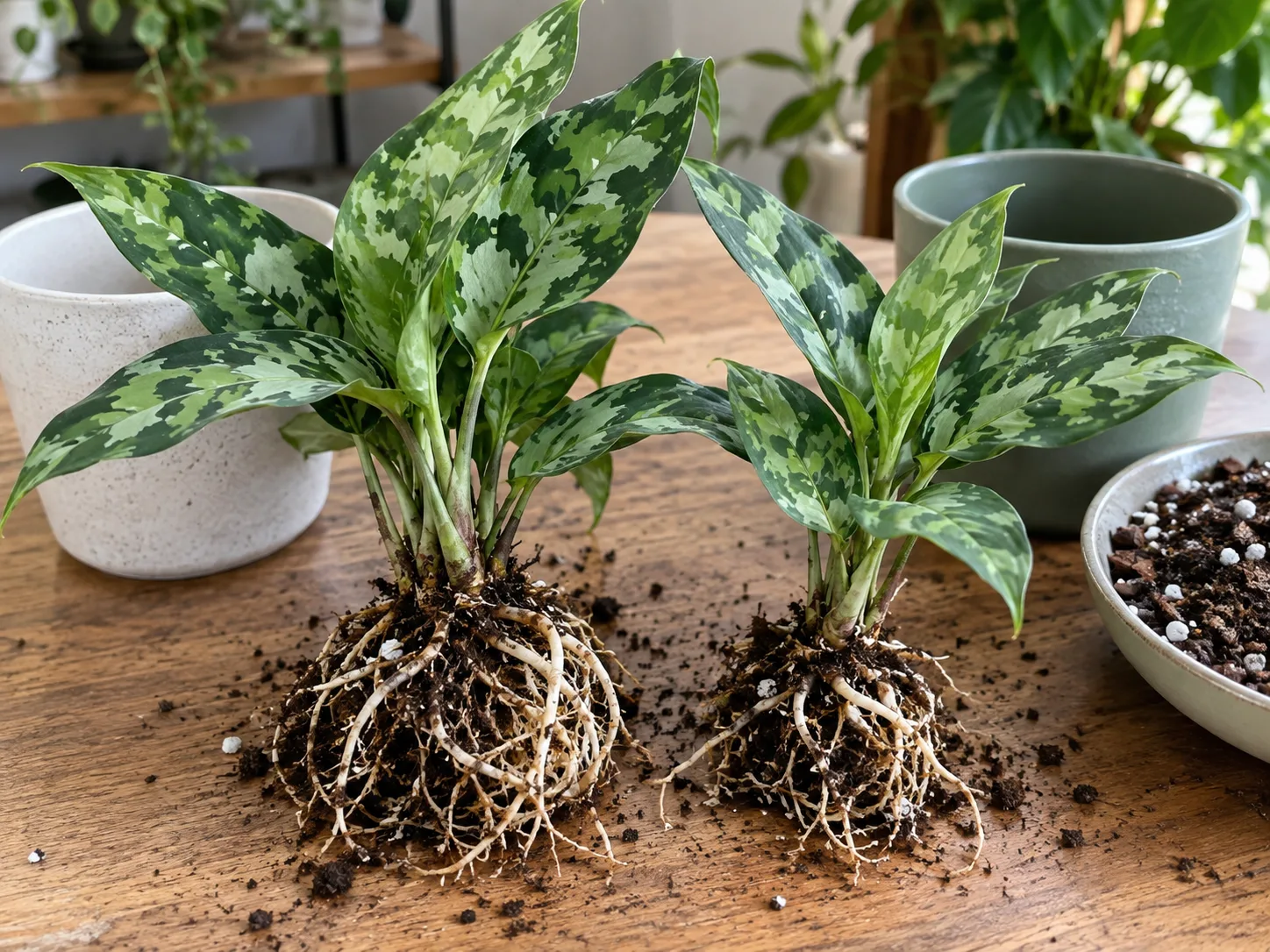
Divide only shoots with their own roots
Water the plant a day before division if the mix is very dry, then slide the root ball from its pot and gently expose the plant’s growth points. Look for a distinct shoot or crown connected to a section of roots. If the clump separates with gentle pressure, tease it apart; if the roots are tightly interwoven, use a clean, sharp knife to divide the root mass while leaving each section with roots and several leaves.
Pot each division in a container sized to its roots, at the same depth it was growing. Water to settle the mix, allow it to drain, and place it in warm, bright indirect light.
Keep the medium lightly and evenly moist as it establishes, but do not keep it saturated. A division with only a leaf and no roots is not a division; it is a cutting and needs a node before it can grow new roots.
Avoid splitting a small plant just to multiply it quickly. Each division loses some root capacity during the process, and a small crown may stall if it cannot support itself. If the plant has only one healthy growth point, let it mature before attempting to separate it.
Keep a node on every stem cutting
Choose a healthy stem segment with at least one clear node—the point where a leaf or aerial root joins the stem. Cut just below a node with a clean blade, remove lower leaves that would sit in water or mix, and keep at least one leaf above the rooting medium. A leaf by itself cannot produce a new plant without stem tissue containing a node.
You can root a cutting in clean water or a lightly moist, airy propagation medium. In water, submerge the node but keep leaves above the surface; refresh the water when it becomes cloudy.
In mix, keep the medium just damp enough that the node does not dry out, never waterlogged. Place the cutting in warmth and bright indirect light, and avoid pulling it up every few days to check for roots.
Once water-rooted cuttings have several roots and are roughly an inch or two long, transfer them carefully into a small pot of lightly moist mix. The transition can be the vulnerable stage because roots formed underwater must adapt to a less saturated medium.
Keep the mix evenly but modestly moist at first, then gradually use the same dry-down cues as for a mature plant once fresh growth shows. If a cutting turns soft or black at the base, remove the damaged section and restart only if healthy stem with a node remains.
Read Leaf Changes Before You Change the Routine
One discolored leaf rarely identifies a cause by itself. Check the newest growth, older leaves, soil condition, pot weight, window exposure, and recent changes. If you changed several things in the same week, pause before making another adjustment so you can see which condition is actually related to the symptom.
Yellowing and drooping leaves
Yellowing on one older leaf may simply be normal aging. Several leaves yellowing together deserve a root-zone check: is the pot still heavy days after watering, does the mix smell sour, or does the stem feel soft near the soil? Those clues point toward excess moisture or declining roots.
Move the plant out of standing water, let the mix dry somewhat, and inspect roots if decline continues. Trim only tissue that is fully dead; yellow leaves will not recover their color.
If the mix is dry well below the surface and the pot feels unusually light, underwatering is more plausible. Water thoroughly and confirm that the root ball actually absorbs it.
A chronically dry plant can droop, but a waterlogged plant may droop too, which is why adding water without checking the soil can make the problem worse. Epic Gardening notes yellow leaves as a common Aglaonema issue associated with both over- and underwatering; the moisture and root evidence helps separate them. (Epic Gardening)
If roots look sound and watering is balanced, consider whether the plant sits in deep shade or harsh direct sun, whether it was recently moved, or whether pests are present. Correct the most likely factor first and monitor new growth for a few weeks. Do not feed a yellowing plant as a first response; fertilizer cannot repair roots damaged by saturation.
Brown tips and fading camouflage
Dry brown tips can follow low humidity, inconsistent watering, or accumulated mineral and fertilizer salts, but they are not proof of any single one. Check whether browning affects only the tips or appears as discrete patches, whether the mix dries too quickly, and whether fertilizer or hard tap water has been used repeatedly. If a crust forms on the surface, pause feed and flush the mix with plain water if it drains freely; if the medium is compacted, replace it rather than repeatedly flushing a pot that stays wet.
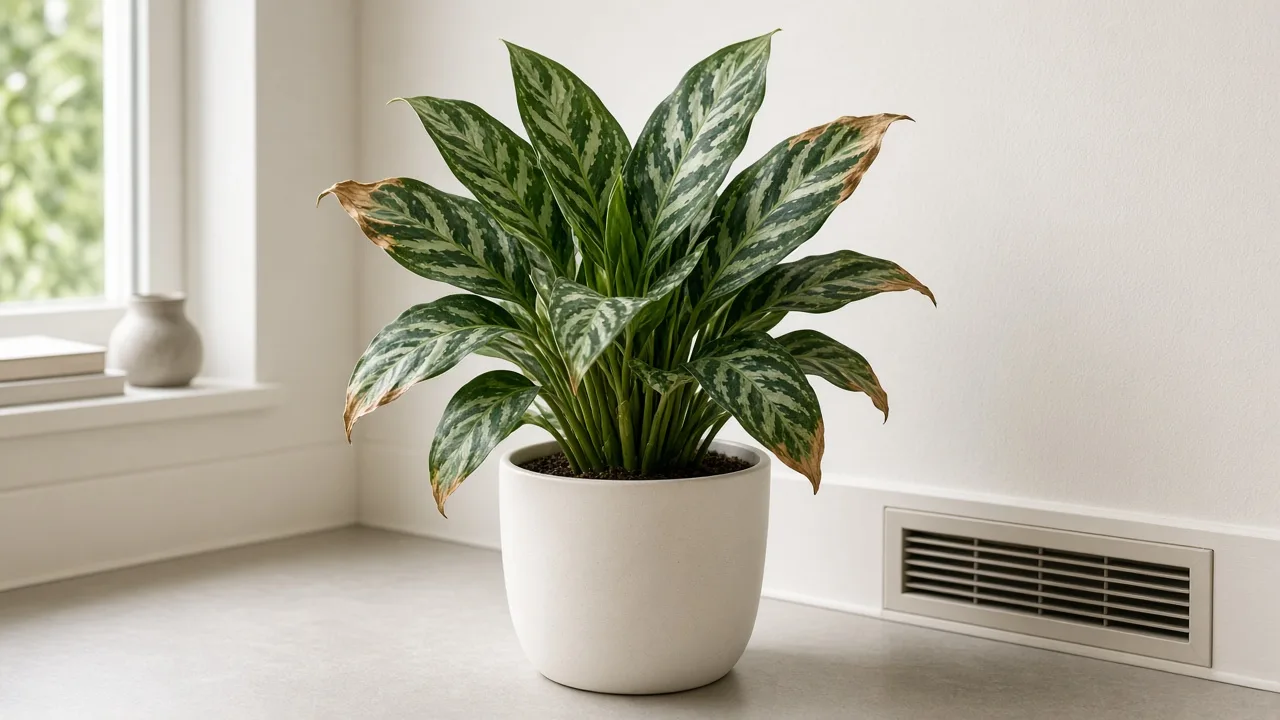
If the color pattern looks weaker on new leaves, check the light first. A darker position may support survival but reduce compact growth, while direct sun can bleach or scorch exposed tissue.
Pattern intensity can also vary between leaves, so do not move a healthy plant solely because one leaf has less contrast. Remove only the completely dead portion if appearance matters; trimming brown tissue does not fix the underlying cause.
Check for Pests and Keep the Leaves Clean
Inspect the undersides of leaves, the central folds, petioles, and the point where stems meet the soil every week or two, especially after bringing the plant home or placing it near new plants. Mealybugs resemble small white cottony clusters; scale can look like fixed bumps, and spider mites may leave fine stippling or webbing. Early detection matters because a few pests are easier to contain than an infestation spread across neighboring pots.
If you find pests, isolate the plant, remove visible insects with a damp cotton swab or rinse the foliage where practical, and recheck every few days. For a persistent infestation, use only a product labeled for the plant and pest, following its directions and precautions; test sensitive foliage on a small area first.
Do not assume every homemade spray or horticultural oil is safe in every concentration or light condition. Clean the leaves with a soft damp cloth so dust does not hide new signs, and sanitize tools between plants.
Keep the Plant Away from Chewing Pets
Treat the plant as unsuitable for pets that chew foliage. The ASPCA’s Chinese evergreen entry identifies Aglaonema modestum and lists it as toxic to cats, dogs, and horses because of insoluble calcium oxalates; it describes mouth irritation, swelling, drooling, vomiting in some animals, and difficulty swallowing.
That record is not a species-specific test of A. pictum, so it should not be misrepresented as one. Still, because this plant belongs to the same genus, keeping it out of reach is the prudent household choice. (ASPCA: Chinese evergreen)
A high shelf is not enough if a cat can jump onto it, and a decorative plant stand may be easy to knock over. Choose a room the animal cannot enter or use a genuinely inaccessible enclosure. If you suspect a pet has chewed the plant, contact a veterinarian or a poison-control service promptly rather than waiting for symptoms; do not induce vomiting unless a professional directs you to do so.
Conclusion
For a healthy camouflage plant, prioritize bright indirect light, a warm and steady location, and a mix that dries gradually without staying soggy. Water after checking the root zone, drain the pot, and use new growth—not a rigid schedule or a single imperfect leaf—to judge whether the routine is working.
Repot only when roots or degraded mix call for it, divide only rooted sections, and make sure any stem cutting includes a node. The plant’s patterned foliage does not need a greenhouse or constant tinkering; stable conditions and small, evidence-based adjustments are usually the most useful care plan.