Distorted Leaves on Pictum Tricolor Aglaonema: Thrips &
Quick answer
Distorted leaves on Aglaonema Pictum Tricolor usually mean feeding damage on tender new flush, cold shock on variegated tissue, or edema from overwatering in dim light. First step—inspect the newest unfolded leaf for silver streaks, puckering, or sticky residue.
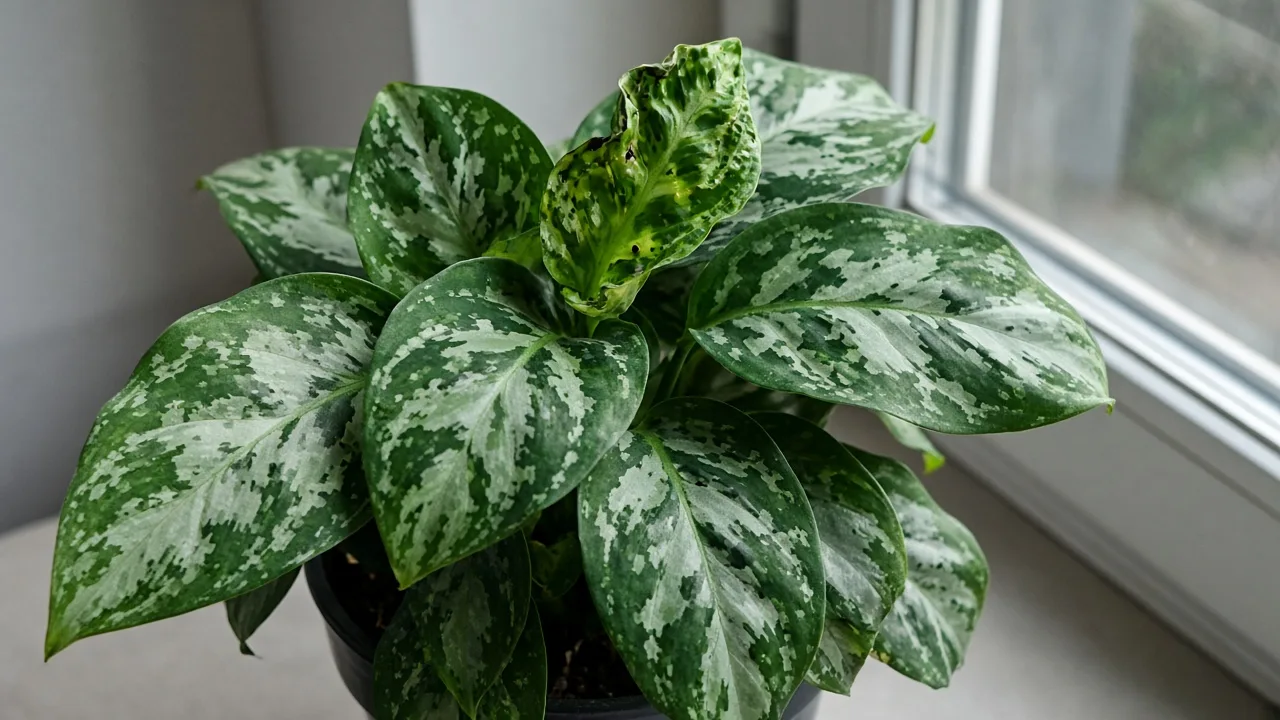
Distorted Leaves on Aglaonema Pictum Tricolor: Causes, Checks & Fixes
This guide covers distorted leaves on Aglaonema Pictum Tricolor. See also the general Distorted Leaves guide, watering, and light pages for this plant.
Distorted Leaves on Aglaonema Pictum Tricolor: Causes, Checks & Fixes
Quick answer
Twisted, puckered, or crinkled new leaves on Aglaonema Pictum Tricolor start on the newest unfolding flush—not random old foliage. See our distorted leaves guide for general mechanics. On Pictum Tricolor, ribbon-like silver veining on a dark green base scars first, so damage often follows the variegation map.
First step: inspect the newest leaf for silver streaks, sticky shine, or cold-draft stiffening.
When to use this page vs other Pictum Tricolor guides
| Pattern | Read next |
|---|---|
| Silver streaks + sticky leaves | Thrips |
| Cottony wax in crown | Mealybugs |
| Lengthwise cup | Curling leaves |
| Faded wash | Pale leaves |
| Chewed holes | Holes in leaves |
What distorted leaves look like on Pictum Tricolor
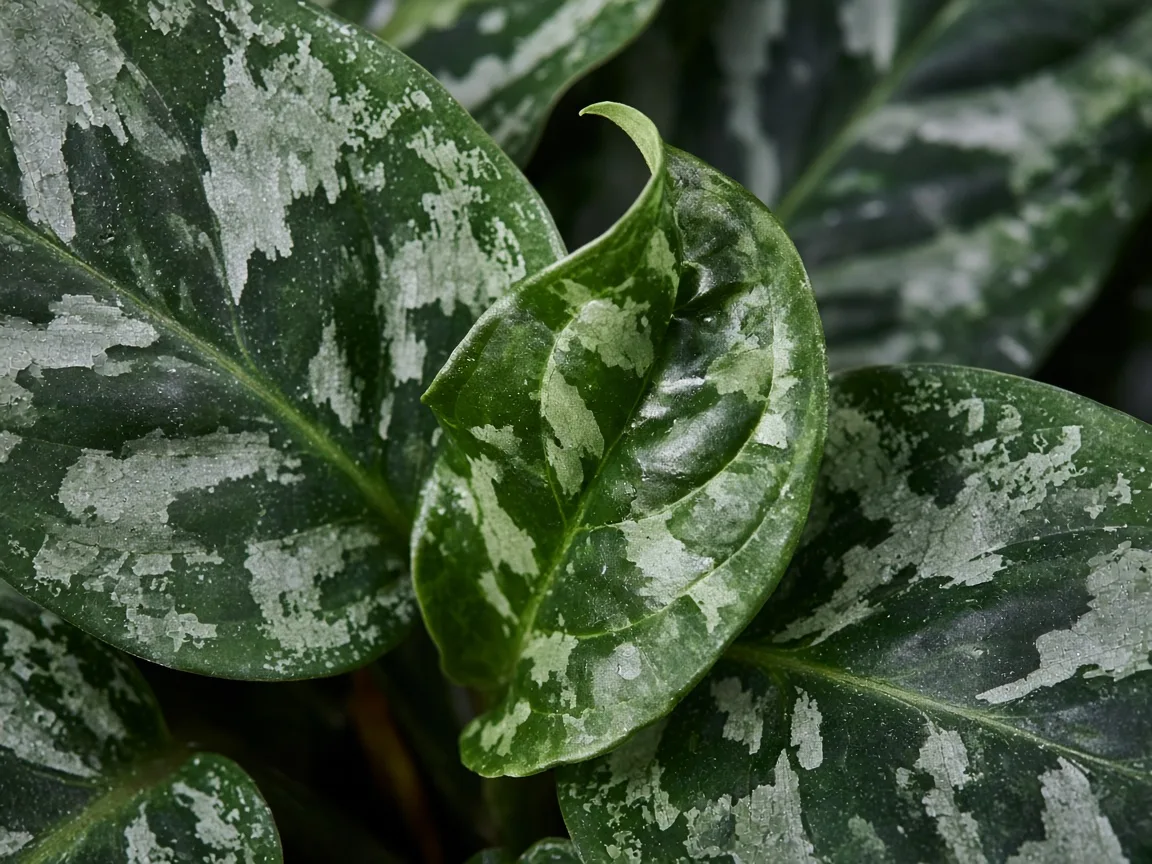
Puckered tissue on Pictum Tricolor new growth—compare with firm older leaves below.
Thrips feeding: silvery streaks on pale zones, hooked tips, sticky crown, damage on top two leaves.
Cold draft warp: stiff crinkle near AC vents or winter glass—often same height on stem.
Edema: translucent blisters on pale undersides with heavy wet pot in dim light.
Fertilizer burn: crisp brown on ribbon-like silver veining on a dark green base after recent feeding.
Why Pictum Tricolor gets distorted leaves
Thrips rasp unfolding leaves. ribbon-like silver veining on a dark green base lacks chlorophyll in pale zones and scars easily.
Aglaonema is cold-intolerant—drafts below 15°C (60°F) warp expanding cells.
Overwatering in low to medium filtered indirect light causes edema when roots drink slowly. See not enough light if pattern fades too.
Over-fertilizing burns pale tissue first. The light zones on camouflage-pattern leaves feathered in dark green, silver, and light green photosynthesize less; excess salts crisp margins before green areas show burn. Hold feed after any distortion event.
Physical bruising from moving the pot can crease unfolding leaves—damage appears on one side of the crown after a recent relocation.
Lookalike symptoms to rule out
| What you see | Key check | Likely cause | Distortion? |
|---|---|---|---|
| Hooked tips + silver streaks | Sticky shine; thrips on paper tap | Thrips | Yes |
| Cottony clusters in axils | Pink smear when crushed | Mealybugs | Sometimes |
| Lengthwise cup, not twist | Dry top half of soil | Curling leaves | No |
| Even pale wash | Fixed pattern loss, no crinkle | Pale leaves | No |
| Chewed holes with margins | Caterpillar frass | Holes in leaves | No |
How to confirm the cause
- Isolate the plant before handling foliage—thrips walk to neighbors on the same shelf.
- Tap a suspect new leaf over white paper—thrips look like tiny moving dashes.
- Feel pot weight and probe top half of soil—soggy mix with blisters points to edema, not pests.
- Note placement—AC vent, winter window, or door draft within one metre explains chill warp.
- Review recent fertilizer—distortion within a week of feeding suggests salt burn on pale tissue.
- Inspect lower older leaves—if only new flush is affected, pests or chill are more likely than chronic root rot.
First fix for Pictum Tricolor
If you see silver streaks or sticky new growth: rinse every leaf and stem with lukewarm water, especially the crown. Isolate and see thrips for repeat treatments. If the pot is heavy and wet: stop watering until top half of soil dries completely.
If cold draft is the culprit: move the plant to a stable 18–27°C (65–80°F) spot away from vents before doing anything else.
Mistakes to avoid
- Do not repot and spray on the same day—pick one stressor to fix first.
- Do not mist the crown; wet foliage spreads fungal problems on Chinese evergreen.
- Do not strip all distorted leaves; green tissue still feeds the plant while it recovers.
- Do not assume distortion means reversion—check for insects before pruning for color.
Recovery timeline
Clean flat new leaves within two to four weeks signal success. Crinkled expanded leaves stay crinkled. Pictum Tricolor grows slowly—a full crown can take a season to look balanced after severe thrips scarring.
Prevention
- Stable 18–27°C (65–80°F) placement away from AC blasts
- Water when top half of soil dries per watering guide
- Weekly new-flush checks October through March when indoor heating dries leaf surfaces
- Hold fertilizer until new growth looks firm for two weeks after stress
- Quarantine new aglaonemas before placing beside Pictum Tricolor
Related Pictum Tricolor guides
Conclusion
Distorted Pictum Tricolor leaves are a new-growth signal—thrips scarring, cold shock on ribbon-like silver veining on a dark green base, or edema from a wet pot in dim light. Fix the crown environment first.