Holes in Leaves on Pictum Tricolor: Pest & Damage Checks
Quick answer
Holes in Aglaonema Pictum Tricolor leaves are almost never a disease on indoor pots—they mean chewing insects, snails on outdoor summer placements, or mechanical scrapes against a wall or shelf. First step: check leaf margins and undersides at night for caterpillars or slime trails.
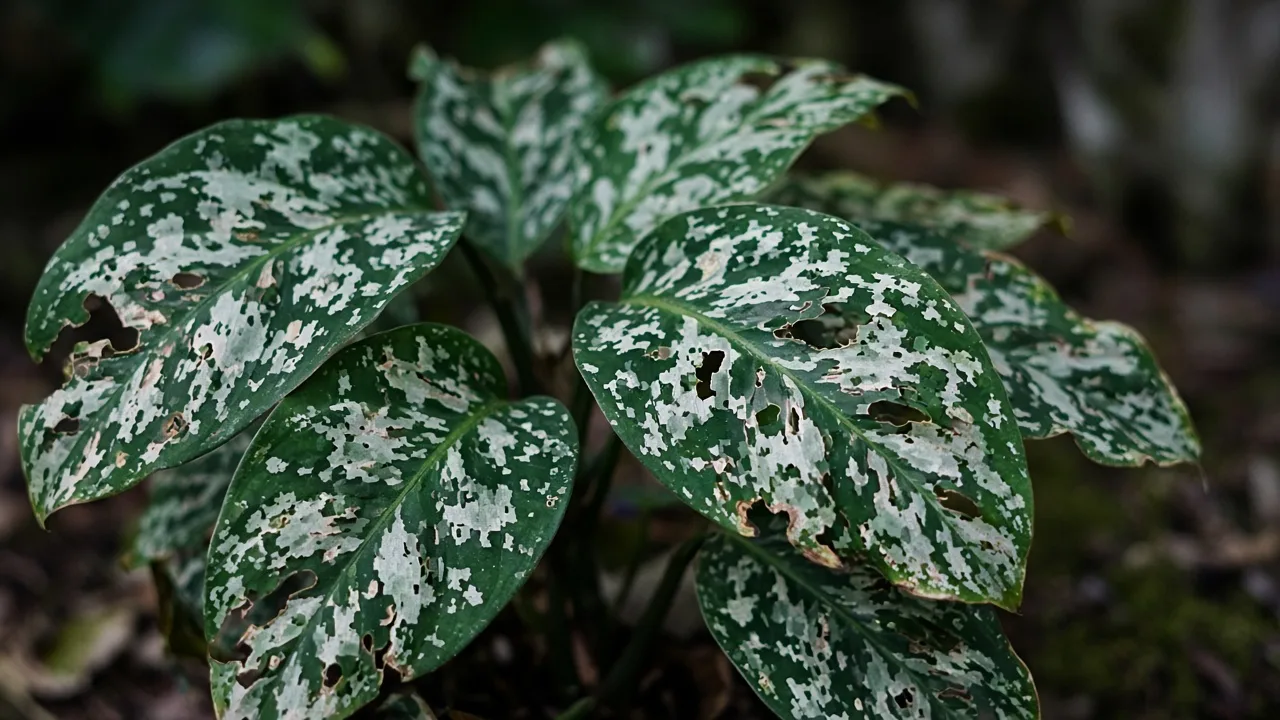
Holes in Leaves on Aglaonema Pictum Tricolor: Causes, Checks & Fixes
This guide covers holes in leaves on Aglaonema Pictum Tricolor. See also the general Holes in Leaves guide, watering, and light pages for this plant.
Holes in Leaves on Aglaonema Pictum Tricolor: Causes, Checks & Fixes
Quick answer
Holes in Aglaonema Pictum Tricolor foliage are almost always chewing damage or mechanical scrapes—not indoor fungal leaf spot. See our holes in leaves guide. On Pictum Tricolor, soft variegated tissue tears easily against shelves, walls, and pet reach.
First step: inspect margins and undersides at night for caterpillars, frass, or slime trails.
When to use this page vs other Pictum Tricolor guides
| Pattern | Read next |
|---|---|
| Irregular chew + frass | Caterpillars |
| Fine stippling, no holes | Spider mites |
| Brown spots, not holes | Black spots |
| Twisted new growth | Distorted leaves |
What holes look like on Pictum Tricolor
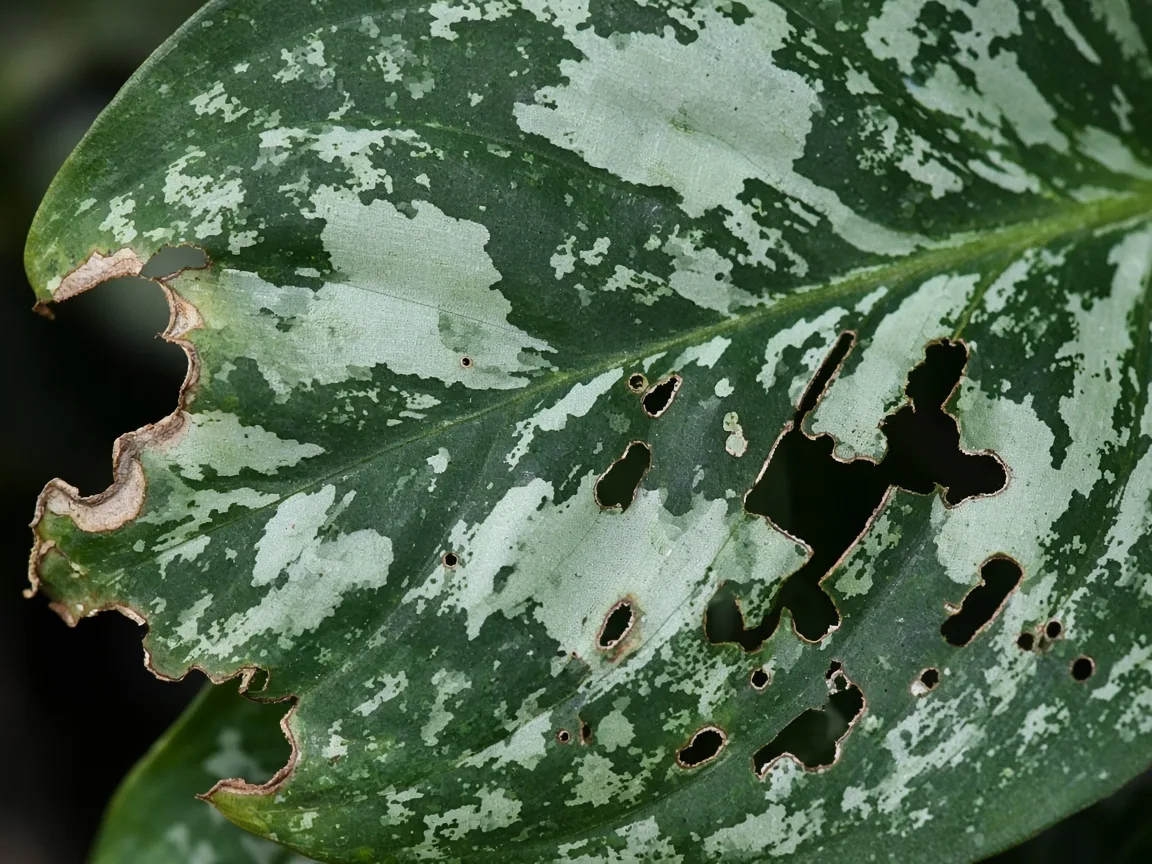
Chewed margin on Pictum Tricolor foliage—note whether damage is on one side against a wall or scattered across the plant.
Caterpillar chew:
- Irregular holes and notched margins with dark frass pellets on leaves or soil
- Caterpillars feed at night on Aglaonema foliage
Mechanical scrape:
- Clean tears on one side of the pot nearest furniture or walls
- Common on broad camouflage-pattern ribbon blades feathered in dark green, silver, and light green along the veins when stems lean in tight placements
- No frass, no insects—repositioning fixes new damage
Outdoor summer pests:
- Slug or snail slime trails on pot rim after patio moves
- Round “window” holes without frass outdoors
Leaf miners:
- Rare indoors; serpentine trails under the surface, not clean round holes
Why Pictum Tricolor gets holes
Variegated cultivars are not more pest-prone than green types, but pale tissue makes chew damage obvious on camouflage-pattern ribbon blades feathered in dark green, silver, and light green along the veins. Indoor plant pests hitch home on new nursery stock and feed on soft blades at night.
Placement damage on Thai hybrids:
- Broad arching leaves scrape when the pot sits in a tight shelf niche.
- Pet or child contact punches holes in lowest accessible soft tissue—look for irregular tears without frass.
- Vacuum hoses and dropped objects cause clean outer-leaf tears.
Thrips scar tissue but rarely cut full holes—if you see stippling without chew, see thrips or spider mites.
How to confirm
- Inspect at night with a flashlight — Caterpillars feed after dark.
- Look for frass pellets — Dark specks on leaves or soil confirm chewing insects.
- Check which side of the pot has damage — One-sided clean tears = mechanical scrape.
- Review recent outdoor time — Summer patio moves invite slugs.
- Tap leaves over white paper — No insects plus clean-edged holes = reposition the pot.
First fix for Pictum Tricolor
Hand-pick any visible caterpillars and wipe slime trails, then move the pot away from walls that scrape soft tissue.
Isolate if chewing continues; see caterpillars. For confirmed caterpillars indoors, Bt (Bacillus thuringiensis) on leaf margins is safer than broad sprays on variegated tissue per UMN Extension guidance.
Step-by-step recovery
- Night 1 — Hand-pick; check neighboring plants for frass.
- Week 1 — Reposition pot with clearance on all sides; quarantine if pests persist.
- Week 2 — Apply targeted Bt or insecticidal soap only after confirming caterpillars—not fungicide.
- Week 3–4 — Judge by new leaves. Clean emerging blades mean pests are gone.
Holey old leaves can stay if still green—tissue does not regenerate.
Lookalike symptoms
| Pattern | Check | Likely cause |
|---|---|---|
| Irregular chew + frass | Caterpillar at night | Caterpillars |
| Round windows, slime | Pot rim trail | Slugs (outdoor) |
| One-sided clean tear | Against wall | Mechanical |
| Fine stippling | Paper tap test | Spider mites |
| Brown spots + halo | Spreads slowly | Black spots |
Mistakes to avoid
- Spraying fungicide on chew holes
- Removing every holey leaf—green tissue still photosynthesizes
- Ignoring new plants on the same shelf
- Broad pesticide on variegated tissue without confirming the chewer
Recovery timeline
New leaves emerge clean within two to four weeks after pests are gone. Pictum Tricolor pushes foliage slowly—allow one full flush before judging. Mechanical damage stops when placement is fixed.
Pictum Tricolor placement and clearance
Thai hybrid aglaonemas like Pictum Tricolor carry broad arching blades on upright stems. In a tight bookshelf niche or corner desk, outer leaves lean against walls and tear when the stem shifts after watering or when someone brushes past the pot. This looks like pest damage but has no frass and appears on one side only.
Give the pot at least 4–6 inches of clearance on every side. Rotate a quarter turn monthly so the same outer leaf does not press against furniture for weeks. If you display Pictum Tricolor in a cachepot, confirm the inner nursery pot sits centered—an off-center lean scrapes variegated tissue against the decorative rim.
Outdoor summer moves are a second placement risk. A week on a shaded patio can invite slugs that leave round holes and slime trails. Inspect the pot rim and soil surface when you bring the plant back indoors, and quarantine it from other Chinese evergreens until you confirm no chewers remain.
When holes mean escalation
Treat same-day if:
- New holes appear on crown leaves while you sleep—active caterpillar feeding
- Frass piles up daily despite hand-picking
- Neighboring plants on the same shelf show fresh chew within 48 hours
Monitor only if:
- One clean tear on a single outer leaf with no frass—likely mechanical
- Old holes on lowest leaves with no new damage for two weeks
Prevention
- Quarantine new plants two weeks before shelf placement
- Night inspections during summer outdoor moves
- Keep pots away from walls, tight shelves, and pet reach
- Rotate quarterly so outer camouflage-pattern ribbon blades feathered in dark green, silver, and light green along the veins do not lean against furniture
- Water at the soil line per watering guide to avoid splash damage on soft tissue
- See caterpillars if damage returns
Related Aglaonema Pictum Tricolor guides
Conclusion
Holes on Pictum Tricolor mean identify the chewer or the scrape—hand-pick and reposition before reaching for sprays. New clean leaves confirm the fix worked.