Not Enough Light on Aglaonema Pictum Tricolor: Camouflage &
Quick answer
Not enough light on Aglaonema Pictum Tricolor shows as washed camouflage striping on dark green blades, long bare petioles with leaves clustered at the crown, and potting mix that stays wet for weeks. First step: move the plant to brighter filtered indirect light—within 1–3 feet of a north or east window, or add a timed grow lamp—before changing water or fertilizer.
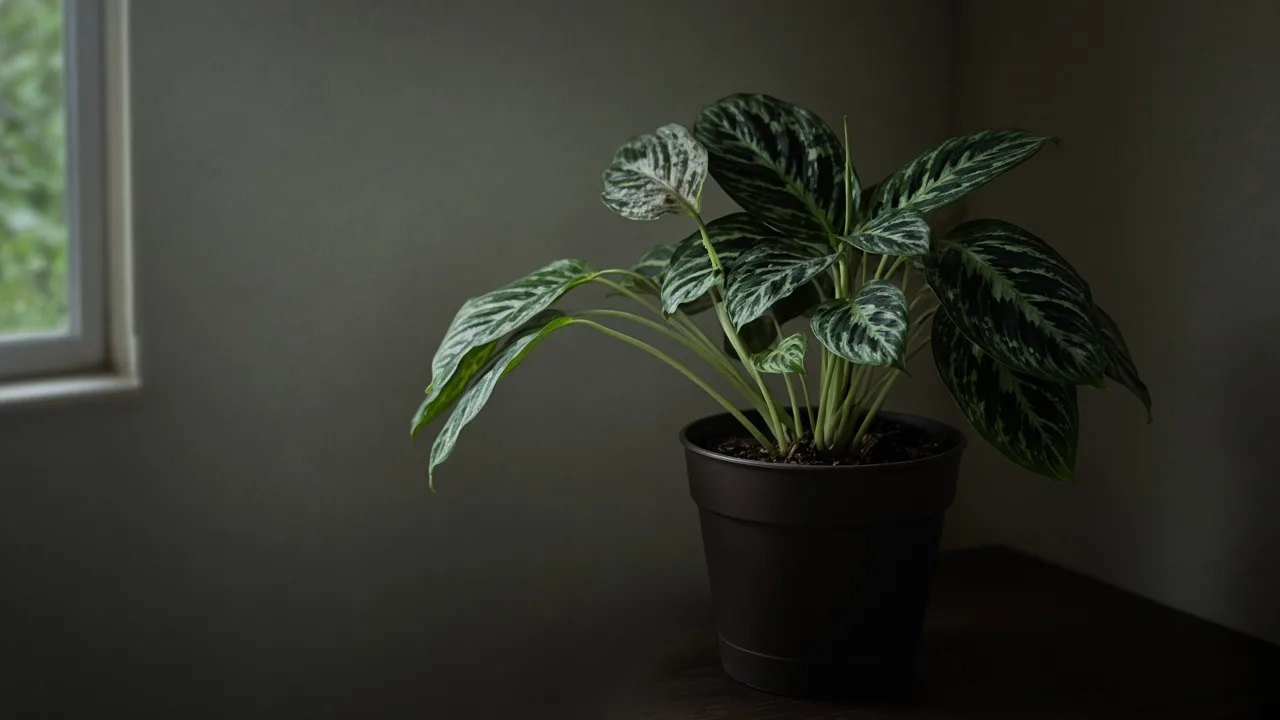
Not Enough Light on Aglaonema Pictum Tricolor: Causes, Checks & Fixes
This guide covers not enough light on Aglaonema Pictum Tricolor. See also the general Not Enough Light guide, watering, and light pages for this plant.
Not Enough Light on Aglaonema Pictum Tricolor: Causes, Checks & Fixes
Quick answer
Aglaonema pictum ‘Tricolor’ is sold as a low-light Chinese evergreen—and it does tolerate dim offices better than pink or cream-heavy hybrids. That tolerance becomes a trap: Pictum Tricolor can look fine from across a cubicle while silver-gray camouflage veining dulls, petioles stretch, and potting mix stays wet for weeks because the plant is barely photosynthesizing.
For how chronic low light limits growth in general, see our not enough light hub. On Pictum Tricolor, the decisive clues are camouflage-pattern etiolation, washed silver marbling on dark green blades, and a watering cycle that no longer matches how slowly the plant uses moisture in shade.
First step: move the pot to brighter filtered indirect light where leaves receive diffuse daylight for much of the day. Practical targets from the Pictum Tricolor light guide: within 1–3 feet of a north or east window, or several feet back from a south or west window behind sheer fabric. Do not repot, fertilize, or prune heavily on the same week. Give the plant two weeks in the new spot and read the next crown leaf—tighter petiole spacing and sharper silver striping confirm you found enough light.
What not enough light looks like on Aglaonema Pictum Tricolor
Pictum Tricolor’s signature is dark forest-green blades feathered with silver-gray and light-green camouflage striping along the veins. Under insufficient light, that contrast is often the first thing to slip—not because the plant is dying, but because it is rationing energy toward survival rather than pattern maintenance.
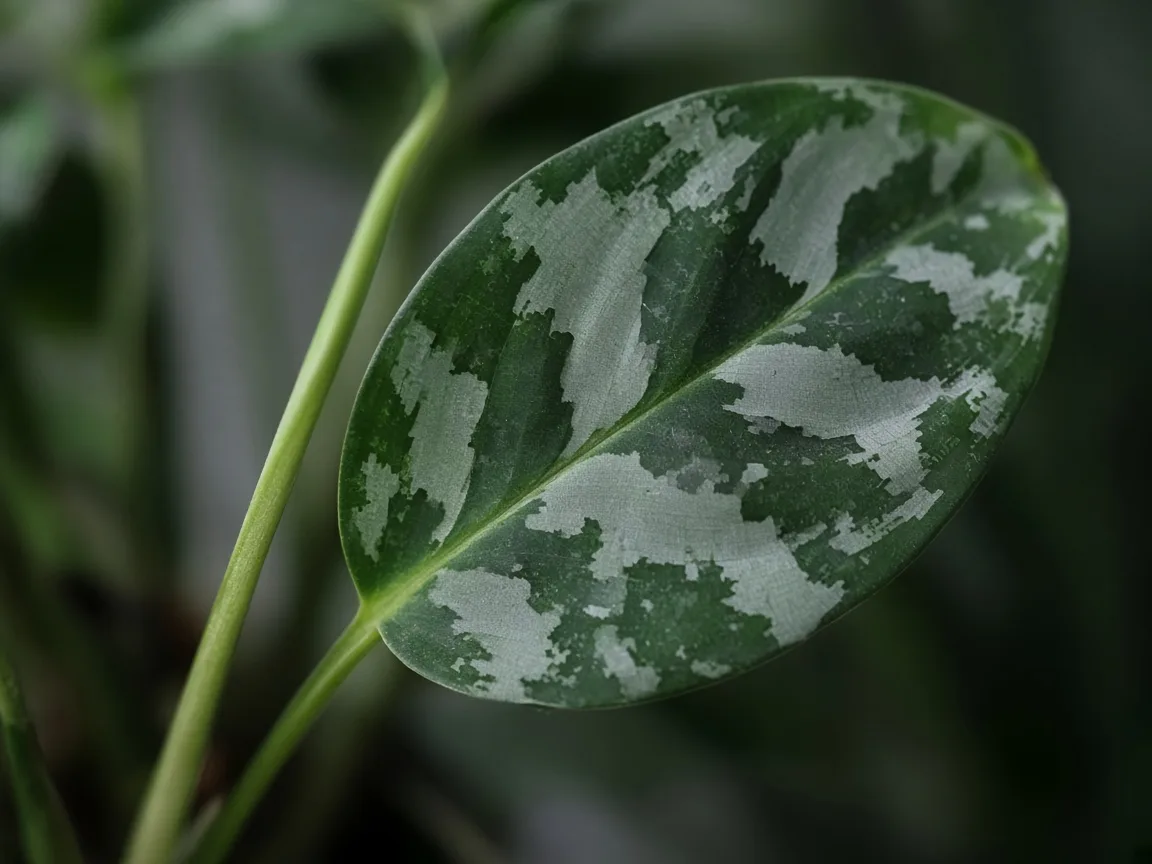
Stretched petioles and smeared silver-green camouflage — Pictum Tricolor losing its signature striping in low light.
Typical signs on this cultivar:
- Etiolation — petioles and stems elongate, and the whole plant leans toward the brightest direction in the room
- Smaller new blades — the newest leaf is noticeably shorter or narrower than leaves from when the plant was well placed
- Washed camouflage pattern — silver-gray vein striping looks less crisp; foliage overall reads as uniform dark green instead of mottled camo
- Slow or stalled growth — Pictum Tricolor is naturally slow, but in good light you should still see occasional new leaves during warm months; months with zero new growth in an unchanged spot suggest light is the limiter
- Lower leaf yellowing and drop — the plant sheds older shaded leaves to favor growth closer to the light source
- Wet soil that lingers — in dim conditions Pictum Tricolor uses less water; the same watering guide that worked in brighter light leaves the mix damp too long
What low light usually does not look like on Pictum Tricolor: bleached white or tan patches on leaf surfaces (that pattern fits direct sun scorch), sticky residue or webbing (pests), or sudden collapse with mushy stems while soil is soggy (root rot—often worsened by low light plus overwatering, but the primary issue is wet roots).
Why dark camouflage hides shade stress longer than pale variegation
Pink and cream aglaonemas bleach obviously in shade. Pictum Tricolor’s dark green base masks stress because the plant can add chlorophyll to silver zones before leaves turn yellow. UF/IFAS EP160 notes that Aglaonema cultivars can tolerate interior light as low as 25 foot-candles—survival territory, not the band where camouflage striping stays crisp.
| What you see on Pictum Tricolor | What it usually means | First adjustment |
|---|---|---|
| Silver veins look smeared; dark green still strong | Early low-light etiolation | Brighter filtered spot; measure at leaf level |
| Tiny new blades on long petioles | Active stretch for photons | Move closer to window or add grow lamp |
| Lower blades yellow on a wet heavy pot | Shade slowed water use; roots suffocating | Brighten light and extend dry-down before next water |
| Uniform dull plant in windowless office | Below productive light band | Timed LED 10–12 h/day; do not fertilize first |
| Crisp camouflage returns on next two leaves after a move | Diagnosis confirmed | Hold new placement; adjust watering to match |
If pattern dulling appears with sticky crown tips and insects, inspect for mealybugs or spider mites before blaming light alone.
Wet mix in dim collector corners: the Pictum Tricolor light–water trap
Ribbon and camouflage aglaonemas in dark rooms follow a predictable failure loop: less light → slower photosynthesis → slower water uptake → mix stays wet → lower roots decline → more yellow leaves.
Pictum Tricolor owners often water when the top half of the mix dries—sound advice in a bright office. After the same plant moves to a dim corner, that top half may take two to three weeks to dry while roots sit in stale moisture. NC State notes root rot follows overwatering on Aglaonema.
Pictum Tricolor-only check: weigh the pot or stick your finger to the mid-depth of the mix. If you are still on a weekly pour schedule but the pot feels heavy day 10, assume light dropped before you assume the plant “needs” more water. Fix placement first; then let the top half dry fully before the next irrigation.
University of Arkansas Extension documents Aglaonema’s light compensation point around 10 foot-candles—where photosynthesis equals respiration. Many interior rooms deliver only 20–60 foot-candles at desk height. Below compensation, Pictum Tricolor waits without dying. Above it, the plant grows—slowly, which is normal for this collector cultivar.
How to confirm the cause
Work through these checks in order:
- Light reading at leaf height — Use a phone lux meter pointed toward the brightest source, or the soft-shadow test from the light guide. Repeated readings under ~75 foot-candles (about 800 lux) at the canopy strongly support shade stress on actively growing Pictum Tricolor.
- New leaf comparison — Photograph the newest camouflage blade beside an older firm leaf. Smaller size, longer petiole, and weaker silver contrast point to etiolation.
- Production timeline — In a warm room, no new crown flush for six to eight weeks while lower leaves age out suggests insufficient light or root decline—not normal dormancy.
- Pot dry-down speed — Note days until the top half of mix feels dry. Stretching past 14 days in a heated interior often pairs with dim placement.
- Cross-room comparison — If a second houseplant thrives on the same shelf, Pictum Tricolor may still be marginal because it is slower—not proof that light is adequate.
- Rule out lookalikes — Yellow lower leaves only on a soggy pot → overwatering. Fine stippling on undersides → spider mites. Uniform pale wash without stretch → pale leaves.
If filtered daylight is clearly adequate and new leaves still fail, move to root health, pests, or cold drafts—not more shade.
First fix for Aglaonema Pictum Tricolor
Move the plant to brighter filtered indirect light where leaves receive diffuse daylight for much of the day.
Practical targets from the Pictum Tricolor light guide:
- North or east window: 1–3 feet from the glass, no direct hot afternoon beam on the foliage.
- South or west window: 3–6 feet back, or behind a sheer curtain that softens midday sun.
- Windowless room: Add a full-spectrum LED grow lamp 12–24 inches above the canopy on a 10–12 hour timer rather than accepting perpetual stagnation.
Acclimate over 7–14 days if the plant lived in very deep shade—sudden harsh sun can scorch camouflage blades even on Pictum Tricolor.
Do not fertilize, repot, or prune heavily on the same week you fix light. University of Minnesota Extension notes that light powers carbohydrate production; fertilizer cannot replace missing photons on a stressed plant.
After the move, pause watering until the top half of the mix dries on the new schedule. A brighter Pictum Tricolor uses water faster; a dim one needs less. Match irrigation to the new dry-down, not the old calendar.
Step-by-step recovery
Once brighter filtered light is in place:
- Week 1 — Hold position; let the top half of mix dry before watering; remove only mushy lower leaves.
- Weeks 2–4 — Watch the crown for a new blade flush. Petiole spacing on the next leaf should tighten slightly.
- Weeks 4–8 — Two to three firm new leaves with readable silver camouflage veining mean the limiting factor was light (or light plus wet roots now corrected).
- If stems are very bare — After new growth looks stable, shorten the worst etiolated stems per the pruning guide. Pictum Tricolor responds slowly; one pruning pass beats repeated shock.
- Ongoing — Re-measure light after seasonal changes; rotate the pot weekly for even crown development.
Recovery timeline
Pictum Tricolor is a slow camouflage aglaonema, so recovery is measured in new leaves, not days.
- 2–4 weeks — First new blade after a light upgrade often looks smaller than ideal but should feel firmer than the last etiolated flush.
- 6–10 weeks — Two to three new leaves with improved silver contrast indicate stable improvement.
- 3+ months — Old stretched petioles remain unless pruned; the clump should look denser at the crown, not taller and emptier.
Worsening signs: progressive yellowing on a still-wet pot, soft crown tissue, or new leaves that emerge smaller and weaker after a light move—re-check roots and drainage before adding fertilizer.
Lookalike symptoms
| Symptom pattern | Likely cause | Where to go |
|---|---|---|
| Long bare petioles, tiny crown blades | Low light etiolation | This page + leggy growth |
| Washed camouflage, plant still compact | Early shade or nutrient drift | Pale leaves |
| Yellow lower blades, sour wet mix | Overwatering in dim room | Overwatering |
| Fine webbing, stippled blades | Spider mites | Spider mites |
| No growth, adequate light, firm roots | Natural slowness or cool room | Slow growth |
When to use this page vs other Pictum Tricolor guides
Use this page when stems lean, camouflage striping dulls, new blades shrink, or soil dries unusually slowly in a dim spot. Use the light guide for foot-candle bands, window placement, and grow-lamp setup before problems appear. Use leggy growth when stretched petioles—not just dull silver—are the main complaint. Use overwatering when yellow lower leaves sit on chronically wet mix even after you brighten the room.
Mistakes to avoid
- Keeping a summer water schedule after moving Pictum Tricolor into a darker office — the fastest path to yellow leaves and root stress in shade.
- Fertilizing a dim, wet plant — salts accumulate when growth is minimal; fix light and dry-down first.
- Placing Pictum Tricolor in direct south or west sun to “fix” shade — camouflage blades scorch; use filtered brightness, not raw afternoon beams.
- Judging health from across the room — dark green foliage hides dull silver until you inspect the newest crown flush.
- Pruning bare stems before light improves — new growth may stay weak; brighten first, then shape.
How to prevent not enough light next time
- Site Pictum Tricolor where filtered daylight reaches the leaf canopy most of the day, per the overview placement notes.
- Re-check brightness after furniture moves, new monitors, or outdoor tree shade in spring.
- Use a grow lamp in windowless workspaces on a timer rather than relying on ceiling fluorescents alone.
- Pair every light downgrade with a watering downgrade until the top half of mix dries on schedule.
- Scout the newest camouflage blades monthly — silver stripe crispness fails before the whole plant looks sick.
Related Aglaonema Pictum Tricolor guides
- Light requirements — foot-candle bands, window placement, and grow-lamp setup after you confirm shade stress
- Watering — dry-down checks that must slow when light drops
- Leggy growth — when stretched petioles, not just dull silver, are the main pattern
- Pale leaves — color wash without dramatic stretch
- Overwatering — yellow lower leaves on chronically wet mix in dim corners
- Plant Problem Diagnosis Tool — narrow causes before changing light, water, and fertilizer at once