42 Aglaonema Varieties (Chinese Evergreen)
Explore green, silver, pink, red, and white Aglaonema varieties with practical light, watering, buying, and pet-safety advice for indoor collections.
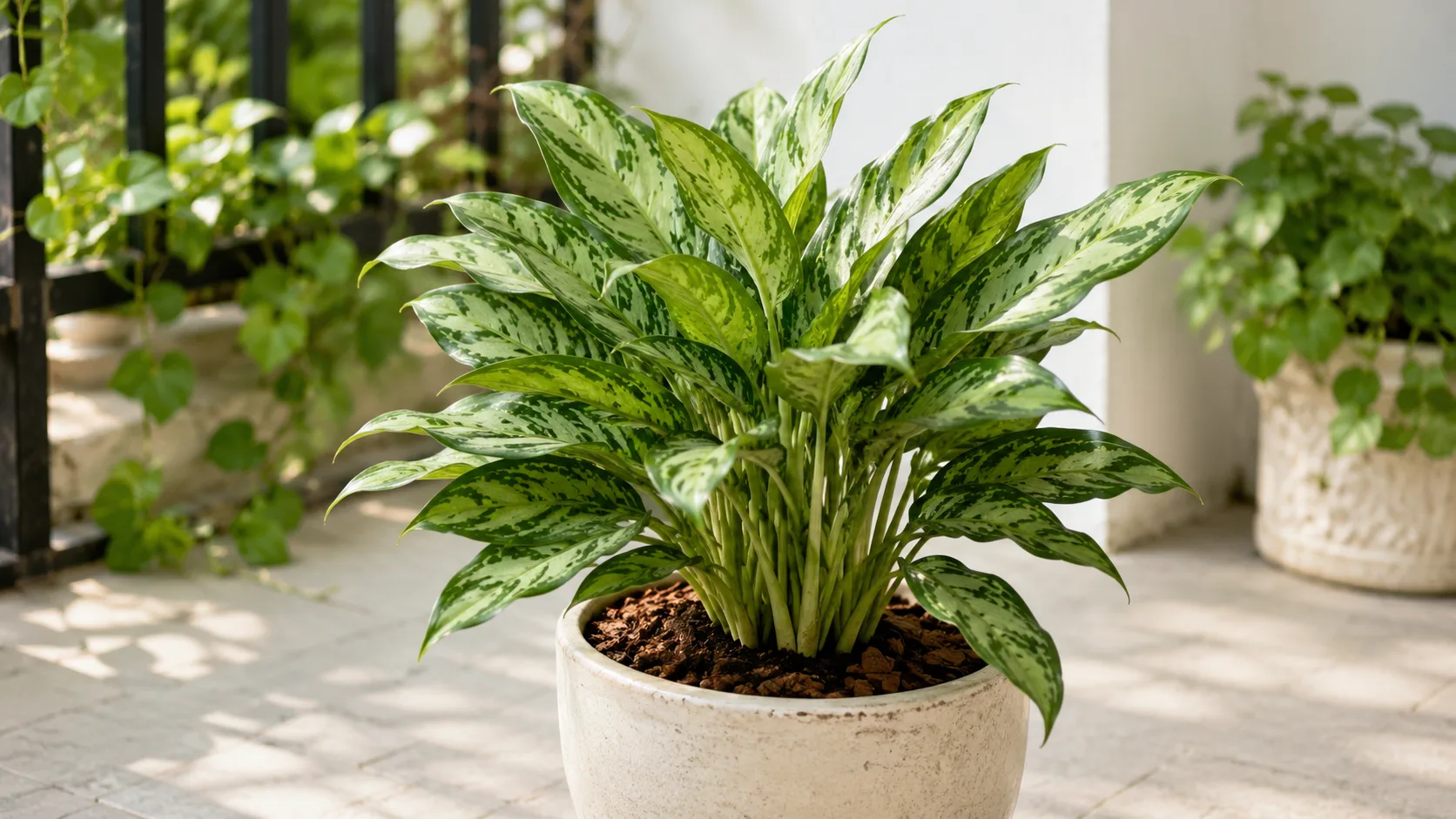
Aglaonema is one of the rare houseplant groups that can look quiet and architectural, neon pink, almost white, or camouflage-patterned while keeping a broadly similar care routine. That range is why “Chinese evergreen” can describe both a dependable office plant and a collector’s conversation piece.
The useful way to compare these 42 Aglaonema varieties is not to rank them from best to worst. Start with your room’s light, then choose the leaf color, mature shape, and level of naming certainty you are comfortable with. A dark-green ‘Maria’ that thrives in your actual apartment is a better choice than a vivid pink plant that slowly loses leaves in a windowless corner.
What to Know Before Buying an Aglaonema
Aglaonema is a genus in the arum family, Araceae. North Carolina State Extension describes Chinese evergreen as a tropical and subtropical Southeast Asian and New Guinea perennial with lance-shaped leaves, clumping or bushy growth, and many cultivars; UF/IFAS likewise describes it as a foliage plant valued for variegation and tolerance of indoor low light. (NC State Extension; UF/IFAS Gardening Solutions)
That means the names in a plant shop are not all at the same botanical level. Aglaonema pictum is a species, ‘Tricolor’ is a cultivar name attached to it, and ‘Silver Bay’ or ‘Lady Valentine’ are named selections. Many modern plants are hybrids, while some labels are regional trade names, aliases, or loose descriptions that sellers apply inconsistently.
How to Read Cultivar Names and Nursery Labels
Treat a plant label as a helpful starting point, not a laboratory identification. A single cultivar can be sold under an alias, a parent species can be omitted, and young leaves can look different from mature foliage. Garden Betty’s cultivar overview notes that selective breeding, hybridization, plant patents, and coded releases have created a very large and fluid naming landscape; Plantura also organizes Chinese evergreens by species and named selections rather than treating every market name as a separate species. (Garden Betty; Plantura)
For an expensive or supposedly rare plant, buy from a seller who shows the mother plant, states whether the plant is tissue-cultured or a cutting, and provides recent photographs. Do not pay a premium merely for a dramatic listing photo, and do not assume that a name containing “red,” “pink,” “silver,” or “white” guarantees that every future leaf will have the same balance of color.
Choose by Light: Green, Silver, Pink, or White
Color is a useful light clue, but it is not a strict care rule. More green leaf area generally gives a plant more chlorophyll to work with in dim conditions; extensive cream, silver, pink, or red patterning often looks and grows best in brighter filtered light. Even a shade-tolerant Aglaonema needs some usable light, and no variety is a true substitute for daylight or a grow light.
Best Picks for Dim Rooms
For a dim but naturally lit room, begin with ‘Maria’, ‘Silver Bay’, ‘Silver Queen’, ‘Stripes’, ‘Green Kochin’, ‘Queen of Siam’, or a mostly green ‘Rotundum’. Keep “low light” in perspective: the plant may survive there, but growth will be slower, spacing may open up, and colorful markings may become less vivid. UF/IFAS notes that Aglaonema works in medium to low light but should not be placed in full sun, while NC State lists both deep shade and partial shade among its cultural conditions. (UF/IFAS Gardening Solutions; NC State Extension)
Best Picks for Bright Indirect Light
Bright, indirect light is the better starting point for ‘Siam Aurora’, ‘Lady Valentine’, ‘Pink Dalmatian’, ‘Anyamanee’, ‘Red Catrina’, ‘Spring Snow’, ‘Snow White’, and heavily variegated selections. Place them near a bright window behind a sheer curtain or several feet back from direct midday rays. Move a plant gradually when changing light; a leaf raised in a dim shop can scorch after an abrupt move to a sunny sill.
Green and Silver Aglaonema With Flexible Placement
These are the practical backbone of an Aglaonema collection: pattern without the highest color-maintenance demands. They are often easier to find, useful in offices and apartments, and forgiving when a room’s light changes seasonally.
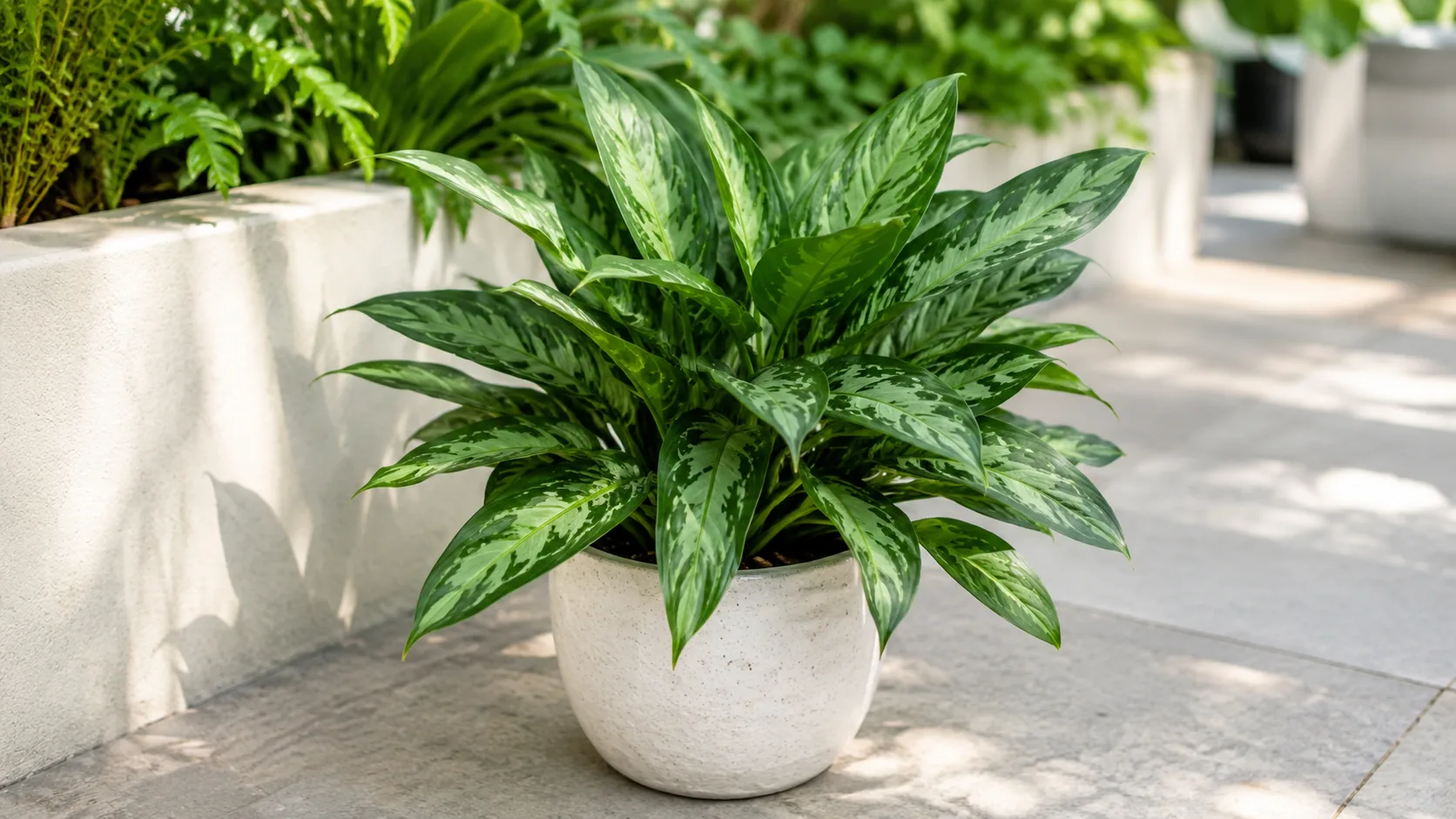
1. Maria. Often sold as ‘Emerald Beauty,’ ‘Maria’ has dark green leaves with a soft silver-green pattern. It is one of the strongest choices for a lower-light room because the foliage still reads as predominantly green. The RHS records ‘Maria’ as a slow-growing, clump-forming houseplant with pale silver-green markings around the veins. (RHS ‘Maria’ plant profile)
2. Silver Bay. Broad, upright leaves carry a silver center framed by green. It is a good all-purpose choice when you want visible contrast without the fussiness of a mostly pink or white cultivar; allow more filtered light if the silver center begins to look dull.
3. Silver Queen. Narrower, lance-shaped leaves are marbled silver and dark green. It is a classic, widely circulated selection, but it deserves protection from cold. The RHS lists it as an upright plant to about 40 centimeters with partial-shade placement, well-drained conditions, and a warning that it is harmful if eaten. (RHS ‘Silver Queen’ plant profile)
4. Stripes. Green leaves are crossed by clean silver bands that radiate from the midrib. The graphic pattern makes it look brighter than a plain green plant, but it still belongs in filtered rather than direct sun.
5. Green Kochin. Deep green leaves carry irregular cream and pink marks near the midrib. Individual plants can show noticeably different amounts of pink, so choose the actual plant when possible rather than relying on a catalog image.
6. Mary Ann. Slim leaves combine emerald green with pale silver-white accents. It suits a narrow shelf or plant stand where the elongated leaves can be seen from the side.
7. Queen of Siam. Slender leaves are pale silvery green with darker olive-green edging. It can become a taller, more upright specimen than compact tabletop types, so leave room for the leaves to arch.
8. Butterfly. Narrow, pointed leaves mix dark green, chartreuse, and pink veins. It is a good middle ground for collectors who want color without a nearly solid pink leaf.
9. Adelia. Deep green leaves have a light pink midrib and green margins, sometimes with extra pink flecks. Its mostly green base makes it more adaptable than its color accents suggest.
10. Brilliant. Also sold as ‘Brilliant Beauty,’ this selection blends pale yellow, green, creamy white, and silver on upright leaves. Give it enough indirect light to prevent the pale areas from looking washed out, but protect it from hot glass.
11. Silverado. Pale gray-silver leaves are edged and spotted with darker green. It is a strong choice for a dim room that needs a light visual accent, provided the plant is still close enough to daylight to grow.
12. Variegatum. This label is often used for unnamed or loosely named variegated Aglaonema with green-and-white patches. Pattern balance can change as new leaves mature, so consider it a foliage category rather than a reliably uniform cultivar.
Pink, Red, and High-Contrast Aglaonema
Pink and red Aglaonemas are the quickest way to make a collection feel colorful, but the brightest foliage needs a better light-to-water balance. A darker room can keep a plant alive while producing greener, less compact growth. Never “fix” fading color by placing it straight into direct sun; increase light gradually and watch the leaves.
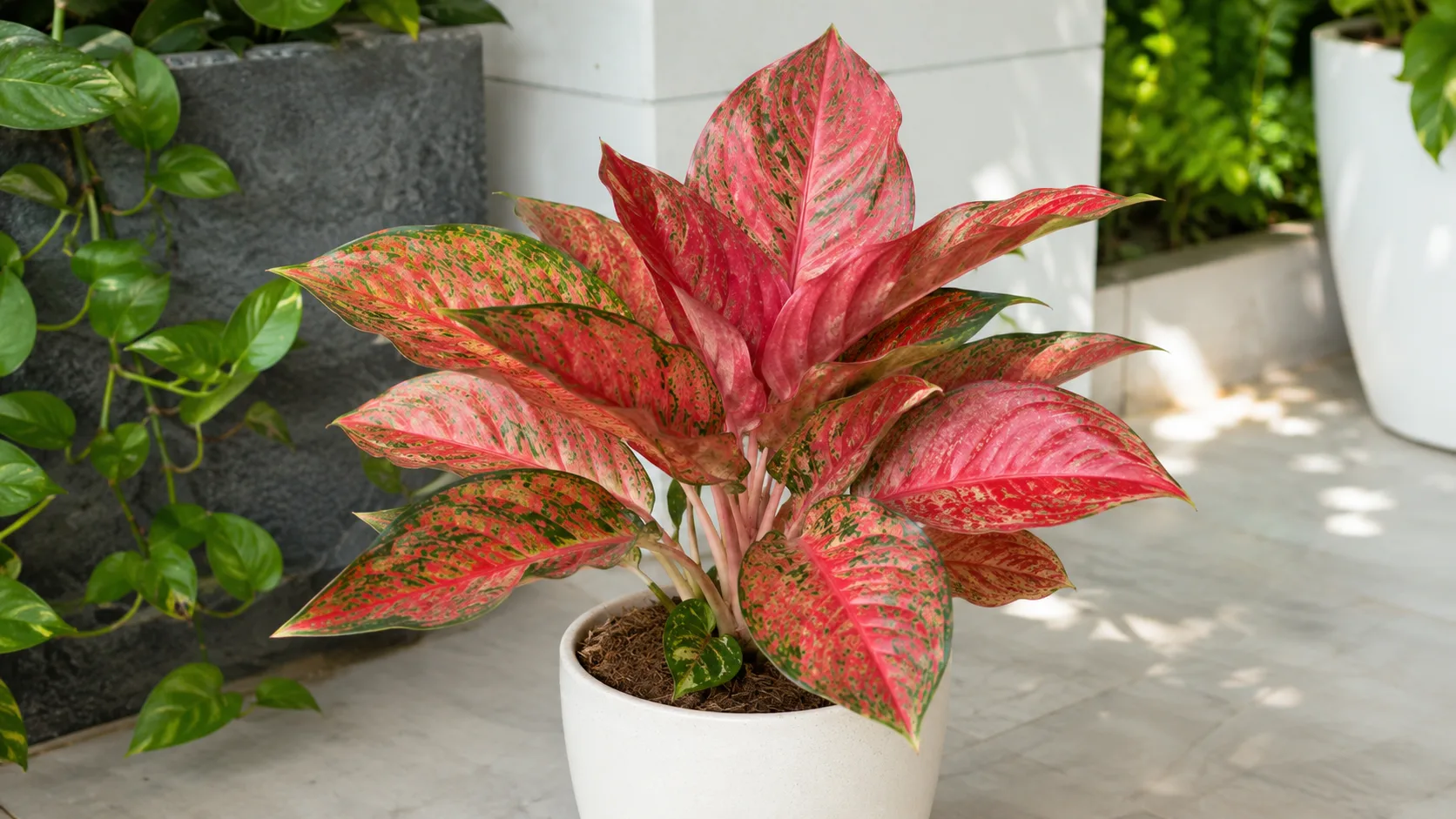
13. King Red. Glossy leaves range from hot pink to red with dark green accents. The name is used for plants with slightly different color ratios, so buy for the visible pattern and give it bright filtered light.
14. Red Catrina. Vivid cherry-red leaves are edged in deep green with occasional pale contrast. It makes a strong seasonal gift plant, but its long-term success still depends on warm temperatures and a pot that drains well.
15. Siam Aurora. Pink, chartreuse, and deep green blotches run through long leaves. “Siam” appears in many Aglaonema trade names, so confirm the full label and inspect the actual plant when color intensity matters.
16. Red Ruby. Rounded leaves glow pink or red around bright green veins and speckles. It works well when you want color distributed across the leaf rather than confined to the edge.
17. Kochin Cameleon. Raspberry pink or red is broken by bright green patches. Spellings and color forms vary in listings, making a recent seller photograph more useful than a generic stock image.
18. Siam Pink. Soft mauve-pink leaves have faint green markings and a broad, teardrop shape. It is a calmer alternative to red cultivars and benefits from bright indirect light that does not bleach the pastel tones.
19. Venus. Chartreuse foliage is marked by hot-pink splotches. The contrast is strongest when new growth has adequate light, but the plant should still be acclimated before it moves closer to a window.
20. Anyamanee. Wide, deep-green leaves are splashed with cherry red, pale pink, or both. No two plants need to look identical, which is part of the appeal and part of the reason to choose a specimen in person.
21. Lady Valentine. Pink and green mottling covers slightly rippled leaves, with the midrib varying from green to pink. It is sometimes confused with ‘Pink Dalmatian’ or sold under a related Valentine label; use the pattern and leaf shape as clues, not the name alone.
22. Pink Panama. Dark and light green stripes are paired with a warm pink midrib. This gives the collection a strong linear pattern without the large pink blocks found on some modern red selections.
23. Lipstick. Bright green leaves are outlined or centered by hot-pink edges and veins. Color can vary from a narrow line to larger pink patches, so it is best treated as a recognizable style rather than a promise of one exact pattern.
24. Suksom Jaipong. Very broad leaves combine cherry red with deep green margins, producing a large, bold plant. Give it floor or table space rather than expecting it to remain a small desk plant.
25. Red Siam. Bright red edges and veins contrast with chartreuse and lemon-yellow marks. It is one of the more dramatic choices for a warm, bright room with filtered light.
26. Sweetheart. Pink and green leaves have prominent pink veins and a soft, romantic palette. It may also be sold as ‘Pink Lady’ or ‘Pink Lady Valentine,’ so ask the seller which name they are using and whether it is a stable cultivar label.
27. Lotus Delight. Pink stems, midribs, veins, and margins sit against olive-green leaves. The stems are part of its visual appeal, so choose a plant with firm, unscarred petioles and enough space for its arching leaves.
28. Big Apple. Long, large leaves are a vivid apple red with small green speckles. It reads as a bold specimen rather than a subtle desk accent and needs enough light to keep the red from becoming muddy.
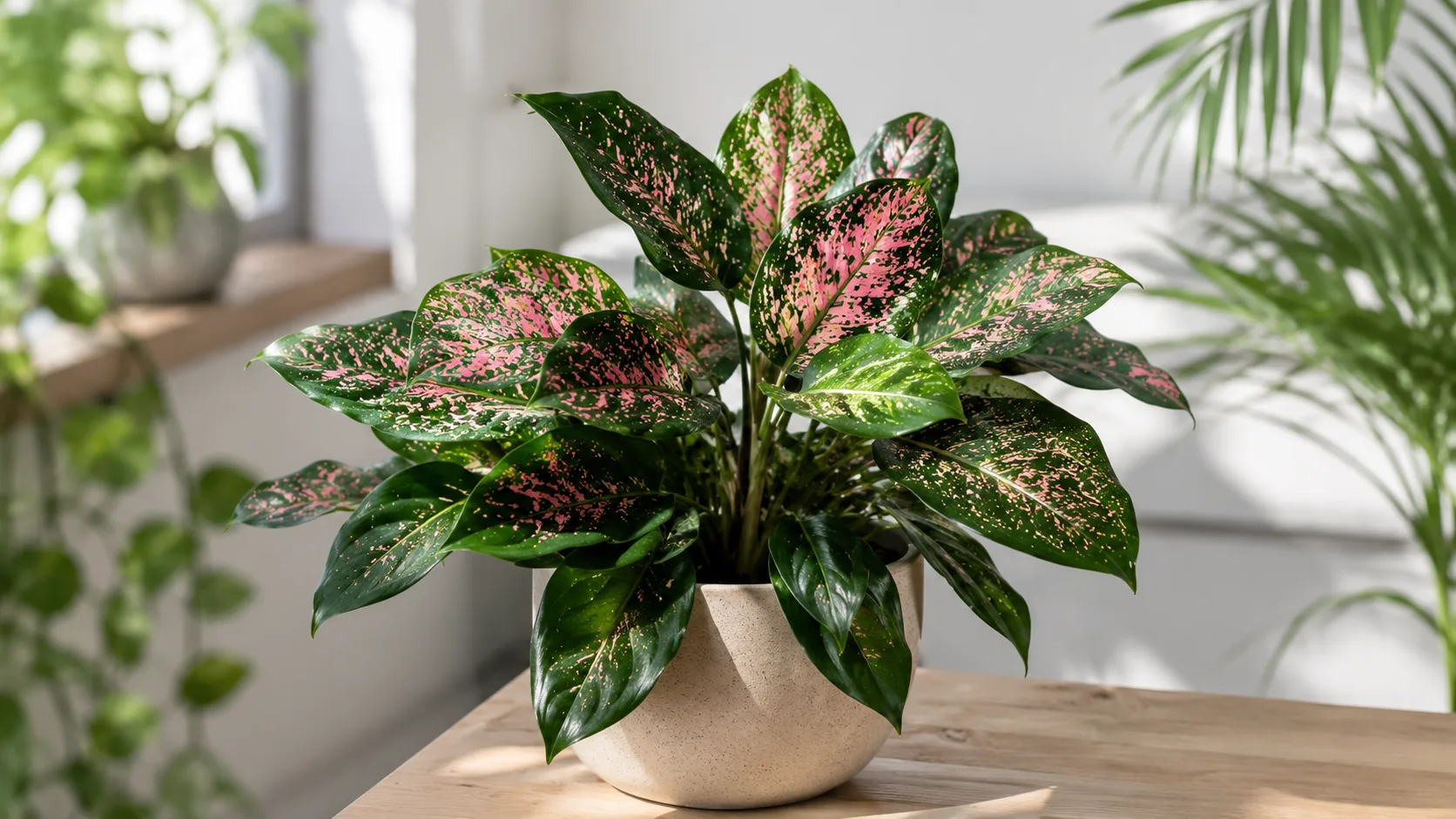
29. Pink Dalmatian. Dark green or pink-tinged leaves carry bright green or pink speckles, depending on the plant sold under the name. It is frequently confused with other spotted pink cultivars, so choose by the actual leaf pattern and seller reliability.
White, Cream, Variegated, and Crossover Picks
White-centered plants bring brightness to a room, but their pale surfaces have less green tissue and can show stress quickly. They need protected bright light, stable warmth, and careful watering; a white leaf that scorches will not turn green again.
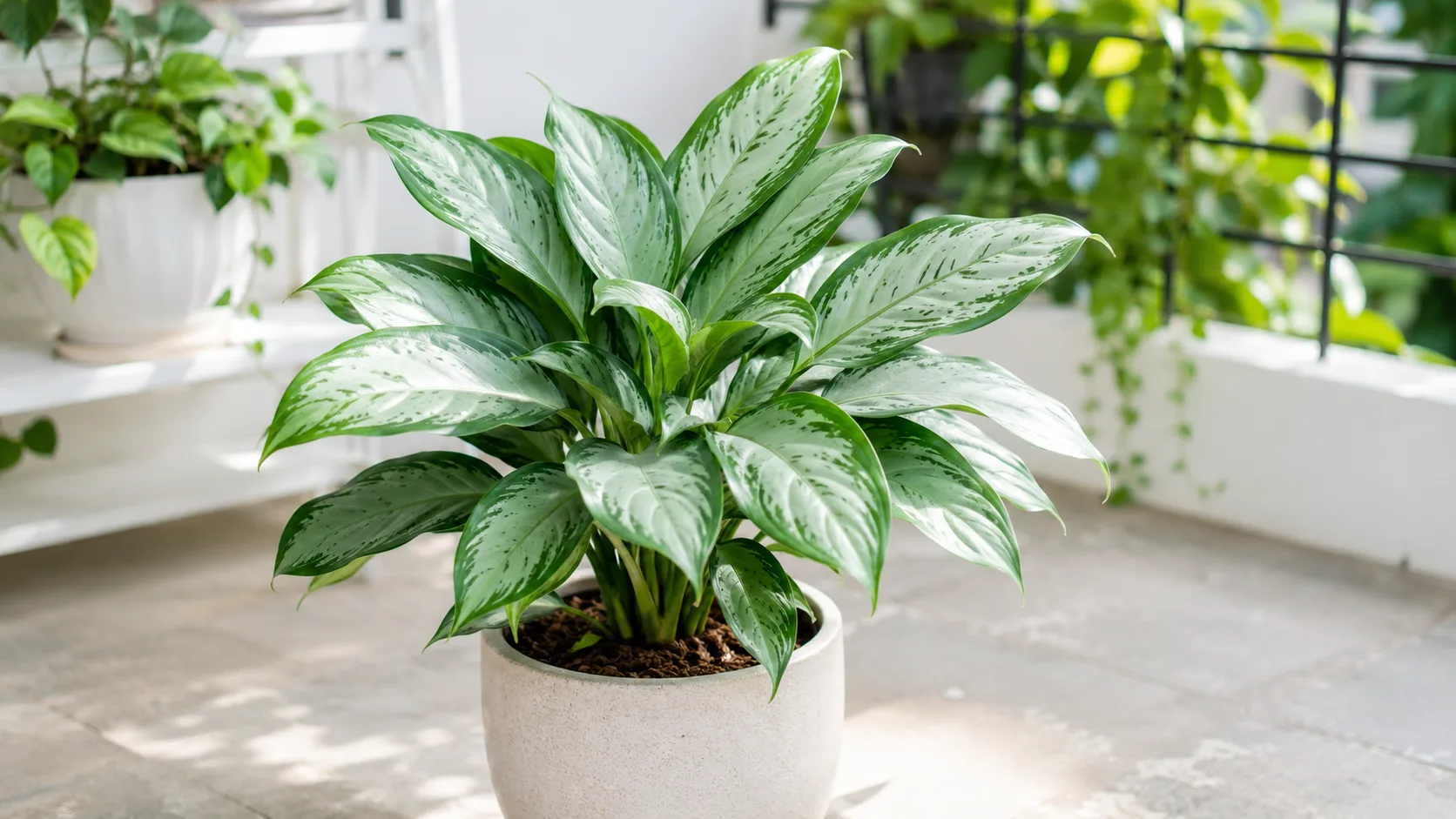
30. Spring Snow. Creamy white leaves are edged, veined, and spotted with green. It is widely available and attractive in a darker room, but “low-light tolerant” does not make direct sun safe for pale foliage.
31. Snow White. Creamy leaves carry tiny dark-green spots and a narrow green edge. The proportion of green can shift with age and new growth, so give the plant steady filtered light rather than chasing a perfect white balance.
32. White Kiwi. Long, pale leaves are marked with dark green and form an upright plant. It can take somewhat brighter light than some white selections, but acclimation is still essential after a move from a shaded store.
33. Frozen. Creamy white leaves are touched with pink and green, while later leaves can deepen in color. Its changing foliage is a feature, not necessarily a sign that the plant is reverting.
34. Dona Carmen. Slender leaves combine deep green and white with a bright pink midrib and occasional pink or red splashes. It is a nuanced choice for someone who wants color without a fully pink plant.
35. Harlequin. Pink, peach, yellow, and green may appear together, and the balance can shift with light and leaf age. Treat online color claims cautiously; the individual plant and its growing conditions matter.
36. Red Peacock. Green-and-white mottling is paired with a pink or red midrib. It is also sold under a Red Emerald name in some markets, which is a reminder to compare photos, labels, and seller descriptions before buying.
37. Spotted Star. Bright pink leaves are edged and spotted with olive-toned green. The compact look makes it appealing for shelves, but dense foliage still needs enough airflow to dry after watering.
38. Anjamani. Also sold as ‘Red Anjamani’ or ‘Pink Anjamani,’ it has large pink centers or splashes framed by mottled olive-green margins. The color is strongest in bright filtered light, but the green edge keeps it from looking like a solid-pink plant.
39. Sparkling Sarah. Curving leaves form a dense upright plant with light and dark green markings, pink speckles, a pink midrib, and unusual pink stems. It is one of the better choices here when you want a taller specimen with color carried beyond the leaf blade.
Unusual Shapes, Species, and Collector Types
These choices are less about a standard green-and-silver houseplant and more about leaf architecture, species identity, or collector appeal. They may be slower, less available, or more variable than the common selections, so the buyer’s confidence in the seller matters as much as the plant name.
40. Aglaonema pictum ‘Tricolor’. This compact species-and-cultivar combination is recognized by its three-tone camouflage pattern of dark green, light green, and silver. It is a collector favorite, but rarity and price can invite poor listings; buy an established plant from a traceable seller rather than unverified seeds or leafless pieces. (Garden Betty; NC State Extension)
41. Rotundum. Unlike the long, lance-shaped foliage common in many hybrids, Aglaonema rotundum is known for darker, rounder leaves and a pale or pink midrib. It is a species-level name, although plants sold under it may still be selections or hybrids close to the species.
42. Big Roy. Large oval leaves carry pink and green marks that can appear as stripes, patches, or margins. It is often sold as a harder-to-find collector type, so judge the plant by rootedness, active growth, and seller documentation rather than by rarity language.
Compact, Tall, and Wide-Growing Choices
Leaf color is only half the buying decision. For a shelf, look for ‘Maria’, ‘Spotted Star’, ‘Pink Dalmatian’, or a compact ‘Aglaonema pictum’. For a floor pot, consider ‘Sparkling Sarah’, ‘Queen of Siam’, ‘Suksom Jaipong’, or another selection whose leaves naturally rise or arch. For a spreading, low-growing silhouette, A. rotundum may be more suitable than a narrow upright type.
‘Sparkling Sarah’ is especially useful when you want height: it forms a dense upright plant with curving leaves, pink stems, and pink speckles. ‘Suksom Jaipong’ is the better choice when you want width and large leaves. ‘Cutlass’ and ‘White Lance’ are not in this 42-plant list, but their long leaves illustrate the broader buying rule: read the mature habit, not just the leaf color.
Aglaonema Care That Preserves Color and Roots
Most of these varieties can share one care routine, with one major adjustment: colorful and heavily variegated plants usually deserve brighter filtered light. NC State Extension describes the group as preferring diffuse or indirect light, high humidity but some tolerance of drier air, a moist growing season, reduced winter watering, warmth, and protection from overwatering-related root rot. (NC State Extension)
Light, Water, Soil, and Temperature
Place the pot in bright indirect light, or in lower indirect light if the leaves are mostly green. Rotate it every week or two so growth stays symmetrical. Bleached, tan, or papery patches on the window-facing leaves mean the light changed too quickly or is too intense; long gaps between leaves and faded variegation point toward insufficient light.
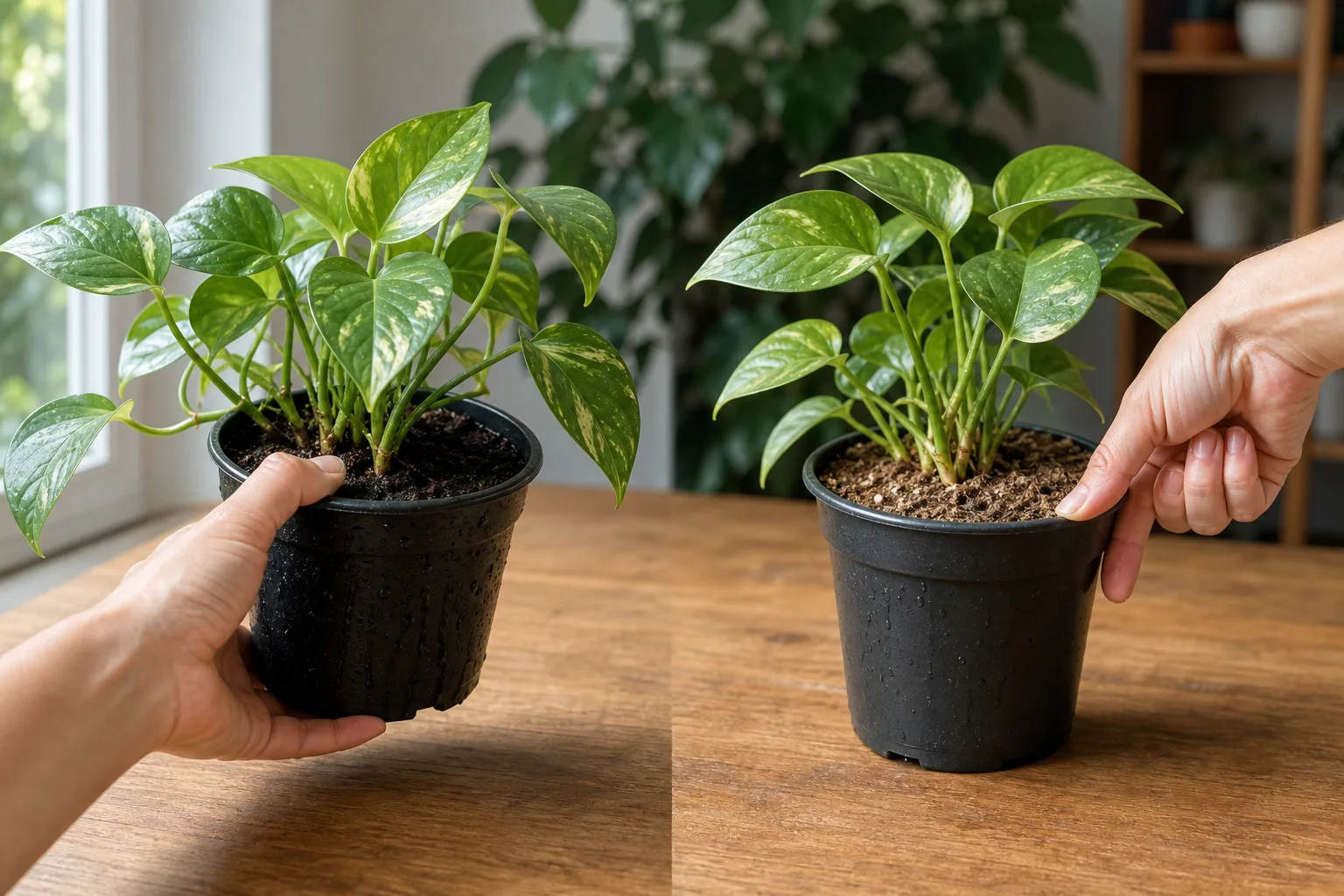
Water when the upper inch or two of mix feels dry, then water thoroughly until the drainage holes run and empty the saucer. A drooping plant with dry, light soil needs water; a drooping plant with wet, heavy soil needs investigation, not another drink. Use a pot with drainage and a porous houseplant mix that holds some moisture without staying saturated. UF/IFAS production guidance describes media built from materials such as peat, bark, vermiculite, or perlite and warns that overfertilization indoors can cause salt buildup and brown leaf margins. (UF/IFAS Aglaonema production guidelines)
Keep Aglaonema warm and away from cold glass, doors, and air-conditioning blasts. UF/IFAS identifies 68–77°F as a preferred range and notes that temperatures near or below 55°F can damage plants; the risk is especially important for ‘Silver Queen’. (UF/IFAS Gardening Solutions; UF/IFAS Aglaonema production guidelines)
Humidity, Feeding, and Grooming
Average indoor humidity is usually workable, especially when watering and temperature are stable. If the room is dry, group plants or use a hygrometer and humidifier; a pebble tray can provide a small local effect, but the pot must sit above the waterline. Do not trade root health for humidity by leaving the nursery pot in standing water.
Feed during active growth with a balanced houseplant fertilizer at the label’s indoor rate. More fertilizer does not produce more color: excess salts can burn leaf margins, and low light cannot be corrected by feeding. Wipe dusty leaves with a damp, lint-free cloth, remove yellow or collapsed leaves, and cut a fading inflorescence if you prefer to keep the plant focused on foliage.
How to Buy, Acclimate, and Quarantine a New Plant
Before purchasing, check the leaf undersides, petioles, stem bases, and the pot rim. Reject a plant with cottony mealybugs, hard scale bumps, fine webbing, sticky residue, a sour-smelling mix, soft stems, or a root ball that is waterlogged and collapsing. A few cosmetic shipping marks are different from an active pest or root problem.
Once home, keep the new Aglaonema separate from your collection for at least one to two weeks. Give it stable light rather than immediately moving it into the brightest window, inspect it every few days, and water according to the new pot’s moisture—not the schedule it had at the shop. Quarantine is especially valuable for collections because a small hidden mealybug population can spread through leaf contact, tools, or shared cachepots.
Do not repot automatically on the first day unless the mix is failing, roots are rotting, or the pot has no drainage. A plant already adjusting to a new temperature, light level, and shipping routine benefits from a short settling period. When you do repot, move up only one pot size and keep the crown and stems at the same depth.
Are Aglaonemas Toxic to Pets?
Yes. Aglaonema contains calcium oxalate crystals and is considered harmful if eaten; NC State Extension describes mouth irritation, swelling, drooling, vomiting, and difficulty swallowing, while the RHS lists Chinese evergreen as harmful if eaten and irritating to skin or eyes. Keep every cultivar away from chewing cats, dogs, horses, and children, and wear gloves if handling sap irritates your skin. (NC State Extension; RHS ‘Silver Queen’ plant profile)
If a pet chews a leaf or stem, remove the plant and fallen pieces and call your veterinarian or an animal poison-control service for individualized guidance. Trouble swallowing, marked mouth swelling, repeated vomiting, or breathing changes warrant urgent help. Do not induce vomiting unless a veterinary professional tells you to do so.
Conclusion: Choose for the Room You Actually Have
The best Aglaonema variety is the one whose color and mature shape fit your room’s real light. Choose ‘Maria’, ‘Silver Bay’, ‘Silver Queen’, or another mostly green selection for flexible lower-light placement; choose pink, red, white, or heavily variegated types when you can provide bright filtered light and a stable warm spot.
Names will overlap, colors will vary, and a nursery photo cannot predict every future leaf. Shortlist by light, inspect the actual plant, quarantine it, and then protect the roots with a draining pot and moisture-based watering. That approach lets a collection grow from dependable classics into unusual collector plants without making rarity the main measure of value.