Best Time to Water Your Garden (and When to Wait)
Learn the best time to water your garden, when midday watering is safe, and how soil, containers, irrigation method, and leaf wetness change the rule.
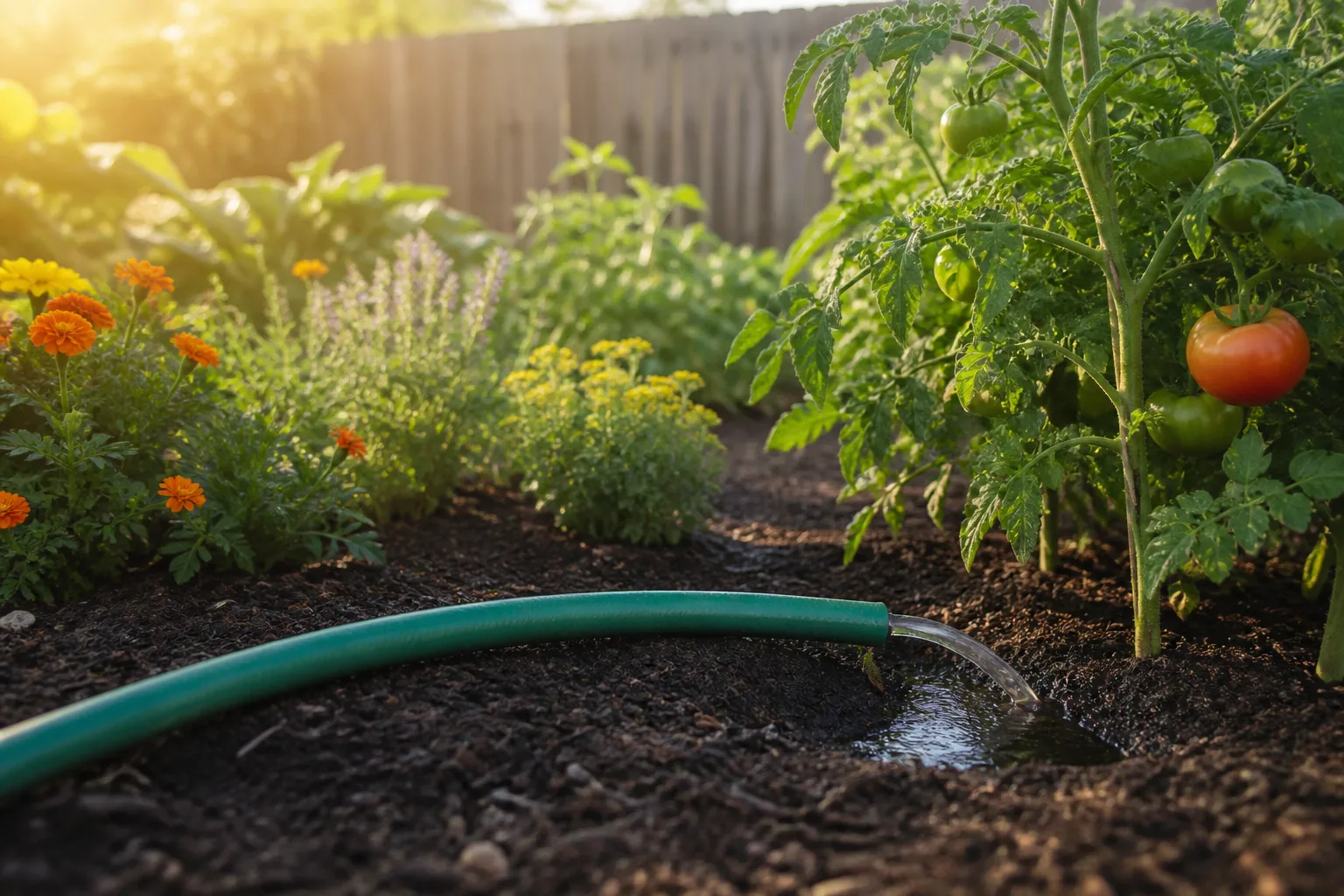
The best time to water a garden is usually early morning, before heat and wind increase evaporation. That is the safest default for a mixed garden, especially when you use a watering can, hose nozzle, or overhead sprinkler that may wet the foliage.
But the clock is only one part of the decision. If a plant’s root zone is dry at 2 p.m., waiting until the next morning can prolong stress. If the soil is already damp, watering at 6 a.m. can be just as unhelpful as watering at noon. The reliable order is need, method, then timing: check whether the plant needs water, deliver it to the root zone, and choose the coolest practical window when you have a choice.
The short answer: early morning is the default, not a commandment
Early morning works well because the air and soil are often cooler, wind is frequently calmer, and plants have the day ahead to use the moisture. Any water that splashes onto leaves has a better chance to dry in daylight than water applied after dark. The Royal Horticultural Society recommends morning watering for lower evaporation and says evening is acceptable, with the caution that damp leaves overnight can encourage pests and fungal diseases. (RHS watering guidance)
Use morning as a starting point, not as a rigid “before a particular hour” rule. A shaded courtyard, a windy rooftop, a clay bed, a black container, and a mulched vegetable plot do not lose water at the same rate. A short shower may leave the top of the soil wet while the root zone is still dry, and a heavy storm may make the next scheduled watering unnecessary.
The best morning routine is simple: inspect the soil, check the forecast and recent rain, water slowly at the base, and stop when the active root zone is moist but not saturated. If you have an automatic system, schedule it early only after you have confirmed that the heads or emitters are watering the places that actually need water.
Why the hottest part of the day is usually inefficient
Midday and early afternoon are often the least efficient time for routine watering because the combination of heat, bright sun, and wind can remove water before it infiltrates. This is most obvious when a fine spray is launched over a bed: some droplets evaporate in the air, some land on leaves, and some blow onto paths or neighboring plants.
The problem is not that sunlight makes water poisonous or that every drop disappears instantly. The problem is that a shallow or poorly aimed application has less time to reach the root zone before the surface dries. A slow stream directed under mulch can be useful in the afternoon, while a misting nozzle pointed at a hot canopy can waste much more water in the same weather.
Overhead spray loses water to evaporation and wind
Overhead irrigation is especially sensitive to conditions at the time it runs. Large droplets applied close to the soil are more likely to arrive where they belong; small droplets carried on warm air are more likely to drift. Wind can create dry strips and puddled strips in the same bed, so a timer may complete its cycle without giving each plant a fair share.
If you use a sprinkler, watch one cycle in person. Look for water striking pavement, the side of a fence, or the foliage more heavily than the soil. Check the wetting pattern with a few identical straight-sided cans or cups placed around the zone, then adjust the head, pressure, or runtime. A timer tells you how long water flowed; it does not tell you how evenly or deeply the garden was watered.
Wet leaves and the “magnifying glass” warning are different issues
Water droplets on leaves are often blamed for sun scorch because they are said to act like tiny magnifying glasses. That explanation is too broad to diagnose brown patches. Leaves can scorch from intense light, heat, drought stress, salt deposits, wind, or a sudden change in exposure, and a few droplets do not automatically create a burn.
The practical rule still favors keeping routine irrigation off the foliage. Leaves are not the root system, so water sitting on them is usually less useful than water soaking into the soil. Persistent leaf wetness can also give some pathogens a better opportunity, particularly in dense canopies or humid weather. The RHS recommends applying water at the base to help avoid fungal disease and to keep more of the water available to roots. (RHS container-watering guide)
Do not panic if a rescue watering splashes a few leaves. Change the method when you can: use a gentle stream, watering wand, soaker hose, or drip line, and avoid turning a dry afternoon into a long leaf-wetting session.
Do the 60-second soil-and-plant check first
Before you turn on a hose, spend a minute checking the place that matters: the active root zone. Look at the plant, feel below the surface, and account for recent weather. This prevents the two most common timing mistakes—watering dry plants too late because you are waiting for morning, and watering wet plants simply because the timer says it is time.
Start by moving mulch or loose debris aside. In a bed, push a finger, trowel, or screwdriver several inches into the soil a little away from the stem. The surface can look dusty while moisture remains below it, or it can look damp after a short shower without being wet deeply enough for a seedling or newly planted shrub.
For an established border plant, the RHS suggests watering slowly and thoroughly until the soil is moist to about 15 centimeters (6 inches) when you dig down. That depth is a practical checkpoint, not a universal prescription: shallow-rooted crops, seedlings, sandy soil, and containers need different intervals. (RHS watering guidance)
Separate real drought stress from midday heat wilt
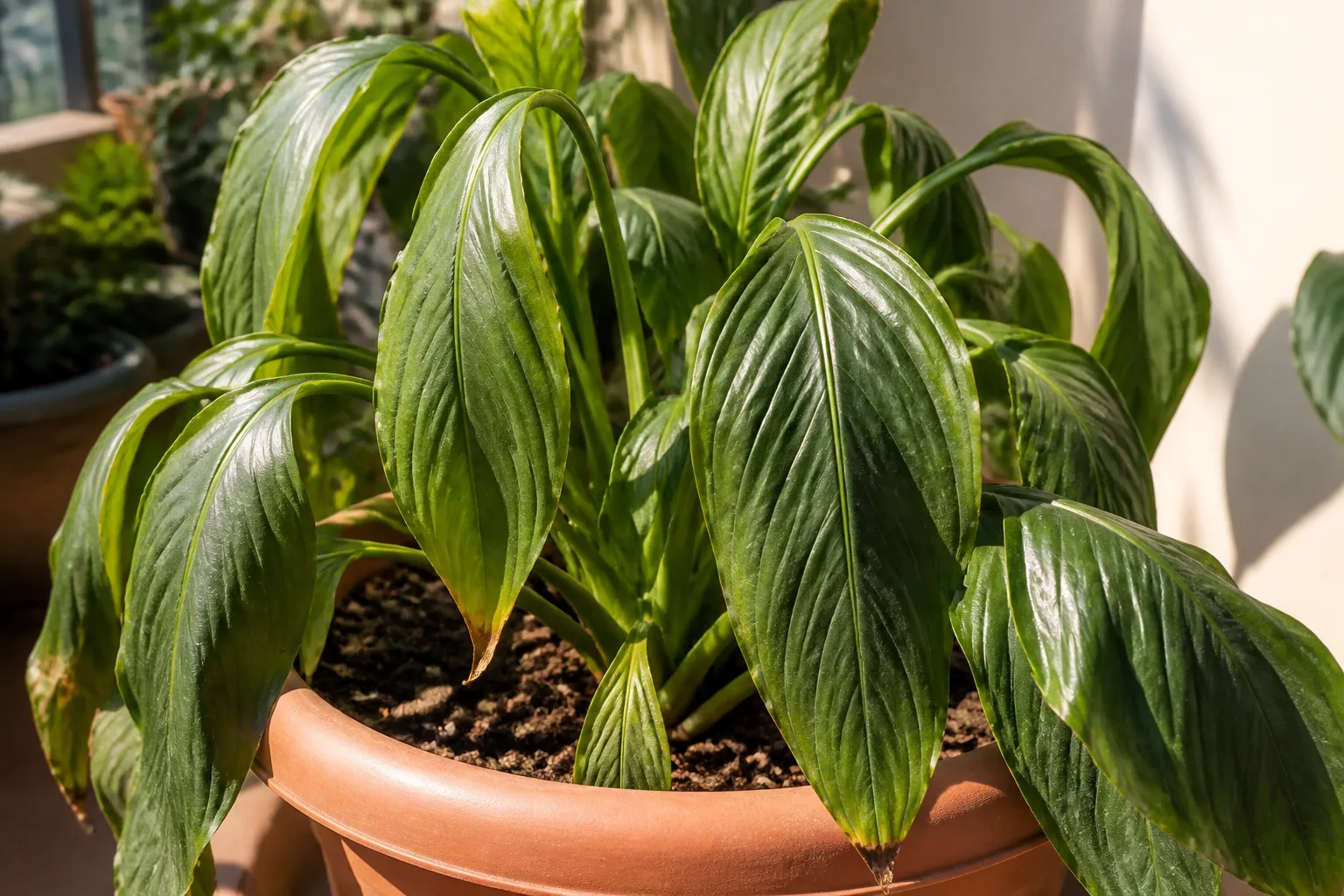
Wilting at noon is a clue, not a diagnosis. Some plants temporarily droop or fold leaves during the hottest part of the day because water is leaving the leaves faster than roots can replace it. If the leaves recover as temperatures fall and the soil is still moist, adding more water can reduce oxygen around the roots and create a longer-term problem.
The stronger signs of thirst are a dry root zone, limp leaves that stay limp into the cooler hours, a very light container, a gap between potting mix and the pot wall, or crispy new damage after repeated dry periods. If the soil is damp but the plant remains collapsed, inspect drainage, roots, wind exposure, pests, and recent transplanting before watering again.
If the soil is dry and the plant is wilting, water it when you find the problem. Move a container out of reflected heat if possible, apply water slowly to the soil, and check again after it has had time to absorb. A thirsty plant does not benefit from being left dry until the “correct” hour.
Account for soil, rain, slope, and exposure
Soil changes how quickly a garden needs water and how carefully it must be applied. Sandy soil drains quickly and may require smaller, more frequent applications. Dense clay or compacted soil can hold water for a long time, form a crust, and produce runoff when water is applied faster than it can enter. Loamy soil can still dry rapidly in full sun or wind if it is bare and shallow.
Rain is not an automatic reset. A light shower may wet only the first few centimeters, while a steady storm can refill the root zone and make irrigation unnecessary. Plants under eaves, beneath dense tree canopies, beside walls, and on the downhill side of a slope may receive much less rain than an open patch nearby. Check the soil where the roots are rather than using a weather app’s rain icon as the final answer.
Exposure matters too. A small dark pot on a south-facing patio, a hanging basket in wind, and a fresh transplant in a raised bed can dry much sooner than a mature shrub in a mulched border. Group plants with similar water needs when you can; otherwise, one whole-bed timer often gives thirsty seedlings too little or drought-tolerant herbs too much.
Choose timing by watering method
The same time of day can be good or bad depending on how water reaches the plant. The practical distinction is whether your method wets the canopy or places a measured amount in the soil.
Hand watering and soaker hoses
Hand watering is flexible, which makes it useful for rescue situations and mixed plantings. Use a rose or gentle hose-wand setting, direct water at the soil, and move around the root area rather than blasting one spot beside the stem. On a very dry pot, water in two or three passes so the mix can absorb instead of sending water down a gap at the pot wall.
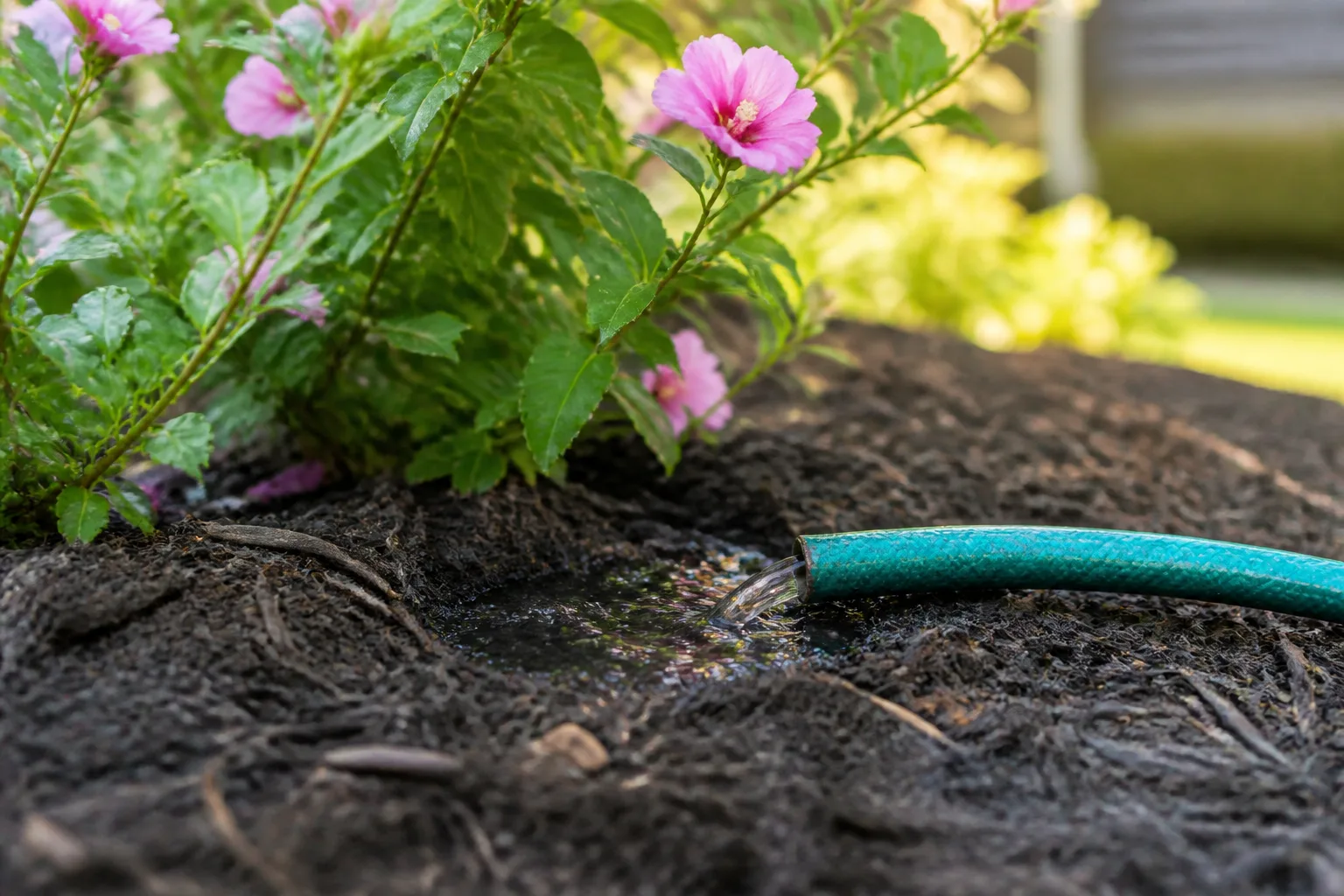
Soaker hoses and slow trickles are efficient when they are laid in the actual root zone and operated long enough to wet the soil beneath them. They are not magic: a hose buried under dense mulch, placed too far from a plant, or run on compacted clay can still deliver an uneven result. Lift the mulch occasionally, inspect the wetting pattern, and adjust the hose as roots spread.
Drip irrigation and automatic systems
Drip irrigation changes the timing rule because it usually puts water directly into the soil while leaving the canopy dry. A 2026 Penn State Extension review reports that available research does not show a strong, consistent efficiency advantage for morning versus afternoon drip irrigation; soil moisture, irrigation frequency, and the amount applied matter more. (Penn State Extension on drip irrigation timing)
That does not mean a drip system can run whenever it wants. Schedule it when the root zone needs replenishing, not on a blind daily cycle. Check the soil at the farthest emitter, confirm that each line is flowing, and watch for water traveling beyond the root zone or pooling at the surface. Shallow-rooted crops may need a different interval from deep-rooted shrubs, and plants in raised beds may dry faster than the same plants in native soil.
If morning is convenient, use it. If an afternoon run is the only practical option and the water is reaching the soil, do not delay a needed irrigation just to obey a time-of-day slogan. Adjust duration and frequency as weather, plant size, and crop stage change.
Overhead sprinklers and lawns
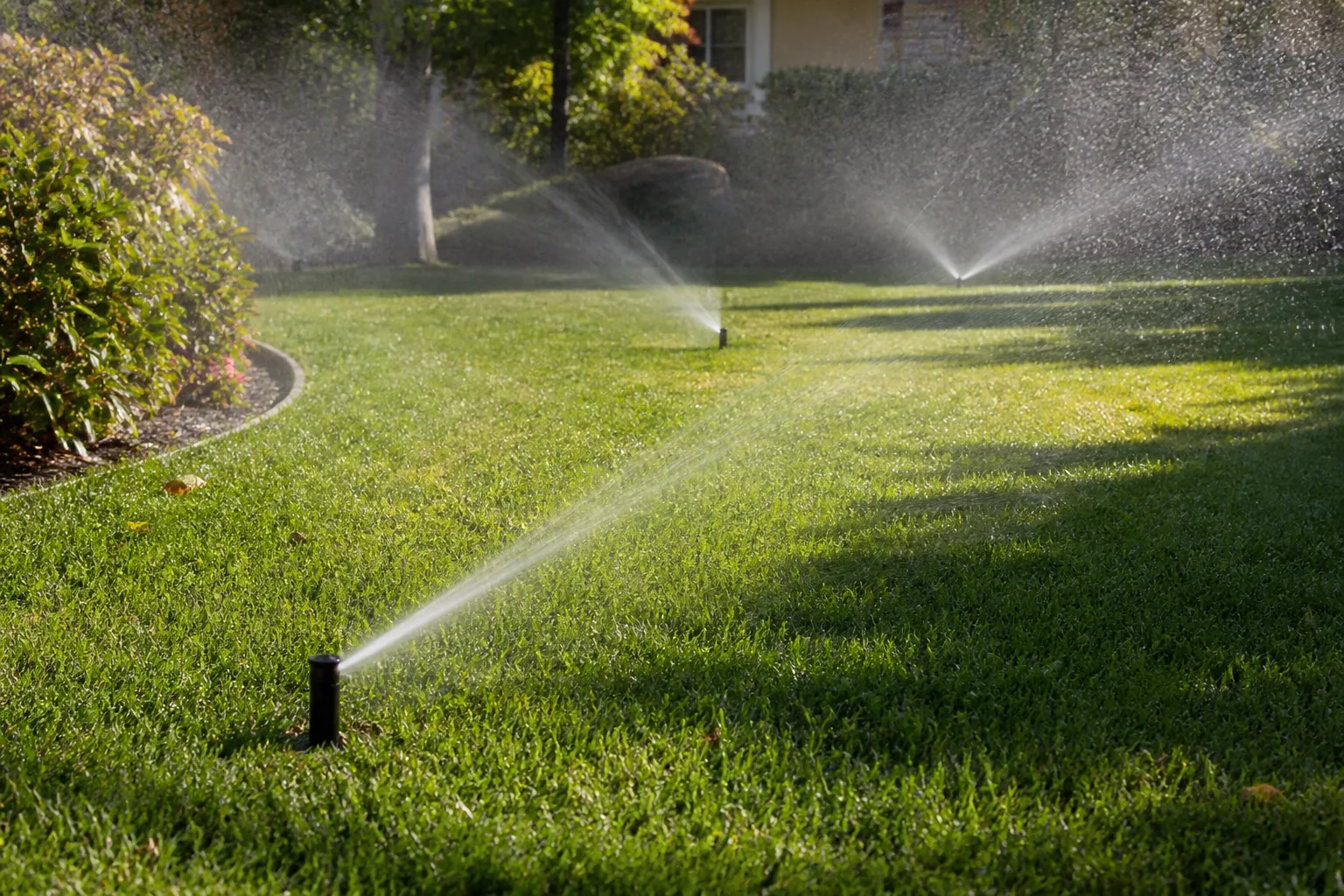
Overhead sprinklers are the method most helped by early-morning scheduling. Morning gives wet grass and foliage time to dry, and cooler air usually reduces evaporation. Keep the spray off sidewalks and driveways, correct tilted or clogged heads, and use cycle-and-soak on slopes or compacted areas so water can enter instead of running downhill.
Lawns are a separate case from mixed garden beds because turf is designed to be wetted across a broad surface. Even so, do not water a lawn simply because it is sunny. Check for footprints that remain visible, a dull or folded appearance, and soil moisture below the thatch. A sprinkler audit with catch cans is more useful than copying a neighbor’s runtime because head type, pressure, soil, grass species, and shade all change the amount delivered.
Morning, evening, and rescue-watering rules
Morning, evening, and midday are not three equal choices. They describe different levels of efficiency and different risks, but the plant’s actual condition still outranks the clock.
Make early morning your routine window
Choose early morning for routine hand watering and overhead irrigation when the soil needs water. Plants begin the day hydrated, less water is lost before infiltration, and stray moisture on leaves has daylight to dry. A morning walk also lets you catch blocked emitters, fresh wilt, runoff, broken stems, and pest damage before heat hides the clues.
You do not need to water every bed every morning. Established plants often do better with a thorough soak followed by a drying interval than with a daily sprinkle that keeps only the surface damp. The right interval depends on plant stage, soil, weather, mulch, and root depth; use a calendar as a reminder to inspect, not as permission to water automatically.
Use evening as a dry-foliage fallback
Evening watering is reasonable when a plant is dry and morning is not practical, especially if you use drip irrigation, a soaker hose, or a low stream at the soil. Finish early enough that you are not leaving a saturated canopy and wet flowers through the entire night. Avoid a late sprinkler run in a dense vegetable or rose canopy when humidity is already high.
Evening can be the better choice for a container that will otherwise dry overnight, a new planting that needs water, or a heat wave that has left soil genuinely dry. The mistake is not “evening” by itself; it is combining late overhead watering with wet foliage, poor airflow, and already-moist soil.
Epic Gardening makes the same practical distinction: late-day watering is preferable to leaving a plant in dry soil, but the leaves should stay as dry as possible when evaporation will be slow. (Epic Gardening watering guide)
Water a truly thirsty plant when it needs help
If the root zone is dry, leaves are staying limp, or a newly planted tree is losing moisture in a hot wind, water at the next safe opportunity. Use the least wasteful method available: slow water at the base, temporary shade for a container, and a second pass after the first water has infiltrated. Rescue watering can happen at noon; the alternative may be deeper stress.
Do not use rescue watering to hide a different problem. If the soil is wet, leaves are yellowing, stems are soft, or water is standing around the roots, stop watering and investigate drainage. If the plant recovers each evening but the soil remains moist, heat load or root function may be the issue rather than a lack of water.
Special cases that break a simple schedule
Some plants should not be managed by an established-bed schedule. Containers have a small, exposed volume of mix and can dry daily in warm, windy weather. Check about one-third of the way down the pot, as the RHS recommends, rather than judging by the surface alone; water slowly until the mix is evenly wet and a little drains from the bottom, then empty a saucer that is holding water. (RHS container-watering guide)
Seedlings and fresh transplants have shallow or damaged root systems. They need consistent moisture while roots spread, but not a permanently waterlogged bed. Water close to the root ball, then expand the wetted area as the plant establishes. Newly planted trees and shrubs may need regular watering through dry spells during the first year, and larger specimens can need support for longer; do not assume a single storm reached beneath a canopy or inside a root ball.
Vegetables in flower or fruit are sensitive to uneven moisture. A dry-to-soggy cycle can cause avoidable stress and, in some crops, fruit quality problems. Mulch the soil, water the root zone consistently, and inspect the soil rather than trying to correct a dry week with one flood.
Lawns may be allowed to slow growth or go dormant in some climates rather than being forced to stay green through every dry spell. Follow local water restrictions and your grass species’ needs. A lawn with shallow compaction or poor sprinkler coverage may need aeration or zone repair, not a longer daily watering cycle.
Plants in rain shadows can need water after the rest of the bed looks settled. Check under eaves, beside walls, beneath tree canopies, and at the high side of a slope. A rain gauge placed in the open can tell you what fell there, not what reached a sheltered container or root ball.
What to do after mistimed or excessive watering
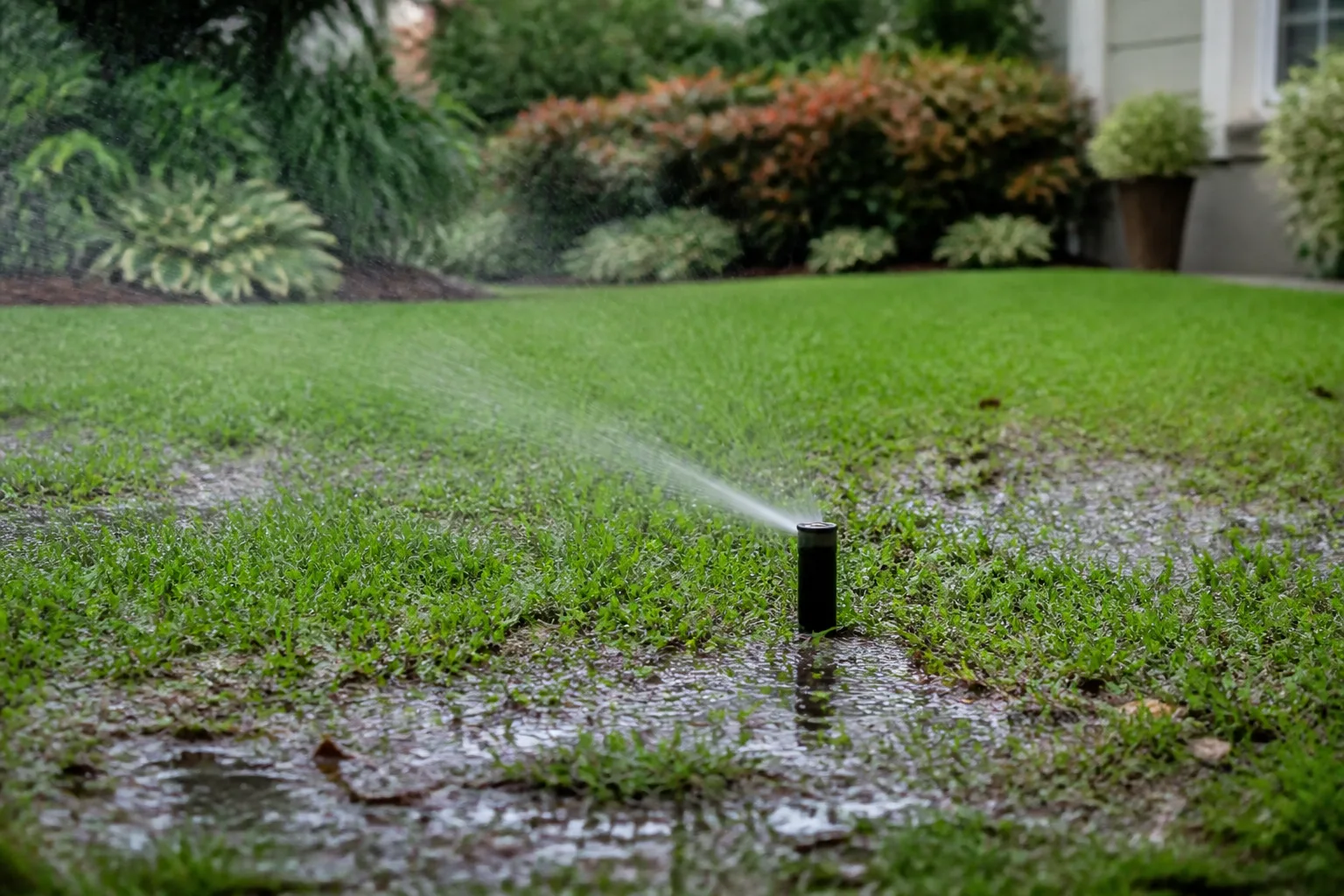
One mistimed watering rarely ruins a garden. The useful response is to stop repeating the mistake and assess what happened: Did water reach the soil? Did leaves stay wet for hours? Did it run off? Is the soil now dry below the surface, evenly moist, or saturated?
If you watered a dry plant in bright sun, leave the foliage alone and watch whether the soil absorbed the water. If a few leaves are scorched later, do not assume the droplets caused it; compare the damage with heat, wind, salt buildup, and recent changes in light. Keep the plant’s root zone steady and remove only leaves that are fully dead.
If you watered already-wet soil, pause irrigation and improve drainage rather than adding a “balancing” drink later. Empty standing water from container saucers, clear blocked drainage holes, move a pot out of rain, and avoid walking on saturated beds. Let the root zone regain air before the next watering.
If leaves were wet overnight, do not reach immediately for a fungicide. Improve the next watering: water at the base, increase spacing or airflow where appropriate, remove badly diseased foliage with clean tools, and identify the actual disease before using any treatment. Timing reduces risk; it cannot compensate for a crowded canopy, infected plant debris, or persistently poor drainage.
Build a low-waste watering schedule you can adjust
Start with a weekly inspection rather than a fixed weekly watering. Walk the garden after a dry, hot, windy period and again after rain. Check representative locations: a sunny edge, a shaded center, a container, a raised bed, and the area farthest from an emitter. The goal is to find the driest meaningful zone without turning every plant into a separate project.
Use this five-step routine:
- Check need. Feel or dig below the surface in the active root zone; look for persistent wilt, recent rain, and runoff.
- Choose the method. Use drip, a soaker hose, or a slow wand stream for beds and containers; reserve overhead spray for situations where it is appropriate and coverage is even.
- Water in passes. Apply enough to start infiltration, pause if the surface ponds, then continue until the root zone is moist to the depth appropriate for the plant.
- Measure the result. Use a rain gauge for rainfall and catch cans or a soil check for irrigation. Runtime alone is not a measurement of water delivered.
- Adjust one variable. Change frequency, duration, emitter placement, shade, mulch, or sprinkler coverage based on what you observed—not all of them at once.
Mulch is a useful efficiency tool after the soil is properly watered. A layer of organic mulch reduces direct sun on the soil and slows evaporation, but keep it away from direct contact with stems and trunks. Fine Gardening’s practical watering guide also emphasizes learning how your soil drains, reading leaves in context, avoiding saturated soil, and shifting established plants toward deeper, less frequent watering rather than daily surface sprinkling. (Fine Gardening watering guide)
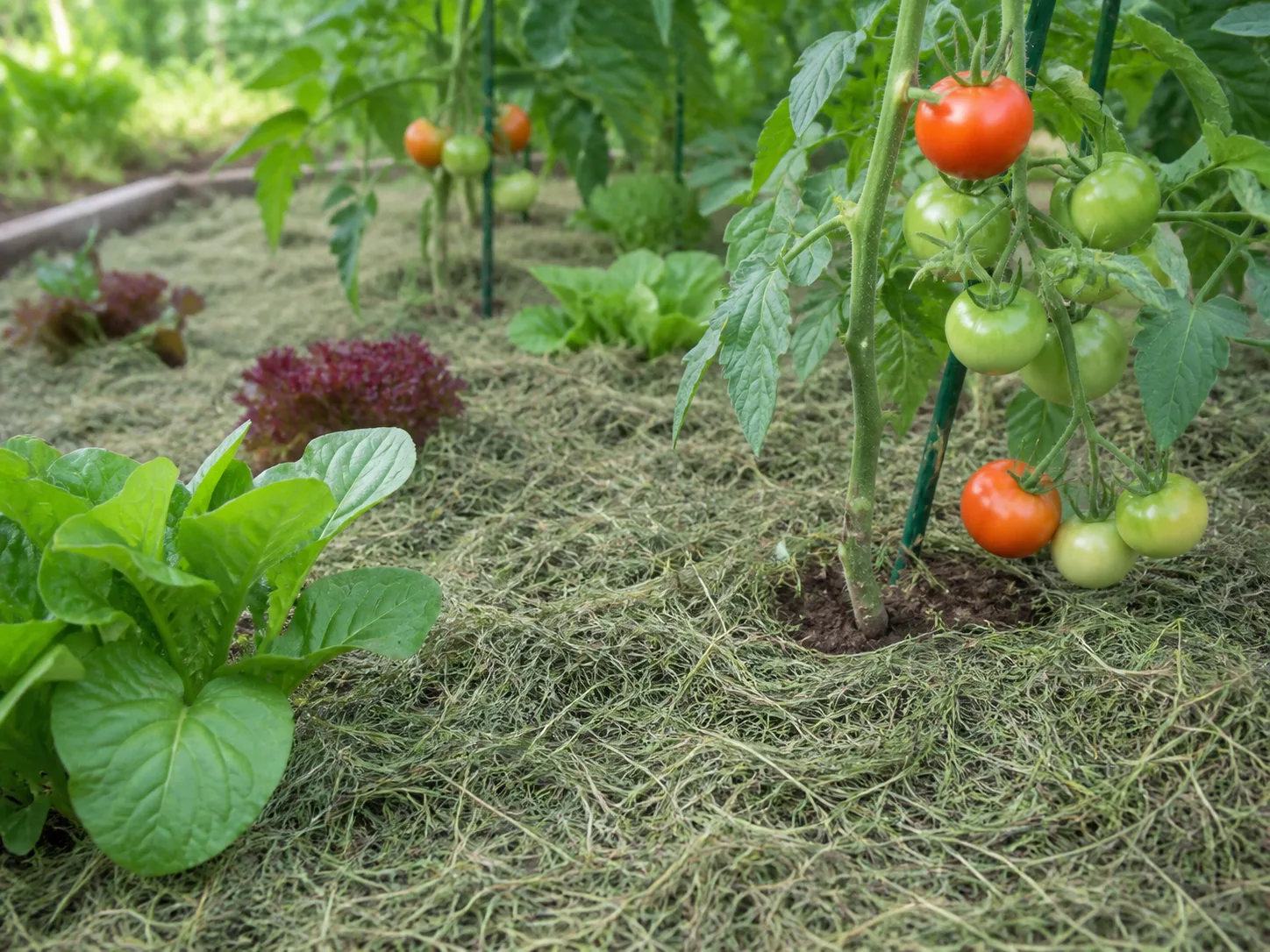
The target is not a garden that is constantly wet. Roots need water and air, and the best schedule is the one that keeps the active root zone supplied without repeated runoff, leaf wetness, or stagnant saturation. When conditions change, return to the check: soil first, method second, timing third.
Conclusion
For most gardens, early morning is the best time to water because it reduces evaporation and gives wet foliage time to dry. Midday is usually a poor routine window for overhead watering, but it is not a reason to leave a genuinely dry, wilting plant waiting until tomorrow.
The stronger rule is practical: water when the root zone needs it, aim water at the soil, apply it slowly enough to soak in, and adjust the schedule for containers, new plantings, soil, rain, wind, and irrigation method. Morning makes that job easier; observation makes it accurate.



