5 Reasons Tomato Plants Wilt in Summer
Learn why tomato plants wilt in summer, how to tell heat stress from underwatering or disease, and what to do in the next 24 hours to protect your crop.
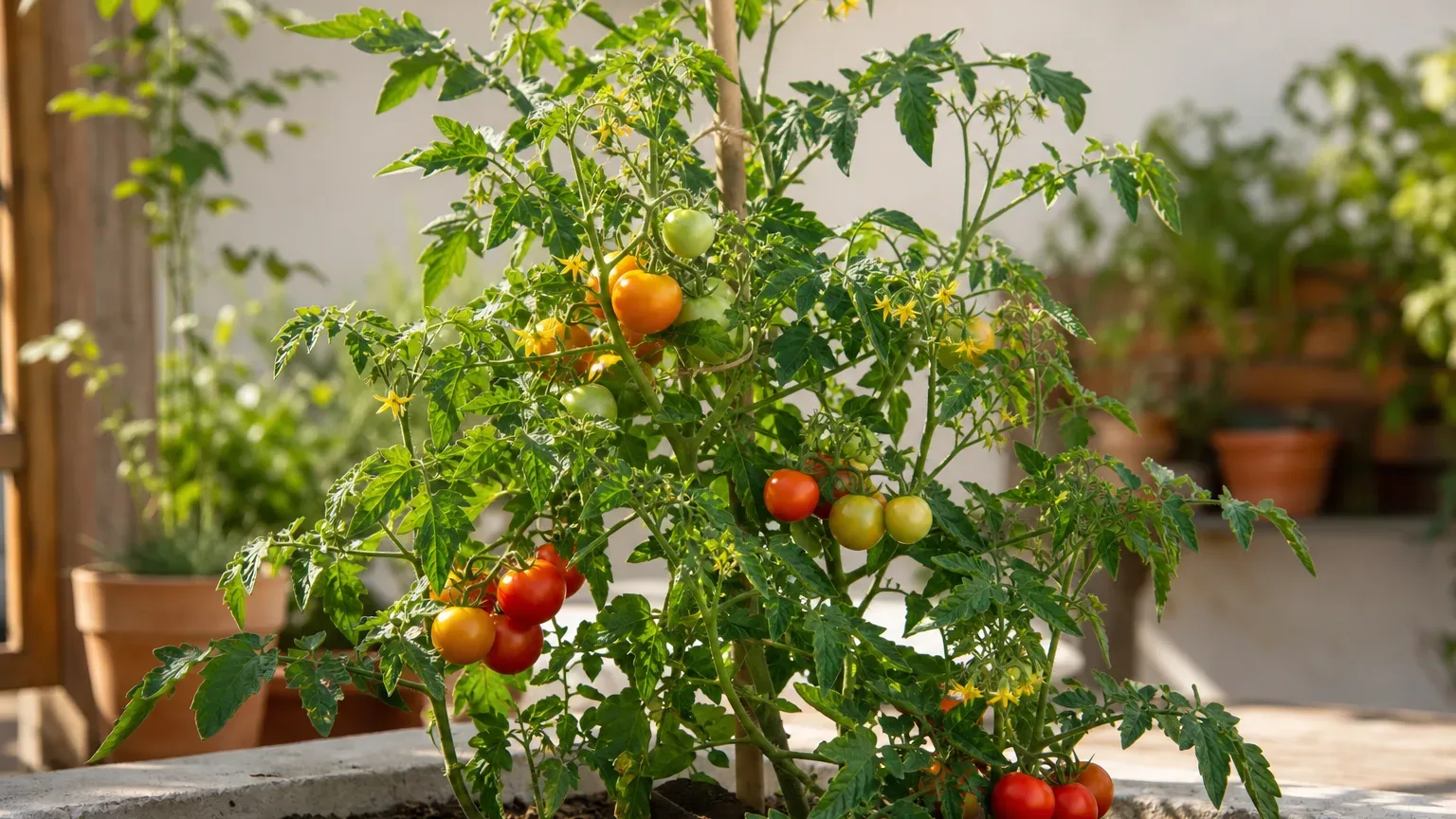
A wilted tomato plant is telling you that its leaves are losing water faster than the plant can replace it—or that something is interfering with that supply line. The symptom can be temporary heat stress, a dry root zone, waterlogged roots, a soil-borne disease, or damage hidden inside a stem. The fix depends on which of those stories the plant is telling.
Start with two observations before you reach for the hose: when does the wilt happen, and what does the soil feel like below the surface? Tomatoes need consistent moisture, but they also need well-drained soil; Cornell’s tomato growing guide notes that they do not tolerate waterlogged conditions. (Cornell University) That single distinction prevents the most common mistake—watering a plant whose roots are already too wet.
Is afternoon wilt normal?
Sometimes. A tomato may droop or curl its leaves during the hottest, brightest part of the afternoon and look much better after sunset. Heat, wind, and intense sunlight increase transpiration, so the leaves can temporarily lose water faster than the roots can move it upward. If the plant is firm again in the evening, the soil is evenly moist, and the pattern is not getting worse, the plant may be protecting itself rather than dying.
The important qualifier is recovery. A plant that stays limp overnight, wilts earlier each day, or develops yellowing, brown stem streaks, holes, mosaic patterns, or stunted new growth needs a closer diagnosis. Heat can also expose a vascular disease: an infected plant may appear to recover in the cool morning and collapse again as afternoon demand rises. Use the same timing clue, but do not treat it as proof of heat stress. (Homes & Gardens)
The 60-second diagnosis before you water
Check the plant in this order. The goal is not to name a disease in one glance; it is to choose the safest first action.
- Feel the soil two to three inches down. Surface soil can look dry while the root zone is damp, or look damp after a shallow sprinkle while deeper soil is dry. If the soil is dry at that depth, underwatering is plausible. If it is wet and heavy, adding water is the wrong first move.
- Look at the clock. Afternoon-only wilt that reverses overnight points first toward heat or high water demand. All-day wilt, especially in the morning, raises the urgency.
- Look at the pattern. A whole plant that droops evenly suggests a root-zone or weather problem. One branch, one side, or one plant in an otherwise healthy row suggests vascular disease, stem damage, or a localized root problem.
- Inspect the lower leaves and stem. Yellowing from the bottom, V-shaped brown lesions, brown streaks under the stem skin, a small entry hole, frass, or a soft crown changes the diagnosis.
- Check for recent changes. Transplanting, a new container, a blocked drainage hole, a heat wave, herbicide drift, cultivation near the roots, or a nearby walnut tree can explain wilt that appears “overnight.”
Is the soil dry, moist, or waterlogged?
Dry soil plus thin, papery leaves is the simplest pattern: water slowly at the base until the whole root zone is wet. Do not stop after a quick surface sprinkle, especially if the soil has pulled away from the sides of a container or become hydrophobic. Give the water time to soak in, then check again rather than flooding the bed repeatedly.
Moist soil with temporary afternoon wilt can be heat stress. Wet soil with a plant that wilts through the morning is more concerning for poor drainage or damaged roots. A pot that stays unusually heavy for days, smells sour, or drains very slowly deserves correction before any more irrigation.
Is the whole plant affected or only one side?
A uniform droop across the canopy often reflects the weather or water reaching the whole root system. One-sided yellowing or wilt is a classic clue for Fusarium wilt, although only a diagnostic test can confirm a pathogen. Brown discoloration inside a cut stem, a sudden green collapse, or a small tunnel in one stem points in a different direction.
This is why a moisture meter or finger test is more useful than a watering calendar. A calendar tells you what you planned to do; the root zone tells you what the plant is experiencing.
Reason 1: Heat, wind, and fast water loss
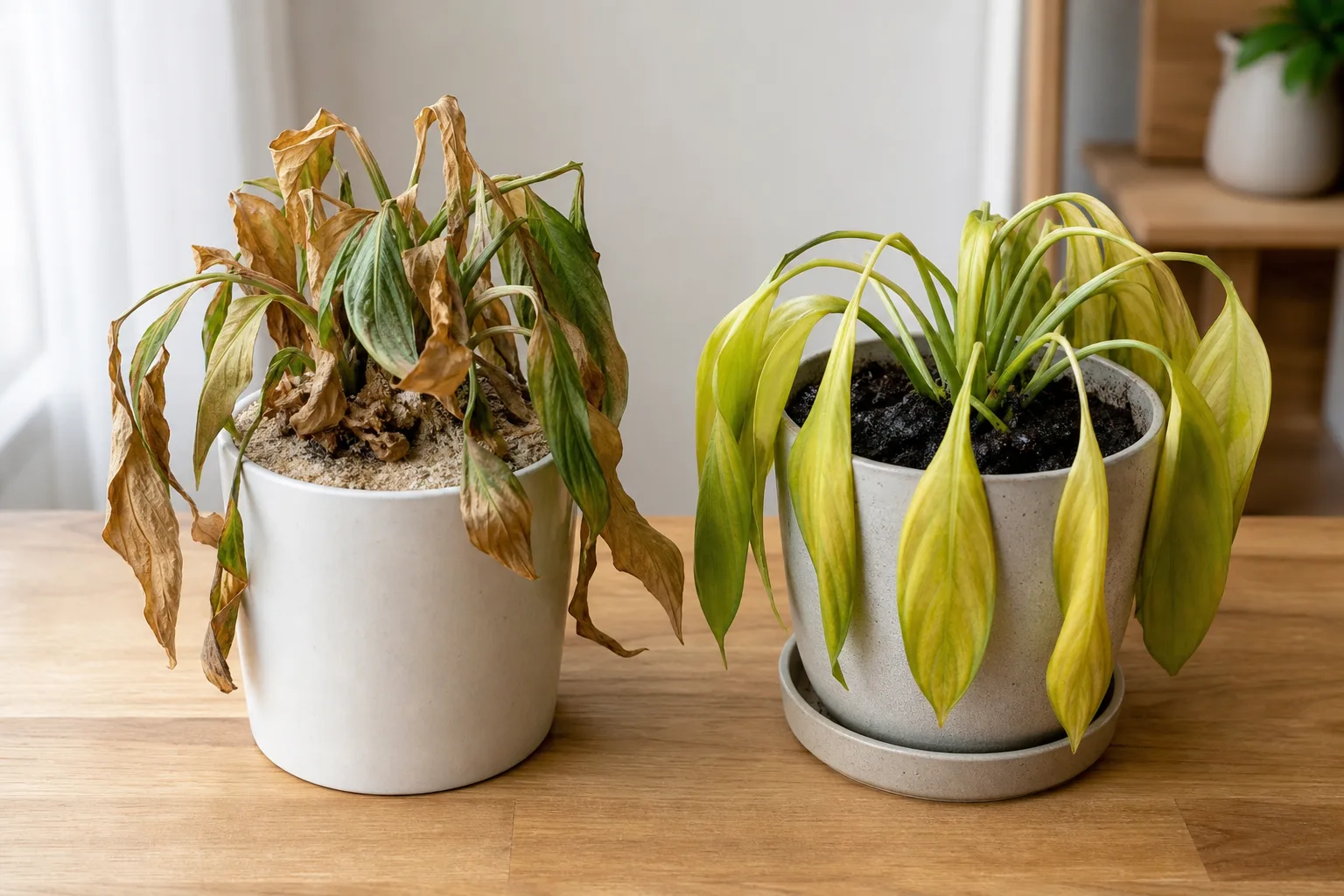
Summer heat can make a healthy tomato look wilted for a few hours. The combination of high air temperature, direct sun, hot pavement, and wind pulls moisture from leaves quickly. Container plants are especially vulnerable because a small volume of potting mix warms and dries faster than a garden bed. A dark container against a wall can turn a normal watering routine into an afternoon stress test.
Heat wilt usually follows a recognizable pattern: leaves relax or curl during the peak of the day, the soil is not bone-dry, and the plant firms up as temperatures fall. Prolonged temperatures above about 90°F can also cause leaf curling and other heat responses, according to practical guidance from Homes & Gardens. (Homes & Gardens) That does not mean every afternoon wilt above that number is dangerous; it means the plant’s water demand is high enough that timing and root-zone moisture matter.
What to do:
- Water in the morning when the root zone needs it, so the plant starts the hottest part of the day hydrated.
- Apply water slowly at the base rather than wetting the leaves. A soaker hose or drip line reduces evaporation and keeps foliage drier.
- Add a two- to three-inch layer of clean organic mulch after the soil has warmed. Keep it a few inches away from the stem so the crown stays airy.
- For a short, exceptional heat wave, use light shade cloth during the harshest afternoon hours. Do not wrap the plant tightly in plastic or block air movement.
- Move a container out of reflected heat if possible. Morning sun and afternoon protection can be a better compromise than repeatedly soaking a pot that is baking on concrete.
Do not automatically fertilize a wilted plant. Heat wilt is a water-balance problem, not proof of nutrient deficiency, and fertilizer salts can add stress when roots are already struggling. Reassess the soil in the evening. If the plant never recovers, move to the disease and root checks below.
Reason 2: Underwatering or uneven moisture
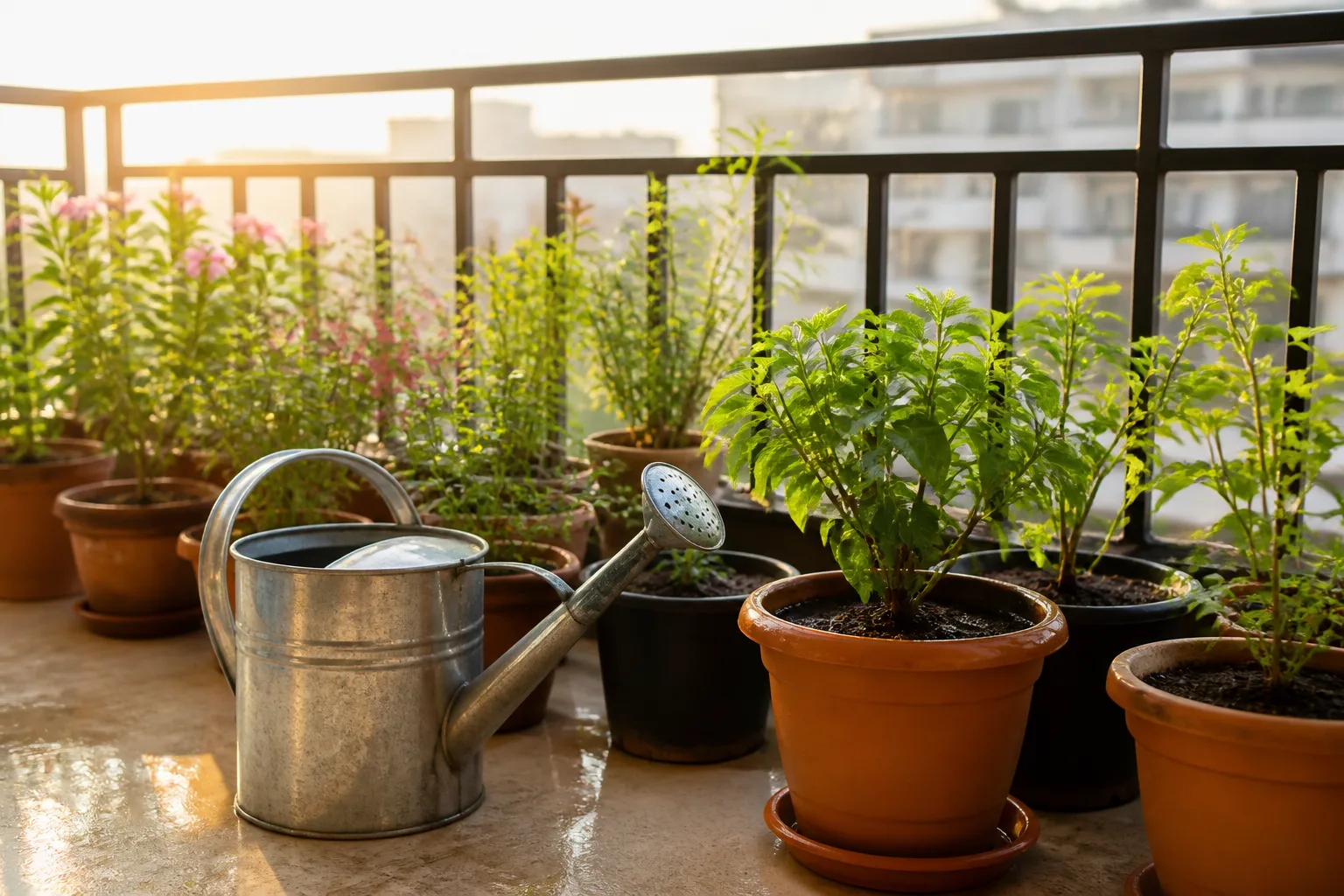
Tomatoes use a lot of water while building foliage and fruit. In an in-ground bed, one to two inches of total water per week—rain plus irrigation—is a useful starting range, not a universal prescription. Sandy soil, high heat, wind, raised beds, and heavy fruit loads can increase the need; clay soil, humidity, rainfall, and partial shade can reduce it. Cornell recommends making up the difference when rainfall is below about one inch per week and emphasizes consistent moisture. (Cornell University)
Containers need more frequent checking, not a fixed number of gallons per day. A five-gallon pot in a humid week and a small black pot on a windy balcony do not lose water at the same rate. Check a few inches down every morning during a heat wave, and lift the pot occasionally so you learn what “ready for water” feels like.
Underwatered tomatoes may have limp leaves, dry or crumbly soil, crispy edges, and a plant that perks up after a thorough drink. Better Homes & Gardens recommends checking two inches down and watering slowly at the base rather than relying on the surface. (Better Homes & Gardens) If a plant improves for only an hour and collapses again, the water may not have reached the deeper root zone, or the roots may be damaged.
Fix the pattern, not just today’s wilt:
- Confirm that water can soak into the root zone instead of running down a crack in dry soil or out the side of a pot.
- Apply a slow, deep watering to the soil around the plant, widening the wetted area as the roots expand.
- Use mulch to slow evaporation and reduce the swing between saturated and bone-dry soil.
- Water based on soil and weather checks, not an identical weekday schedule.
- If the plant is in a container, confirm that the pot is large enough for its root mass and that the mix is not packed into a dry, water-repellent block.
Avoid alternating between severe drought and a huge flood. That cycle stresses roots, encourages fruit cracking, and can make a plant look like it has several unrelated problems at once.
Reason 3: Waterlogged roots, poor drainage, or root damage
An overwatered tomato can wilt because roots need oxygen as well as water. When soil stays saturated, fine roots lose access to air, stop functioning efficiently, and may begin to rot. The leaves then droop even though the plant is standing in moisture. Cornell’s guidance is clear on the practical balance: tomatoes need consistent moisture but do not tolerate waterlogged soil. (Cornell University)
Suspect wet-root stress when the soil remains wet for days, the pot is heavy, lower leaves turn yellow, growth slows, or the plant wilts after watering. Poor drainage can come from compacted garden soil, a low bed that collects rain, a pot without a clear drainage path, a saucer left full, or a dense mix that has collapsed over time.
What to do: stop watering until you have checked the moisture below the surface. Empty standing water, clear blocked drainage holes, and move a container where air can circulate. Do not add gravel to the bottom of a pot as a substitute for a drainage hole; fix the hole or change the container. In a bed, improve the long-term structure with organic matter and avoid planting in a depression that stays wet.
A recently transplanted tomato can wilt even when moisture is correct because roots were disturbed or the plant moved abruptly into sun and wind. Give it stable moisture, temporary protection from the harshest afternoon conditions, and time to re-establish. A root-bound container plant may need a larger pot, but do not repot a heat-stressed plant in the middle of the afternoon unless drainage failure makes it urgent.
Reason 4: Vascular wilt diseases
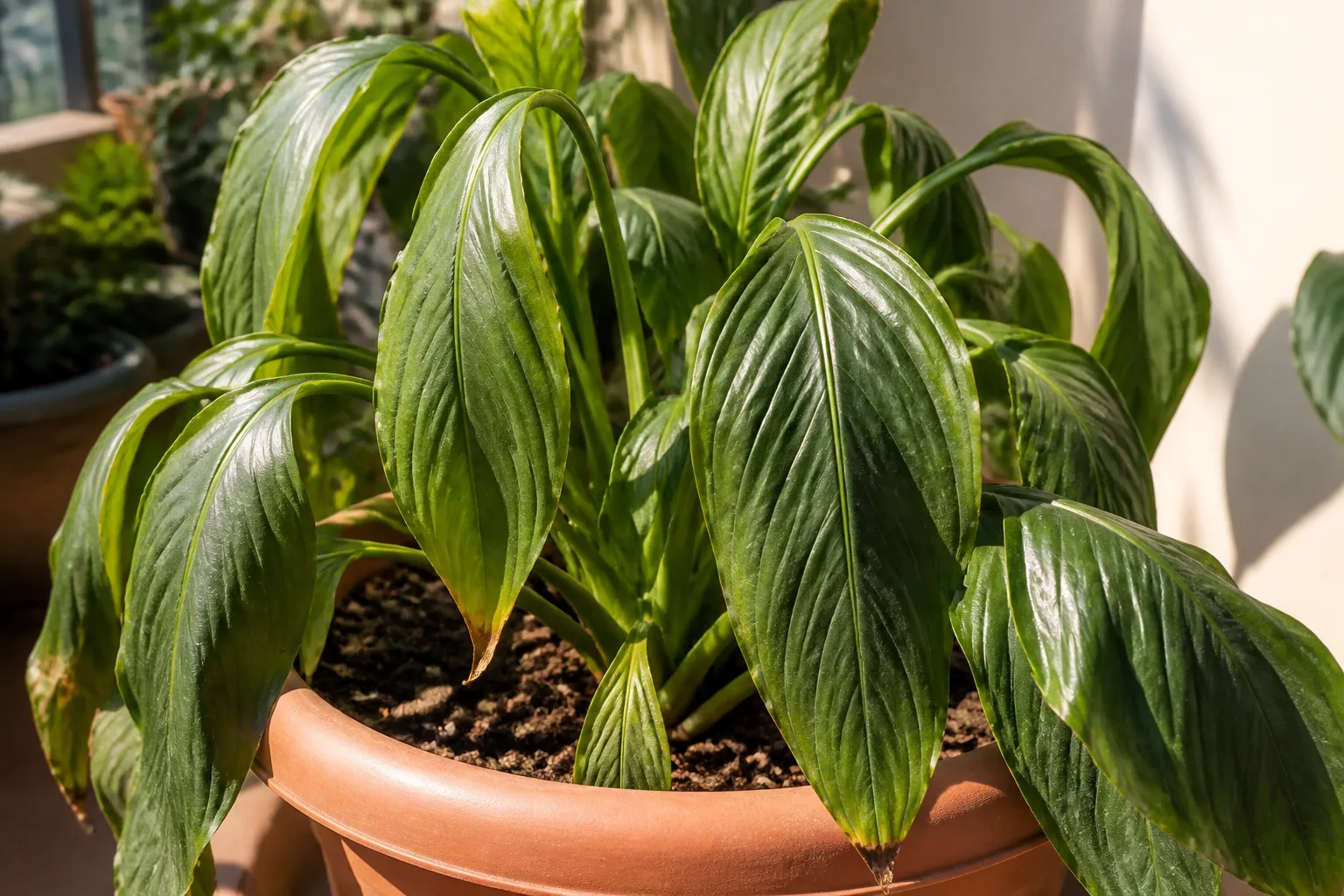
Vascular wilt pathogens interfere with the tissue that moves water and nutrients through the stem. The result can look exactly like thirst at first, which is why disease is easy to miss during a hot spell. The clues are progression, discoloration, one-sided symptoms, lower-leaf decline, or a plant that repeatedly wilts despite appropriate soil moisture.
The most useful home diagnosis is not “the plant wilted, so it has Fusarium.” It is: the plant is well watered, symptoms are progressing, and the stem or leaf pattern matches a disease clue. Cornell’s diagnostic key lists bacterial wilt, Fusarium wilt, Verticillium wilt, and walnut wilt among tomato causes of general wilt and decline. (Cornell Vegetables)
Fusarium wilt
Fusarium wilt often begins on one side of a plant, branch, or leaflet. Lower leaves yellow first, the plant becomes progressively less able to recover, and a light-brown streak may appear in the vascular tissue when the lower stem is cut lengthwise. NC State Extension notes that the fungus can persist in soil for years and that home gardeners have no fungicide that manages an established infection. (NC State Extension)
There is no reliable rescue spray for an infected tomato. Remove the entire plant with as much surrounding soil as practical, bag it, and put it in the trash rather than the compost pile. Clean tools and avoid carrying wet soil into another bed. For future plantings, use varieties with the resistance codes that match the disease pressure in your region, buy healthy transplants, and rotate tomatoes away from the bed for several years. Resistance reduces risk; it does not make every variety immune to every race.
Verticillium wilt
Verticillium wilt can produce yellowing on lower leaves, V-shaped lesions that extend inward from a leaf edge, afternoon wilt, and brown vascular streaks near the crown. It may progress more slowly than bacterial wilt, so a plant can keep producing for a while even as its yield declines. NC State identifies the V-shaped leaf lesion as a particularly useful clue, while also warning that moisture stress and other wilt diseases can look similar. (NC State Extension)
An infected plant cannot be cured. Remove symptomatic plants and handle them as contaminated material. Prevention is more realistic: choose resistant varieties, clean soil from tools and shoes, control weeds that can host the pathogen, and rotate with crops that are less susceptible. Rotation is not a magic reset because Verticillium has a wide host range and can survive in soil for years, but it can lower disease pressure when planned carefully.
Bacterial wilt
Bacterial wilt can be especially deceptive in summer. A plant may wilt suddenly while remaining green, appear slightly better overnight, and collapse again in the afternoon as water demand rises. NC State Extension describes the disease as favored by hot conditions and moist soil; the bacterium blocks vascular tissue and can cause brown discoloration inside the stem. A milky stream from a freshly cut stem placed in water is a strong indicator, but a home cut is not a substitute for a laboratory diagnosis. (NC State Extension)
Remove and bag a plant that strongly fits bacterial wilt rather than watering it repeatedly or applying a general fungicide. NC State reports that chemical controls do not provide effective control once the disease is present. Avoid moving the wet root ball through the garden, and clean tools before touching another tomato. Crop rotation and non-susceptible cover crops may reduce soil populations, but an affected bed may remain a difficult place for tomatoes.
Reason 5: Pests, viruses, and walnut root zones
Some causes are less common than water and heat, but they become more likely when the wilt is localized or accompanied by a specific mark. This group is best treated as three separate checks rather than one generic “pest problem.”
Stalk borers and root-feeding pests
A stalk borer can tunnel inside a stem and interrupt water movement. Look for a tiny hole, frass, a split or weakened stem, and wilt above the damaged section. Stalk borers are difficult to control once they are inside the plant; removing and destroying a badly affected plant is usually more useful than spraying the outer leaves. Homes & Gardens also identifies aphids, whiteflies, nematodes, and stalk borers as pests that can contribute to wilting, especially when the infestation is heavy or the roots are damaged. (Homes & Gardens)
Inspect leaf undersides, growing tips, and the stem base. A few aphids do not automatically explain a collapsed mature tomato, while a large sap-feeding population, root-knot symptoms, or a borer tunnel may. Wash small sap-feeding infestations from sturdy foliage with a firm stream of water, and use any labeled insecticidal product exactly as its label directs. Do not cut into a suspect stem with dirty pruners and then move straight to the next plant.
Tomato viruses
Viruses usually announce themselves with more than plain wilt: mosaic or mottled leaves, distorted new growth, bronzing, stunting, reduced yield, or marbled fruit. The Royal Horticultural Society lists tomato mosaic virus, tomato spotted wilt virus, cucumber mosaic virus, and other viruses among tomato diseases and recommends prompt removal of symptomatic plants because they can become a source of infection. (Royal Horticultural Society)
There is no treatment that turns virus-infected tissue healthy again. Isolate a suspect container if possible, avoid saving seed from a symptomatic plant, wash hands and tools after handling it, and remove the plant if symptoms continue to spread. A virus is not proven by a single curled leaf; herbicide drift, heat, nutrient imbalance, and pests can create similar distortion. When the plant is valuable or the diagnosis matters, contact a local extension diagnostic clinic before discarding everything nearby.
Walnut wilt
A black walnut or butternut tree changes the diagnosis when tomatoes in its root zone repeatedly struggle while tomatoes elsewhere do not. Cornell’s tomato diagnostic key lists poor growth and wilt in the root zone of walnut or butternut trees as walnut wilt. (Cornell Vegetables)
Do not blame a nearby walnut for one hot afternoon. Look for a location pattern, chronic poor growth, and failure that persists despite reasonable moisture and drainage. Move future tomatoes to clean containers or a location outside the tree’s active root zone; do not assume that a raised bed placed directly over walnut roots is isolated from the problem. The exact safe distance varies with tree size and root spread, so a local extension office is better placed to advise on a difficult site than a single universal number.
What to do in the next 24 hours
If you discover a wilted tomato today, use this sequence:
- Photograph the whole plant and one close leaf. Include the soil, pot or bed, stem base, and neighboring plants. Symptoms change quickly, and a photo helps an extension diagnostician.
- Check the root-zone moisture before watering. Dry soil calls for a slow, deep drink. Wet soil calls for drainage correction and no additional irrigation.
- Check again at dusk and the next morning. Recovery supports heat or reversible water stress; persistent or worsening wilt raises the disease and root-damage concern.
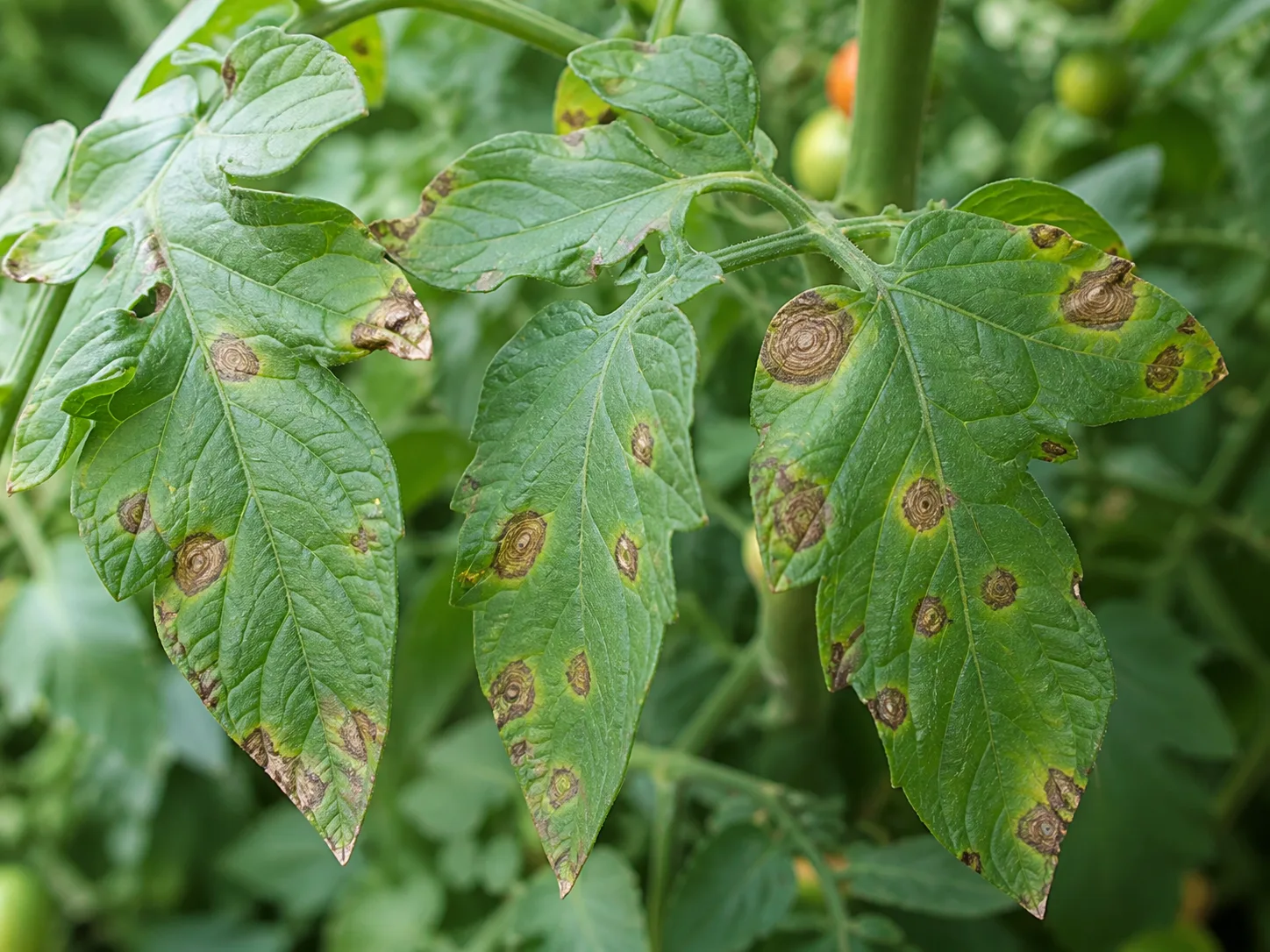
- Inspect the stem and undersides of leaves. Look for tunnels, frass, insects, mosaic patterns, V-shaped lesions, or one-sided yellowing.
- Separate a suspect plant from the rest of the crop. Do not share pruners, gloves, stakes, or wet soil until you have cleaned them.
- Remove a plant that is clearly declining from vascular disease. Bag it instead of composting it, and mark the bed so you can plan crop rotation and resistant varieties.
Do not make three changes at once—flood the soil, apply fertilizer, and spray an insecticide—because you will lose the clues and may worsen the problem. One careful observation followed by one proportionate action gives the plant a better chance and gives you a better diagnosis.
How to prevent summer wilting next season
Prevention is a system rather than a single product.
- Build the bed for drainage and moisture retention at the same time. Tomatoes need soil that holds enough water for the root zone but drains excess rain. Avoid low pockets and compacted planting holes.
- Mulch after the soil warms. Organic mulch reduces evaporation, buffers root temperatures, limits soil splash, and makes watering more even.
- Water the root zone, not the calendar. Use rainfall plus irrigation as your guide, and check containers more often during hot, windy weather.
- Give plants room and support. Spacing, cages, and stakes improve airflow, keep foliage and fruit off wet soil, and make it easier to inspect the stem and lower leaves.
- Rotate the nightshade family. Tomatoes, peppers, eggplants, and potatoes can share some soil-borne disease problems. Rotate thoughtfully and remove volunteer tomatoes and weeds that can carry pathogens.
- Choose resistance codes with a purpose. A tag marked for Fusarium or Verticillium resistance can help in a problem bed, but resistance is specific and not a cure for an already infected plant.
- Keep tools and hands clean between suspect plants. This is especially important when virus or bacterial wilt is possible.
- Inspect transplants before planting. Reject plants with unexplained wilt, yellowing, stem lesions, pest clusters, or stunted new growth.
For a broader watering routine, use the hot-weather plant watering guide. For disease symptoms that go beyond wilt, see the tomato disease identification guide. If you are tracking the season from seedling to harvest, the tomato plant growth timeline can help you tell normal aging from a sudden decline.
Conclusion
Tomato plants wilt in summer for understandable reasons, but the visible symptom does not identify the cause by itself. Check the time of day, feel the soil below the surface, inspect the pattern across the plant, and look for stem or leaf clues before adding water.
Heat-only wilt and dry soil often improve when the root zone is managed consistently. Wet-root stress needs better drainage, while progressive one-sided wilt, vascular streaking, sudden green collapse, virus-like mosaics, or a stem tunnel calls for isolation and a more serious disease or pest response. The faster you separate reversible stress from a spreading problem, the better chance you have of saving healthy plants and stopping the same issue from returning next summer.



