22 Tomato Diseases: Identify, Treat, Prevent
Identify 22 tomato diseases and disorders by leaf, stem, root, and fruit symptoms. Learn what to remove, what to treat, and how to prevent spread.
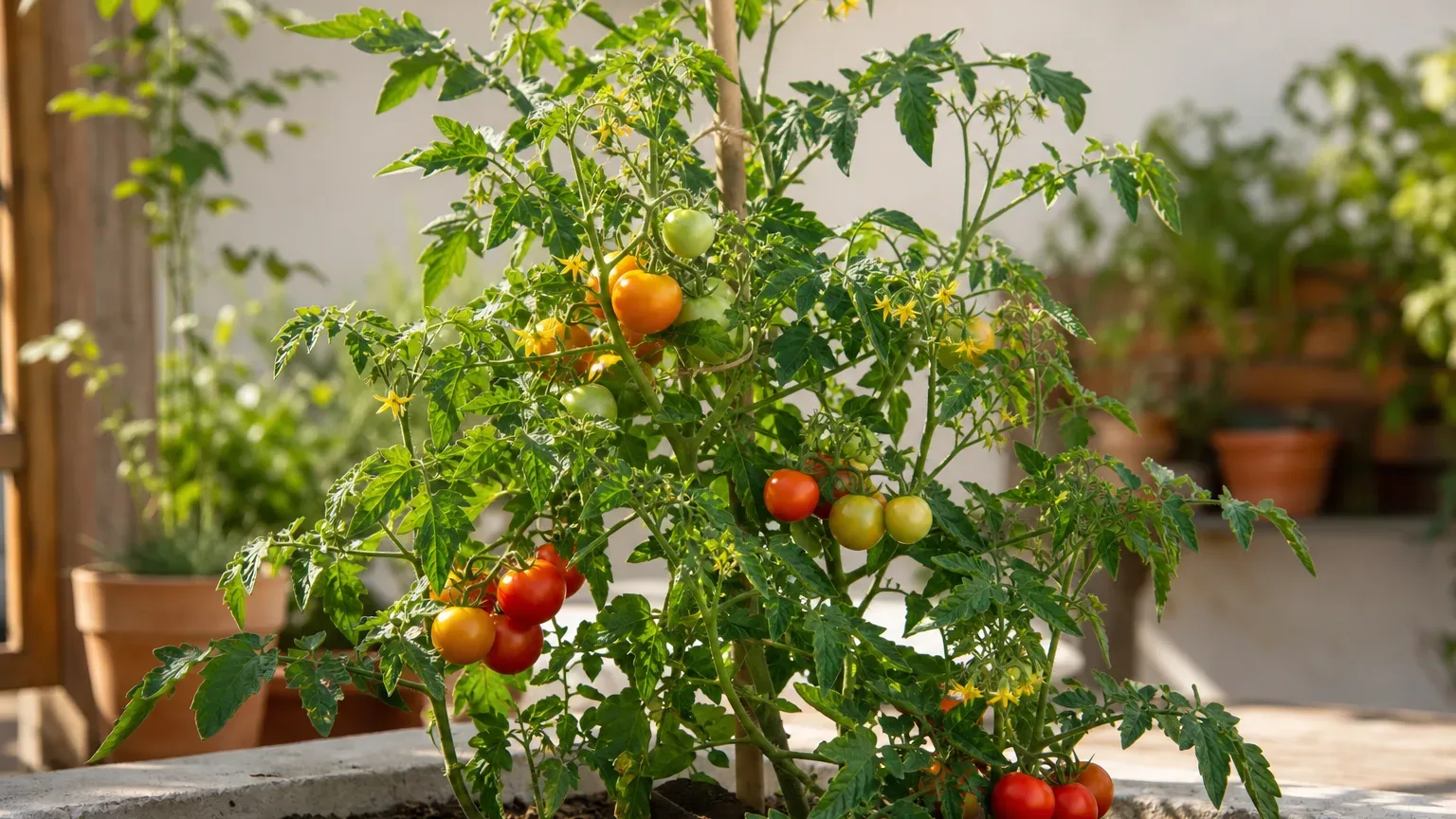
Tomato problems rarely arrive with a name tag. A leaf may turn yellow because of a virus, a wilt pathogen, a damaged root, or simply a stretch of hot weather. A black patch on fruit may be blossom end rot, sunscald, buckeye rot, late blight, or decay that entered through a crack.
That overlap is why the best way to manage tomato diseases is to identify the pattern before reaching for a spray. Use the plant part affected, the speed of spread, the weather, and the texture of the damage as your first clues. Then take a low-risk action that helps several likely causes while you confirm the diagnosis.
Start with the symptom pattern, not the spray bottle
Begin by photographing the whole plant and one close view of the symptom. Note whether the first damage appeared on lower or upper leaves, whether the plant is in a pot or bed, how quickly it is spreading, and whether the weather has been cool and wet, hot and humid, or unusually dry. This record is more useful than a generic label such as “blight.”
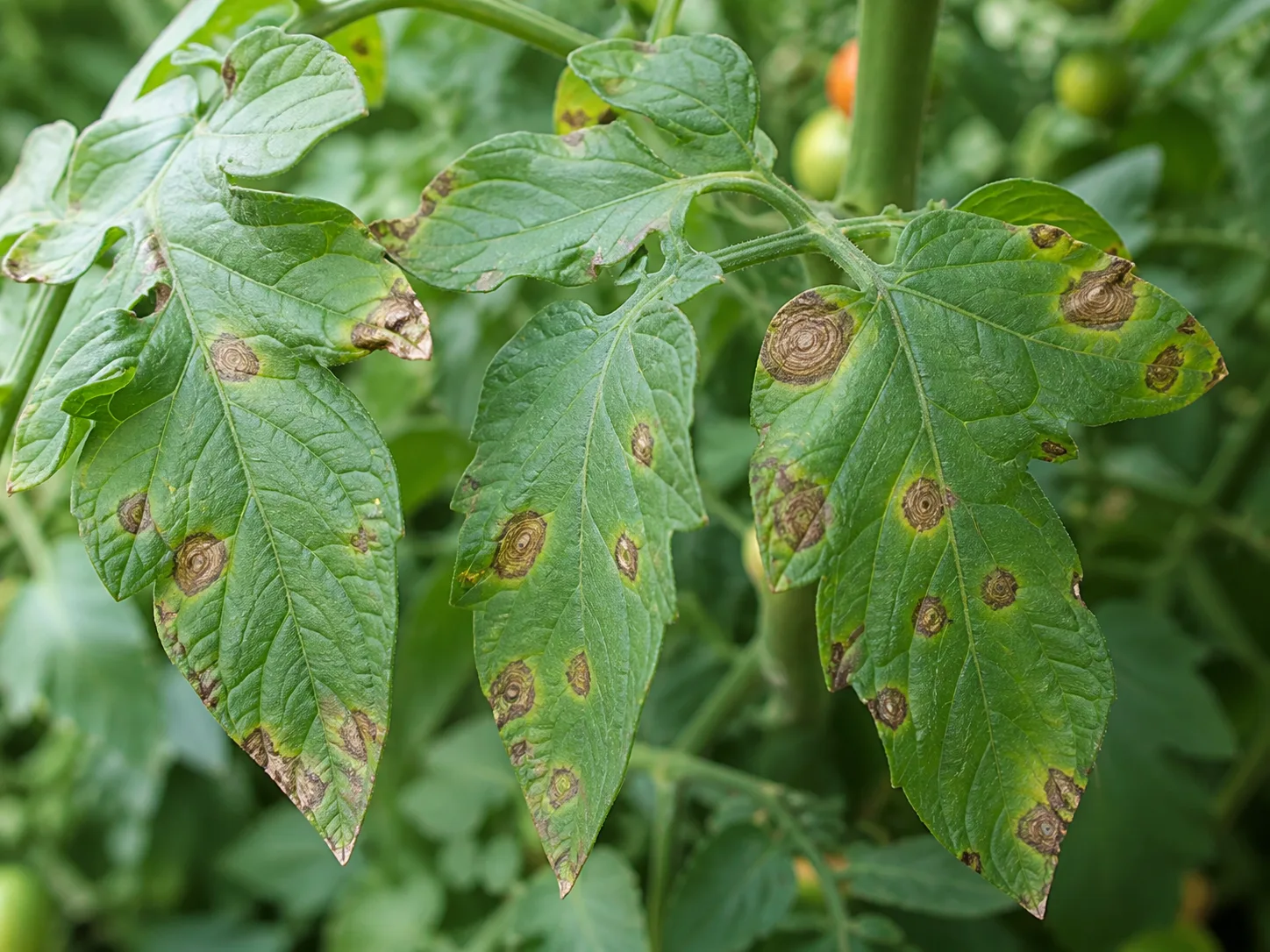
A close view helps you compare spot size, centers, edges, and ring patterns before choosing a treatment.
The Clemson Cooperative Extension tomato diseases and disorders guide is a useful diagnostic reference because it covers infectious diseases and common growing disorders together. If two possible diagnoses require different treatment, send a sample or clear photographs to your local extension diagnostic service rather than escalating blindly.
Leaf spots: location and texture narrow the diagnosis
Spots that begin on the lowest leaves often start with infected soil splashing upward. Septoria leaf spot usually makes many small, round spots with pale or tan centers; early blight makes larger brown lesions with concentric rings; and late blight makes fast-moving, greasy or water-soaked blotches, sometimes with white growth underneath in humid weather. Bacterial spot and bacterial speck can resemble fungal spots, but fruit spots and the weather pattern can help separate them.
Do not diagnose from color alone. Look at the spot’s edge, center, size, underside, and rate of spread, and check whether fruit or stems are involved. The University of Minnesota’s tomato leaf spot guide notes that early leaf spots can be difficult to separate, but keeping foliage dry, mulching, staking, and removing a limited amount of spotted tissue are useful across the common leaf-spot diseases.
Wilting: test the stem and root zone before watering
A wilted tomato is not automatically thirsty. Check the soil several inches down, then inspect the stem and roots if the soil is already moist. Heat stress and uneven watering can improve after conditions stabilize; a vascular wilt may show one-sided yellowing and brown streaking inside the lower stem; bacterial wilt may cause sudden, permanent collapse; and southern blight can girdle the stem right at the soil line.
If a plant wilts at midday but recovers overnight and the soil is dry, water thoroughly and observe it for 24 hours. If it wilts in wet soil, declines from the bottom up, or several plants fail in the same bed, stop treating it as a watering problem and investigate roots, stem tissue, and the planting history.
Fruit blemishes: compare blossom end, stem end, and soil contact
The blossom end is the end opposite the stem. A dry-looking, dark, sunken patch there is often blossom end rot, a physiological disorder linked to calcium availability and uneven water supply. A firm brown lesion with rings where a tomato touches wet soil points more toward buckeye rot, while small sunken spots that enlarge as fruit ripens suggest anthracnose.
Fruit exposed after heavy leaf loss can develop a pale, leathery sunscald patch. Greasy lesions on both foliage and fruit during cool, wet weather raise concern for late blight. When fruit is soft, moldy, foul-smelling, or extensively rotted, discard it rather than trying to rescue a portion that has been in contact with decaying tissue.
The 22 tomato diseases and disorders
The list below keeps the familiar 22-problem scope but labels the categories honestly. Blossom end rot, gray wall, and sunscald are not infections. Root-knot nematodes are microscopic pests, and damping off is a group of seedling diseases caused by several organisms. That distinction matters because a fungicide cannot correct a calcium-uptake disorder, a virus, or a nematode-infested root system.
| Problem | Most useful first clue | Best first response |
|---|---|---|
| Early blight | Brown lower-leaf spots with rings | Remove spotted leaves, mulch, keep foliage dry |
| Fusarium or Verticillium wilt | One-sided yellowing and wilt; brown vascular tissue | Remove affected plants and use resistant cultivars |
| Powdery mildew | White powder on leaf surfaces | Improve airflow and protect new growth if label allows |
| Anthracnose | Sunken spots on ripening fruit | Remove fruit, mulch, and avoid overhead water |
| Septoria leaf spot | Many small spots with pale centers | Remove early spotted leaves and reduce splash |
| Botrytis gray mold | Gray fuzzy growth on damaged tissue | Remove affected tissue and increase ventilation |
| Bacterial speck | Tiny dark fruit and leaf spots in cool wet weather | Keep plants dry and use clean seed or transplants |
| Southern blight | Brown stem lesion and white growth at soil line | Remove the plant and avoid replanting tomatoes there |
| Gray leaf spot | Small dark spots that enlarge and crack out | Sanitation, airflow, rotation, resistant varieties |
| Late blight | Fast greasy blotches with possible white growth | Isolate, confirm quickly, and remove infected plants |
| Blossom end rot | Dark sunken patch on blossom end | Even moisture and soil-test-led nutrition |
| Buckeye rot | Firm brown rings where fruit touches soil | Mulch, stake, improve drainage, remove fruit |
| Gray wall | Gray internal fruit walls or blotchy ripening | Stabilize growth, moisture, light, and nutrition |
| Leaf mold | Yellow upper spots with velvety underside growth | Ventilate, space plants, and keep leaves dry |
| Tomato pith necrosis | Blackened stem with hollow or disintegrating pith | Avoid excess nitrogen and overhead irrigation |
| Damping off | Seedlings fail to emerge or collapse at soil line | Use clean mix and containers; avoid saturated soil |
| Mosaic virus diseases | Mottled, distorted leaves and stunting | Remove suspect plants and sanitize hands and tools |
| Bacterial wilt | Sudden wilt, often without an early leaf-spot pattern | Remove plant and avoid susceptible crops in that soil |
| Root-knot nematodes | Stunting with swollen root galls | Use resistant plants and rotate away from hosts |
| Sunscald | Pale, leathery patch on exposed fruit | Preserve enough leaf cover and shade exposed fruit |
| Bacterial spot | Dark leaf spots, holes, and scabby fruit spots | Use clean planting material and reduce splash |
| Tomato yellow leaf curl | Small upward-curling yellow leaves and flower drop | Manage whiteflies and remove confirmed plants |
Leaf and stem diseases
Early blight is caused by Alternaria species and usually starts on older lower leaves as dark brown spots with target-like rings. It can move into stems and fruit, and the loss of leaf cover can expose fruit to sunscald. Remove the most affected lower leaves without stripping the plant bare, stake or cage it, mulch the soil, and water at the base. A labeled protectant fungicide may slow new infections when used early, but it will not restore dead tissue.
Septoria leaf spot makes numerous small, circular lesions with tan or gray centers and tiny dark specks. It mainly damages foliage rather than fruit, but severe leaf loss can reduce the plant’s ability to ripen a crop. Pinch off spotted leaves when the disease is first noticed, remove fallen debris, and keep soil from splashing onto new leaves. The University of Minnesota advises not removing more than about one-third of the foliage at once; leaving enough healthy leaf area is part of the treatment.
Late blight is caused by the oomycete Phytophthora infestans, not the same organism as early blight. It favors cool, wet conditions and can move rapidly through leaves, stems, and fruit. The Royal Horticultural Society’s tomato blight guide describes rapidly spreading watery leaf rot, brown stem lesions, and fruit decay; white growth may appear under leaves when conditions stay humid. Separate a suspect plant from healthy plants, avoid handling wet foliage, and contact an extension service when the diagnosis will affect the rest of the garden. Remove and dispose of confirmed infected plants and volunteer tomatoes or potatoes that could keep the pathogen moving.
Powdery mildew appears as white, flour-like patches on leaves and sometimes stems. Unlike many splash-spread leaf spots, the disease can develop when the air is humid even if leaves are not constantly wet. Prune only enough to restore airflow, remove heavily affected leaves, and water the soil rather than misting foliage. If using sulfur, horticultural oil, or another fungicide, check that the product is labeled for tomatoes and the target disease, and follow all heat, harvest, and reapplication restrictions.
Leaf mold is most common in humid protected growing spaces. Yellow or pale patches appear on the upper leaf surface, while the underside develops olive, gray, or brown velvety growth. Ventilate a greenhouse, space plants so air can move through the canopy, water at the soil line, remove infected leaves, and choose resistant cultivars where available. Leaf mold is easy to confuse with late blight, but extensive stem lesions and rapidly rotting fruit are stronger warnings for blight.
Gray leaf spot begins as small dark spots, often with yellow halos, that enlarge and may crack or fall out of the leaf. It can be carried on crop residue or volunteer plants and is more likely to keep cycling when foliage stays wet. Remove infected debris, control solanaceous weeds, improve airflow, and rotate tomatoes away from the same bed. North Carolina State Extension’s gray leaf spot guidance emphasizes that rotation works best as one part of a broader plan rather than as a standalone cure.
Botrytis gray mold produces soft decay and gray fuzzy growth on injured leaves, stems, flowers, or fruit, especially during cool, humid periods. Remove damaged tissue when plants are dry, make pruning cuts that can dry quickly, and improve ventilation around the canopy. Do not leave infected fruit in the plant or harvest basket. A gray-mold product may protect uninfected tissue in some settings, but a spray cannot reverse soft rot already established in fruit.
Tomato pith necrosis is associated with Pseudomonas bacteria and often appears during cloudy, cool, moist periods when plants are making rapid early-season growth. Stems may blacken, split, or develop hollow, disintegrating pith; yellow leaves and extra roots on the stem can follow. Avoid excessive early nitrogen, keep the soil adequately moist without wetting foliage, and give plants more space. Clemson Extension notes that warmer weather can allow some plants to recover, while plants that collapse should be removed with their roots; there is no spray that reliably cures this problem.
Fruit diseases and physiological disorders
Anthracnose starts as a small sunken spot on ripening fruit and expands inward, sometimes with dark centers or salmon-colored spore masses in wet weather. Harvest promptly, remove rotting fruit, mulch to keep fruit off soil, and avoid overhead irrigation. Use clean seed or transplants and rotate tomatoes, peppers, and eggplant away from a contaminated bed when practical. Fungicides are preventive tools for protecting new fruit, not a way to make a visibly rotted tomato safe.
Buckeye rot makes firm, smooth, brown lesions with concentric rings, often where fruit touches soil. It is favored by warm wet conditions, surface water, and poor drainage, and the fruit may eventually collapse. Stake or cage plants, mulch beneath them, improve drainage, remove affected fruit, and avoid planting tomatoes or peppers in the same problem spot until the soilborne pressure has been reduced. Do not confuse the firm rings of buckeye rot with the rougher, faster-moving lesions of late blight.
Blossom end rot is a physiological disorder rather than a contagious disease. The first fruit shows a water-soaked patch at the blossom end that turns brown or black as tissue collapses. Maintain even soil moisture with deep, regular watering and mulch, avoid damaging roots, and use a soil test before adding lime, gypsum, or fertilizer. Clemson Extension’s recommendations explain why excess salts and certain nitrogen, potassium, or magnesium inputs can interfere with calcium availability. A calcium spray cannot repair the affected fruit.
Gray wall causes gray or blotchy areas in the fruit wall, sometimes with green or brown internal tissue that is most obvious when the tomato is cut. It is associated with stressful growing conditions such as cool temperatures, uneven growth, shade, or nutrient imbalance rather than a pathogen that can be sprayed away. Keep plants growing steadily, provide adequate light, water consistently, and avoid pushing lush foliage with excess nitrogen. Remove affected fruit, but do not pull an otherwise healthy plant just because one crop is ripening unevenly.
Sunscald appears as a pale, yellow, white, or tan leathery patch on the side of a fruit facing intense sun. It often follows aggressive pruning or disease-related defoliation, so the prevention is to protect the leaf canopy rather than treating the fruit. Keep enough healthy foliage to shade developing tomatoes, avoid removing leaves during the hottest part of the season, and use temporary shade cloth in extreme heat. Fruit with a small dry patch can be assessed for quality after harvest; fruit with secondary mold or extensive decay should be discarded.
Wilts, root problems, and seedling collapse
Fusarium and Verticillium wilt both interfere with water movement inside the plant and can look like heat stress at first. Lower leaves yellow, a single side of the plant may decline, and cutting the lower stem can reveal brown vascular tissue without the soft, foul decay of a root rot. There is no reliable home-garden cure once a plant is systemically infected. Remove the plant and roots, do not reuse contaminated potting mix, control weeds that can host disease, and choose cultivars with the resistance codes that match your pathogen and region, such as F, FF, or V.
Bacterial wilt can cause a rapid, permanent wilt of an otherwise green plant, especially in warm wet soil. It is soilborne and can affect other nightshades, including pepper and eggplant. Pull the plant and as much of the root system as practical, bag or dispose of it according to local rules, clean tools, and do not replant a susceptible crop in the same spot until you have a rotation and diagnosis plan. Because bacterial wilt can resemble other wilts, a diagnostic service is worthwhile when several plants are affected.
Southern blight begins as a brown to black lesion at the soil line and may develop white fungal growth with small tan or reddish-brown survival bodies. The stem is girdled, the plant wilts suddenly, and fruit touching infested soil can collapse within days. NC State Extension links the disease to hot, moist conditions and explains that the fungus can persist in soil and plant debris. Remove symptomatic plants and nearby debris, reduce weeds, improve drainage, and rotate with non-host crops; home gardeners should not attempt soil fumigation without professional guidance.
Root-knot nematodes are microscopic roundworms that feed on roots and create swollen galls. Plants may be stunted, wilt during heat, or show nutrient stress even when the soil is moist. Inspect roots at the end of the season or send them for diagnosis, use resistant tomato cultivars marked N when appropriate, rotate to non-host crops, and remove roots after harvest. Marigolds may fit into a rotation plan, but one border of marigolds is not a guaranteed cure for a heavily infested bed.
Damping off affects seeds and young seedlings, which may fail to emerge or collapse where the stem meets wet growing medium. It is a disease complex favored by saturated, crowded, poorly ventilated conditions. Start seeds in clean containers with fresh, well-drained mix, sow thinly, provide bright light and airflow, and let the surface dry slightly between waterings. Discard collapsed seedlings and sanitize trays; extra fertilizer will not revive a rotted stem.
Bacterial and viral diseases
Bacterial speck produces tiny dark spots on leaves, stems, and fruit, often with a yellow halo, and is particularly associated with cool wet weather. Bacterial spot can look similar on leaves but usually makes larger, scabby or slightly raised fruit spots. The University of Minnesota comparison notes that the fruit spots are often more useful for separating speck from spot than the leaf lesions. Use disease-free seed and transplants, avoid handling wet plants, water at the base, remove severely affected tissue, and use a copper product only when a current label and local guidance support that use.
Mosaic virus diseases cause mottled light and dark green leaves, distorted new growth, stunting, and sometimes mottled or internally discolored fruit. Viruses do not respond to fungicides. Remove a confirmed plant, clean pruners and hands before moving to healthy plants, control weeds and insect vectors, and do not save seed or cuttings from suspect plants. Because herbicide injury and nutrient stress can also distort leaves, use photographs and a diagnostic service before removing a valuable planting when the pattern is ambiguous.
Tomato yellow leaf curl virus causes small, curled, yellowing leaves, shortened growth, flower drop, and poor fruit set. It is spread primarily by whiteflies in areas where the virus occurs. UC Integrated Pest Management guidance recommends resistant varieties, virus-free transplants, whitefly management, weed control, and removal of infected plants when incidence is low. There is no spray that cures an infected plant; the goal is to prevent the next plant from becoming infected.
How to treat a suspected tomato disease
Treatment is a sequence, not a single product. Start with the action that reduces spread without harming a healthy plant: keep leaves dry, stop moving through the crop when it is wet, remove fruit or leaves that are clearly infected, and mark the plants whose symptoms are changing. A plant that is still producing and has a limited number of leaf spots may be worth monitoring; a plant with a confirmed virus, vascular wilt, or basal stem girdling is usually a source of continuing inoculum and should be removed.
Decide whether to remove, monitor, or protect new growth
Remove a plant promptly when the disease is systemic, the stem is girdled, the plant is collapsing in wet soil, or infection is spreading faster than you can isolate it. Bag or contain diseased material while carrying it out, clean tools afterward, and follow local rules for yard-waste disposal. Do not automatically compost visibly diseased tomato tissue in a small home pile that may not heat evenly.
Monitor when the damage is limited to a few lower leaves, the plant is growing normally, and the suspected problem is a common leaf spot or disorder. Remove no more than a manageable portion of foliage at one time, leave healthy leaves for photosynthesis, and reassess after dry weather. For fruit disorders such as blossom end rot or sunscald, remove affected fruit while protecting the plant’s remaining canopy.
Use pesticides only after the diagnosis and label fit
Fungicides and bactericides are generally protectants: they can reduce new infections on tissue that is still healthy, but they do not erase spots, reverse wilt, cure viruses, or make rotted fruit usable. A product that helps early blight may not help bacterial spot, and a product labeled for ornamentals may not be legal on edible tomatoes.
Before applying anything, confirm the likely problem, read the current product label, check that tomatoes and the target disease are listed, follow the rate and protective-equipment directions, and observe the preharvest interval. The EPA pesticide-label guidance explains that labels contain the directions and precautions needed for safe, legal use. If the label does not name the crop and use, do not improvise with a stronger mix, a homemade combination, or a shorter harvest wait.
Prevention that works across most tomato disease problems
No prevention plan blocks every disease, but it can interrupt the conditions that allow many pathogens to move from soil or an infected plant onto fresh tissue. Focus on dry foliage, clean planting material, enough space for air, stable root-zone moisture, and a fall cleanup that does not leave tomato and potato debris as a bridge into the next crop.
Keep leaves dry and air moving
Water the soil with drip irrigation, a soaker hose, or a slow stream at the base rather than wetting the canopy. Morning watering is preferable when overhead water is unavoidable because leaves have more time to dry. Space plants according to the mature size of the variety, stake or cage them early, remove weeds from the immediate bed, and prune only when the plant is dry.
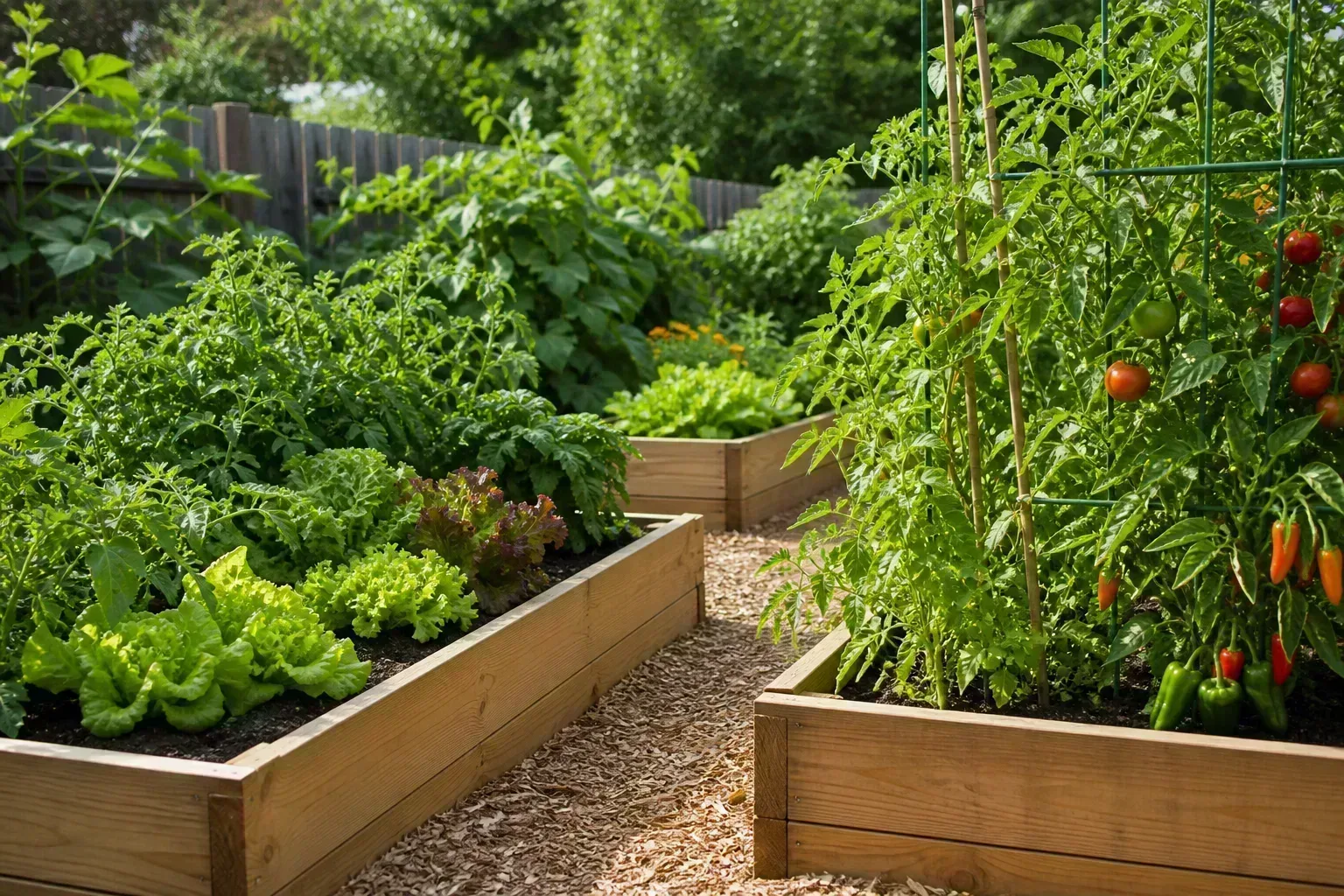
Open spacing, a service path, and raised beds make it easier to keep tomato foliage dry and inspect plants regularly.
Mulch after the soil has warmed to reduce splash from rain and irrigation. A layer of clean straw, leaf mold, or another suitable mulch also makes it easier to keep fruit off the soil. Do not pile wet mulch against the stem, and do not use grass clippings or leaves that may contain lawn herbicide residues.
Manage soil, rotation, and sanitation
Remove fallen leaves and rotten fruit during the season, and pull up roots after the crop finishes. Rotate tomatoes, peppers, eggplant, and potatoes away from beds with recurring soilborne disease when space allows; two or three years may be more useful than changing from one nightshade to another. The exact rotation length depends on the pathogen, climate, and local extension guidance, so treat a calendar as a planning tool rather than a guarantee.
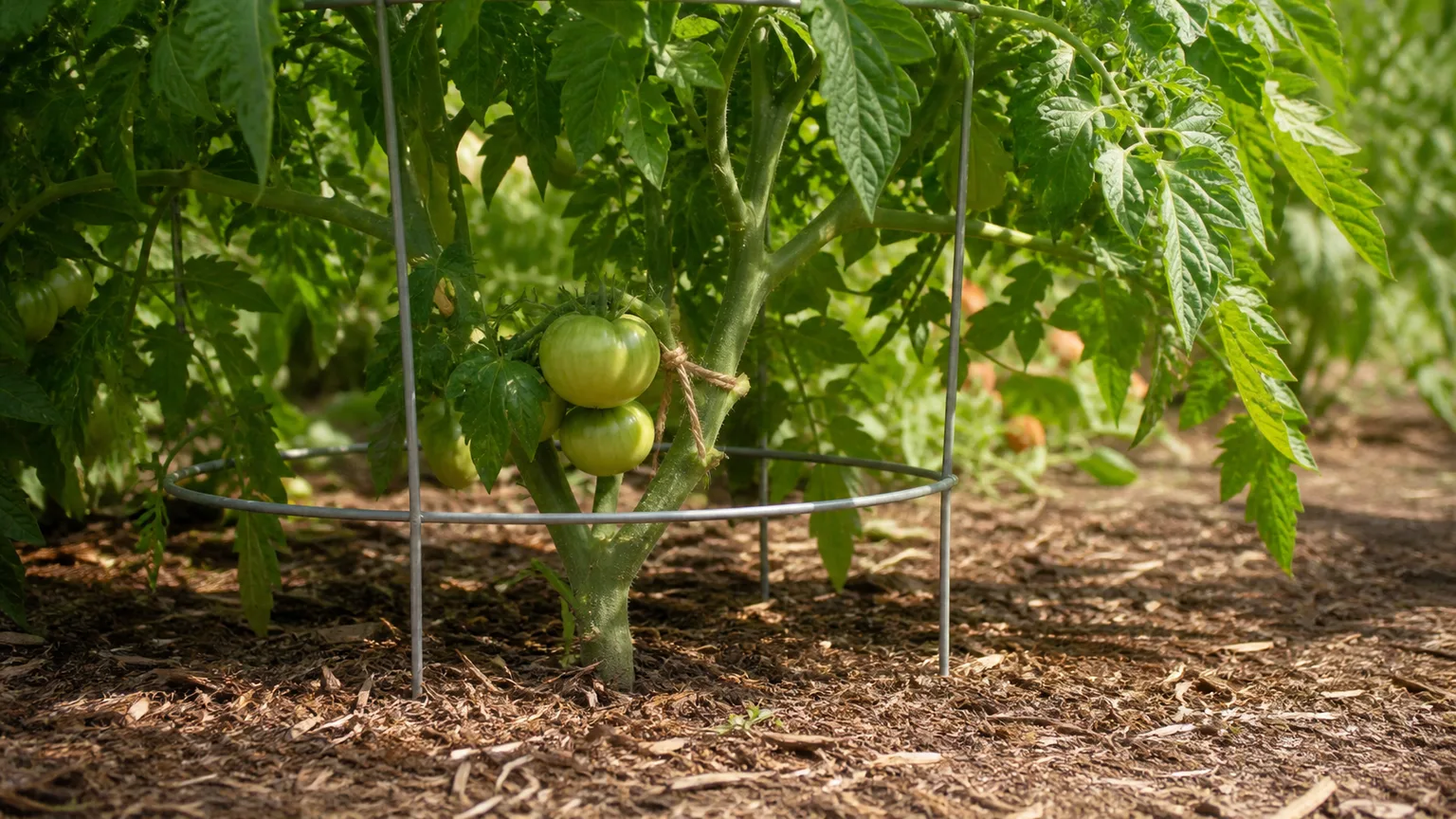
A cage and clean mulch keep foliage and fruit off the soil while making cleanup and scouting easier.
Clean cages, stakes, pruners, and hands after working with a suspect plant. Avoid working through the crop when leaves are wet, since moisture helps some bacteria move on tools and skin. Clean soil from tools before disinfecting them, and keep volunteer tomatoes and weeds from silently carrying a disease into the next planting.
Start with clean seed and resistant varieties
Buy disease-free seed and transplants from a source that names the cultivar and resistance package. Resistance is not immunity: a variety marked VFN may have protection against specific races of Verticillium, Fusarium, and root-knot nematodes, but it may still develop early blight, bacterial spot, or a virus. Match the resistance code to the disease pressure you actually have, and ask an extension office which races and varieties matter in your area.
For seedlings, use clean containers and fresh seed-starting mix, provide strong light and airflow, and avoid keeping the tray constantly wet. For established plants, avoid excess nitrogen that produces a dense, soft canopy and can worsen some disease problems. A soil test is a better basis for lime and fertilizer decisions than a calendar application or a social-media remedy.
When to remove a plant or get a professional diagnosis
Pull a tomato plant when a confirmed virus is spreading, a vascular wilt is advancing through the plant, southern blight has girdled the stem, late blight is moving rapidly, or the plant is clearly serving as a source for nearby infections. Remove the root system when practical, keep diseased material out of a poorly managed compost pile, and do not save seed from suspect fruit.
Ask a diagnostic clinic for help when the symptom pattern is ambiguous, several diseases fit, the bed has a history of wilt or nematodes, or the decision affects a large planting. Send fresh symptoms, the whole-plant context, the underside of leaves, a stem cross-section if requested, the growing location, and recent weather. A good diagnosis can save more plants than a broad-spectrum spray applied after the disease has already spread.
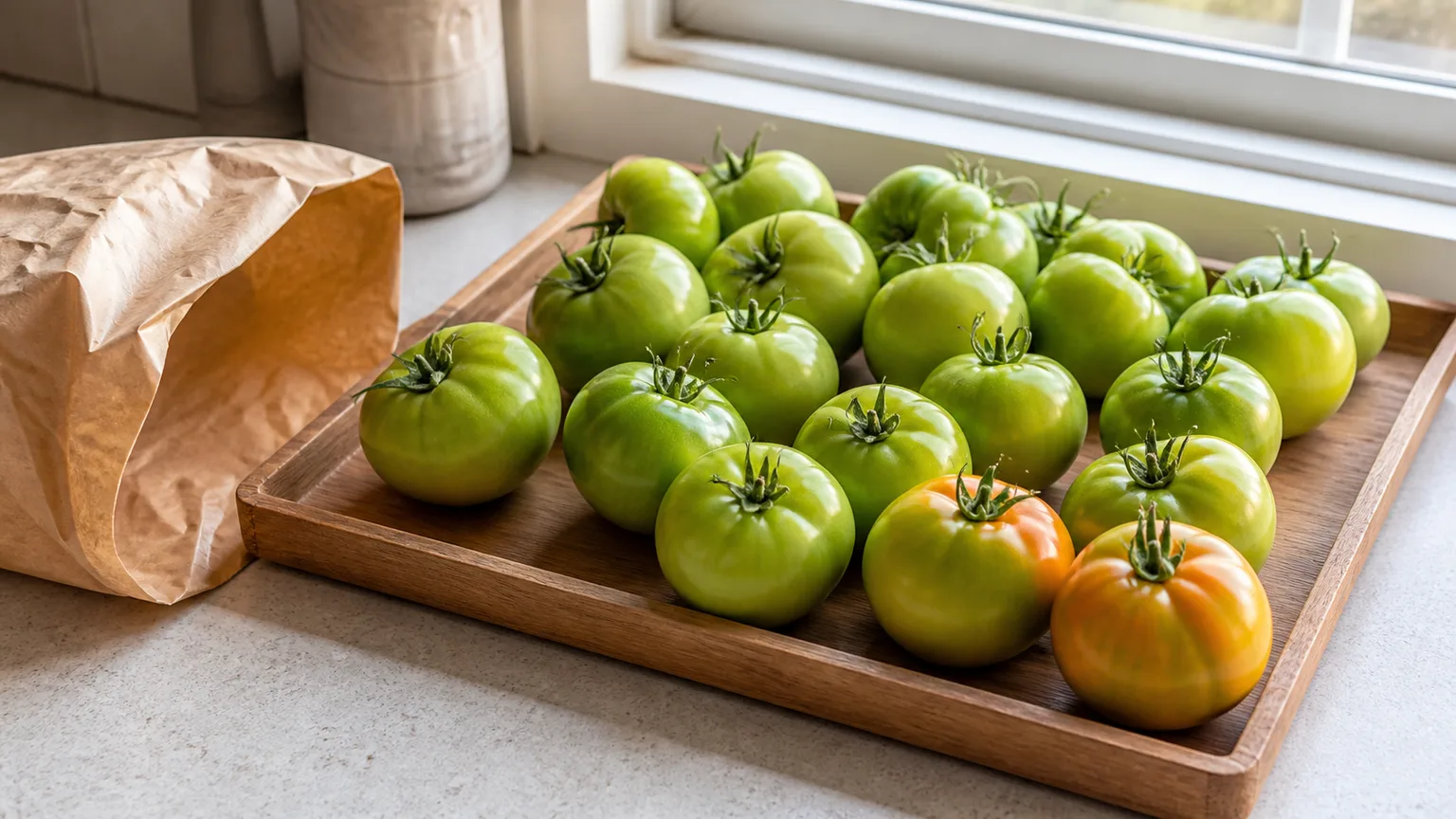
Harvesting sound fruit can preserve part of the crop while you remove plants that are spreading a confirmed disease.
Do not confuse a single damaged tomato with a crop-wide disease. Blossom end rot, sunscald, heat-related leaf roll, growth cracks, and nutrient stress can affect fruit or leaves without being contagious. Correct the growing condition, protect healthy growth, and watch the next flush before removing a productive plant.
Conclusion
The fastest way to handle tomato disease is to slow down long enough to read the pattern. Start with the plant part affected, compare the texture and location of the symptom, consider recent weather and watering, and then choose the least disruptive action that fits the likely cause.
Keep foliage dry, mulch the soil, give plants room, rotate nightshades, clean tools, and start with clean seed and resistant cultivars. Those habits will not make a tomato crop invincible, but they do reduce the spread of many leaf spots and fruit rots—and they make the diseases that remain easier to identify and manage.



