How to Identify Mold vs. Mildew at Home
Learn how to identify mold vs. mildew with surface tests, smell cues, and location clues—plus when DIY cleanup is safe and when to call a pro.
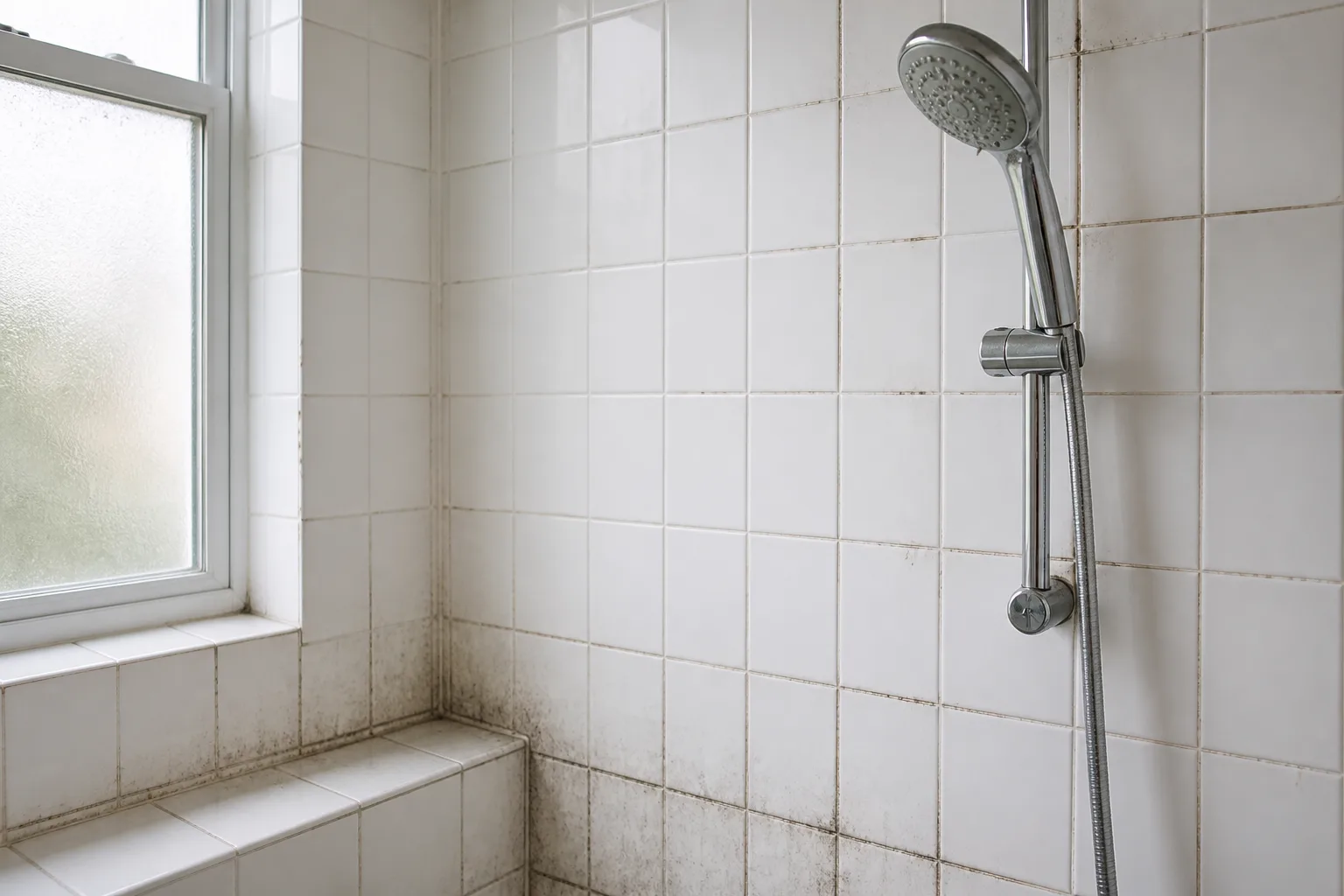
You notice a patch in the bathroom corner and reach for the label that says “mold and mildew remover”—but identifying mold vs. mildew first changes what you should do next. Both are fungi that need moisture, yet the useful split is not color alone. Surface mildew usually sits on top of tile, glass, or fabric and wipes away when the area dries. Penetrating mold sends hyphae into porous materials like drywall, wood, and carpet padding, so scrubbing the surface can spread spores without fixing the colony underneath.
The Quick Answer: Surface Mildew vs. Penetrating Mold
If a damp cloth lifts the growth off a hard, nonporous surface and it stays gone after the area dries for several days, you are almost certainly dealing with surface mildew—a flat, powdery fungal film. If the spot is raised, fuzzy, or slimy, smells strongly musty, smears when you wipe it, or returns in the same place within days, treat it as mold until a moisture source is found and fixed. The CDC does not ask you to name the species: if you see or smell mold, remove it and fix the water problem. Color cannot tell you whether growth is more or less dangerous, and home test kits rarely change that action plan.
What Mold and Mildew Actually Are
Mold is a broad term for fungal colonies that grow on organic material when moisture, oxygen, and a food source align. Outdoors, molds break down dead leaves and wood. Indoors, they colonize paper-faced drywall, ceiling tiles, dust, fabric, wallpaper, insulation, and even settled organic film on concrete. Spores are always present at low levels in indoor and outdoor air; they become visible once a colony establishes on a wet surface, often within 24 to 48 hours after materials stay damp.
Why Mildew Is Still Mold
Mildew is not a separate organism class. In everyday home language—and in EPA guidance—it usually means mold with a flat, surface-level growth habit: powdery or downy white, gray, or yellowish film on shower grout, window sills, or damp fabric. It is still mold. Calling something “mildew” describes where and how it grows (on the surface, spreading outward) more than a safe-vs-dangerous line. That distinction matters because many pages imply mildew is harmless while mold is toxic. In reality, both can trigger symptoms in sensitive people; the bigger practical difference is whether you can clean the surface or must remove porous material and stop hidden moisture.
Common Indoor Species You May See
The CDC lists Cladosporium, Penicillium, and Aspergillus among the most common indoor molds. You may also encounter greenish-black Stachybotrys chartarum on cellulose-rich materials—fiberboard, gypsum board, paper—that stayed wet from leaks, condensation, or flooding. Stachybotrys requires constant moisture to grow and cannot be confirmed by color alone. The CDC states that no test proves an association between Stachybotrys and particular health symptoms for every person, and that all molds should be treated the same for health risks and removal. Chasing a Latin name rarely helps a homeowner more than finding the leak and removing the growth.
Mold vs. Mildew: Side-by-Side Comparison
Use the table as a field guide, then run the tests below. One row usually settles the question faster than debating black vs. green.
| Feature | Mildew (surface habit) | Mold (penetrating growth) |
|---|---|---|
| Typical look | Flat, powdery or downy | Fuzzy, raised, sometimes slimy |
| Common colors | White, gray, yellowish | Black, green, blue, brown, many colors |
| Surface depth | Sits on top | Grows into porous materials |
| On tile/grout | Common; often soap-scum related | Possible if grout is failed or wall is wet behind tile |
| Smell | Faint musty, if any | Stronger earthy or musty odor |
| After wiping hard surface | Often gone when dry | Smears, stains, or returns quickly |
| Typical cleanup | Household cleaner on hard surfaces | May require cutting out drywall, carpet, or insulation |
| Health note | Can still trigger allergies | Same spectrum; larger hidden colonies raise exposure |
Appearance, Texture, and Color
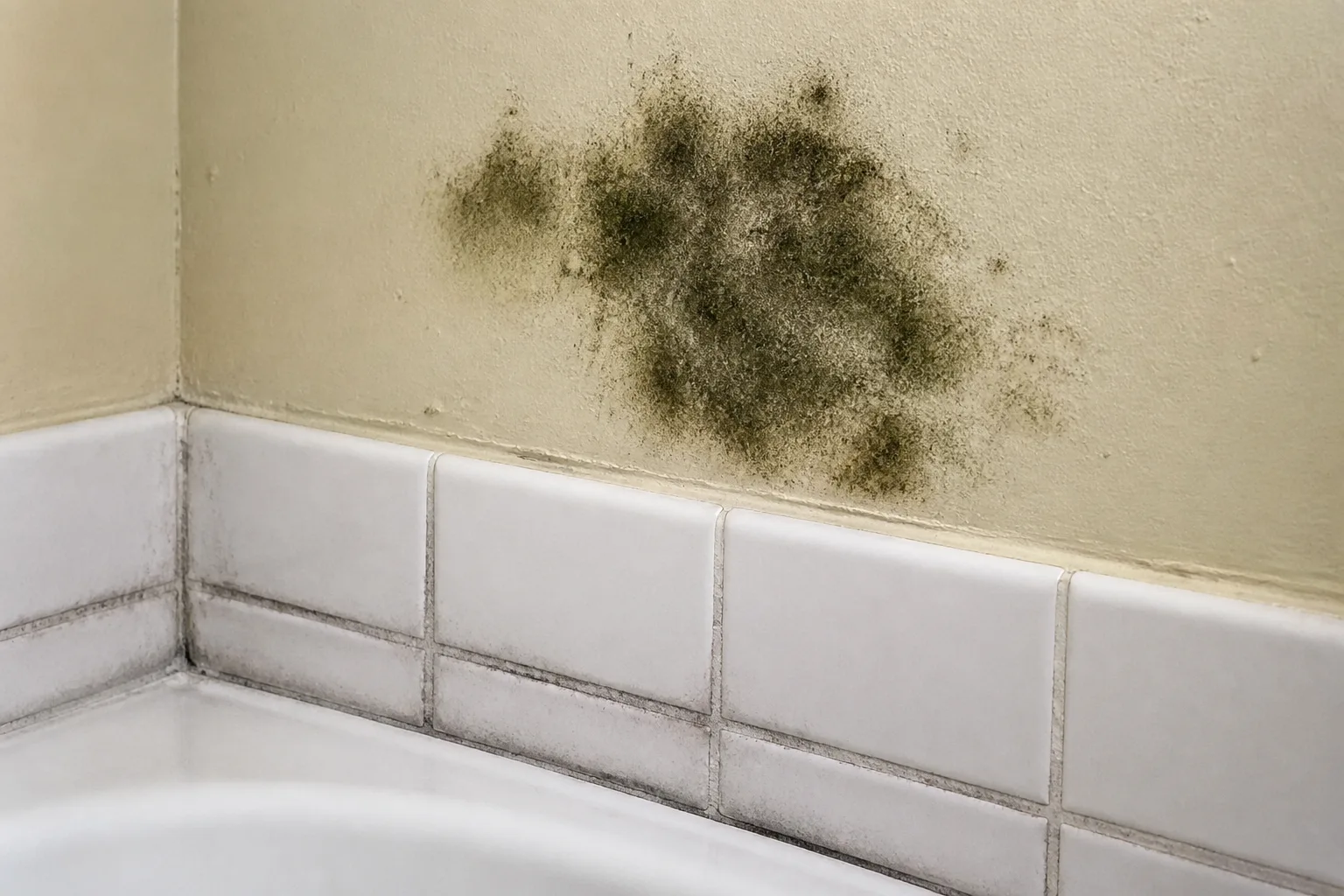
Mildew on grout or glass looks like someone spilled gray flour along a line—it stays flat and may wipe to a faint stain on the cloth. Mold often looks like spotty islands with fuzzy edges, raised from the surface, or wet-looking slime on organic debris. Dark color does not prove “toxic black mold,” and light color does not prove safety. Harmless-looking black spots on silicone caulk can still be mold; bright white powder on basement concrete may be efflorescence (minerals), not a fungus at all. Texture and whether the material is porous beat color every time.
Smell as an Early Clue
Mildew may have little odor until the area stays damp for days; when present, it is a light musty smell, sometimes compared to wet laundry left in a pile. Mold colonies often produce stronger earthy, musty odors from microbial volatile organic compounds as they grow. A persistent damp smell after you cleaned visible spots suggests hidden growth—in a wall cavity, under vinyl flooring, or inside HVAC components—and warrants investigation beyond another surface wipe. Your nose is a useful early detector, not a lab instrument.
Four At-Home Identification Tests
Run these in order. No single test is proof; when two or more point to penetrating mold, stop aggressive scrubbing and shift to moisture tracing and possibly professional help.
The Surface vs. Penetration Check
On nonporous tile, glass, or sealed metal, lightly wipe with a damp microfiber cloth and mild detergent. If the growth lifts cleanly and the surface underneath looks intact and unstained, surface mildew is likely. On porous drywall, unfinished wood, or carpet, wiping may remove color while hyphae remain inside. If the paper face of drywall discolors or softens, or wood grain darkens deeper than the surface, assume mold penetration. The EPA notes that absorbent or porous materials that stay moldy often must be discarded rather than surface-cleaned.
The Wipe-and-Watch Test
After cleaning a hard surface, dry the area fully and watch it for three to seven days. Surface mildew on grout stays gone if ventilation improves and water stops pooling. Mold rooted in failed caulk, wallboard, or subfloor returns in the same footprint because the moisture source never left. A patch that reappears without a new spill is telling you to fix water, not buy a stronger bottle. For product choices once you know it is surface growth on tile, see the best mildew removers guide—still fix the fan and caulk first.
False Alarms That Look Like Mold
Not every spot is fungal. Ruling these out saves panic and wrong chemistry.
Efflorescence on basement or garage concrete looks like white crystalline powder. It is mineral salt left when water moves through masonry and evaporates. A quick check: efflorescence dissolves or softens with water and does not smell musty; mold does not dissolve and often smells. Fix the moisture path either way, but you do not need fungicide on salts.
Dirt, soot, and soap scum can mimic dark speckling. Soap film in showers holds moisture and feeds real mildew, but plain gray grime wipes away without a musty return. Water stains without active growth are tan rings with no fuzzy texture. Insect frass is granular and localized near pest activity, not a spreading film. If you are unsure, clean once, dry thoroughly, and use the wipe-and-watch test before assuming a fungal colony.
Where Mold and Mildew Show Up in the Home
Location narrows odds but never replaces the surface-depth check. Use where you found growth as a clue, not a verdict.
Bathrooms, Showers, and Grout
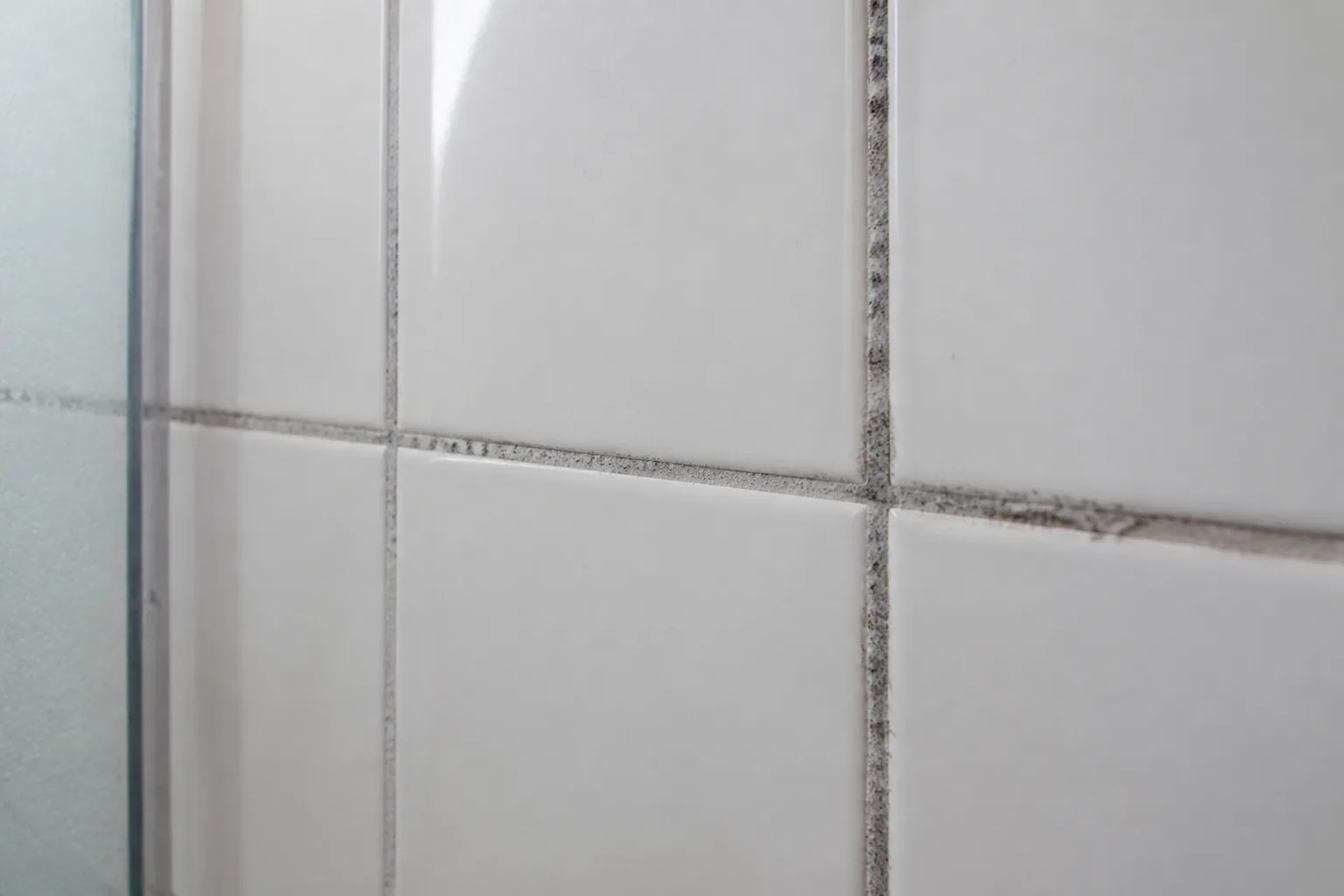
Flat gray or black film along grout lines and caulk is usually surface mildew feeding on soap residue and staying wet between showers. It sits on nonporous tile and responds to cleaning plus exhaust fan use and squeegeeing. Fuzzy patches on painted ceilings, corners above the tub, or walls outside the wet zone often mean condensation or a leak behind tile—treat as mold and find the water path. Failed caulk lets water into the wall cavity; no cleaner fixes that permanently.
Drywall, Ceilings, and Basements
Raised spots on painted drywall that return after cleaning usually indicate mold in the paper-facing of the board, especially near roof leaks, window condensation, or plumbing lines. Flat powder near a cold exterior wall can be mildew if humidity is high and airflow is poor. In basements, distinguish efflorescence from mold on concrete as above. Mold in HVAC ducts or around supply registers spreads spores house-wide and needs specialized cleaning—not a bathroom spray.
Houseplant “Mildew” Is Not Shower Mildew
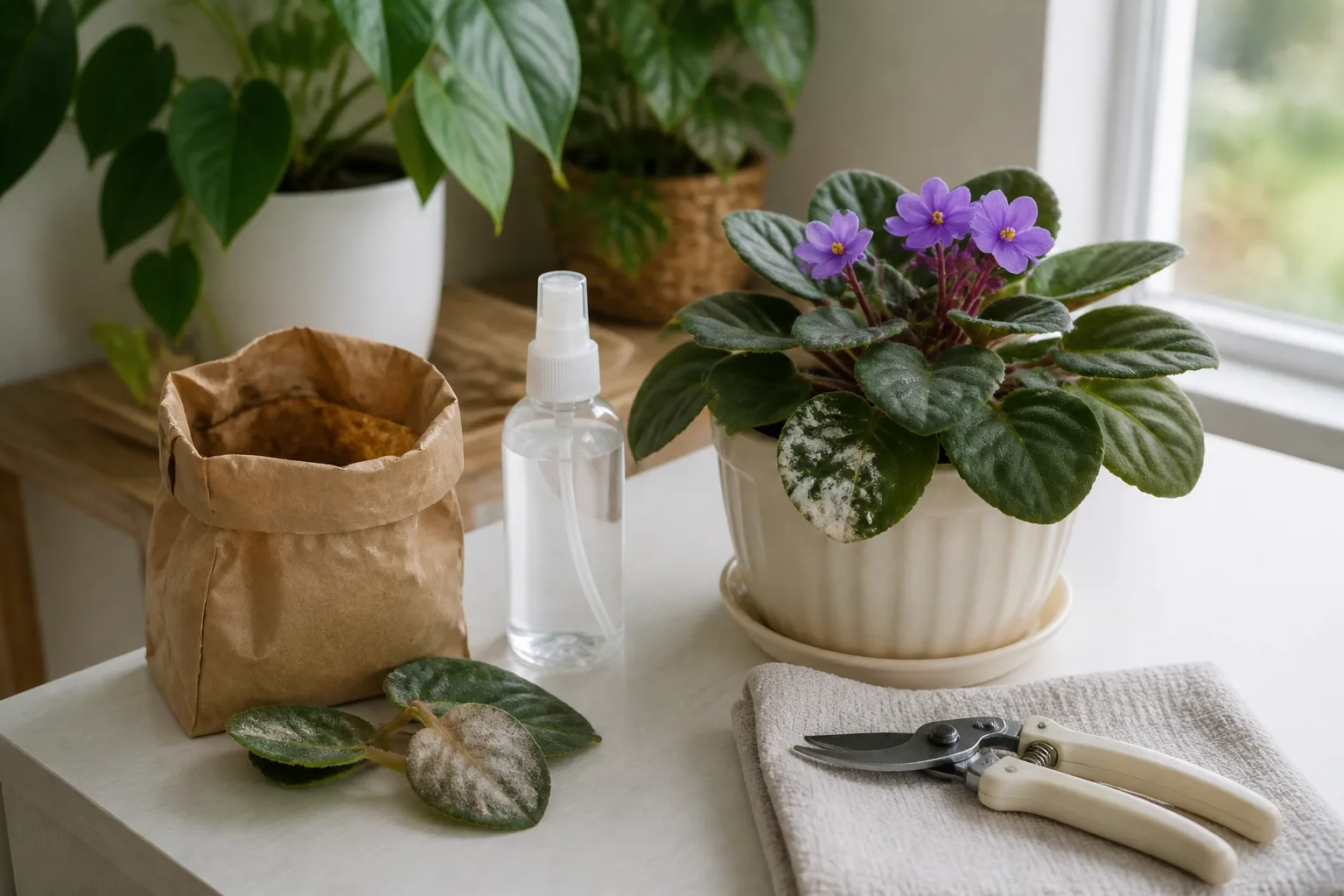
White powder on a calathea or crowded seedlings is usually powdery mildew, a plant disease driven by humidity, stagnant air, and susceptible species—not the same problem as bathroom film. Household mildew removers contain bleach, quats, or detergents formulated for sinks and tile; they can burn leaves and contaminate soil. For indoor plants, use the powdery mildew on houseplants playbook—airflow, isolation, labeled fungicides or horticultural oils—not shower spray.
Green or white fuzzy growth on potting soil is a different issue again: often harmless saprophytic mold on organic-rich mix, sometimes linked to overwatering.
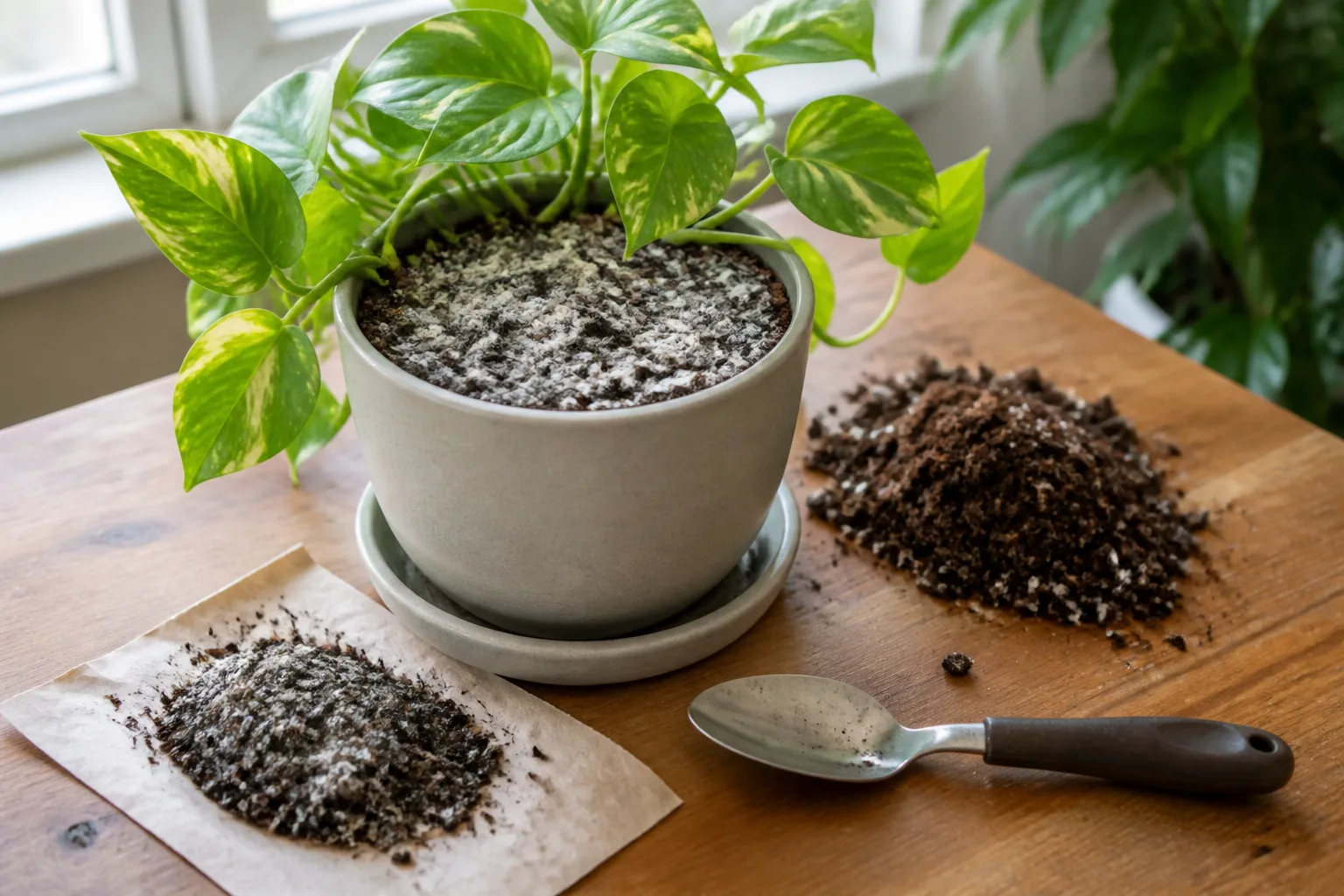
That belongs in mold on soil houseplants, not grout removers. If your search started because a monstera has spots, close the cleaning-products tab first and diagnose the plant separately from the shower.
Health Risks and When to Call a Professional
Mold and mildew sit on a spectrum of exposure, not opposite sides of a safe line. The CDC reports that damp, moldy environments may cause stuffy nose, sore throat, cough, wheezing, burning eyes, or skin rash in some people, with more severe reactions in those with asthma, mold allergy, or weakened immune systems. The Asthma and Allergy Foundation of America notes mold allergy symptoms can include sneezing, runny nose, itchy eyes, and asthma flares. Mildew with a flat surface habit can still trigger those responses; larger hidden colonies increase exposure.
CDC does not recommend routine mold testing in homes: health effects vary by person, sampling is expensive, and there are no universal acceptable spore counts. Remove visible growth and fix moisture regardless of species. For cleanup scale, the EPA advises that moldy areas smaller than about 10 square feet (roughly 3 by 3 feet) can often be handled by homeowners on hard surfaces when they use proper PPE—gloves, goggles, and ventilation—and address the water source. Call a remediation professional when growth exceeds that area, involves HVAC systems, follows sewage or flood contamination, sits in porous materials you cannot dry and remove, or returns after you fixed obvious surface moisture. Persistent symptoms that improve when you leave the house also warrant medical advice and a building investigation.
Prevention That Stops Both From Returning
Identification is step one; moisture control is what keeps growth from coming back. Keep indoor humidity at or below 50% with dehumidifiers or air conditioning, especially in basements and closed bathrooms. Run exhaust fans that vent outdoors during and after showers; confirm the dryer duct is attached and clear. Fix roof, window, and plumbing leaks promptly; dry flooded areas within 24–48 hours. Remove or replace soaked carpet and upholstery that cannot dry quickly. In bathrooms, squeegee walls, wash soap scum regularly, and replace failed caulk before film becomes a wall-cavity problem. Outdoors, keep gutters draining away from foundations. None of this is glamorous, but it is the part that actually outlasts a single cleaning session.
Conclusion
Mildew, in everyday use, means flat surface mold you can often wipe off hard, nonporous materials when the area dries. Mold, in the sense that should change your plan, means growth that penetrates, smells strong, smears or returns, or lives in porous building materials. Use appearance, smell, location, and the wipe-and-watch test together—not color alone. Treat all molds seriously enough to remove them and fix water; do not rely on home species kits to decide whether you are safe. Separate shower film from plant powdery mildew and soil mold before you spray anything. When patches stay large, hidden, or recurring, stop scrubbing and get moisture mapped by someone equipped for the job.