Mold on Houseplant Soil: Causes and Safe Removal
White mold on potting mix signals excess moisture. Tell mold from salt crusts, scrape safely, fix watering, and stop fungus gnats and root stress.
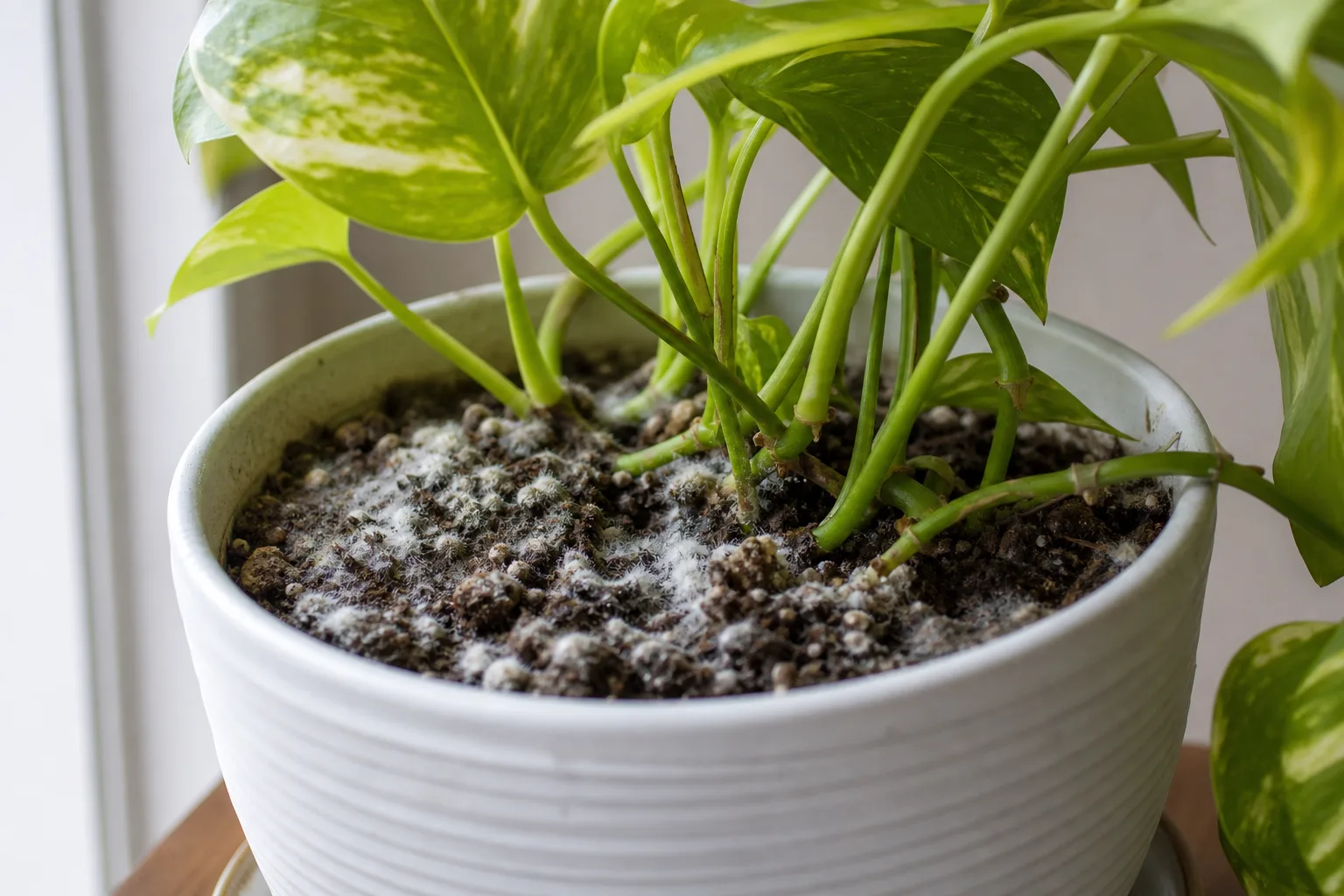
You water a healthy-looking pothos, glance at the pot, and notice a white fuzzy film across the top of the mix. It looks like the soil grew a sweater overnight. Most growers assume the plant is diseased or the bag of potting mix was “bad.” Usually neither is true.
That film is typically a saprophytic fungus — a decomposer living on dead organic bits in the mix, not a pathogen attacking living roots. The fungus itself is rarely the emergency. The moisture, stagnant air, and slow dry-down that let it bloom are the real story. This guide shows you how to tell safe surface mold from lookalikes, remove it without wrecking the plant, and change watering and airflow so it stops returning. For a shorter symptom-level overview of the same pattern, see our mold on soil symptom hub.
What That White Stuff on Your Soil Actually Is
The fuzzy white, gray, or off-white growth on potting mix is usually mycelium — the thread-like body of a fungus feeding on peat, bark, composted organics, leaf scraps, or leftover fertilizer residues. The Royal Horticultural Society describes saprotrophic (saprophytic) fungi as organisms that break down dead organic material; their mycelium can become visible as white fungal threads on soil surfaces when conditions favor growth. (RHS) In a sealed bag of moist peat-based mix, or in a pot that stays damp for days, those same decomposers get a buffet and enough humidity to show themselves where you can see them.
Surface mold is a symptom of an environment, not a plant identity problem. The same plant can stay mold-free in a terracotta pot under a bright window and grow a white mat in a plastic nursery pot sitting in a dim corner with water in the saucer. Spores are everywhere indoors; what changes is whether the top centimeter of mix stays wet long enough for colonies to expand.
That distinction matters because scraping mold without fixing dry-down is cosmetic. The colony returns in a few days because the food and moisture never left. Treat the fungus as a dashboard light: useful, sometimes ugly, almost never the engine failure itself.
Safe White Mold vs Harmful Lookalikes
Not every pale patch on soil is the same organism. Misidentifying salts as mold — or ignoring green algae while obsessing over white fuzz — wastes time and leads to the wrong fix. Use texture, smell, and moisture context before you reach for fungicides.
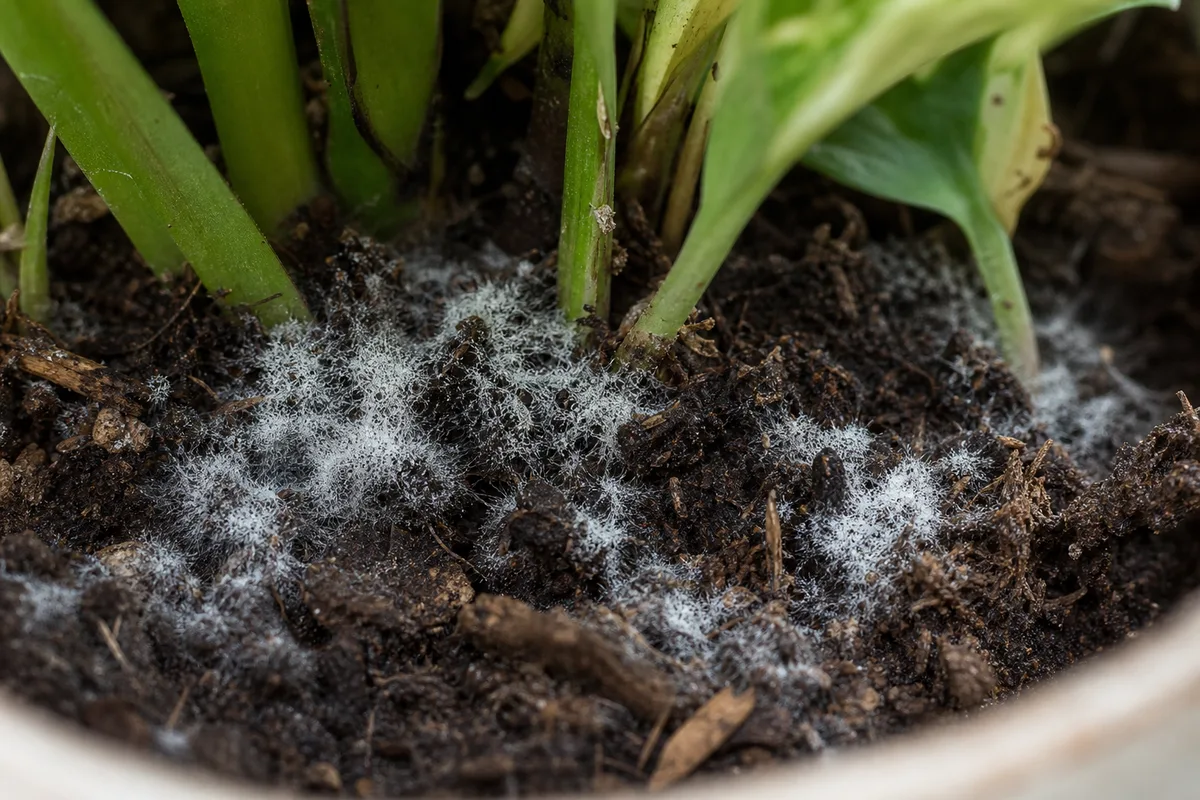
Soft fuzzy mycelium vs chalky salt crusts
Safe surface mold looks soft, fuzzy, or cottony. It often forms patches after watering, spreads across the top layer, and may return after you scrape it if the mix stays wet. The plant above can look completely fine: firm stems, normal new leaves, no foul smell from the root zone.
Clemson Extension draws the same bright line growers miss from across the room: white to grey crusty deposits on the soil surface or pot rim signal salt buildup — and that should not be confused with the white or yellow mold-like growth of saprophytic soil fungi. (Clemson HGIC) Up close, salt crusts are chalky, brittle, and crystalline. They do not smear into a soft mat when you press them with a finger.
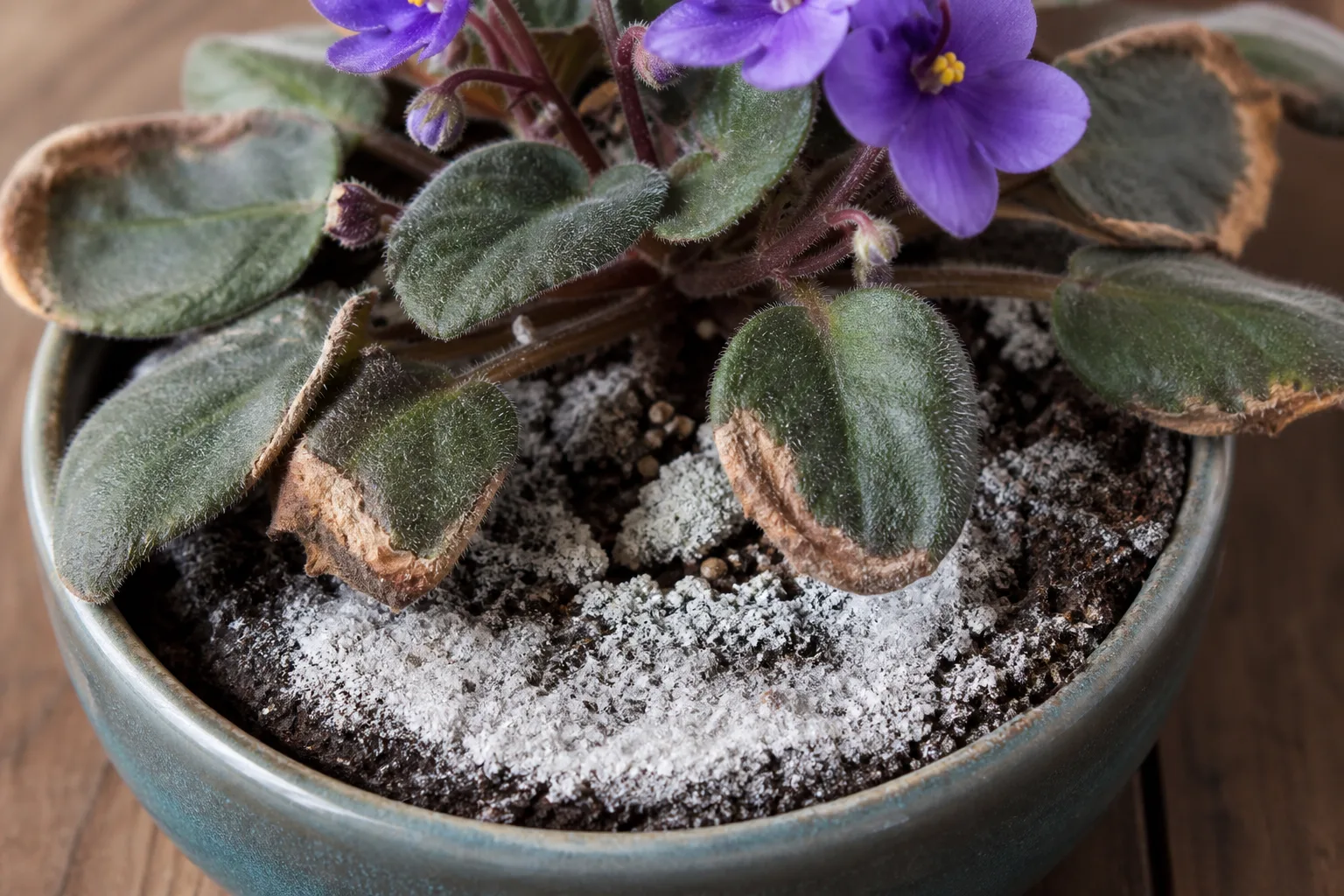
Salt crusts call for a different response: flush the pot thoroughly until water runs clear, empty the saucer, and ease up on fertilizer. Do not scrape salts and then only “water less” if the real problem is salt buildup from hard water — you need leaching, not just surface dry-down. For watering technique that reduces both mold and salt stress, use how to water indoor plants the right way.
Green algae and mealybug lookalikes
A green or greenish film on the soil or pot rim is usually algae, sometimes early moss, not white mold. Algae thrive when the surface stays wet and light reaches the mix — common in clear plastic pots, low-light bathrooms, or plants watered on a calendar. The plant may still be fine, but the green film confirms the same core issue: the top of the mix never gets a real dry interval. Brighten indirect light slightly if the species allows it, stretch watering so the surface can pale and dry, and improve airflow.
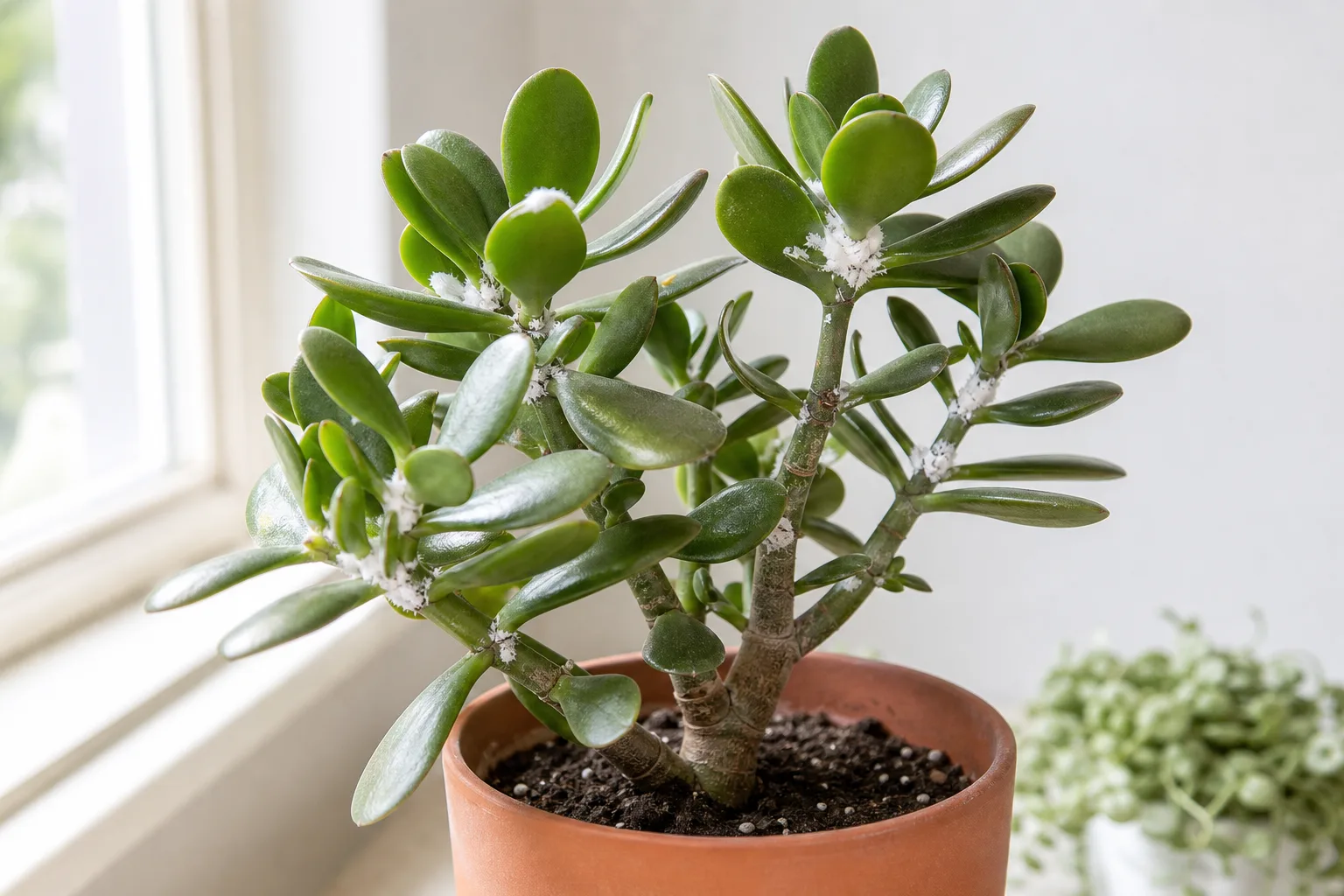
Mealybugs look like tiny cotton tufts, but they cluster on stems, leaf axils, and undersides, and they move or smear when disturbed. (UC IPM) Soil-surface mold does not crawl. If you see white fluff on foliage plus sticky honeydew, treat it as a pest problem — see mealybugs on houseplants — not potting-mix mold.
Tiny flying insects rising from the soil when you water are more likely fungus gnats — a moisture co-traveler, covered later.
| What you see | Likely ID | First move |
|---|---|---|
| Soft white/gray fuzz on damp soil | Saprophytic mold | Scrape; let surface dry between waterings |
| Green film on soil or pot | Algae / early moss | Dry surface; add light and airflow |
| Hard chalky white crust | Fertilizer / hard-water salts | Flush pot; reduce fertilizer |
| Cotton on stems/leaves | Mealybugs | Isolate and treat pests |
| Fuzzy soil + flying gnats | Mold + fungus gnats | Dry top layer; fix watering together |
A Quick Severity Ladder Before You Scrape
Not every white film deserves the same urgency. Rank what you see, then act at the right level:
- Cosmetic only — Soft white fuzz on damp mix; plant firm, no smell, no flies. Scrape, then fix dry-down.
- Recurring moisture — Film returns within days of a perfect scrape; saucer stays wet or pot stays heavy. Fix drainage and watering before another cosmetic pass.
- Suspect root stress — Wet soil plus wilting/yellowing, sour smell, or soft stems. Unpot and inspect roots; follow root rot or overwatered plant workflows.
- Household / multi-plant escalate — Mold-sensitive household members, thick musty growth in a closed bedroom, or fungus gnats exploding across many pots. Prioritize ventilation, hygiene, and collection-wide moisture correction.
If surface mold is not the priority — soft crown, foul root smell, collapsing stems — skip the scrape-first ritual and go straight to root inspection.
Why Mold Appears on Potting Mix
Mold needs three things: moisture that lingers, organic food, and enough warmth for growth. Indoor pots deliver all three when care habits drift — especially in winter, when plants use water more slowly but watering schedules stay the same.
Overwatering and slow dry-down
Clemson Extension is blunt: over-watering is the main cause of death for potted plants because roots need oxygen as well as water, and saturated mix cuts oxygen off. (Clemson HGIC) The same saturation that risks roots also keeps the surface damp enough for mold. You do not need a “daily waterer” habit for this to happen. Watering on a fixed weekly schedule in low light, leaving the pot in a full saucer, or using a cachepot that traps runoff can keep the top layer wet for days.
Missouri Botanical Garden notes that roots in waterlogged soil die from lack of oxygen and that plants stressed by wet soil become more vulnerable to certain fungal pathogens. (Missouri Botanical Garden) Surface mold is often the early, visible version of that same moisture story. If you are already seeing soft yellow leaves with heavy wet soil, shift to the overwatered plant workflow — do not just scrape the white film and keep watering the same way.
Poor drainage, dense media, and stagnant air
A pot with no drainage hole, a clogged hole, or a dense peat-heavy mix that collapses into a sponge will hold water long after the plant has finished using it. Heavy fine-textured media and high-peat blends hold more moisture than loose mixes of bark, sand, and perlite. (Clemson HGIC) Oversized pots make it worse: a small root ball cannot drink a large soil volume fast enough, so the mix stays wet and mold-friendly.
Stagnant rooms slow evaporation from the soil surface. Grouped plants, closed cabinets, grow tents with weak exhaust, and bathrooms without airflow keep a humid boundary layer over the pot. Supplemental humidity for tropicals can help leaves and still leave the top of the mix damp if air never moves. Low light compounds the problem because plants use water more slowly, so the same pour lasts longer in the pot.
You do not need gale-force fans. Gentle room air movement, slightly brighter indirect light when the species tolerates it, and spacing pots so leaves do not form a closed canopy are usually enough. If you use pebble trays for humidity, keep the water level below the pot bottom so the mix is not sitting in a constant vapor bath — see houseplant humidity for balanced approaches. Best potting mix for indoor plants covers aeration amendments that speed dry-down without starving moisture-loving species.
Fallen leaves, flower scraps, and bark fines on the surface feed saprophytes. Fresh bagged mix that was stored damp can already carry active mycelium; opening a wet bag sometimes reveals white threads before the first watering. Clear debris after every grooming session and store unused potting mix sealed and dry.
How to Remove Mold Safely
Removal is the easy half. Prevention is the half that sticks. Start with mechanical cleanup, then change the conditions that made the colony comfortable.
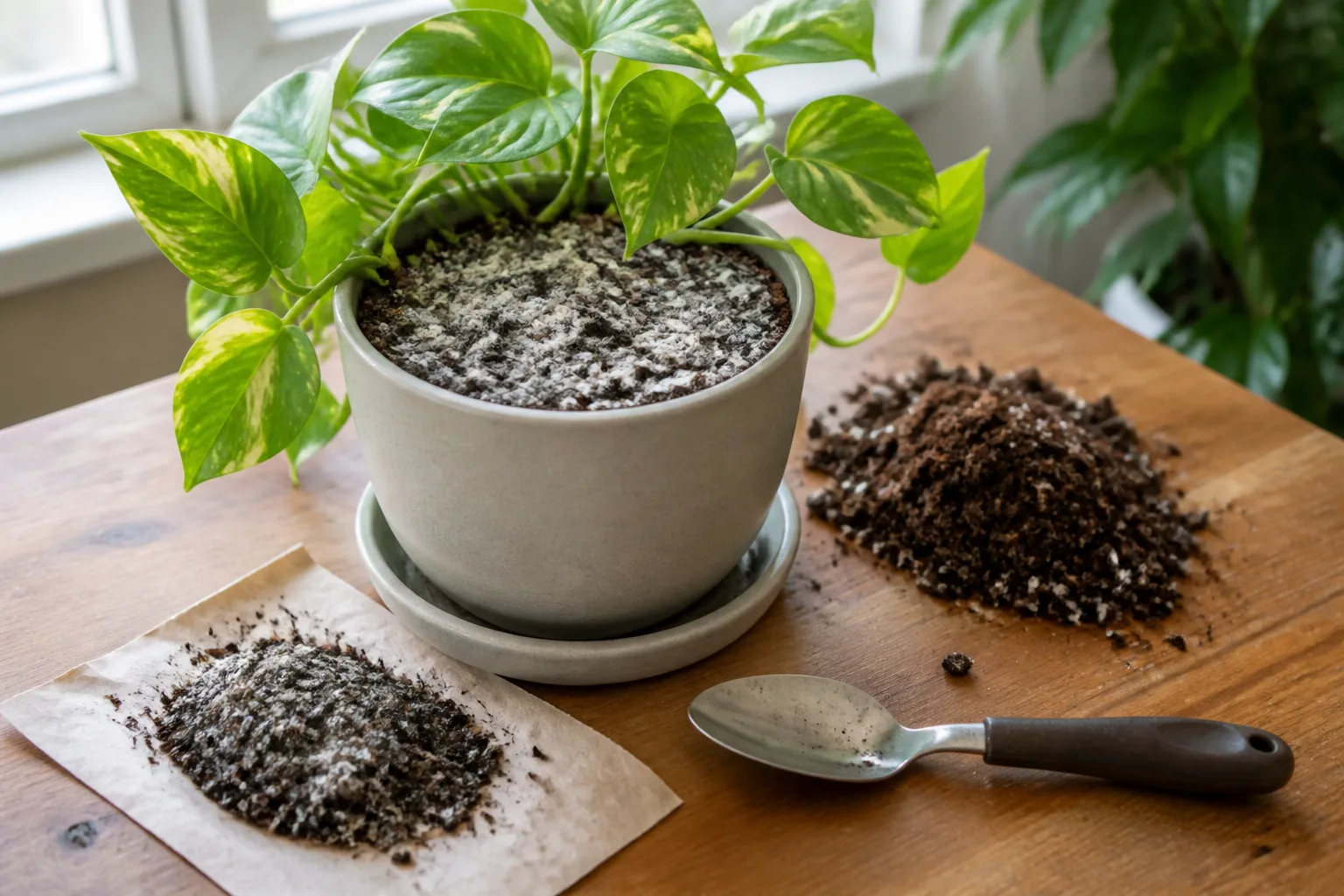
Scrape and refresh the top layer
For light to moderate white mold on an otherwise healthy plant:
- Let the surface dry enough to handle without smearing mud everywhere.
- Scrape off the top 1–2 cm (about ½–¾ inch) of affected mix with a clean spoon or trowel.
- Discard the scrapings in household trash — do not dump them into a shared compost pile you use for seed starting.
- Top up with a thin layer of fresh, dry potting mix once the remaining surface is no longer soggy.
- Wash your hands and rinse the tool; wipe the pot rim.
If mold returns in under a week after scraping, you did not fail at scraping — the mix is still too wet or too dense. Move to drainage and watering changes before a second round of cosmetics.
What not to pour on the soil
Skip vinegar drenches. Acetic acid can injure roots and foliage if it concentrates in the root zone. Cinnamon dusting is a popular home tip with some antifungal research interest, but it is not a substitute for dry-down, and results are inconsistent on thick colonies. Hydrogen peroxide surface sprays may temporarily bleach visible growth for some growers, but they do not fix the moisture clock and can disrupt the root zone if overused. Commercial fungicides are rarely needed for ordinary surface saprophytes on houseplants; culture fixes outperform chemical sprays for this specific problem.
Do not bleach-drench living roots. Bleach solutions belong on empty pots you are sanitizing before reuse — Wisconsin Horticulture recommends disinfesting tools and clay pots after working with root-rot plants — not as a soak for a living root ball. (Wisconsin Horticulture)
When to Repot Into Fresh Mix
Repot when any of these are true: mold covers most of the surface again and again; the mix smells sour or swampy; the pot stays heavy for many days; roots look brown and mushy when you tip the plant out; or the media has collapsed into a compacted brick. Fresh, well-aerated mix in a clean pot with open drainage resets both the food source and the moisture profile.
When you repot, tease away old soggy media, trim only clearly rotten roots, and choose a pot only slightly larger than the root ball. Water once to settle the mix, then wait for the top layer to dry before the next thorough soak. Full technique lives in repotting houseplants. If roots are already soft and foul-smelling, treat it as root rot first — mold on top may be the least of the damage.
Fix the Conditions That Keep Mold Coming Back
After cleanup, change the moisture clock. Water thoroughly when the plant needs it, then let the surface recover. Clemson’s practical rule is to check the mix with a finger and water when it feels dry at fingertip depth for that plant’s preference, water until runoff appears, and empty the saucer so the pot does not sit in standing water. (Clemson HGIC) That pattern washes salts while still allowing the top layer to dry between events — exactly what saprophytes dislike.
Match frequency to season and light. In winter, many indoor plants use less water; fungus gnat and mold complaints spike when summer watering continues under shorter days. (N.C. Cooperative Extension — Union County; Colorado State University Extension) Prefer terracotta for plants that tolerate faster dry-down; keep plastic or glazed pots for moisture lovers but still refuse saucer lakes. Bottom watering can keep foliage dry, yet it can also leave the surface oddly damp if you soak too often — check the top centimeter either way.
Improve airflow and light as supporting levers, not magic. A small circulating fan on low across a plant shelf, cracked windows when outdoor temperatures allow, and rotating pots out of dead air corners shorten surface wet time without crashing humidity overnight. In sealed cabinets or grow tents, add deliberate exhaust or a brief daily door-open cycle; stagnant high humidity is a surface-mold factory even when the root zone looks “fine.”
Mold, Fungus Gnats, and Root Rot — Shared Moisture Problems
Surface mold, fungus gnats, and root rot often share one habitat: chronically moist organic media. Colorado State University Extension notes that fungus gnat larvae develop in houseplant growing media and primarily feed on fungi, algae, and decaying matter — with moist peat-heavy media especially attractive to egg-laying adults. (Colorado State University Extension) UC IPM adds that overwatering and poor drainage promote fungus gnat populations and that management should focus on letting soil dry as much as the plant allows between waterings. (UC IPM)
So if you see white mold and tiny dark flies rising from the pot, treat them as one moisture problem. Dry the top layer, empty saucers, and improve drainage. Sticky traps catch adults; they do not fix wet media. Follow the sibling fungus gnats on houseplants guide for traps, BTI, and larval control.
Root rot is the serious fork in the road. Saprophytic surface mold alone does not equal root rot. Escalate when leaves yellow and wilt while soil is wet, growth stalls, stems soften at the base, or unpotted roots are brown, mushy, and sour. Water molds such as Pythium and Phytophthora spread in wet conditions and damage living roots — a different biological story from fuzzy white decomposers on the surface. (UC IPM; Wisconsin Horticulture) For disease-context reading beyond soil mold, see houseplant diseases identification and treatment.
First-Hand Notes From Fixing Recurring Soil Mold
These are observations from pots we have managed while refining this guide — not lab trials, but specific enough to set expectations.
Plastic nursery pot, scrape-only failure. A golden pothos in a 15 cm plastic nursery pot inside a ceramic cachepot grew a soft white film within three days of every scrape when we left runoff in the cachepot. After we lifted the nursery pot out after watering and emptied standing water the same day, the same scrape stayed clear for more than two weeks under identical light. The fungus was not “more aggressive.” The saucer was.
Terracotta vs plastic dry-down on the same mix. Two ZZ cuttings in the same bark-perlite blend: the terracotta pot’s top centimeter usually dried enough to scrape cleanly within 48 hours after a thorough watering; the matching plastic pot often needed four to five days in the same north-facing room. Mold returned faster on plastic until we stretched the watering interval by that same gap.
Winter schedule lag. A peace lily that looked thirsty every five days in July still looked “fine” if watered on that schedule in January — and grew both surface mold and a small fungus-gnat cloud. Stretching to pot-weight checks (wait until the pot felt clearly lighter) stopped new film within one watering cycle; sticky-trap counts dropped over the following two weeks once the top layer actually dried.
Nursery quarantine. A newly purchased monstera arrived with evenly moist retail mix and faint white threads already on the surface. Isolating it for two weeks, allowing a real dry-down before the first thorough water, and scraping once prevented the film from seeding a crowded shelf. Quarantine is not paranoia when retail media is kept display-wet on purpose.
Prevention Habits That Actually Work
Prevention is boring on purpose. The habits that keep mold rare are the same habits that keep roots oxygenated.
Water by plant need, not by calendar. Confirm dryness below the surface before you pour. Use pots with open drainage and empty catch trays after every watering. Choose a mix that matches the plant: chunkier for aroids and succulents, still well-aerated for moisture lovers. Clear dead leaves from the soil surface weekly. Give plants brighter indirect light and gentle airflow when mold keeps returning in the same corner. Store bagged mix dry and sealed. In winter, stretch intervals and watch pot weight instead of repeating summer routines — winter houseplant care explains why wet-soil pests and problems surge then.
If you keep a large collection, quarantine new purchases for a couple of weeks. Nursery media is often kept evenly moist for retail display, which is ideal for both surface fungi and fungus gnats. Letting new pots dry appropriately before they join a crowded shelf prevents one wet plant from seeding a shelf-wide nuisance. A thin top-dress of coarse grit or sand can help keep the surface drier for plants that tolerate it, but it is a supporting tactic — not a license to leave saucers full.
When Mold Means You Should Escalate
Most mold on houseplant soil is a care adjustment, not a crisis. Escalate when:
- Mold returns within days despite scraping, brighter light, and longer dry intervals
- The pot smells strongly musty, sour, or rotten below the surface
- Leaves wilt or yellow while the mix stays wet
- Stems or the crown feel soft
- Fungus gnats explode across many plants at once
- Anyone in the home is highly mold-sensitive and pots sit in bedrooms with poor ventilation
In those cases, unpot and inspect roots, improve drainage aggressively, isolate heavily infested plants, and follow root-rot rescue if tissue is mushy. Ordinary white surface mold is not typically treated as a serious household toxin risk for healthy people in typical home settings, but thick, musty growth in a poorly ventilated room is still worth cleaning up for comfort and air quality. Focus on dry-down and hygiene rather than panic disposal of every plant.
People with significant respiratory sensitivities may prefer to scrape outdoors or near an open window and wash hands afterward. If mold exposure triggers strong symptoms, seek advice from a qualified health professional — this guide covers plant care, not medical diagnosis.
Related Guides
Use these when the next problem is clearer than “something white on the soil”:
- Mold on soil symptom hub — short cross-plant triage before a species page
- Houseplant symptom checker — when wet soil, yellowing, and pests overlap
- Fungus gnats on houseplants — when tiny flies rise from the same damp pots
- Overwatered plant and root rot on houseplants — when leaves wilt over wet mix or roots are mushy
- How to water indoor plants the right way — finger checks, drain-through watering, and empty-saucer habits
- Best potting mix for indoor plants — aeration that speeds surface dry-down
- Repotting houseplants — when the mix itself must be replaced
Species pages help when dry-down tolerance differs: pothos mold on soil for a typical tropical that still needs a real dry top layer; peace lily mold on soil when a moisture lover is kept too wet too often; monstera mold on soil for chunkier aroid mixes; snake plant mold on soil and zz plant mold on soil when long dry-down plants are watered on a tropical calendar.
Conclusion
48-hour fix checklist
- Confirm it is soft fuzz (not chalky salts or stem mealybugs).
- Scrape 1–2 cm of affected mix; trash the scrapings; top up with dry mix if needed.
- Empty every saucer and lift nursery pots out of cachepots after watering.
- Stretch the next watering until the top centimeter can dry for that species and pot type.
- Add gentle airflow and clearer indirect light if the corner stays damp.
- Watch 7–14 days: no return means the habitat changed; fast return means drainage or schedule still fails.
- Escalate to root inspection if the plant wilts on wet soil, smells sour, or softens at the crown.
White mold on houseplant soil is usually a harmless saprophytic fungus announcing that the top of the mix stays wet too long. Scrape the visible growth, then fix watering, drainage, and airflow so the colony loses its habitat. Distinguish fuzzy mold from salt crusts, algae, and pests so you apply the right fix. Watch for fungus gnats and root decline as related moisture problems, not as proof that every white film is fatal. When the surface can dry between thorough waterings, mold stops being a weekly chore and becomes an occasional reminder you already know how to answer.