Why Strawberry Plants Aren’t Fruiting and How to Fix It
Strawberry plants flowering but not fruiting? Use this flower-stage checklist to spot black-eye frost damage, poor pollination, shade, root stress, and wrong timing.
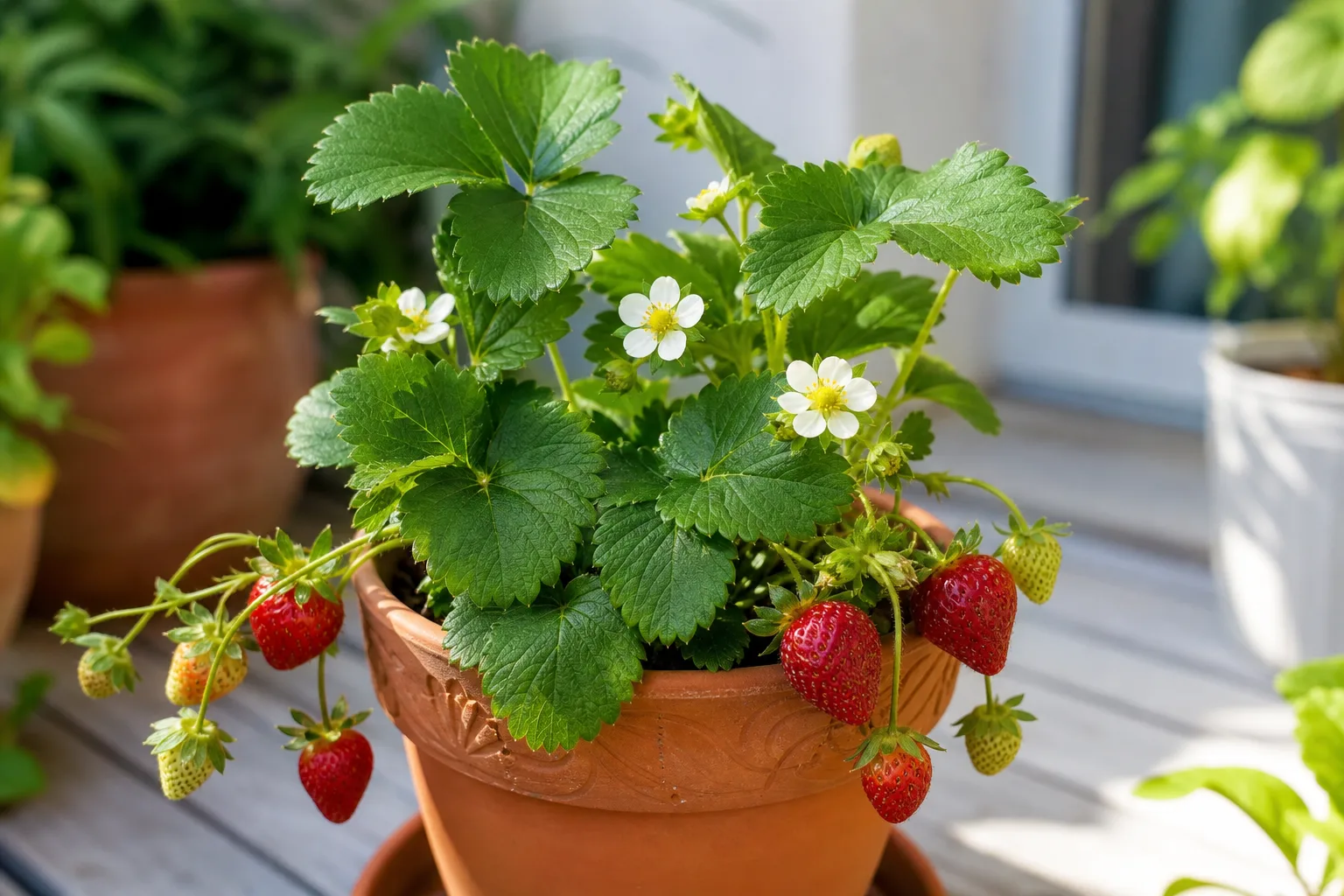
If your strawberry plants look green and vigorous but you are not picking berries, do not start by adding more fertilizer. First find out where the fruiting process stopped: the plant may not be old enough, the flowers may have been killed by frost, the site may be too shady, the flowers may not have set, or tiny berries may be disappearing after they form.
Strawberries are short-rooted perennials, and their harvest depends on timing as much as on day-to-day care. A plant can have healthy leaves and still miss its crop because its variety is between harvest flushes, its crown is crowded with runners, or one cold night damaged the flowers that would have become fruit.
Start with the flower stage before changing the care routine
Walk the bed and sort each plant into one of three groups. A plant with no flowers needs a different response from one with open flowers, and both are different from a plant that made green fruit that later vanished.
- No flowers at all: Check the cultivar’s normal crop window, the plant’s age, direct sun, crowding, and whether a heavy nitrogen feed has produced leaves at the expense of reproductive growth.
- Flowers appear, then shrivel or show a dark center: Inspect the center of several flowers. A black center after a cold night points to frost injury, not a fertilizer shortage.
- Small green berries form, then disappear: Look for clipped stems, peck marks, chewed fruit, slugs, or gray mold. The plant may be fruiting successfully while wildlife or disease removes the evidence.
The same diagnosis applies differently in a garden bed and a container. A pot can dry out or heat up much faster, while a crowded ground bed can stay leafy but lose productive space to weeds and runners. Record what you see before making changes so you do not solve one problem by creating another.
1. The plant is too young or the crop is between its normal harvest windows
“Strawberry” is not one harvest schedule. June-bearing types usually make one heavy crop in late spring or early summer, while day-neutral types fruit in repeated flushes and everbearing or perpetual types make several smaller harvests over a longer season. NC State Extension describes strawberries as generally June-bearing or ever-bearing, and Penn State Extension notes that day-neutral plants can fruit through spring, summer, and fall, with the exact pattern changing by region and temperature. (NC State Extension and Penn State Extension)
That means a June-bearing plant with abundant leaves in July may not be failing; it may have already finished its normal crop. Conversely, a day-neutral plant that stops flowering during a spell of very hot weather may resume when conditions moderate. Check the plant label, nursery description, or cultivar name before treating an off-season pause as a care mistake.
New plants also need time to establish. In a matted-row system, Penn State Extension recommends removing flowers during the first season so June-bearing plants can build crowns and roots, while NC State gives the same general first-year establishment advice. But the rule is not universal: the RHS recommends removing the first flush mainly when summer-fruiting or perpetual plants are weak or were planted at a time when they need more establishment. Strong, well-established autumn plants may be able to carry a modest crop, while a small spring transplant benefits from having early flowers pinched off.
Use the plant’s strength as the deciding clue. If it has only a few small leaves, a thin crown, or has recently been moved, remove the first flowers and give it a season to build. If it is a robust, established day-neutral plant, removing every flower may unnecessarily delay the crop. Pinch flowers cleanly at the base with your fingers or clean snips, and do not remove healthy leaves that the plant needs to make energy.
2. An old or crowded bed has lost fruiting power
Strawberry plants do not stay equally productive forever. Penn State reports that fruit size and overall yield decline as matted-row beds age, while NC State and the RHS both give a general replacement window of about three to four years. The exact lifespan depends on cultivar, winter conditions, disease pressure, and whether the bed is renovated, but a fourth-year bed with small berries, weak crowns, and many gaps is a reasonable replacement candidate—not a sign that it needs increasingly strong fertilizer.
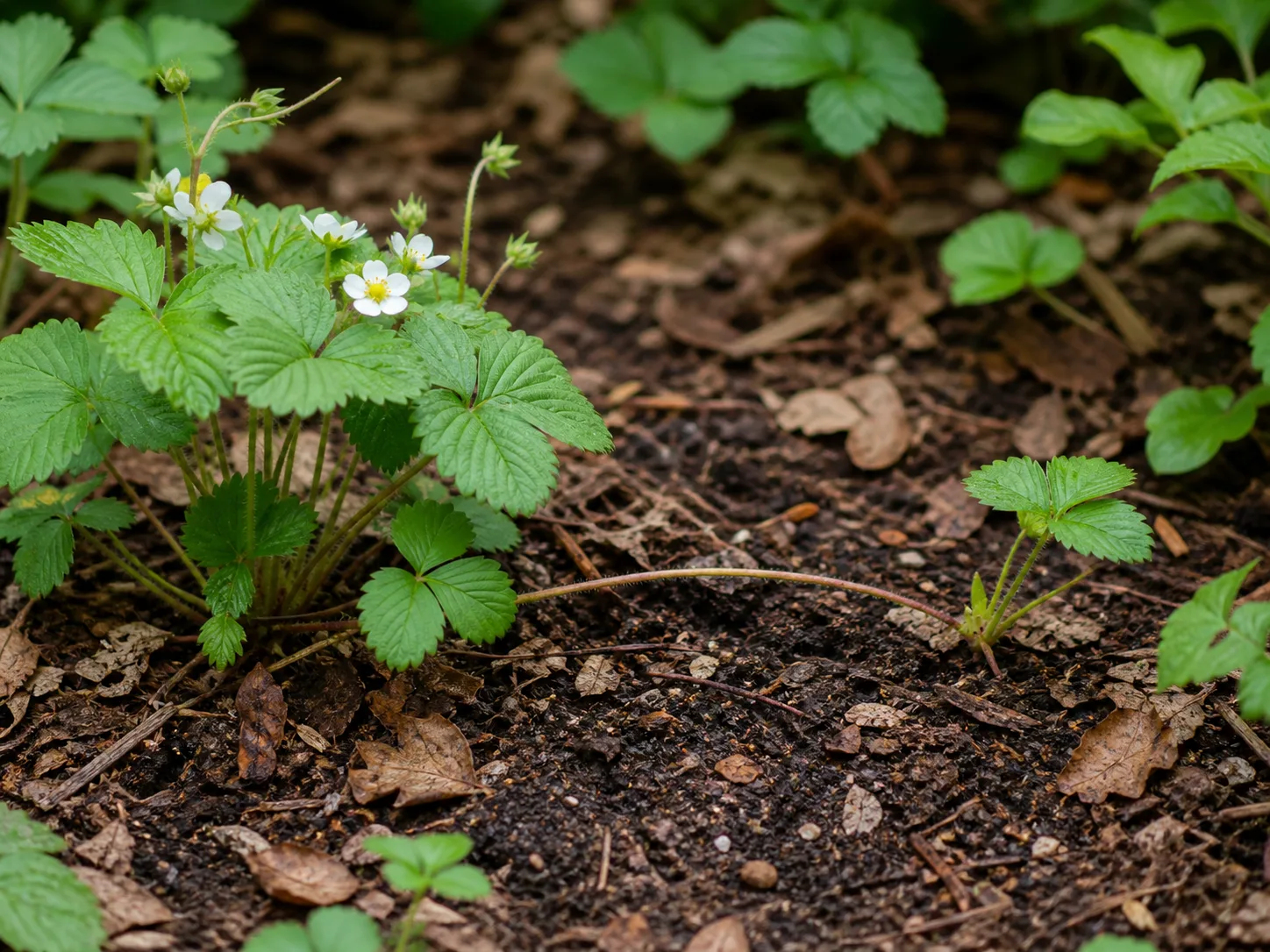
Crowding creates a similar result sooner. Runners make daughter plants, which is useful when you are renewing a bed, but an uncontrolled carpet of runners can leave the original crowns competing for water, light, and nutrients. Weeds add another layer of competition, especially because strawberry roots stay near the surface.
After harvest, decide whether a runner is a replacement or a liability. Root a few of the healthiest daughter plants in the row or in small pots, then cut away extras that fill the path or pack the crown. In containers, be more aggressive: a cascade of runners may look attractive but can reduce the mother plant’s fruiting potential, as practical container guidance from Savvy Gardening also notes. (Savvy Gardening)
If the whole bed is declining, renovate or replant rather than trying several random fixes at once. Remove the weakest plants, root selected runners in a fresh location, and avoid putting a new bed directly where an old one has built up soil-borne disease. The RHS recommends moving the new bed when possible to reduce replant problems.
3. Frost damaged the flowers before fruit could set
Strawberry foliage can look perfectly healthy after a cold night even though the crop has been lost. Flowers are much more vulnerable when they are open, and a late frost can kill the reproductive tissue at the center before a visible berry begins to swell.
Look for black eye, the RHS name for the most recognizable form of frost damage. The petals may remain white, but the center turns brown or black. Those flowers will not set fruit; partial damage can instead lead to misshapen berries. (RHS: Strawberry black eye)
There is no feed or watering adjustment that can revive a flower whose reproductive parts were killed. Remove badly damaged flowers if they are rotting, then protect the next flush. When frost is forecast, cover flowering plants overnight with horticultural fleece, a light sheet, or another breathable cover supported so it does not crush the flowers. Weigh the edges down, and lift the cover during the day so pollinating insects can reach the blooms.
Do not confuse a frost-damaged flower with a plant that never flowered. If every flower is black after one cold event, wait for the next flower flush and focus on protection. If flowers are open and white-centered but never swell, investigate pollination, water, heat, and cultivar timing instead.
4. Too little sun—or too much heat—is interrupting production
Strawberries need a bright growing site to make enough energy for flowers and fruit. NC State lists full sun to partial shade, but the RHS notes that the best crops and sweetest fruit come from a sheltered position in full sun. In practice, aim for at least six hours of direct sunlight, then inspect the bed at different times of day rather than judging it by a bright morning alone.
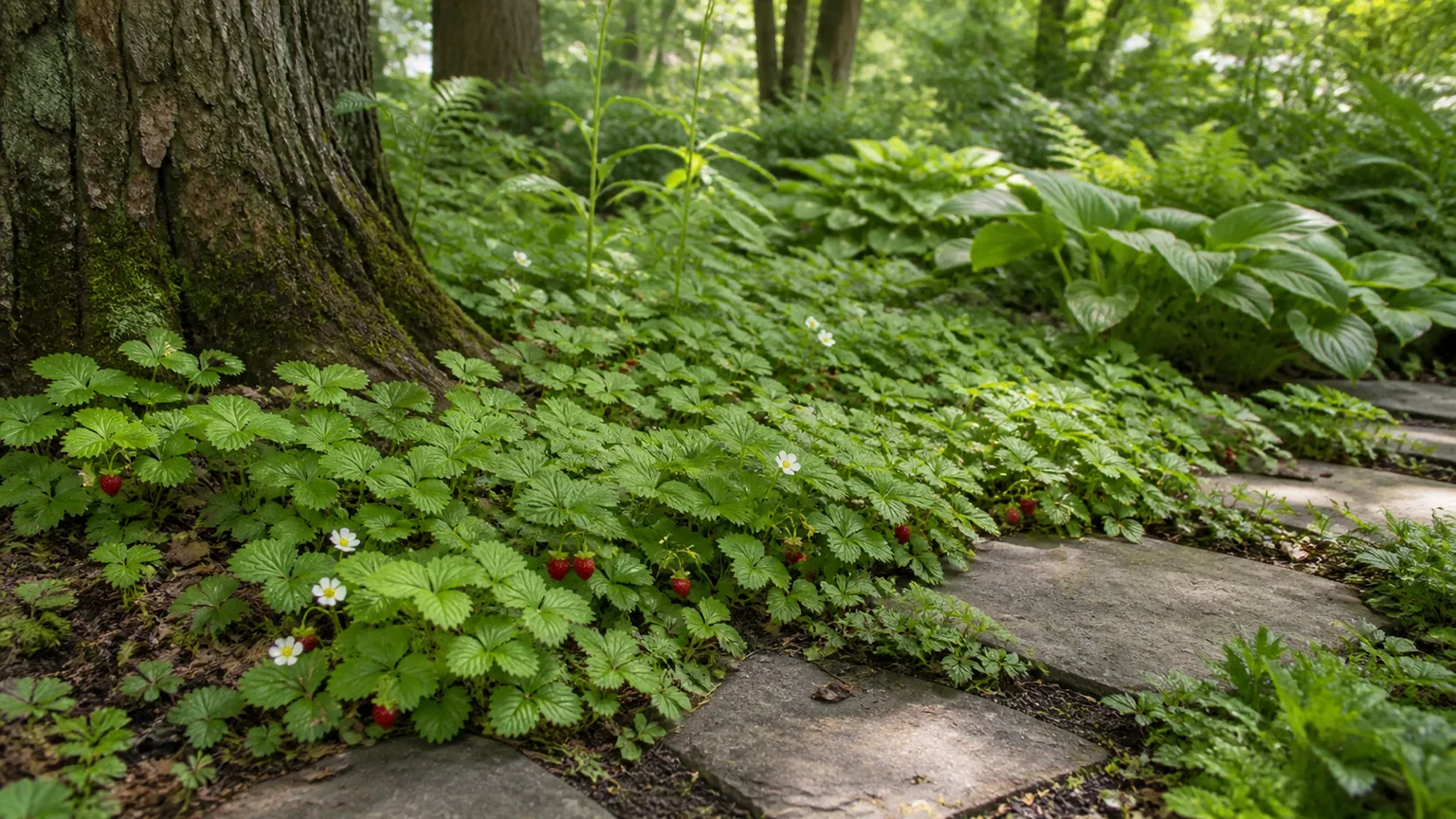
Shade often arrives gradually. A nearby shrub, fence, tree canopy, balcony railing, or tall vegetable may block the afternoon light just when the strawberry bed needs it most. Leggy leaves, few flower stalks, and a bed that stays damp for a long time are clues that the site may be too shaded or poorly ventilated. Thin the obstruction or move container plants before applying more fertilizer.
Heat can also reduce fruiting, especially for day-neutral strawberries. Penn State notes that high temperatures can cause day-neutral plants to stop flowering or interfere with pollination; in hot areas, their heaviest crop may shift toward spring or fall. Give containers morning sun and some protection from reflected heat off concrete, but do not place them in deep shade as a permanent fix.
The goal is not the highest possible temperature. It is a long stretch of bright light with roots that stay evenly moist and flowers that are not repeatedly blasted by hot, drying wind. A light-colored container, a thicker pot, or a position away from a hot wall can help potted plants keep a steadier root-zone temperature.
5. Flowers are opening without enough effective pollination
Strawberry flowers contain the parts needed to make fruit, but fruit set still depends on pollen reaching the flower’s reproductive surfaces. This becomes a more plausible explanation when you have many fresh, open flowers, no black centers, adequate light, and no swelling behind the flowers several days later.
Pollination problems are more common in protected spaces than in a normal open garden. A greenhouse, cloche, insect screen, windy balcony, or very isolated container may receive fewer insect visits. Poor pollination can also show up as small, lopsided, or poorly filled berries rather than a complete absence of fruit.
If flowers are under cover, open the cover during the day when weather permits so insects can enter. For a greenhouse or other enclosed setup, use a clean, soft paintbrush to touch the center of each open flower, moving gently from flower to flower. The RHS specifically recommends hand-pollinating covered plants or removing covers while flowers are in bloom. Do not brush wet flowers, shake the plant aggressively, or use an insecticide on open blooms unless a local expert has identified a serious, label-covered need.
Outside, do not assume that buying a second cultivar is the first fix. Start with flower-center inspection, light, moisture, and temperature. A second plant may increase the number of flowers and insect visits, but it will not repair frost damage, a buried crown, waterlogged roots, or a June-bearing plant that is simply out of season.
6. Water, drainage, or nutrition is stressing the shallow roots
Strawberries need a root zone that is moist but not saturated. Their roots are shallow; Penn State describes roots extending only about six inches in clay-loam soil, which is why irrigation matters and why a short dry spell can affect flowers quickly. NC State gives about one inch of water as a general need, but the usable schedule depends on rainfall, soil texture, bed depth, wind, temperature, mulch, and container size.
Underwatering can cause flower drop and small fruit because the plant cannot keep new growth supplied. Overwatering is not safer: saturated mix deprives roots of air and can lead to crown or root problems. In a pot, a dry surface does not always mean the root zone is dry, and a wet surface does not tell you whether water is draining through the bottom.
Check soil and crown moisture before adding anything
Push a finger into the soil or use a narrow probe near—but not directly against—the crown. In a bed, check several inches down in two or three locations; in a container, check the center and the edge because the edge often dries first. Water slowly when the root zone is becoming dry, then stop when the mix is evenly moistened and excess water drains freely.
Use one inch per week as a starting benchmark for an established bed, including rainfall, then adjust frequency rather than blindly adding volume. Containers and hanging baskets may need checking every day during heat, while heavy soil may need less frequent watering but better drainage. Apply water to the soil in the morning when possible, keep it off the crown and fruit, and use clean straw or another suitable mulch to reduce evaporation and keep berries off damp ground. The RHS recommends regular watering during dry periods, morning application, and keeping water away from the crown and fruit to reduce fungal problems. (RHS strawberry-growing guide)
Check the crown depth at the same time. The crown—the short, thick stem between roots and leaves—should sit at soil level. A buried crown stays wet and can rot; a crown perched above the soil dries out and may never establish strongly. In a container, confirm the drainage holes are open and the potting mix drains rather than turning into a slow-drying plug.
Feed from a soil test and growth pattern, not a “bloom booster” promise
Fertilizer helps only when nutrition is actually limiting. If a plant has huge, soft, dark-green leaves but few flowers, stop adding high-nitrogen products and test the soil before applying anything else. More leaf growth is not proof that the roots can support fruit, and excess fertilizer can create salts or an imbalance that is harder to correct.
The RHS advises that strawberries in decent, mulched soil may need little additional feed, while a poor harvest can justify a high-potassium granular fertilizer in spring; it also recommends switching container plants from general-purpose liquid feed to a high-potassium feed when flower buds form. Follow the product label and local soil-test recommendations rather than copying a rate from another garden. A tomato fertilizer is not automatically correct for strawberries just because both plants fruit.
If the soil is compacted, weedy, or poorly drained, correct that condition before feeding. Fertilizer cannot compensate for roots that are dry one day and saturated the next, or for a crown buried under wet mulch. A simple soil test is more useful than adding lime, potassium, or a “fruiting” product by guesswork.
A ten-minute recovery plan for a plant with no fruit
Use this order so you do not change six variables at once:
- Identify the crop type and age. Confirm whether the plant is June-bearing, day-neutral, perpetual, or alpine, and note when it was planted. Mark a three- to four-year-old bed for renewal.
- Count direct light. Watch the plant through the day if possible. Move a container or remove the most obvious shade source if it receives less than about six hours of direct sun.
- Inspect five flowers. Black centers after a cold night indicate frost damage. White-centered flowers with no swelling shift the investigation toward pollination, moisture, heat, or timing.
- Check the root zone and crown. Feel several inches down, confirm the crown is at soil level, and look for standing water, blocked drainage, or a pot that dries almost immediately.
- Look below the leaves. Remove excess runners and weeds, check whether the bed is packed, and look for chewed fruit or gray mold if small berries were present.
- Feed only with a reason. Use a soil test, the plant’s growth pattern, and the fertilizer label. Do not stack a granular feed, liquid feed, compost tea, and bloom booster in the same week.
If open flowers are present
Protect the flowers from the next frost, especially if a recent cold night left black centers. If flowers are under cover, ventilate during the day and hand-pollinate gently; if the plants are outdoors, focus on steady moisture, insect access, and avoiding sprays on open flowers.
Keep watering consistent while the berries swell. Once fruit forms, put clean straw or another dry mulch beneath it so the berries do not sit on wet soil. If fruit turns soft or gray rather than swelling normally, shift from fruit-set troubleshooting to disease and humidity management.
If the plant has leaves but no flowers
Start with age and timing, then light. A first-year transplant, a June-bearing variety outside its crop window, or a plant recovering from winter may simply be building strength. If the leaves are lush and the plant received repeated nitrogen feeds, pause feeding and use a soil test before doing anything else.
Remove unwanted runners so the crown’s energy is not spread across a tangle of daughter plants. Do not cut the whole plant back during the growing season just because it is not flowering; healthy leaves are the plant’s solar panels and will help form future flower buds.
If the bed is old, packed, or runner-heavy
Do not try to rescue every plant. Keep a few healthy runners from productive plants, root them in clean soil, and prepare a new row or container with good drainage and full sun. After harvest, thin overcrowded plants and remove runners that are not part of your renewal plan.
For a bed that has produced poorly for several seasons, replant in a different location when possible. This gives the new plants a cleaner start and helps avoid repeating a soil-disease or compaction problem that extra fertilizer would only hide.
Keep next season’s strawberry crop on track
Choose the crop type for the harvest you actually want. Plant June-bearing varieties when you want one concentrated early-summer harvest, or use day-neutral or perpetual types when repeated smaller harvests suit your space and climate. In hot regions, do not judge a day-neutral variety by a midsummer pause alone; its best production may return in cooler weather.
Prepare the site before planting: full sun, good drainage, fertile soil, and enough room for the cultivar’s crown and runners. The RHS recommends raised beds for heavy soil, and Penn State gives a soil pH range of 6.0 to 6.5 for its production guidance; use a local soil test because soil texture and regional recommendations vary. (Penn State Extension soil and site guidance)
Plant with the crown level, water new plants consistently, and mulch without covering the crown. Protect open flowers from late frost with a cover that comes off during the day, and use a loose layer of straw under developing fruit to keep berries clean and dry. Cover the bed with secure wildlife netting only when fruit is ripening, and fasten it so birds and other animals cannot become tangled.
Make runners part of the plan instead of letting them take over. Root only as many daughter plants as you need for gaps or next year’s replacement, and remove the rest while they are easy to see. At the end of each season, note which plants flowered early, which handled heat, and which produced well; those observations are often more useful than a generic fertilizer schedule.
Conclusion
When strawberry plants are not fruiting, the fastest fix is a better diagnosis, not a stronger product. First decide whether flowers are absent, frost-damaged, poorly pollinated, or followed by missing fruit; then check crop type and age, direct sun, shallow-root moisture, crown depth, crowding, and nutrition in that order.
Young or off-season plants may need time, while black-centered flowers cannot recover and old crowded beds may need renewal. Give established plants full sun, even moisture, free-draining soil, sensible feeding, pollinator access, frost protection, and a runner plan, and you will give the next flower flush a much better chance to become a real harvest.



