8 Rare Houseplants: Care Needs and Buying Advice
Compare eight rare houseplants by care, growth habit, and buying risk. Learn which is worth the cost, what to inspect, and when a rare label is just hype.
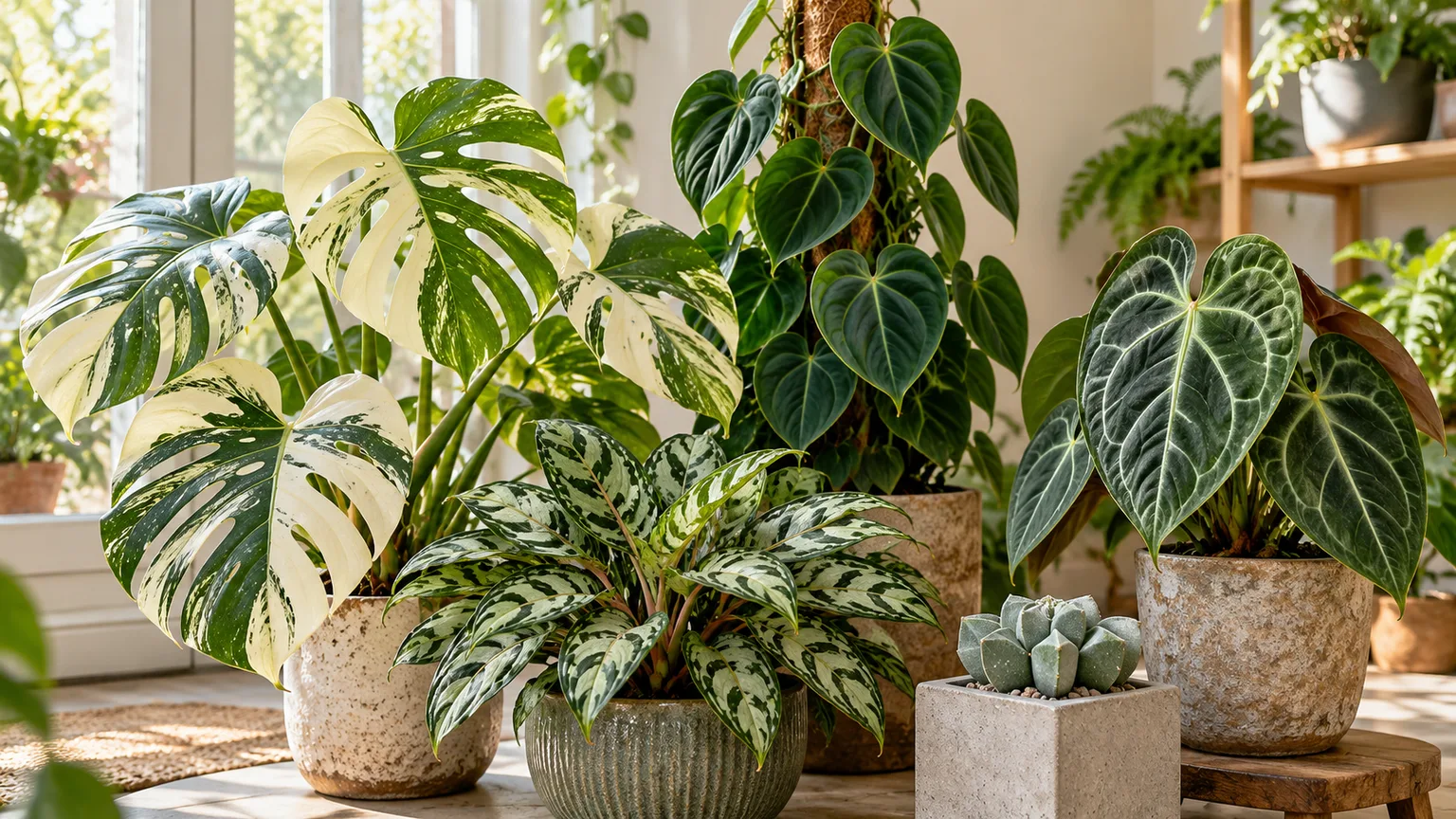
A rare houseplant can be worth buying when you love the plant itself, can meet its care needs, and can verify what the seller is offering. A high price or “collector” label alone does not make a plant a better choice, and no one can promise that today’s unusual cultivar will stay expensive.
“Rare” can refer to a plant that is slow to propagate, temporarily scarce in shops, unusual because of a cultivar, or genuinely at risk in the wild. Those are different things. The eight plants below range from variegated Monstera cultivars that have become easier to find to a succulent that is still a specialist purchase; the best choice depends more on your room and routine than on a price tag.
Why “rare” means several things in the houseplant trade
In a nursery or online listing, rare usually means a plant is difficult to find at that seller’s current price and size. Slow growth, limited propagation, import constraints, a new wave of demand, or a cultivar that has not yet reached mass production can all create short-term scarcity. Supply can change when growers propagate more plants, so a cultivar that was once expensive may later become commonplace.
A trade label is not a conservation assessment. Formal conservation categories refer to a plant population, location, and evidence; they are not inferred from an auction price or a seller’s adjective. The University of Washington Botanic Gardens’ rare-plant program, for example, describes status categories used with Washington’s Natural Heritage Program, including endangered, threatened, and sensitive plants. That kind of listing is separate from whether a tropical cultivar is fashionable or hard to source.
It also helps to distinguish a species from a cultivar. Monstera deliciosa is a species; Thai Constellation and Albo are cultivated forms with different leaf patterns. Their rarity in retail is not the same question as whether the species is rare in nature. When a listing makes conservation claims, ask for the exact botanical name and evidence rather than assuming “rare” means protected.
At a glance: Which rare houseplant fits your home?
| Plant | Best fit | Main trade-off | Consider it if… |
|---|---|---|---|
| Thai Constellation Monstera | First variegated collector plant | Needs good light and climbing room | You want cream-speckled leaves and steady aroid care |
| Monstera Albo | Collector who enjoys monitoring new growth | White sectors can reduce the green leaf area | You can inspect the stem and accept variable leaves |
| Philodendron melanochrysum | A bright space with vertical room | Needs support as it matures | You want large, velvety leaves more than instant size |
| Philodendron tortum | A collector who likes unusual form | Needs space and careful handling of delicate foliage | The narrow, divided leaves are the main attraction |
| Pink Princess philodendron | Beginner-to-intermediate collector | Color varies; pink-heavy growth may be less vigorous | You prefer dark leaves with balanced pink patches |
| Pseudolithos cubiformis | Experienced succulent grower | Sensitive to cold, wet conditions | You already understand warm, bright, fast-draining succulent care |
| Anthurium regale | Humid plant room or cabinet grower | Large leaves and higher humidity needs | You can provide stable warmth and room for a specimen |
| Aglaonema pictum Tricolor | Compact foliage collector | Slow growth and limited availability | You want camouflage leaves without a climbing vine |
This is a fit guide, not a universal ranking. A lower-priced, nursery-propagated plant with healthy roots may be a better buy than a dramatic specimen with an unclear label, poor shipping conditions, or more white than green.
Monstera Thai Constellation: the approachable collector plant
Thai Constellation is recognizable by cream or pale-yellow speckles and marbling spread across green leaves, rather than the large sharply divided white sectors often associated with Monstera Albo. That pattern gives each leaf a different “star map” effect without making every plant look identical. NC State Extension lists both forms among Monstera deliciosa cultivars, while Epic Gardening’s Thai Constellation guide covers the bright, indirect light and well-drained mix that support indoor growth.
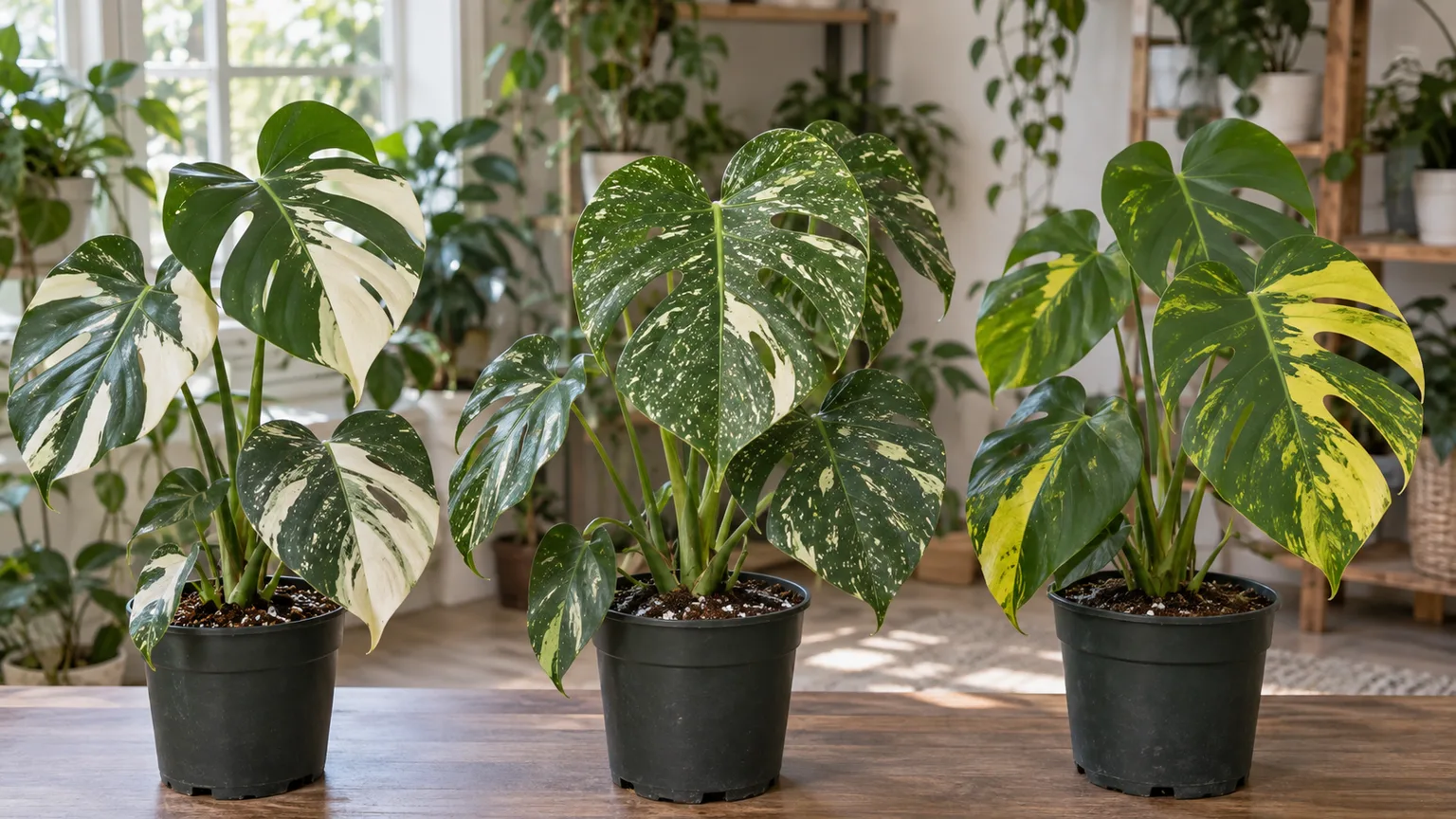
Thai Constellation is often a sensible first collector plant because it is still a climbing Monstera with familiar needs: a bright position out of harsh midday sun, a pot with drainage, and a mix that does not stay saturated. Give it a support once the vine starts to lean, and water after the upper part of the mix has begun to dry rather than following a fixed weekly schedule. The NC State Extension profile notes that variegated cultivars need more light than darker green forms.
The caveat is that “more light” does not mean hours of hot direct sun. Acclimate a plant gradually if you move it to a brighter window, and check how quickly the pot dries in your home. A starter plant may take time to make large, deeply fenestrated leaves; buy it because you enjoy raising it, not because a listing promises a mature look in a few months.
Ask whether the plant was grown from tissue culture or from a cutting, and whether it has been hardened off from a propagation setup. “Tissue-cultured” does not automatically mean carefree or guaranteed to keep the same leaf pattern; it tells you something about how the grower multiplied it, not how well the individual plant will settle into your room.
Monstera Albo: dramatic leaves, less predictable growth
Monstera Albo usually refers to Monstera deliciosa ‘Albo Variegata,’ whose leaves carry larger white sectors or streaks. The pattern can be more dramatic than Thai Constellation, but the proportion of green and white may vary from leaf to leaf and sometimes along a single stem. If the newest growth repeatedly emerges mostly green, the plant may lose the contrast you paid for; if it emerges nearly white, it may lack enough green tissue to sustain strong growth.
This is the plant to consider if you enjoy watching each new leaf unfurl and can accept an imperfect pattern. Provide bright filtered light so the green parts can support growth, but do not try to “force” more white with extra fertilizer or stronger sun. The Royal Horticultural Society’s explanation of how plants use light is useful context: photosynthesis depends on leaf tissue with chlorophyll, and paler areas contribute less to that work.
Buy the stem as carefully as the leaf. For a cutting, look for a viable node—the point where the stem can produce a new shoot or roots—and some healthy green tissue; a leaf with no node may stay attractive in water for a while but will not grow into a new vine. For a rooted plant, inspect the newest growth point and ask for recent, unfiltered photos that show the stem as well as the most photogenic leaf.
Albo can still be rewarding, but it is a less predictable purchase than the leaf photo suggests. If you do not want to manage light, support, and changing variegation, a green Monstera or Thai Constellation may give you more reliable growth per dollar. For a deeper care routine, see the Monstera Albo growing guide.
Philodendron melanochrysum: a velvet-leaf climber
Philodendron melanochrysum is valued for its long, dark, velvety leaves with bright veins. It is a climber, so a young plant may look like a small potted philodendron at first, while a mature, supported vine can produce larger leaves. Expect a plant you train over time, not an instant floor-standing specimen.
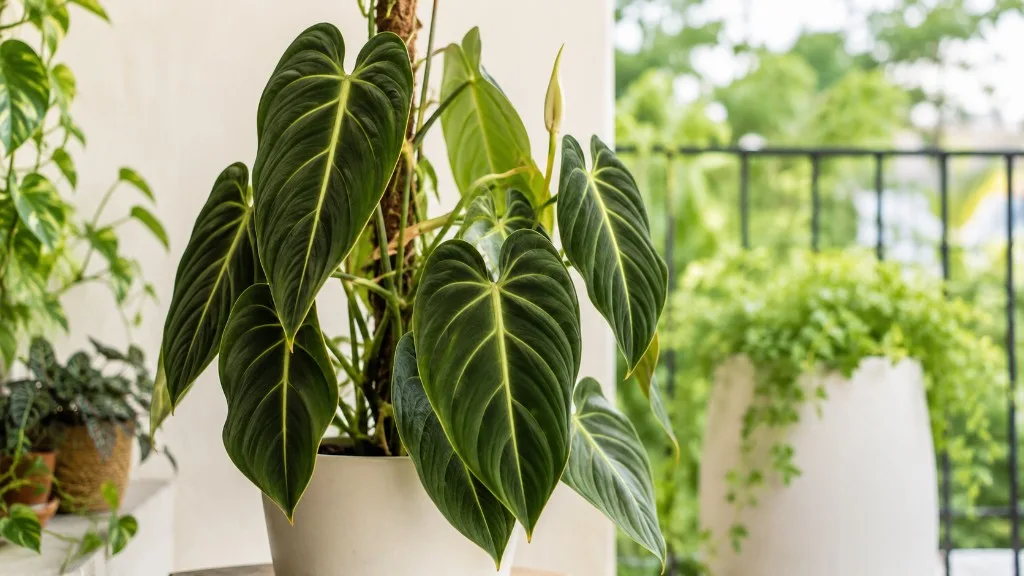
This plant suits a bright room with space for a moss pole, plank, or other sturdy support. An airy aroid mix and a pot with open drainage reduce the chance of roots sitting wet; let the top few inches of mix begin to dry before watering again, then water thoroughly. In a dim corner, the vine can stretch and leaves may stay smaller, while a sudden move into direct sun can scorch the foliage.
Higher humidity can help the leaves unfurl cleanly, but do not assume a sealed glass cabinet is necessary for every specimen. A humidifier is easier to regulate than frequent misting, and good air movement still matters. Grower Brittany Goldwyn’s practical melanochrysum care notes describe its climbing habit and bright-indirect-light preference.
The purchase question is whether you want the routine that comes with the look. If you can install a support and give the plant a stable bright spot, a small rooted starter can be satisfying; if you want a plant that stays compact on a crowded shelf, this is a poor fit. The Philodendron melanochrysum care guide gives a more detailed growing routine.
Philodendron tortum: sculptural foliage with room to spread
Philodendron tortum has narrow, deeply divided leaves that look almost skeletal compared with the broad hearts of many philodendrons. Its foliage is the whole point, but that fine shape can be easy to mistake for damage if you have not seen the plant before. Confirm the botanical name with the seller and compare the plant’s growth habit against a reliable image before paying a rarity premium.
Tortum is another climbing philodendron, so a compact starter can eventually need vertical support and room for leaves to extend without brushing walls or nearby plants. Give it bright indirect light, warmth, and a fast-draining aroid mix; allow the pot to lose some moisture between waterings without letting the root ball become bone-dry for prolonged periods. Thin leaf divisions are more vulnerable to tearing during transport and handling than a broad, sturdy leaf.
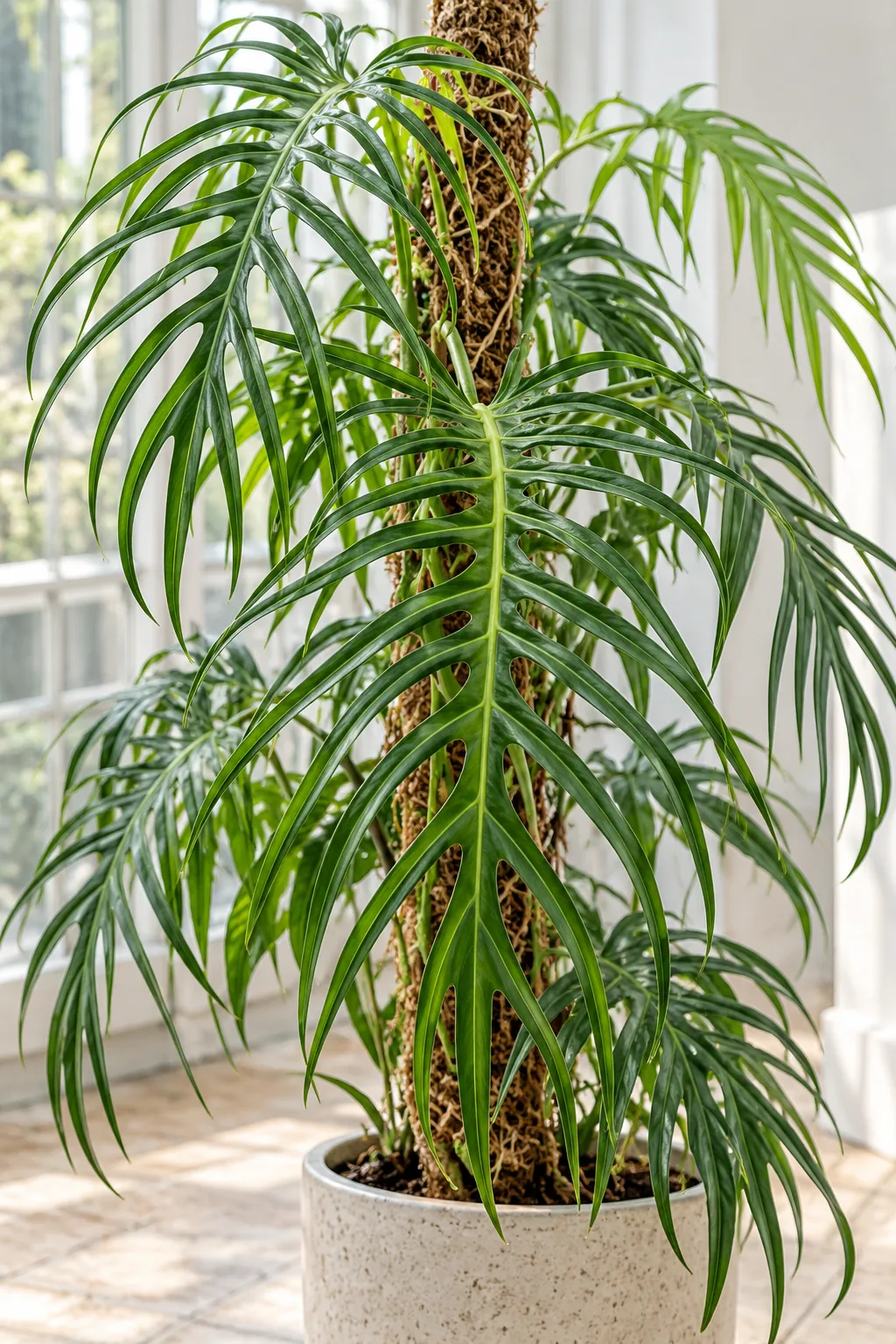
Consider this one if the unusual leaf shape interests you enough to plan its placement. It is not the best choice for a high-traffic shelf where leaves are frequently bumped, or for a dim room where the plant will stretch toward a window. Ask for a photo of the whole plant and the newest growth, not just an extreme close-up of a single dissected leaf.
Pink Princess philodendron: choose green balance over all-pink leaves
Philodendron ‘Pink Princess’ combines dark green foliage with pink patches or streaks. The color can be spectacular, but a photo of a mostly pink leaf is not a promise that every later leaf will match it. New growth can change, and the plant still needs enough green area to grow at a healthy pace.
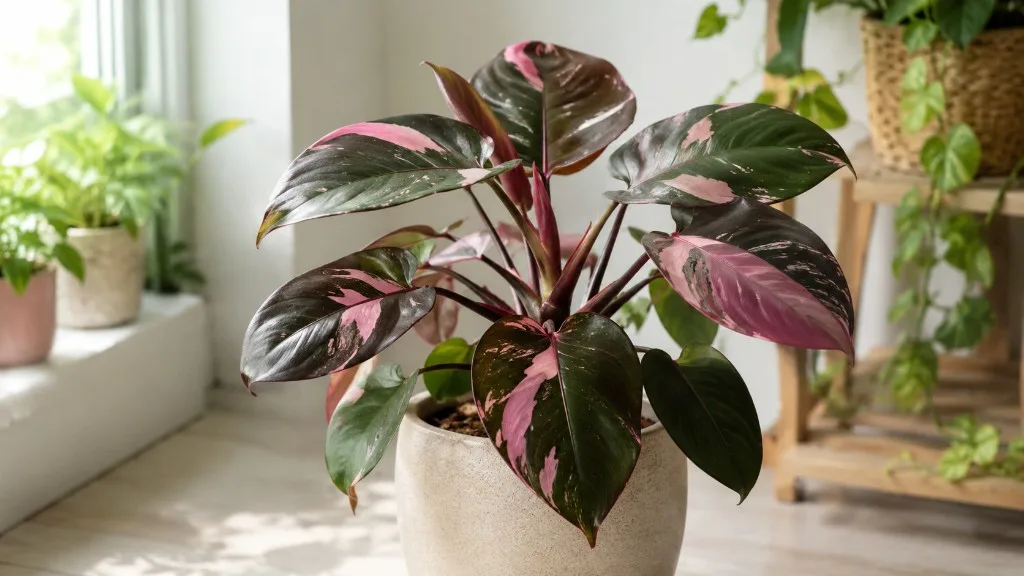
Bright, indirect light helps the plant maintain strong growth and visible color, while direct hot sun can damage leaves. Keep the mix airy and water when the top portion dries, rather than leaving the plant constantly damp in the hope of faster growth. A climbing support can also help an upright specimen display its leaves instead of sprawling.
When buying, choose a balanced plant with several leaves that show the cultivar’s characteristic coloring and a firm, active growing point. Do not pay extra just because one leaf is unusually pink; look at the whole vine and whether it has enough healthy green growth to continue. Because Pink Princess has become easier to find in many markets than it once was, check current comparable listings instead of relying on old social-media prices.
Pseudolithos cubiformis: a specialist succulent, not an aroid
Pseudolithos cubiformis looks like a small gray-green cube with a pebbled, sculptural surface, making it unlike the leafy tropical plants in this list. It is a succulent-like member of a specialist group, not a Monstera or philodendron, so do not copy an aroid’s watering routine. Its unusual appearance is a genuine draw, but the plant is a poor “first rare houseplant” for someone who has never grown a warm-climate succulent.
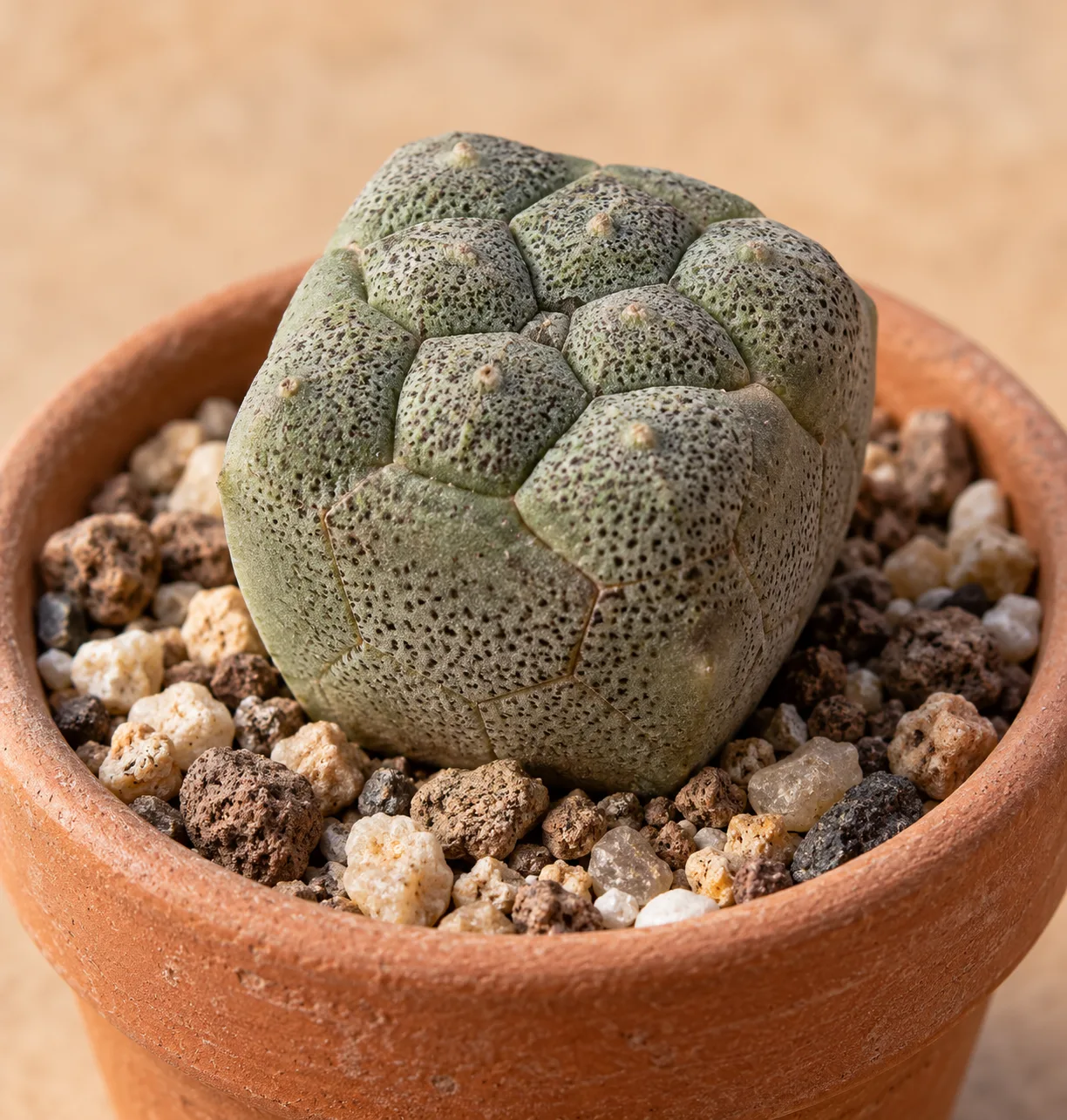
It needs very bright light, warmth, and a highly free-draining growing medium, with watering adjusted to active growth and the conditions in your home. The major risk is prolonged cold, wet soil, which can damage roots or rot the plant; a large pot or dense moisture-retentive mix makes that risk harder to manage. A specialist grower’s Pseudolithos cubiformis profile can help you confirm the plant and its distinct growing habit.
Before buying, ask whether it was grown from seed or propagated from a cultivated parent, how long it has been rooted, and what temperatures it experienced in transit. Do not order a delicate succulent during a cold snap unless the seller explains a safe packing and shipping plan. If you already own healthy succulents and can give this one a bright, warm, dry-down cycle, it may be a rewarding specimen; otherwise, admire it before committing.
Anthurium regale: large leaves with a humidity trade-off
Anthurium regale is prized for broad, heart-shaped leaves with strong pale veining. A young plant can be surprisingly small, so do not assume the listing image of a mature specimen shows the size or form you will receive. As it grows, the leaf span can take up more space than the nursery pot suggests.
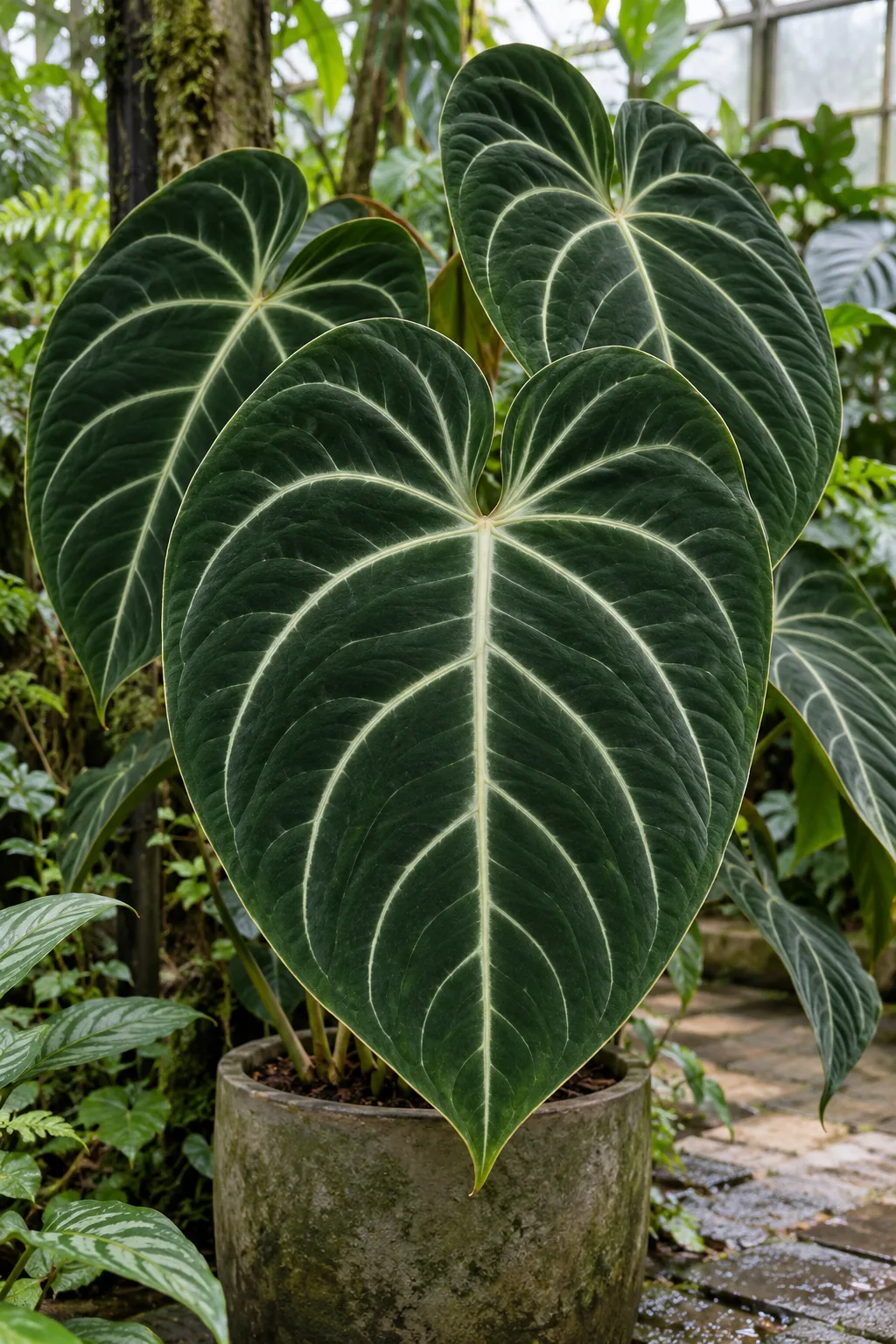
The plant appreciates bright indirect light, warmth, an airy mix, and more consistent humidity than many everyday houseplants. Those conditions are manageable in a humid room or controlled grow area, but they are harder to maintain in a dry home with temperature swings. Specialist anthurium growers such as Odd Leaf’s buyer guide emphasize matching a rare specimen to the growing environment rather than choosing on leaf appearance alone.
This is worth buying when the plant’s foliage is the centerpiece and you already have a stable place for it. It is a poor impulse buy if you have nowhere warm to put it, or if every day’s routine already makes watering and humidity checks difficult. Ask for the plant’s current leaf span, root condition, and recent growing conditions; a seller who knows the specimen should be able to describe those details.
Aglaonema pictum Tricolor: camouflage foliage at a slower pace
Aglaonema pictum ‘Tricolor’ is known for leaves patterned in patches of light, medium, and dark green, a camouflage effect that makes it stand out without bright flowers or variegated white. It is a slower-growing plant, so a small specimen may take patience to fill out. That pace can make it harder to find in certain markets, but the market label does not tell you whether an individual plant is healthy.
Give it warmth, a bright-to-moderate indirect position, and a well-drained mix that stays lightly and evenly moist rather than waterlogged. Avoid a cold draft and check the pot before watering; persistent wetness is more dangerous than a brief delay while the surface dries. This can be a good choice for a collector who wants a compact foliage plant and does not mind waiting for new leaves.
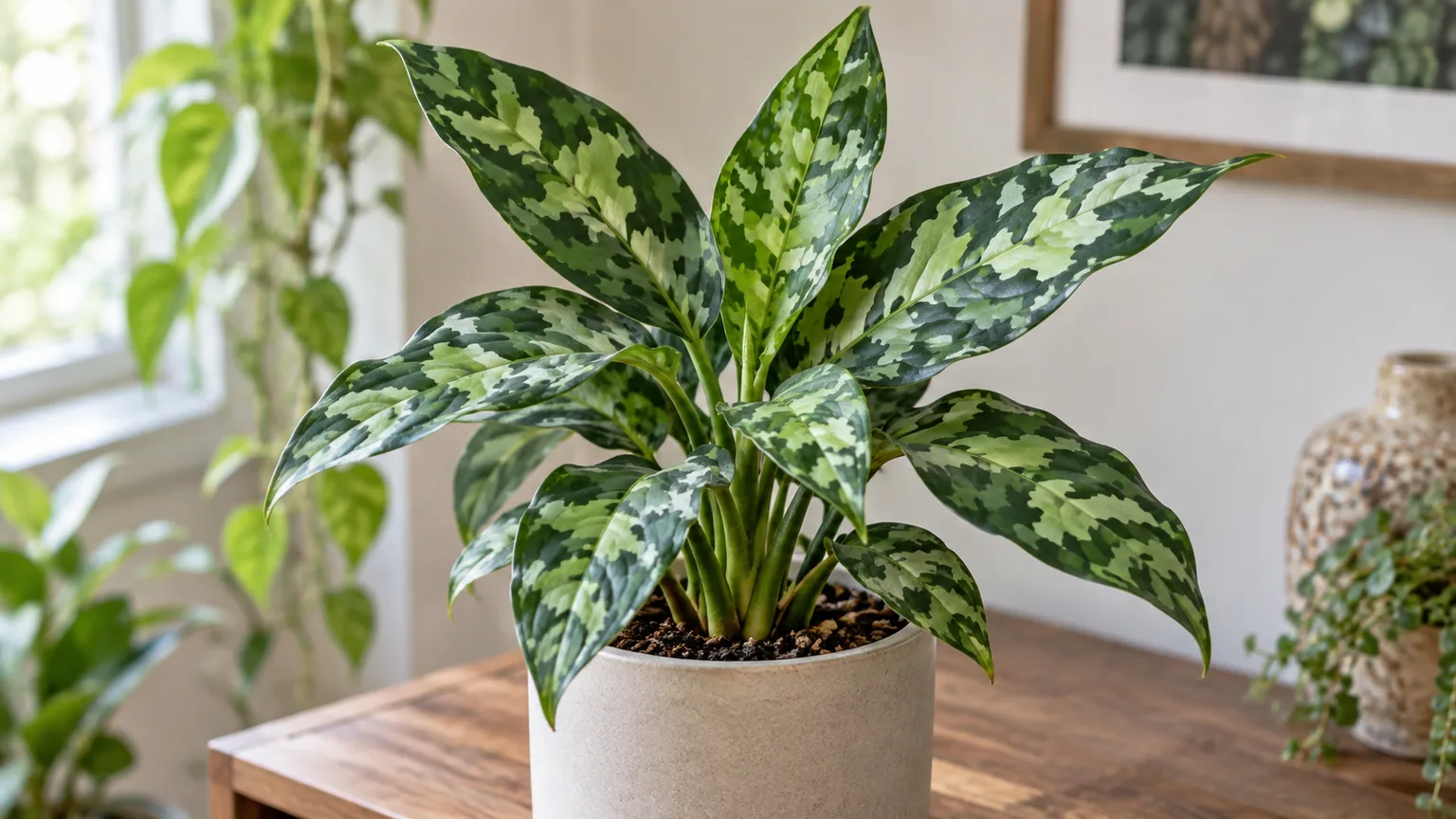
If your budget is limited, compare the price of a rooted starter with the cost of a more mature plant from a nursery that provides current photos. A tiny seedling may be cheaper, but its identity and pattern can be harder to judge and it may need a longer period of careful acclimation. Ask how it was propagated and whether the pictured plant is the exact specimen being shipped.
Are rare houseplants worth the asking price?
A fair price is the amount you are comfortable spending for this exact plant today—not a promise about what it might be worth later. Costs vary with size, root establishment, leaf count, pattern, season, seller reputation, shipping, and local supply. A rooted starter with modest but healthy growth can be a better buy than a cutting with one dramatic leaf and no clear evidence that it will establish.
How propagation and supply change the price
Some plants are slow to grow or difficult to propagate at scale, while others become easier to buy when commercial growers produce more. A new propagation wave can change the market faster than a care article or old post can be updated. Compare at least a few current listings for plants of similar size and condition, and ignore any seller who presents yesterday’s auction price as a guaranteed future value.
Variegation can also affect what a buyer is paying for. A broad white sector or unusual leaf pattern may be scarce in one batch, but a plant with very little green tissue can be slower and less forgiving to grow. For a rooted plant, judge several leaves and the newest stem growth; for a cutting, judge the node and visible stem variegation, not the leaf alone.
There is no dependable way to forecast what a rare plant will resell for. A collector plant can lose market value if availability rises, while a buyer may still value it because they like its shape and enjoy caring for it. If you would regret owning it at a lower resale price, buy a cheaper plant or wait.
How to inspect a rare plant before you buy
First decide what you are buying: a rooted plant, an unrooted cutting, a seedling, or a tissue-cultured plantlet. Each is a different amount of growing time and risk. A rooted specimen costs more but gives you a chance to evaluate roots and established growth; a cutting can be less expensive but needs a viable node and time to establish.
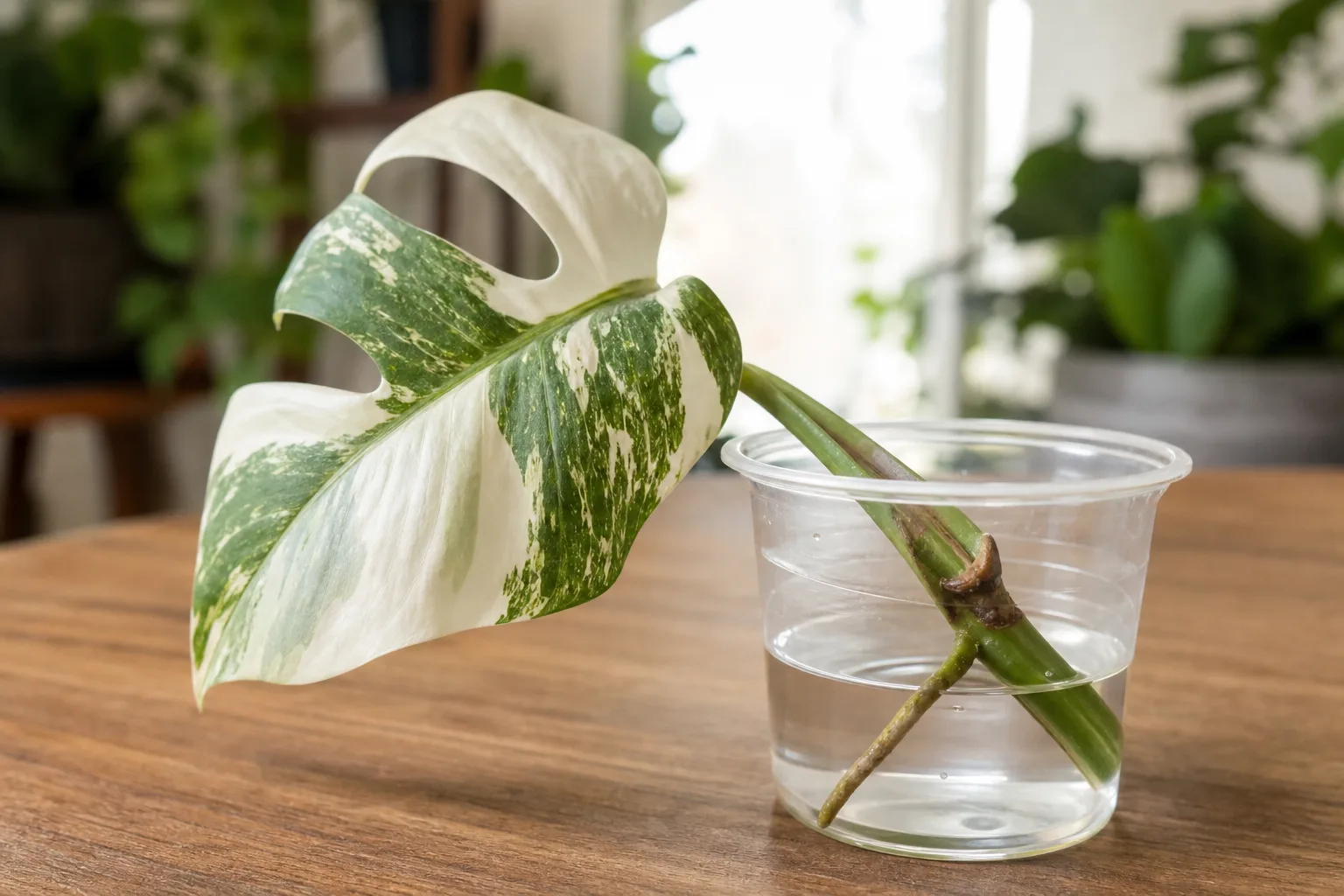
Check the photos, stem, and growth point
Use this short check before paying:
- Confirm identity. Ask for the botanical name and cultivar, then verify the leaf shape and pattern against a reliable reference.
- Request current photos. Look for the date or ask for a new image of the exact plant, including the stem and newest leaf.
- For cuttings, find the node. A leaf petiole without a stem node cannot make a new vine, even if the leaf stays green after cutting.
- Judge the whole plant. Look for multiple leaves, a firm stem, and enough green tissue on variegated varieties to support growth.
- Ask how it was grown. Tissue culture, seed-grown plants, and stem cuttings differ; the seller should identify the material accurately.
- Check the seller’s terms. Find the shipping window, replacement policy, and what happens if the plant arrives damaged.
Do not rely on one glamorized close-up as proof of condition. A strong seller can show the growing point, stem, and overall plant without filtering the colors or hiding the potting medium. If the exact specimen is not the one in the photo, ask for the stage, size, and variation you should expect instead.
Check the roots, pests, and shipping plan
For a rooted plant, inspect roots if the seller allows it, or ask for a clear photo through the drainage holes. Healthy visible roots are generally firm; dark, mushy roots, a sour smell, or a pot that stays waterlogged are reasons to slow down. Do not pull a plant out of its pot without permission at a retail nursery, but do ask about the root system and drainage.
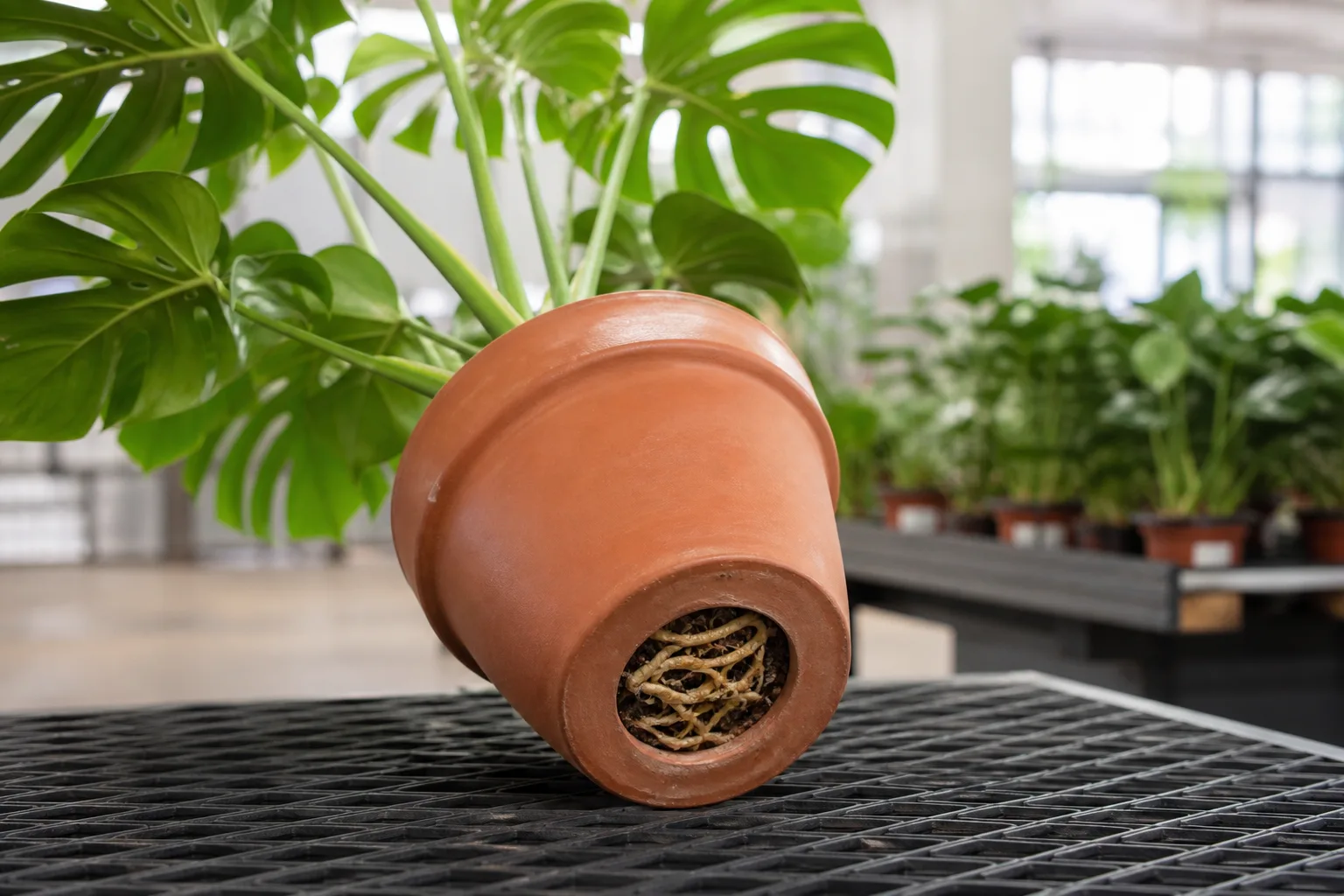
Look at leaf undersides, petiole joints, and the newest growth for scale, mealybugs, thrips, or webbing. A tiny pest problem can become a collection-wide problem if a new plant goes directly beside established plants. Keep purchases separate for a few weeks, inspect them regularly, and use a treatment only after identifying the pest and following its label.
Shipping is part of the plant’s condition, not an afterthought. Avoid extreme heat or cold, ask how the plant will be insulated, and choose a delivery window when someone can bring it indoors promptly. After arrival, take photos before unpacking, let the plant acclimate in stable indirect light, and wait to repot unless the medium is saturated, the roots are failing, or the seller’s instructions make immediate action necessary.
Budget for the growing setup, not just the plant
A realistic budget includes a container with drainage, fresh airy mix, support for climbing species, and a suitable bright location. A grow light can help when the window is too dim, but it adds equipment cost and does not correct overwatering or cold drafts. High-humidity Anthuriums may also need a humidifier or a suitable grow space, and that equipment needs cleaning and monitoring.
Plan for ordinary losses as well as routine care. A new plant may drop a leaf during shipping, take weeks to resume growth, or reveal a pest after it settles in. Do not immediately fertilize, repot, and move it to a brighter window all at once; let it stabilize, then make one change at a time so you can see how it responds.
Consider pets before you place the plant. The ASPCA’s list of houseplants that can cause trouble for pets includes Monstera, Philodendron, Anthurium, and Aglaonema among plants containing insoluble calcium oxalates; its Monstera deliciosa listing identifies that compound as a toxic principle. Keep these plants away from animals that nibble foliage, and use the exact ASPCA listing or your veterinarian for plant-specific guidance rather than assuming a rare cultivar is safer than the green species.
Buy responsibly and know what “rare” does not prove
Prefer nursery-propagated plants from sellers who will explain where the plant came from and how it was grown. Avoid wild-collected specimens and listings that use conservation language without naming the species, source, or documentation. A plant can be scarce in online shops without being endangered, and a species can face conservation pressure even when a cultivated clone is easy to buy.
For cross-border purchases, check the plant-health and import rules that apply to both the origin and destination before ordering. A seller’s willingness to describe the plant’s propagation and shipping paperwork is more reassuring than a vague “rare import” claim. If the source cannot be explained, skip the listing and choose a transparent grower.
The most responsible choice may also be the most practical one: a locally grown starter plant, a common green form, or a cutting traded by a fellow grower. You can still build an unusual collection without treating high prices as proof of quality or rarity. The point is to bring home a plant that has a good chance of adapting and that you will still enjoy if the trend passes.
Conclusion
Buy a rare houseplant when its appearance genuinely appeals to you, its care fits your home, and the seller can verify the plant and its condition. Thai Constellation, Pink Princess, or Aglaonema pictum Tricolor may fit a bright, ordinary room more easily than Anthurium regale or Pseudolithos cubiformis, while Albo and climbing philodendrons need you to plan for variable growth, support, and space.
Before paying, compare current listings, inspect the node or roots, confirm the propagation type, check for pests, and plan the first weeks of quarantine. If any of those checks are unclear, wait for a better specimen. A beautiful plant that thrives in your actual conditions is a better purchase than a famous name you are afraid to touch.