Philodendron Melanochrysum Care: Light, Water & Support
Learn how to grow Philodendron melanochrysum indoors with bright indirect light, check-based watering, airy mix, humidity, climbing support, and fixes.
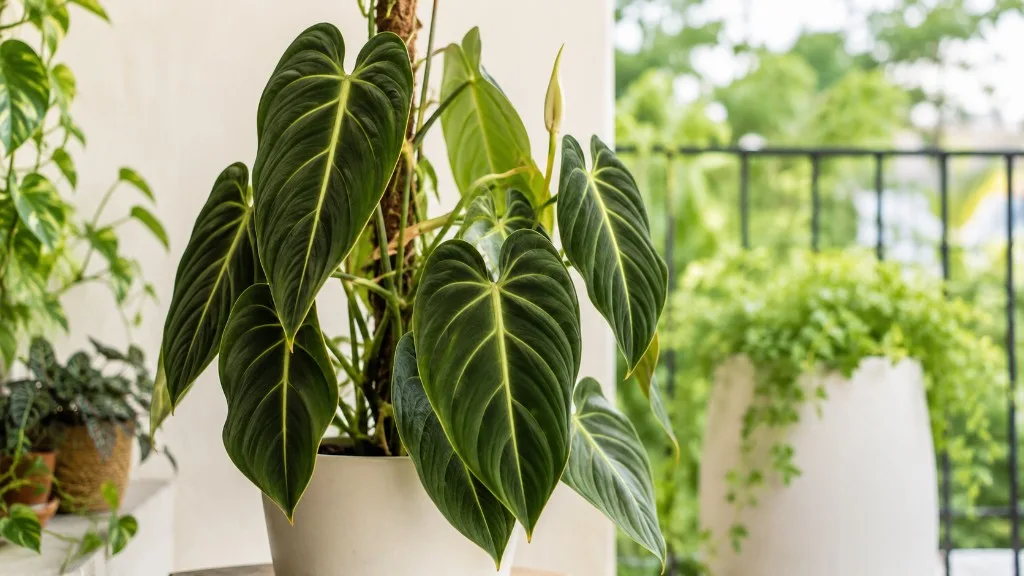
A Philodendron melanochrysum can survive as a trailing houseplant, but its signature mature leaves are more likely when the vine can climb. Give it bright filtered light, an airy root zone that drains freely, warmth, and support it can attach to; then adjust watering to how quickly that particular pot dries. The plant does not need a greenhouse, a rigid schedule, or a perfect humidity reading to grow well indoors.
This Colombian climbing aroid is often sold as the black gold philodendron or velour philodendron. Its deep green, velvety leaves and pale veins become more dramatic as the plant matures, but new leaves develop gradually. The useful question is not “How do I make every leaf huge?” but “What is limiting the next leaf?”
Quick care snapshot
| Need | Practical starting point | What to watch |
|---|---|---|
| Light | Bright, indirect light; shield leaves from hot direct sun | Long gaps between leaves or scorched patches |
| Water | Water thoroughly after the upper mix begins to dry | Pot weight, mix depth, drainage, and season |
| Mix | Loose, chunky, moisture-retentive but airy | Mix that stays soggy or turns hydrophobic |
| Temperature | A warm, stable room; avoid cold drafts | Chilling near windows or air-conditioning vents |
| Humidity | Average home air is often manageable; moderate humidity supports smoother growth | Stuck unfurling leaves and crisp margins after other causes are checked |
| Support | A firm pole, board, or trellis for the climbing stem | New aerial roots and the direction of new growth |
| Growth | Feed lightly in the active season | Fresh leaves, not old damaged foliage, show whether changes help |
Treat these as starting points, not a prescription. A small terracotta pot in a bright, warm room can dry much faster than a large plastic pot in winter, so check the plant and substrate before repeating yesterday’s routine.
Identify the plant and its climbing habit
Kew’s Plants of the World Online lists Philodendron melanochrysum as an accepted species native to Colombia and describes it as a climber of the wet tropical biome. That habit is visible indoors: the stem produces aerial roots at nodes and is built to ascend a surface, not to make a dense self-heading rosette. Clemson Extension describes the plant’s heart-shaped, velvety leaves and notes that they can reach impressive size when a specimen is trained vertically for several years; those mature dimensions are a possibility, not a promise for every home.
The leaves may emerge lighter, bronzy, or copper-toned before darkening as they harden. A fresh leaf can look limp or folded while it unfurls, and older leaves may have blemishes from shipping or rubbing that will not disappear. Judge progress by the size, spacing, color, and condition of new growth after the plant settles into your conditions.
Melanochrysum vs. micans
Juvenile plants of Philodendron melanochrysum and Philodendron hederaceum ‘Micans’ can both have dark, velvety leaves; Micans is usually smaller-leaved and more readily grown as a trailing vine, while melanochrysum can develop a much larger, elongated leaf with pronounced pale venation when it climbs. A young plant may not show every mature trait, so compare several features rather than relying on one leaf. Check the seller’s label and the plant’s growth habit if a mature-looking specimen never changes after climbing; light, support, roots, and age all affect leaf size, and care cannot make a different species grow like melanochrysum.
Choose bright, filtered light
Place the pot where the room is bright for much of the day but direct sun does not sit on the leaves for hours. An east-facing window is often a useful starting point; a south- or west-facing window can work farther back or behind a sheer curtain. A dim corner may keep the plant alive, but it tends to produce slower, more stretched growth and smaller leaves, which is why the University of Connecticut’s houseplant guidance recommends bright indirect light for philodendrons generally.
Use the plant’s response to refine placement. If each new leaf is smaller and the stem has longer bare spaces between leaves, move it closer to a bright window gradually or add an appropriate grow light. If pale, dry patches appear only on the window-facing side, reduce direct exposure; scorched tissue will not turn green again.
Avoid changing light and water at the same time unless the plant is in immediate danger. Moving it from a dim room to strong sun while increasing watering can create two new stresses and make the next symptom harder to interpret. Rotate the pot a little at a time if one side keeps leaning toward the window.
Water when the root zone is partly dry
Keep the mix lightly and evenly moist during active growth, but never leave the root ball sitting in water. A good watering is thorough: wet the mix until water exits the drainage holes, let it drain, and empty the saucer or decorative outer pot. The Royal Horticultural Society likewise advises allowing the compost to dry somewhat between waterings and warns that saturated mix can lead to root rot.
A fixed weekly schedule is unreliable because light, heat, pot material, root mass, and season all change drying speed. In warm bright conditions a small pot may need attention more often, while a large pot in a cool, dim room may stay wet much longer. Use a calendar only as a reminder to check; Gardening Know How’s general philodendron guide uses the top inch as a cue, but with a deeper pot also test below the surface before deciding.
A reliable watering check
For a typical indoor pot, press a finger into the top inch or two of mix. If the surface is still cool and damp, wait; if the upper layer has dried and the deeper root zone is only faintly moist, water thoroughly. With a deep pot or chunky mix, slide in a wooden skewer and check the lower third as well: wet mix clinging to it is a reason to pause.
Pot weight is another useful cue once you learn the difference. Lift the pot after watering, then again as it dries; a noticeably lighter container, together with dry upper mix, is a better prompt than a calendar date. Do not let the entire root ball bake dry for days, but do not “top up” a still-wet pot with small sips, which can keep some roots persistently saturated.
If water runs straight down the sides without soaking the center, the mix may have become hydrophobic. Set the nursery pot in a shallow basin of water for 10 to 15 minutes, then let it drain completely; afterward, return to normal top watering and check the mix more often. Do not use this rescue routine if the plant is already sitting in soggy substrate.
When to inspect for root rot
One yellow lower leaf by itself is not enough to diagnose rot. Suspect a root-zone problem when several leaves yellow or droop while the mix remains wet, the pot smells sour, the stem base softens, or roots are brown and mushy rather than firm. Overwatered roots can lose oxygen and decay, so adding more water because the leaves look limp can worsen the cause; Clemson Extension identifies overwatering and poorly draining media as common contributors to philodendron root rot.
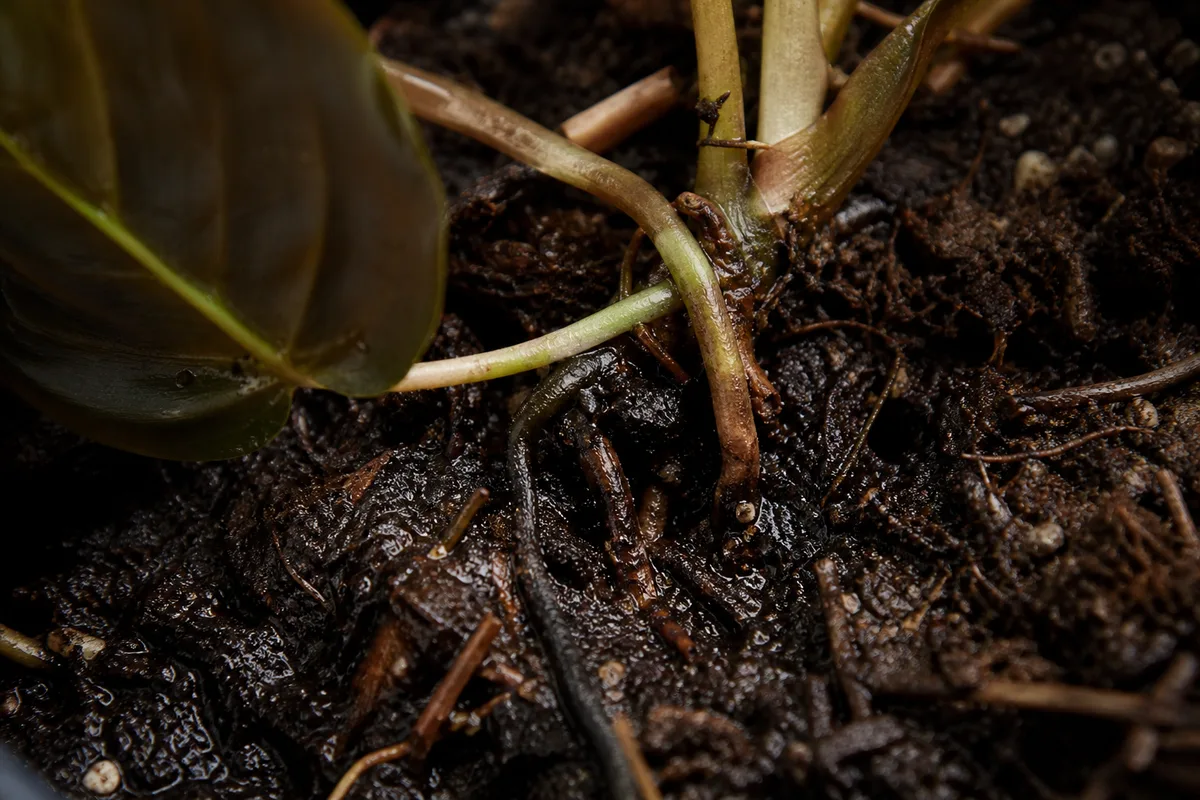
Inspect the roots and mix together; yellow foliage alone cannot confirm root rot.
Slide the root ball from the pot if the plant is declining and the mix stays wet for days. Trim only clearly soft, hollow, or foul-smelling roots with clean shears, then repot into a clean pot with drainage and fresh airy mix; do not keep the old waterlogged substrate. If only a few roots are damaged and the stem is firm, recovery is possible, but wait for the plant to stabilize before fertilizing or taking multiple cuttings.
Build an airy potting mix and pot
The root zone needs both water and oxygen. A dense, fine potting soil can stay wet too long in a warm-climate species kept indoors, while a mix that is almost all bark may dry before the roots can use it. Start with about equal parts indoor potting mix or coir, medium orchid bark, and perlite or pumice; then adjust toward more moisture retention if the mix dries unusually fast in your home.
Clemson and NC State Extension describe philodendrons as preferring moist but well-drained, organic-rich media. That does not mean the pot should remain wet: water passes through the open spaces, while the finer portion holds a reserve around the roots. Avoid garden soil and pots without drainage holes, and do not rely on a gravel layer at the bottom to correct a compact mix.
A nursery pot with open drainage holes inside a heavier cachepot is easy to manage because you can lift and drain it. Choose a pot only modestly wider than the current root ball; excess unused substrate can hold moisture longer than a small root system can absorb. If the nursery mix is very different from your new blend, transition during repotting without stripping every healthy root bare.
Keep temperature steady and humidity realistic
A warm room is more important than chasing an exact temperature on a thermostat. Typical comfortable indoor conditions work well; keep the plant away from cold window glass, a door that opens to winter air, and direct blasts from air-conditioning or heating vents. The RHS recommends at least 15°C (59°F) for philodendrons generally, while Clemson describes warmer day temperatures as ideal for the genus; this supports warmth and stability, not exposing the plant to a hot radiator.
Humidity can influence how smoothly a large leaf opens, but a household-grown plant does not need a sealed cabinet by default. The RHS says philodendrons prefer moderate humidity yet tolerate the lower humidity common in homes, and Clemson similarly notes that the genus can adapt to household air. If your room is dry and new leaves repeatedly stick or edges crisp despite sound roots and sensible watering, measure near the foliage and consider a small humidifier.
A practical target is to improve very dry air rather than treating a particular percentage as a pass-or-fail threshold. Keep the humidifier clean and direct mist away from the leaves; misting briefly wets the surface but does little to change room humidity for long. A pebble tray may make an attractive display, but it cannot reliably humidify a whole room, and the pot should never sit in the tray’s water.
Give the vine support early
The support is part of this plant’s growth setup, not just a way to keep a long stem tidy. Clemson Extension’s species note says the leaves of Philodendron melanochrysum do not reach full size unless the plant is trained vertically for several years. Good light, healthy roots, and time remain essential, so installing a pole will not instantly enlarge leaves that already hardened.

Aim the stem and aerial roots toward the support while leaving each petiole free to move.
Set a support near the stem while repotting if you can do so without tearing through the root ball. If the plant is already settled, place a slim pole along the pot’s inside edge where the stem naturally leans; avoid forcing a thick stake through dense roots. Attach the main stem loosely with soft ties, checking that each tie holds the stem rather than squeezing a leaf stalk.
Aerial roots may grow toward a rough, moist surface and attach over time. If they point away from the pole, guide the vine gently rather than twisting it; roots that already dried will not necessarily reattach. Add height when needed, and make sure the pot remains stable as the plant climbs.
Choose a moss pole, plank, or trellis
A moss pole offers a textured surface that can stay damp enough for aerial roots to grip, but it requires occasional maintenance and can make the potting mix dry at a different rate. A coco pole provides grip but may not hold moisture like sphagnum. A wood plank or trellis needs less maintenance and can support the vine, although it may offer less opportunity for roots to attach directly.
Choose based on the result you want and the care you can sustain. If you want a tidier, climbing plant with the option of larger mature leaves, a vertical support is useful; if you cannot keep a moss pole damp, a stable plank or trellis is still better than leaving a heavy vine to kink and tangle. The Royal Horticultural Society notes that climbing philodendrons can be trained on a moss pole and that aerial roots may grow into a moist support.
Do not soak the entire pot every time you moisten the pole. Water the potting mix according to its own moisture, and wet the pole separately with a narrow pour bottle or sprayer if the roots are actively attaching. This prevents the common mistake of using a dry moss pole as a reason to keep the roots waterlogged.
Feed modestly during active growth
Fertilizer supports new growth but cannot repair weak light, root rot, or a plant that has just been repotted. During spring and summer, use a balanced houseplant fertilizer at the label’s conservative indoor rate, especially if the plant is producing new leaves. In a low-light room or during a winter slowdown, reduce or pause feeding rather than applying fertilizer to a plant that is barely growing.
Apply diluted fertilizer to already damp mix and avoid letting concentrated solution collect in the saucer. Brown tips, a crust on the substrate, or a sudden decline after feeding can indicate excess salts as well as dry air or inconsistent watering. If you suspect buildup and the mix drains well, flush the pot with plain water and let it drain fully; do not add more fertilizer until healthy growth resumes.
More feeding is not a shortcut to large foliage. Leaf size follows the plant’s maturity and growing conditions, especially its climbing habit and available light. A sensible feed routine is a support for steady growth, not a substitute for those conditions.
Prune, clean, and repot without stress
Prune only when the vine is too long, damaged, or difficult to train. Make a clean cut just below a node if you want to use the removed stem for propagation, and leave enough healthy foliage on the parent plant to keep it growing. Wear gloves and wash tools afterward because philodendron sap can irritate skin; the Royal Horticultural Society specifically advises care when handling and pruning philodendrons.
Wipe dust from leaves with a soft, slightly damp cloth or a soft brush. The velvet surface can mark if you rub hard or apply leaf-shine products, so support each blade rather than pulling it by the tip. Turn the plant gradually if growth is strongly one-sided rather than spinning it abruptly into a very different light level.
Repot when roots circle densely, escape through the drainage holes, or the mix has broken down and no longer drains predictably. A root-bound plant does not need an oversized upgrade; move up one pot size, keep the stem at its previous depth, and water the fresh mix through once. Spring or early summer is convenient because growth is active, but the plant’s condition matters more than the date if the old medium has become sour or waterlogged.
Propagate a stem cutting
A cutting needs a node, the point on the stem where a leaf and often an aerial root emerge. A leaf removed with only its petiole may stay green for a while but cannot make a new climbing stem without a node. The RHS and Fine Gardening describe stem cuttings as a practical way to propagate climbing philodendrons; use a clean blade and take a section with at least one healthy node and one leaf.
Select a firm section that is not carrying a new leaf halfway through unfurling. Cut just below the node, keep the leaf blade above the rooting medium, and remove any leaf that would sit underwater or buried. If you are nervous about cutting the vine, air-layer a node first by wrapping it in lightly damp sphagnum; once roots form, cut below the rooted section.
Root cuttings in water or a loose medium
In water, keep the node submerged but the leaf and petiole dry, and change the water when it becomes cloudy. In sphagnum, perlite, or a propagation mix, keep the medium lightly damp and airy rather than saturated. Set the cutting in warm, bright indirect light and check it periodically without pulling it up to test every day.
Rooting time varies with warmth, light, and the cutting itself. Once a cutting has several roots about 2 to 5 cm (1 to 2 inches) long, with side roots beginning to form, pot it into a small container of airy mix and keep it evenly moist while it adjusts. Then transition to the same check-based watering routine as the parent plant; a cutting does not need standing water or constant mist.
Diagnose common leaf and growth problems
Use a pattern and a check, not one leaf symptom, to choose a fix. A single old leaf yellowing as a new leaf opens can be normal aging; multiple leaves changing at once suggest a change in the root zone, light, temperature, or pests. The fastest useful check is often to feel the medium, inspect the undersides and nodes, and compare the newest leaf with the last one.
| What you see | First check | Sensible next move |
|---|---|---|
| Several yellow leaves, mix stays wet | Drainage, pot weight, roots, and smell | Let excess moisture clear; inspect and repot if roots are soft |
| Crisp pale patch on window side | Direct sun exposure | Filter or move the plant gradually |
| Brown dry tips on several leaves | Humidity, water consistency, fertilizer salts | Check root moisture first; reduce dry-air stress and avoid extra fertilizer |
| Long bare stem and smaller leaves | Light level and whether the vine is climbing | Improve light and attach new growth to a stable support |
| New leaf does not open | Recent move, dry air, dehydration, or damage | Stabilize conditions; do not pull the leaf open |
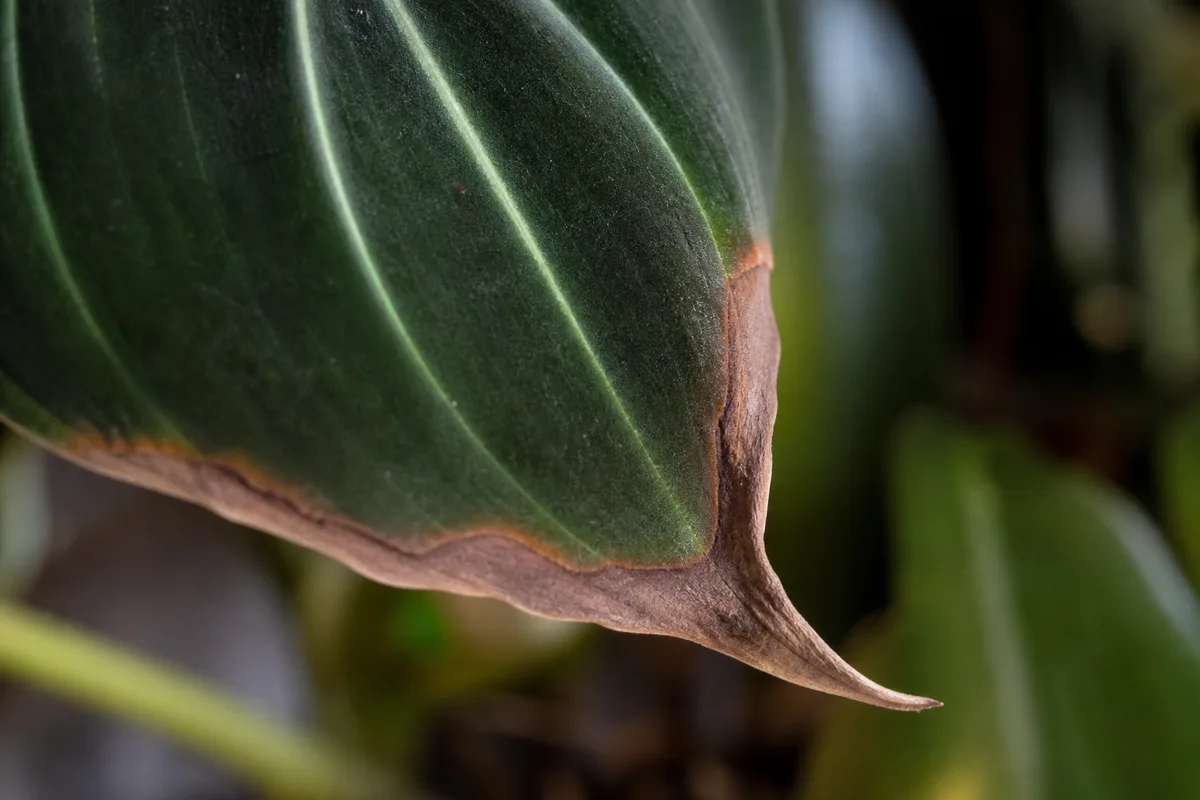
Dry brown margins are a symptom to investigate, not proof that the room is too dry.
Brown tips can follow several stresses, including a dry spell, dry air, fertilizer salts, or roots that have been damaged by staying wet. Look for a pattern: if only the side facing a window is bleached, light is more likely; if several leaves have crisp edges and the room is very dry, humidity may contribute. Correct the likely cause and watch the next leaf, because damaged tissue will not heal.
If a new leaf is stuck, do not pull the tip or peel away a cataphyll that is still attached. Check that the pot is not bone-dry or soggy, keep the plant warm and stable, and avoid drafts; a persistently dry room may benefit from a humidifier. A leaf that opens with a tear can be a one-time mechanical injury, so wait for the next leaf before changing several care factors.
Watch for pests
Inspect the undersides of leaves, leaf joints, and the stem where it meets the pole for mealybugs, scale, thrips, or fine webbing from spider mites. Quarantine a new plant and any plant with suspected pests so insects do not move through a collection; Fine Gardening recommends checking new plants and looking under leaves before they join other houseplants.
If you find pests, identify them before choosing a treatment. Wipe or rinse what can be removed, then use only a product labeled for indoor plants and the pest you have, following its label; test a small area first because velvet leaves can be sensitive to residue. Fine Gardening recommends inspecting new plants and checking leaf undersides; repeat your own inspection over the next few weeks, since one cleaning rarely removes every egg or hidden insect.
Keep the plant away from pets and curious children
Philodendrons contain calcium oxalate crystals that can irritate the mouth and digestive tract if chewed or swallowed, and sap can irritate skin or eyes. Poison Control describes pain and swelling as possible effects of exposure and advises keeping philodendrons away from children and pets. Place the pot and climbing vine where a cat cannot use its support as a route to nibble new leaves, and wear gloves when pruning.
If a pet or person chews the plant or gets sap in the eyes, contact a relevant poison-information service or seek medical or veterinary advice, especially if swelling, drooling, pain, or trouble swallowing occurs. Do not assume that a plant is safe because it has been in the home for years without an incident. Poison Control’s guidance can help with next steps, but urgent symptoms warrant direct professional help.
Conclusion
The most dependable indoor routine for Philodendron melanochrysum is bright filtered light, a warm stable room, an airy pot with drainage, and watering based on the mix rather than the calendar. A vertical support gives the climbing stem a route to mature, larger foliage over time, but good roots and light still set the pace. Keep humidity in perspective, inspect roots before treating yellow leaves, and make one measured change at a time so the next new leaf tells you whether it helped.