Philodendron Micans Care: Light, Water & Soil Guide
Learn Philodendron Micans care: choose indirect light, water by soil dryness, build an airy mix, root node cuttings, and diagnose yellow leaves and root rot.
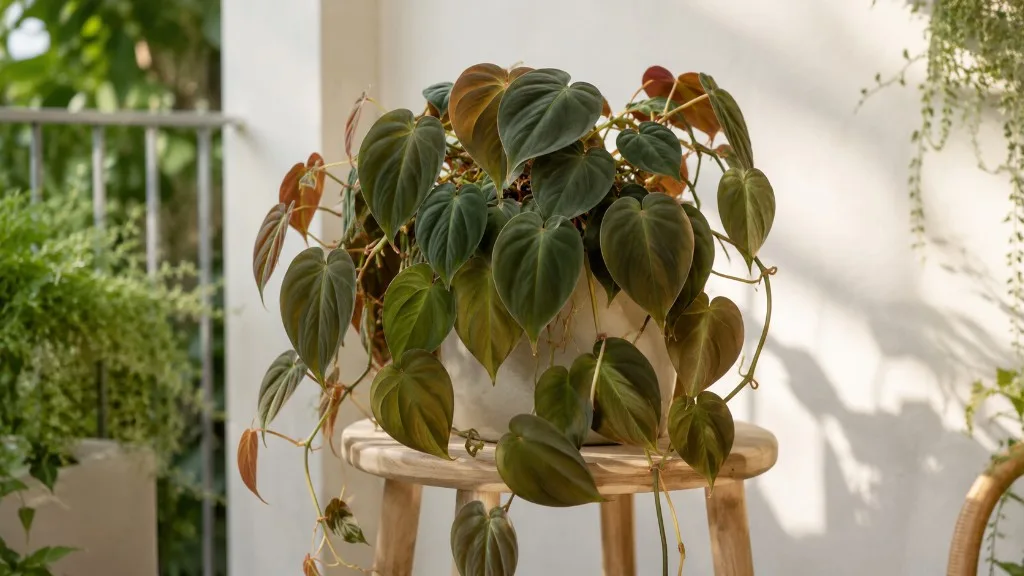
Philodendron Micans is grown for its small, heart-shaped leaves, soft velvet surface, and bronze-to-green color shifts. Indoors it is forgiving when light is indirect and the potting mix drains freely; most setbacks start when a low-light plant is watered on a fixed schedule or left in a container that stays wet.
The reliable routine is simple: give the vine bright filtered light, water only after the upper mix has dried, let excess water escape, and judge changes by new growth. You can let the stems cascade from a shelf or guide them upward, and a healthy vine can provide cuttings for a fuller pot.
What “Micans” Means—and What the Plant Looks Like
“Philodendron Micans” is the familiar houseplant name for a velvet-leaved form in the heartleaf philodendron group. Kew’s Plants of the World Online treats Philodendron micans as a synonym of Philodendron hederaceum var. hederaceum, the accepted botanical name in that classification. Labels still commonly use Micans, so recognizing the trade name is more useful than treating it as a different care category.
The plant is a tropical vine in the Araceae family. In nature, heartleaf philodendrons climb or trail, attaching at stem nodes where they can form aerial roots; indoors, the same stems hang from baskets or climb a support. The American Aroid Society’s botanical treatment describes the juvenile form as velvety on top, often with a purplish cast below. New leaves may open bronze or copper before maturing toward green, so a shift in color from one leaf to the next is not automatically a health problem.
Micans can be confused with other velvet philodendrons, especially P. melanochrysum. Micans typically has smaller, more delicate leaves on a thin, flexible trailing vine; melanochrysum develops much larger blades with conspicuous pale veins as it climbs. Heart-shaped leaves alone are not a reliable ID clue, because pothos can look similar. NC State Extension notes that philodendrons have non-grooved petioles and loose stipules around new growth, while pothos lacks those stipules and has a grooved petiole.
Quick Care Snapshot
| Care factor | Practical starting point | What to watch |
|---|---|---|
| Light | Bright, indirect light; avoid harsh midday sun | Long gaps between leaves signal the spot may be dim |
| Water | Let the top 2.5–5 cm (1–2 in) dry, then water thoroughly | Pot size, mix, temperature, and season change the interval |
| Potting mix | Loose, airy, and free-draining | Mix should hold some moisture without remaining soggy |
| Temperature | Warm room conditions; protect from cold drafts | Growth slows when the plant is chilled |
| Humidity | Average indoor air is usually workable | Dry air can make edges crisp, especially with a dry root ball |
| Feeding | Dilute houseplant fertilizer during active growth | A weak, low-light plant needs better conditions before more fertilizer |
| Display | Trail or climb, depending on space and preference | Support is optional for a healthy indoor plant |
The ranges are starting points rather than a promise that every pot will dry at the same speed. A small plastic pot in a bright warm room may need water much sooner than a large glazed pot in winter shade, even when both plants are Micans.
Give It Bright, Indirect Light
Set the plant near a bright window where direct sun does not strike the leaves for hours. An east-facing window often gives gentle morning light; a bright south or west window can work if the vine sits back from the glass or behind a sheer curtain. The aim is enough light to keep growth compact, not a specific compass direction.
Heartleaf philodendrons tolerate dimmer conditions, but tolerance means the plant may persist—not that it will keep the same growth pattern. The Royal Horticultural Society and Missouri Botanical Garden both describe low light as a cause of leggy growth and smaller leaves. If the stems are lengthening between leaves, move the plant closer to a brighter source gradually rather than jumping it into intense afternoon sun.
Direct hot sun can bleach or scorch foliage, and the velvety surface can show damage clearly. Rotate the pot a quarter turn every week or two if growth leans toward the window, but do not keep moving it from one extreme to another. Dust on the leaves can also dull the look; gently brush or wipe leaves with a clean, soft cloth rather than polishing them with leaf shine.
How Light Changes the Vine and Leaf Color
The most useful light signal is the newest growth. In a suitable bright-indirect spot, fresh leaves should continue to appear at a steady pace and the gaps between leaves should remain reasonably short for a trailing vine. In a darker corner, new growth often becomes smaller and more widely spaced; the plant may look thin even if older leaves remain healthy.
Color is more complicated than a simple “more light equals more red” rule. Micans leaves naturally change as they expand and mature, and bronze or reddish tones vary with the individual plant and conditions. Use leaf size, internode spacing, and growth rate alongside color; do not respond to one greener leaf by adding fertilizer or placing the plant in direct sun.
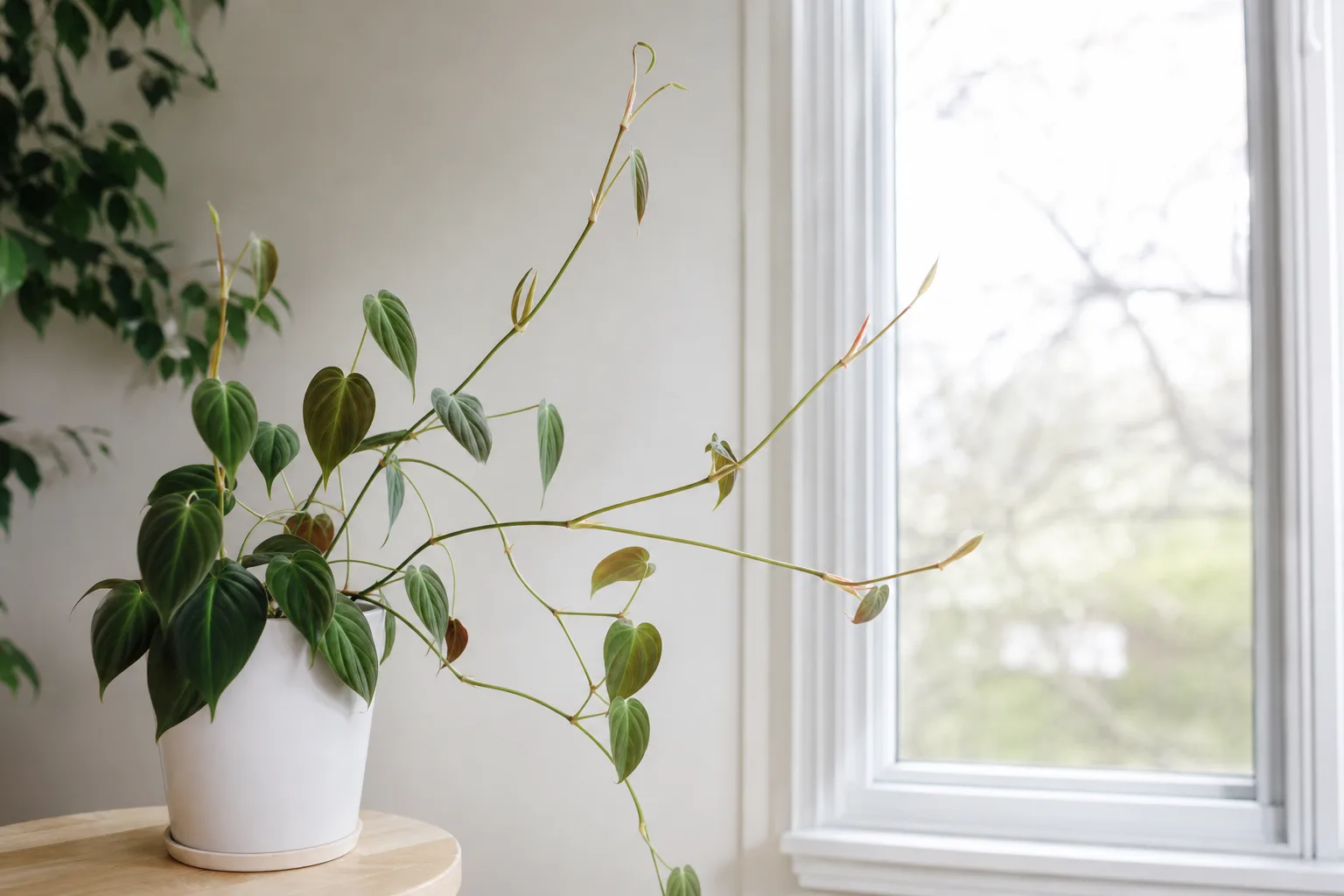
Widely spaced leaves and a stretched vine are a stronger low-light clue than a subtle color change by itself.
Water by Dry-Down, Not by Weekday
Water when the top layer of mix has dried rather than following a weekly calendar. For many indoor pots, checking the upper 2.5–5 cm (1–2 inches) with a finger is a useful start; if the pot is shallow, check a smaller depth, and if it is much larger, also consider how the middle of the root ball feels. Lift the pot before and after watering so you learn how a nearly dry container differs from a freshly watered one.
When it is time, pour slowly across the surface until water runs from the drainage holes. Let the pot finish draining, then empty the saucer or cachepot so the roots are not left sitting in runoff. If water rushes straight through a very dry mix, pause briefly and water again so the root ball has a chance to rehydrate evenly.
Expect the interval to lengthen in winter, after pruning, or when the room is cool and dim. It usually shortens during active growth in warm bright conditions, but pot material and mix matter just as much. The RHS advises letting philodendron compost dry slightly between waterings, while UF/IFAS uses the top inch as a check for heartleaf philodendron; both point to checking the mix instead of trusting a fixed schedule.
A drooping leaf alone cannot tell you whether the plant is thirsty. A light pot and dry mix support the underwatering explanation; a heavy pot, wet mix, and yellowing lower leaves point toward poor drainage or overwatering. Check the root-zone condition before changing the amount of water.
Build a Loose Mix and Use a Pot That Drains
Micans needs a mix that retains enough water for roots to absorb but leaves air spaces after watering. A practical starting blend is two parts quality indoor potting mix, one part perlite, and one part fine orchid bark or small coco chips, measured by volume. This is a flexible recipe: if your room is warm and the pot dries extremely fast, use a little more potting mix; if the mix stays wet for days, increase the airy component or choose a smaller pot.
A commercial aroid mix can work just as well if it drains freely. Avoid dense garden soil and heavy, compacted mixes that remain saturated. You do not need to make the potting medium strongly acidic or buy a special “Micans” blend; healthy roots and a manageable dry-down are the practical goals.
Choose a container with unobstructed drainage holes and only a little more room than the root ball. An oversized pot contains more wet mix than a small root system can use, which can stretch out the dry-down and raise the chance of root decline. Use a cachepot for display if you like, but remove the nursery pot to water and let it drain before putting it back.
Keep It Warm; Treat Humidity as a Bonus
Ordinary comfortable room temperatures suit this tropical plant. Keep it away from cold window glass in winter, exterior doors, air-conditioning blasts, and hot heating vents; abrupt changes can stress leaves and slow growth. The RHS recommends keeping philodendrons above about 15°C (59°F), while UF/IFAS cautions that heartleaf philodendron becomes too cold below about 10°C (50°F). Those are useful caution points, not a target to test against every hour; a steady warm room is easier on the plant.
Moderate humidity can support clean leaf edges, but Micans does not require a glass cabinet to live in a home. If your room is dry, first confirm that the root ball is not drying too far between waterings. A room humidifier can help a whole group of tropical plants; occasional misting is short-lived and leaves the velvety foliage wet, so it is not a dependable way to change ambient humidity.
The plant may tolerate typical household humidity with no special setup. If edges crisp only during heated winter weather, move it away from the vent and check the soil before buying a humidifier. If leaves remain healthy and new growth continues, the room is probably adequate even if it does not feel tropical.
Feed Lightly While It Is Growing
A balanced liquid houseplant fertilizer can support new leaves during active spring and summer growth. Follow the product label and start at a conservative dilution if the plant is in fresh mix or you are unsure how much fertilizer the potting medium already contains. Do not fertilize a dry root ball; water first or feed with the next normal watering according to the label.
Reduce or pause feeding when growth slows in a darker, cooler season. More fertilizer does not correct low light, root damage, or a pot that stays wet. Excess salts can produce brown tips or a pale crust on the mix, so if that appears, stop feeding and flush the medium with plain water only if the pot drains freely.
Advice on frequency differs among general philodendron care sources: UF/IFAS suggests feeding every three to four months, while Gardening Know How describes more frequent feeding in the growing season. The safer practical principle is a light application during active growth, adjusted to the label and the plant’s pace, rather than pushing a set monthly dose all year.
Choose Whether to Trail or Climb
Trailing is the easiest display: place the pot on a stable shelf or hang it where stems can lengthen without being brushed or pulled. That showcases the cascade and avoids adding a support to the pot. Check the eventual vine length before hanging it, especially if pets or small children can reach the lower stems.
A small trellis, coir pole, or moss pole is optional if you want upward growth. Tie the vine loosely with soft plant ties and guide a node toward the support; do not cinch a tie around the stem. A climbing support gives the plant a direction and keeps the foliage nearer eye level, but it does not guarantee dramatically larger leaves indoors. Light and root health still set the pace.
Pick the display that fits the room instead of treating one method as a care requirement. If the pot is already full and the vine is healthy, letting it trail is fine. If the plant is sparse, improve light before adding a pole; support cannot make a dim location brighter.
Prune for Shape and Take Node Cuttings
Pruning controls length and gives you material to propagate. Use clean, sharp scissors and cut just below a node—the point where a leaf and often a small aerial root emerge. A cut made between nodes may leave a piece without the growth point it needs to form roots or a new shoot.
To make the original pot look fuller, trim the longest bare sections and root several healthy cuttings, then plant the rooted pieces back around the parent plant. Cutting does not instantly make every section branch; the response depends on the plant’s condition and available light. Prune lightly if the plant is already stressed, and wear gloves if sap irritates your skin.
The Royal Horticultural Society recommends pruning straggly philodendrons as active growth begins and describes trailing or climbing philodendrons as straightforward to propagate from stem cuttings. A sharp, clean cut and a node in the propagation medium matter more than taking a long piece with many leaves.
Root Cuttings in Water or Potting Mix
For a water cutting, choose a healthy vine with at least one clear node; two or three nodes give you more flexibility when trimming and potting. Remove leaves that would sit below the water line, keep at least one leaf above it, and place the bare node in a clean jar of room-temperature water. Set the jar in bright indirect light, refresh the water if it becomes cloudy, and watch for roots rather than counting a guaranteed number of days.
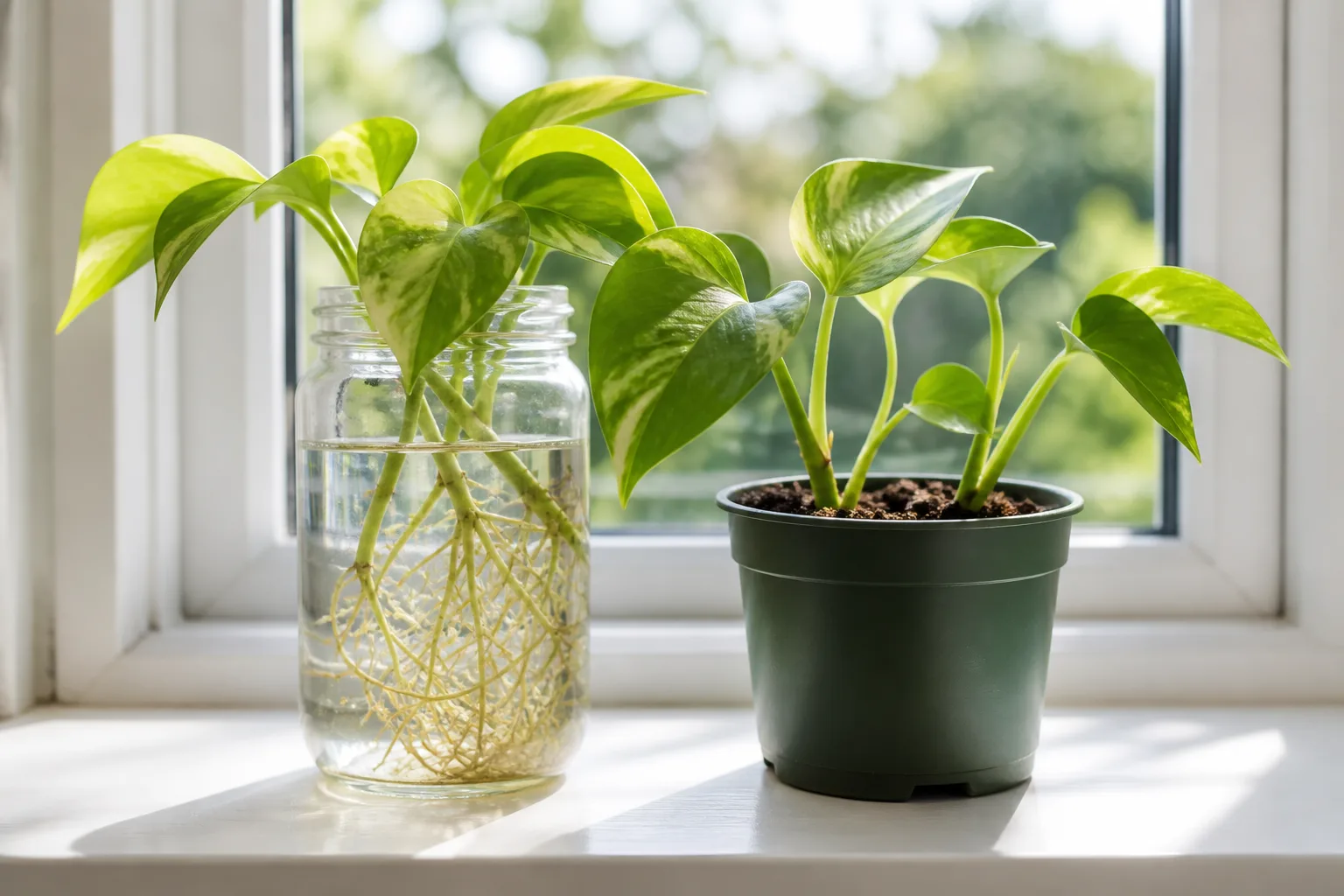
Illustrative vining-houseplant propagation setup; the example plant is not Micans. On a Micans cutting, keep the leaf above water and submerge at least one node.
Pot a water-rooted cutting once it has several established roots, rather than waiting for a tangled mass. Set it into pre-moistened airy mix, press the medium gently around the roots, and keep it lightly moist while the roots adjust; then resume the normal partial dry-down. Water roots can pause while adapting to potting mix, so a brief stall after potting does not by itself mean the cutting has failed.
Direct soil rooting avoids the water-to-soil transition. Place the bare node in lightly moist mix, keep the cutting in bright indirect light, and maintain modest moisture without sealing the pot in a constantly wet enclosure. If the cutting has no node, it may stay green for a while without making a new plant; the node is the essential part.
Repot When the Roots Need More Room
A Micans does not need a new pot every spring by rule. Repot when roots densely circle the pot, emerge from several drainage holes, or the plant dries unusually fast despite a healthy mix and normal conditions. A crusted, broken-down medium that stays wet or sheds water is another reason to replace the mix even if the plant is not dramatically root-bound.
Move up just one pot size, or choose a container only a few centimeters wider than the root ball. Loosen a tight outer mat of roots gently, remove mix that is sour or compacted, and set the plant at the same depth in fresh airy medium. Water once to settle the mix and let it drain completely.
Spring or early summer is a convenient time because active growth helps the plant re-establish, but urgent root rot should be addressed whenever it appears. If the plant is healthy and the current pot dries at a reasonable pace, leave it alone. Repotting a healthy vine into a much larger decorative pot can create more watering trouble than it solves.
Diagnose Yellow Leaves, Droop, and Leggy Growth
A single old leaf near the base can yellow and drop as a stem matures. A cluster of yellow leaves or a sudden change deserves a check of moisture, light, and pests before adding fertilizer. Look at the pattern and the pot together:
| What you see | Check first | Better next step |
|---|---|---|
| One older lower leaf yellowing while new growth looks normal | Whether the leaf is isolated and the rest of the vine is firm | Remove it once fully yellow; keep routine care steady |
| Several leaves yellow and mix stays wet | Pot weight, drainage holes, and root condition | Empty standing water, allow more dry-down, and inspect roots if decline continues |
| Leaves droop while mix is dry and pot feels light | How far the dry zone extends into the root ball | Water thoroughly, drain, and shorten the next interval only if the same dry-down repeats |
| Long spaces between small leaves | Light level and direction of new growth | Move gradually to brighter indirect light; do not compensate with extra fertilizer |
| Bleached or crisp patches on the window-facing side | Whether direct sun touches the leaves | Filter or move the plant back from the glass |
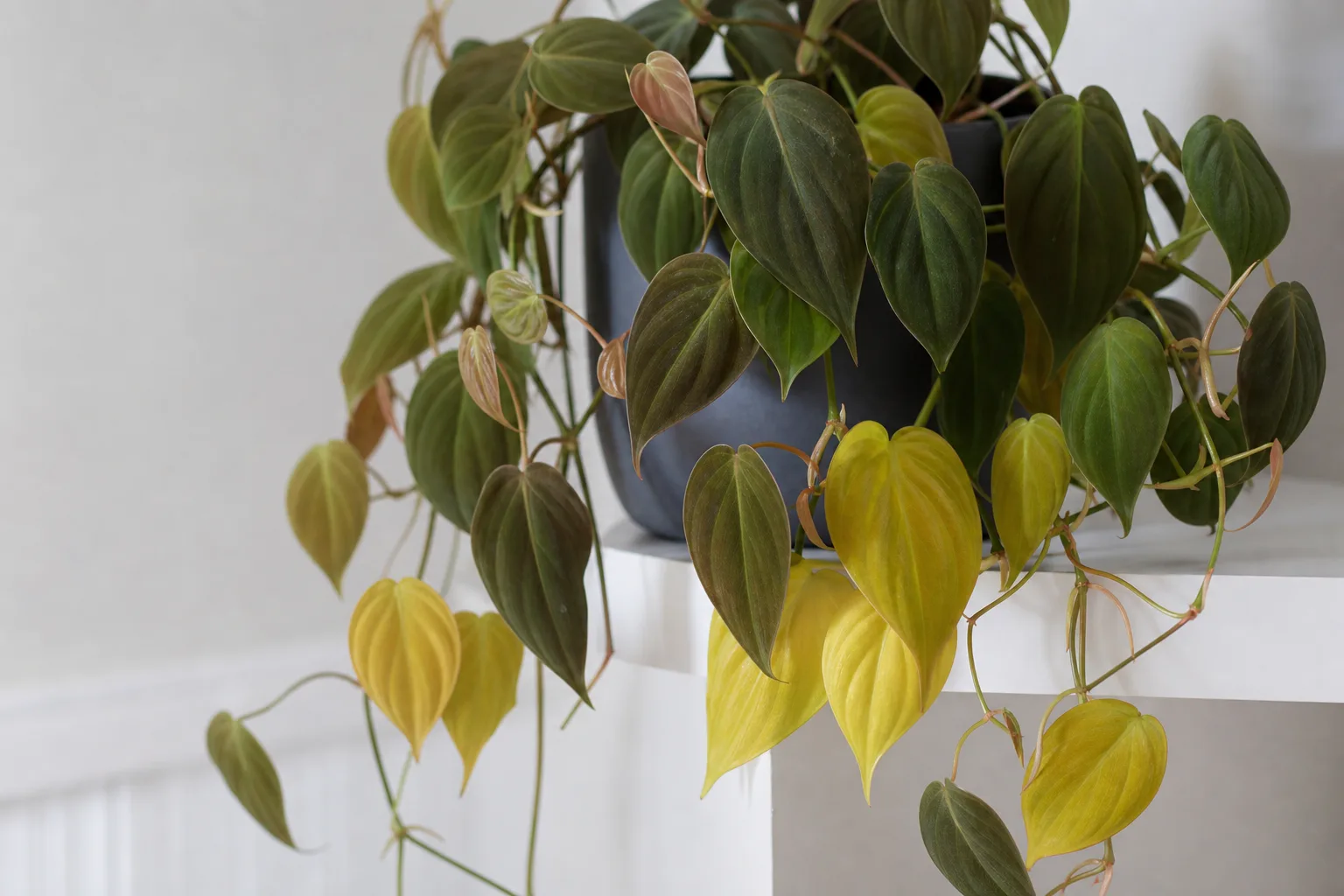
Multiple yellow leaves are a cue to inspect the root zone and light pattern; color alone does not identify the cause.
When root rot is likely, remove the plant from the pot and inspect rather than repeatedly watering or withholding water without checking. Healthy roots are firm; rotted roots are soft, dark, or unpleasant-smelling. Trim clearly damaged roots with clean scissors, discard saturated old mix, and repot the remaining healthy roots into a clean draining container and fresh airy medium. If the base of a stem is soft, take only firm, healthy sections above the damaged part and root those nodes.
Brown Tips, Curling Leaves, and Soft Stems
Crispy tips can follow a dry root ball, fertilizer or mineral buildup, low humidity, or direct sun; compare the affected edge with where the pot sits and how the mix has been drying. A salt crust on the surface or a recent heavy feed makes fertilizer accumulation more plausible. Correct one likely cause, then judge the next leaves rather than expecting damaged tissue to turn green again.
Curling can also be a response to dehydration, heat, or pests hidden under leaves. Check the underside and node joints with a light; fine webbing, tiny moving specks, sticky residue, or cottony clusters call for pest inspection. Soft, blackening stems together with constantly wet mix are more urgent than a single curled leaf and point toward decay at the root or stem.
Do not remove every imperfect leaf at once. Keep firm leaves that still contribute energy, remove only dead or rotted tissue, and avoid combining a repot, hard prune, fertilizer dose, and major location change unless an emergency requires it. Changing one factor at a time makes the response easier to read.
Find Pests Before They Spread
Inspect the undersides of leaves, new unfurling growth, and the tight joints where each leaf meets the vine. Aphids cluster on tender growth; mealybugs resemble white cotton; scale can look like fixed brown bumps; spider mites may leave fine stippling or webbing. Fungus gnats are more closely tied to persistently damp potting mix than to the leaves, so a sticky card alone does not diagnose a leaf-feeding pest.
Isolate a plant with suspected pests from nearby houseplants. Wipe a small infestation from the leaves and stems, then monitor new growth over the following days. If you use insecticidal soap or another labeled product, follow its directions for indoor plants and test a small area first; velvet foliage can be more sensitive to repeated sprays than smooth leaves.
A regular quick look while watering is easier than treating a large outbreak. Gardening Know How lists aphids, mealybugs, scale, and mites among common philodendron pests, and Epic Gardening likewise emphasizes catching early infestations before populations build. Do not spray on a strict calendar when no pest is present.
Keep Sap and Foliage Away from Pets and Children
Philodendrons contain insoluble calcium oxalate crystals and are listed as toxic to cats and dogs by ASPCA Animal Poison Control. Chewing can cause oral irritation, pain, swelling, drooling, vomiting, and difficulty swallowing; the RHS also cautions that sap may irritate skin. Keep trailing stems out of reach, collect pruned pieces promptly, and wash hands after handling sap. Gloves are sensible if you have sensitive skin.
If a pet chews the plant, contact a veterinarian or an animal poison-control service promptly and share the plant name and estimated amount. Do not induce vomiting or try a home remedy unless a veterinary professional tells you to. For a suspected human ingestion, contact your local poison center; seek urgent medical care for swelling or trouble breathing.
A hanging basket is not automatically safe if the vines grow down to a reachable shelf or furniture. Choose placement based on where the stems will be after a season of growth, not only where the pot hangs today.
A Calm First-Month Care Routine
For the first week, keep the plant in a stable, bright-indirect spot and inspect for pests. Check how heavy the pot feels and how quickly the upper mix dries; do not water just because the nursery pot looks small or because another plant is due for water. If the mix is still wet, wait and check again.
Over the next few weeks, note whether new leaves open, whether stems lean toward the window, and whether the pot dries at a predictable pace. If the plant is badly root-bound or the mix is compacted and staying wet, repot; otherwise, avoid changing containers just to settle it in. Give the vine a support only if climbing suits your space.
Once it is growing steadily, prune for shape or take a node cutting if you want another plant. Begin light feeding during active growth only after checking the potting mix label and the plant’s condition. A short note of watering dates can help you learn the interval, but let the soil check decide when the next watering happens.
Conclusion
The best Philodendron Micans care is built around a healthy root zone and steady indirect light. Check the mix before watering, use a pot that drains, and treat color or droop as clues to investigate rather than instructions to change several things at once.
Trail the vine, give it support, or prune it into a fuller display—the plant can handle each approach when its basic conditions are right. With a suitable spot and a node-based propagation routine, one healthy Micans can remain an easy, long-lived houseplant and provide cuttings when you want to expand the display.