How to Prune Annabelle Hydrangeas: Timing and Cuts
Choose a pruning height for Annabelle hydrangeas, remove winter damage safely, and avoid cuts that trade sturdy stems for oversized, drooping blooms after rain.
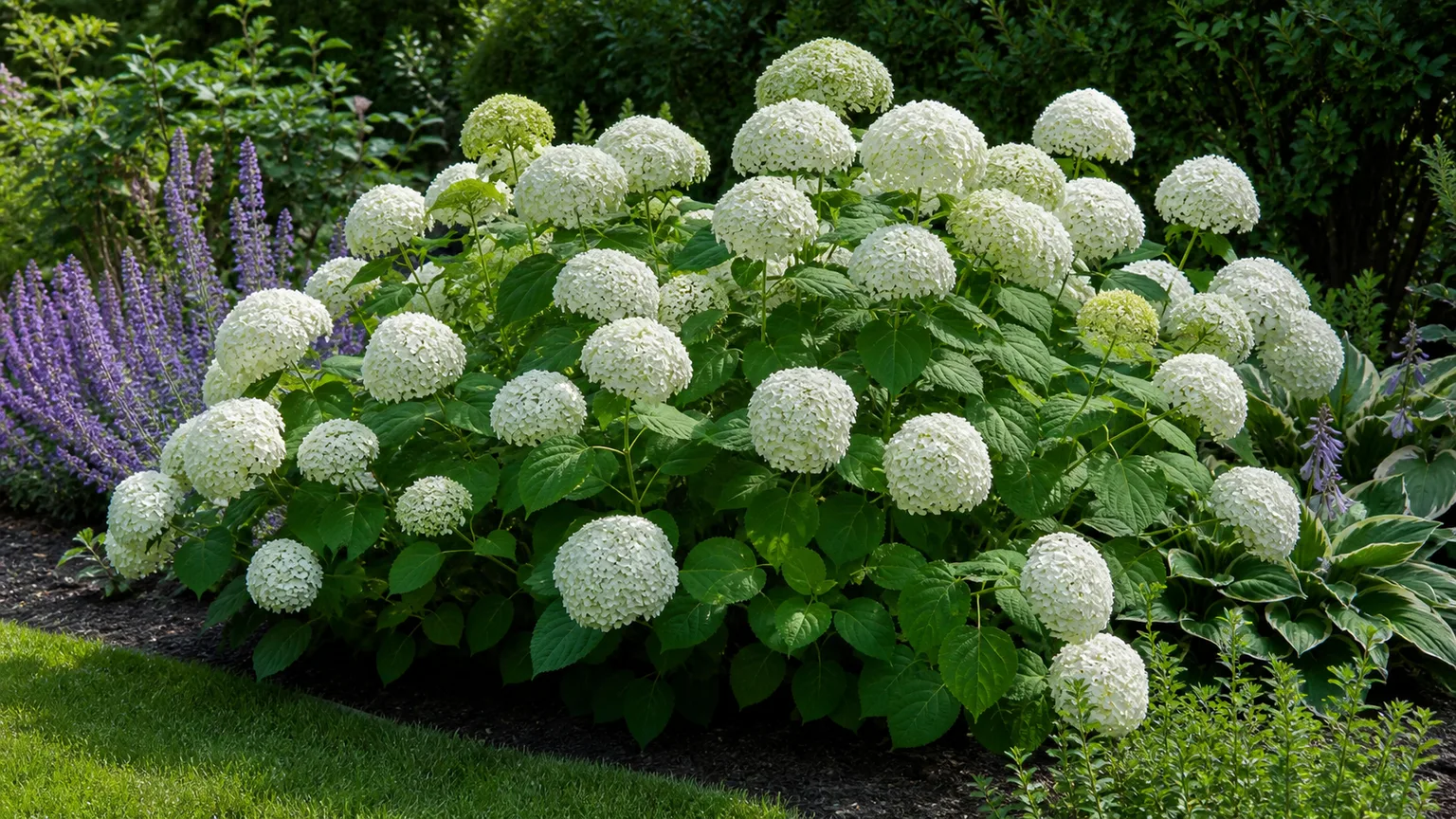
Annabelle hydrangeas do not need an annual haircut to flower. They bloom on new growth, so you can prune in late winter or early spring without removing next summer’s flower buds—but the height of the cut changes the shrub’s shape and how well its stems carry those heavy white flower heads.
For most established plants, the useful choice is simple: leave roughly 18 to 24 inches of last year’s stems if you want a taller, sturdier framework, or cut lower if you need a compact reset and accept that new shoots may bend under large blooms. First remove dead or broken stems, then make the remaining cuts before active spring growth begins.
The right cut depends on the result you want
Before you prune, decide what needs to change. A shrub that is healthy but too wide may need selective shaping; one whose flower heads bend after rain may need more supporting stem, not a shorter haircut. A plant that has become crowded and weak may benefit from gradual renewal, while a recently planted Annabelle usually needs little more than cleanup.
Pruning can control size, remove winter damage, and create a framework for the next season. It cannot guarantee larger flowers, stop every stem from bending, or correct poor growing conditions on its own. If your plant already has a shape you like and sound stems, removing only dead or damaged growth is a legitimate pruning plan.
Confirm the shrub before you cut
Annabelle is a cultivar of smooth hydrangea, Hydrangea arborescens. It usually forms a rounded, deciduous shrub with broad leaves and large, round flower clusters that open pale green, turn white, and often age back toward green. The exact size and flower display vary with the site and cultivar, so a nursery label or reliable plant record is more helpful than flower color alone.
Do not apply this pruning schedule to every hydrangea with a white flower. Bigleaf and oakleaf hydrangeas generally carry flower buds on older stems, so a hard spring cut can remove the coming season’s flowers; smooth and panicle hydrangeas flower on current-season growth. If the label is missing and you cannot identify the plant confidently, remove only clearly dead or broken branches and wait until after it flowers to decide on a larger cut.
A young or recently transplanted Annabelle also benefits from restraint. During its first season in a new spot, prioritize establishment and remove only damaged stems; once it is growing strongly, you can shape the mature framework in a later dormant season.
Why Annabelle hydrangeas tolerate spring pruning
“New wood” means the current season’s shoots produce the flowers. Annabelle does not rely on flower buds formed on the previous summer’s stems in the way bigleaf hydrangeas do, so dormant pruning is less likely to sacrifice next summer’s bloom. That makes spring the practical time for structural cuts, but it does not mean every stem should be cut to ground level every year.
North Carolina State Extension Plant Toolbox notes that smooth hydrangea can be pruned close to the ground in late winter and will grow vigorously, with very large flower clusters on the new shoots. The same profile cautions that these stems can bend after heavy rain. In other words, the plant’s ability to bloom after a severe cut is not proof that a severe cut is the best choice for every garden.
The Royal Horticultural Society’s shrubby hydrangea guide says regular pruning is not essential for H. arborescens, though annual pruning can encourage more prolific, larger flowers. Its framework guidance is deliberately adjustable: prune to the lowest healthy pair of buds for a low structure, usually around 10 inches, or leave a taller framework of about 2 feet if you want more height. Those options describe different goals, not a universal rule.
Choose a framework before choosing a height
Use the shrub’s current shape and its performance last summer to select a cut. If stems stayed upright, you can preserve that structure and make only light corrections; if the heads collapsed after rain, retain more woody stem next year and plan support before the plant fills in. A moderate cut is a good starting point when you are unsure because you can always prune more in a later year.
| Your goal | Starting framework | Main trade-off |
|---|---|---|
| Keep flower stems more upright | 18–24 inches (45–60 cm) | Taller shrub; may need light shaping |
| Keep a compact shrub | About 10–12 inches (25–30 cm) | Strong new growth, but large heads may still bend |
| Rejuvenate a crowded, established shrub | Remove selected old stems at the base; reduce the rest moderately | Takes more than one season, but avoids a drastic all-at-once cut |
| Preserve a shape that already works | Remove dead or broken stems; shorten only awkward growth | Less size control and fewer new basal shoots |
These are starting points, not cultivar-specific guarantees. The Gardenia hydrangea pruning guide gives smooth hydrangeas a broad 12–24-inch range, which reinforces the value of matching the cut to the structure you want.
Leave 18 to 24 inches when sturdier stems matter
Keeping roughly 18 to 24 inches of last year’s growth gives new shoots a woody base and tends to preserve a more open, taller outline. This is a sensible first choice for mature Annabelles whose large flower heads repeatedly pull the stems outward or down, especially in exposed gardens that receive hard rain. It also makes it easier to see the plant’s natural branching rather than forcing it into a uniform ball.
The retained stems do not make a plant flop-proof. Flower weight, rain, shade, soft new growth, and the plant’s own vigor all matter, so observe the result through summer and adjust the next winter. If the framework makes the shrub too tall, shorten it gradually rather than lopping every stem to the same low point.
Cut lower only when you want a compact reset
A low cut can be useful if an established shrub is too tall, badly misshapen, or recovering from substantial dieback. Smooth hydrangea can send up new flowering shoots after a hard dormant-season cut, but those shoots may be vigorous and carry large heads on less substantial stems. For many gardens, a cut near 10 to 12 inches is a more controlled reset than cutting flush to the ground.
Do not choose the lowest possible cut simply because you expect it to produce the biggest or most flowers. A severe cut can create tall soft growth, and the shrub may need support in summer; the exact flower size and stem strength vary with cultivar, weather, light, and moisture. If the plant is large but healthy, remove a few old stems at the base and lower the remaining canopy over two or three seasons.
When to prune in your climate
Prune in late winter or early spring, while the plant is dormant and before fresh shoots actively extend. In colder regions, wait until the harshest part of winter has usually passed so the exposed cuts are not followed by the worst cold, but finish before leaves unfold. In milder regions, that dormant window may arrive earlier on the calendar.
Use the plant and the weather as your guide rather than relying on a single date. If you can still see the framework clearly and buds have not opened into leaves, it is generally a practical time to prune; if strong new growth is already underway, limit work to dead, broken, or dangerously rubbing stems and save reshaping for the next dormant season. A short delay is safer than cutting because a calendar says it is time.
Avoid major fall pruning even though Annabelle blooms on new wood. Late-season cuts can remove the winter structure, expose the shrub to cold, or stimulate growth that has little time to harden before frost. The exact risk depends on climate, so treat any late-year cleanup as a separate, optional job rather than moving the main pruning season.
Tools and setup: keep the job simple
For most Annabelle stems, use sharp bypass pruners that cut cleanly without crushing the wood. Keep loppers nearby for older stems too thick for your pruners, and wear gloves if your skin is sensitive or the cut stems are rough. A tarp or garden bag makes the cleanup easier, but you do not need special pruning products or wound paint.
Start by checking that the blades are clean and the locking mechanism works. If you are removing a diseased stem, wipe the blades before moving to healthy growth; routine cuts on a healthy shrub do not require elaborate tool treatment. Set the loppers aside unless a stem is genuinely too thick for hand pruners, because a controlled cut is easier with a tool sized to the branch.
Stand back before the first cut and note the shrub’s height, width, leaning stems, and any old stems that failed last season. If you want a 2-foot framework, mark that height mentally or with a temporary reference stick, then work around the whole plant. This check prevents the common problem of cutting one side low while leaving the other side tall and lopsided.
Step-by-step: prune Annabelle hydrangeas in late winter
Prune from the outside in, inspecting each stem before shortening it. Remove what is clearly damaged first, then choose the final framework height and make the remaining cuts consistently; that order keeps healthy wood from being removed just to make the shrub look tidy.
If you are unsure about a stem, scratch a small area of bark with a fingernail. Green tissue below the bark suggests the stem is alive; dry, brittle wood without green tissue is likely dead. Do not strip every stem down to the crown just because winter has made the shrub look bare.
Remove dead, broken, or crossing stems first
Cut dead, broken, or diseased stems back to sound wood or to the base if the whole stem is dead. Remove stems that cross and rub, grow toward the center, or lie across the ground, because those can clutter the framework and create repeated damage as the shrub leafs out. Keep healthy, well-spaced stems even if they are not perfectly straight.
A stem that is brown on the outside is not automatically dead; older hydrangea wood is naturally woody. Check for flexible live tissue and visible buds before removing it, and make a small test scratch only where it will not spoil the stem’s appearance. If only the tip is damaged, cut back to the first healthy pair of buds instead of removing the entire branch.
Set a consistent height around the shrub
Once damaged growth is out, choose the framework height you want and shorten the remaining stems to a similar level. For a sturdy, taller structure, retain about 18 to 24 inches; for a lower profile, use the lower range described above, while keeping healthy buds on each stem. A varied, natural outline usually looks better than a perfectly flat hedge-like top.
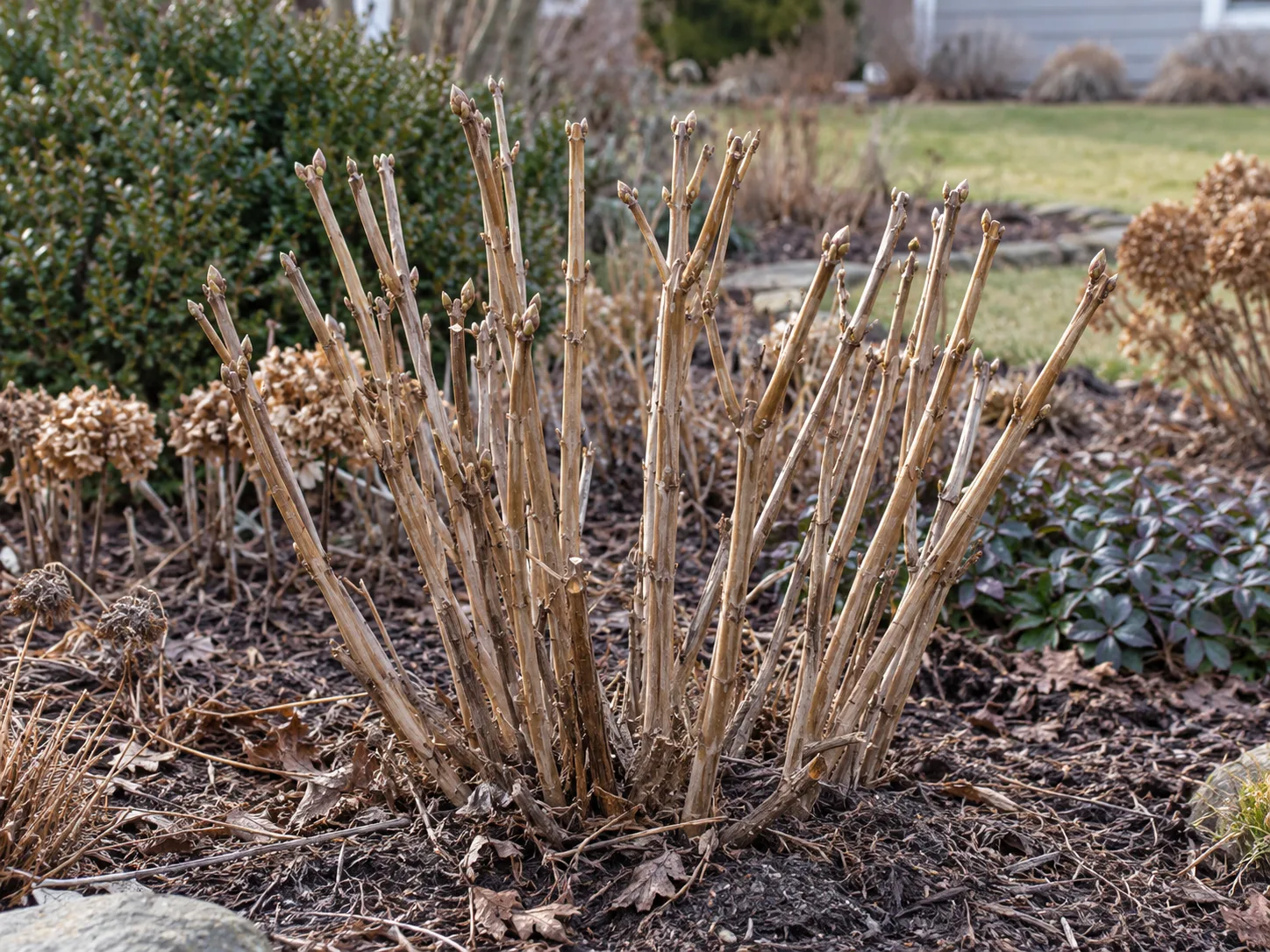
Avoid shearing the plant into a tight sphere. Annabelle naturally has a loose, rounded habit, and a hard outline cut can remove useful branching while leaving crowded stems inside. If only one section is too tall, lower that section to an appropriate side branch or healthy bud rather than making the entire shrub match it.
Make each cut just above a healthy bud
Position the blade just above a pair of healthy buds, leaving a short stub instead of cutting directly through the buds. Make the cut cleanly so it does not split the stem, and avoid leaving a long dead stub that can break back later. A slight angle away from the bud helps shed water, but cut placement matters more than achieving a precise angle.
Pause after each handful of cuts and look at the overall shape. If the crown is open, the main stems are spaced, and the shrub has the height you want, stop; Annabelle does not benefit from repeated detail trimming through the season. More cuts are not automatically better pruning.
Fall deadheading: remove flower heads selectively
Removing a spent flower head is optional and different from shortening the entire shrub. You can cut individual heads for a tidier look or a dried arrangement, but the dried clusters also add texture to the winter garden, so leaving them is a reasonable choice. Annabelle’s new-wood flowering habit means a clean deadhead does not remove next year’s flower buds in the same way it can on older-wood hydrangeas.
If you want to remove heads in fall, do it early enough that the cut is not part of late-season structural pruning. Gardening Know How’s October hydrangea care guide recommends selective early-fall deadheading on new-wood smooth hydrangeas where snow or ice might weigh down brittle stems, while postponing hard pruning until late winter. Its October timing reflects a particular seasonal window, so use local frost patterns rather than copying the month everywhere.
If the heads are dry and attractive, leave them and remove them during spring pruning. If you cut flowers for a vase, wait until the clusters have begun to age and turn green; early white blooms may wilt faster after cutting. Trim only the flower stem you are harvesting and leave the rest of the plant’s framework alone.
Why Annabelle flops, and when support helps more than another cut
Annabelle’s round flower clusters can become heavy when rain soaks the blooms. A shrub with healthy leaves and a few bent flower stems may be dealing with weight rather than disease, thirst, or a need for emergency pruning; the North Carolina State Extension profile specifically notes that vigorous shoots with very large heads may bend after heavy rain.
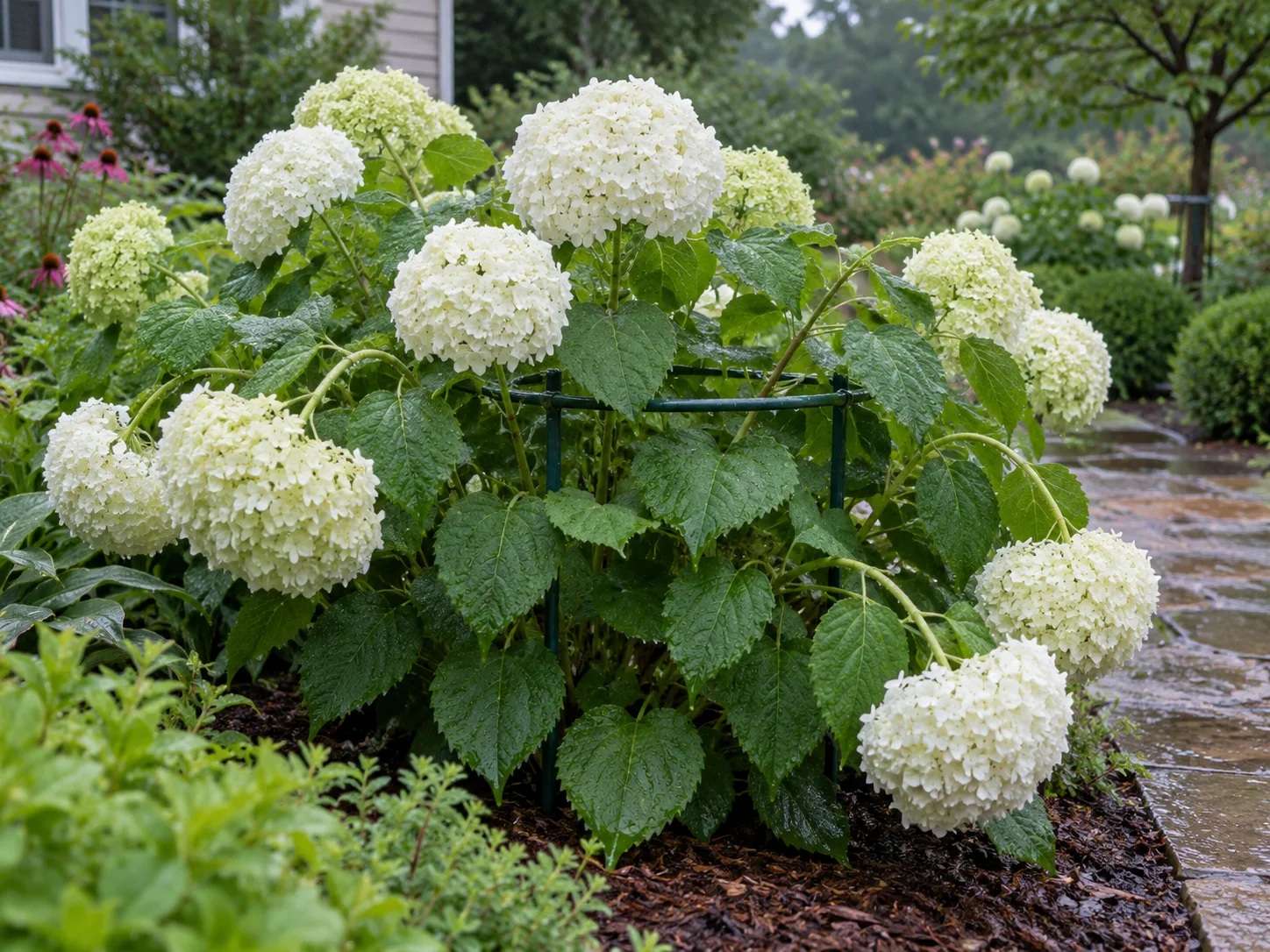
Use support when you like the plant’s flowers but stems repeatedly sag. A peony ring or low shrub support works best when installed early in spring, before shoots grow through it; loose ties to a sturdy nearby support can help an existing plant, but never cinch the stems tightly or bind several stems into a single bundle. If blooms bend only while wet and recover as they dry, wait before cutting healthy branches.
Pruning is one part of the solution, not the entire fix. A taller retained framework may help, but a plant in deep shade can produce softer growth, and excess nitrogen can push leafy shoots that are less sturdy; review the site and feeding habits if flopping persists. For a droop that involves the leaves as well as the flower stems, use the plant checks in this hydrangea drooping guide before treating it as a pruning problem.
Renovate an overgrown or neglected plant gradually
For a healthy but crowded Annabelle, begin by removing dead stems and a small number of the oldest or weakest stems at ground level. Shorten the remaining growth to your chosen framework height, then see how the shrub responds over the next growing season. This preserves more living structure and lets you learn how the plant behaves before making a larger renovation cut.
If nearly every stem is weak, damaged, or badly placed, a more substantial dormant-season reset is possible because smooth hydrangea flowers on new growth. Still, there is little reason to remove every stem to soil level if a lower but visible framework will do the job; leave healthy buds and avoid injuring the crown. The first year after renovation may produce vigorous shoots that need support.
A neglected shrub can also be renewed over several seasons by removing roughly a third of the oldest stems at the base each year and lightly shortening the rest. This staged approach is slower than starting over, but it avoids taking away the whole canopy at once and makes the results easier to judge. Do not combine severe pruning with major root disturbance or heavy feeding in the same season.
If you pruned too late or cut too low
If you cut Annabelle after new shoots have begun to grow, the plant may lose some of that season’s flowering stems, but one mistimed cut does not usually mean the shrub is finished. Stop pruning, keep the root zone evenly moist during dry weather, and let the remaining shoots grow; do not fertilize heavily to force a quick replacement flush. Check the plant again when it is dormant and adjust next year’s cut.
If you cut a healthy plant close to the ground in late winter, it can still regrow and flower because it blooms on new wood. The trade-off may show up later as longer, more flexible stems with large heads that bend in wind or rain. Support the new growth if needed, then leave a taller framework the following winter instead of repeating the same hard cut automatically.
If you prune the wrong hydrangea type, wait to see which stems remain alive and avoid another corrective cut. Bigleaf and oakleaf hydrangeas may lose flowers after heavy spring pruning because their buds form on older wood; identify the plant before trying to compensate with more cutting. Dead or broken wood can still be removed at any time when it creates a safety issue, but preserve healthy stems until you know what they are.
Aftercare and what to expect from the next bloom cycle
After pruning, clear fallen stems and old leaves from the crown so you can see new growth and avoid leaving a tangled pile against the plant. Water normally as spring growth begins, using soil moisture and rainfall as your guide rather than adding water just because the shrub has been cut back. A layer of mulch can help steady soil moisture, but keep it off the stems and do not use fertilizer as a substitute for the right pruning height.
New shoots may take time to appear, especially after a cold winter or a hard cut. Give the plant a chance to leaf out before declaring it dead, and check for live tissue near the base if no growth appears when nearby shrubs have already started. If only a few stems leaf out, remove confirmed dead stems and let the living ones fill in before making another structural change.
When the shrub flowers, note whether stems remain upright after rain and whether the chosen height still fits the space. If the heads are large but the plant flops, keep more of the framework or add early support next year; if the plant is too tall, lower it gradually. The best routine is the one that gives your particular shrub a manageable shape and flowers you can enjoy without rebuilding the plant every season.
Conclusion
Prune Annabelle hydrangeas in late winter or early spring, before active growth, and choose the cut height to match the plant’s job in your garden. Leaving about 18 to 24 inches of old stems is a practical starting point when you want a taller framework and better support for heavy blooms; a lower cut is an option for size control or renewal, not a requirement for flowering.
Remove dead and broken stems first, preserve healthy buds, and make a larger cut only when you have a clear reason. If the shrub’s flowers bend after rain, combine a sturdier framework with early support instead of assuming that another hard cut will solve it.