Why Are My Hydrangeas Drooping? Causes and Fixes
Why are your hydrangeas drooping? Use this timing-and-soil check to tell heat stress from thirst, root rot, heavy blooms, and disease—and fix each one.
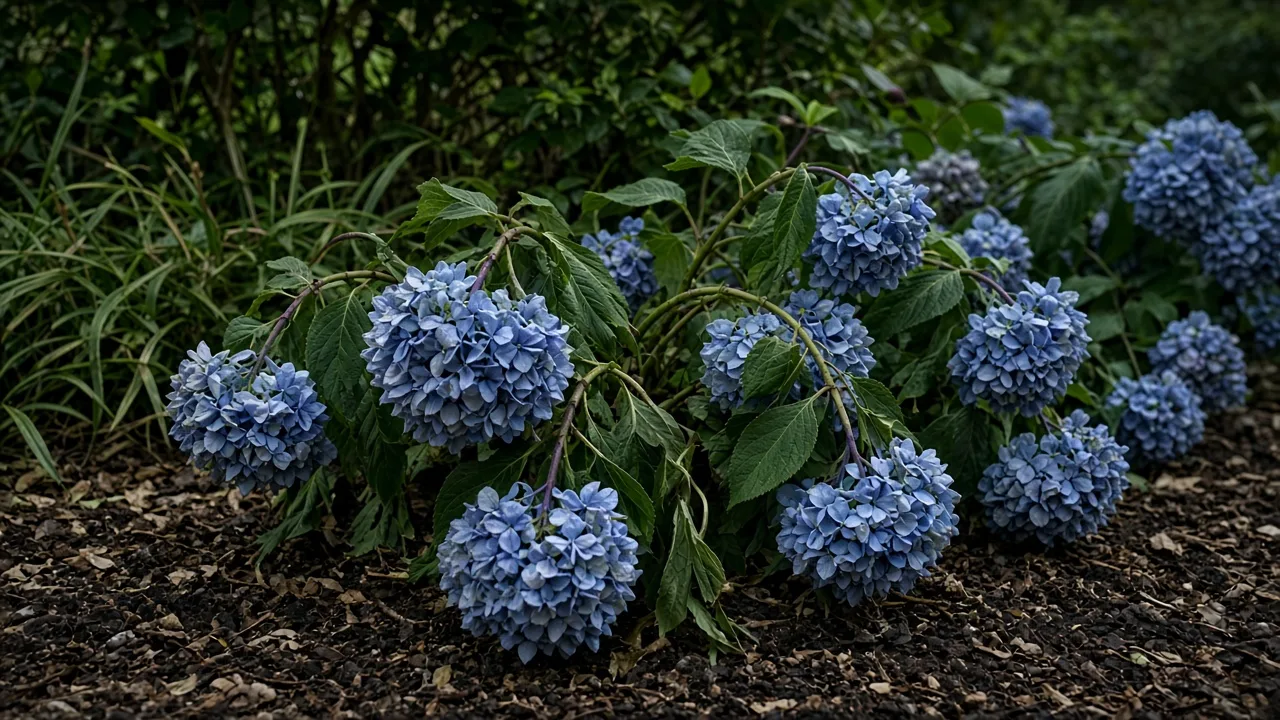
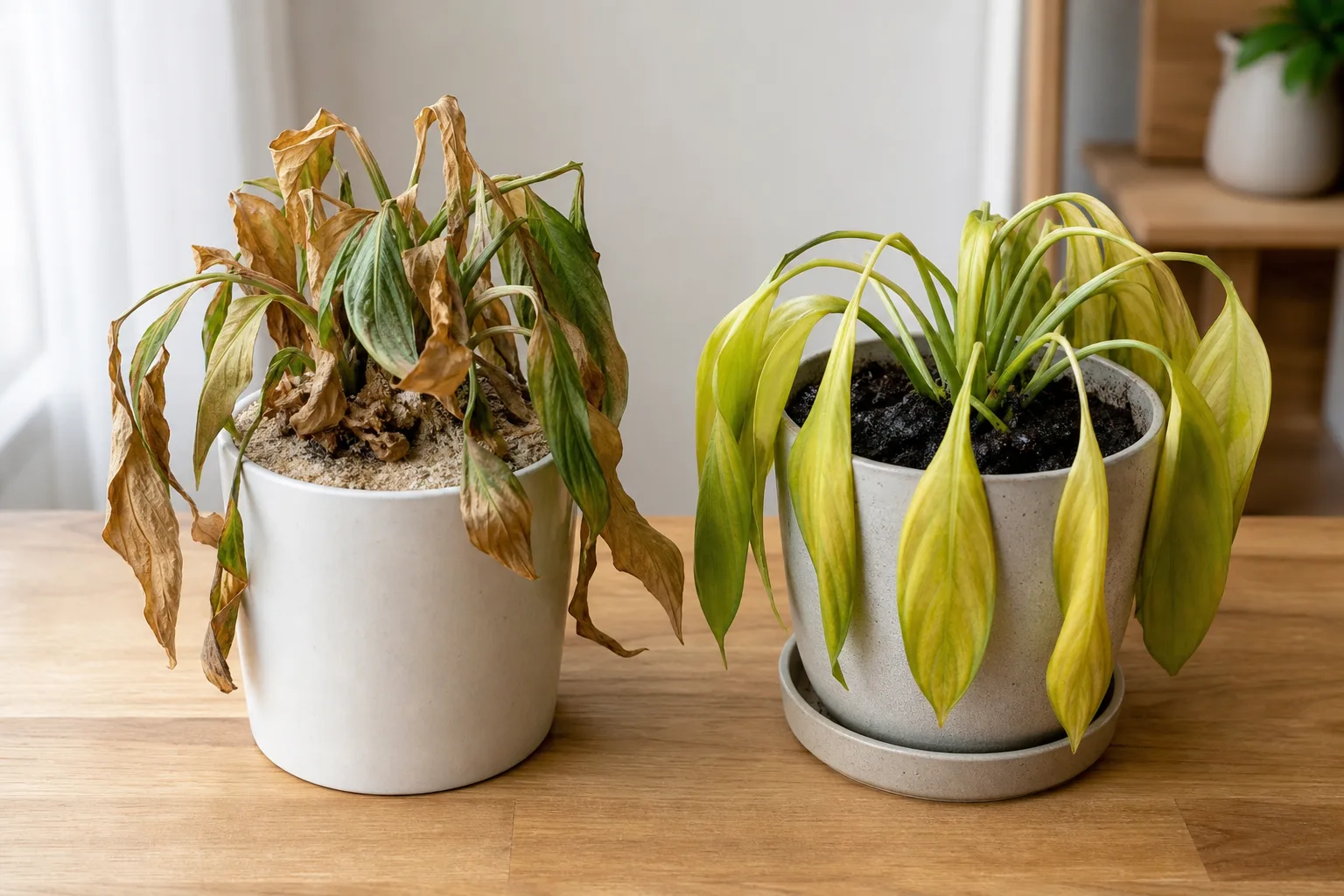
Hydrangeas droop for opposite reasons, so the watering can is not always the right first move. A bigleaf hydrangea can sag through a hot afternoon while the soil is still damp, whereas a plant in dry soil needs a deep soak. A plant with yellowing leaves and waterlogged roots may also wilt because damaged roots can no longer take up the water around them.
Start with three observations: when the droop appears, how wet the soil is below the surface, and whether the leaves or only the flower stems are affected. That quick triage prevents the most common mistake—adding more water to a plant that is already too wet—and points you toward shade, drainage, root inspection, support, or pest and disease checks instead.
The Timing Tells You Which Problem to Test First
Drooping that arrives on a hot, bright afternoon and disappears by evening or the next morning is usually a heat-and-transpiration response. Large hydrangea leaves lose water faster than the roots can replace it during the hottest hours; the leaves temporarily lose firmness, then recover as light and temperature ease. The Royal Horticultural Society’s recent heat guidance likewise emphasizes that traditional mophead and lacecap hydrangeas are especially vulnerable in prolonged heat and drought, while shadier positions cope better.
Droop that is still present the next morning deserves a closer soil and root check. If the root zone is genuinely dry, you have a water deficit; if it is soggy, the issue may be oxygen-starved roots or root rot. If the leaves look firm and green but individual bloom stems hang, the plant may be healthy and simply carrying more flower weight than its stems can support.
Do Three Checks Before You Water
These checks take about two minutes and work for both in-ground and container-grown hydrangeas. Test the soil beside the root ball rather than relying on a dry-looking surface, because the top layer can dry while the deeper root zone remains adequately moist.
Use Overnight Recovery as Your First Clue
Look at the plant in the late afternoon, then again after a cool night. If it stands up without extra water, heat stress is likely. You do not need to rescue a plant that has already corrected itself; instead, reduce future stress with mulch, better afternoon protection, or a more suitable planting position.
If it stays limp from one morning to the next, treat the recovery failure as useful evidence. Check the soil before watering again, because persistent wilt can follow either an empty root zone or roots that are too wet to function.
Feel the Soil at Root Depth
Push a finger, narrow trowel, or soil probe 2–3 inches into the soil a few inches away from the stems. Bone-dry soil at that depth supports underwatering. Cool, damp soil is not a reason to keep watering, and sticky or sour-smelling soil points toward poor drainage or root trouble.
For a container, check several spots because roots can form a dry pocket along the pot wall while the center stays wet. Also lift the pot if it is manageable: a very light pot with mix pulling away from the sides is likely dry, while a heavy pot that never seems to drain may be holding too much water.
Check Whether Leaves or Flower Stems Are Drooping
Soft leaves across the plant indicate a water-transport problem. Compare the newest leaves, the sun-facing side, and the shaded interior. If only exposed leaves droop or scorch, heat, wind, reflected light, or root damage near the surface may be driving the pattern.
Flower stems that bend while leaves stay green and hydrated are a different case. Heavy mophead or smooth-hydrangea blooms can pull stems down, especially after rain, and do not call for emergency irrigation.
Fast Diagnostic Table for Drooping Hydrangeas
| What you see | Best first clue | Likely cause | First action |
|---|---|---|---|
| Droops in afternoon, upright by morning | Soil is moist 2–3 inches down | Heat stress | Do not add routine water; provide afternoon shade and mulch |
| Leaves stay limp after a dry spell | Soil is dry at root depth | Underwatering | Soak the root zone slowly and deeply |
| Droops with yellowing in wet soil | Drainage is slow or soil smells sour | Overwatering or root rot | Pause irrigation and investigate drainage and roots |
| One shoot collapses while others look better | Localized dieback or damaged roots | Root disease or physical injury | Inspect crown, stems, and roots; remove the source if confirmed |
| Flowers hang but leaves are firm and green | Bloom heads are saturated or oversized | Mechanical flower-head weight | Let blooms dry, then support stems |
| Wilt comes with spots, webbing, sticky leaves, or distortion | Visible pest or disease signs | Leaf spot, mildew, or sap-feeding pests | Improve airflow, clean debris, and identify before treating |
 |
The table is a starting point, not a substitute for looking at the plant. Drought, overwatering, pests, and disease can overlap, which is why the Missouri Botanical Garden’s drought guidance recommends checking moisture below the surface and considering the plant’s age, exposure, soil, and recent weather together.
Heat Stress and Too Much Afternoon Sun
Bigleaf hydrangeas (Hydrangea macrophylla) are the classic afternoon droopers. Their broad leaves and large flower heads create high water demand, and a hot wall, driveway, south-facing bed, or windy corner can make a plant wilt even when the root zone is moist. Reflected heat from masonry is especially hard on a shrub that would otherwise be comfortable in morning sun and afternoon shade.
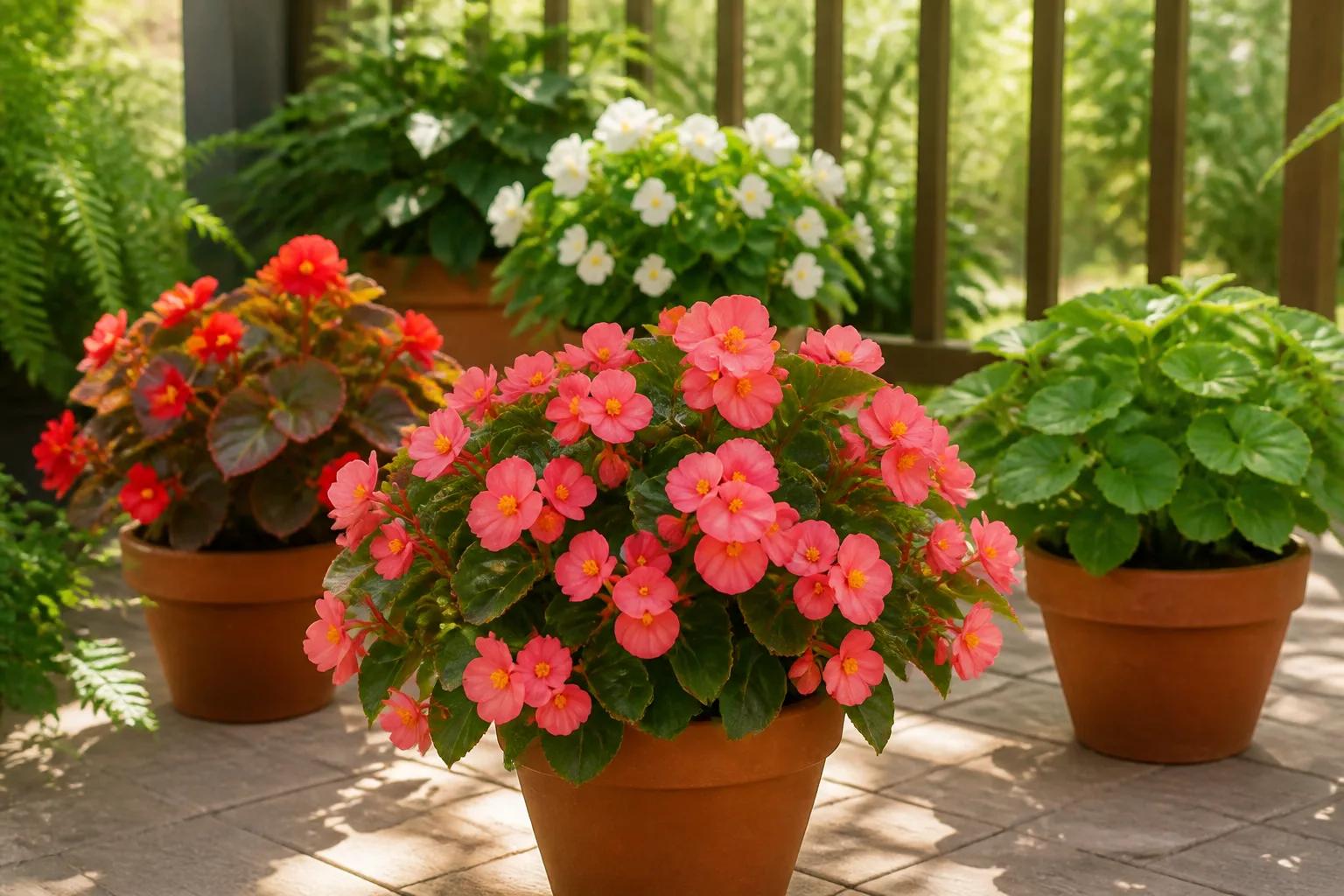
If the soil is moist and the plant recovers overnight, focus on reducing the daily water loss rather than watering on a rigid schedule. Add a layer of organic mulch over the root zone, keep it away from the stems, and use temporary shade cloth during the hottest hours if the site is newly exposed or a heatwave is unusual. Container plants can be moved to dappled shade immediately; the RHS specifically recommends moving pots out of harsh sun during heatwaves and considering a permanent move in autumn.
Do not transplant an in-ground hydrangea during the hottest part of summer just because it drooped once. Move it in autumn or during a cool, cloudy stretch if it droops repeatedly, scorches on the same exposed side, and fails to recover in mild weather. A single midday sag with normal morning and evening foliage is a signal to manage exposure, not proof that the plant is dying.
Underwatering and a Truly Dry Root Zone
Water stress is more likely when drooping follows several rainless days, the soil is dry 2–3 inches down, leaves feel limp or papery, and the plant does not recover by morning. New plantings are particularly vulnerable because the root ball may remain a small, dry island even when nearby garden soil feels moist. Containers can move from adequately moist to severely dry much faster than an in-ground bed.
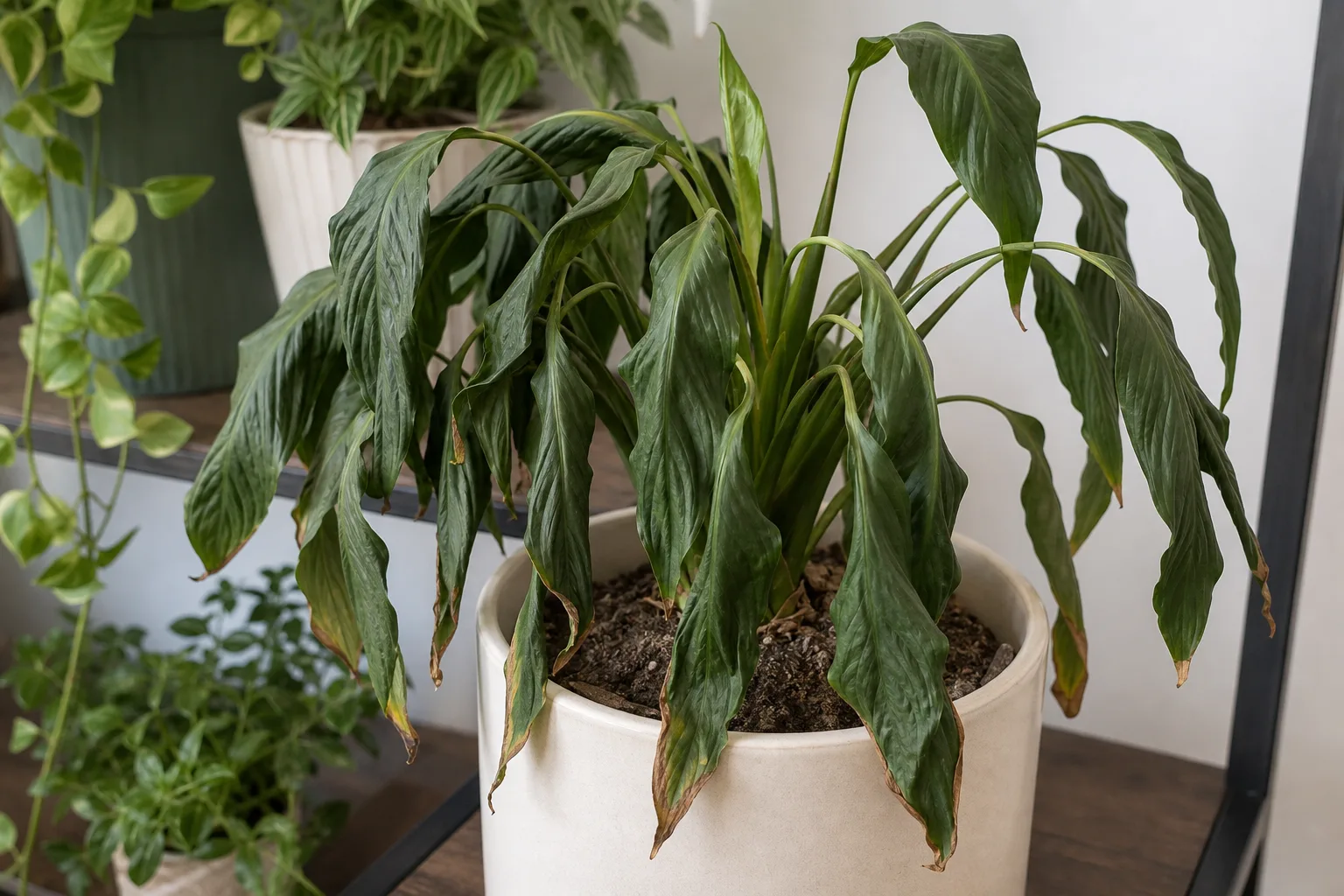
Give a dry hydrangea a slow, thorough soak at the base. A hose nozzle on a gentle trickle, a soaker hose, or drip irrigation is more useful than a fast spray that runs off hard soil. Water until the whole root zone is wet, then wait long enough for the surface to begin drying before checking again; repeated shallow splashes encourage a shallow moisture pattern and can leave the center of a root ball dry.
The right interval changes with plant size, soil, wind, rainfall, temperature, mulch, and sun exposure. Use a weekly rainfall total only as a planning prompt, not a promise that every shrub needs the same number of inches. The RHS advises watering new plants during the first growing season and giving established hydrangeas supplemental water during hot, dry spells, while the Missouri Botanical Garden stresses longer, deeper watering and moisture checks below the surface.
Do not fertilize a severely wilted plant while it is dry. Concentrated fertilizer salts can add stress to roots that are already struggling to move water. Rehydrate first, correct the site, and wait for fresh, firm growth before deciding whether a soil test shows a real nutrient need.
Overwatering and Poor Drainage
An overwatered hydrangea can droop, yellow, and look as lifeless as a thirsty one. The difference is that water is present but the roots are not functioning well: water-filled pore spaces contain too little air, and damaged roots cannot supply the leaves. Fixed calendar watering is a common culprit when rain, clay soil, or a saucer has already kept the root zone wet.
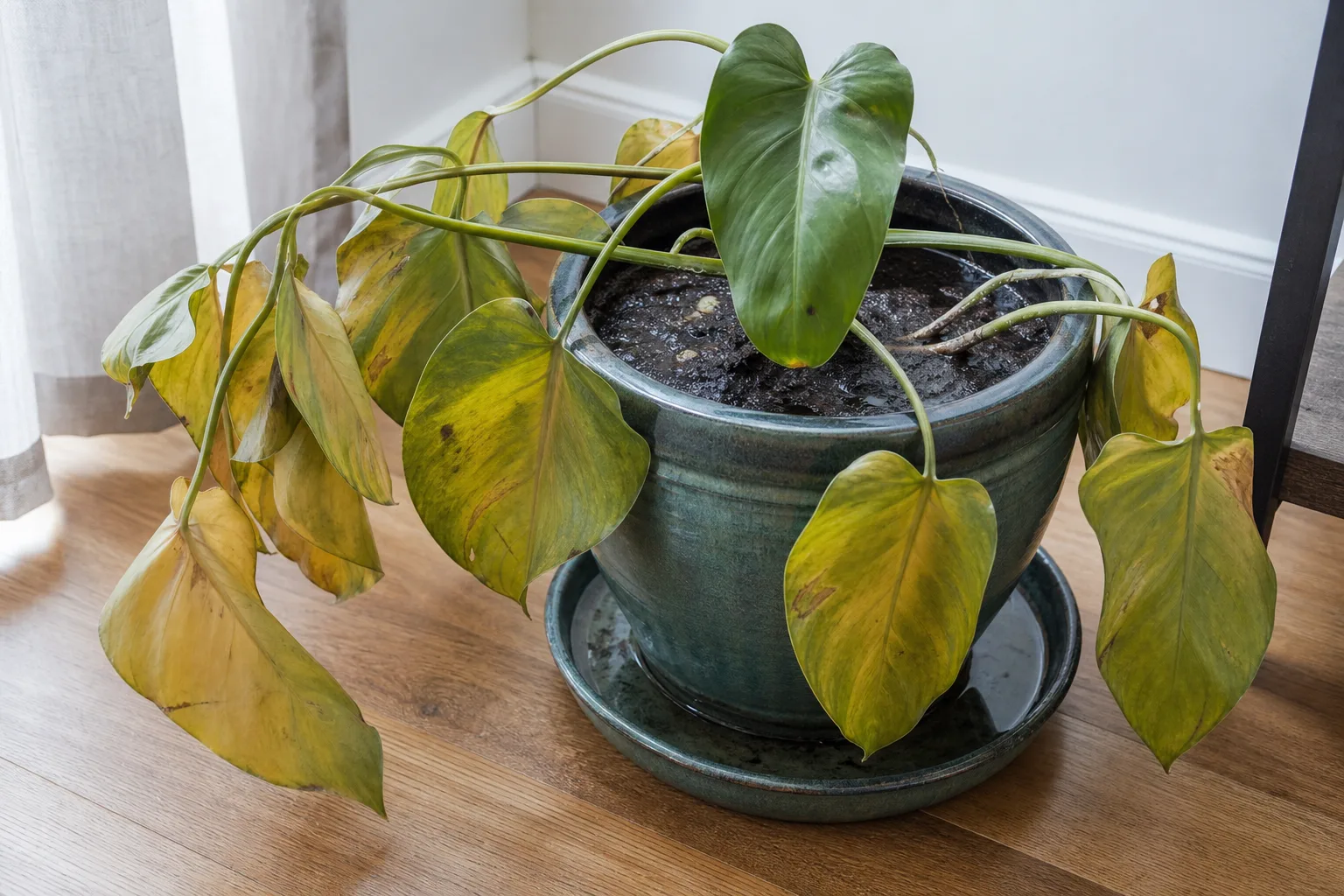
Pause irrigation and remove any standing water from a container saucer. Check whether drainage holes are blocked, whether a pot sits directly on a sealed surface, and whether water exits freely after a soak. In a garden bed, observe the site after heavy rain; if water remains around the crown, the long-term answer may be a raised bed, a better-draining planting location, or a different shrub rather than more soil amendments piled around the plant.
Avoid “fixing” waterlogged soil with a shallow layer of gravel over the surface. Improve the structure of the broader planting area with organic matter where appropriate, keep the crown at the correct grade, and address the source of excess water. For containers, use a free-draining potting mix made for containers and a pot with a drainage hole; ordinary garden soil can compact and behave poorly in a confined pot.
If the plant is only mildly overwatered, it may improve as the soil regains air. Do not water again until your root-depth check says it needs water. If wilt, yellowing, dieback, or a sour smell persists, move to a root inspection rather than waiting indefinitely.
Root Rot and Damaged Roots
Root rot is the diagnosis to take seriously when a hydrangea stays wilted in damp soil or declines in sections despite corrected watering. The Pacific Northwest Pest Management Handbooks report Pythium and Phytophthora root, crown, and stem rots in hydrangea, favored by cold, wet, overwatered conditions and poorly draining potting media. The symptoms can include chlorosis before wilt, reddish-brown root or crown tissue, and shoot dieback.
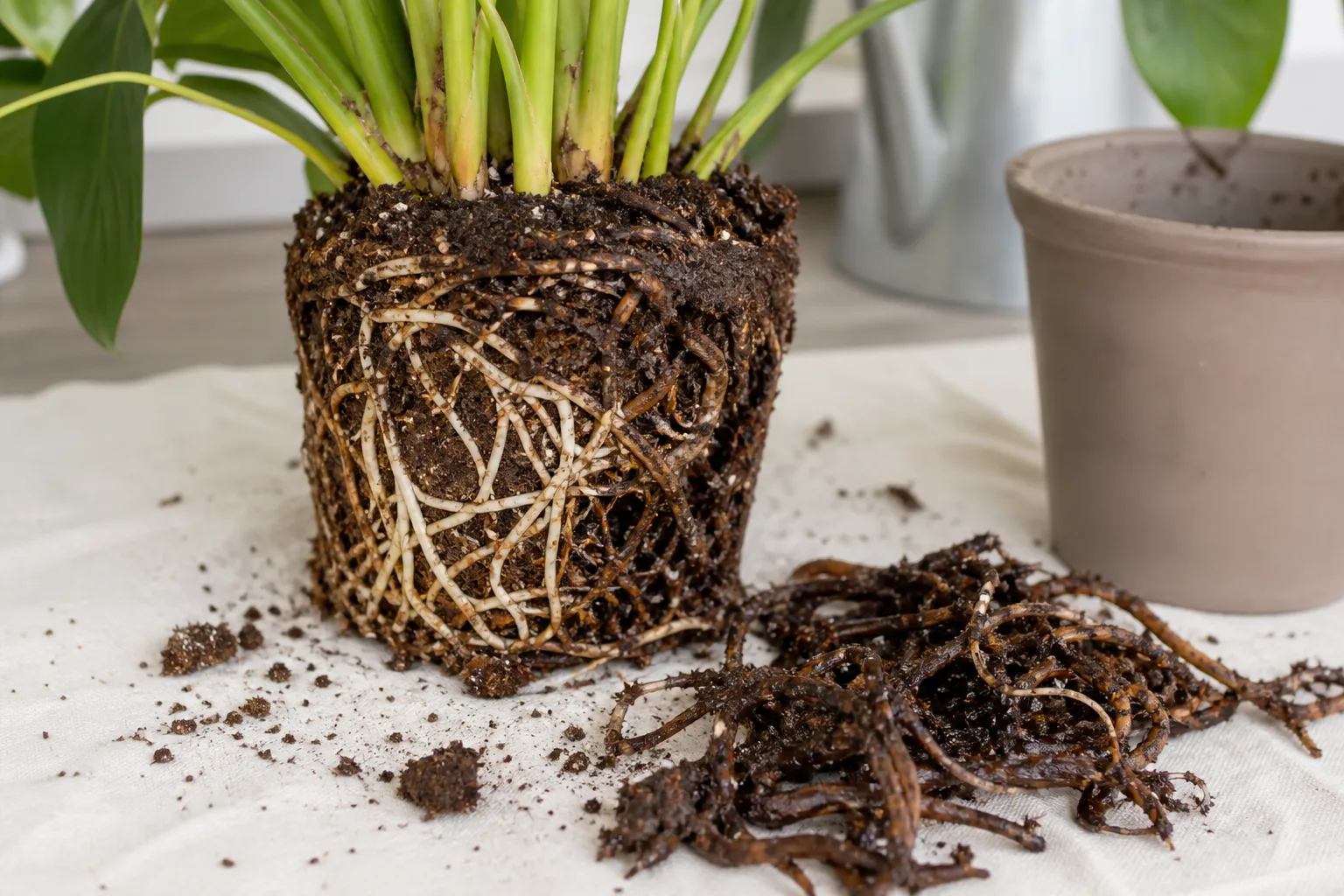
Inspect a container plant by sliding it from the pot, or carefully excavate beside an in-ground shrub without ripping through the entire root system. Healthy roots are generally firm and pale; rotten roots are brown to black, soft, and easily stripped or crushed. Root damage from construction, digging, rodents, a root-feeding insect, or a compacted planting hole can create a similar water-transport failure even when no pathogen is present.
Cutting away every root is not a recovery plan. Remove only tissue that is clearly dead, improve drainage, and replant a container specimen in fresh, well-drained mix at the same depth. In the landscape, severe decline or a site that floods repeatedly may have a poor prognosis; the University of Connecticut’s hydrangea disease guidance notes that some root rots cannot be cured with a chemical treatment and that preventing waterlogging is central to management.
Do not drench an unknown problem with a fungicide just because the word “rot” is frightening. Products, labels, pathogen coverage, and legal uses vary by location. If a valuable shrub has progressive dieback, a local extension diagnostic service, certified arborist, or experienced garden professional can help identify whether the problem is a pathogen, drainage, root injury, or a combination.
Heavy Flower Heads After Rain
Sometimes the flowers are drooping and the plant is not. Smooth hydrangeas (Hydrangea arborescens) and bigleaf mopheads can carry large, dense heads on stems that bend under the weight. A rain-soaked bloom becomes heavier, so a branch may lean to the ground while the leaves remain green, crisp, and properly hydrated.
Let the heads dry naturally, and gently shake or lift branches only if doing so will not break them. A peony ring or open plant support installed before the canopy fills can keep stems upright without tying every branch. Use soft ties loosely if one or two stems need help, and do not prune healthy green branches simply because a rainstorm made them bend.
If flopping happens every year, improve structure for the next season: avoid excessive nitrogen, keep the plant’s natural framework, and choose a cultivar selected for stronger stems. Epic Gardening’s hydrangea guidance also points to older growth and stem support as useful context for large-flowered smooth hydrangeas. Panicle hydrangeas often hold their cone-shaped flowers more upright, but they still need appropriate moisture and are not immune to storm damage.
Leaf Scorch Is a Symptom, Not a Diagnosis
Brown edges and crispy patches often appear after the wilt has already happened. Washington State University Hortsense describes hydrangea scorch as a water-loss problem in which leaves lose moisture faster than roots can supply it; common contributors include inadequate watering, strong or reflected light, high temperatures, dry wind, damaged roots, compacted soil, overwatering, and overfertilization.
Notice where the damage starts. The top of the plant and the sunniest side are often affected first because those leaves face the harshest conditions. If the scorch is minor and appears only during a hot spell, correct moisture and exposure and leave the leaf in place—it cannot turn green again, but it can still contribute energy while the plant makes new growth.
Recurring scorch on the same side calls for a site correction. Mulch the root zone, protect afternoon foliage, reduce reflected heat, and improve drainage if the bed stays wet. Light summer pruning may temporarily reduce water demand, but it also removes potential flowers and should not replace fixing the root or site problem.
Pests and Diseases That Can Add to the Wilt
Pests rarely explain a one-time, whole-plant afternoon wilt by themselves. They matter when droop arrives with sticky leaves, black sooty mold, stippling, webbing, distorted new growth, notched margins, or a gradual decline that watering does not reverse.
Aphids cluster on tender growth and may cause yellowing or distortion; spider mites are more likely during hot, dry weather and leave fine stippling or webbing. Scale insects can appear as fixed bumps on stems or leaves. Black vine weevil larvae are more serious in containers and nursery situations because they feed on roots, while adults leave notches along leaf edges. The University of Connecticut’s pest guide recommends starting with accurate identification and cultural or low-impact methods, since broad-spectrum sprays can also remove beneficial predators.
Leaf spot and powdery mildew can make a hydrangea look tired without being the main cause of wilt. Cercospora leaf spot produces tan spots with reddish-brown margins, while powdery mildew creates a white coating and may be worse in crowded, humid sites. Remove fallen infected leaves, water at the soil line, thin only when needed for airflow, and avoid wetting foliage late in the day; use a product only when the diagnosis and local label support it.
Newly Planted or Recently Moved Hydrangeas
Transplant shock can cause a healthy hydrangea to droop for days or weeks because roots were disturbed, dried during the move, or have not yet re-established contact with surrounding soil. The risk is greatest when a shrub is moved in hot weather, planted too deeply, or watered in a way that leaves the root ball alternately bone-dry and saturated.
Keep the root zone evenly moist but not soggy, and protect the plant from harsh afternoon sun while it re-establishes. Mulch broadly over the root zone without piling it against the stems. Hold fertilizer until you see stable new growth; feeding a stressed transplant pushes demand before the damaged root system is ready to supply it.
When planting or moving is unavoidable, spring or autumn is usually gentler than a hot summer day. The RHS growing guide recommends planting hydrangeas in spring or autumn when possible, setting the root ball at the surrounding soil level, and watering through establishment. Water the plant well before moving it, but do not interpret that pre-soak as permission to keep the new site saturated.
Potted Hydrangeas Need a Separate Check
A potted hydrangea can droop because its container is too small, its mix has become hydrophobic and dry, or its drainage is blocked. Look for roots circling densely at the pot edge, a root ball that dries out within a day or two, water racing down the sides without wetting the center, or a saucer that stays full after each irrigation.
Choose a container with a drainage hole and enough volume for the root system, but do not jump to an enormous pot filled with wet mix. Step up one practical size, loosen only tightly circling roots, and use fresh container mix. Water thoroughly after repotting, let the excess drain, and move the plant out of harsh sun while it settles.
Containers placed on hot concrete or against a heat-reflecting wall need more frequent checks than the same cultivar in a cool bed. Botanical Interests’ hydrangea guidance highlights the combined effect of sun orientation, limited pot volume, poor drainage, inadequate water, and unsuitable soil. That combination is why a potted hydrangea can appear fine in the morning and be severely wilted by late afternoon.
Match the Fix to the Hydrangea Type
“Hydrangea” is a large group, and the best light advice depends on the type and climate. Use the plant label when you have it, but let the symptom pattern tell you whether the current site is too demanding.
| Type | Typical stress pattern | Practical placement |
|---|---|---|
| Bigleaf (H. macrophylla) | Afternoon wilt, scorch, winter-bud loss | Morning sun and afternoon shade, especially in hot climates |
| Smooth (H. arborescens) | Flower stems flop under large heads | Morning sun to partial shade; support stems before bloom weight peaks |
| Panicle (H. paniculata) | More sun-tolerant but still wilts in dry soil | Full sun can work when soil holds moisture; protect new plants from extremes |
| Oakleaf (H. quercifolia) | Heat or root stress plus possible root rot | Bright filtered light or gentle sun with good drainage |
The RHS’s five-year panicle trial found that even relatively resilient cultivars can face drought, heat, waterlogging, and sudden temperature changes. Choose the right plant for the site instead of treating a panicle hydrangea as drought-proof or a bigleaf hydrangea as destined to fail in every sunny garden.
The Prevention Routine That Actually Works
Prevention is a rhythm, not a watering number. Check the root zone before irrigating, adjust for rain and heat, and make the bed hold moisture without staying saturated. The most useful routine is:
- Check twice during heatwaves. Look at containers and new plantings in the morning, then inspect the most exposed side in late afternoon.
- Water deeply at the base. Use a slow soak that reaches the root zone; avoid frequent foliage sprays that evaporate quickly and prolong leaf wetness.
- Mulch the root zone. Apply a few inches of organic mulch over the soil, leaving an open ring around the stems. Refresh it when it thins rather than building a volcano against the crown.
- Audit the site after rain. If puddles remain near the crown, correct drainage before the next hot spell turns a root problem into wilt.
- Keep competition reasonable. Turf, thirsty neighboring shrubs, and crowded containers can take moisture faster than a young hydrangea can replace it.
- Prune with the cultivar in mind. Remove dead or damaged wood, support floppy stems, and avoid cutting old wood from types that use it for next season’s flower buds.
- Feed only for a reason. Established hydrangeas often need less fertilizer than gardeners assume. The RHS notes that excess fertilizer encourages soft, leafy growth and can increase frost risk; test soil before correcting a nutrient problem.
For a plant that is drooping today, use this recovery order: move a container into bright shade, check the soil below the surface, water only if it is dry, and remove standing water if it is wet. Recheck the plant the next morning. If it recovers, address the repeat trigger; if it does not, inspect roots and stems before adding more water or fertilizer.
Conclusion
The best fix for a drooping hydrangea starts with restraint. Dry soil calls for a deep soak, moist soil during a hot afternoon calls for shade and time, and soggy soil calls for a pause and a drainage check. Green leaves with bent flower stems usually need support rather than rescue, while persistent wilt with yellowing, spots, dieback, or damaged roots deserves a closer diagnosis.
Once you match the response to the symptom, hydrangea care becomes much more predictable. Keep the root zone evenly moist but airy, give the plant protection from its hardest afternoon conditions, and use the next morning’s recovery—or failure to recover—as your most useful piece of evidence.



