How to Use Garlic in the Garden for Plant Pests
Garlic can deter some pests but is not a fertilizer or cure-all. Get a safer spray test, companion-planting ideas, and clear limits for edible crops.
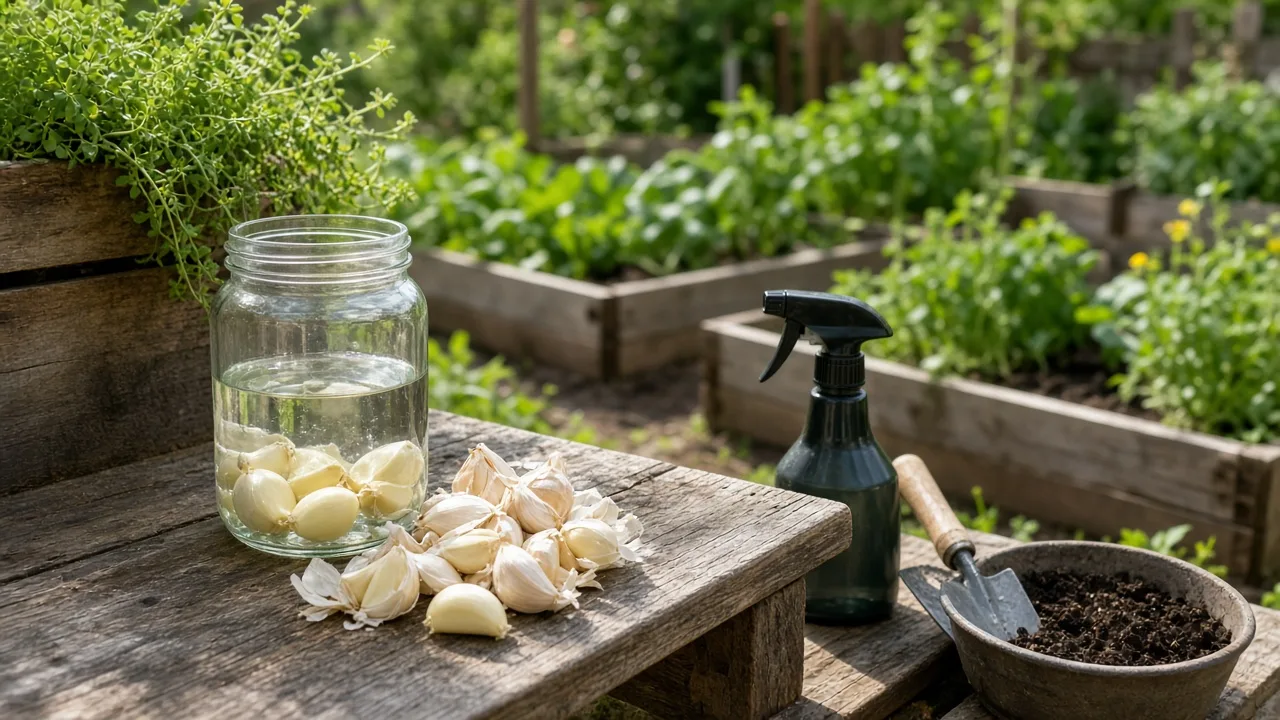
Garlic has a persuasive reputation in the garden. It is pungent, easy to grow, and associated with everything from healthier soil to fewer insects. That combination makes garlic water and garlic sprays feel like obvious shortcuts: crush a few cloves, add water, and let the smell do the work.
The useful answer is narrower. Garlic is worth trying as a temporary pest-repellent tool or companion crop, especially when a problem is small and you can watch the result. It is not a dependable fertilizer, a cure for plant disease, or a substitute for identifying the pest first. The difference matters because a weak garlic treatment wastes time, while a strong or poorly timed one can injure leaves.
This guide treats garlic as one small part of integrated pest management. You will learn which method fits which situation, how to run a conservative spray test, how to plant garlic near other crops without treating companion planting as magic, and when to move on to a better-supported control.
The short answer: use garlic as a repellent, not a fertilizer
Crushing garlic damages its cells and helps form allicin, along with other sulfur-containing compounds. Those compounds are responsible for the sharp smell and are part of why garlic extracts, garlic oils, and garlic juices have been studied as pest deterrents. A peer-reviewed review of garlic-based plant protection describes activity against particular insects and emphasizes that results depend on the crop, pest species, life stage, concentration, and preparation.
That is different from feeding a plant. Garlic contains nutrients, but a few cloves steeped in water do not provide a measured nitrogen, phosphorus, potassium, or micronutrient program. Even if an extract changes microbial activity around roots or briefly stimulates a plant response, you cannot tell how much of any nutrient reached the plant or whether the mix will be consistent from one batch to the next. Treat garlic water as an optional trial, not as fertilizer.
The most useful rule is simple:
| Your goal | Best interpretation of garlic | Better first move |
|---|---|---|
| Make a crop less attractive to some pests | A short-lived repellent or companion crop | Scout, then try interplanting or a mild test spray |
| Correct pale leaves or weak growth | Not a reliable fertilizer | Check light, watering, roots, and soil fertility; use a labeled feed if needed |
| Stop a spreading disease | Not a proven cure | Remove affected tissue when appropriate and identify the disease |
| Eliminate a large infestation | Too inconsistent on its own | Use a complete IPM plan matched to the pest |
If the plant is already stressed by drought, saturated soil, transplanting, heat, or root damage, fix that condition before adding a pungent extract. A stressed plant has less room for an experiment to go wrong.
What garlic can actually do in a garden
Garlic’s realistic garden roles fall into three categories: interplanting, a carefully tested foliar spray, and reusing a small amount of plant material in a way that does not pretend to be fertilizer. The first two have a plausible pest-management purpose. The third is mostly about experimentation or composting rather than direct plant nutrition.
Why crushed garlic smells strong
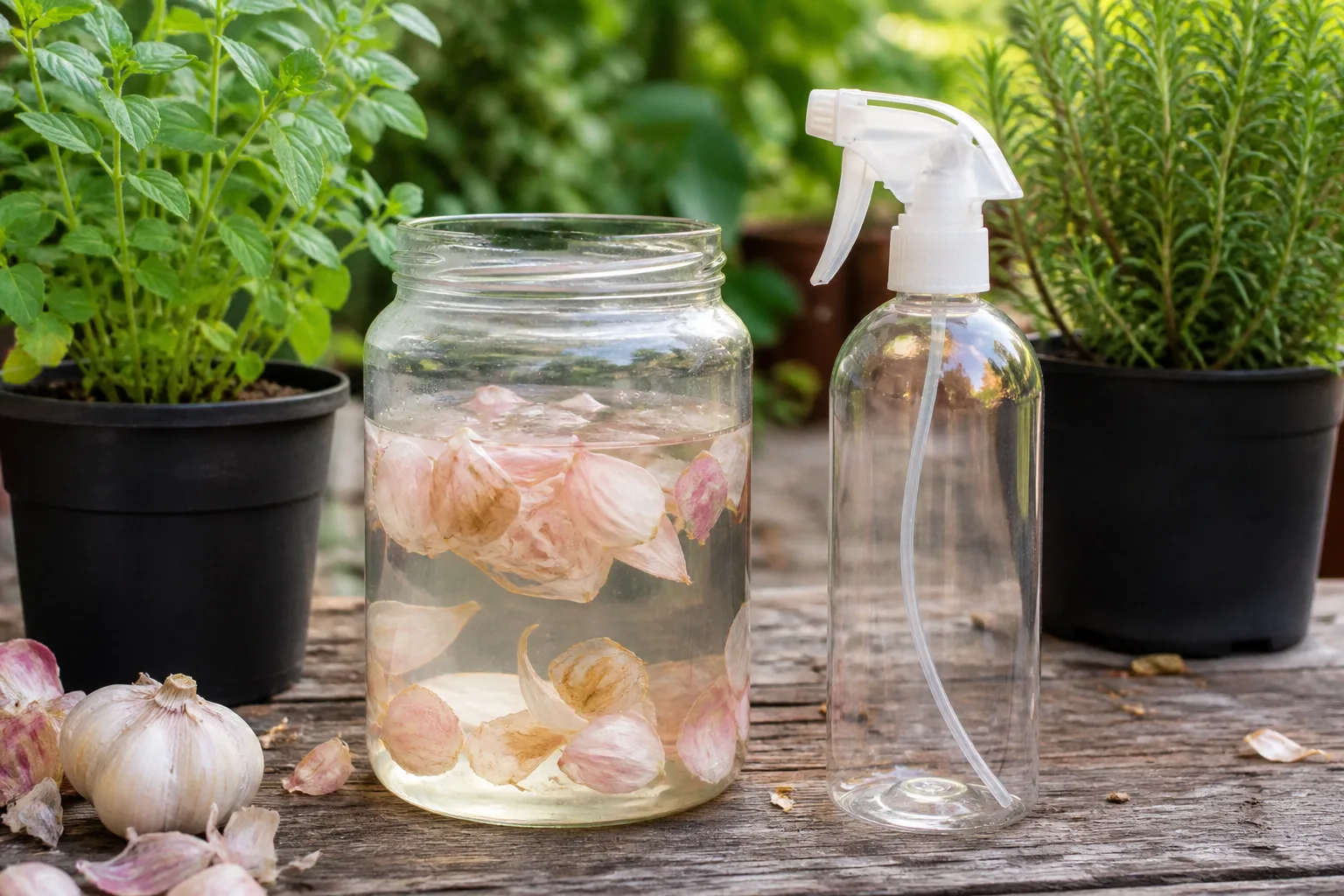
Whole garlic cloves are not simply bottles of ready-made pesticide. Crushing or chopping brings enzymes and sulfur-containing precursors together, producing compounds that are more volatile and pungent. Those compounds can make a plant surface or crop row less appealing to some herbivores, but the smell fades, rain removes residues, and different insects respond differently.
This also explains why garlic oil is not interchangeable with garlic water. An essential oil or concentrated oil preparation is far more chemically intense than a few crushed cloves in water. “Natural” describes the origin of an ingredient, not its strength, plant safety, or legal status. Never pour neat essential oil onto soil or leaves.
What the research can and cannot prove
The strongest kind of answer is specific rather than sweeping. In a two-season study of eggplant and garlic intercrops, researchers found lower two-spotted spider mite density and a much lower mite damage index in the intercrops than in sole-crop eggplant. The reported damage index was 8.1–11.5% in the intercrops versus 37.0–40.3% in the sole crop across the two seasons, and yields improved as well. You can read the abstract in the PubMed record for the eggplant-garlic study.
That is encouraging, but it is not a guarantee for tomatoes, roses, beans, or a balcony planter. The result came from a particular crop combination, layout, region, season, pest pressure, and management system. A garlic row may change how a pest finds its host, but it will not form an invisible wall around every neighboring plant.
The broader evidence has the same shape. The peer-reviewed review of garlic extracts for herbivorous-pest management gathers examples involving garlic oil, extracts, and juice, but it also identifies a major limitation: preparations are difficult to standardize. Higher concentrations can inhibit plant growth, and an extract that affects one pest stage or crop may be ineffective on another. Use the literature to justify a cautious trial, not to copy a lab concentration into a kitchen spray bottle.
Choose the garlic method that matches the problem
Start with the least disruptive option that could plausibly help. A garlic companion planting is slow but gentle. A spray acts faster but touches leaves and insects. A root drench is the least convincing choice when your goal is pest control because it puts an unstandardized extract into the soil without guaranteeing contact with the pest.
Interplant garlic with a susceptible crop
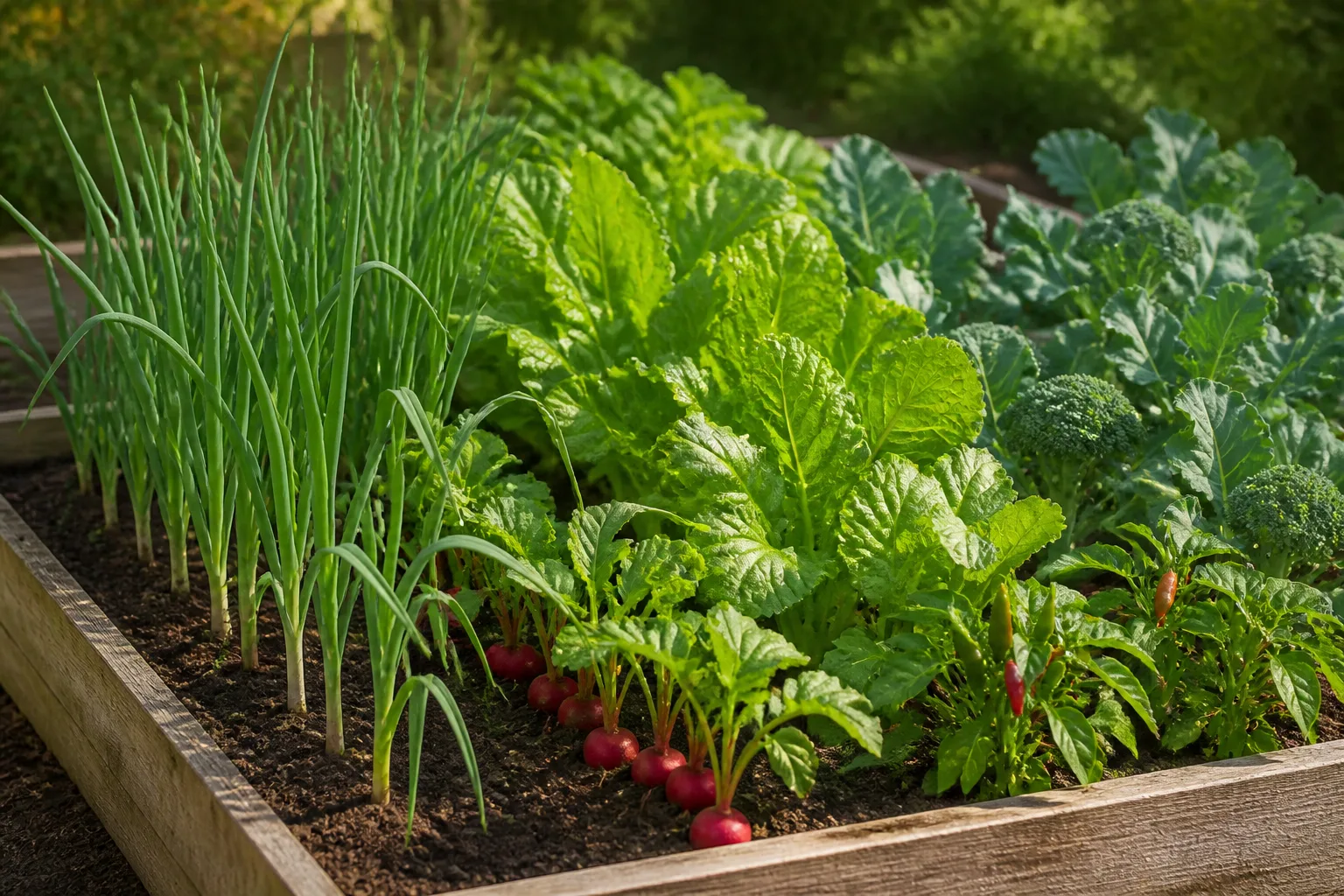
Interplanting is the best fit when you already want to grow garlic and the neighboring crop has a recurring, low-to-moderate pest problem. It is a layout choice, not an emergency treatment. Planting garlic around a bed may add scent diversity and make it harder for some insects to locate their preferred host, but it will not remove eggs, larvae, or established colonies already feeding on the crop.
The calendar takes planning. Garlic is commonly planted well before warm-season crops fill the bed, so mark the cloves or plan a row that will remain accessible. You can also use green garlic as an early crop and reclaim space later, provided harvesting does not disturb the roots of the main crop.
A practical example comes from GrowVeg’s garlic companion-planting guidance, which describes garlic used with strawberries, spinach, peppers, cabbage, and oats. The useful lesson is not that every pairing is proven; it is that timing, spacing, and the growth habit of each crop determine whether the combination works in a real bed.
Use a mild garlic spray for a small, early pest problem
A foliar spray makes sense only when you have inspected the plant and found a pest that is exposed on the leaf surface. Garlic works, if it works, through contact with or avoidance of the treated surface. It is a poor match for pests hidden inside curled leaves, protected in soil, or already causing severe damage.
The research literature includes garlic preparations tested against selected aphids, whiteflies, mites, cabbage pests, flies, and stored-product insects. That list is not a guarantee for every insect with a similar common name. For a backyard trial, start with one affected plant or one small section of a bed, and compare it with an untreated plant if you can.
Treat garlic water as an experiment, not plant food
A root-zone garlic drench is the method most likely to be oversold. Watering with garlic may introduce sulfur compounds and organic material, but it does not tell you whether your plant is short of nitrogen, whether the roots can absorb nutrients, or whether the soil is too wet. The extract may also vary with clove variety, freshness, crushing, water volume, steeping time, and storage.
If you want to test garlic water, use a small amount on an established, non-valuable plant and observe the root-zone response over several days. Do not use a concentrated slurry around seedlings, newly divided plants, or containers that already stay wet. For actual nutrition, diagnose the growing conditions and use compost or a fertilizer whose analysis and directions you can measure.
A conservative garlic spray recipe without dish soap
There is no universal homemade garlic-spray concentration. Recipes online range from a few cloves in a large volume of water to concentrated extracts and essential oils. Because garlic preparations are not standardized and stronger extracts may inhibit plant growth, the safest useful recipe is a small-batch test mix, not a promise of guaranteed control.
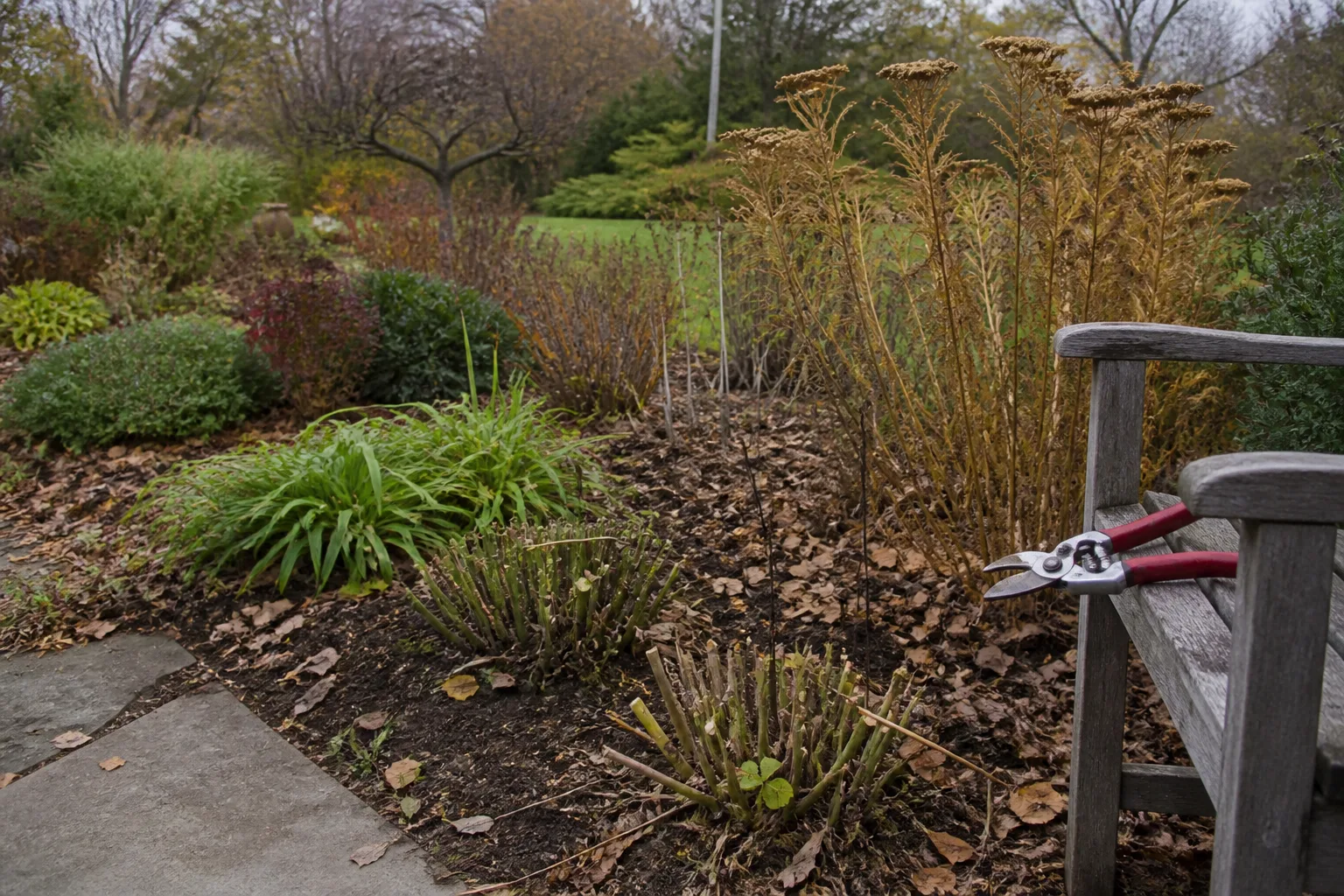
Try this starting point on an established, well-watered plant:
- Crush two fresh garlic cloves and place them in 1 liter (about 4 cups) of clean water.
- Cover and steep for several hours or overnight, then strain through a coffee filter or fine cloth. Bits of garlic can clog a sprayer and leave hot spots on leaves.
- Dilute the strained liquid with an equal volume of water for the first plant test. This makes a 2-liter working solution; you do not need to use it all.
- Spray a few leaves, including the undersides where pests hide, and wait 24–48 hours before treating more of the plant.
- Discard the batch if it smells fermented, develops mold, or causes spotting. Do not store a homemade extract for weeks.
This conservative mix is a practical starting experiment, not a validated pesticide label. If it produces no change after a properly observed trial, increasing the strength is not automatically the answer. A stronger extract may increase leaf injury without making the pest leave.
The recipe deliberately leaves out dish soap. University extension guidance warns that household detergents are not the same as formulated insecticidal soaps: their ingredients vary, they are not consistently tested for plant safety, and they can injure leaves, soil, and waterways. The University of Connecticut’s homemade-pesticide fact sheet explains why familiar kitchen products should not be assumed safe simply because they are common at home.
Apply it without burning leaves or hitting beneficial insects
Spray in the cool part of the day, when leaves will not heat rapidly under bright sun. Avoid drought-stressed plants, tender new growth, plants with a heavy waxy or hairy surface, and any plant that is already showing chemical injury. Keep the spray off open flowers when possible, and target the pest-covered foliage rather than coating the whole garden.
Patch testing is not optional. The Colorado State University guidance on insecticidal soap explains the broader principle: sprays must thoroughly wet the target, have little or no residual action, may need repeat applications, and can damage sensitive plants. That page is about labeled insecticidal soap rather than garlic, but the application logic is directly relevant to any homemade foliar spray.
Use a dedicated, clean sprayer and label it “garlic test spray.” Do not mix the extract with bleach, vinegar, oils, fertilizer, or another pesticide. Keep children, pets, and people away until treated foliage is dry, and wash your hands after handling the solution. If the plant is edible, avoid spraying close to harvest; pungent residues can affect flavor, and a homemade mix has no tested preharvest interval.
Repeat only while the test is earning its place
Garlic’s smell is not a residual shield. Rain, irrigation, growth, and sunlight reduce the effect, so a spray that appears useful may need repeating. Repeating is also where a low-level leaf injury can accumulate.
Recheck the plant before every application. If pest numbers are stable or falling and the leaves remain clean, one carefully timed repeat may be reasonable. If the pest population is rising, the plant is still losing new growth, or the same damage appears after two well-timed tests, stop adding garlic and change tactics. More odor is not the same as more control.
Companion planting ideas worth trying
Garlic belongs to the Allium group with onions, chives, and leeks. A University of Maine garlic field guide is a useful reminder that garlic itself still has disease and pest problems, including bulb mites and several rots. Growing garlic does not make a bed pest-proof, and planting a dense block of related crops can make crop-rotation and disease management harder.
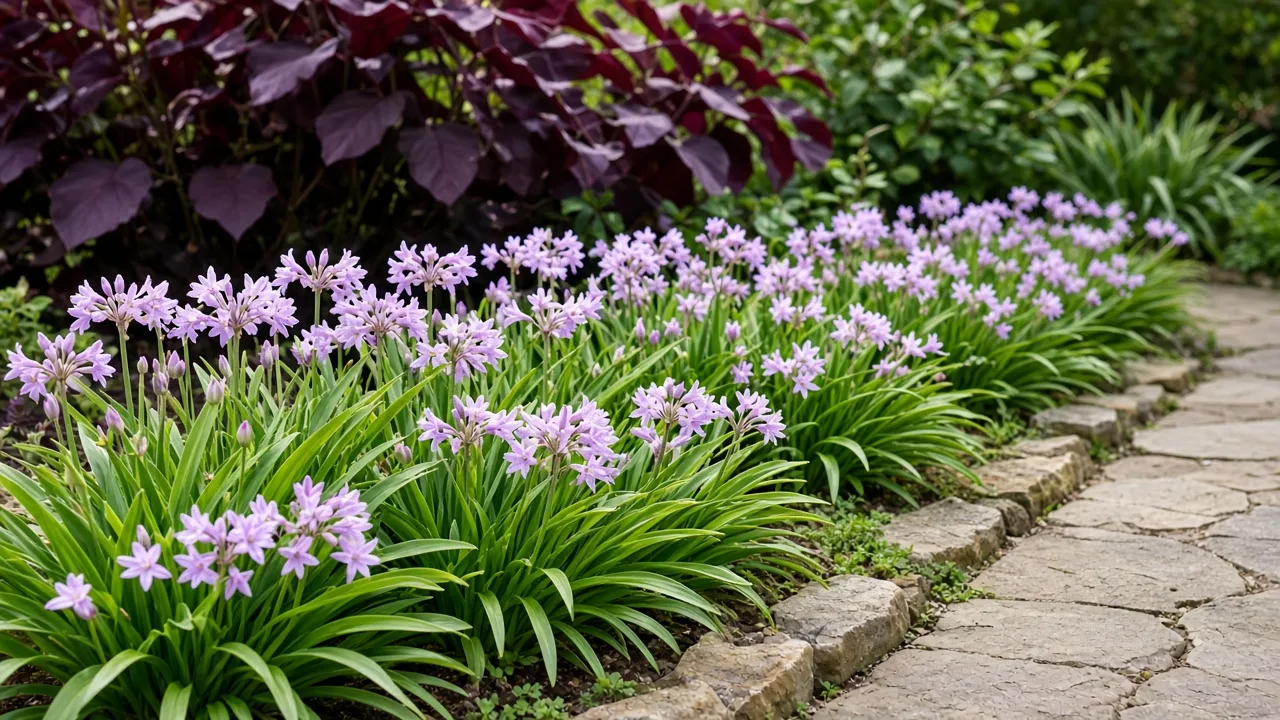
Crops that can share space with garlic
Choose pairings based on space and timing first, pest hopes second. Garlic’s narrow leaves can share vertical space with low greens, and a garlic row can occupy a bed before peppers or eggplant need their full summer footprint. Strawberries, leafy greens, peppers, eggplant, cabbage-family crops, tomatoes, and roses are all reasonable candidates for a small, observed trial when their light, water, and root-space needs already match.
For a vegetable bed, plant garlic at the edge or in a marked row rather than scattering it so densely that you cannot reach the crop. Watch for shade: a thick garlic planting should not block a low-growing lettuce or spinach crop. With roses, place garlic where it does not compete with the shrub’s main root zone or make watering and pruning awkward.
The strongest backyard design is a comparison, not a claim. Put garlic beside one section of the target crop, leave a similar section without it, and inspect both sections on the same days. If only one section improves, garlic may be contributing; if both do, weather or natural enemies may explain the change.
Crops and situations to keep separate
Advice about “bad” garlic companions is often repeated more confidently than it has been tested. Some gardeners report poor results with beans, peas, and other legumes, while others grow mixed beds without a visible problem. If beans or peas are your priority, give them their own row for the first season rather than sacrificing the whole crop to a folklore test.
Keep garlic away from any crop that needs a different watering pattern, dense root disturbance, or frequent harvesting access. Avoid putting garlic into a bed with a known Allium disease problem; the field guide from Maine Extension describes how pathogens can persist in soil or spread through infected bulbs, water, equipment, and handling. Healthy seed stock, sanitation, spacing, and rotation matter more than a garlic companion claim.
Common garlic mistakes that make the method fail
Using garlic water to fix every plant problem. Yellow leaves may come from low light, poor drainage, root injury, nutrient shortage, or disease. Garlic water cannot distinguish among them, so inspect the root zone and growing conditions before adding anything.
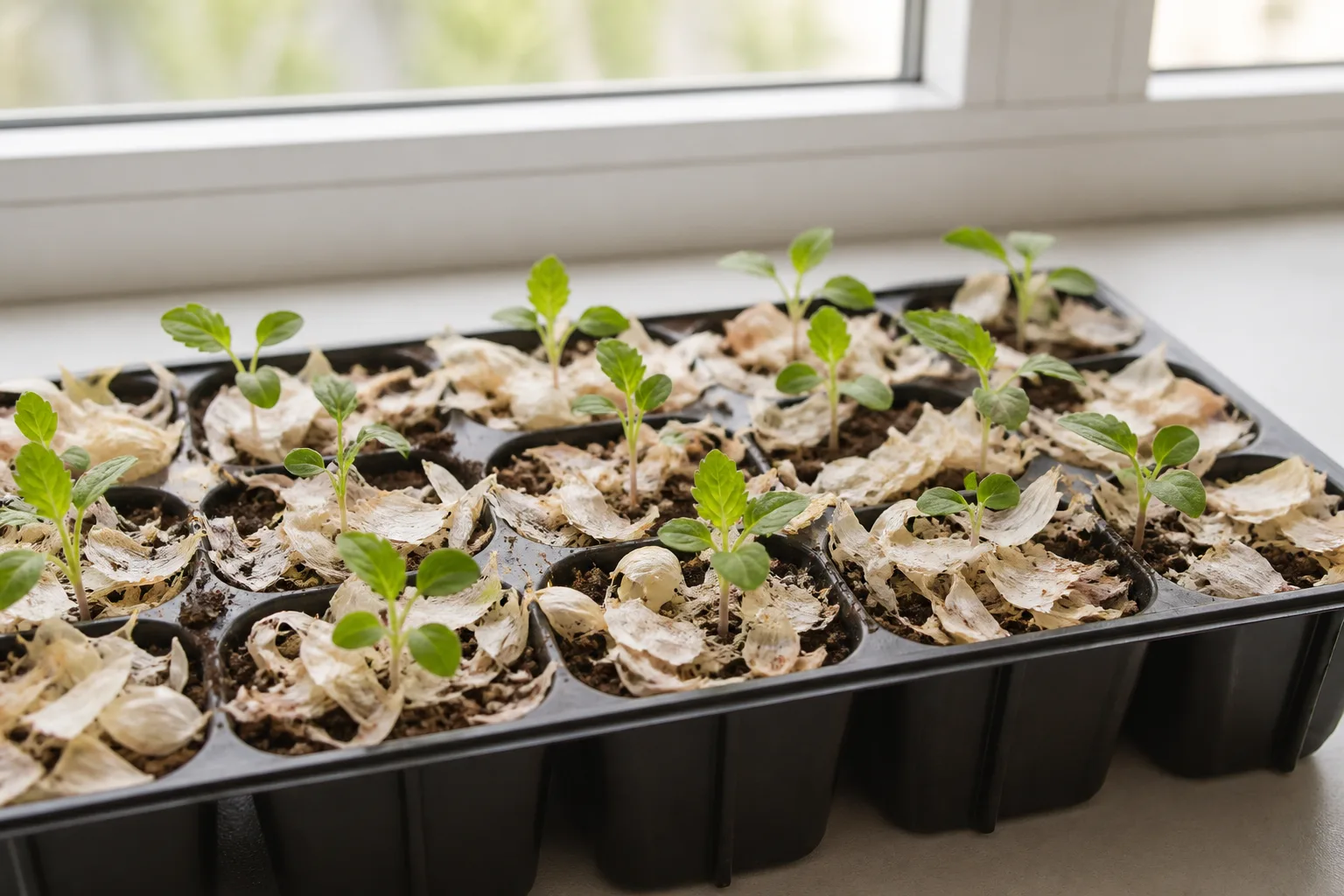
Spraying before identifying the pest. Chewed leaves, stippling, sticky honeydew, and distorted growth point to different problems. A garlic spray cannot reach a soil pest, a borer inside a stem, or a disease that looks like insect damage.
Making the mix stronger because the first test was quiet. A quiet result may mean the pest is not responsive, the application missed the undersides, the pest pressure is too high, or the plant is not the right target. It does not prove that a concentrated extract is safe.
Adding dish soap because the spray needs to stick. Household detergent is not a harmless emulsifier. As CSU Extension explains, commercial insecticidal soaps are designed, tested, and labeled for that purpose; homemade soap mixtures are variable and can injure plants.
Spraying in hot sun or onto a thirsty plant. Heat, drought stress, and a wet leaf surface can combine into rapid spotting or scorch. Water the plant normally first, let foliage dry, and choose a cool application window.
Coating flowers and every plant in the bed. Broad spraying can disturb pollinators and beneficial predators while adding no value where pests are absent. Treat the smallest area that can answer your question.
Spraying right before harvest. Garlic flavor is not a food-safety test. Avoid late applications to edible crops, respect the label if you switch to a registered product, and use ordinary produce-washing practice after harvest.
Leaving the garlic in the garden to do all the work. Companion plants support a system; they do not replace row covers, hand removal, water management, sanitation, resistant varieties, or biological control. Garlic is most useful when it complements those actions.
Run a seven-day garden test before you commit
If you want a clear answer for your own garden, make the trial small enough to measure. Choose two similar plants or two comparable sections of the same crop. Record the pest and its life stage, count a few leaves, photograph the same area, and note rain, irrigation, temperature, and whether flowers or beneficial insects are present.
On day one, remove heavily infested leaves only if that is appropriate for the crop, then apply the diluted garlic-only test to one section. Leave the comparison section untreated. Do not add soap, oil, neem, fertilizer, or another spray during the test, or you will not know what caused the change.
Check on days two, four, and seven. Look for live pests rather than just old holes, and inspect new growth as well as treated leaves. A useful result is not “the leaves smell like garlic”; it is fewer live pests or less fresh damage on the treated section without spotting, scorch, distorted new growth, or a noticeable loss of beneficial insects.
Use this decision rule at the end:
- Pests lower and foliage healthy: keep garlic as a limited, weather-aware supplement and continue scouting.
- Pests unchanged but plant healthy: stop repeating the same mix; try a different IPM action matched to the pest.
- Pests lower but foliage damaged: discard the garlic spray and do not increase the dose.
- Pests higher or new growth declining: treat it as an active problem, not a successful experiment; identify the pest and escalate.
This approach turns a viral-style garden hack into a controlled observation. Even a result of “not useful here” saves more time than repeating an unmeasured recipe all season.
When to stop experimenting and use IPM
Switch to a fuller integrated pest-management plan when the infestation is spreading quickly, the plant is losing new growth, the pest is hidden, or the crop is valuable enough that a week of delay matters. Start by identifying the pest through a local extension service, a diagnostic lab, or a clear close-up. Then choose the least disruptive effective step: washing off exposed aphids, hand-picking caterpillars, using row cover, removing badly infested leaves, improving airflow, or encouraging natural enemies may be more useful than another garlic application.
For soft-bodied pests such as aphids, whiteflies, and some mites, a labeled insecticidal soap can be more predictable than a kitchen detergent or garlic concentrate because the product has directions for use and plant-safety precautions. It still requires direct coverage and a small-area test. For larger caterpillars and many beetle larvae, soap sprays are generally a poor match; the CSU Extension explanation of insecticidal soap notes that larger, harder-bodied insects are less susceptible than small soft-bodied arthropods.
On crops in the onion family, use crop-specific guidance rather than assuming garlic will protect garlic. UC IPM’s onion and garlic guidelines organize pest monitoring and management by actual pest and disease, including thrips, leafminers, maggots, bulb mites, and multiple rots. That is the level of specificity to aim for when a bed is genuinely threatened.
Garlic can be part of a low-input garden, but “low-input” does not mean “no diagnosis.” The best natural control is the one that reaches the right pest, at the right life stage, with the least collateral damage, and that you can repeat safely if conditions demand it.
Conclusion
Using garlic in the garden makes sense when you treat it as a modest, testable pest-management aid. Interplanting may help some crop combinations, and a mild garlic-only spray may make a small exposed pest problem less attractive for a short time. The most dependable evidence is specific, not universal: garlic extracts and intercrops can work under particular crop, pest, concentration, timing, and climate conditions.
Garlic water is not a substitute for fertilizer, and a strong homemade spray is not automatically better. Start with a healthy plant, a small untreated comparison, a diluted and strained batch, cool application conditions, and a seven-day observation. If the plant is still declining or the pest is winning, stop chasing the smell and use a targeted IPM step.



