9 Tiny Indoor Plants for Cute, Compact Gardens
Find nine tiny indoor plants for a shelf, desk, or windowsill, with honest notes on light, watering, mature spread, pet cautions, and the trickier picks.
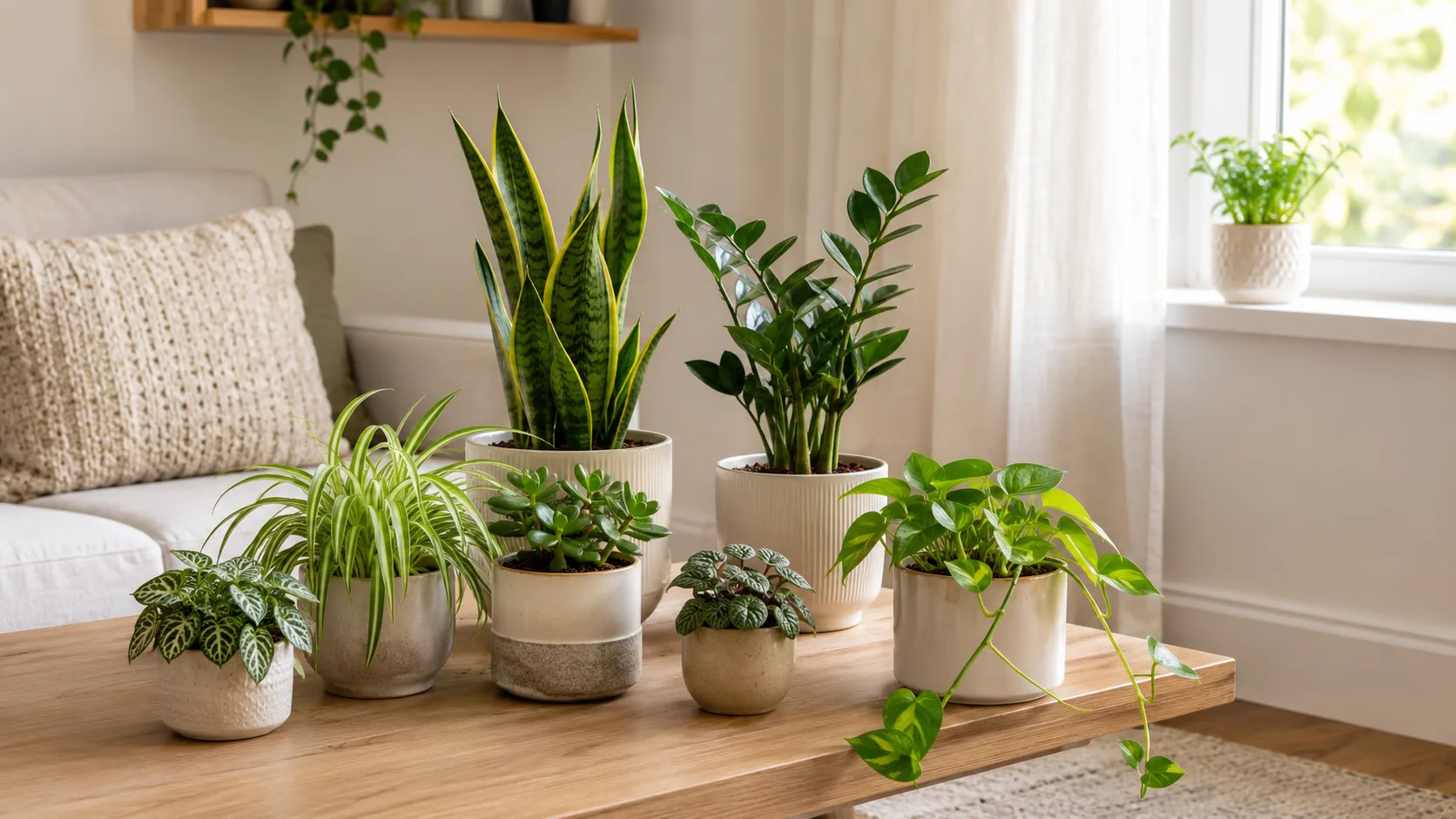
A miniature plant can make a windowsill feel like a garden, but the size of the nursery pot tells you very little about the plant’s eventual footprint. Some species stay naturally compact; others trail several feet, spread into a wide clump, or need outdoor conditions to remain healthy. The better question is not “Which plant is smallest?” but “Which plant fits this light, this surface, and the care I can give it?”
The nine choices below include dependable small-space candidates and a few eye-catching plants that need a clear caveat. Use the comparison first, then choose by growth habit and care—not by the cute pot in which the plant is sold.
Start with light, not the miniature pot
Watch the window before you shop. A bright room is not automatically a bright plant spot: light drops quickly several feet from glass, and a north-facing or shaded window can be too dim for sun-loving succulents and a Venus flytrap. If a plant grows stretched, leans toward the glass, or stops making compact leaves, the site may be too dim even if it looks bright to you.
Next, measure the whole footprint. A trailing plant needs room for its stems, not just its pot; a dense plant needs space around its leaves for airflow. A two-inch pot may hold a young specimen of a plant that eventually spreads wider than a desk. Experienced houseplant writer Nell Foster of Joy Us Garden makes the same practical distinction between plants that stay naturally compact and plants kept small through pruning or pot choice (Joy Us Garden’s small-space plant guide).
Finally, decide how often you want to think about water. A plant in a tiny pot may dry faster than a larger one, but that does not mean every tiny plant wants frequent watering. Baby tears prefer steady moisture; string of pearls and donkey’s tail need a faster-drying mix. Picking two plants with opposite needs and planting them together turns a cute dish into a care problem.
At a glance: nine plants and their trade-offs
| Plant | Best small-space role | Light | Moisture | Reality check |
|---|---|---|---|---|
| Miniature African violet | Flowering desk or shelf | Bright, indirect | Evenly moist, never waterlogged | Choose a true miniature cultivar |
| Baby tears | Dense, soft green cover | Bright, indirect | Consistently lightly moist | Dries and wilts quickly |
| Purple shamrock | Colorful tabletop accent | Bright light, some gentle sun | Let surface dry between waterings | Can spread well beyond a tiny pot; toxic if eaten |
| Air plant | Soil-free display | Bright, indirect | Soak or rinse, then dry fully | Needs water and airflow, not a sealed globe |
| String of pearls | Trailing shelf or hanger | Bright light, gentle sun | Let mix dry completely | Delicate stems; mildly toxic if ingested |
| Donkey’s tail | Trailing succulent | Very bright light | Let mix dry between waterings | Leaves detach when handled |
| Venus flytrap | Miniature bog pot | Several hours of direct sun | Keep medium wet with low-mineral water | Specialist needs and winter dormancy |
| Woolly thyme | Sunniest window or outdoor pot | Full sun | Dry, well-drained mix | Primarily an outdoor groundcover |
| Scotch moss | Cool display or outdoor trough | Sun to partial shade | Cool, moist soil with drainage | Not a true moss; often better outdoors |
The table is a starting filter, not a rigid calendar. Potting mix, season, indoor heat, humidity, and the plant’s root mass all affect drying time. Check the mix or leaf condition before watering instead of assigning every pot the same weekly day.
Miniature African violet for a small flowering display
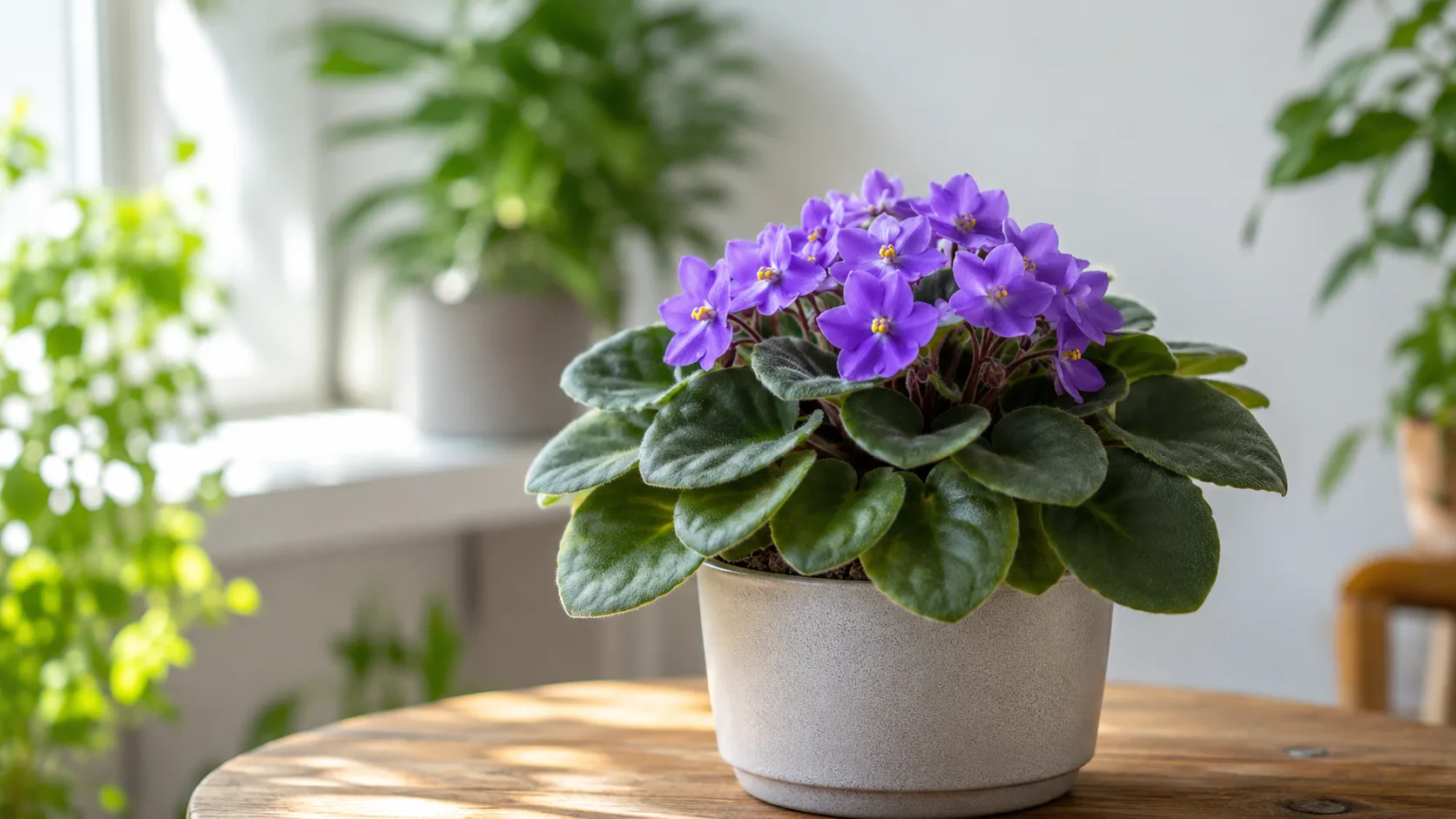
A miniature African violet is one of the most rewarding choices when you want flowers without giving up much shelf space. The key word is miniature: African violets are sold in different size classes, and a standard plant can become much broader than the small pot suggests. Look for a miniature or semi-miniature cultivar on the label rather than assuming every young violet will stay tiny. Joy Us Garden describes miniature through standard African violets as ranging from only a few inches to about a foot, which is why the cultivar name matters more than the display pot (Joy Us Garden).
Give it bright, indirect light, such as a bright east-facing window or a spot a little back from a stronger window. Keep the potting mix evenly moist but not saturated. Water the soil, not the center of the leaf rosette; if water lands on the leaves, blot it rather than leaving a cold droplet on a fuzzy surface. A small pot with drainage makes it easier to judge moisture and prevents the roots from sitting in runoff.
This is a strong pick for someone who wants a plant to look finished rather than merely interesting. Remove spent flowers and damaged leaves, rotate the pot if growth leans, and avoid moving it between very different temperatures. It can bloom repeatedly when light and moisture are steady, but it will not flower on command just because its pot is small. If your room is dim, choose a foliage plant or add a suitable grow light instead of feeding the violet more fertilizer.
Baby tears for a soft green carpet
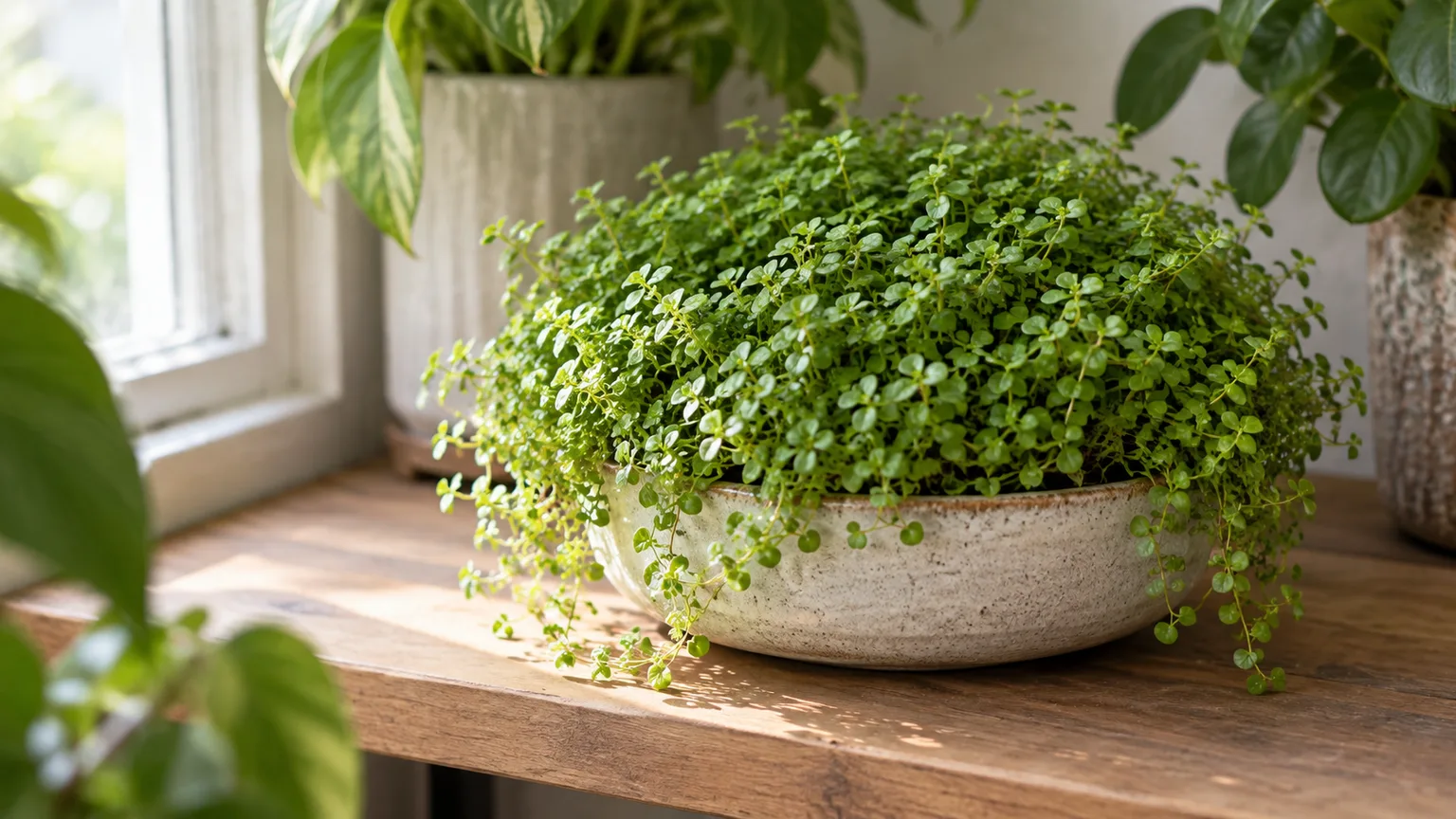
Baby tears (Soleirolia soleirolii) forms a dense cushion of tiny leaves that spills over a pot rim. It is especially effective in a shallow, wide container where the foliage can spread across the surface and soften the edge. This plant is compact in leaf size, but it is not a neglect-tolerant succulent.
Keep the root zone lightly and consistently moist. Letting the entire root ball dry can cause rapid wilting and crispy patches, while leaving water trapped around the roots can lead to decay. Use a fine, moisture-retentive potting mix with drainage, and check the pot often in a warm or dry room. Bright indirect light helps it stay dense; harsh midday sun can dry or scorch its delicate growth.
Humidity and air movement both matter. A cloche or terrarium can reduce moisture loss, but a sealed container that stays wet encourages rot and makes inspection harder. If you use a cover, leave a way for air to circulate and remove it if the foliage remains constantly damp. Epic Gardening notes that baby tears can be trickier indoors than its cute, miniature look suggests because it needs dependable moisture (Epic Gardening’s tiny-plant guide). Choose it if you enjoy frequent checks; skip it if you want to water only when you remember.
Purple shamrock for moving, colorful foliage
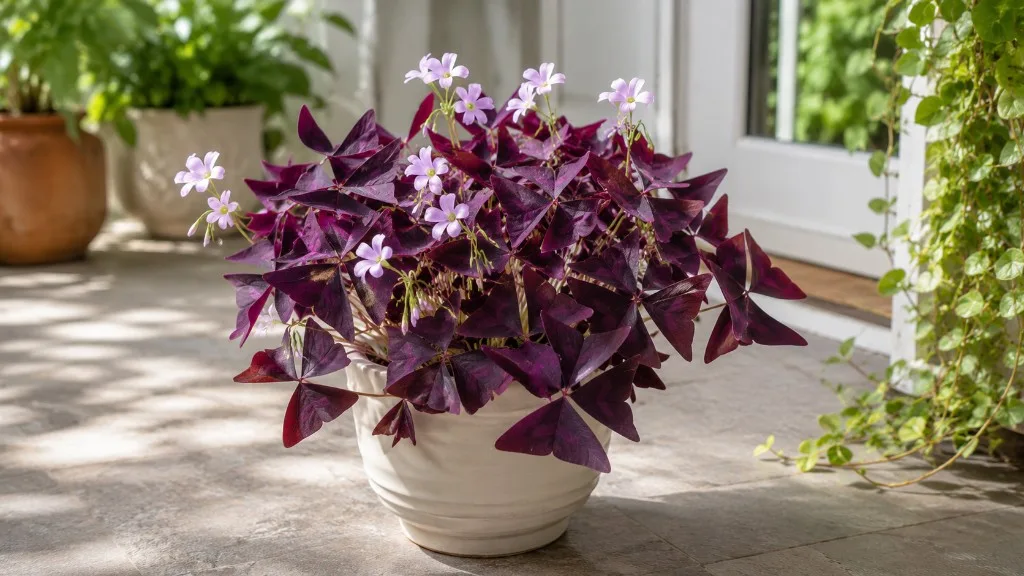
The deep plum leaves of purple shamrock (Oxalis triangularis) fold at night and reopen with the light, giving a small display a little movement. It grows from underground rhizomes and can flower in spring and summer. A few leaves in a small pot may look petite, but a mature clump can become a much broader tabletop plant, so leave room for the foliage to expand instead of treating it as a tiny novelty.
Give it bright light, including some gentle morning sun if the leaves tolerate it, and plant it in a well-draining mix. Water when the surface begins to dry rather than keeping the pot constantly wet. If the leaves decline seasonally, do not immediately discard the plant: purple shamrock can go dormant after heat or dryness. Cut back watering and wait for fresh growth from the rhizome before deciding that it is dead. North Carolina State Extension describes this dormancy and advises reducing water until new growth appears (North Carolina Extension Gardener Plant Toolbox).
There is a household-safety trade-off: North Carolina State lists the plant as having low-severity poisonous characteristics, with serious effects generally associated with eating larger quantities. Keep it where pets and small children cannot chew the leaves, and do not interpret “low severity” as “safe to eat.” For a genuinely tiny shelf, a small violet is easier to size; choose purple shamrock for its color and daily leaf movement, with room for a wider pot.
Air plant for a soil-free shelf
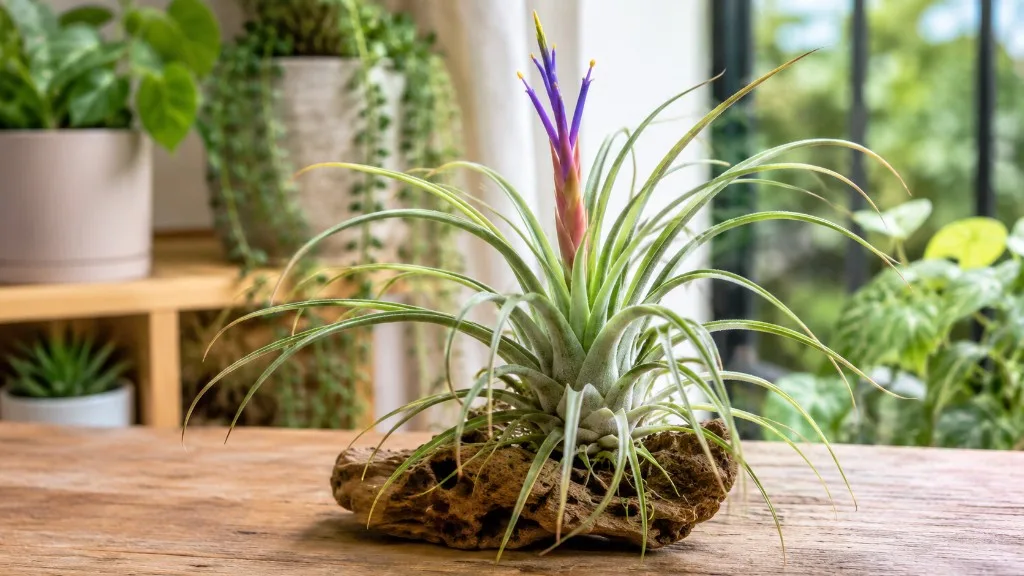
An air plant (Tillandsia species) saves soil and pot space, but it still needs a real watering routine. Its leaves take up water through specialized scales; it does not live on air alone. Set it on a shallow dish, attach it loosely to a mount, or use an open holder that lets air reach all sides. Avoid a permanently closed glass globe, where damp leaves may not dry.
Bright, indirect light is a reliable starting point. Watering needs vary with the species and the room, but a thorough rinse or short soak is usually more useful than occasional misting alone. Shake excess water from the leaf bases and set the plant upside down or at an angle until it dries completely. A plant that stays wet in its center can rot; one in a dry, heated room may need more frequent watering than the same plant in a humid bathroom.
Choose this plant for an open shelf or bright desk where you can reach it easily. Do not glue it into a display or hide it behind decorative stones: the plant must be removable for watering and inspection. Air plants are not a fit for someone who wants a plant that never needs attention, but they are excellent when conventional potting soil would make a narrow space messy. Epic Gardening and Joy Us Garden both emphasize that air plants remain small for a while but still vary in eventual size and do best when their display matches their light and humidity (Epic Gardening; Joy Us Garden).
String of pearls for a bright hanging spot
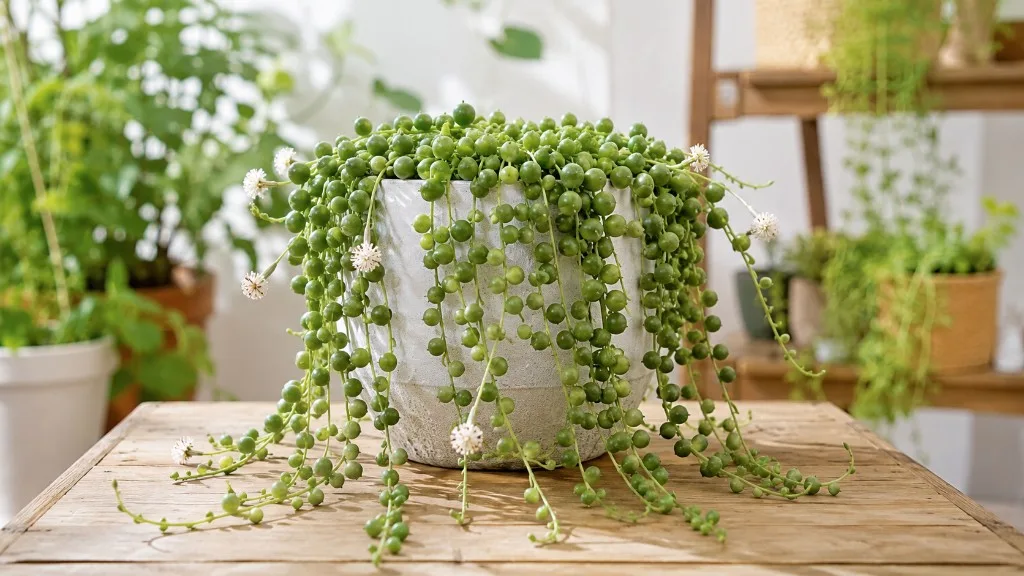
String of pearls (Curio rowleyanus, still sold as Senecio rowleyanus) is a trailing succulent whose round leaves store water. The stems can eventually run several feet, so it occupies little shelf surface only if you provide a high, bright place for them to hang. A narrow shelf below a passageway is a poor choice: the fragile strands break when brushed.
Use a shallow pot with drainage and a gritty cactus-and-succulent mix. Give it bright light, with some gentle direct sun if the plant is acclimated, and let the mix dry fully before watering again. If the pearls shrivel, check the soil rather than automatically adding water: both dry roots and chronically wet, damaged roots can produce a limp appearance. Wisconsin Horticulture at the University of Wisconsin–Madison Extension identifies root rot from excess water as a common cause of failure and recommends bright light, a very well-drained medium, and infrequent watering (UW–Madison Extension’s string-of-pearls guide).
Keep the plant away from chewing pets. The same Extension guidance notes that the leaves are mildly toxic if ingested and that sap may irritate sensitive skin. This is a striking choice for a hanging rail or the top of a bookcase, but it is a poor desk plant if people or animals will brush or taste the stems. Trim only when necessary, and root healthy cuttings in the same well-draining mix if you want to fill out the pot.
Donkey’s tail for a sunny succulent corner
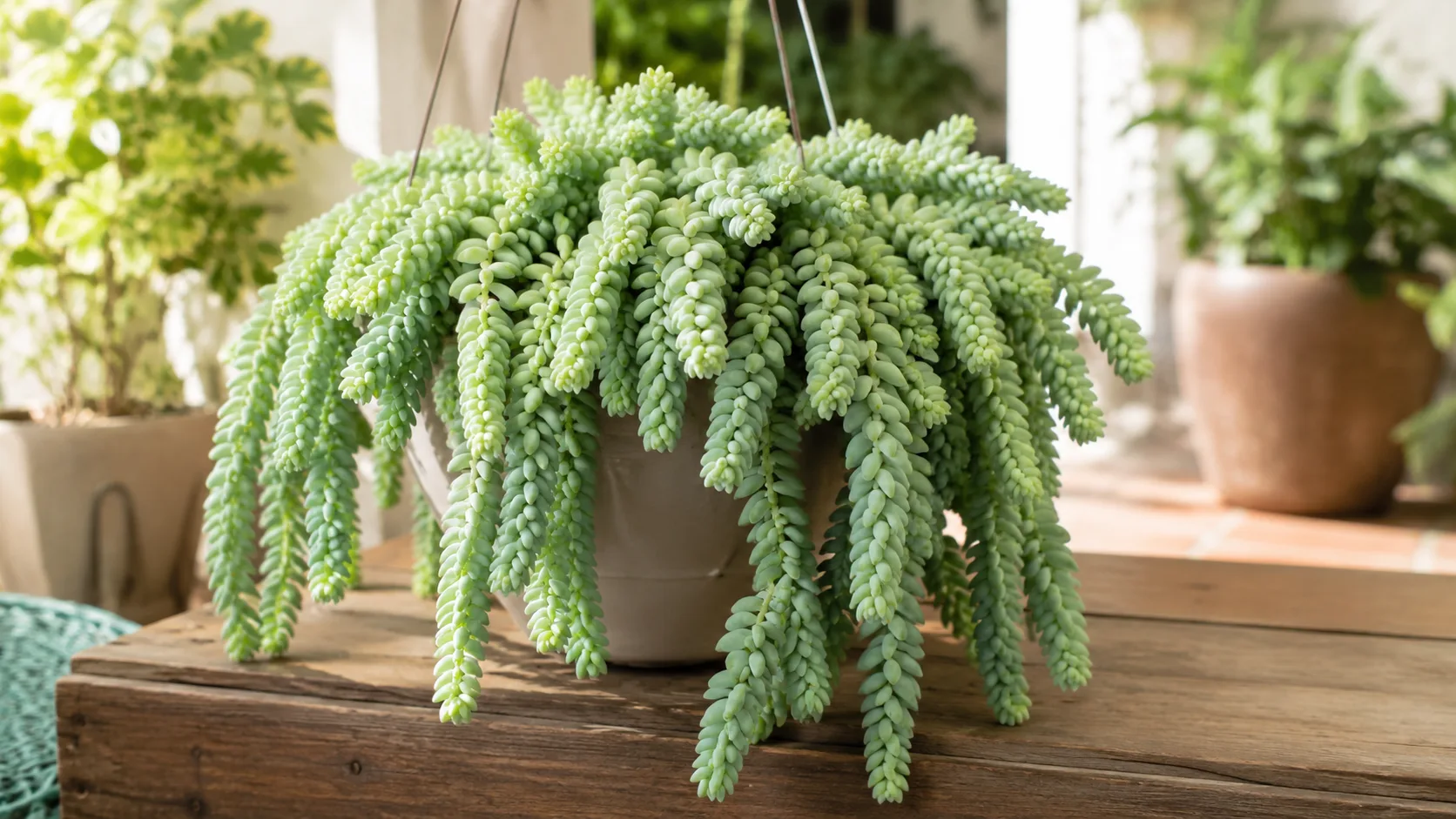
Donkey’s tail or burro’s tail (Sedum morganianum) has plump overlapping leaves arranged along long, pendulous stems. It makes a good compact accent when the pot itself stays small and the stems hang into open space. The plant is not truly miniature: its trailing length can grow well beyond the pot, and the leaves detach easily if the stems are bumped.
Set it in the brightest practical window you have, then acclimate it gradually if you move it into stronger sun. Use a drainage hole and a fast-draining succulent mix. Water thoroughly, empty the saucer, and wait for the mix to dry before watering again. The roots need air between waterings; small containers do not protect them from rot if the soil stays wet.
Give the plant a stable ledge where it will not be brushed while people open a window, draw a curtain, or reach for something nearby. If a few leaves fall, they are easy to sweep up, but repeated leaf loss usually means too little light, rough handling, or a watering problem. Donkey’s tail suits a bright plant shelf better than a desk where its stems will be moved often. Its form is similar to string of pearls, but its heavier stems and succulent leaves make it a more sculptural rather than delicate-looking trailer.
Venus flytrap for a specialized mini bog
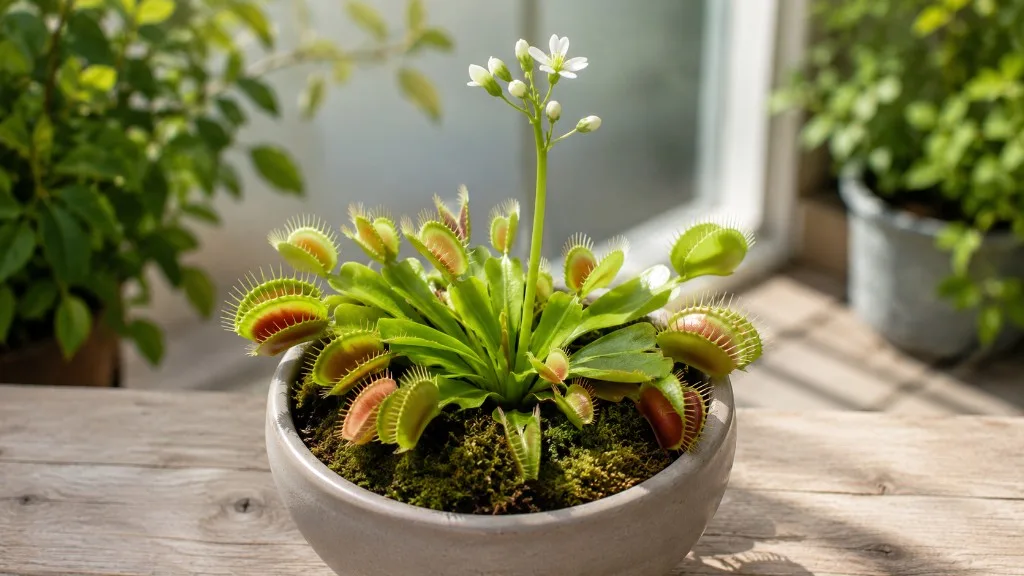
A Venus flytrap (Dionaea muscipula) can fit in a small pot, but it is not a small, low-maintenance houseplant. It evolved in nutrient-poor wetlands, so ordinary potting soil and fertilizer can harm it. North Carolina State Extension recommends a wet, sandy growing medium, full sun to partial shade, and rainwater or distilled water; hard or treated water can kill the plant (North Carolina Extension Gardener Plant Toolbox).
Use a purpose-made carnivorous-plant mix or an appropriate unfertilized sphagnum-based medium, and keep it consistently moist during active growth. Avoid fertilizer, tap water with unknown mineral content, and decorative pebbles that hide the moisture level. A sunny outdoor position or a very bright indoor grow-light setup is more dependable than an ordinary office window. A flytrap can catch occasional insects, but it is not a substitute for pest control and does not need a person to trigger its traps for entertainment.
Plan for winter rest. The top growth may reduce or die back as the plant enters dormancy; that seasonal change does not mean it needs richer soil or extra feeding. Buy nursery-propagated plants rather than collecting wild ones: North Carolina State Extension classifies the species as endangered and notes that wild collection is not allowed. Choose a flytrap because you can provide its bog conditions and seasonal cycle, not merely because the traps look like tiny jaws.
Woolly thyme for a very sunny sill or outdoor pot
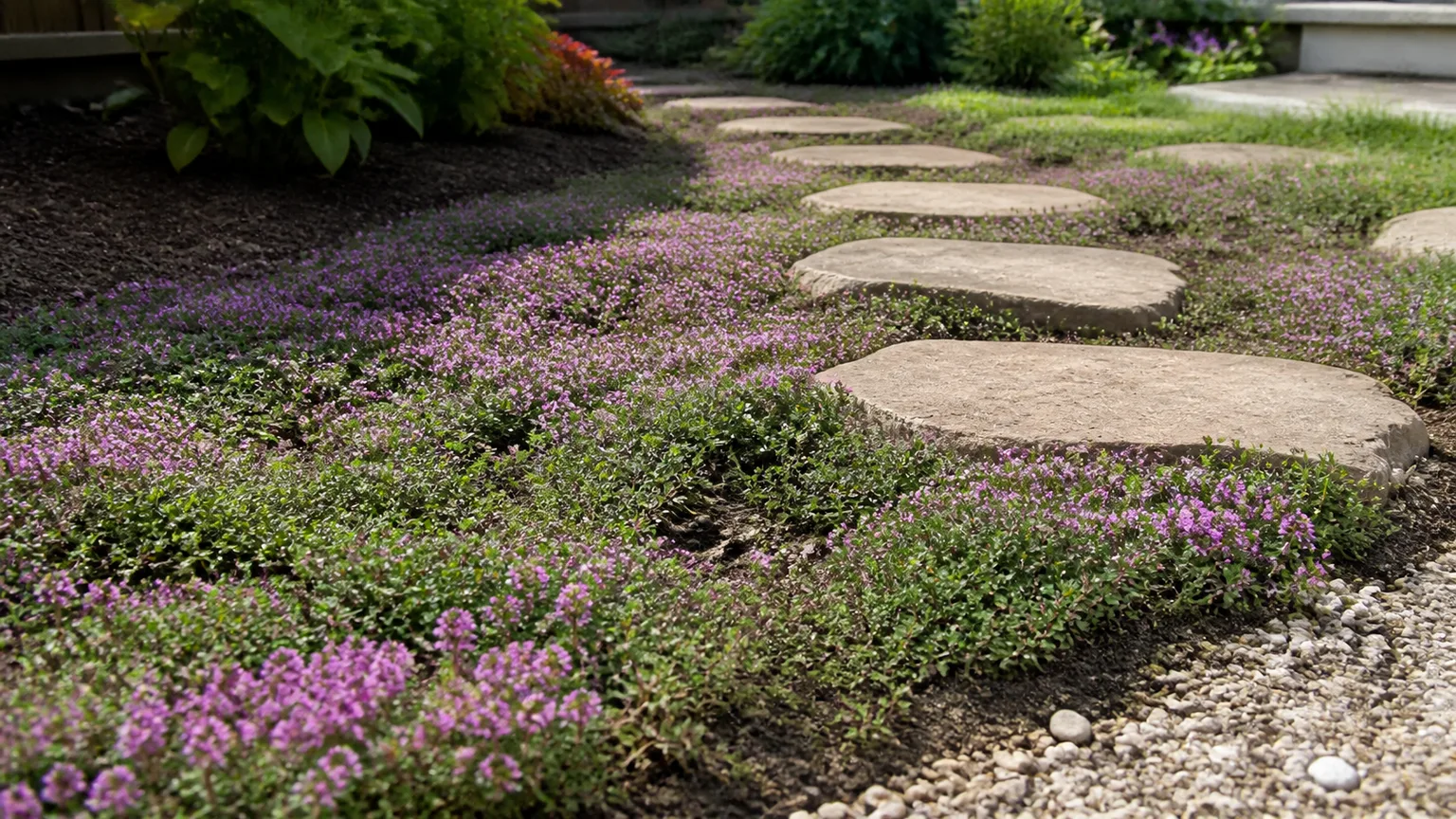
Woolly thyme (Thymus pseudolanuginosus) is a low, creeping plant with small fuzzy leaves. It is often placed in lists of miniature plants because the foliage stays close to the soil, but its natural role is a sun-loving groundcover, not a typical indoor houseplant. North Carolina State Extension describes it as a prostrate herb for dry, well-drained soil and full sun; it does not tolerate wet sites, and it is not a culinary thyme (North Carolina Extension Gardener Plant Toolbox).
You can experiment with it in a small outdoor pot, trough, or the sunniest windowsill in your home, provided the container drains quickly and the plant gets several hours of direct light. Water when the mix has dried rather than keeping it evenly moist. Indoors, limited light and poor air movement often make it a frustrating choice; a bright-looking room away from the window will not meet its needs.
Treat it as an ornamental texture plant, not as a convenient kitchen herb. If the pot is inside, rotate it to keep growth even and move it outside for a suitable season only after gradually acclimating it. For a dark desk or a shelf several feet from glass, choose the African violet or baby tears instead. The small leaves and soft surface make woolly thyme appealing, but the right place matters more than its tiny profile.
Scotch moss for a cool, airy display
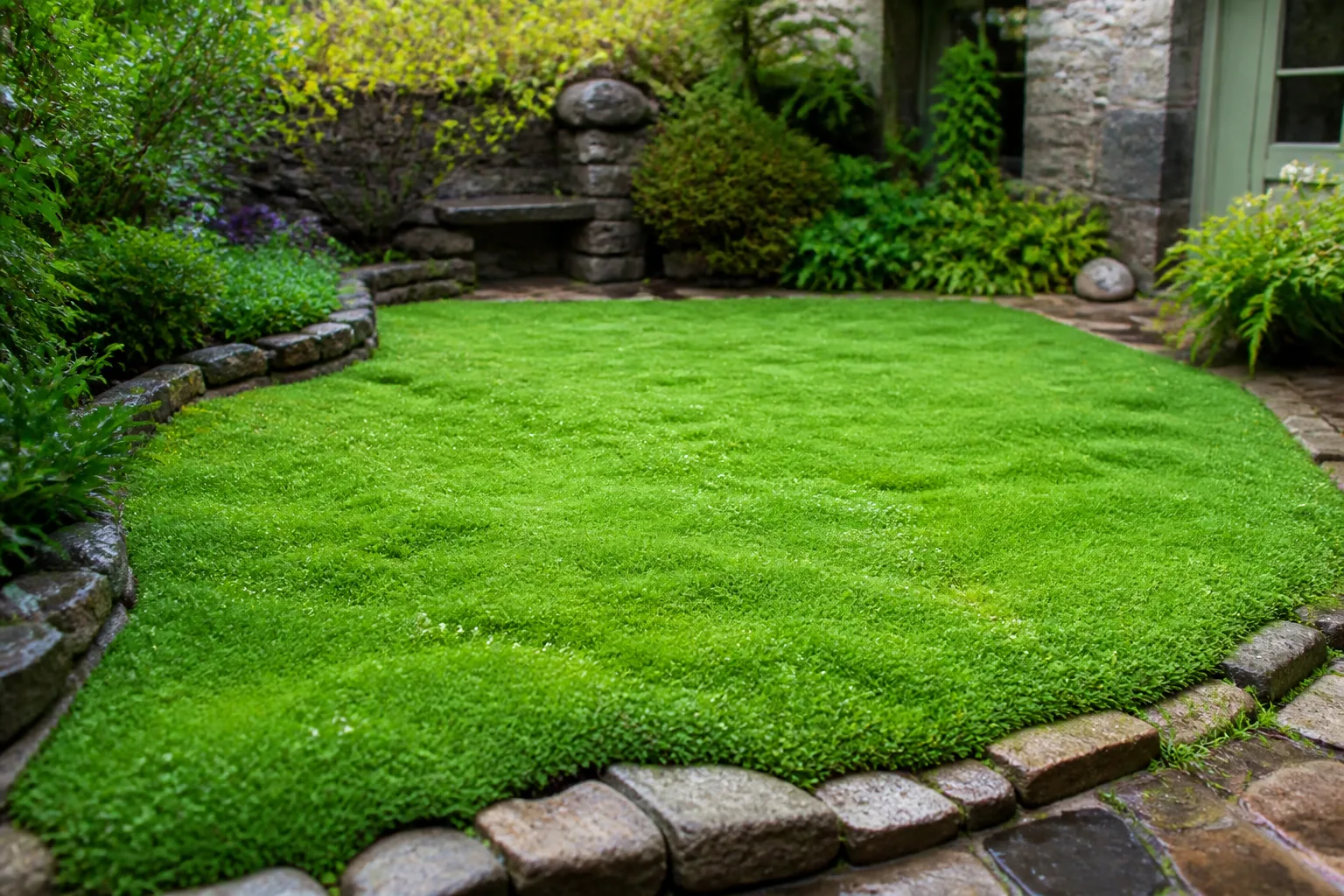
Despite the name, Scotch moss is not a true moss. The plant commonly sold as Irish or Scottish moss is Sagina subulata, a flowering perennial groundcover in the carnation family; its tiny leaves form a green cushion, and it can produce small white flowers. The gold-leaved cultivar often sold as Scotch moss is commonly labeled ‘Aurea.’ North Carolina State Extension lists “Scottish moss” among the common names for Sagina subulata and describes its preference for cool, moist conditions (North Carolina Extension Gardener Plant Toolbox).
This is the least dependable indoor choice on the list. It prefers cool weather, sun or partial shade, moisture, and good drainage; heat and drought stress it, while excess water can also cause trouble. A warm, dry room or sealed terrarium is therefore a poor match. It is happier outdoors in a trough, rock garden, or between stepping stones, where it can spread without fighting indoor heat and low humidity.
If you want to try it in a small display, use a shallow pot with drainage, place it in a cool bright location, and keep the root zone lightly moist without leaving it in standing water. Expect to inspect it often and move it outdoors if it starts browning or thinning. Think of it as a short, living landscape rather than a standard low-care houseplant. The clear caveat saves a reader from buying a plant that looks like moss and assuming it can live indefinitely in a closed glass bowl.
Build a miniature garden without mixing mismatched plants
A group of small pots is usually easier to care for than one mixed dish garden. Keep each plant in its own nursery pot with drainage, then arrange the pots together on a tray or shallow decorative container. You can change the composition without disturbing roots, and a thirsty baby-tears pot will not force a succulent to sit in wet soil.
Group by conditions, not by size. African violet, baby tears, and purple shamrock can share a bright display area, but they still need separate watering decisions. String of pearls and donkey’s tail can sit near each other if the light is strong, yet their trailing stems need room and should not be trapped behind other pots. A Venus flytrap belongs in its own mineral-free, consistently wet setup; never add it to a conventional succulent or tropical houseplant arrangement.
For a simple shelf plan, start with one compact foliage plant, one flowering plant, and one trailing plant. Leave a gap between leaves so you can see pests early and reach the soil to check moisture. Put taller pots at the back, but do not shade sun-loving plants behind taller foliage. Keep a shallow tray beneath the grouping to catch drips, then remove standing runoff so no pot wicks water continuously unless it is designed for that method.
Keep small plants healthy in small containers
Choose a pot with a drainage hole and only a little more room than the root ball needs. A tiny plant in an oversized pot can leave a large volume of mix wet for too long; a plant crammed into a decorative cup without drainage can also stay soggy at the bottom. If you love the look of a teacup, use it as an outer cachepot and set a draining nursery pot inside.
Water by checking the plant and medium, not by copying a schedule from another plant owner. For a succulent, lift the pot or feel the mix lower down before watering; for baby tears, inspect more often so the root ball does not dry completely. In winter, cooler temperatures and slower growth usually reduce water use, while indoor heating can make a small pot dry faster. The same plant may need different timing in January and July.
Use a potting medium suited to the plant’s roots. A standard light houseplant mix works for African violets and many leafy plants, while string of pearls and donkey’s tail need a faster-draining succulent mix. Venus flytraps require nutrient-poor carnivorous-plant media rather than regular potting soil. Baby tears want more even moisture, but drainage is still essential; “moist” does not mean waterlogged.
Do not keep a plant small by starving it of light, water, or root space. That produces weak, stretched, or stressed growth, not a healthy miniature. When roots circle densely, the plant repeatedly dries within a day, or foliage spills past the space you planned, move it to a slightly larger draining pot, divide it if the species allows, or choose a naturally smaller cultivar for the tight spot.
Match the display to pets and daily life
“Small” does not mean safe to nibble. Wisconsin Extension notes that string-of-pearls leaves are mildly toxic if ingested and that the sap may irritate sensitive skin; North Carolina State Extension lists purple shamrock as having low-severity poisonous characteristics. If a cat, dog, or young child can reach a plant, check the exact species with a reliable poison-control or veterinary resource before buying and place the pot outside chewing range.
Choose a display you can actually maintain. A rarely used guest-room shelf may be too dim for a flytrap or woolly thyme, while a busy desk may snap the stems of donkey’s tail or string of pearls. If you travel often, a thirsty baby-tears plant may become a chore. A miniature African violet or a different forgiving, compact foliage plant may be a better starting point than the plant with the most unusual leaves.
Leave room for normal growth and upkeep. Small plants need a reachable pot, a saucer you can empty, and enough space to rotate or inspect leaves. Keep them away from heater vents and cold drafts, and do not stack pots where leaves block one another’s light. A tiny collection stays cute when each plant has the conditions it needs—not when every pot is squeezed onto one crowded tray.
Conclusion
A successful miniature indoor garden begins with a realistic match between the plant and the place. Miniature African violets, baby tears, purple shamrock, air plants, string of pearls, and donkey’s tail can all add distinct shapes to a compact display, but each brings its own light and watering rules. Woolly thyme and Scotch moss are better treated as outdoor or very specific cool-window experiments, while a Venus flytrap belongs to growers who can provide wet, low-mineral conditions and winter rest.
Buy by the botanical name and mature growth habit, then give each plant a draining pot and a spot that matches its needs. Keep unlike plants in separate containers, check soil rather than the calendar, and leave room for trails and spreading leaves. That way, the garden remains small because you chose the right plants—not because you kept them cramped.