How to Unclog a Toilet Trap With a Plunger or Auger
Learn how to unclog a toilet trap with a flange plunger or closet auger, stop a rising bowl, avoid porcelain damage, and know when the blockage needs a plumber.
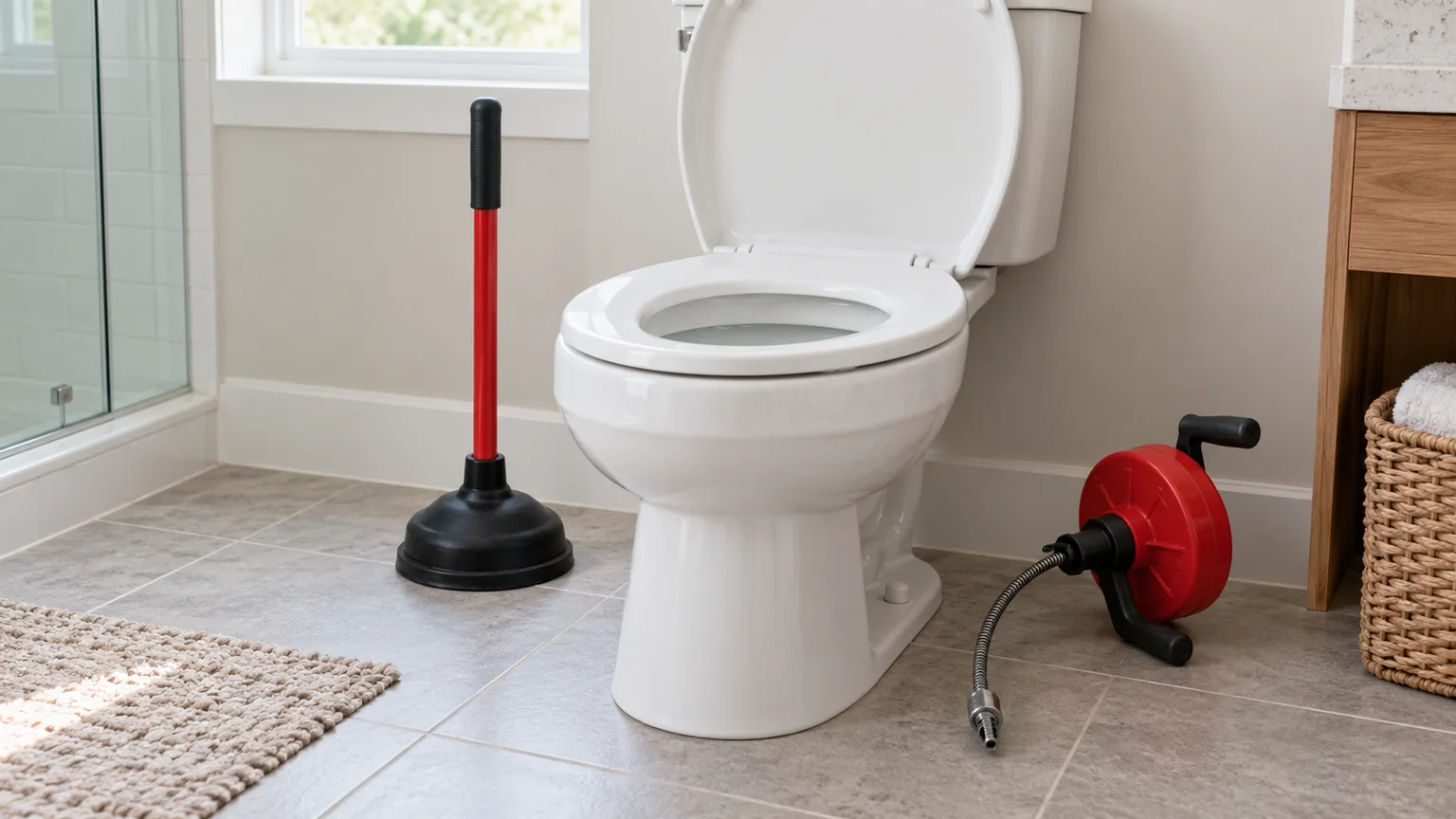
A toilet that will not drain is stressful, but the first move is simple: do not flush it again. If the bowl is rising, stop the incoming tank water, keep the level below the rim, and then decide whether the blockage looks confined to the toilet’s trapway or may be farther down the plumbing.
Most soft clogs respond to a toilet-specific plunger. A closet auger is the next tool for a stubborn obstruction or a clog that will not move with a good seal. The key is to use each tool gently, avoid a regular sink snake or chemical drain opener, and stop if other fixtures show signs of the same problem.
Stop the Water Before It Reaches the Rim
If the bowl is filling after a flush, leave the handle alone. On a conventional tank toilet, lift the tank lid and press the rubber flapper down over the flush-valve opening if water is still flowing into the bowl. You can also turn the shutoff valve on the supply line behind or beside the toilet clockwise until it stops; do not force a valve that feels stuck or begins to leak.
If the bowl is close to the rim, bail out some water with a small cup or container into a bucket before you plunge. Keep towels around the base, wear waterproof gloves, and avoid leaning over the bowl while the water is moving. The goal is to leave enough water to cover the plunger’s cup but enough space that a few splashes will not spill over.
Do not test the toilet with another flush just because the water level has fallen a little. A partial opening can let the first few inches of water pass and then back up again once the bowl refills. Wait until the level has returned to its usual resting height and the flow looks clear before you consider a controlled test.
If your toilet has a concealed tank, a wall-mounted flush plate, or an unfamiliar dual-flush mechanism, do not dismantle the panel to stop a clog. Use the accessible fixture shutoff if you can reach it safely, or call building maintenance or a plumber if water continues to enter the bowl.
What a Toilet Trapway Does
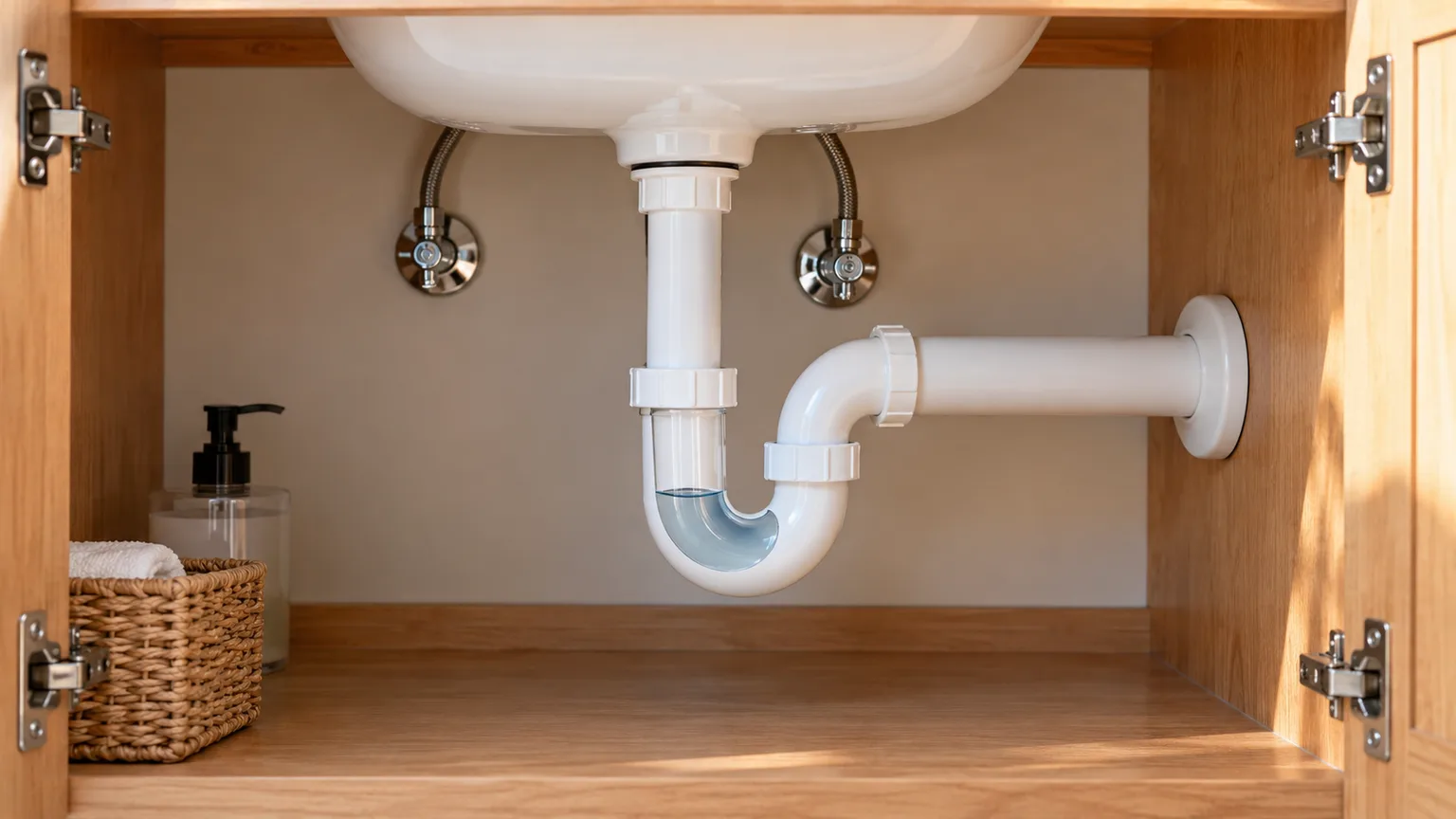
The toilet’s “trap” is the curved passage molded inside the base of the fixture; plumbers often call it the trapway. It carries flushed water and waste from the bowl toward the drain while holding water in the bend between flushes. That water seal helps keep sewer odors from entering the room, so the goal is to clear the obstruction without draining or damaging the fixture.
A clog can sit in the trapway, but the phrase “toilet trap clog” does not prove that the obstruction is there. It may be lodged in the outlet bend, caught just beyond the toilet, or part of a blockage in a shared branch drain. Kohler’s troubleshooting guidance describes a trapway obstruction as one possible cause when bowl water will not evacuate and recommends a toilet auger or snake; if the problem remains after snaking, the vent may be involved (Kohler Assist).
The bowl’s water seal and a clog are also different things. The standing water you see at rest is normal; a blockage is more likely when a flush sends the water unusually high, drains slowly, or leaves waste behind. Avoid trying to inspect the hidden passage with a wire or by taking the toilet off the floor: the porcelain curve is not visible from the bowl, and lifting the fixture can break the seal at its base if you do not know how to reset it.
Read the Symptoms Before Choosing a Tool
Start with what happened just before the first slow flush. A sudden backup after a large wad of toilet paper or a small object fell in points toward a local obstruction. A toilet that has been flushing weakly for weeks, gurgling along with other drains, or backing up when a tub or shower is used deserves a broader check before you keep plunging.
The layout matters. In many homes, a toilet, sink, and tub share part of a drain system, but they do not always join at the same point. The clues below help you decide what to try, not prove the exact location of a blockage hidden inside a wall or under a floor.
Clues That Point to a Toilet-Only Clog
If one toilet suddenly drains poorly while the bathroom sink, tub, and other toilets behave normally, begin with a plunger. A single fixture affected after excess paper or a small soft obstruction is more consistent with a plug near that toilet than with a whole-house sewer backup. You still cannot confirm the exact location without opening the plumbing, so treat that as a practical first guess.
A bowl that rises, pauses, and then slowly sinks can mean water is squeezing past a partial obstruction. A weak flush can also come from a low tank water level, a misadjusted flush mechanism, or a clogged rim jet rather than a trapway clog. If the toilet has been weak for a long time and there is no sudden blockage, look for a tank or fixture problem instead of repeatedly forcing water through it.
A hard object changes the decision. If a plastic toy, toothbrush, air freshener, or other item disappeared during the flush, do not assume plunging will break it down. A plunger can move a soft paper plug, but a rigid item may lodge at the bend or move farther into the pipe; stop and assess whether it is visible or retrievable.
Clues That Point Beyond the Toilet
Several affected fixtures make a toilet-only explanation less likely. Pay attention if the tub or shower drains slowly, the sink gurgles when the toilet is flushed, water bubbles back through another drain, or more than one toilet backs up. Kohler lists rising bowl water, slow flushes, frequent clogs, sounds from nearby drains, and bubbles at the trapway as clues that can accompany a clogged waste stack or vent; those signs need diagnosis rather than repeated plunging (Kohler’s poor-flush troubleshooting guide).
If sewage or dirty water is rising in a tub, shower, or floor drain, stop running water elsewhere in the home and do not flush again. A low fixture can become the outlet for a downstream blockage, and adding more water may spread the backup. Contact a licensed plumber or your building’s maintenance team; if neighbors in a multi-unit building are affected, alert management because the line may be shared.
A vent restriction can produce slow or noisy flushing without the same type of solid trapway obstruction. A professional can distinguish a vent problem from a branch or sewer-line blockage using the plumbing layout and appropriate equipment. Avoid sending an ordinary drain snake through a toilet as a diagnostic experiment.
Set Up Safely and Choose the Right Tool
Before touching the bowl, clear the floor, put on waterproof gloves, protect the area with towels, and place a bucket nearby. Eye protection is sensible if the water is high or the blockage may splash; keep children and pets out of the work area. If a cleaning chemical has already been poured into the bowl, skip the DIY tool sequence below and read the section on chemical cleaners first.
| Situation | Better first choice | Why |
|---|---|---|
| Sudden clog after paper or waste; no other drains affected | Toilet plunger with a flange | Makes a seal at the toilet outlet and moves water against a soft plug |
| Plunger seals well but the clog remains, or a soft clog is unusually stubborn | Manual closet auger made for toilets | Its curved guide and protective guard let the cable pass through the trapway |
| A hard object disappeared, multiple drains are affected, or tools meet strong resistance | Stop and call a plumber | The obstruction may need retrieval or work beyond the fixture |
Use a Toilet Plunger for a Soft Blockage
Choose a flange plunger, also called a toilet plunger: its smaller extension fits into the outlet while the wider rubber cup seals against the bowl. A flat cup-style sink plunger often cannot seal well against the toilet’s opening, so it may splash or move air instead of water. Bob Vila’s toilet-plunging guidance likewise recommends the flange style and advises bailing out a full bowl before plunging (Bob Vila).
Check that the rubber is flexible, the handle is secure, and the plunger is clean enough to use. A worn or hardened cup may not seal even when positioned correctly. Avoid using a plunger from a kitchen sink or shower if it may carry residue or debris from another drain.
Switch to a Guarded Closet Auger for a Stubborn Clog
A closet auger is a hand-operated cable tool shaped to enter a toilet outlet; a plastic or vinyl guard sits against the bowl to protect the porcelain as the cable advances. It is different from a general-purpose sink snake, whose exposed metal coil can scrape the finish inside the trapway. RIDGID describes a vinyl guard on its K-3 toilet auger as protection against accidental porcelain scratches, while This Old House recommends a toilet-specific auger instead of a standard hand snake for the same reason (RIDGID’s K-3 auger specifications; This Old House’s toilet-snake guide).
For a home toilet, use a manual toilet auger with a sleeve that is intact and long enough for the fixture. A powered drain machine is not the next step for a homeowner: it can apply far more force than you need in a porcelain fixture and may drive a foreign object deeper. Follow the instructions for your particular auger because cable length, crank direction, and head shape vary by model.
Clear a Toilet Trapway With a Flange Plunger
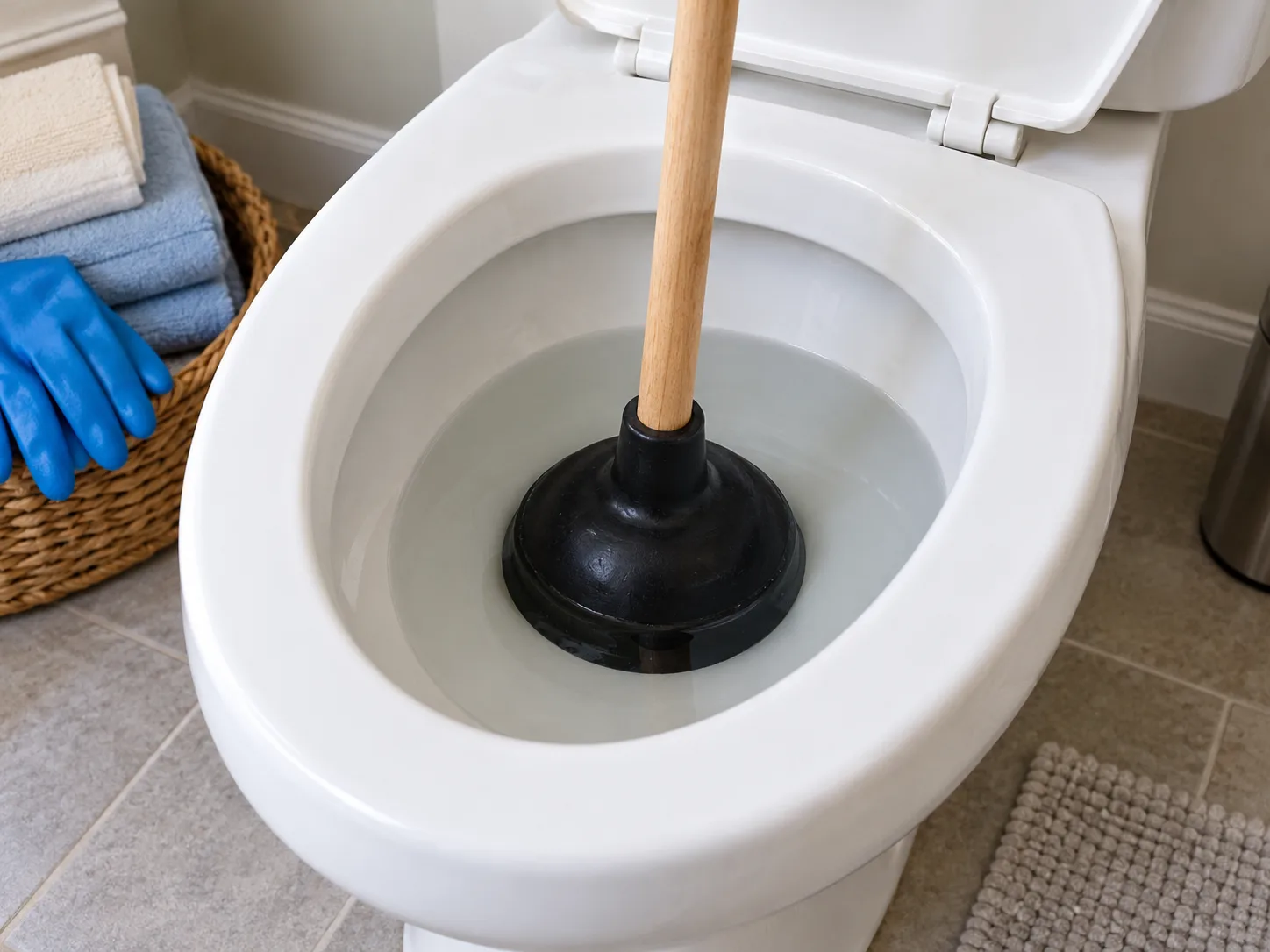
Set the plunger so its flange enters the toilet outlet and its cup rests flat around the opening. Tilt the cup while lowering it so water—not a pocket of air—fills the cup, then bring the handle upright to hold the seal. If the water level is too low to cover the cup, add a little tap water; if it is high, bail some out first rather than risking an overflow.
Press down slowly on the first stroke to compress trapped air without splashing. Then work the handle with short, controlled push-pull strokes while keeping the rubber cup sealed to the bowl. The movement sends water back and forth against the obstruction; a series of steady strokes is more useful than a few violent jabs that break the seal or rock the fixture. This Old House’s plunging guide describes the toilet plunger as the first tool for a common clog and emphasizes forming a proper seal before working the handle (This Old House).
After about 10 to 20 seconds, pause and lift the cup slowly. If the bowl water begins draining, give it time to settle; do not immediately flush to “make sure.” If nothing changes and the bowl remains safely below the rim, you can repeat a short cycle once or twice. If the level rises, stop and shut off the tank supply instead of continuing to pump into a full bowl.
Once the water has dropped back to its normal level, look for a clean, complete drain rather than a brief dip. If it is still sluggish, the clog may be too firm for a plunger or may sit farther along the drain. That is the point to use a closet auger, not to increase force indefinitely. Repeated hard plunging can also stress a toilet that is loose at its base or already leaking.
Use a Closet Auger Without Scratching the Bowl
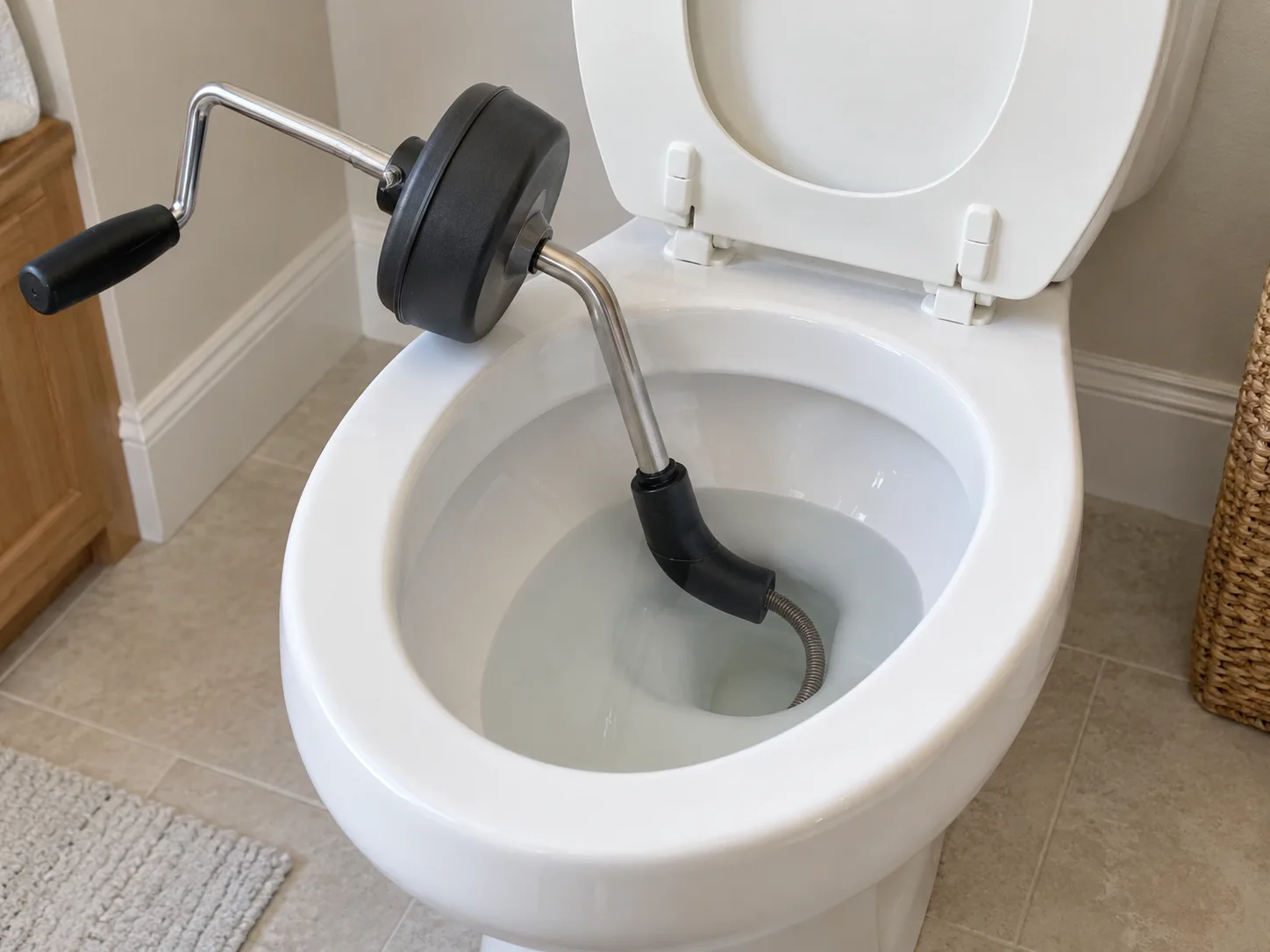
Put on gloves, keep towels on the floor, and read the auger’s instructions before starting. Confirm that the protective sleeve or guard is in place and that the cable retracts smoothly. Do not use the auger if its guide is cracked, the cable is kinked, or the exposed metal could scrape the porcelain.
Set the curved guide into the bowl outlet so its protected bend rests against the ceramic. Advance the cable gradually while turning the handle as the manufacturer directs; do not shove a long length of cable out at once. The cable should follow the toilet’s curve. A firm stop can be the bend, the obstruction, or a hard item, so resistance is a cue to slow down rather than lean harder.
When you feel resistance, turn gently and make small controlled advances. If the head catches something soft, a little movement may loosen it; if you suspect a solid object, try to draw the cable back slowly so the object comes toward the bowl. If you feel the cable winding tightly, the tool binding, or the toilet itself rocking, stop and reverse according to the auger’s instructions. Forcing the cable can scratch the bowl, damage the tool, or push an object beyond easy reach.
Pull the cable back in gradually, keeping the guide at the outlet and a bucket close for any debris. Wipe off what the auger retrieves rather than flushing a toy, wipe, or other object back through the pipe. Clean and disinfect the tool according to its product directions, and wash your hands after handling it. Kohler recommends an auger for a suspected trapway obstruction, while a toilet-tool maker’s guard is designed to reduce accidental scratching; neither source makes the tool damage-proof, so careful handling still matters.
Handle a Toy or Other Visible Object Differently
If you can see the object in the bowl and can lift it out without reaching into the trapway, put on gloves and retrieve it directly. Use tongs or a disposable tool if needed, then seal the object in a bag and clean the tool. Do not push a visible toy, cap, or bottle into the outlet to “get it out of sight”; that can turn an easy retrieval into a trapway or drain obstruction.
If the item has already disappeared, do not plunge aggressively. A plunger can push a hard object past the bowl’s bend, where retrieving it may require removing the toilet or opening a cleanout. A toilet auger may catch an item with its tip, but it may also push it farther; if the object is valuable, sharp, battery-powered, or large enough to lodge, call a plumber before working it deeper.
This is especially true for small children’s toys and items that can expand or snag, such as wipes, cloth, or hygiene products. The safest outcome is to bring the item back toward the bowl, not to force it toward the sewer. If you do not know what went down, tell the plumber what you suspect rather than repeatedly testing the flush.
Confirm the Toilet Is Draining Normally
Do not judge success by the sound of one plunge or by a momentary drop in the water level. The bowl should return to its usual standing level, the water should pass without surging upward, and the tank should refill and stop normally. Check around the base and the shutoff valve for fresh water before you leave the bathroom.
If a low-risk flush test is appropriate, keep your hand near the supply shutoff and be ready to stop the tank refill. Flush once only after the bowl has settled and the water has drained freely; watch the bowl throughout the flush. If the level starts rising again, close the valve, stop using the toilet, and move to the auger or call a plumber rather than trying a second test flush.
A partial opening may let liquid pass while paper or a solid item remains. That is why a slow, swirling drain or a bowl that clears only after several minutes is not a confirmed repair. If the toilet has a weak flush even after the clog clears, check the tank’s fill level and the manufacturer’s troubleshooting advice, or ask a plumber to inspect the fixture and venting.
Methods That Can Make the Blockage or Damage Worse
Do not pour boiling water into the bowl. American Standard advises against pouring boiling water on ceramic toilets because the rapid expansion can fracture the material, creating an injury or leak risk (American Standard). Warm water is not a substitute for a plunger or auger when the blockage is a toy, wipe, or hard object, and adding more water to a nearly full bowl can overflow it. If you try a warm-water method on a low bowl and a likely paper clog, use only warm—not boiling—water and add it slowly; a hands-on Family Handyman guide notes that this method can be messy and is aimed at smaller paper clogs (Family Handyman).
Avoid chemical drain openers as a first choice for a clogged toilet. Some drain cleaners are caustic and can burn skin or eyes on contact; Poison Control advises reading the label and using protective measures for caustic products (Poison Control). A chemical left in the bowl can splash during plunging or augering. If you already added a cleaner, do not introduce another product or start plunging; keep people and pets away, follow the product label, and tell a plumber exactly what was used. If the chemical contacts skin or eyes, follow the label’s first-aid instructions and contact Poison Control or emergency services as appropriate.
Do not use a bare wire coat hanger, a standard sink snake, or a power auger in a toilet. A hanger can scratch the glaze, catch on the outlet, or break off; a sink snake does not have the same curved protective guide as a closet auger. A toilet auger is designed for the bowl’s bend, but it still needs a protective sleeve and a light touch. If the tool stops hard, binds, or seems to be catching the porcelain, pull back and reassess rather than forcing it.
Do not keep flushing to see whether a stubborn clog “finally goes.” Each flush adds another tankful to a bowl that cannot empty. Do not remove the toilet unless you know how to shut off and disconnect the supply, lift the fixture safely, and install a new seal when resetting it; a poor reset can leave a hidden leak at the floor.
Know When to Stop and Call a Plumber
Call a plumber if a toilet auger does not reach or clear the obstruction after careful attempts, if a hard object has disappeared, or if the same toilet clogs again soon after it seems clear. Those patterns can mean the clog is beyond the fixture, an object is lodged in the trapway, or the toilet itself has a flushing problem that plunging cannot fix. A plumber can check the branch line, vent, and toilet without relying on guesswork.
Treat water backing up into a tub, shower, floor drain, or another toilet as a wider plumbing issue. Stop using fixtures that drain to the same line and avoid running a washing machine or dishwasher until the blockage is assessed. Gurgling in more than one drain, a sewer odor that appears across rooms, or waste coming up from a lower fixture all deserve prompt professional attention. If sewage is spilling, keep people and pets out of the area and contact a plumber or property manager right away.
Stop DIY work if the bowl or tank is cracked, the toilet rocks, water appears at the base, the shutoff valve leaks, or you cannot confidently control the supply. Do not tighten the toilet’s floor bolts aggressively to stop rocking: porcelain can crack and the underlying seal may already be compromised. A plumber can separate a clog from a loose or damaged fixture and avoid turning a simple stoppage into a floor leak.
Prevent the Next Toilet Trapway Clog
Flush only human waste and toilet paper. “Flushable” on a wipe package does not mean the wipe behaves like toilet paper in every household drain; wipes, paper towels, cotton swabs, dental floss, menstrual products, and small trash should go in the bin. This Old House’s snake guide specifically warns against flushing wipes, paper towels, and hygiene products, and Kohler notes that some toilet-paper grades or additives can break down less readily than others (This Old House; Kohler Assist).
Use modest amounts of toilet paper, especially in older toilets or fixtures that already flush weakly. If large wads cause repeated slowdowns, try smaller amounts per flush and watch whether the pattern changes; do not assume a particular brand will fix a toilet with poor tank settings, mineral buildup, or restricted venting. A home with a septic system should also follow local health-department guidance and avoid putting nondegradable products into the system.
Keep small objects off the tank lid and away from an open bowl, and use a covered wastebasket for bathroom trash. If a toilet has a history of recurring clogs, note what was flushed, which fixtures were running, and how quickly the bowl drained; that information can help a plumber find whether the fault is a usage issue, a fixture problem, or a shared line. A repeat pattern is a reason to investigate, not just to buy a stronger chemical or push a longer snake through the bowl.
Conclusion
For a sudden, isolated toilet clog, stop flushing, keep the bowl from overflowing, and start with a flange plunger that seals around the outlet. If a careful plunger cycle does not restore normal drainage, use a manual closet auger with its protective guide against the porcelain, or call a plumber if an object or strong resistance changes the risk.
The most important diagnostic is whether other fixtures are involved. A toilet-only soft clog is often a reasonable DIY job; gurgling, sewage backup, repeat stoppages, or an auger that will not pass point beyond the trapway and call for professional diagnosis. Once the toilet drains normally, avoid flushing wipes and other trash so the same obstruction does not return.