The Purpose of a Drain Trap: How It Blocks Sewer Gas
Learn what a drain trap does, how its water seal blocks sewer gas, where traps hide, and how to troubleshoot odors, clogs, dry drains, and venting problems.
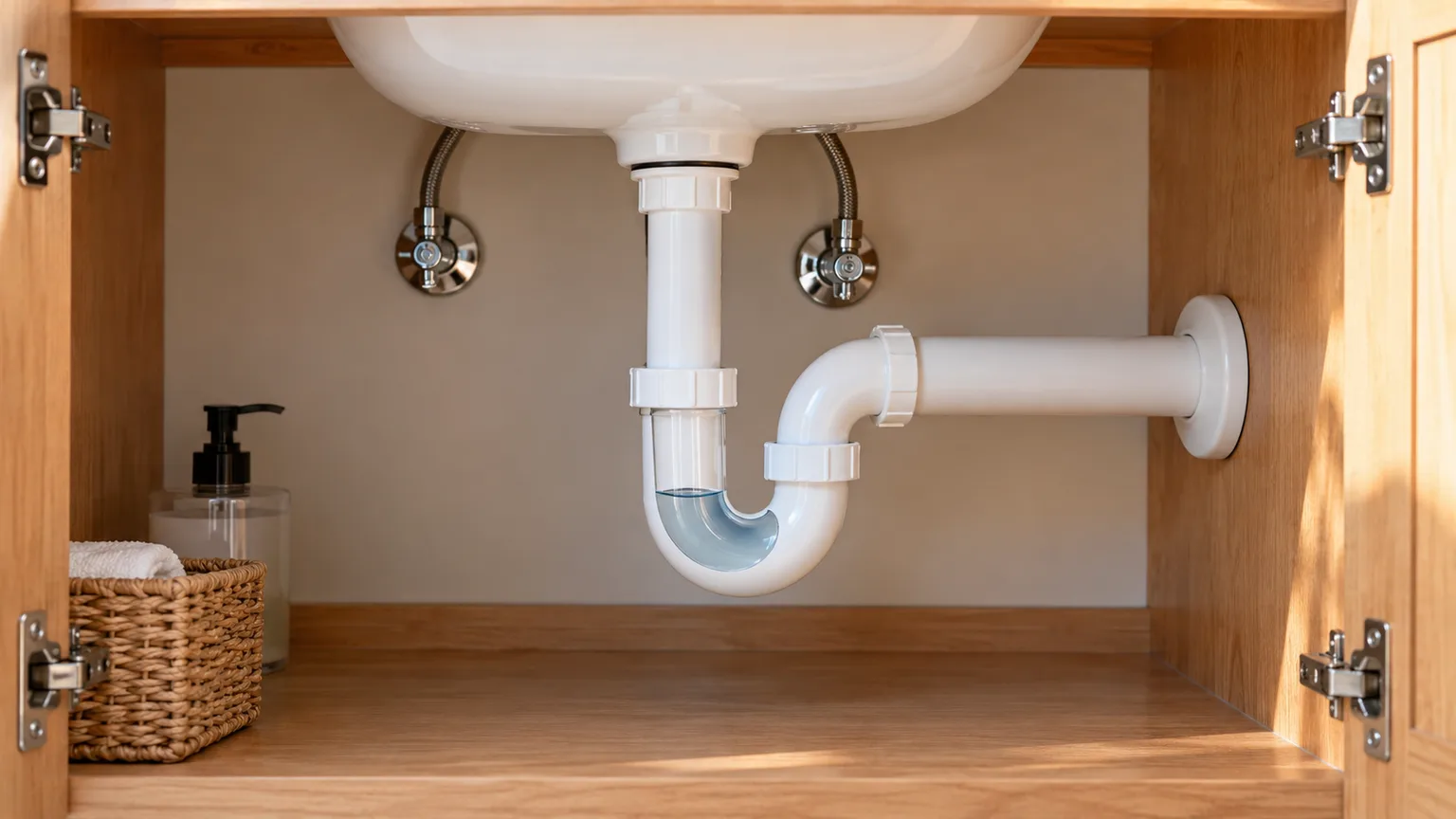
A drain trap is the curved section of pipe that keeps a small amount of water between your room and the drain line. That standing water is a seal: it blocks sewer gas from moving backward through an open drain while allowing used water to flow away. The familiar P-shaped pipe under a sink is one example; other traps are hidden under floors or built into a fixture.
The trap is not a screen or a miniature septic tank. Its primary job is to maintain a water barrier, and it works with the plumbing vent so drainage pressure does not pull that barrier away. If an unused drain smells, adding water may restore a dry seal—but an odor that returns can point to a venting, leak, or drainage problem instead.
The Short Answer: a Drain Trap Holds a Water Seal
When you run a faucet or shower, wastewater passes through the trap on its way to the larger drain system. After the flow stops, the bottom of the bend stays partly full. The water spans the pipe’s inside opening like a liquid plug: air from the sewer cannot freely pass through it, but the next rush of water pushes the old water onward and leaves a fresh seal behind.
That simple arrangement is why a sink can sit connected to a sewer line without leaving an open air passage into the room. The water itself—not the shape alone—does the blocking. A dry, cracked, incorrectly installed, or siphoned-out trap loses that protection even if the pipe still looks like a U or P from the cabinet door.
In most homes, you can recognize a sink trap by following the pipe down from the drain and looking for a dip that rises again before entering the wall or floor. A toilet has a curved internal passage called a trapway, so its trap is part of the porcelain fixture rather than a separate pipe visible behind the bowl. Building codes govern the exact arrangement; the 2024 International Plumbing Code, Chapter 10 describes fixture-trap design and seal requirements, but local jurisdictions adopt and amend model codes differently.
How the Water Seal Stops Sewer Gas
Wastewater pipes connect fixtures to a sanitary sewer or a private septic system. Those pipes carry organic waste and air. The trap interrupts the air path at each fixture with a small pool of water, preventing sewer gas from simply following the drain opening into the building. The seal also helps block odors associated with the drainage system; it does not make a drain sterile or remove contaminants from the water.
Picture a doorway with a shallow water curtain across the floor. Water can move through when the faucet runs, but after the flow ends, a little remains in the low curve. As long as the water seal is intact, the gas side and room side are separated at that point. The seal is passive: it does not need a motor, valve, or chemical treatment to do its ordinary job.
The 2024 International Plumbing Code sets a typical fixture-trap liquid seal between 2 and 4 inches and specifies additional protection where evaporation could cause seal loss. That measurement is code language, not a DIY instruction to measure or alter a pipe: the adopted version, exceptions, fixture type, and local amendments matter. A trap that is unusually deep or shallow, doubled up, or improvised from flexible corrugated tubing should be assessed in the context of the whole drain-and-vent layout.
Why Venting Protects the Seal
A trap is only one part of a drain-waste-vent system. Water moving down a pipe changes air pressure; a properly arranged vent lets air move through the system and helps keep pressure from siphoning water out of the trap or pushing air through it. A vent also helps waste drain smoothly. This is why a fixture can have a trap and still gurgle, drain slowly, or lose its seal if the venting or pipe layout is wrong.
The plumbing expert Richard Trethewey explains in This Old House’s guide to sink drainage and venting that venting helps balance pressure and preserve the P-trap’s water seal. For a homeowner, the useful clue is not to redesign a vent based on a diagram online: if a trap repeatedly empties after another fixture drains, or several drains gurgle together, have a plumber inspect the vent and branch layout. Refilling the trap may remove an odor for a short time without fixing the pressure problem that caused it.
Where You’ll Find a Drain Trap
Everyday fixtures can hide their traps in different places. Knowing where to look helps you check a suspect drain without cutting into a wall or assuming that every curved pipe is accessible. The trap’s location depends on the fixture and the building’s construction, especially in older houses, slab foundations, and remodeled bathrooms.
Sinks, Showers, Tubs, and Floor Drains
Under a kitchen or bathroom sink, the trap is usually visible inside the cabinet as a U-shaped or P-shaped pipe connecting the sink’s vertical tailpiece to a drain arm. Pedestal sinks may leave the trap exposed. A shower or bathtub trap is generally below the fixture, beneath the floor, or within an access space; it is not usually a part you can see by looking down through the drain.
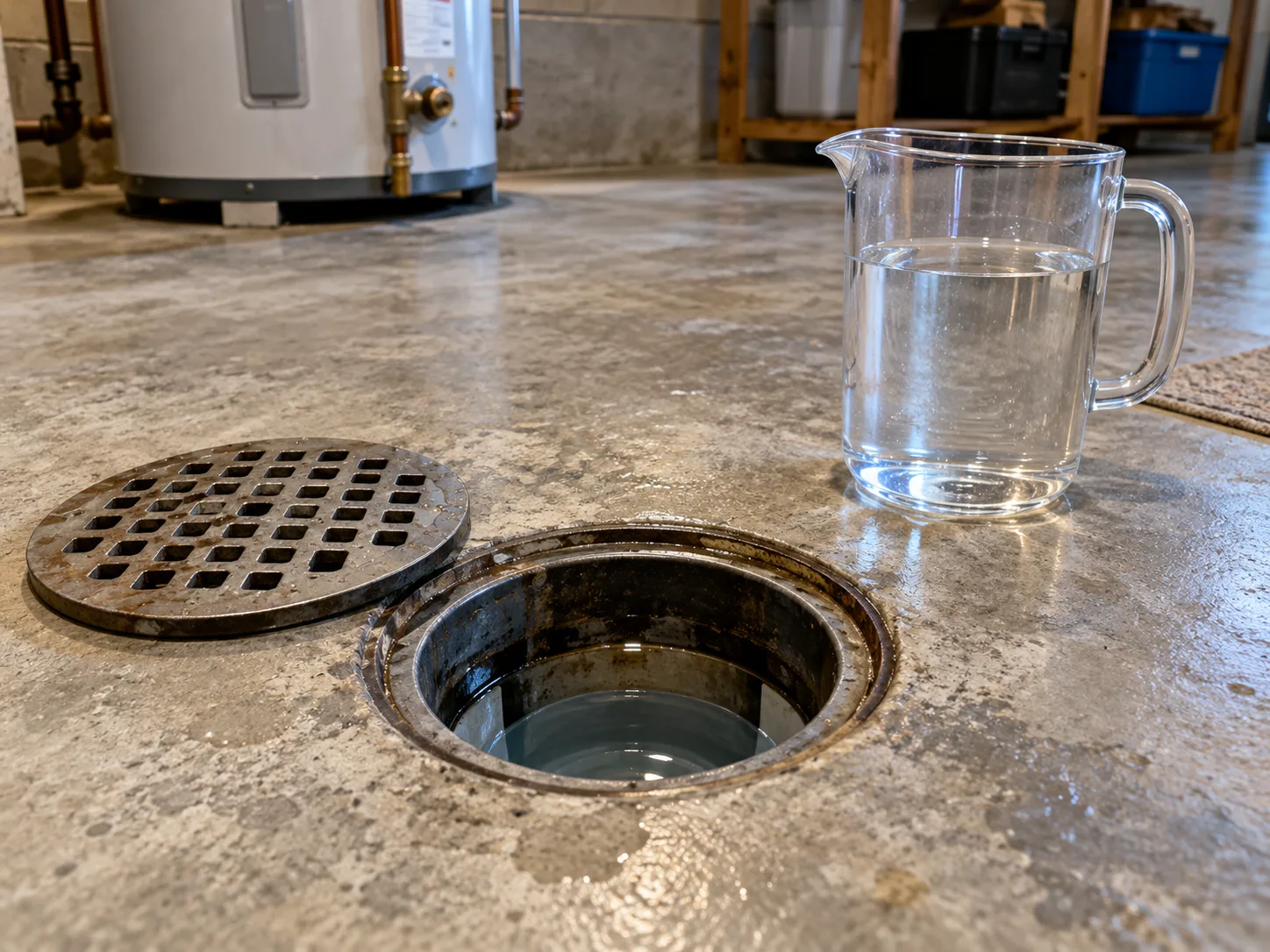
Floor drains are easy to overlook because they may sit in a basement, laundry room, garage, utility closet, or mechanical room and remain unused for months. Their traps are typically below the drain opening or floor slab, so you cannot visually inspect the bend from above. A floor drain may also be an emergency route for water; do not cap, plug, or permanently block it just because it is seldom used.
Toilets and Washing Machines
A toilet’s internal trapway is the built-in curved channel through which flushed water travels. The water visible in the bowl is part of that fixture’s seal. There is no separate P-trap tucked behind the toilet that a homeowner should add; an extra trap on a toilet drain can create a poor double-trap arrangement and interfere with flushing.
A washing machine typically empties through a standpipe, with its trap hidden in or below the wall where the standpipe connects to the drain system. The standpipe itself gives the washer hose an air gap rather than sealing the hose airtight into the pipe. If a laundry drain smells or overflows, the issue may be the trap, a blocked or improperly sized drain, a vent, or hose placement; avoid pushing the washer hose deep into the standpipe or sealing it with tape.
What a Drain Trap Does—and Does Not Do
The trap’s main purpose is odor and gas control through a water seal. It is also a convenient access point in many under-sink installations, which is why it sometimes catches a ring, earring, bottle cap, or clump of hair. That secondary effect is useful when something drops into a sink, but it is not the reason the trap is there and should not be treated as a reliable debris filter.
A drain strainer catches larger solids before they enter a pipe; a trap holds water and may incidentally retain some material. Grease, coffee grounds, lint, soap residue, hair, and food scraps can collect there and restrict flow. The trap does not digest waste or make it safe to send unsuitable material into the sewer. For kitchen sinks, a strainer and proper disposal habits prevent more buildup than relying on a trap to collect it.
Why Traps May Catch Rings and Debris
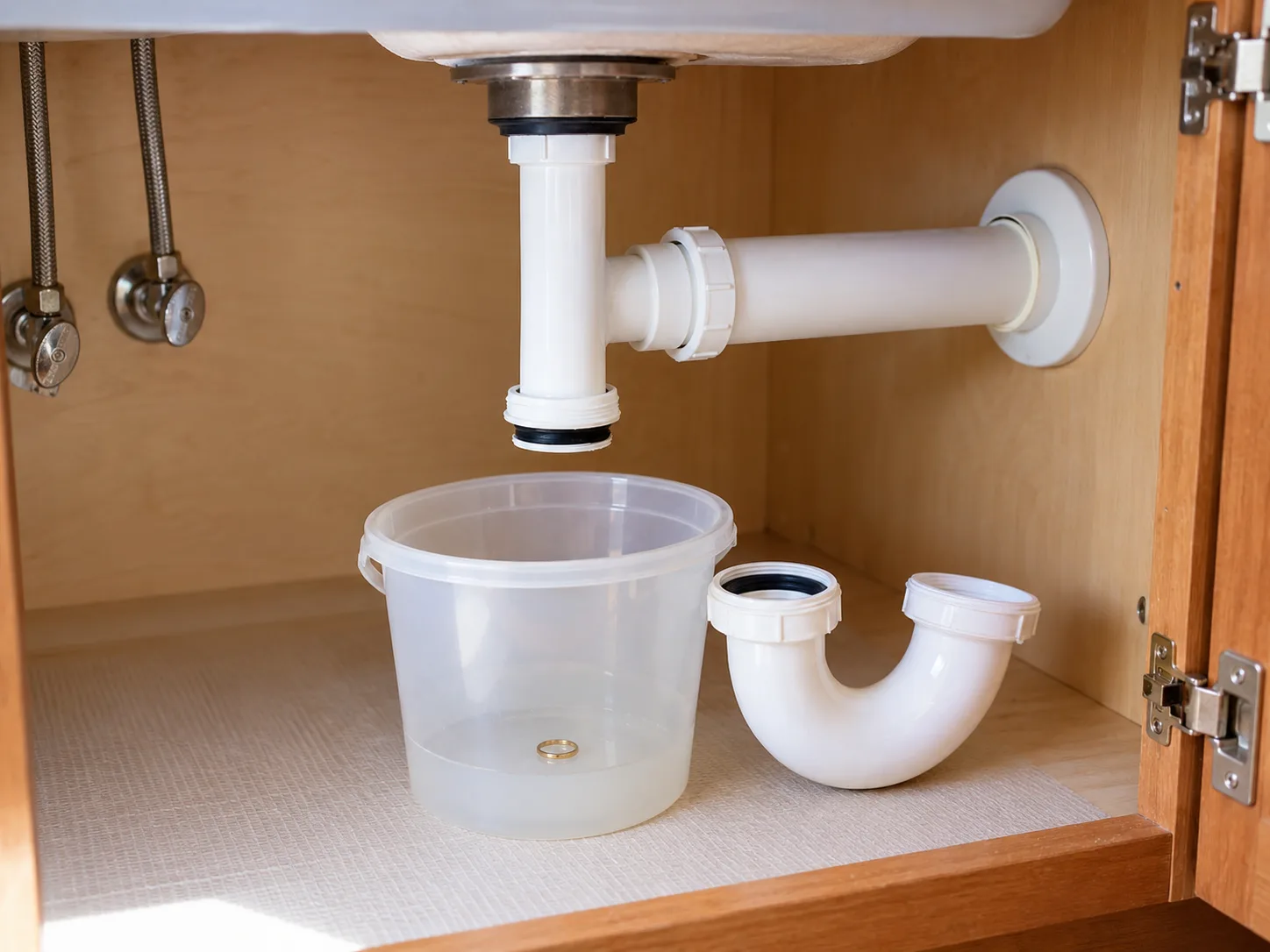
Because the trap’s curved bottom retains water, a dropped small object can settle there instead of traveling farther into the drain. If you lose jewelry down a sink, stop using the fixture so additional water does not carry it downstream. Look beneath an accessible sink and decide whether you are comfortable removing a slip-joint trap; keep a bucket under it, protect the cabinet, and do not dismantle a corroded, glued, or unfamiliar assembly.
The same shape can catch debris that moves through the drain. If a sink is slow, that material may be the cause, but the clog can also sit in the tailpiece, drain arm, vent, or branch line. A trap that is clean once does not explain a clog that quickly returns. Repeated blockages, backups in more than one fixture, or gurgling after the trap is clear call for a broader drain inspection.
P-Traps, S-Traps, and Other Designs
The P-trap is the common modern fixture-trap arrangement under sinks and many other fixtures. From the side, the pipe drops into a U-shaped bend, then continues horizontally toward the wall. The horizontal outlet gives the trap a different layout from an S-trap, whose pipe continues downward after the bend. That downward continuation can encourage siphoning and pull water out of the seal.
The 2024 International Plumbing Code lists S-traps among prohibited fixture traps, along with certain bottle and drum designs, while providing exceptions for specialized uses. This model-code language is a useful reason not to copy an old arrangement during a replacement, but it is not a substitute for local code: older installations, special equipment, and jurisdiction-specific amendments can differ. If you find an S-shaped pipe, a deep drum-like fitting, or more than one trap in series, have a licensed plumber evaluate the vent and drain before replacing parts.
| Arrangement | What it generally looks like | Practical takeaway |
|---|---|---|
| P-trap | U-shaped bend followed by a horizontal outlet | Common serviceable fixture trap; the outlet and vent arrangement still matter |
| S-trap | Bend followed by a pipe that drops again | Can siphon its seal; do not install a new one without code-compliant professional guidance |
| Integral trapway | Curved passage built into a fixture, such as a toilet | The fixture provides the trap; avoid adding a second trap downstream |
| Bottle or drum trap | Bulb-shaped chamber or canister-like fitting | May occur in older or specialty installations; serviceability and code status vary |
| Trap primer | Device or approved arrangement that adds water to a low-use trap | Protects a seal from evaporation; it is not a different type of fixture trap |
Some plumbing references use regional labels such as Q-trap or house trap for specific configurations. Those labels do not change the central principle: the trap must preserve a water seal while letting wastewater drain, and the venting and downstream piping must support that seal. Avoid choosing or modifying fittings by name alone; show the existing layout to a plumber who knows the local code.
What Happens When a Trap Dries Out
Water in a rarely used trap can evaporate. The risk is highest at a floor drain, guest-bath fixture, utility sink, shower, or other drain that sees little regular flow. A hot or dry room, moving air across the drain, and a long vacancy can shorten the time before a seal weakens, but there is no reliable universal calendar for every home. A dry trap may allow a sewer-like odor into the room because the water barrier is gone.
The first clue is often an odor near a drain that has not been used. North Dakota’s Department of Environmental Quality guidance on sewer gas lists a dry trap in a rarely used drain and plumbing leaks as common causes, and recommends checking low-use drains and refilling a dry trap with water. A persistent or widespread odor, visible plumbing damage, or an odor that returns after a trap has been refilled needs more diagnosis than simply adding more water.
How to Tell a Dry Trap from a Bigger Problem
Start with the simplest safe check: identify drains in or near the smelly room, especially floor drains and fixtures that are rarely used. Run water in a sink or shower, flush a toilet, or pour water into a floor drain to restore its seal. If the odor fades and stays gone, evaporation may have been the cause. If it comes back within hours or days, the trap may be losing water through siphonage, a leak, or an unusual system layout.
Use the pattern of symptoms rather than the smell alone. A single unused floor drain that improves after adding water points toward evaporation. Gurgling, slow drainage, or a trap that empties when another fixture runs can point to venting or drainage pressure. A smell around a cabinet, dampness, or corrosion suggests a leaking joint or pipe. A drain that smells only after water runs may have residue in the drain opening or overflow, or a venting issue; the trap is not automatically the culprit.
| What you notice | A reasonable first check | If it continues |
|---|---|---|
| Odor at a seldom-used floor drain | Add water to the drain to rewet its seal | Ask whether a trap primer or approved seal-protection device is appropriate |
| Odor after a long vacancy | Refill low-use traps throughout the home | Check for leaks or a trap that will not retain water |
| Gurgling or slow flow at several fixtures | Note which fixtures are affected and when | Have a plumber inspect venting and the drain branch |
| Odor plus visible dampness beneath a sink | Avoid using the sink if water is leaking | Repair the leaking joint or damaged pipe; dry the cabinet |
| Odor that stays after every suspect drain has water | Do not keep pouring cleaners down each drain | Arrange a plumbing inspection for vent, joint, or sewer-line defects |
Do not lean over an opening or enter a crawlspace, pit, or sewer area to investigate an odor. Hydrogen sulfide can be one component of sewer gas; ATSDR’s hydrogen-sulfide guidance explains that odor is not a reliable measure of concentration because people can lose the ability to smell it at higher levels. If an odor is strong or widespread, or anyone develops eye or throat irritation, dizziness, nausea, or breathing difficulty, leave the area and contact local emergency services or the appropriate utility; do not keep troubleshooting by smell.
How to Refill and Maintain a Rarely Used Trap
For a dry but otherwise intact drain, water is the usual first step. Run the fixture long enough to refill the trap, or pour water slowly into a floor drain. A toilet’s bowl seal is restored by flushing. If your municipality gives a specific amount before sewer work, follow that notice: for example, the City of Toronto’s smoke-testing preparation guidance asks residents to pour 1 to 2 liters into each drain before a scheduled test so traps have a water barrier.
Make a short home check rather than treating the entire plumbing system at once. Walk through the home and list drains that do not get used during a normal week: basement floor drains, guest bathrooms, spare showers, utility sinks, and rarely used tubs. Add water to each; then note whether a particular drain dries again or the odor persists. That record gives a plumber a useful clue about whether the problem is evaporation, a failing seal, or pressure from another fixture.
For floor drains, the City of Minneapolis sewer maintenance tips recommend pouring a bucket of water down each floor drain once a month to keep it working. That is municipal homeowner guidance, not a universal code interval, so adjust for how often the drain is used and follow local advice. Do not pour in cooking oil, concentrated cleaners, or an improvised chemical mixture as a substitute for a trap primer; the water seal is the thing that blocks gas, and unapproved additives can create a separate maintenance or drainage issue.
When a Trap Primer or Waterless Seal Makes Sense
A trap primer automatically supplies a small amount of water to a seldom-used trap. It can make sense in a basement, mechanical room, or other location where water evaporates between uses, especially if the drain needs to remain available for an emergency. The 2024 IPC calls for trap-seal protection where a seal is subject to evaporation, but requirements and approved methods vary by jurisdiction and installation type.
Some drains can use a listed waterless trap-seal device or another code-approved protection method. These devices are not interchangeable with every drain, and they should not be used to block a drain that must carry water in an emergency unless the product and local rules allow it. Ask a plumber to choose the method for the drain and code; do not make a permanent cap from plastic or tape. If you are leaving a home vacant, refill low-use traps before departure and ask about a proper primer or seal-protection device when the odor has happened more than once.
Safe P-Trap Cleaning and Clog Checks
An accessible, plastic slip-joint trap under a sink may be straightforward to clean, but removing it is optional—not required just because a trap exists. Start by clearing stored items from the cabinet, placing a bucket directly under the bend, and taking a photo of the assembly so you can restore its orientation. Put on gloves and eye protection; standing trap water can be dirty, and fittings may be brittle or cross-threaded.
If you are comfortable, loosen the slip nuts by hand and remove only the accessible trap bend. Empty its contents into the bucket or trash, clear debris with a small brush, and inspect the washers and threads. Reassemble the same parts in the same direction, hand-tighten the slip joints, and run water while checking every connection for drips. If a washer is split, the plastic is cracked, or the pipe will not align without force, stop and replace the right parts or call a plumber rather than tightening until something breaks.
Do not open a trap after using a chemical drain cleaner unless the product label explicitly says the pipe is safe to open and you have followed its precautions. A caustic liquid can remain in the trap and splash onto skin or eyes when a fitting comes apart. This Old House’s current sink-clog guidance warns that drain-opening work after chemicals can expose a homeowner or plumber to serious burns. If you have already poured a product down the drain, tell the plumber what it was and when it was used.
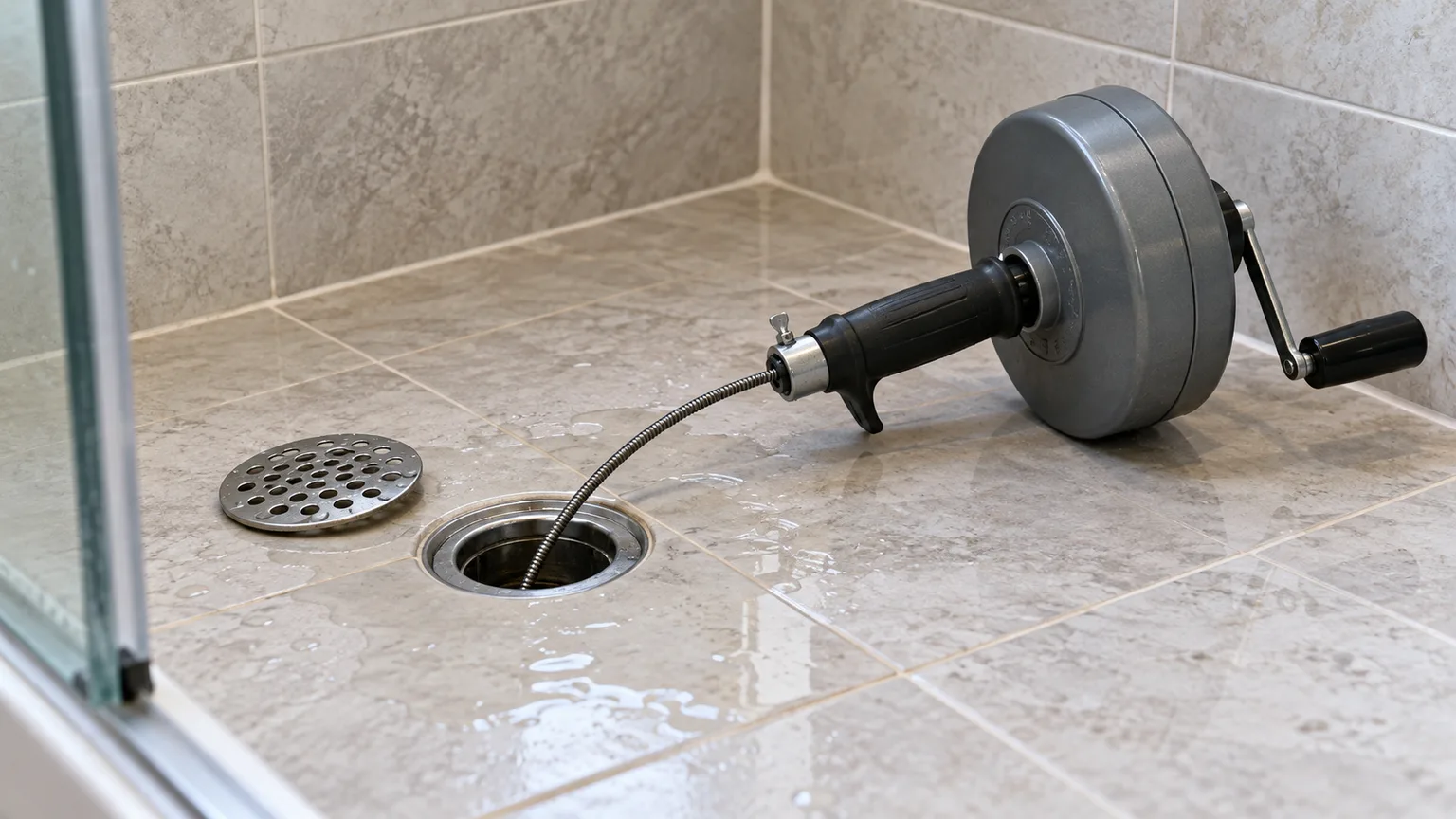
Cleaning the trap only solves a clog located there. If water still drains slowly after the bend is clear, the blockage may be farther down the branch or related to venting. Do not ram a snake through a fragile, corroded, or unusual assembly, and do not keep adding chemical products. A sink that backs up into another fixture, or several fixtures that slow at once, is a sign to stop fixture-level troubleshooting and get the drain line checked.
When to Call a Plumber
Call a licensed plumber when a sewer-like odor returns soon after you refill the drain, when more than one fixture gurgles or drains slowly, when a trap is leaking or visibly damaged, or when wastewater backs up. A plumber can distinguish a dry seal from a bad fitting, blocked vent, improper trap arrangement, or main-line issue; those causes can produce overlapping symptoms but need different repairs. If you see an S-trap, doubled traps, old drum-style plumbing, or a trap hidden behind a wall, have the layout assessed before replacing it.
For a single trap that went dry after months of nonuse, adding water and monitoring it is a reasonable first check. For a repeat problem, document which drain was unused, whether another fixture was running, and how quickly the smell returned. Avoid cutting into ceilings, floors, or walls to find a tub trap, and do not cap a floor drain that could be needed to carry water. The right repair depends on the whole system and the code your area has adopted.
Treat strong or widespread sewer odors and symptoms such as breathing difficulty, dizziness, or eye irritation as an indoor-air concern, not a routine clog. Leave the space and contact local emergency services or the appropriate utility if anyone feels unwell. Never enter a sewer, manhole, pit, or other confined space to inspect a trap or pipe; those settings require professional monitoring and equipment.
Conclusion
The purpose of a drain trap is to hold a small water seal between a fixture and the drainage system. That seal blocks sewer gas from using the drain as an open path into a home, while a properly vented pipe lets wastewater flow away. A P-trap under a sink is the easiest example to spot, but traps may also be hidden under showers, built into toilets, or placed below floor drains and laundry standpipes.
If a rarely used drain smells, refill it with water and see whether the odor stays gone. A recurring smell, gurgle, slow drain, leak, or backup deserves a plumbing diagnosis because a dry trap is only one possible cause. Keep the water seal intact, leave unfamiliar or hidden plumbing alone, and use a plumber when the problem points beyond a simple evaporated trap.