13 Best Trees for Patios: Pots and Small Yards
Choose a small patio tree for shade, flowers, privacy, or fruit. See which trees suit containers, which need soil, and how to avoid root and cleanup hassles.
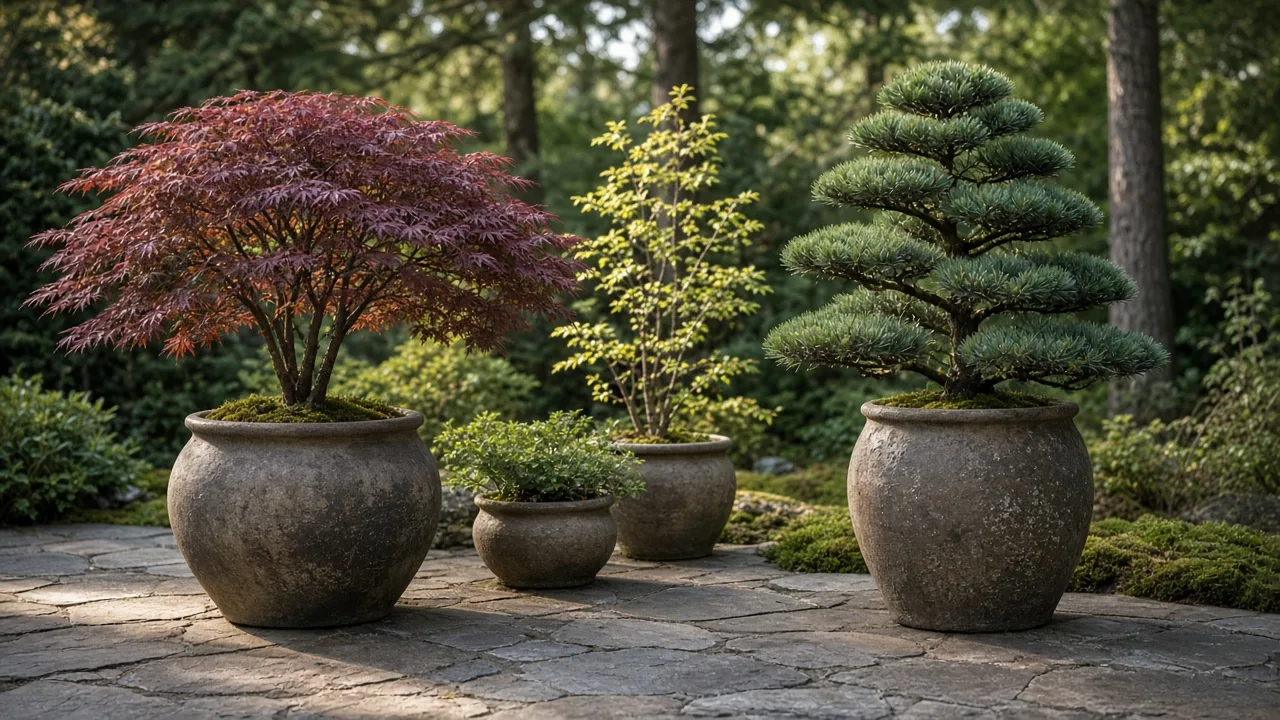
A patio tree can soften a paved courtyard, frame a doorway, offer a little dappled shade, or put citrus within reach. The right choice depends first on where it will grow: a tree in a planter has different limits from one rooted in a planting bed beside the patio.
Use the table to narrow the list, then check the individual notes before buying. “Dwarf” on a nursery tag is not a promise that a tree will stay tiny; confirm the named cultivar’s mature height and width, and leave room for the shape it will actually make.
| Tree | Best patio use | Best placement | Plan for |
|---|---|---|---|
| Japanese maple | Fine foliage and seasonal color | Large pot or sheltered bed | Afternoon heat and wind can scorch leaves |
| Kumquat | Fragrant flowers and edible fruit | Sunny, movable container | Frost protection and dropped fruit |
| European fan palm | Evergreen, architectural form | Warm, sheltered patio or sturdy pot | Slow growth, broad leaves, and sharp leaf stalks |
| Flowering crabapple | Spring blossom and wildlife | In-ground bed with a compact cultivar | Fruit, petals, and cultivar-dependent size |
| Flowering cherry or plum | A short spring flower show | In-ground, with canopy room | Petal and fruit litter; disease pressure varies |
| Dwarf mugo pine | Year-round green structure | Sunlit bed or large pot | Some “dwarf” forms grow wider than expected |
| Smoke tree | Purple leaves and summer plumes | In-ground, away from paving | Broad mature spread and seasonal leaf drop |
| Sweet bay laurel | Clipped evergreen form and leaves for cooking | Container near an entrance | Cold protection and pet toxicity |
| Dwarf crape myrtle | Long summer bloom in warm climates | Sunny bed or large container | Flowers can stain nearby paving |
| Chaste tree | Fragrant summer flowers and pollinators | Sunny bed with open space | Fruit litter, reseeding, and local invasiveness |
| Fig | Large leaves and edible fruit | Sunny pot or roomy warm-climate bed | Winter protection and fallen fruit |
| Olive | Silver-green evergreen foliage | Sunny, sheltered container or bed | Cold, wet roots, and possible fruit drop |
| Serviceberry | Spring flowers, berries, and fall color | In-ground bed set back from paving | Birds take fruit; berries can stain below |
Two commonly suggested patio plants need a closer look. Wisteria trained upright is still a woody climbing vine, and UF/IFAS lists Chinese and Japanese wisteria as invasive, high-risk growers that can overtake other plants; it is a pergola vine, not a low-maintenance small tree. Bradford pear is also a poor patio choice: Callery pear cultivars can cross-pollinate and seed into natural areas. If you consider any pear or wisteria, check the exact botanical name and your local invasive-plant list first. UF/IFAS identifies invasive Asian wisteria, and the U.S. Invasive Plant Atlas documents Callery pear.
How to choose a patio tree
The best tree for a patio is the one that fits the site after it reaches its mature size. Decide whether you need a movable container plant, a small tree planted in a bed, or a leafy canopy over a seating area; those are three different jobs, and no single species does all of them equally well.
Decide between a container and an in-ground planting
Choose a container when you need portability, want to garden on a balcony, or are growing a tender tree that must move to shelter in winter. A pot also limits root space, but that does not turn any large tree into a permanent dwarf: a vigorous tree can become root-bound, dry out quickly, lean in wind, and need repeated root renewal. The Royal Horticultural Society’s guide to growing trees in containers recommends compact choices, drainage, regular watering, and attention to crowded roots; it also notes that a container tree may need protection because its roots are more exposed to freezing than roots in the ground.
For a tree planted beside patio paving, start with the mature spread and put the trunk far enough away that the canopy and roots have space beyond the edge of the seating area. A tree planted in a bed can grow larger and provide more shade than one in a pot, but its fallen fruit, flowers, or leaves may land where people walk. If the patio is on a balcony or roof terrace, check its load rating before placing a large, wet planter there; large containers are heavy even before a tree fills them.
Match sunlight, mature spread, and cleanup to the space
Track the light over a full day rather than guessing from the patio’s compass direction. Full-sun flowering and fruiting trees need several hours of direct light; a Japanese maple is more comfortable in bright filtered light or gentle morning sun. Wind, reflected heat from walls, and a pot’s material can make a patio much hotter or drier than the surrounding yard.
Decide what “low mess” means for your household. Fruit attracts birds and can soften or stain on paving; spring petals are brief but plentiful; evergreen trees still drop some leaves, needles, or cones. The RHS container-tree list highlights naturally compact Japanese maples, olives, bay, dwarf conifers, and restricted fruit trees. The BBC Gardeners’ World list of trees for pots also emphasizes tree forms and cultivars that suit a container instead of assuming any small nursery plant will remain small. For a patio planting, the cultivar and the position matter as much as the species name.
13 patio tree choices
1. Japanese maple
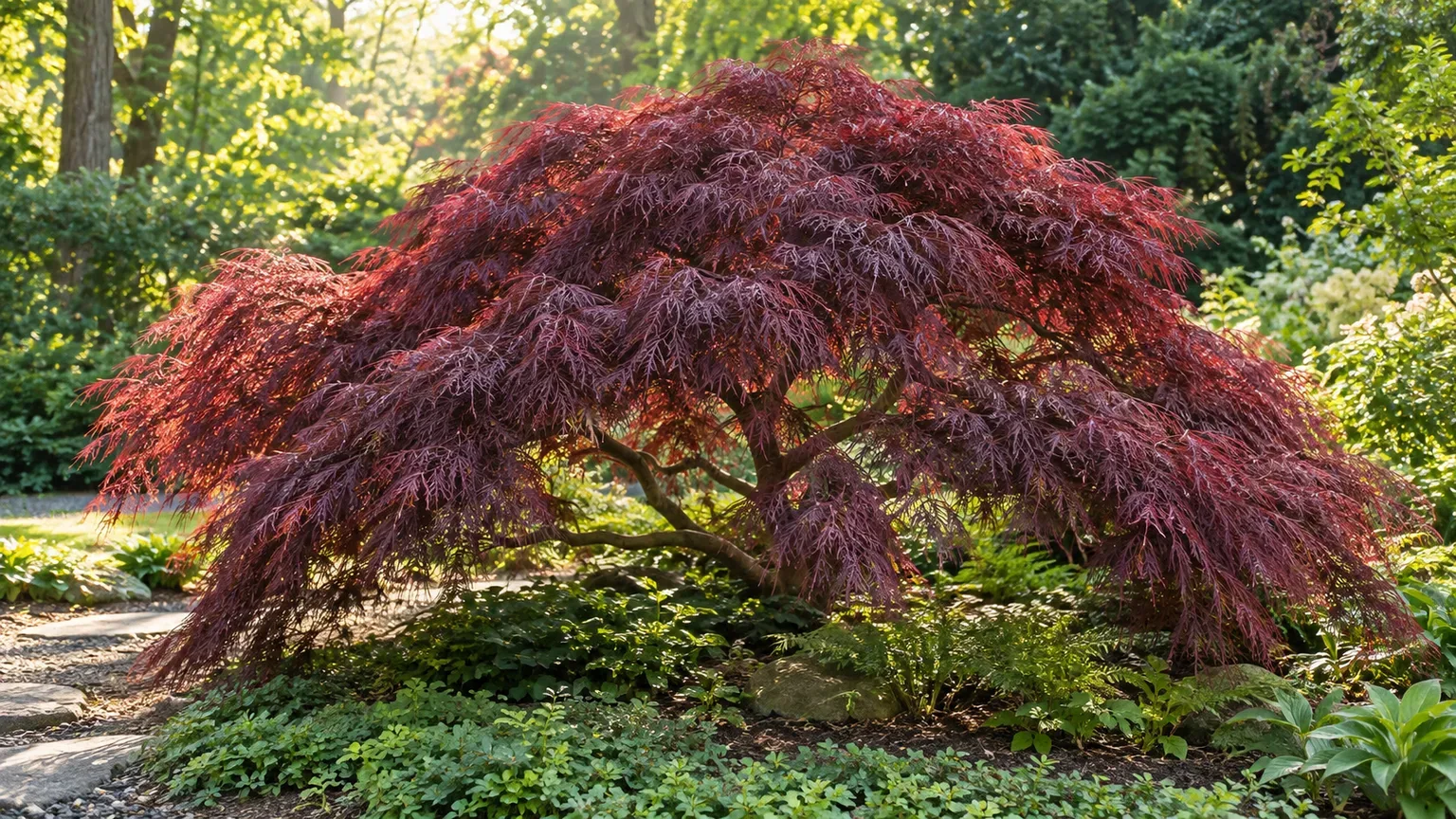
Japanese maple (Acer palmatum) is the strongest all-round choice when you want sculptural form and color rather than deep shade. It suits a large container or a protected bed, and its foliage gives a patio a focal point from spring through fall. Choose a named slow-growing or compact cultivar, such as a laceleaf form, instead of expecting a standard seedling to remain small.
Give the tree morning sun or dappled light and shelter it from hot, drying afternoon wind. The North Carolina Extension Gardener Plant Toolbox describes Japanese maple as slow-growing and lists dappled light and moist, well-drained soil among its growing conditions; it also documents a much larger possible size for the species than many buyers expect. Read the NC State Japanese maple profile and the nursery’s cultivar label together. In a pot, keep moisture even, but let excess water drain rather than leaving the root ball saturated.
2. Kumquat
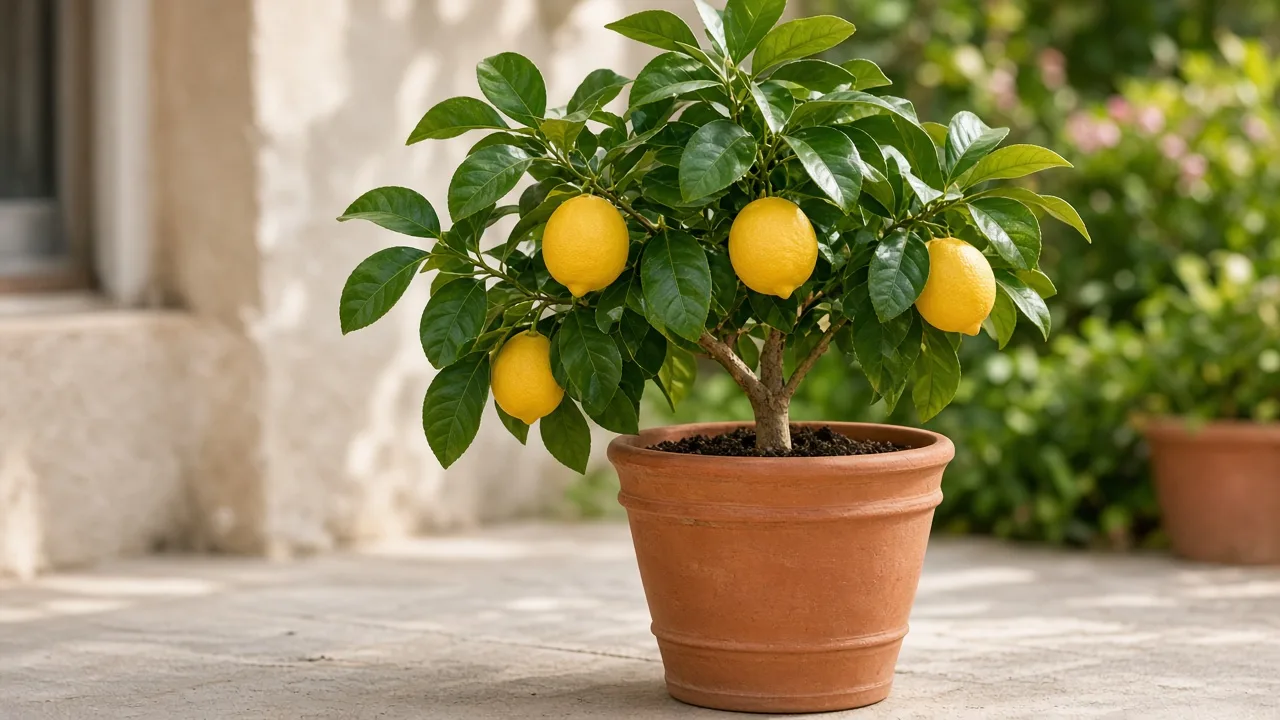
Kumquat (Citrus japonica) is a compact citrus option for a bright, sunny patio. The glossy leaves, fragrant white flowers, and small orange fruit give it more than one season of interest, and a container makes it possible to protect the tree when winter gets too cold. The fruit is edible, but a tree’s ability to set a reliable crop depends on light, warmth, and healthy growth—not simply on the fact that it flowered.
Use a pot with drainage holes and move the tree outdoors gradually in spring so indoor-grown leaves are not suddenly exposed to full sun. In a cold climate, plan for a bright, cool, frost-free winter location before purchasing; a dark room is not a substitute for winter care. University of Minnesota Extension’s citrus guidance includes kumquat among the citrus that can be grown in pots, but also cautions that flowering does not guarantee fruit indoors. Remove fallen fruit before it becomes soft on the patio.
3. European fan palm
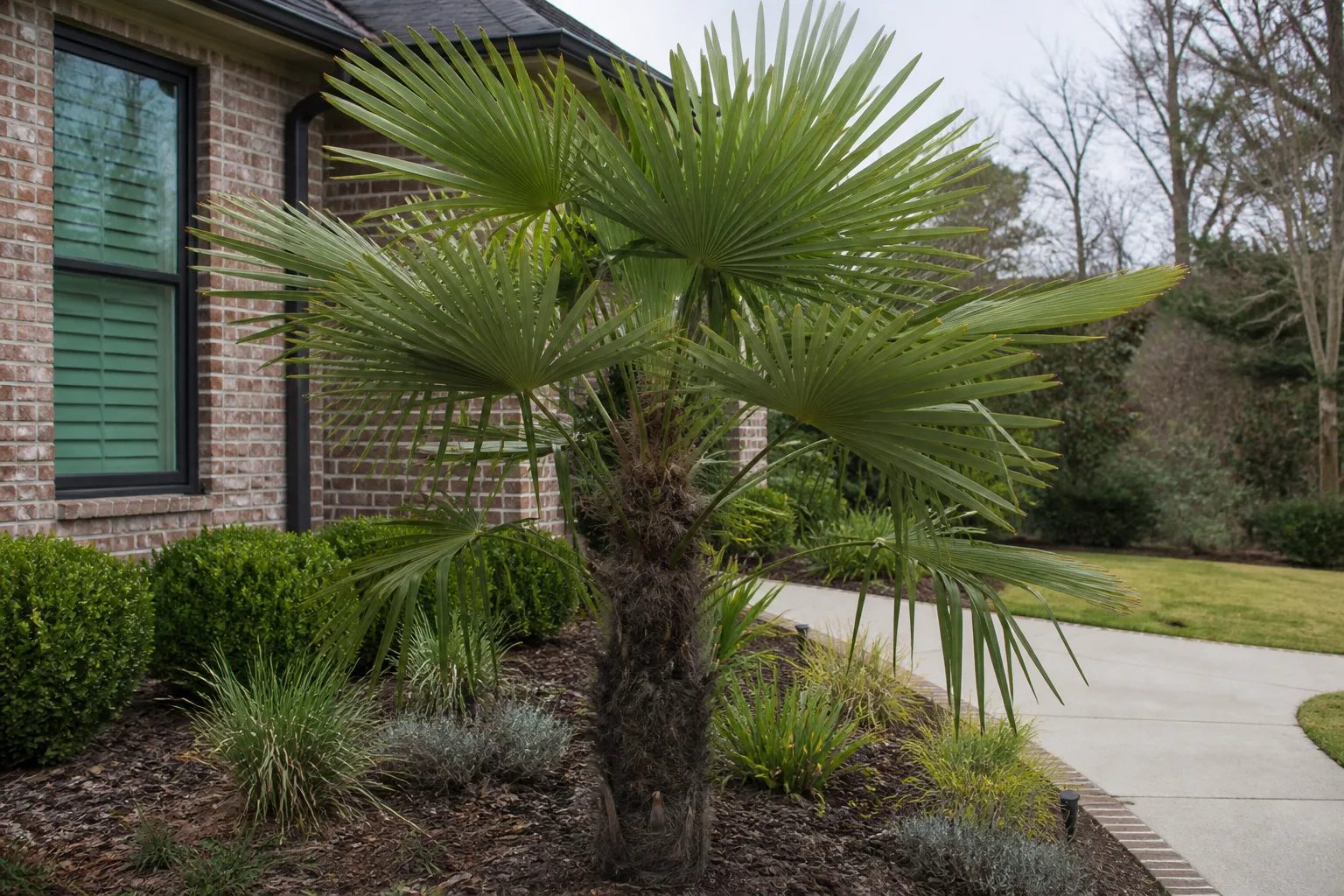
European fan palm (Chamaerops humilis) supplies evergreen, fan-shaped leaves and a distinctly Mediterranean silhouette. It can work as a slow-growing patio specimen in a sheltered warm-climate garden or in a substantial container. The Royal Horticultural Society lists it for courtyard and container settings and gives a mature range of about 5 to 8 feet tall, with a spread of roughly 3 to 5 feet.
This is not a good choice beside a narrow walkway where stiff leaf stalks will brush people. Give the pot excellent drainage and winter shelter where the roots may freeze; cold tolerance depends on the plant’s exposure and whether it is in the ground or a container. The RHS fan-palm profile is a useful check before buying because “fan palm” covers species with very different sizes and cold limits.
4. Flowering crabapple
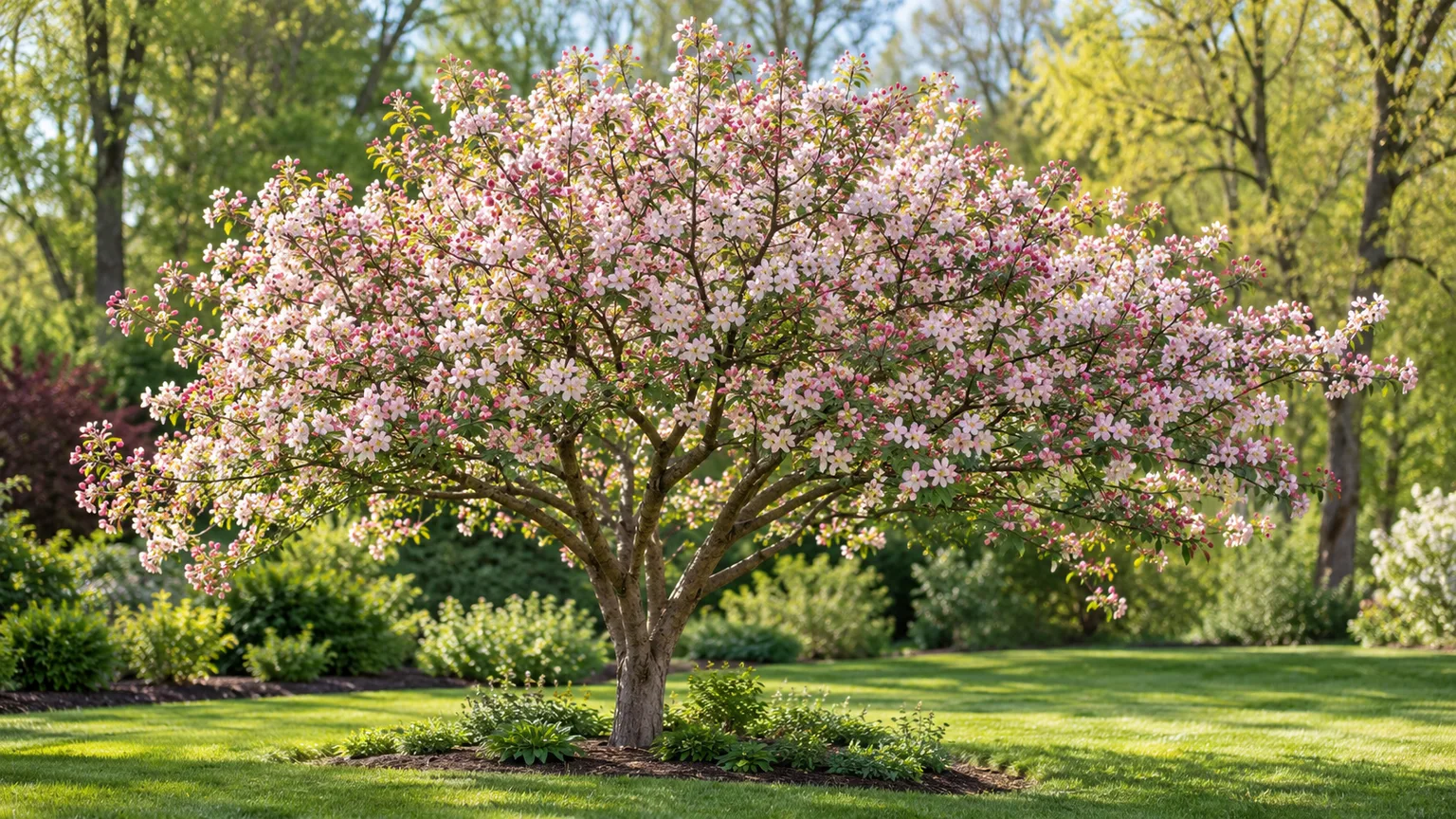
Flowering crabapple (Malus) is best for a patio bordered by a real planting bed, where a compact cultivar can bring spring flowers, summer foliage, and small fruit that birds may eat. Look for a named dwarf or columnar selection with a documented mature spread. The genus includes trees of very different sizes, so “crabapple” by itself is not a size guarantee, and most are more practical in the ground than in a patio pot.
Place it where fallen fruit will not be crushed underfoot, and ask the nursery about disease resistance for your region. Crabapple fruit may persist into winter on some varieties, while other cultivars drop it sooner; that difference can determine whether a specimen belongs beside a walkway or farther back in the garden. North Carolina Extension’s crabapple profile describes the broad size range and notes that dwarf and columnar forms are available.
5. Flowering cherry or plum
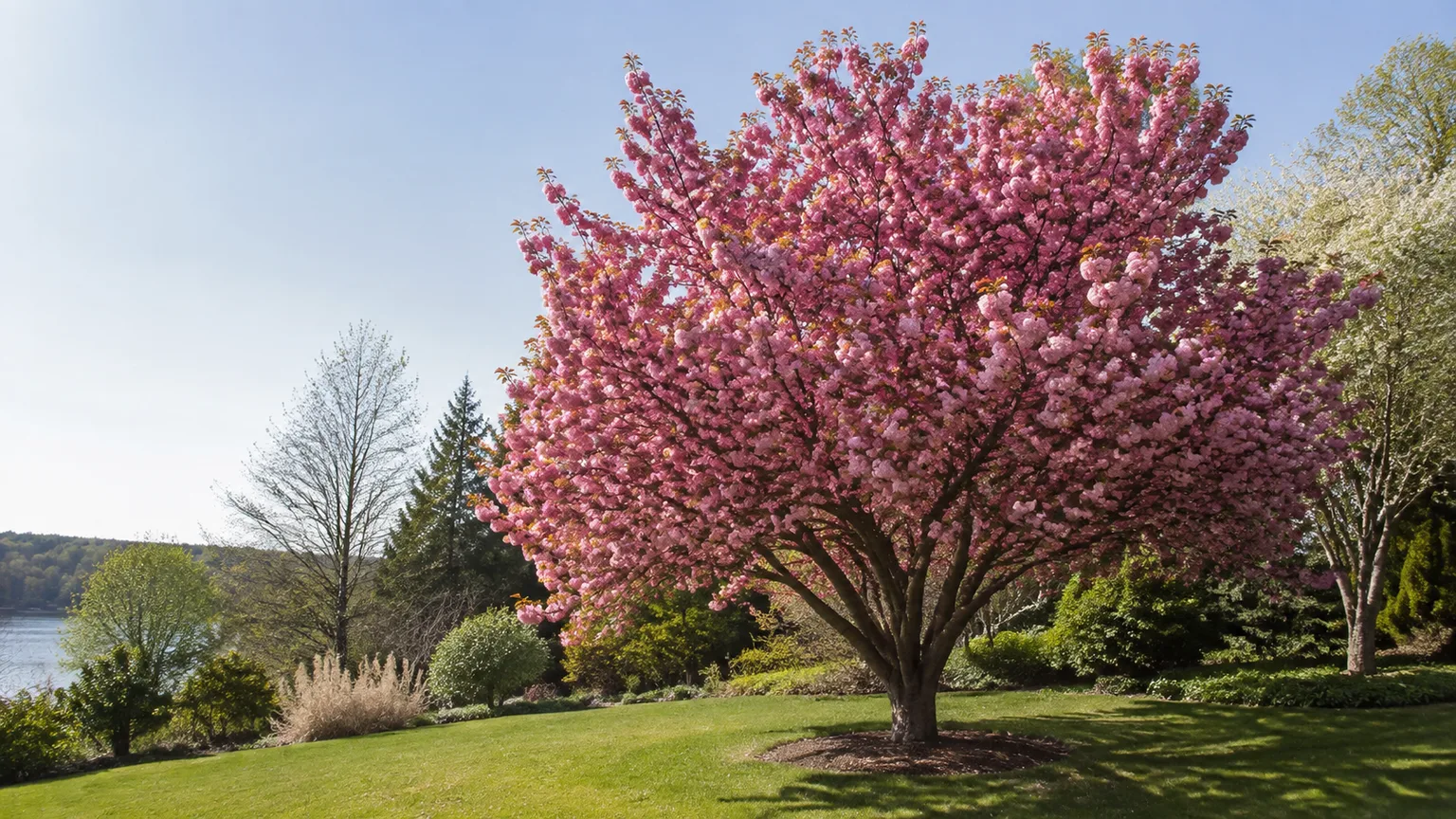
An ornamental cherry or plum is a good pick if a few weeks of spring bloom matter more than year-round foliage. Choose a small cultivar with a mature size that fits the bed, and use it as a focal tree where you can enjoy the flowers without expecting them to last all season. These trees are usually better planted in the ground than kept indefinitely in a pot.
The trade-off is cleanup: petals can carpet paving soon after bloom, and some varieties also drop small fruits. Give the canopy space for airflow, especially in humid regions, and avoid planting over a tight seating area if slippery petals or fruit will be a nuisance. Check the botanical name, cultivar, and local performance before buying; “flowering cherry” is a broad group rather than one predictable tree.
6. Dwarf mugo pine
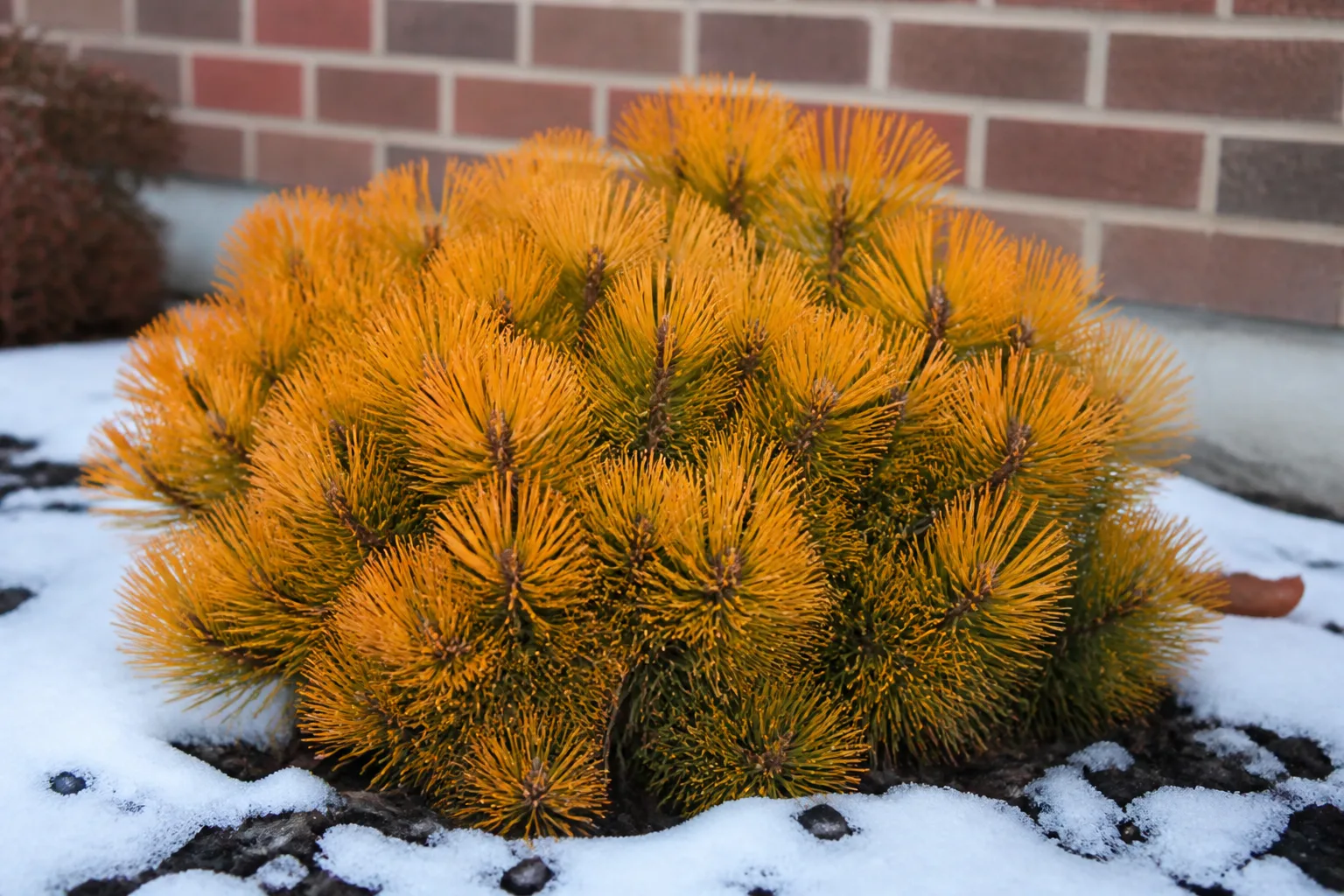
Mugo pine (Pinus mugo) is a useful evergreen when a patio needs structure in winter. Named compact cultivars can fit a large pot or a sunny border and require less seasonal cleanup than a fruiting tree. Look for a truly slow-growing selection such as ‘Mops’ or ‘Slowmound,’ then check the nursery’s stated mature width rather than relying on the word “dwarf.”
Many dwarf pines grow wider than they look when young. Give the branches room to spread, use a free-draining mix, and avoid treating repeated shearing as a substitute for choosing a compact cultivar. A pot can dry quickly in wind, but constantly wet roots can also damage the plant. If the patio is shaded most of the day, choose another option rather than forcing a sun-loving pine to stay dense in low light.
7. Smoke tree
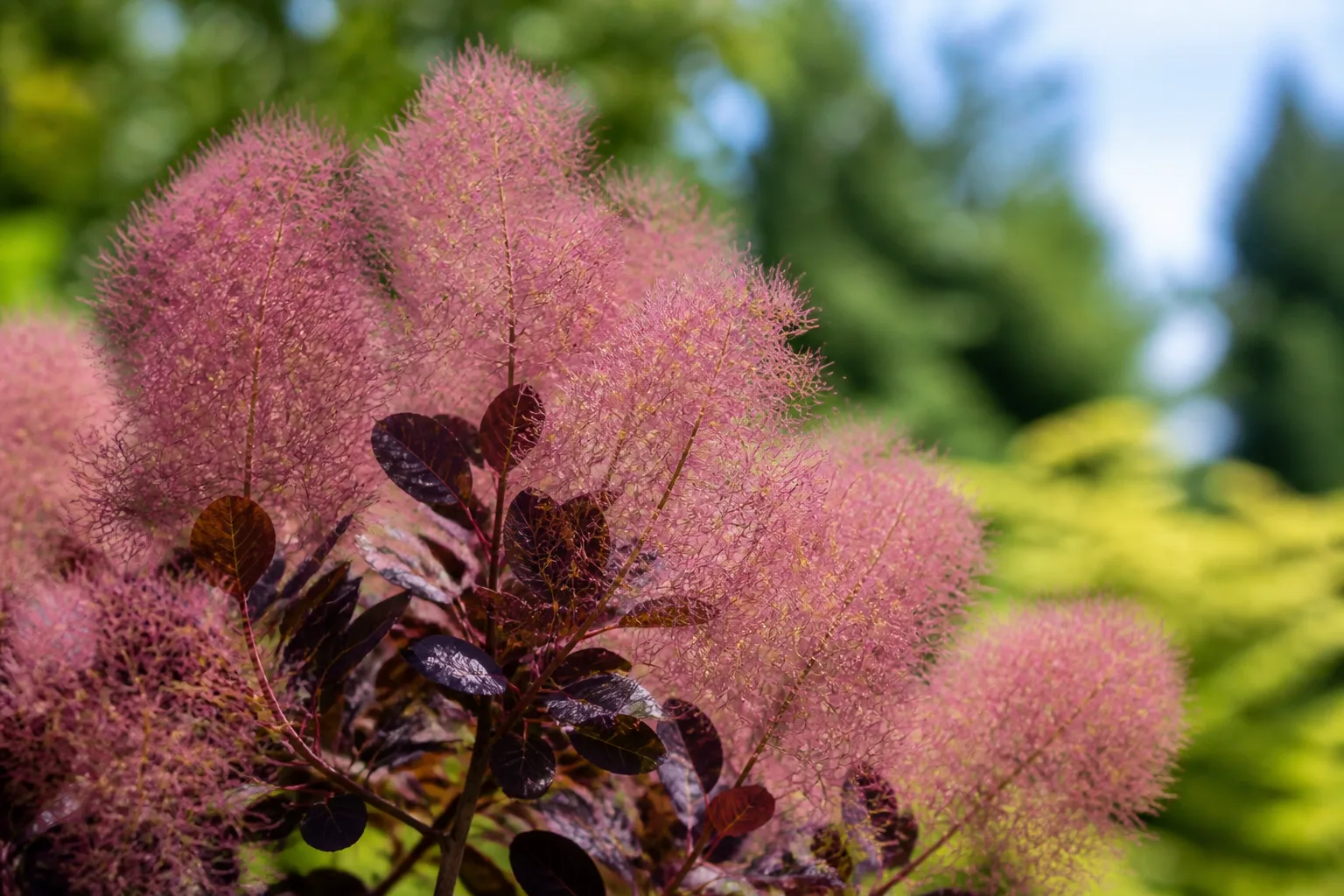
Smoke tree (Cotinus coggygria) is a strong in-ground accent for a sunny patio edge, especially if you want dramatic foliage rather than fruit. Purple-leaved cultivars such as ‘Royal Purple’ provide color through summer, while the airy flower stems create the smoky effect that gives the tree its common name. It is often sold as a shrub or small tree, and either form can be attractive when there is enough space around it.
Do not place the species beside paving just because it is called a small tree: it can reach roughly 10 to 15 feet in both height and width. The North Carolina Extension Gardener Plant Toolbox describes the plant as an upright, spreading shrub or small tree and notes that hard late-winter cutting can sacrifice that year’s plumes. See the NC State smoke-tree profile before selecting a cultivar. This is a better choice for a border a few steps from the patio than for a narrow path or a permanent pot.
8. Sweet bay laurel
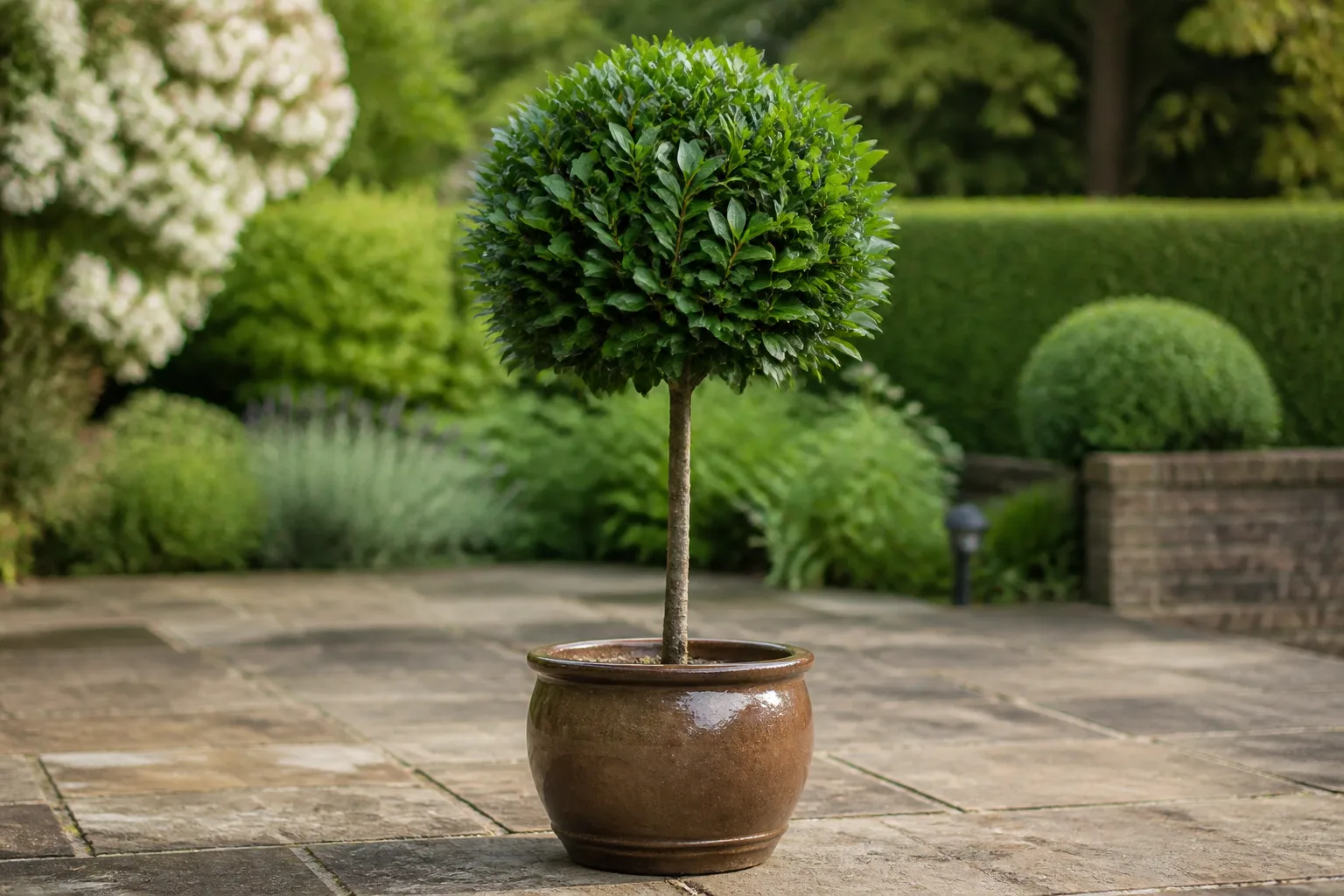
Sweet bay (Laurus nobilis) is a practical evergreen for an entrance or patio corner: its dense leaves can be clipped into a lollipop standard or left as a loose small tree, and the leaves can be used in cooking. A container gives you more control over its size and lets you move it to shelter in a cold winter. It prefers a bright position and soil that drains freely; do not leave the pot sitting in water.
Buy the true culinary bay and check the plant’s botanical name, since several unrelated plants are also sold under “laurel.” The ASPCA lists Laurus nobilis as toxic to dogs and cats, so skip it where pets chew foliage or fallen leaves; its bay-laurel safety entry names the species and reported signs. For a pet-friendly patio, choose another evergreen rather than relying on a common-name label.
9. Dwarf crape myrtle
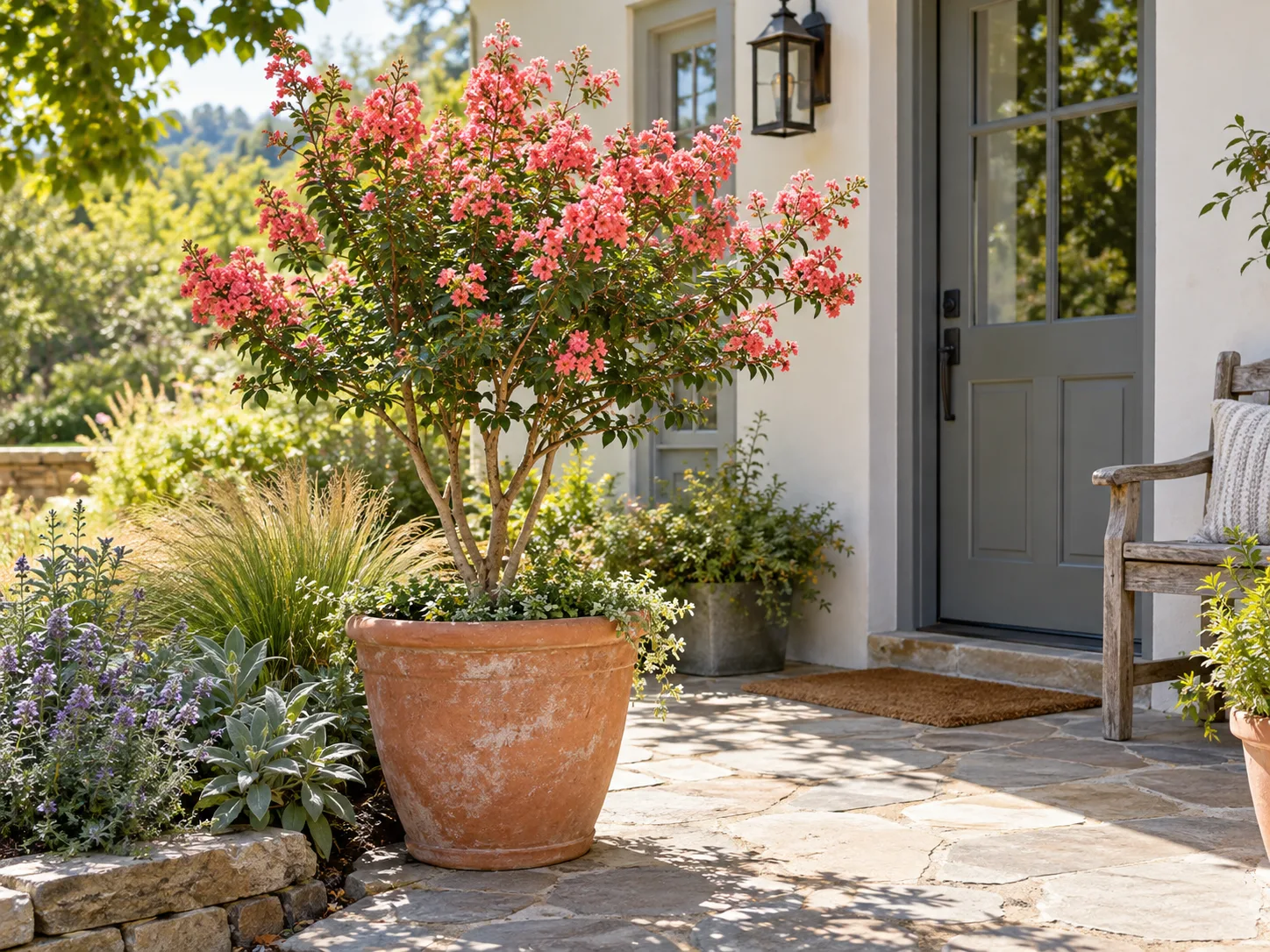
Crape myrtle (Lagerstroemia indica) brings summer flowers, colorful fall leaves, and attractive bark to a sunny patio. Compact cultivars such as ‘Pocomoke’ or ‘Petite Plum’ are more realistic for a large container than a standard tree, while bigger varieties belong in an in-ground bed with room for a full crown. Ask for the mature dimensions of the named cultivar instead of buying from bloom color alone.
Sun is essential for good flowering, and the tree should not need annual hard topping to fit the site. The North Carolina Extension Gardener Plant Toolbox lists compact cultivars as well as much taller crape myrtles, and warns that flowers can stain nearby walkways or car paint. Its crape-myrtle profile helps distinguish genuine miniatures from larger shrubs and small trees. Set the pot or planting bed where spent blooms will not become a slippery or stained traffic strip.
10. Chaste tree
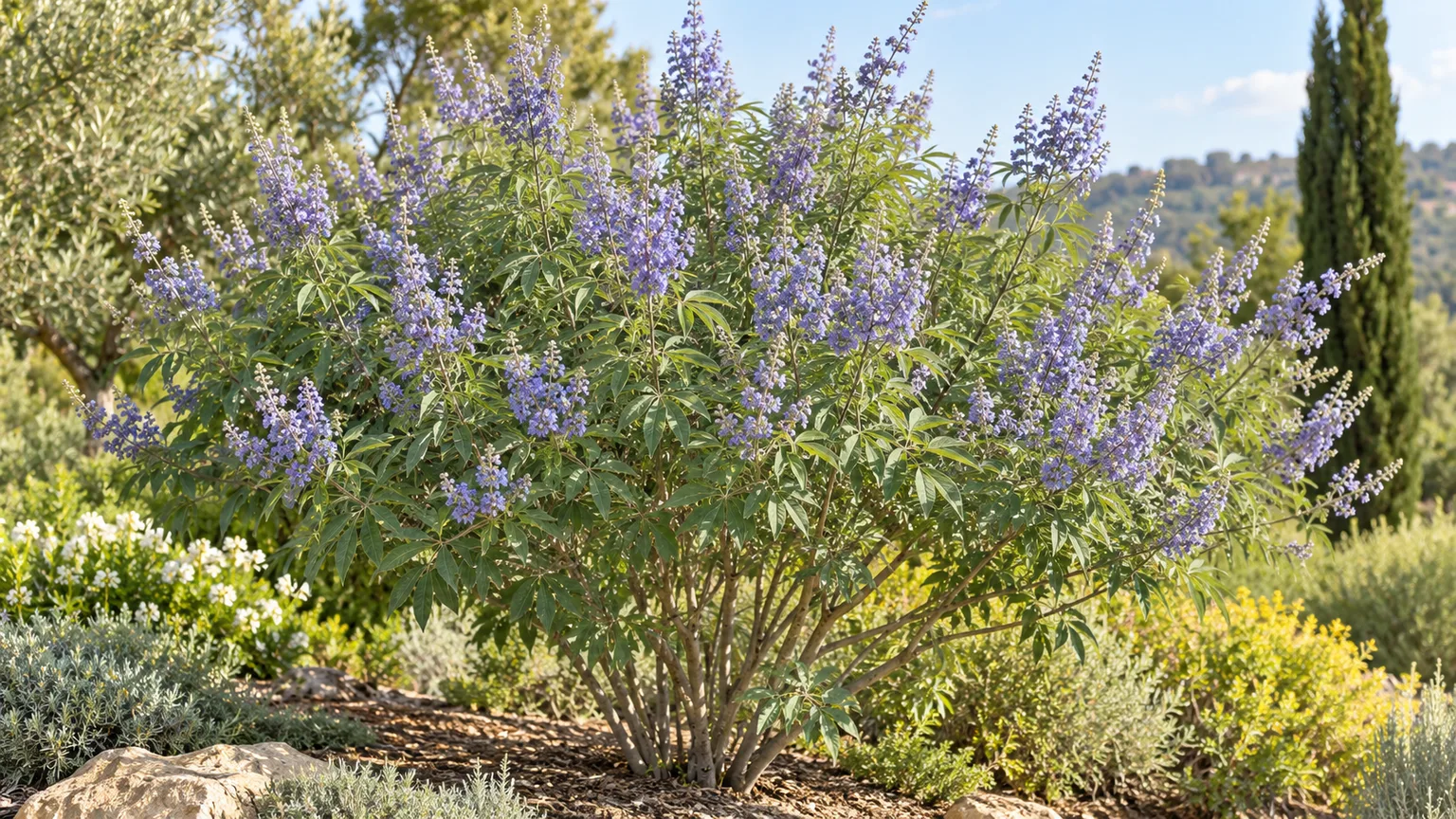
Chaste tree (Vitex agnus-castus) is a heat-tolerant choice for a sunny garden near the patio, where its fragrant summer flower spikes can attract pollinators. It is often trained as a small tree, but the species can grow much larger than a compact courtyard needs; smaller cultivars such as ‘Blue Diddley’ or ‘Blue Puffball’ are better for limited space. This is usually an in-ground choice, not a tree to keep small by crowding its roots in a pot.
The purple fruits can become litter, and the species reseeds freely in some settings. North Carolina Extension notes that size varies sharply by cultivar and that chaste tree has invasive potential in parts of the South. Check your local invasive-plant guidance before planting; the NC State chaste-tree profile lays out its size and reseeding concerns. Where it is locally discouraged, choose a native small tree instead.
11. Fig
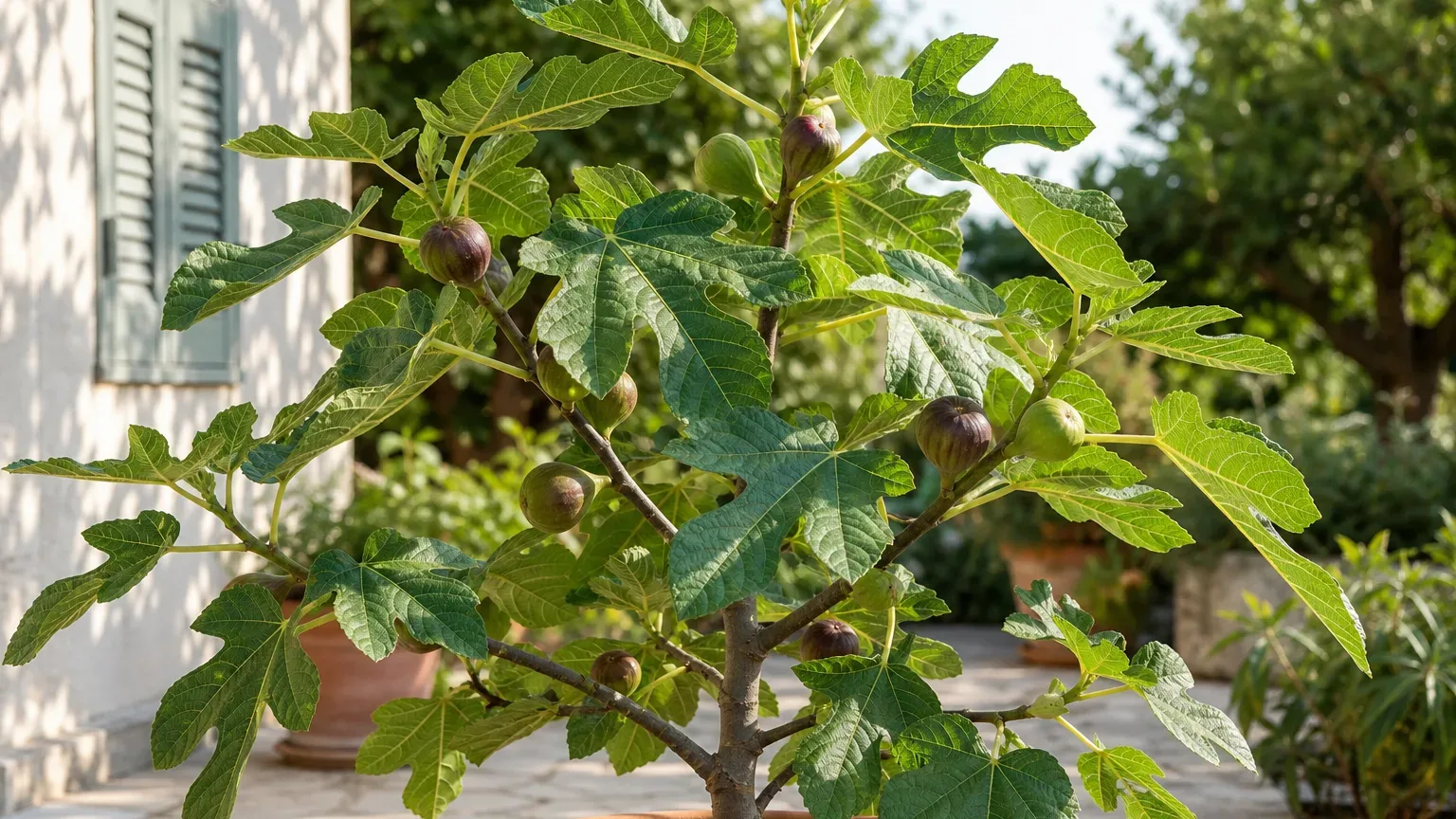
Fig (Ficus carica) is one of the better fruit trees for a sunny patio container when you want large tropical-looking leaves as well as edible fruit. Choose a named compact fig and use a heavy pot with free drainage; a restricted root zone can keep a tree manageable, but it does not remove the need for water, feeding, and periodic root checks. In a warm climate, an in-ground fig can become broad, so leave room for branches and fruit collection.
Pick fallen figs up before they soften on the ground or attract insects. In cold areas, container roots are more exposed than roots in garden soil, so move the pot to an appropriate sheltered location or protect it according to local winter conditions. Container fruit-tree guidance from Fine Gardening emphasizes matching the plant and rootstock to the pot and protecting container-grown roots in winter; apply the same planning to a long-lived fig.
12. Olive
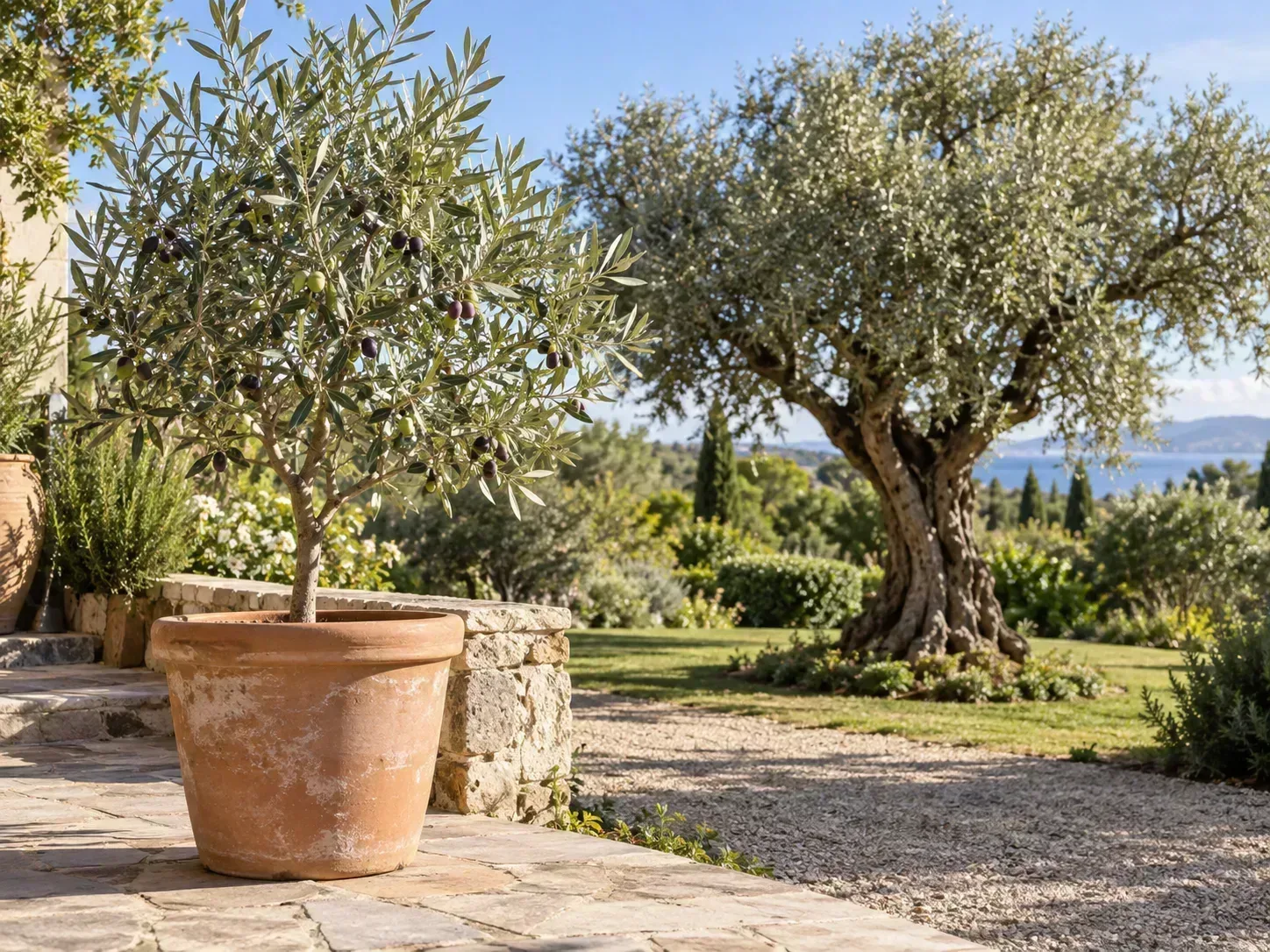
Olive (Olea europaea) brings narrow silver-green leaves and a relaxed Mediterranean shape to a bright patio. It is particularly useful in a container because you can provide the sharp drainage and winter shelter it needs, and a pot makes a slow-growing tree easier to position near a seating area. Choose it for foliage and form first; an olive crop depends on the cultivar, climate, pollination, and length of the growing season.
Give it full sun, shelter from cold wind, and a mix that drains freely. Drought tolerance in the ground does not mean a small patio pot can stay dry through a heat wave; check moisture more often during hot, windy weather. The RHS says olives grow well in sunny containers but are vulnerable to wet, heavy soil and harsh frost. Its olive growing guide covers container watering and winter care in more detail.
13. Serviceberry
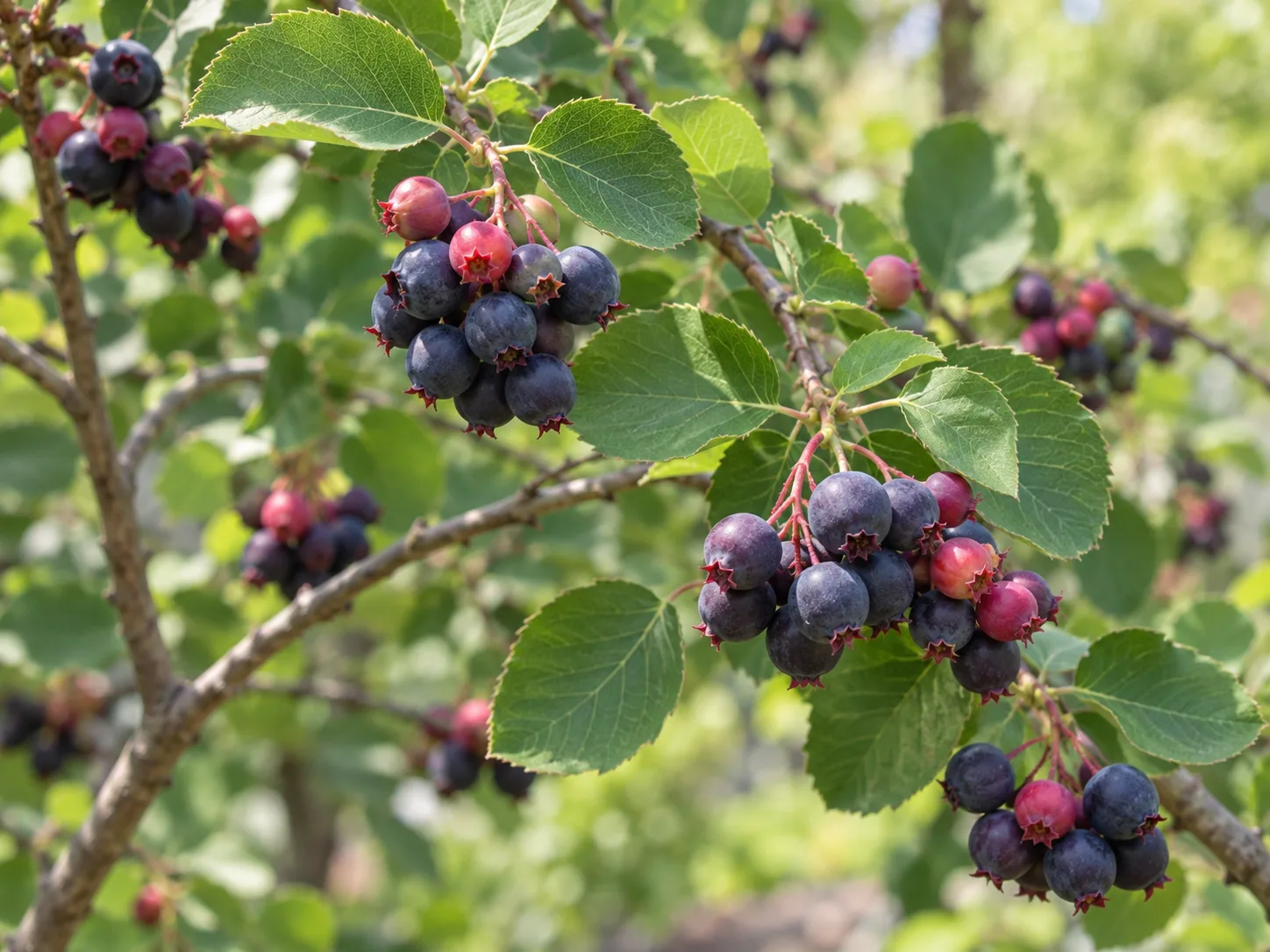
Serviceberry (Amelanchier) is a strong in-ground option if you want several seasons of interest: spring flowers, edible berries, and fall color. Different species and cultivars range from compact shrubs to small trees, so buy for the mature height and spread shown on the tag. A multi-stemmed selection can soften the hard lines around a courtyard while leaving open space for a chair or path.
Berries are part of the appeal for birds, but they can stain pavers and furniture if the tree is planted directly overhead. Set it beside, not above, the main walking or seating surface, and check the chosen species’ soil and climate requirements. The RHS recommends an ericaceous, loam-based compost for acid-loving Amelanchier in containers; for a patio tree in the ground, choose a locally suited species and keep the root zone consistently moist while it establishes.
Keep a patio tree healthy after planting
The planting plan should include the container or bed, not just the tree. For a pot, start with a stable container that has open drainage holes and is only a little larger than the root ball; step up as roots fill it instead of surrounding a small root system with a large volume of wet mix. The RHS advises a final container size of about 18 inches or more for many trees, regular watering, annual surface compost renewal, and protection for exposed roots in winter. Those are starting points, not a universal pot-size formula: a broad-canopied tree needs a stable base, and a roof terrace needs a safe load calculation.
Use a quality container mix that drains while holding enough moisture for the species, rather than dense garden soil. Check moisture below the surface before watering; a light shower may wet leaves without soaking the root ball, while wind and hot paving can dry a pot faster than the yard. Water thoroughly when the root zone begins to dry, let excess drain, and empty standing water from a saucer so roots are not left saturated. The RHS guide to watering containers recommends checking moisture rather than following a fixed calendar, because pot material, exposure, and weather change how often a tree needs water.
Inspect container roots every couple of years and repot or renew the root zone when the pot is crowded. Before buying a nursery-grown tree, look for roots circling tightly around the inside of its pot. Penn State Extension explains that circling roots can continue to girdle a trunk after planting; its container-tree root guidance describes what to check and why root quality matters.
For an in-ground tree, stake only when the planting site or tree form needs support, and avoid burying the trunk flare under soil or mulch. Keep the root collar visible, water deeply during establishment, and maintain a mulch ring without piling mulch against the bark. A local nursery or extension office can confirm whether a species, cultivar, and distance from paving suit your soil and climate better than a generic hardiness range can.
Do not try to correct a poor species choice with severe pruning. If a tree is growing into the seating area, creating too much litter, or outgrowing its pot every year, it is usually easier to move it while it is still manageable or replace it with a genuinely compact cultivar. A shade tree is a long-term structure; plan around its future canopy before you commit it to the patio.
Conclusion
For most patios, a Japanese maple is the best foliage tree, bay laurel or olive is the stronger evergreen choice, and a kumquat or fig is worth considering when you want fruit and can manage its light and winter needs. Flowering crabapples, serviceberries, smoke trees, and chaste trees need a real bed and room around the canopy, while dwarf conifers add year-round form with less seasonal litter. Choose by mature size, placement, and cleanup first; then use the tree’s care needs to confirm it belongs on your patio.



