How to Water Plants: 20 Practical Tips for Pots and Gardens
Learn when and how to water plants with soil checks and clear adjustments for houseplants, pots, seedlings, garden beds, vegetables, and lawns year-round.
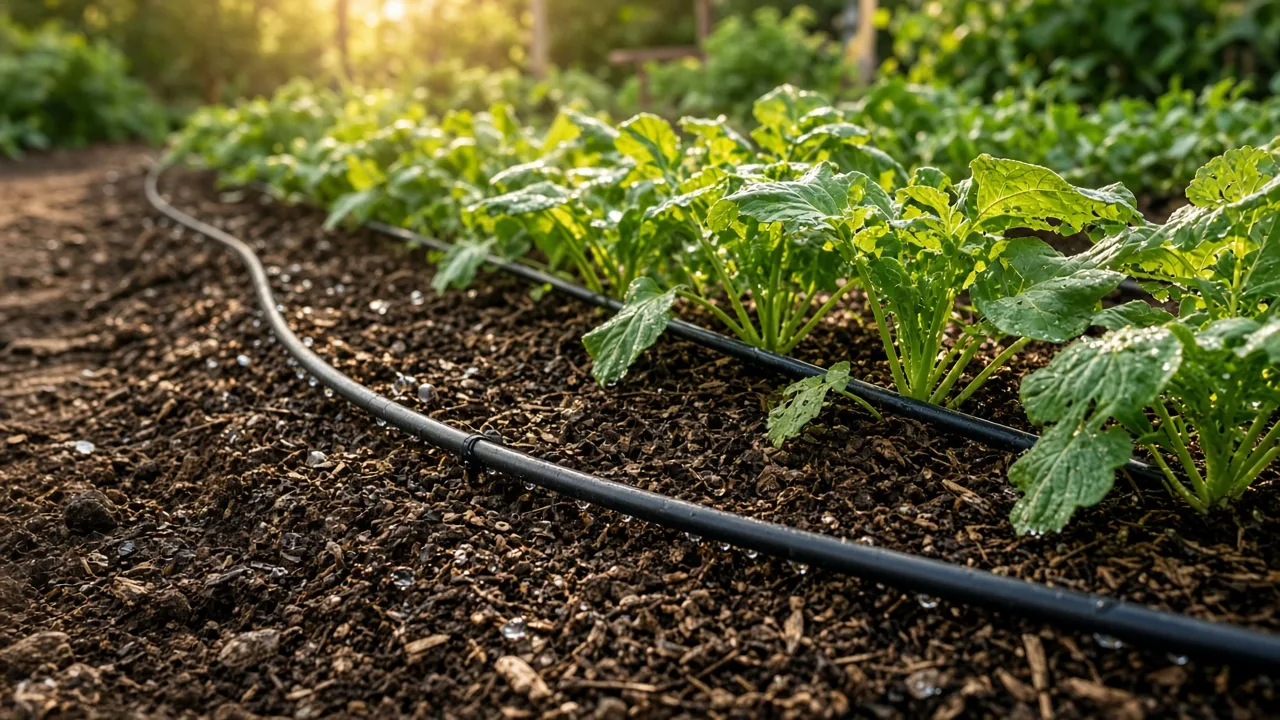
Water when the active root zone is dry enough for that plant, then apply water slowly until that zone is evenly moist. There is no reliable weekly schedule or single volume for every houseplant, vegetable bed, new tree, and lawn: soil texture, pot size, sunlight, wind, plant age, and weather all change water use and loss. A better routine is to check the growing medium, water the plants that need it, and verify that the water reached their roots.
These 20 tips turn that routine into practical decisions. They cover indoor pots as well as outdoor beds, but the same amount or interval should not be forced across both. For details specific to houseplant watering, containers, or deep watering, use the more focused guides alongside this overview.
Start With the Root Zone, Not the Calendar
Tip 1: Check the soil before you pick up a watering can. Push a finger into potting mix or garden soil near the plant, rather than judging only by a pale, dry-looking surface. For many garden plants, Iowa State University Extension suggests checking the top 1 to 2 inches; large pots and deeper-rooted plants need a check farther down. The right test depth depends on where that plant’s active roots are, so the surface alone is rarely enough.
Tip 2: Use a second check when the first one is ambiguous. A bamboo skewer or wooden chopstick left in the root zone for a few minutes can show moisture deeper in a pot: darkened wood or damp mix clinging to it suggests waiting, while a clean, dry section suggests that the checked zone has dried. A moisture meter may help in a large planter, but test it in more than one spot and compare its reading with touch and pot weight before trusting its scale.
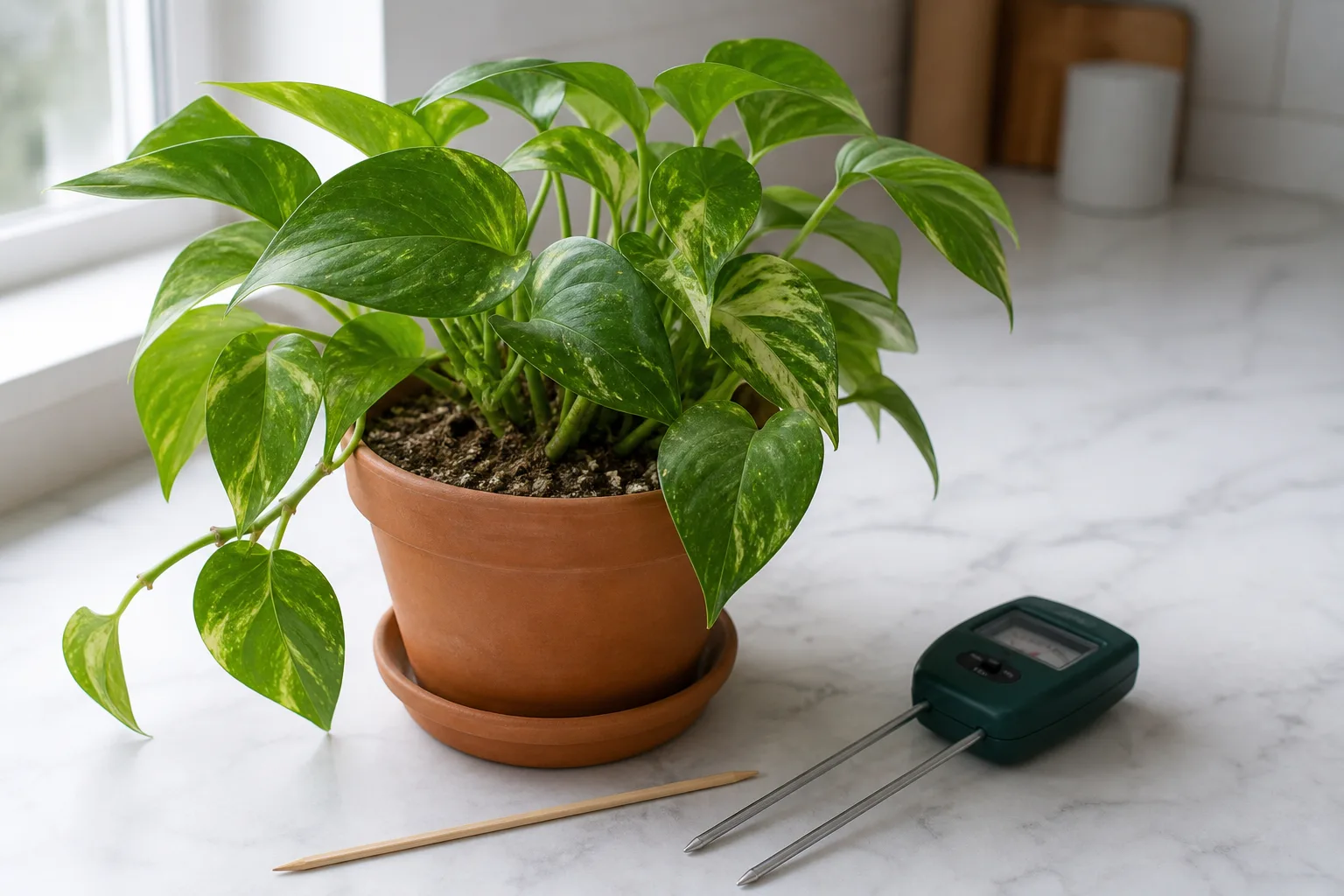
Tip 3: Learn the wet and dry weight of a container. Lift a small pot just after watering and again when the mix is nearly ready for the next drink. That comparison can become a useful cue, especially when the surface dries quickly; it is less useful for a large heavy planter, a plant in a decorative cachepot, or a pot that has recently been repotted.
A Simple Moisture Check You Can Repeat
Make the check consistent so it becomes informative: sample the same depth and a similar distance from the stem each time. In a bed, check near—but not directly against—the crown, and inspect more than one location if the soil, shade, or irrigation coverage varies. In a pot, test the root ball rather than the gap at the pot wall, where water can sometimes run down without wetting the middle.
Use Plant Cues, but Confirm Them With Soil
Tip 4: Treat leaves as evidence, not a watering command. Limp leaves, curled edges, or drooping stems can indicate drought, but they can also result from heat, damaged roots, disease, or soil that stays too wet. The University of Minnesota Extension notes that plants may wilt or curl during hot, windy weather even while the soil is moist. Check the soil first and compare the plant’s condition in the cooler morning or evening before adding more water. (University of Minnesota Extension)
Tip 5: Match the dry-down target to the species. A succulent or cactus generally needs a more pronounced dry period than a moisture-loving fern or leafy vegetable. “Dry soil” is not a universal watering signal: a drought-tolerant plant may be healthy in a mix that would stress a shallow-rooted seedling. Check the plant’s care needs, then use soil moisture to decide when that preference has been reached.
If the plant is drooping while the root zone feels wet, stop and inspect drainage rather than watering again. Roots need both moisture and oxygen; persistently saturated mix can leave them unable to function, so a plant may look thirsty while sitting in wet soil.
If the wetness continues, check whether the pot drains, whether runoff is trapped in an outer pot, and whether the planting site stays waterlogged. The Missouri Botanical Garden’s watering guide recommends checking pot weight and soil depth as well as symptoms.
Match Moisture to the Plant and Its Growth Stage
Tip 6: Separate plants by moisture preference. Put plants with similar watering needs in the same bed, irrigation zone, or container group when you can. A bed arranged for moisture-loving greens may keep Mediterranean herbs too wet; watering according to the herbs may leave leafy crops struggling. Grouping plants makes a single irrigation method more useful because the plants receiving the same water have more similar needs.
Tip 7: Give young roots closer attention than established roots. A newly planted perennial, shrub, or tree has a limited root system, often concentrated in the original root ball. It cannot yet draw water from as broad an area as an established plant. As the plant establishes, the location and frequency of checks should expand with its roots; drought tolerance comes after roots have grown into the site, not on planting day. (Colorado State University Extension)
Learn How Soil and Site Change the Watering Interval
Tip 8: Let soil texture guide how often you check, not a fixed timer. Sandy soil drains quickly and may need more frequent checks; clay-heavy soil holds water longer but can absorb a rapid pour poorly. Raised beds and many container mixes drain faster than native soil. Oregon State University Extension summarizes these differences and recommends checking soil moisture instead of assuming one watering pattern fits every bed. (Oregon State University Extension Service)
Tip 9: Check beneath a dry-looking clay surface before irrigating. A crusty top can sit over wet soil that still has not drained. Colorado State University Extension warns that saturated clay can remain waterlogged below even when the surface looks brittle; watering it again can cause pooling and runoff.
A finger test, hand trowel, or soil probe can show whether water is needed before you start another cycle. A screwdriver is a handy rough probe in many soils, though loose sand offers little resistance and therefore needs a separate moisture check.
Sand, Clay, Compaction, and Slopes Need Different Pacing
Water can run off before it enters compacted, sloped, or very dry soil. On clay or a slope, apply a short cycle, pause, then resume after the first water has soaked in; this lets the soil accept more before runoff begins.
On sand, the problem may be the opposite: a large amount can drain below shallow roots quickly. Check the depth that became moist after watering and change the pace or interval based on that result. (Colorado State University Extension)
Water Slowly Enough to Reach Active Roots
Tip 10: Aim for an even soak, not a surface sprinkle. For an established plant that needs water, apply it gradually over the area where roots can absorb it. A few shallow splashes may darken the surface while leaving the root zone dry.
The goal of “deep watering” is not a certain number of minutes; it is moist soil at a useful root depth without prolonged saturation or runoff. Check after the first pass, then continue if the target zone is still dry.
When dry soil repels or sheds water, slow down further. Water a little, wait for the surface to absorb it, and repeat in passes. A parched peat-based potting mix can shrink from the sides of a pot so water slips down the gap.
Moistening it in stages or briefly soaking the pot from below can help rewet the mix. Once the root ball accepts water evenly, let excess drain rather than leaving the plant standing in runoff.
Direct Water Where the Roots Can Use It
Tip 11: Water soil around the roots, not just the leaves. Directing water at the base or across the root zone puts it where the plant can take it up and reduces losses to wind and foliage interception. Keep the flow gentle enough not to expose roots, dislodge seedlings, or splash soil onto leaves. For a tree, do not pour only against the trunk: as roots expand, water the root ball and the surrounding root area.
The rule has exceptions. Germinating seeds and small seedlings need the surface around them to stay evenly moist because their roots are shallow, so use a gentle rose or fine spray over the seed row.
Overhead watering is also reasonable for a lawn or for plants that benefit from washing dust from foliage, but prolonged wet leaves can favor disease in susceptible crops. When foliage needs to stay dry, drip or a soaker hose is a better fit. (Iowa State University Extension and Outreach)
Choose a Watering Method That Fits the Job
Tip 12: Choose the tool by area, plant stage, and how water moves there. A watering can gives control over one pot or a small bed. A hose with a gentle wand works for large plants and lets you place water accurately. Drip lines and soaker hoses can supply a row or bed slowly at soil level, while sprinklers cover turf and broad seeded areas but may lose water to wind or wet foliage.
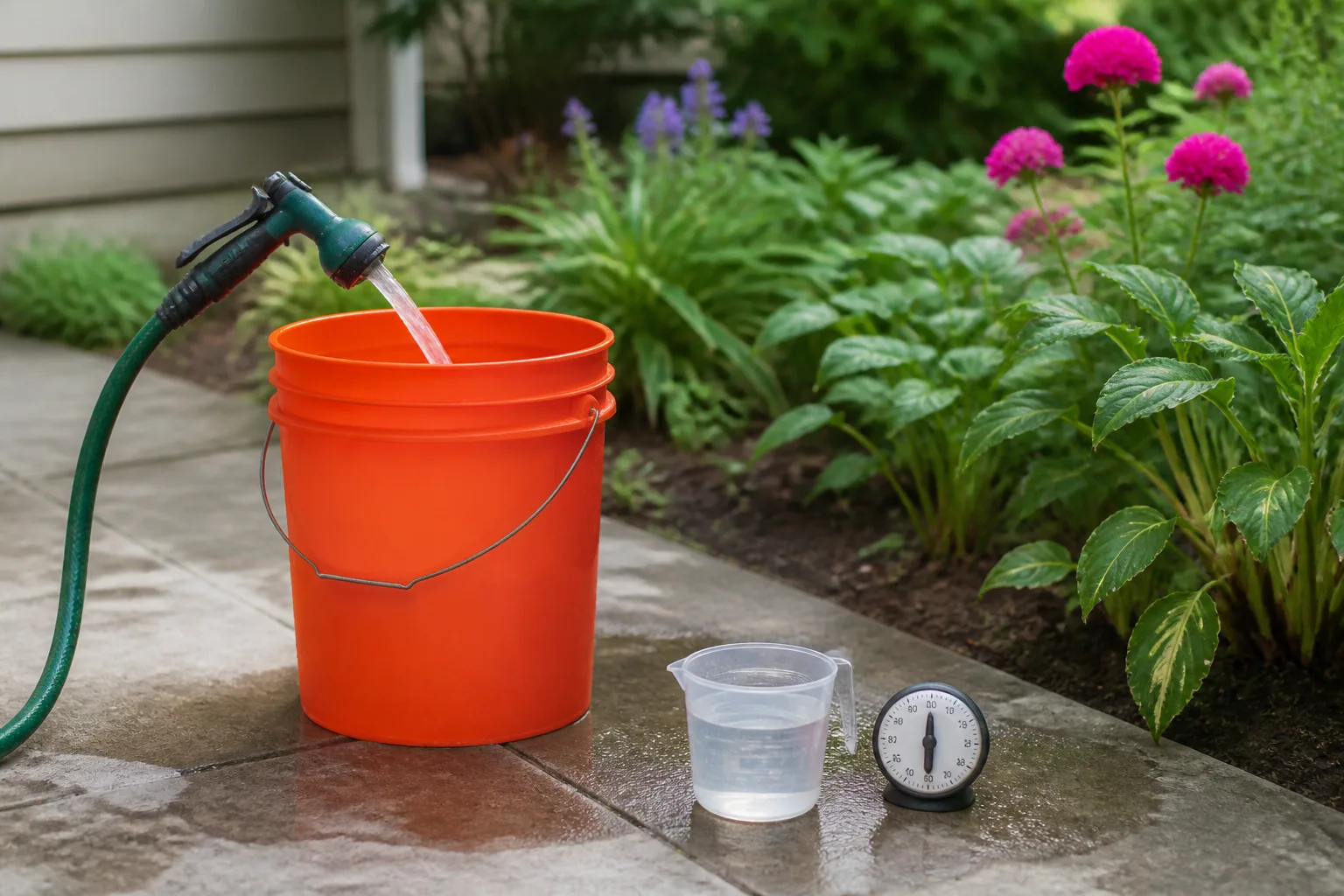
Whatever the equipment, calibrate what it delivers. Put a rain gauge or several straight-sided containers in the area, run the sprinkler for a known period, and compare the collected depth from edge to center.
Adjust overlapping zones or emitter placement if one area receives much more water than another. Colorado State Extension recommends measuring irrigation output with containers rather than guessing from a controller’s runtime; this test also shows whether a timer setting means anything for your layout. (Colorado State University Extension) The BBC Gardeners’ World guide also illustrates how root-directed watering and drip delivery help reduce runoff and wasted water.
Treat Containers as Their Own Watering Environment
Tip 13: Check pots more often, but do not water them automatically every day. Containers have a limited volume of mix and expose more surface area to sun and air than garden soil. Small and shallow pots, hanging baskets, terracotta, windy balconies, and south- or west-facing spots can dry fast; large, shaded pots may stay moist much longer. The RHS container guide recommends checking below the surface and notes that pot size, material, position, and weather change how quickly a container dries.
Water the root ball evenly, then make sure drainage works. If water immediately pours out but the center remains dry, apply it in two or three slower passes rather than increasing the total blindly. Empty saucers or decorative outer pots after excess has drained so roots do not sit in stale water.
A study summarized by the RHS found that, in its trials with bedding plants, some containers grew well without dripping after each watering; that result is a reminder that drainage runoff is not itself a universal measure of how much every pot needs. The objective is a moist, aerated root ball, not a fixed volume. (RHS container-watering experiment)
Keep Seeds, Seedlings, and New Transplants From Drying
Tip 14: Keep the seed zone evenly moist through germination. Seeds close to the surface can dry much sooner than established roots, especially in warm, windy weather. Use a fine spray or watering-can rose to keep the seed row moist without washing it away; do not treat this temporary routine as the right schedule for mature plants. Once seedlings develop roots and leaves, begin checking below the surface and lengthen the interval as they grow.
Tip 15: Water transplants for the root ball they arrived with. New plants in garden beds need water around the original root ball and the soil just beyond it. The root ball can dry faster than surrounding ground, or it can remain dry while nearby soil is damp, so check both. For newly planted trees and shrubs, water slowly around the root ball and continue observing them during dry spells through establishment; large specimens may take more than one growing season to settle in. (Iowa State University Extension and Outreach; RHS watering advice)
Give Vegetables, Trees, and Lawns Different Targets
Tip 16: Adjust vegetable watering to the crop and its stage. Leafy vegetables often benefit from more even moisture, while other crops may tolerate a slightly wider dry-down. Water demand can rise around transplanting, flowering, and fruit formation, then change as a crop matures.
Iowa State Extension uses about 1 inch per week as a starting point for many vegetable gardens when rain has not supplied it; that is a planning estimate, not a rule for every crop, region, soil, or week. Check the root zone and use a rain gauge before adding irrigation. For crop-specific guidance, see how often to water a vegetable garden. (Iowa State University Extension and Outreach)
Tip 17: Prioritize newly planted trees and shrubs during dry periods. Water their root balls slowly and check that the surrounding soil is getting moist too. Established trees and shrubs usually need less supplemental water than new plantings, but restricted roots, prolonged drought, construction disturbance, or dry soil under an eave can change that. Do not assume a tree received enough rain because the nearby lawn is green; the root zone and exposure can differ.
Established Beds, Woody Plants, and Turf Are Not Interchangeable
Tip 18: Treat new grass seed differently from established turf. Grass seed and young sprouts need the surface layer kept from drying, often with gentle, frequent water while roots are shallow. Established cool-season lawn can tolerate summer dormancy in some regions, so a brown lawn is not automatically a signal for daily irrigation. Local climate, grass species, soil, and water rules matter; use the dedicated lawn watering guide rather than transferring a seedling schedule to mature turf.
Count Effective Rain and Check the Weather
Tip 19: Count rain only when it reaches the roots. A short shower may wet leaves and mulch without soaking below the surface, and rain beneath a tree canopy, next to a wall, or under eaves may be much lighter than in an open area. A rain gauge tells you how much fell where the gauge sits, not whether every plant received that amount.
After rain, inspect the soil at root depth before deciding to skip irrigation. Fine Gardening recommends tracking rainfall near the garden and checking whether that water actually enters the soil. (Fine Gardening)
Use the forecast as a reason to recheck, not as permission to follow a rigid timer. Wind, heat, cloud cover, indoor heating, and a sudden change in sun exposure can alter dry-down speed.
A week of cool cloudy weather may stretch the interval; a hot, windy day can make a small pot or new transplant need attention sooner. Automatic systems should skip or shorten a cycle when the soil is already moist, but a sensor or weather app still needs occasional on-the-ground confirmation.
Water in the Morning When Practical
Tip 20: Prefer a cool, low-wind window, but water a genuinely thirsty plant when it needs it. Early morning is often efficient: roots have access to water before the hottest part of the day, and any accidental leaf wetness can dry sooner. Evening watering can also work if water goes to the soil and the foliage does not stay wet overnight. The RHS recommends morning as a useful default while recognizing evening as acceptable; Oregon State Extension makes the same practical point that a plant with dry soil should not be left wilting simply because the ideal hour has passed. (RHS watering advice; Oregon State University Extension Service)
Do not delay emergency watering to satisfy a clock. If the root zone is dry and the plant is failing, water at the time you discover it, directing the stream to soil.
Afterward, adjust future checks and irrigation so the plant does not repeatedly reach severe stress. Avoid leaving susceptible foliage wet overnight when you can choose a better time, but do not confuse that disease-management preference with a reason to withhold water from dry roots.
Reduce Water Loss With Mulch and Better Grouping
Moisture conservation begins before the next watering. Apply an appropriate mulch layer over garden soil to reduce direct sun and wind at the surface, and keep it away from stems and tree trunks.
A mulch layer does not substitute for watering dry soil: wet the root zone first, then cover it. Use a thinner layer in small pots so you can still inspect the mix and keep the stem base airy. The RHS lists organic matter, mulching, stored rainwater, and choosing plants for the site among its water-saving measures. (RHS watering advice)
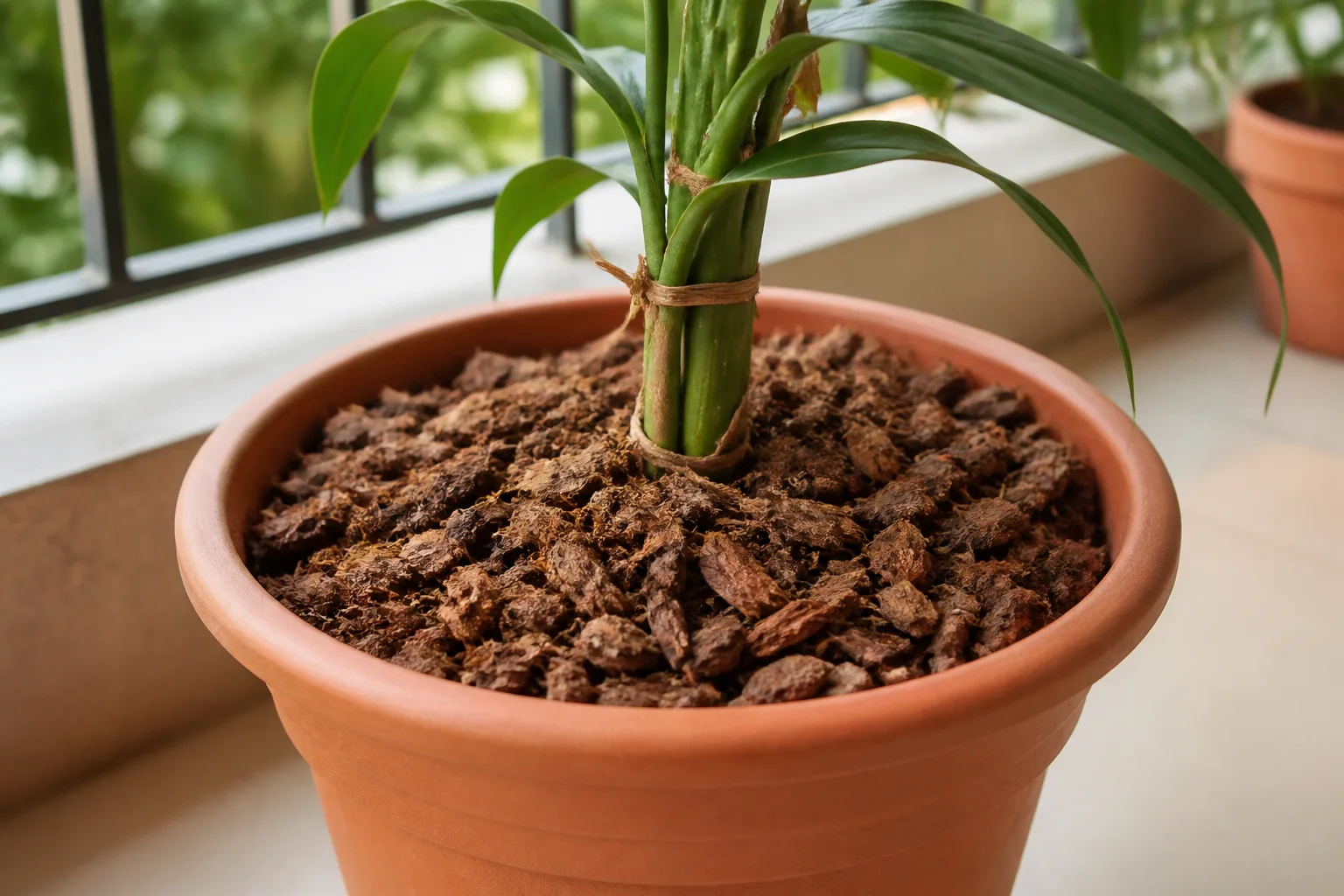
Group plants with similar water needs, fix leaks, and use drip irrigation where it can deliver water to the actual root zone. Improve soil gradually with organic matter when the site needs it, but do not assume amendments will fix poor drainage overnight.
Choosing plants suited to local rainfall and exposure can reduce future watering demand; even a drought-tolerant plant needs attention while it establishes. For more ways to lower demand, see water conservation in the garden.
Use a Suitable Water Source and Reliable Tools
For most outdoor plants, a clean source appropriate for irrigation is fine. Most houseplants also tolerate ordinary municipal tap water, though some sensitive species may react to particular minerals or water additives.
Salt-softened water can add sodium to the root zone over time; the Missouri Botanical Garden advises using an unsoftened tap, rainwater, or another suitable source for plants in that situation. Do not buy distilled water for every plant unless there is a specific reason, such as a sensitive plant or a problem that persists after you have checked the soil and roots. (Missouri Botanical Garden)
Maintain the delivery system as carefully as the source. Check that hose connections do not leak, emitters are not clogged, sprinkler heads cover the intended area, and saucers are not trapping water.
For a new setup, run it while you can watch, inspect soil afterward, and revise the timer or placement before relying on it. A timer controls minutes, not plant moisture; a tested system plus occasional observation is more dependable.
Correct the Mistakes That Make Watering Less Effective
- Watering on the same day every week: Keep a check routine if it helps you remember, but only water the plants whose root zones have reached their dry-down point.
- Giving frequent surface sips to established plants: Apply water slowly enough to wet the active root zone, then let it drain and recheck before watering again.
- Treating midday wilt as proof of drought: Check soil. Heat can make leaves droop even when roots have access to moisture.
- Giving every bed and pot one timer setting: Separate zones by plant, container, exposure, and soil; test the output instead of guessing.
- Assuming rain or mulch solves the problem: Rain can miss the root zone, and mulch slows loss but does not replace water when soil is already dry.
Overwatering is not just “using too much water once.” The more important risk is keeping roots in poorly drained, saturated conditions for too long. If soil stays wet, check drainage and airflow rather than adding another drink. If soil is dry several inches down after watering, change the delivery method, slow the flow, and see whether runoff or a hydrophobic surface is preventing absorption.
Conclusion
Good watering is a small feedback loop: check moisture where roots are, consider the plant and its setting, apply water slowly, and confirm the root zone changed. Use closer checks for pots, seedlings, and new transplants; let established plants and their soil dry to the degree that suits them. Rain, mulch, irrigation equipment, and morning timing can all help, but none replaces checking what is happening under the surface.