How to Water Your Lawn in Peak Heat Without Waste
Learn how to water your lawn in hot weather with early timing, deep soaking, catch-can calibration, soil checks, and smarter sprinkler fixes.
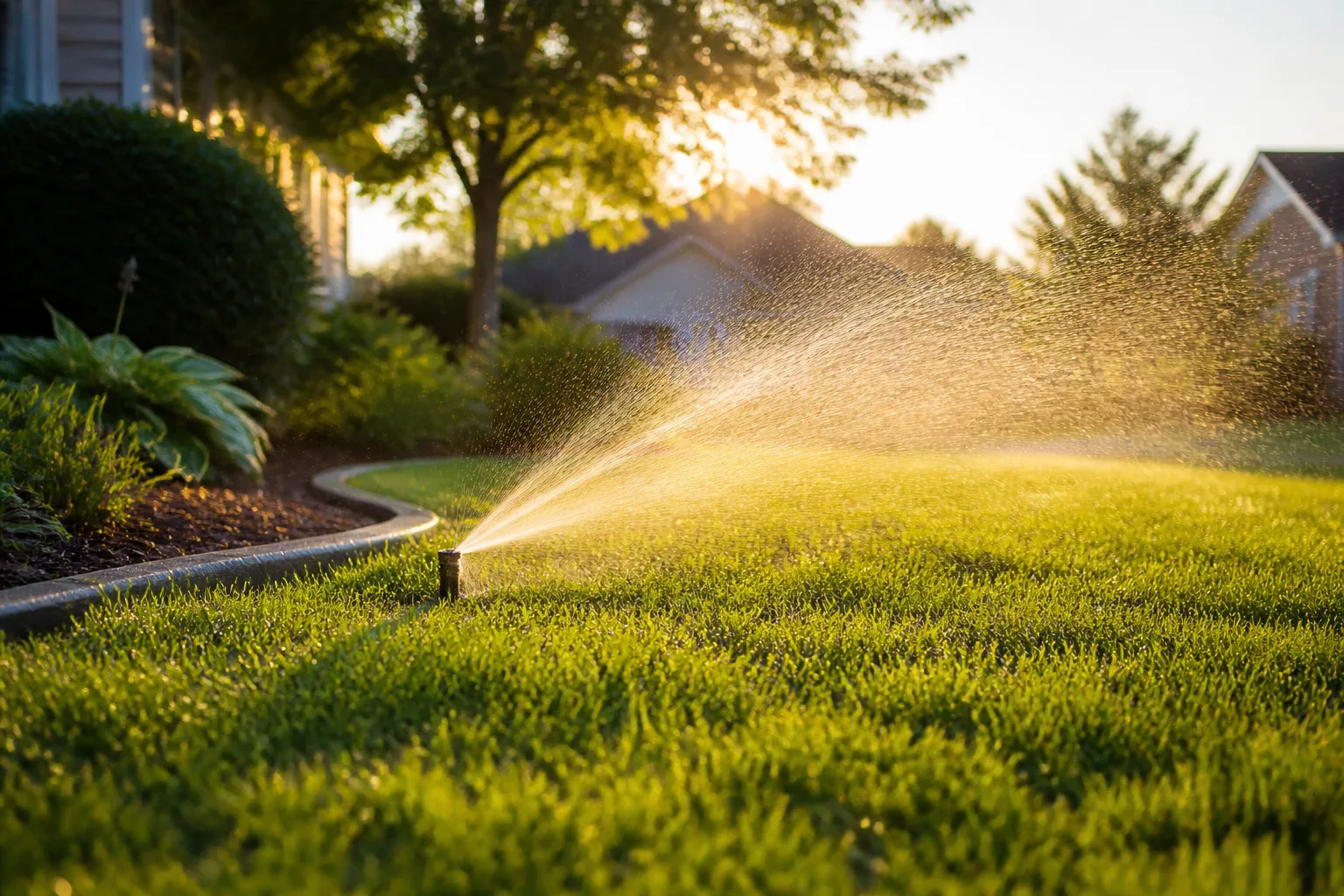
The most efficient way to water an established lawn in hot weather is to wait for real signs of moisture stress, apply enough water to wet the root zone, and schedule the cycle early enough for grass blades to dry. For many lawns, that means a deep irrigation session in the early morning rather than a little water every day, but the exact runtime belongs to your sprinkler output and soil—not a generic timer chart.
Start with a simple target: use rainfall plus irrigation to provide roughly 1 inch of water per week to established turf when conditions are dry, then adjust for grass type, soil, shade, slope, and local restrictions. University of Georgia Extension describes about 1 inch as roughly 600 gallons per 1,000 square feet and recommends wetting the soil 6 to 8 inches deep, while UF/IFAS irrigation guidance emphasizes waiting for visible wilt signs and calibrating each irrigation zone. Those figures are useful starting points, not a license to water on autopilot.
The reliable routine is: check the grass, check the forecast, measure what your system actually applies, water in the morning, and walk the zones while they run. That sequence prevents the two expensive mistakes that look alike from a distance—watering too little to reach roots and watering so much that water runs down the driveway.
Start With the Lawn, Not the Timer
An automatic controller can repeat a schedule perfectly while the lawn is already wet from rain or the soil is too dry to absorb a fast spray. UF/IFAS recommends turning irrigation on only when the turf shows a need rather than treating a fixed schedule as proof that water is required. The right time to change the schedule is when the lawn and weather justify it, not simply when the calendar reaches a hot month.
Three signs your turf is ready for water
Look across the lawn before you touch the controller. A thirsty established lawn commonly shows one or more of these signs:
- The blades look dull, bluish-gray, or less reflective than usual.
- The blades fold, curl, or roll instead of standing open.
- Footprints remain visible after you walk across the grass because the blades do not spring back.
UF/IFAS uses a practical threshold: wait until roughly 30 to 50 percent of the lawn shows at least one wilt sign before irrigating. That threshold is for established turf. Newly seeded grass, fresh sod, and recently repaired patches have a much smaller root system and need a different establishment plan; do not let them dry down like a mature lawn.
Brown grass alone is not a perfect watering signal. Warm-season turf may slow down or go dormant during extended drought, and cool-season turf can decline in heat even when the surface was recently wet. If brown areas are sharply patterned, appear beside a healthy strip, or remain brown despite moist soil, investigate coverage, compaction, disease, traffic, and grass type before adding more water. The guide to grass that stays brown after watering is a useful next diagnostic step.
Rain changes the schedule
Count meaningful rain as part of the lawn’s weekly water. If a storm has soaked the root zone, skip the next irrigation cycle; running sprinklers just because the programmed day arrived can push water past the roots, increase runoff, and keep the canopy wet longer than necessary.
A rain sensor or soil-moisture sensor can stop an automatic system from running after a storm, but it is not a substitute for checking the lawn. Sensors need the correct setting and placement, and one sensor may not represent a sunny slope, a shaded side yard, and a compacted strip equally well. UF/IFAS advises checking the shut-off device regularly and adjusting the controller seasonally.
Rain barrels are more useful for containers, beds, and small lawn patches than for irrigating an entire established yard. Use collected water only in ways allowed by local rules, and never let the appeal of “free” water turn into watering wet soil.
Build a Watering Target That Fits Your Yard
Use inches, not minutes
“Run the sprinkler for 30 minutes” is not a watering plan until you know what that sprinkler delivers. A spray head, rotor, oscillating hose-end sprinkler, and partially clogged nozzle can apply very different amounts during the same runtime. Even two zones on one property may need different runtimes because of head type, pressure, slope, sun, or coverage.
Think in inches applied. For an established lawn during a dry period, about 1 inch per week from rain and irrigation is a useful starting reference. A hot, windy week may increase demand, while a humid, cloudy, rainy week may require less. Do not jump automatically to a much larger weekly total just because the air temperature is high; first inspect the soil, confirm that the system is covering the lawn, and check whether the grass is actually showing stress. UF/IFAS’s calibration instructions explain why measured depth is more useful than a timer number.
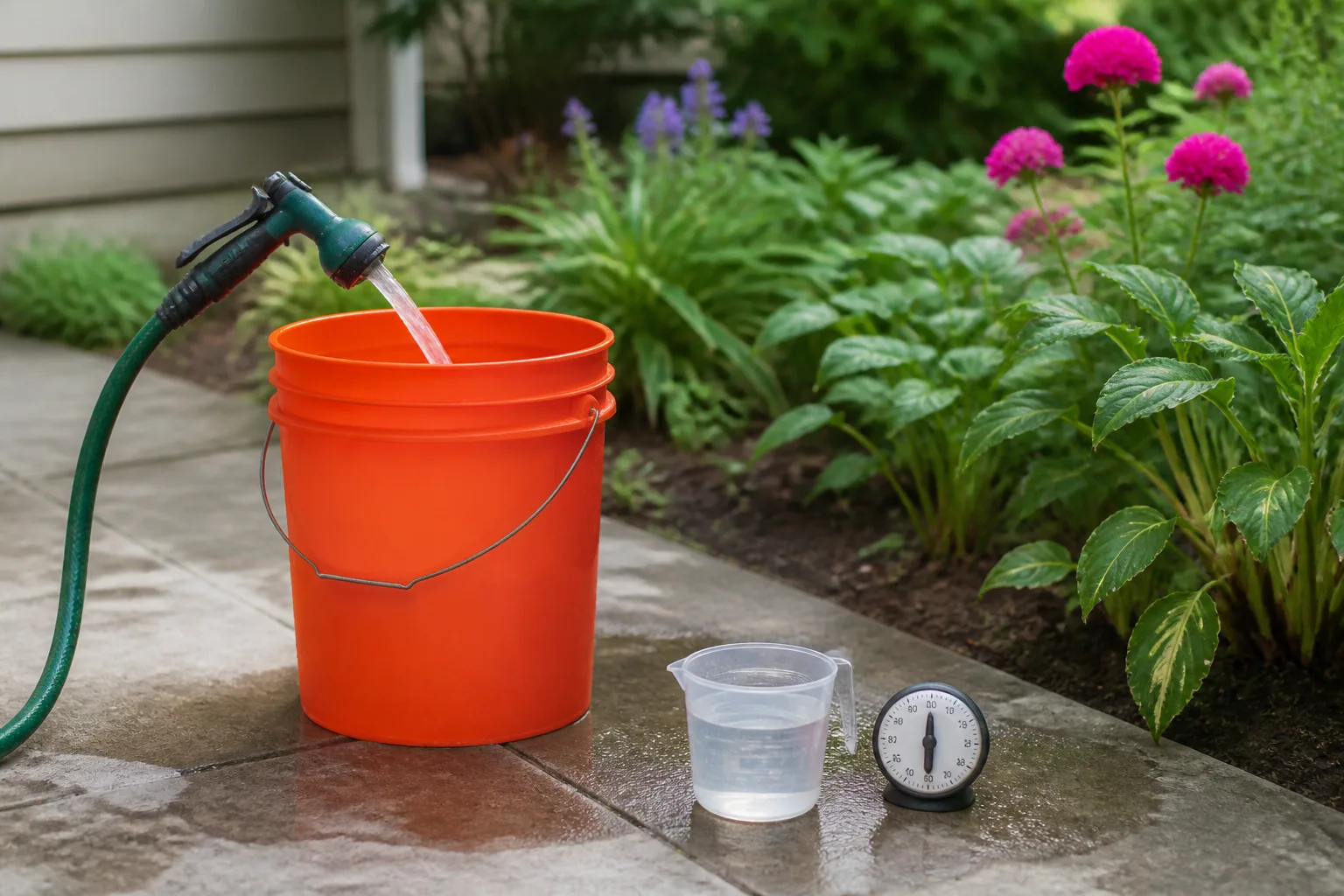
For a hose-end sprinkler, a bucket can help you measure the hose’s flow rate, but a catch-can test on the lawn is better because it captures the sprinkler pattern and distribution. The hose-flow testing guide explains the basic volume check; the zone test below tells you how much water reaches the turf.
Let soil and grass type set the interval
The goal is not to keep the top inch of soil constantly damp. Deep, less-frequent irrigation encourages roots to use moisture lower in the profile and gives the surface time to dry. Short daily sprinklings often evaporate from the surface before they build a useful reserve, while repeated saturation can displace the air roots need.
Grass type changes the trade-off. Warm-season grasses such as bermudagrass, zoysiagrass, St. Augustinegrass, bahiagrass, and centipedegrass are actively growing in summer heat in the regions where they are adapted. Cool-season grasses such as tall fescue, Kentucky bluegrass, and perennial ryegrass may need careful summer management, and some will slow growth or enter dormancy during severe heat. A locally adapted cultivar, suitable mowing height, and realistic expectations can save more water than trying to force every lawn to stay the same shade of green.
UGA Extension recommends using a locally adapted turfgrass and raising the mowing height during stress periods. If you do not know what grass you have, identify it before building a detailed watering calendar; a schedule for a fescue lawn in a humid transition zone should not be copied onto a bermudagrass lawn in a dry region.
Sandy, loamy, and clay soil
Soil controls how quickly water moves and how long the root zone holds it.
| Soil or site | What you may see | Better adjustment |
|---|---|---|
| Sandy soil | Water disappears quickly and the surface dries fast | Use smaller, measured applications more often than heavy clay requires; confirm depth rather than guessing |
| Loamy soil | Water spreads and drains at a moderate rate | Use the deep-and-infrequent starting plan, then adjust after a soil-depth check |
| Clay or compacted soil | Water ponds, runs downhill, or takes a long time to enter | Use shorter cycles with pauses, improve infiltration, and stop before runoff |
| Slope or thatchy lawn | Water leaves the target area before soaking in | Use cycle-and-soak, correct thatch or compaction, and check head placement |
The same inch target can behave differently in each soil. UGA Extension notes that 1 inch penetrates deeper in sandy soil than in clay, and UF/IFAS cautions against applying water until it runs off. If a screwdriver will not enter the soil easily, more water may not be the first fix; compaction or a dense thatch layer may be blocking infiltration.
Use the Deep-and-Infrequent Method
Deep watering means applying enough water to move moisture below the surface while stopping before it runs off. In practice, that often means one or two substantial sessions during a dry week rather than seven tiny sessions, but the best frequency is the one that reaches the root zone without leaving the soil saturated.
Do not confuse “deep” with “long enough to flood.” Healthy roots need both water and oxygen. When the soil stays saturated, roots can weaken even though the lawn looks temporarily greener.
Water in cycles when runoff starts
Watch the first watering cycle from the curb, driveway, and low parts of the lawn. If water begins flowing along the surface before the target depth is reached, pause the zone and let the water infiltrate. Then run a second cycle later in the same morning.
This cycle-and-soak method is especially useful on clay, slopes, compacted paths, and areas where a high-output spray head is covering too much ground too quickly. A practical starting pattern might be 5 to 10 minutes of water followed by a 30- to 60-minute pause, but the correct numbers depend on when your soil stops accepting water. Treat those times as a test sequence, not a universal setting.
Keep water off sidewalks, driveways, walls, and neighboring property. If the head cannot be adjusted enough to keep water on the lawn, replace the nozzle or split the zone rather than adding more minutes to compensate for water that never reaches grass.
Check depth after the cycle
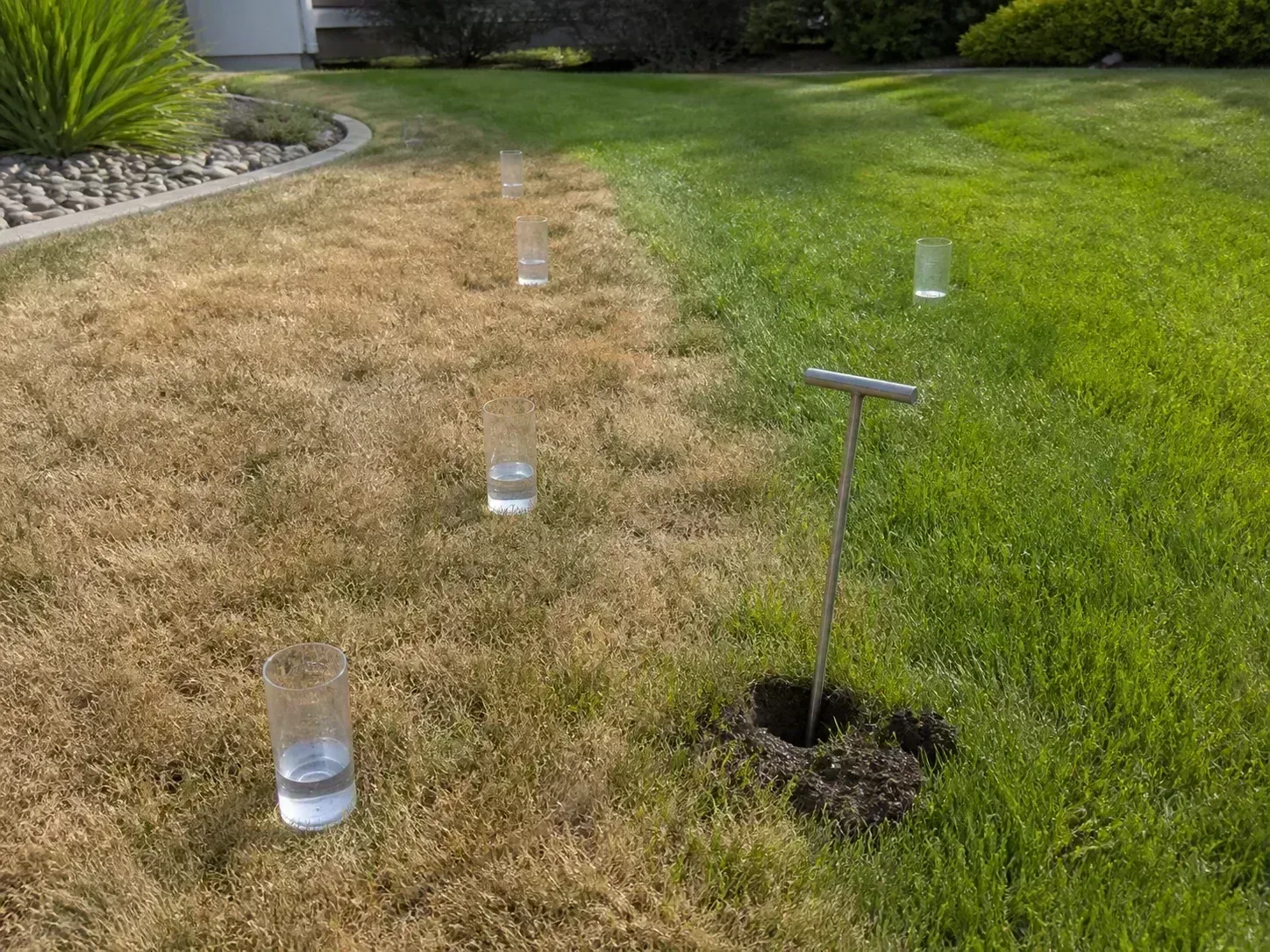
After the soil has had time to absorb the water, push a long screwdriver or soil probe into several places. The tool should enter moist soil with less resistance than dry soil; one easy spot does not prove the entire zone is wet. Check sunny edges, shaded areas, slopes, and places where the grass looks different.
For a more meaningful check, dig a small inspection hole or use a narrow trowel to look at the soil profile. You are looking for moisture through the active root zone, not a puddle at the surface. If the top is wet but the soil a few inches down is dry, the run was too short, too fast, or poorly distributed.
If a lawn stays squishy, develops puddles, smells sour, or grows algae or persistent mushrooms, stop adding water and investigate drainage, compaction, shade, and thatch. The lawn-watering-mistakes guide covers the difference between a thirsty lawn and an overwatered one.
Why Early Morning Is the Best Window
Schedule irrigation so the final zone finishes in the early morning, commonly around 4 to 8 a.m. or soon after, depending on local rules and how long the entire system takes to run. UF/IFAS identifies early morning as the most efficient period because temperatures and wind are lower, so more water reaches the soil and the canopy has time to dry as the day warms.
Early morning is not magic, and the clock matters less than the conditions. A still, cloudy morning may lose less water than a windy morning; a humid climate may make overnight leaf wetness more concerning than a dry climate; and a local watering ordinance may set the legal window. The aim is to avoid the combination of midday evaporation, strong wind drift, and wet grass that remains damp all night.
Evening watering is not equally risky in every climate. Organo-Lawn notes that dry Colorado conditions can make nighttime irrigation less problematic than it is in humid regions, while still describing early morning as the better default. In a humid summer, avoid making late-evening irrigation your routine; in an arid climate, watch soil saturation and disease symptoms rather than following an absolute rule detached from local conditions.
Water droplets do not “burn” grass when the sun is out. Midday watering is simply less efficient because heat, solar radiation, and wind increase evaporation and drift. If midday is the only legal or workable window, water according to the measured need and accept that you may need to check coverage more closely; do not wait until evening if that would leave the canopy wet overnight.
What to do when the best window is unavailable
Follow local water restrictions before following any general lawn-care schedule. Some communities limit days, hours, or sprinkler use during drought, and violating those rules can cost more than a brown lawn. UF/IFAS’s timer guidance likewise recommends matching controller programs to local restrictions and changing them seasonally.
If morning watering is not possible, choose the permitted window that minimizes runoff and prolonged leaf wetness. Watering at midday can waste more water but may be preferable to routinely wetting the lawn at night in a humid climate. If the only available time is evening, water only the amount the lawn needs, avoid repeated misting, and monitor for disease rather than adding an automatic daily cycle.
For a small high-value patch, hand watering can be more precise than running a whole zone. For a full lawn, the better long-term fix is a controller with a functioning rain or soil-moisture shutoff, properly separated zones, and a schedule built from measured precipitation rather than guesswork. The 30-minute sprinkler guide explains why the same runtime can be too short for one setup and excessive for another.
Audit Every Sprinkler Zone
An irrigation audit is simply a careful walk through the system while it is operating. UF/IFAS recommends checking for broken or misaligned heads weekly, separating turf zones from ornamental beds, and calibrating zones because each may distribute water differently. A practical LawnStarter zone-audit guide also highlights nozzle condition, pressure, leaks, and uneven coverage as reasons a timer may not deliver what the lawn needs.
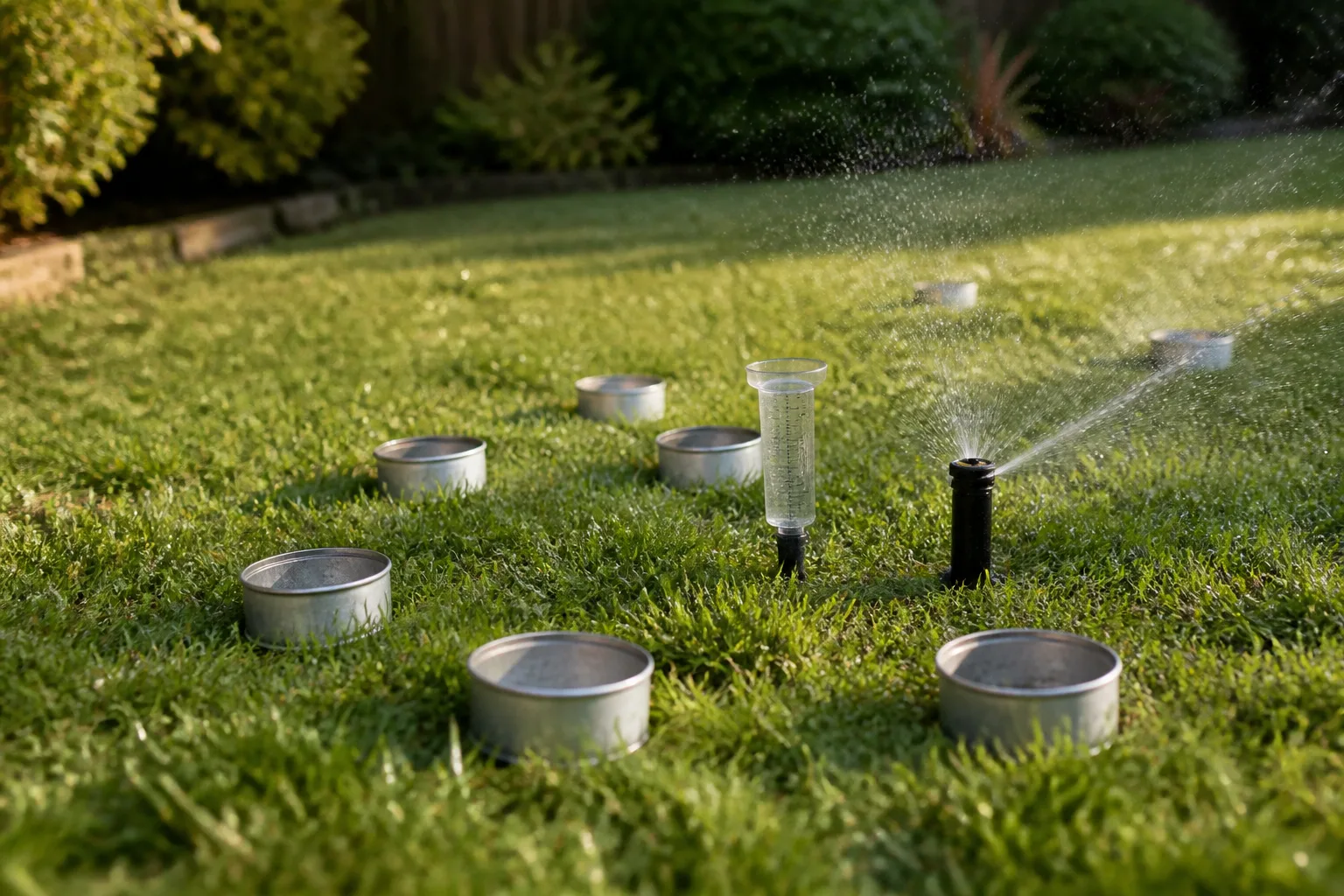
The catch-can test
Use five to ten straight-sided cans, tuna cans, or rain gauges for an in-ground zone. UF/IFAS gives this repeatable method:
- Place the cans across one zone, including the center, edges, sunny spots, and any area that looks dry.
- Run that zone for 15 minutes with the wind as calm as practical.
- Measure the water depth in every can.
- Add the measurements and divide by the number of cans to find the average depth.
- Multiply the 15-minute average by four to estimate the hourly application rate, then set the runtime needed for your target depth.
The average tells you how much water the zone applies; the spread between cans tells you whether the zone is uniform. If one can is nearly empty and another is overflowing, changing the timer will not solve the underlying coverage problem. Reposition cans and repeat the test after adjusting a head.
For a hose-end sprinkler, place cans along the watering pattern from the sprinkler toward its far edge, then repeat the test in every position you use. Do not copy an in-ground zone’s runtime to an oscillating sprinkler or assume a product label’s coverage matches your water pressure.
Fix drift, leaks, and mismatched zones
Walk the property while each zone runs and look for:
- spray landing on pavement, fences, or tree trunks instead of the intended turf
- broken, tilted, clogged, or sunken heads
- bubbling water around a head or valve that suggests a leak
- dry arcs between heads where overlap is missing
- puddles at the same low spot after every cycle
- a bed, shrub border, or container area sharing a schedule with thirsty turf
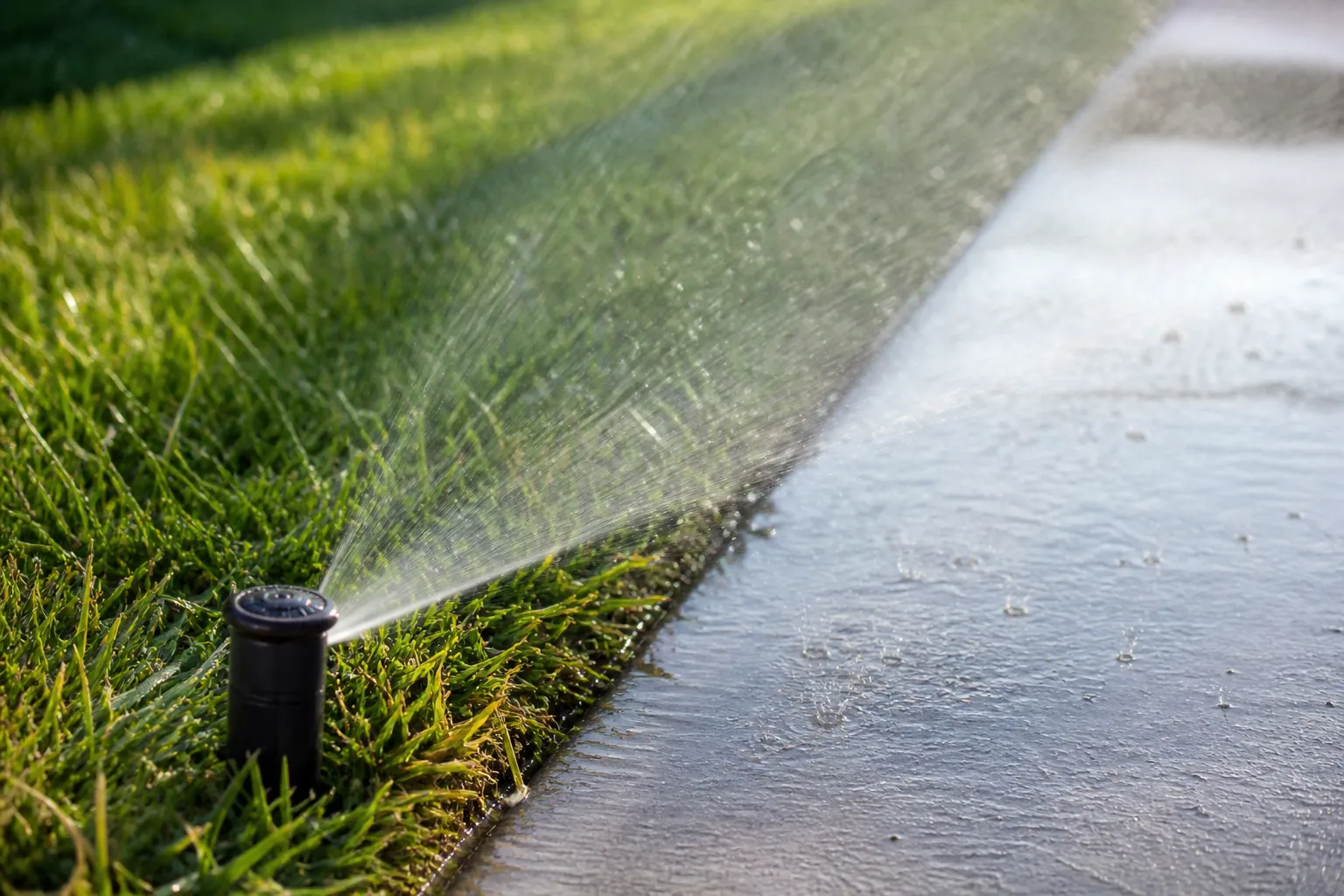
Correct the hardware before increasing runtime. Clean or replace clogged nozzles, level tilted heads, adjust the arc, and divide areas with different water needs into separate zones. If pressure drops when several zones overlap, run fewer zones at once or have an irrigation professional assess the system.
Smart controllers can help with weather-based adjustments, but they still depend on accurate zone information and functioning sensors. A “smart” schedule that runs a misaligned head longer is still wasteful. Save the measured output and date of each zone so seasonal adjustments are based on evidence.
Mow for Root and Soil Protection
Watering is only one part of heat resilience. A lawn cut too short loses more exposed leaf area and leaves the soil less shaded; a lawn cut too aggressively also has less leaf tissue available to recover from heat.
Raise the deck and follow the one-third rule
Keep the mower at the upper end of the height recommended for your specific grass, especially during drought or a heat wave. Never remove more than one-third of the leaf blade in one mowing, and keep the blade sharp so it cuts rather than shreds the grass. UGA Extension specifically recommends raising the mowing height during stress periods and limiting each cut to no more than one-third of the blade.
Do not treat “3 to 4 inches” as a universal height for every lawn. Some warm-season grasses are maintained shorter than cool-season turf, and shade, cultivar, and mowing equipment change the appropriate range. The useful rule is to identify the grass, stay within its recommended range, and raise the setting modestly during stress instead of scalping a brown lawn.
Leave reasonable clippings on the lawn when they are short enough to filter between blades. They are not a substitute for watering, and thick clumps can smother turf, but a properly mowed lawn can recycle nutrients without bagging every pass. Avoid mowing when the soil is saturated; tire and foot traffic can compact wet ground and make future watering less effective.
Heat-Wave Adjustments and Recovery
A heat wave is a reason to inspect more often, not a reason to turn every zone on every day. Check the soil in the afternoon, look for new wilt signs across the lawn, and compare sunny areas with shaded ones. If only one area is struggling, spot-check its coverage and root zone rather than increasing the whole property’s water.
During extreme heat, protect the lawn’s root system by keeping the watering deep enough to reach below the rapidly drying surface. Split the application if runoff starts, and pause irrigation after significant rain. If your grass is adapted to seasonal dormancy, allowing it to lose some color can be more responsible than chasing a permanently green surface under drought restrictions.
New seed and fresh sod are the major exceptions to the established-lawn approach. Their roots are shallow, so they may need frequent light moisture while they establish, followed by a gradual transition to deeper irrigation. Likewise, a recently repaired patch, a sandy south-facing slope, or a root zone disturbed by construction may need a temporary custom plan.
If the lawn stays brown after measured, well-distributed watering, do not assume the answer is more water. Use a soil probe, inspect the root zone, check for compaction and thatch, compare the catch cans, and look for disease or pests. Persistent brown patches, standing water, or rapid decline are good reasons to contact a local county Extension office or qualified turf professional with a grass sample and details about your irrigation history.
Conclusion
Smarter lawn watering is a measurement habit, not a longer timer. Wait for visible moisture stress, count rainfall, target roughly 1 inch per week for established turf as a starting point, and use a catch-can test to discover what each zone actually applies. Then water early, split cycles when runoff begins, repair coverage problems, and raise the mowing height during heat stress.
That routine will not make every lawn green through every drought—and it should not. It gives adapted grass the water it can use, keeps wasted water off hard surfaces, and makes it easier to tell whether a failing patch needs irrigation, better infiltration, different mowing, or a diagnosis. If you change only one thing this week, walk each sprinkler zone while it runs and set the next schedule from what you see.



