Best Way to Water Your Garden With a Hose
Turn your garden hose into a water-saving tool. Learn the slow-trickle method, root-zone targeting, morning timing, and the bucket test pros use.
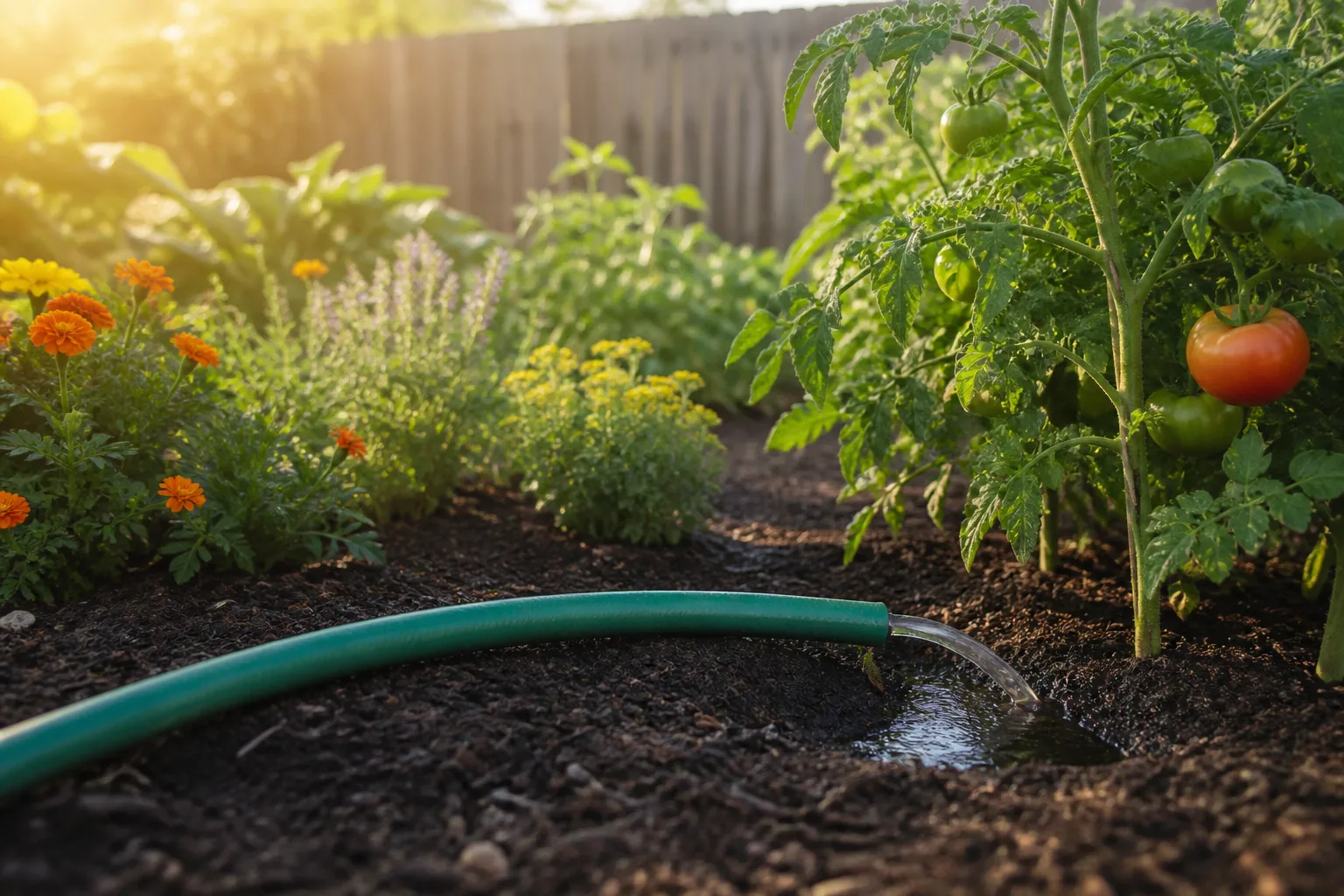
You do not need a smart irrigation controller or a four-figure drip system to cut outdoor water waste. The garden hose on your patio can be one of the most precise tools you own—if you stop treating it like a fire hose. Full-blast spraying sends water over leaves, across pavement, and down the storm drain long before roots can drink. Slow, targeted delivery at the soil surface puts water where plants actually pull it up—and keeps gallons off your utility bill.
The Quick Answer: Slow, Targeted Watering Beats Full-Blast Spraying
The best way to water a garden with a hose is to run a slow trickle at the base of each plant until the root zone is moist 6–8 inches down, then move on. Water early in the morning, adjust duration for hot or windy weather, and calibrate your hose flow once with a one-gallon bucket test so you know how many minutes equal one gallon. Use a trigger nozzle or soaker attachment, never spray foliage on purpose, and set a phone timer every time the hose is running unattended. Check soil moisture before you water again—not the calendar.
Why a Garden Hose Can Be Your Most Efficient Tool
Hand-watering with a hose wins on control. You can see the moment water starts pooling or running off, shut the valve, and move to the next plant. Sprinklers and oscillating heads throw water into the air where wind and midday heat steal a measurable share before it reaches soil (RHS). A hose also lets you skip plants that do not need water yet instead of soaking an entire zone because the timer says so.
That control matters most in mixed yards: thirsty vegetables beside drought-tolerant shrubs, new transplants beside established trees, and lawn strips in rain shadows under eaves. One schedule cannot fit all of those zones. A hose lets you water the stressed individual without drowning everything else—the same selective approach the RHS recommends for established borders during ordinary summers.
When Hand-Watering Outperforms Sprinklers
Hand-watering shines for new trees and shrubs, vegetable rows, container clusters, small beds, and spot fixes after heat stress. You deliver water slowly at the rootball, watch for runoff, and stop exactly when soil is moist to the depth roots occupy—typically 6 inches for herbaceous perennials and 8–12 inches for lawns and young trees (RHS). Sprinklers cannot give you that plant-by-plant feedback loop.
Hoses also beat sprinklers when water pressure is uneven or beds have irregular shapes. Overhead spray hits fences, paths, and house siding; a hose wand or soil-level trickle keeps water in the bed. For bill-conscious gardeners, the RHS ranks sprinklers among the least efficient outdoor methods and watering cans as the most controlled—hoses sit in the middle only when you use them like a can with a longer reach, not like a miniature sprinkler.
When a Hose Is the Wrong Tool
Be honest about scale. Hand-watering a 5,000-square-foot lawn every week will eat your time and still tempt you to open the valve too wide just to finish faster. Large turf areas belong on cycle-and-soak irrigation or a properly zoned sprinkler system with moisture-aware scheduling—not a wand waved from the porch. Similarly, long hedgerows and deep perennial borders are faster and more even with soaker hoses or drip line laid once and mulched over.
If you repeatedly forget the hose is running, a sprinkler on a mechanical timer may waste less than your last three “I’ll move it in five minutes” sessions. The hose is efficient only when someone is paying attention or a reliable timer shuts water off. Efficiency is behavioral as much as mechanical.
The Slow Trickle Method (and How Long to Run It)
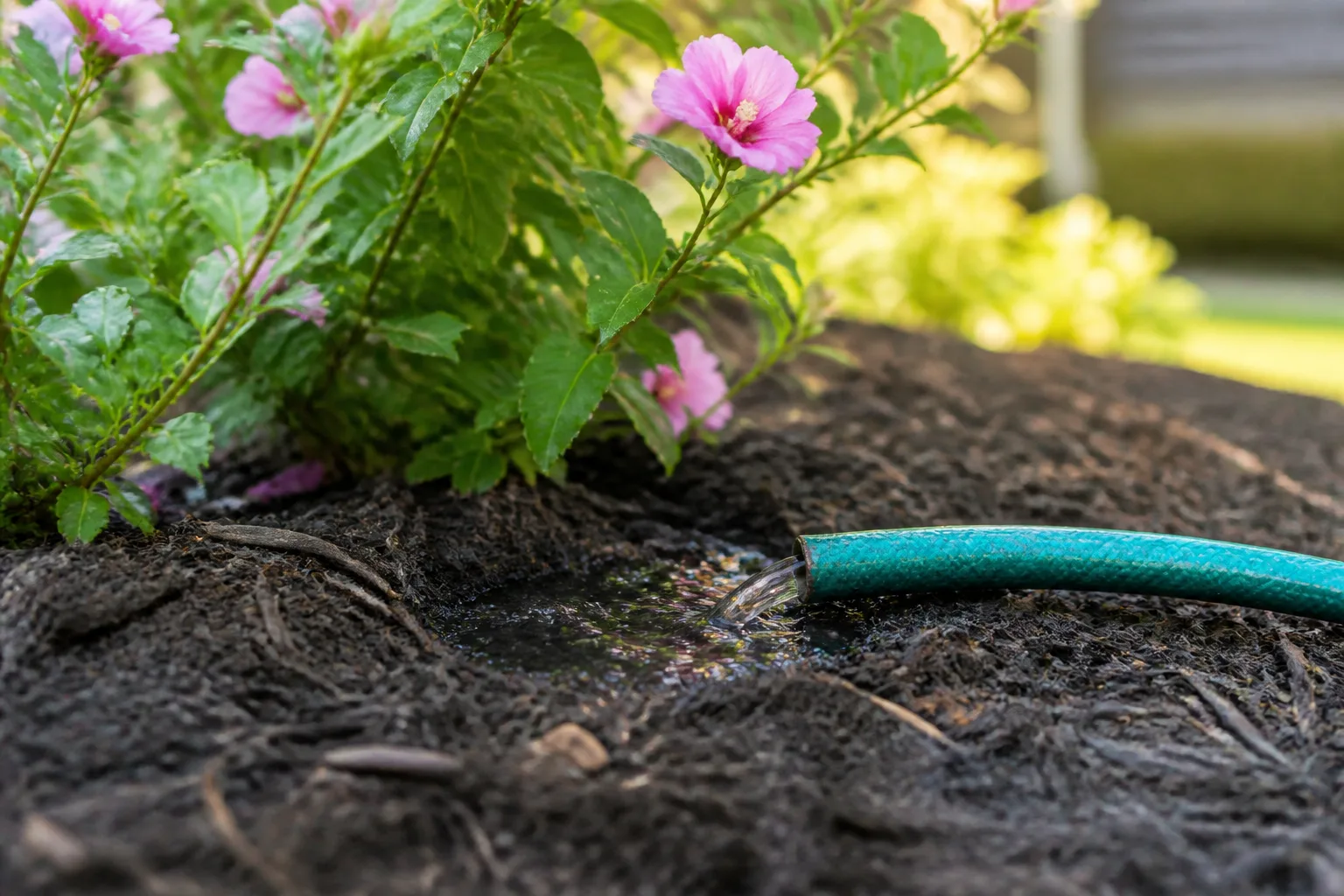
The slow trickle method means opening the spigot just enough that water seeps from the hose end—or a open-ended hose lying at the soil surface—without spraying or bouncing off crusted mulch. Water moves downward by capillary action instead of washing sideways across hardpan or sloped beds. Roots follow moisture down, which builds deeper, more drought-tolerant root systems than daily surface splashes ever will (RHS).
Most gardeners turn the hose on full blast out of habit. On many soils, especially clay and compacted loam, that rate exceeds infiltration speed within seconds. You see runoff in the gutter while the top inch looks wet and everything below stays dry—the classic “I watered for twenty minutes but the plant still wilted” failure. A trickle gives soil time to absorb.
How long? There is no universal minute count because flow rate, soil type, plant size, and weather all shift the target. Instead, use a stop rule: trickle until moisture reaches the correct depth (probe with a screwdriver or trowel), or until you see surface pooling that does not soak in within a minute—whichever comes first. On a medium loam bed, a slow trickle at the crown of a established perennial might take 15–30 minutes; a large shrub could need 45–60+ minutes in a dry week. Cool, overcast days need less; hot, windy days need more.
Set a Timer So the Hose Does Not Run Away With Your Bill
An unattended trickle is safer than an unattended spray—but it is not safe for your bill. Set a phone or kitchen timer every time you park the hose at a plant. Move the hose when it rings, reset, repeat. For larger shrubs, use a mechanical hose timer at the spigot that shuts water off after a preset interval; you still move the hose between plants, but a forgotten valve cannot run all afternoon.
If you use the trickle method on several beds in rotation, note start times on paper once until the rhythm becomes automatic. One hour of forgotten 10 GPM hose flow can dump 600 gallons—enough to show up on a metered bill or blow a drought-tier water budget in a single afternoon.
Aim at the Root Zone, Not the Leaves
Place the hose end, soaker, or wand at the soil line above the root zone, not over the plant canopy. Roots absorb water; leaves do not drink through their surfaces in any quantity that matters for irrigation. Wet foliage in evening hours invites powdery mildew and other fungal issues on susceptible species, and midday overhead wetting can magnify sun scorch on tender leaves in hot climates.
Overhead spraying also loses water to evaporation before it lands—exactly what sustainable landscape designers warn against when comparing hand delivery to sprinklers. Keep the stream low, under the leaf layer when possible, and move around the plant stem on sloped ground so water does not all run downhill on one side. For rows, lay the hose along the drip line of shrubs or the seed drill of vegetables rather than zigzagging across paths.
Water Early in the Morning—With One Honest Exception
Early morning is the best default time to water with a hose. Temperatures are cooler, wind is usually lighter, and plants can use moisture through the day without sitting wet overnight (RHS). You lose less water to evaporation than midday watering, and foliage dries quickly if a few lower leaves get splashed.
Evening watering is acceptable when morning is impossible—after work, for example—but accept the trade-off: damp leaves and humid surface soil overnight can favor slugs and foliar disease on dense plantings. Avoid midday watering on hot, sunny days when much of what leaves the hose never reaches roots. The exception: if a plant is actively wilting from drought stress and soil is dry when you probe, water immediately regardless of clock time. Rescue watering now beats rigid rules; just keep the stream at the base and skip foliar misting.
Adjust Your Schedule to Weather, Not the Calendar
“Water every Tuesday and Friday” is how bills climb. Plants use different amounts of water when temperatures, cloud cover, wind, and humidity change. A bed that needed forty minutes of trickle during a 95°F windy week may need half that after two days of overcast, calm weather—and zero if a soaking rain rewetted the root zone.
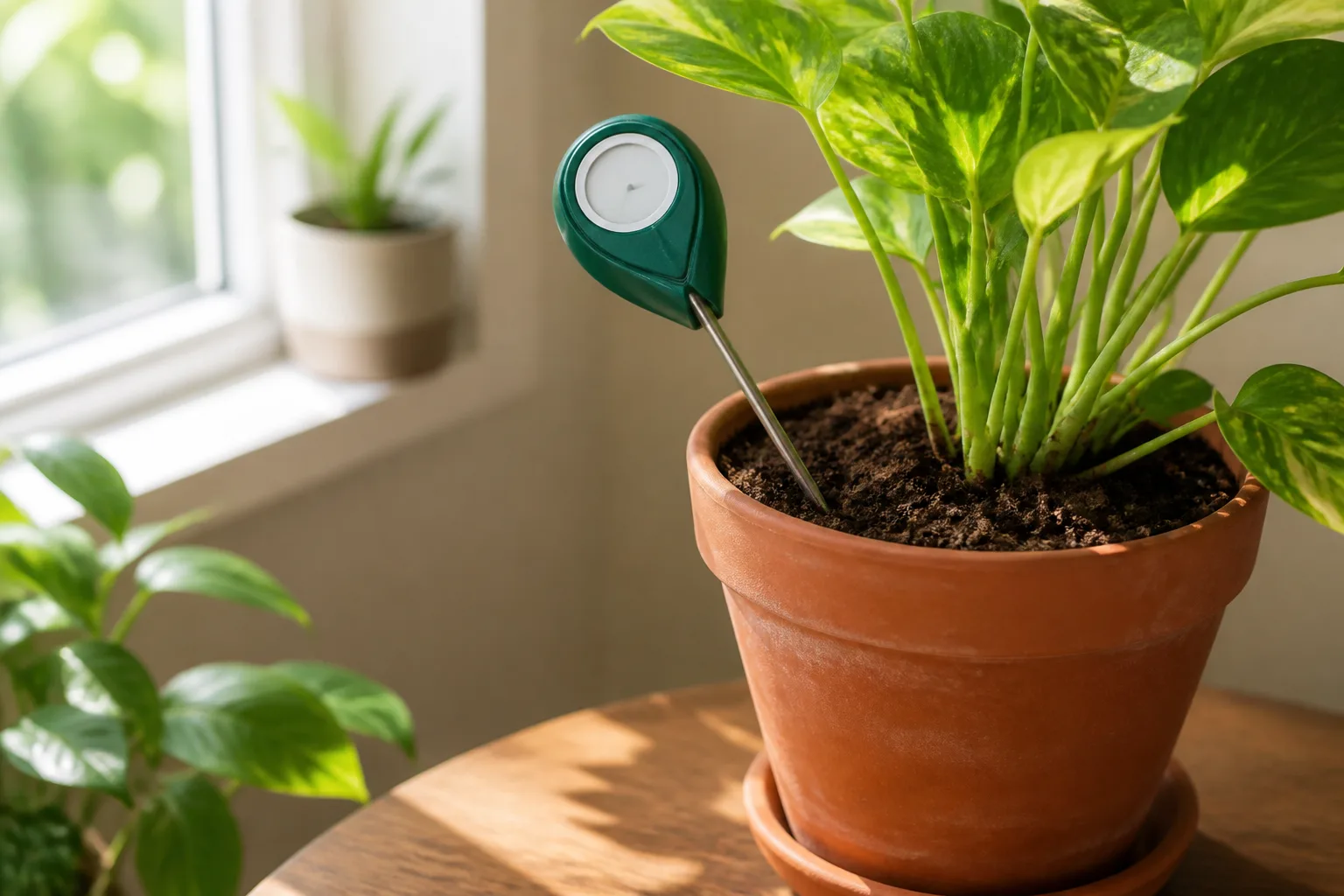
Before you turn the spigot, do a touch test: dig or probe to the target depth. If soil is already moist, skip watering even if the schedule says otherwise. Established trees and shrubs in borders often need water only during extreme drought once their roots are deep (RHS). Fast-growing vegetables and newly seeded lawns are the opposite—they need consistent monitoring all season.
Evapotranspiration in Plain English
Evapotranspiration (ET) combines water lost from soil evaporation and water used by plants. Hot, sunny, windy weather pushes ET high; cool, cloudy, calm weather pushes it low. In summer, ET in many U.S. regions can exceed one inch of water per week from soil and plants combined—meaning you must replace roughly that much through rain or irrigation to keep actively growing plants from slipping into stress.
You do not need a satellite ET app to use the concept. Treat one inch per week as a rough budget for actively growing beds and lawns in peak summer, then adjust: add time on heat-wave weeks, subtract after rain or during mild spells, and stop when dormancy or natural rainfall covers the need. Utah State University Extension notes that turf can brown and look dead during drought while crowns survive—extra hose time is not always the answer if the lawn has entered dormancy (Utah State University Extension). Match water to living, actively growing tissue, not to panic at tan grass alone.
Calibrate Your Hose With the One-Gallon Bucket Test
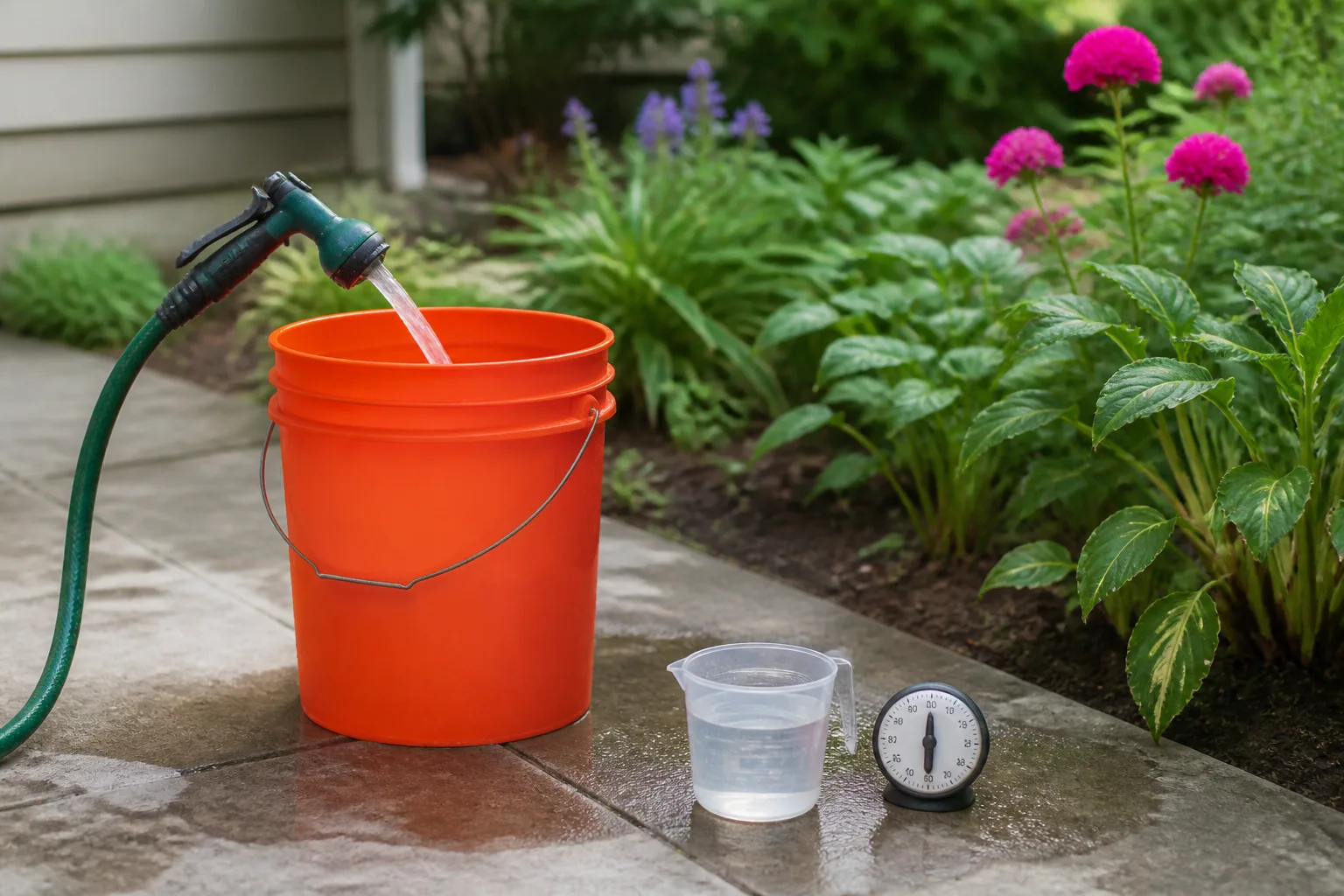
You cannot run a trickle on schedule if you do not know your flow rate. Most 5/8-inch garden hoses deliver roughly 9–17 gallons per minute at typical residential pressure when the valve is fully open—but partial opening, hose length, kinks, and municipal pressure swing that range wildly. Measure your setup once:
- Attach the hose you actually use outdoors.
- Open the spigot to the same position you use for watering (not necessarily full open).
- Time how many seconds it takes to fill a one-gallon bucket at the hose end.
- Divide 60 by those seconds to estimate gallons per minute (GPM) at that setting.
Example: 30 seconds to fill one gallon ≈ 2 GPM at your trickle setting—not the 15 GPM full-blast rate that would empty a 300-gallon allowance in twenty minutes. Write the number on tape at the spigot. Now you can translate plant needs into minutes: if a shrub wants 3 gallons at the root zone and your trickle is 2 GPM, run about 90 seconds of concentrated flow—or longer if you are moving a slow seep across a wide root zone.
Repeat the test for each attachment (open end, wand, soaker) because they change flow. Re-test if you replace the hose or notice pressure changes after municipal work.
Gear That Actually Saves Water (and What to Skip)
Trigger nozzle: A shut-off valve at the wand stops flow between plants so you are not dumping water while walking. It also lets you pulse water gently instead of maintaining a continuous high flow (GardenHoses.com.au). Choose a model with a soft shower or soaker pattern, not a jet that excavates mulch.
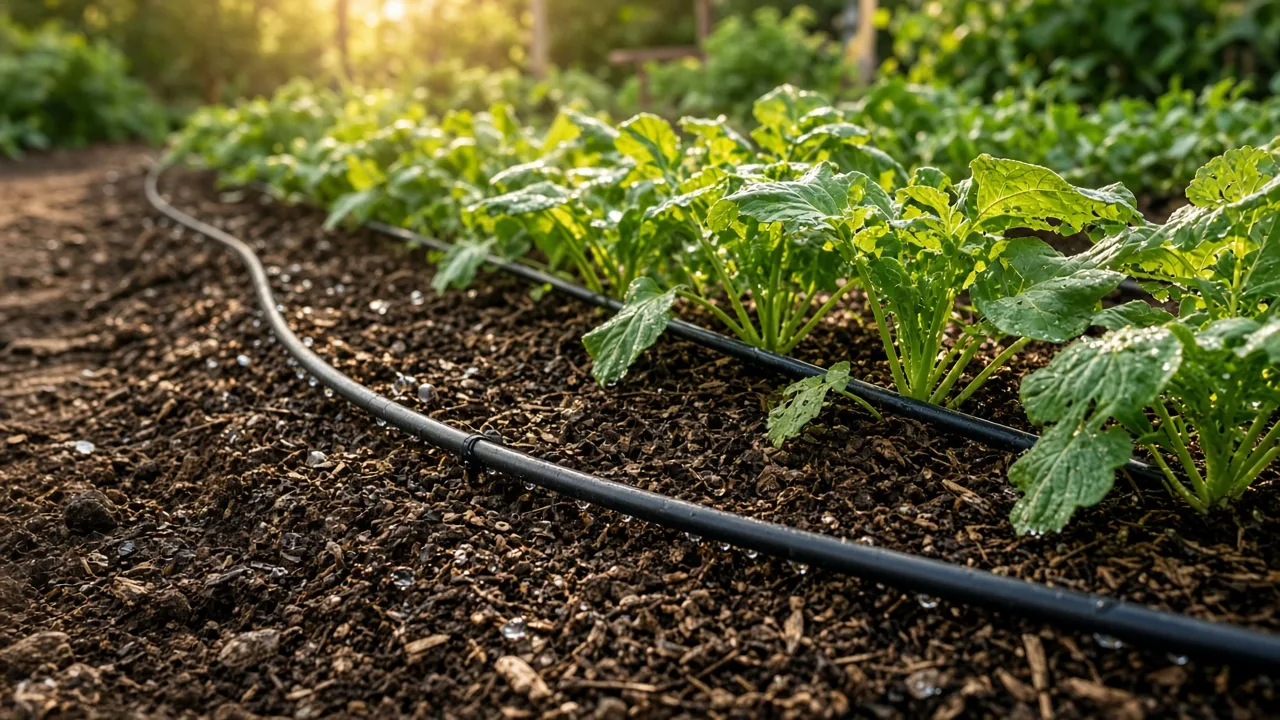
Soaker hose or porous hose: Laid along rows and buried lightly under mulch, soakers weep along their length—excellent for vegetables and hedges when you need to cover linear beds without standing there an hour. Move soakers seasonally; flush them occasionally so mineral buildup does not choke pores.
Mechanical hose timer at the spigot: Cheap insurance against forgetfulness. Pair with trickle watering for shrubs: set 20–45 minutes, move hose, repeat.
What to skip for bill savings: Impulse sprinklers on the end of a hose for bed watering (too much drift and evaporation), fan sprayers on windy days, and cheap multi-pattern pistol nozzles stuck on “stream” that you use like a pressure washer on soil. Oscillating lawn sprinklers on a hose have their place for large turf but rank low on efficiency per gallon delivered to roots compared to cycle-and-soak or targeted hand delivery (RHS).
Match the Technique to What You Are Growing
One hose technique does not fit every planting. Use the matrix below as a starting point, then always confirm with a soil probe before you water.
Beds, Vegetables, Lawn, and Containers
Ornamental beds and herbaceous perennials: Trickle at the base until moist 6 inches down for established plants; first-year plantings need more frequent checks. Mulch reduces repeat visits (see our mulch guide). Skip routine watering of deep-rooted established shrubs unless they show drought stress.
Vegetables: Leafy crops (lettuce, spinach) want even moisture; root crops (carrots, beets) tolerate more drying between drinks (RHS). Trickle or soaker along rows; prioritize water when fruit or edible parts are forming—dry stress during tomato fruit set hurts yield more than a missed day early in growth.
Lawn: New seed or sod needs shallow, frequent moisture until roots knit; established turf prefers deep, infrequent soaking that wets 6–8 inches of soil.
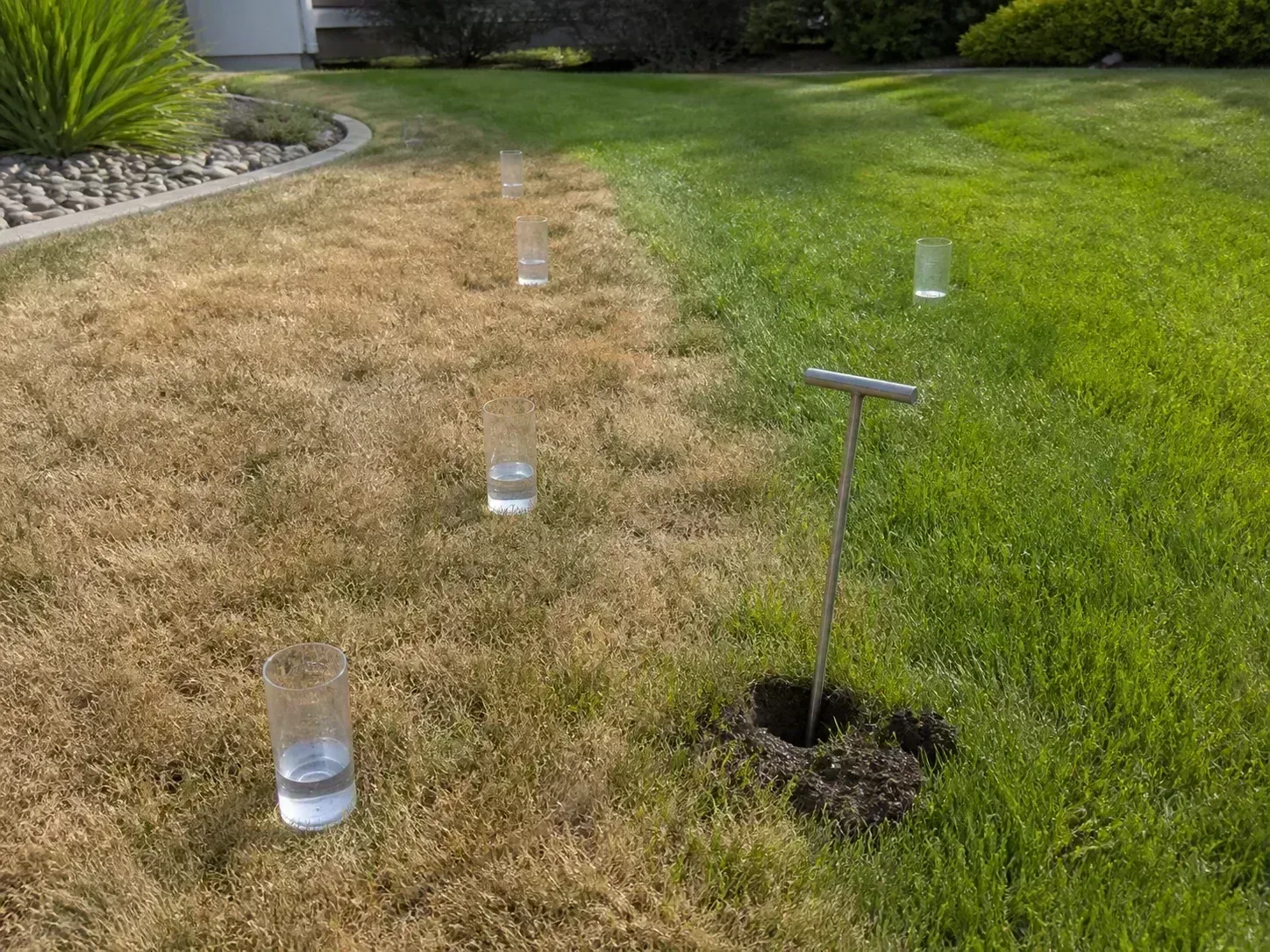 Use a hose with a soft spray attachment or spot sprinkler only for small lawns; probe brown areas before you assume drought—brown grass after watering often traces to shallow irrigation, disease, or dormancy rather than total dryness. Gardening Know How’s lawn-watering guidance stresses confirming soil need before adding water.
Containers and hanging baskets: Dry faster than in-ground beds—often daily in summer. Lift pots to feel weight, or stick a finger 2–3 cm (about an inch) into the compost surface (RHS). A hose wand with a gentle shower works; trickle until water exits drainage holes once, not three times in a row.
Stop Runoff Before It Hits Your Meter
Runoff is pure bill waste: water leaves your property without benefiting roots. On slopes, run shorter trickle cycles, move the hose to several sides of the plant, or build a shallow basin around new trees to hold water until it soaks. On clay soil, use cycle-and-soak: water for 10–15 minutes, wait 30–60 minutes for infiltration, then repeat until depth targets are met—instead of one continuous flood that sheets to the sidewalk.
Watch for hydrophobic dry pockets in old potting mix or mulched beds where water runs off the surface. Break crust gently with a hand cultivator and water slowly until the soil accepts moisture. After heavy rain, do not reflexively hose the lawn; saturated soil cannot absorb more, and extra irrigation damages roots (Pinellas County lawn guidance with UF IFAS Extension). Our guide on what not to do to grass after heavy rain walks through that post-storm sequence.
If you see algae on paths, constant soggy spots, or mushrooms in turf, you are likely overwatering or watering too often—not under-watering. Fix timing and depth before you add minutes.
Mulch and Soil Prep Multiply Every Gallon You Apply
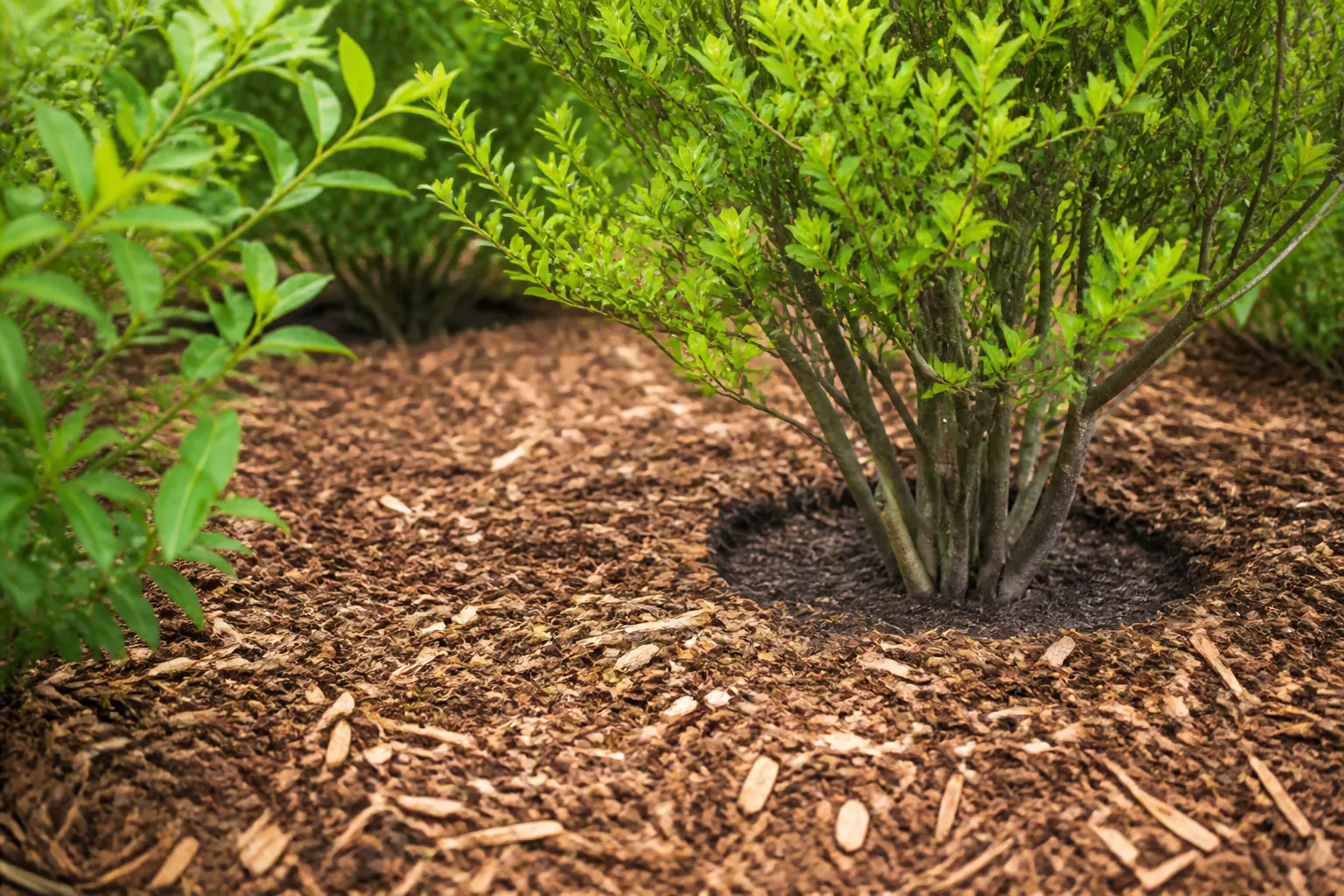
Every gallon you apply works harder when soil holds moisture and mulch slows evaporation. Organic mulch on beds—wood chips, shredded bark, compost—reduces surface evaporation and keeps soil cooler (RHS). Aim for at least 2 inches of settled depth on ornamental beds, keeping mulch 6 inches back from trunks to avoid rot.
Improve soil before you blame the hose. Incorporating compost increases water-holding capacity in sandy soils and improves infiltration in tight clay when combined with aeration. Pair mulch strategy with our full guide on whether mulch prevents weeds—weeds steal water from intended plants, so weed control is water control.
Collect rainwater in barrels where regulations allow and use it on containers and beds first; tap water becomes the backup, not the default (RHS). Grey water from baths or laundry can work on ornamentals where local codes permit—never on edibles without confirming your municipality’s rules.
Seven Hose Mistakes That Spike Your Water Bill
1. Full-blast default. If water jumps off the soil surface, you are flowing too fast. Dial back until the surface stays calm.
2. Wetting leaves instead of roots. You hydrate fungus more than plants. Keep the stream low.
3. Calendar watering. Tuesday irrigation during a rainy week doubles your bill and suffocates roots. Probe first.
4. No bucket calibration. You guess minutes; the meter counts gallons.
5. Forgotten hose. The most expensive “free” trickle is the one that runs until someone notices hours later.
6. Ignoring runoff on slopes and clay. One long session beats the soil’s intake rate; split cycles instead.
7. Watering dormant or already-wet lawn. Brown summer turf may be dormant, not thirsty; saturated lawn after storms should not get another pass (Utah State University Extension; Pinellas County). Diagnose before you irrigate—brown patches need different fixes than simple drought.
Conclusion
The best way to water your garden and yard with a hose is not a gadget upgrade—it is discipline at the spigot. Run a slow trickle at the root zone, water in the morning when you can, adjust for weather, and know your gallons per minute from a one-gallon bucket test. Match technique to beds, vegetables, lawn, and pots; stop runoff with cycle-and-soak on tough soils; and mulch so each gallon lasts longer.
A hose rewards attention and punishes autopilot. Set timers, probe soil before you water, and skip the full-blast habit that looks like progress while roots stay dry and your bill climbs. Master that, and the hose you already own becomes one of the most water-efficient tools in the shed—no smart controller required.