Black Spots on Basil: Causes and Fixes
Black spots on basil leaves? Learn what causes them—from cold and sunburn to mites, fungal leaf spot, and bacterial disease—and how to fix each without tossing the whole plant.
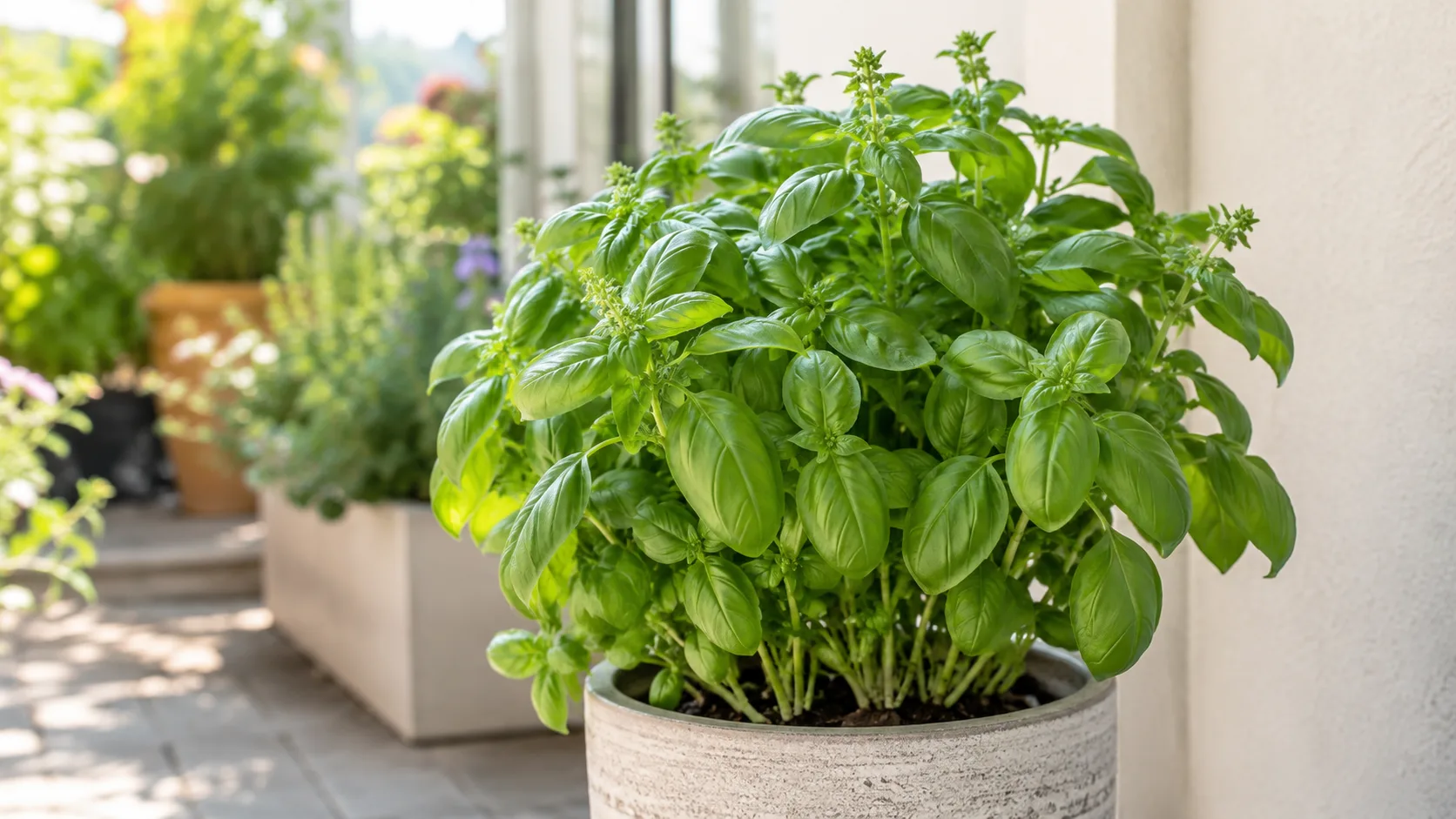
You pinch a perfect-looking basil leaf and find black spots—or whole sections of the plant have turned dark overnight. That jolt is normal. Black spots on basil (Ocimum basilicum) look alarming, but they are usually a stress signal, not a death sentence. The plant is dying only when the stem base is mushy, downy mildew has colonized most of the canopy, or root rot has collapsed the whole root ball after weeks of soggy soil.
The Quick Answer: Black Spots Rarely Mean Instant Death
Most black-spotted basil is fixable if you match the spot pattern to the cause within a day or two. Cold injury and refrigerator bruising blacken edges without spreading up the stem. Sun scorch creates crisp brown-black patches on exposed leaves while new growth stays green. Overwatering pushes yellow first, then blackened, limp tissue when roots fail—often fatal if the stem is soft at soil level. Spider mites leave thousands of tiny dark stipples plus fine webbing, not large wet-looking patches. Fungal leaf spot (including Cercospora and Colletotrichum) and bacterial leaf spot (Pseudomonas cichorii) spread irregular or angular dark lesions in humid weather; downy mildew (Peronospora belbahrii) starts as yellow between veins with gray-purple fuzz underneath before tissue turns brown-black (UF IFAS Extension). Prune affected leaves, fix watering, improve airflow, and treat pests or disease early—replace the plant only when more than half the stems are infected or the base is rotting.
What Black Spots on Basil Actually Look Like
Basil leaves are thin and oil-rich, so damage shows fast. Before you spray anything, decide what kind of black you are seeing—patch, pinprick, edge, or whole leaf.
Spots, Stippling, Edge Blackening, and Whole-Leaf Collapse
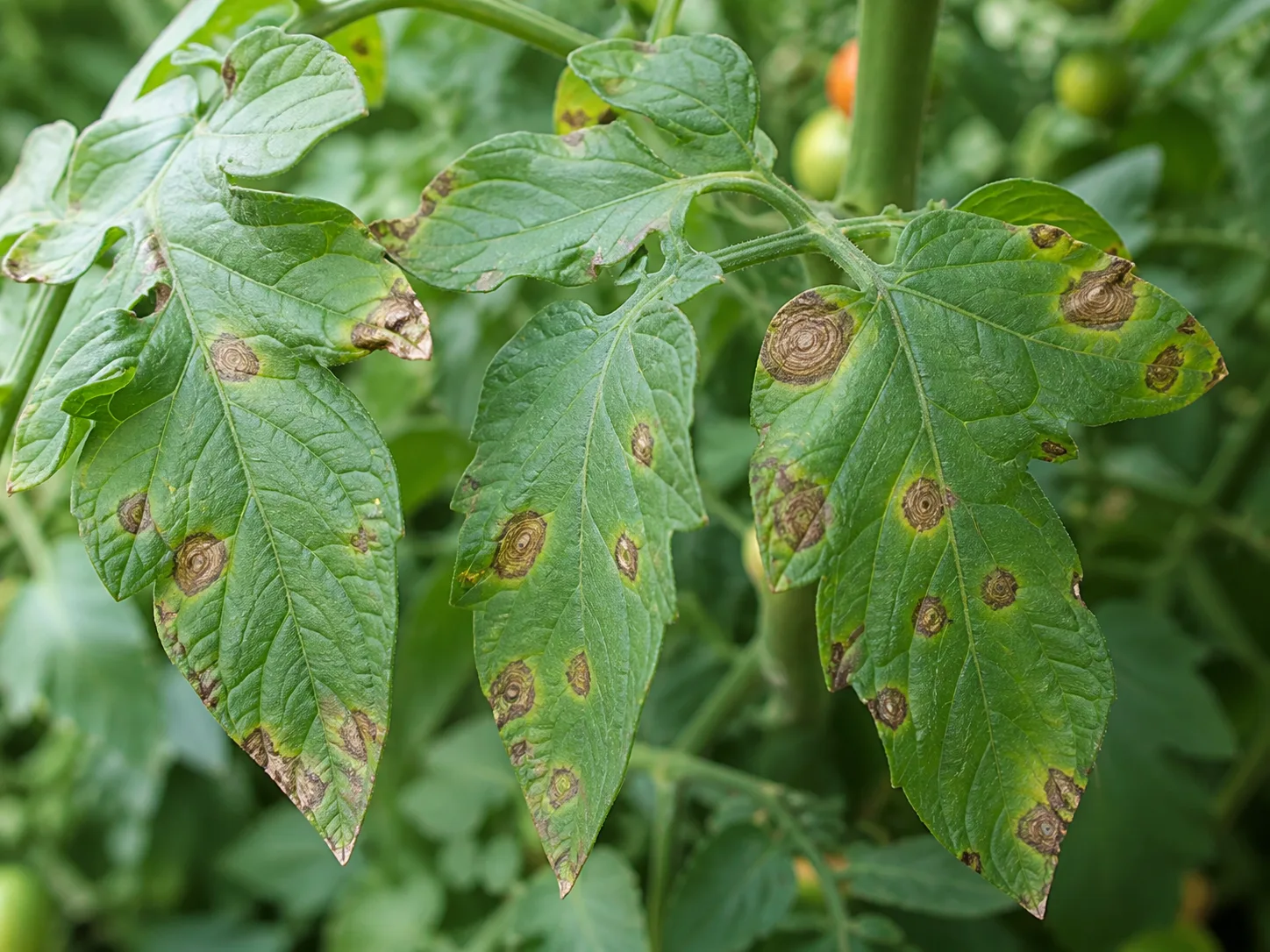
Large irregular patches with yellow halos often mean fungal leaf spot; some fungi create shot-hole damage where dead tissue drops out and leaves look peppered (UF IFAS Extension). Angular, water-soaked spots bounded by leaf veins point to bacterial leaf spot, especially after splashing rain or overhead watering (UF IFAS Extension). Uniform yellowing between veins that later browns, with fuzzy growth on leaf undersides in morning humidity, is classic downy mildew—the most destructive basil disease in much of the eastern U.S. since it spread widely in the 2000s (UF IFAS Extension).
Pinpoint black or bronze specks scattered across the upper leaf surface, sometimes with silk at stem nodes, mean spider mites—not a leaf-spot disease. Crisp black-brown edges on the side facing afternoon sun suggest sun scorch. Soft blackening after a frost or fridge chill is cold injury. Bottom-up yellowing followed by black, limp leaves on a pot that never dries out signals overwatering and root rot moving past salvage.
Signs Your Basil Is Still Recoverable
Your basil can bounce back when new growth at the tips stays green, spots are confined to older lower leaves, and the stem is firm above and below the soil line. Recovery is likely for cold damage, mild sunburn, early mite rinses, and small leaf-spot outbreaks caught before rain spreads spores. Start worrying when spots climb new shoots daily, stems turn black and wet, half the plant wilts in cool morning weather (possible fusarium wilt—different from spot diseases but often confused), or gray fuzz covers most undersides (advanced downy mildew). Those cases need aggressive removal or a clean restart—not another week of hope.
Run the 60-Second Triage Before You Prune Anything
Grab one affected leaf and run four checks before you cut half the plant or drench it with fungicide.
Four Checks That Narrow the Cause Fast
Where did spots appear first? Edge blackening after a cold night or fridge storage points to temperature injury. Upper leaves facing west afternoon sun point to scorch. Lower leaves in a crowded pot after heavy rain point to splash-borne disease. What is the spot texture? Dry and papery differs from water-soaked and oily. Is there fuzz or webbing? Gray-purple underside fuzz means downy mildew; fine silk means mites. How is the soil? Soggy, sour-smelling mix with yellow lower leaves means root trouble—see our basil watering guide and root rot page before treating leaves like a fungus problem.
| What you see | Likely cause | First move |
|---|---|---|
| Black edges after frost or fridge | Cold injury | Warm up / use leaves soon; prune damaged tissue |
| Crisp patches on sun-exposed leaves | Sun scorch | Shade afternoon sun; trim burnt leaves |
| Yellow lower leaves, wet soil, limp black tissue | Overwatering / root rot | Stop watering; repot if stem base is firm |
| Tiny specks + webbing | Spider mites | Isolate; rinse; see spider mite fixes |
| Spreading dark spots, humid weather | Fungal / bacterial leaf spot | Remove leaves dry; base-water; fungicide if spreading |
| Yellow between veins, gray underside fuzz | Downy mildew | Remove plant; do not compost; replant resistant variety |
Cold Damage and Refrigerator Blackening
Basil is tropical. Temperatures below about 50°F (10°C) injure leaves; a light frost can blacken entire blades and stems within hours. Cut basil stored in a too-cold refrigerator (especially pressed against the back wall) often develops dark bruises that look like rot but are simply chill injury—the leaf cells collapse without a live pathogen.
Fix: Move outdoor pots to shelter before frost, or harvest and store basil at room temperature in a jar of water like a bouquet. Trim blackened tissue for appearance. The plant itself may recover if only a few stems froze and the base stayed warm. Cold-blackened leaves are safe to eat if they still smell fresh and are not slimy—trim the damaged area for pesto or sauce.
Sun Scorch on Basil Leaves
Basil wants six to eight hours of sun, but sudden heat after cloudy weeks—or reflected heat from a south-facing wall—can sunburn leaves. Scorched tissue turns dry, brown-black, and papery on the most exposed side while shaded leaves stay fine. Container basil on dark patios is especially vulnerable because roots heat up too.
Fix: Trim damaged leaves so the plant stops sending energy to dead tissue. Move pots to afternoon shade during heat waves, or use a light shade cloth during 95°F+ afternoons. Keep soil evenly moist (not flooded) so roots can transpire and cool the plant. Scorch does not spread like disease; new growth should emerge green within a week once stress drops.
Overwatering, Root Rot, and Soil That Stays Wet
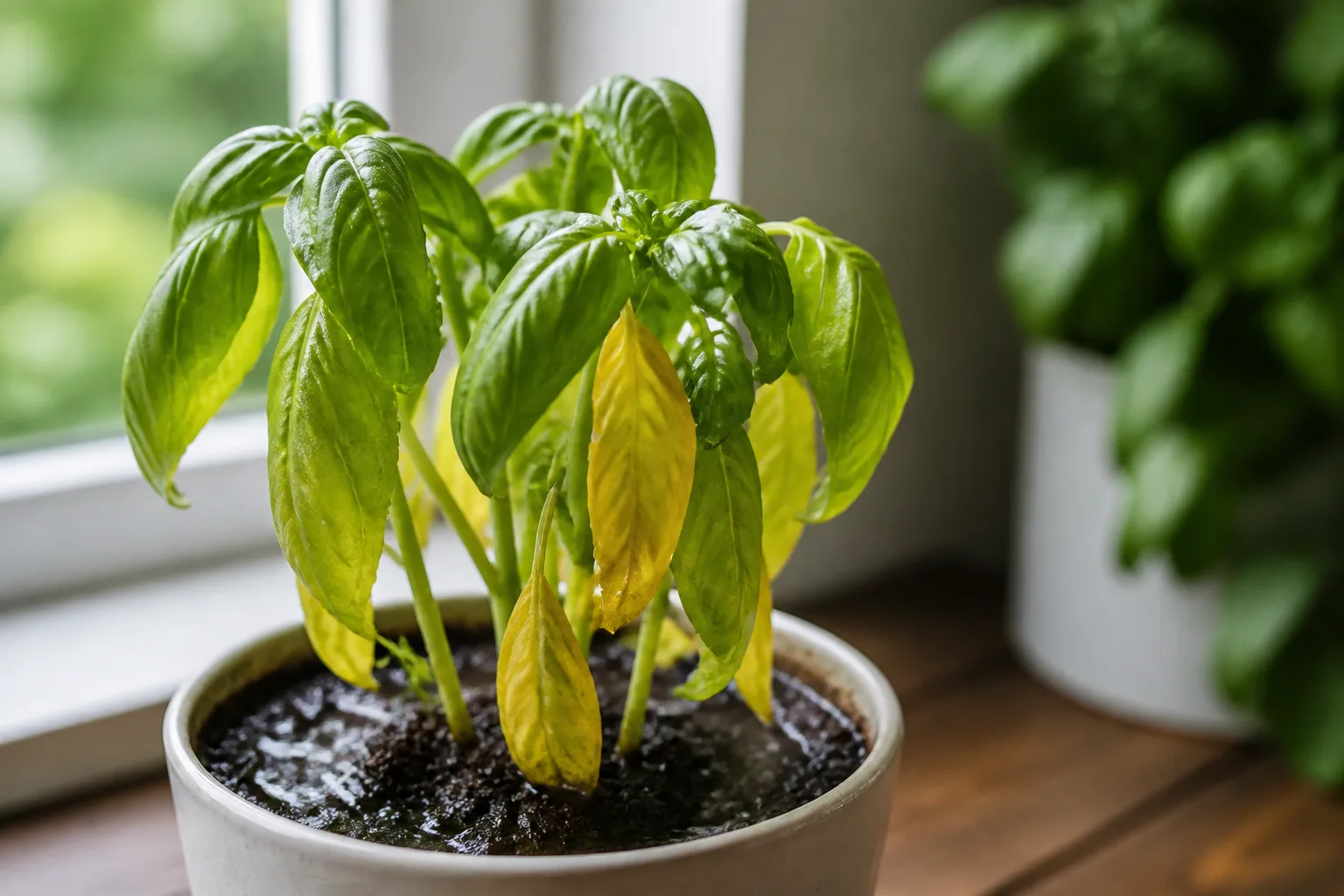
Basil drinks steadily but hates sitting in soggy mix. Chronic overwatering shows yellow lower leaves first—the plant cannot move water through damaged roots. If watering continues, tissue turns dark, soft, and black, and the whole plant collapses. That pattern is often terminal because root rot has already advanced (UF IFAS Extension).
Fix: Stop watering until the top inch of soil is dry. If the stem is still firm, repot into fresh, fast-draining mix, trim black leaves, and place the pot in bright indirect light for a few days. If the stem base is mushy or smells sour, discard the plant and wash the pot before replanting—see overwatering on basil for the full recovery ladder. Do not eat black, slimy leaves from a rotting plant.
Spider Mites and Pinpoint Black Stippling
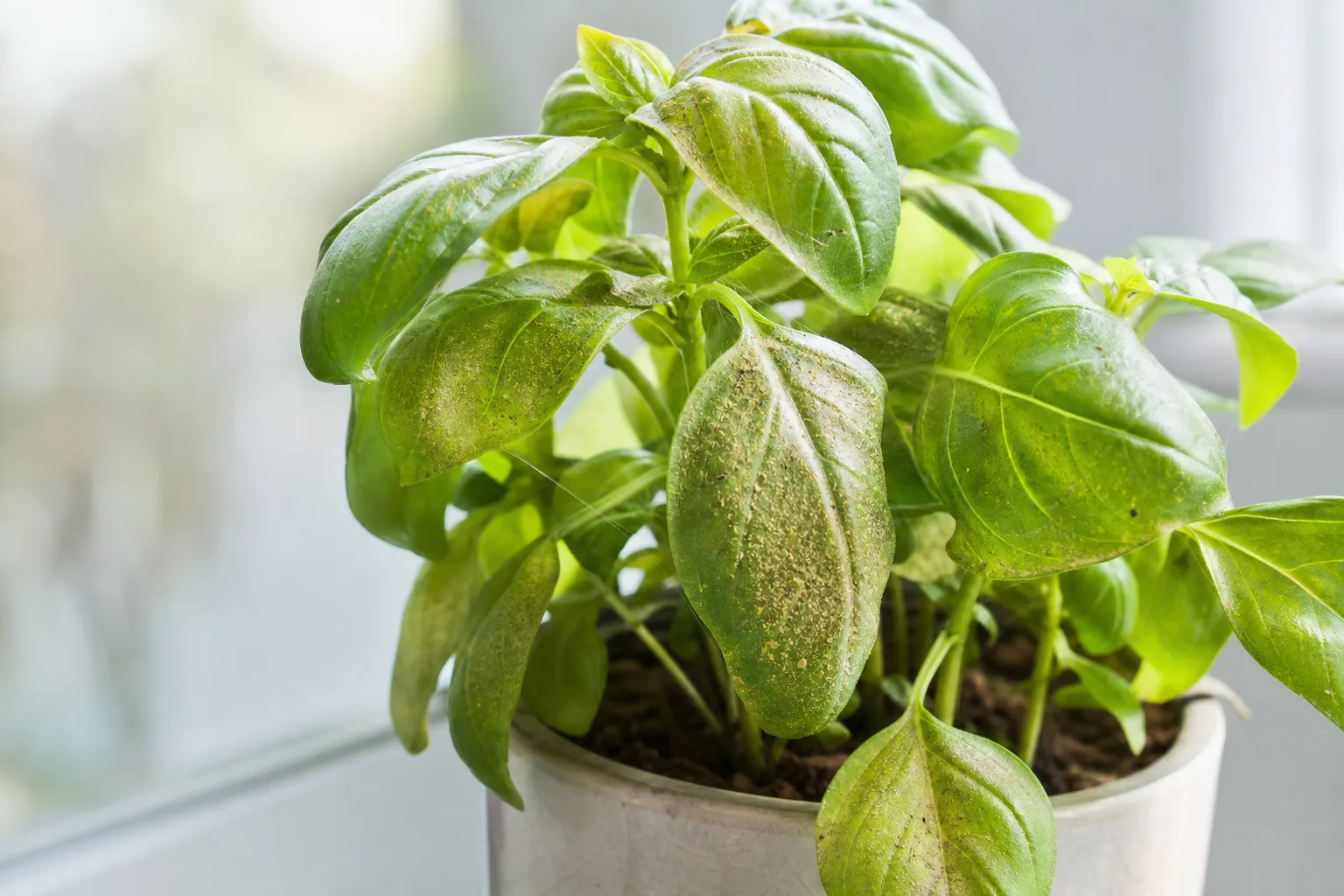
Spider mites are not a disease, but they cause black or bronze pinpoint damage that gardeners describe as “spots.” Mites pierce individual cells on the underside; upper leaves look sandblasted or speckled. Fine webbing at nodes confirms them. Dry, warm indoor air on a kitchen windowsill is a common trigger.
Fix: Isolate the pot from other herbs. Rinse undersides with lukewarm water, then apply insecticidal soap per label directions, respecting harvest intervals on edible herbs. Repeat every four to seven days until new growth stays clean. Mite damage does not make basil unsafe if you wash leaves—but heavy stippling ruins flavor and texture, so treat early using our spider mite guide for basil.
Fungal Leaf Spot and Cercospora on Basil
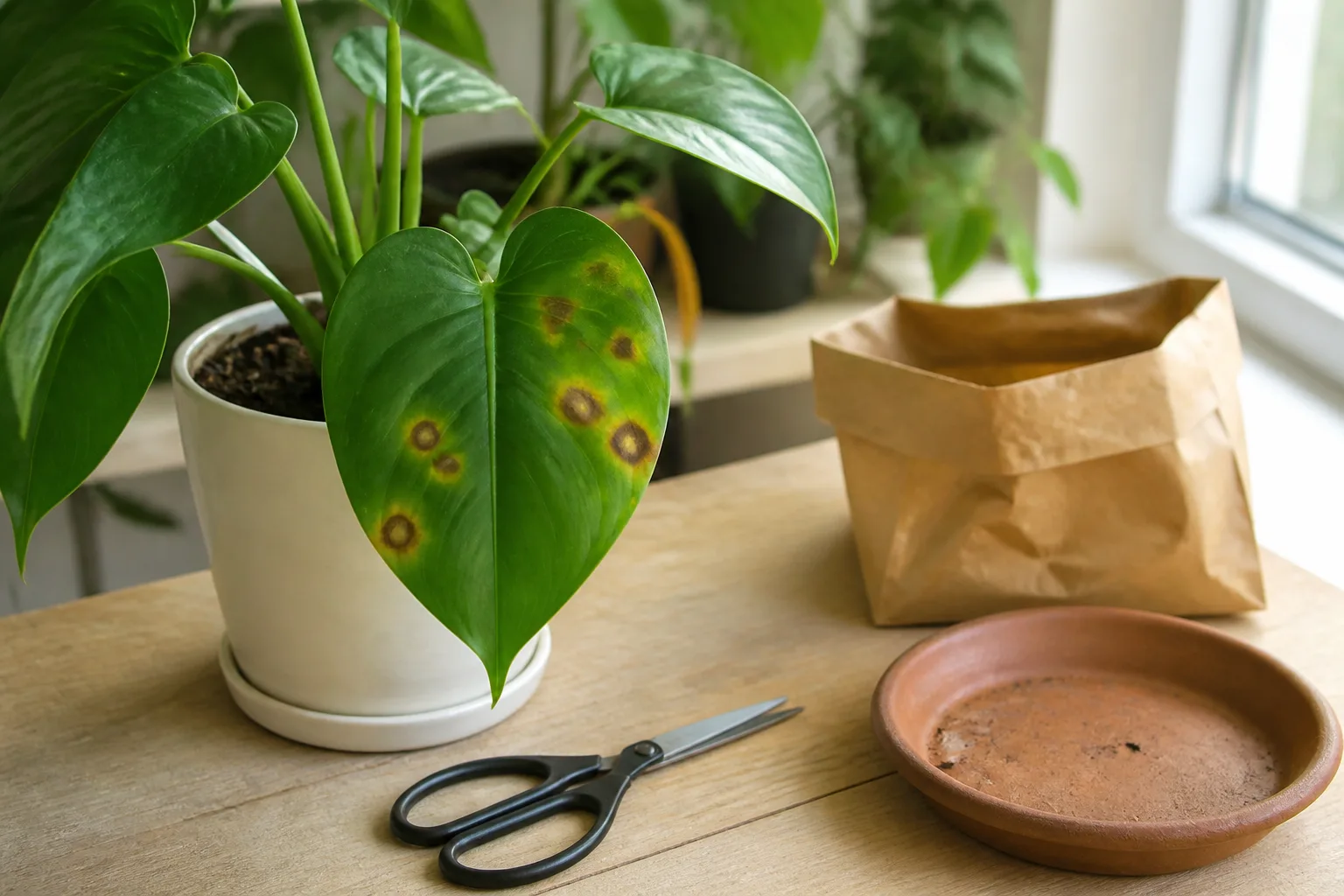
Several fungi attack basil foliage in warm, humid weather—often late summer. Cercospora and Colletotrichum leaf spot produce dark brown to black lesions; Colletotrichum may leave shot-hole patterns when dead tissue falls out (UF IFAS Extension). Alternaria spots tend to be darker with yellow borders. Spores splash from soil and infected debris during rain or overhead irrigation.
Fix: When leaves are dry, remove and bag affected foliage—never compost infected basil in home piles. Switch to base watering only. Increase spacing so leaves dry within a few hours after rain. For spreading outbreaks on valuable plants, a potassium bicarbonate or copper fungicide labeled for herbs may help if used with cultural steps first; always follow label rates and pre-harvest intervals. Replace severely defoliated plants rather than fighting through autumn humidity.
Bacterial Leaf Spot and Basil Downy Mildew
Bacterial leaf spot (Pseudomonas cichorii) creates dark, water-soaked spots that may follow leaf veins. Wet, humid weather and overhead watering spread bacteria on tools, hands, and splash (UF IFAS Extension). Downy mildew is different: upper leaves show yellow patches between veins, then brown-black collapse; undersides carry gray-purple sporulation in morning dew (UF IFAS Extension). Downy mildew can destroy a bed in days and overwinter in some climates via seed and debris.
How to Tell Bacterial, Fungal, and Downy Mildew Apart
Fungal leaf spot: dry-ish dark patches, often circular; may shot-hole; no velvet fuzz underneath. Bacterial spot: angular, water-soaked, sometimes oozing in extreme humidity; spreads fast in wet canopy. Downy mildew: yellow “windows” between veins first; fuzzy underside growth; whole plant decline in humid heat. When downy mildew is confirmed, remove the entire plant and start fresh with resistant cultivars now sold specifically for downy mildew pressure—cultural fixes alone rarely save a mature infection (UF IFAS Extension).
Can You Still Eat Basil With Black Spots?
It depends entirely on the cause—not on whether the leaf still smells like basil. Cold bruises and minor sun scorch: trim the black area; the rest is fine for pesto if texture is firm. Active fungal, bacterial, or downy mildew infections: do not eat spotted tissue; discard those leaves. Pathogens may not poison you like botulism would, but they ruin flavor and you cannot wash off mycelium inside leaf tissue.
For sprayed plants, wait until the label harvest interval passes, then rinse thoroughly. When disease is widespread, harvesting clean-looking tips from the same infected plant is a judgment call most cooks skip—starting a new pot is cheaper than food anxiety. If leaves are mushy, sour-smelling, or from a rotting root ball, throw them out.
Fix-It Plans by Cause: Prune, Dry Out, Spray, or Start Over
Cold or scorch: Prune damaged leaves; adjust temperature or shade; no spray needed. Overwatering: Dry soil cycle, repot if needed, discard if stem is mushy. Spider mites: Rinse, soap, repeat; isolate herbs on the same sill. Fungal leaf spot: Bag prunings, base-water, improve airflow; fungicide only if spots keep spreading after cultural fixes. Bacterial spot: Same as fungal, plus sterilize scissors between plants; avoid working wet foliage. Downy mildew: Remove plant, sanitize container, replant resistant seed or transplants in a new location.
Give cultural fixes seven to ten days before declaring failure—except downy mildew and advanced root rot, where same-week replacement saves you from contaminating neighbors. Keep a quarantine pot for supermarket herbs before mixing them into your main basil cluster.
Prevention for Next Season and Indoor Pots
Water at the base in the morning so leaves dry by evening—UF IFAS lists this as core disease prevention for basil (UF IFAS Extension). Space plants so air moves between them; crowded container triangles stay wet overnight. Use disease-free seed or reputable transplants; downy mildew can ride on seed. Rotate outdoor basil beds if you had fusarium or repeated leaf spot—do not replant in the same soggy corner.
For indoor basil, run a small fan on low to cut humidity around leaves, and scout undersides weekly when heat dries the room. Choose downy-mildew-resistant varieties if your region sees humid summers. Mulch outdoor rows with straw to reduce soil splash, but keep mulch from touching stems. Harvest regularly; dense, untouched canopies hold moisture and hide mites.
Conclusion
Black spots on basil are your plant asking for a specific fix—not a generic panic prune. Match patch vs stipple vs edge vs yellow-between-veins, act on watering and airflow first, and treat pests or disease only when the pattern fits. Most plants recover from cold, scorch, and early mite or leaf-spot damage; replace when downy mildew, fusarium-style wilt, or root rot owns the stem. Keep edible-herb rules simple: trim mechanical damage, discard diseased tissue, and restart with resistant varieties when humidity wins twice in one season.