42 Calathea Varieties to Grow at Home
Compare 42 calathea varieties by pattern, size, humidity needs, and difficulty—plus a quick-pick table and beginner picks so you buy the right prayer plant.
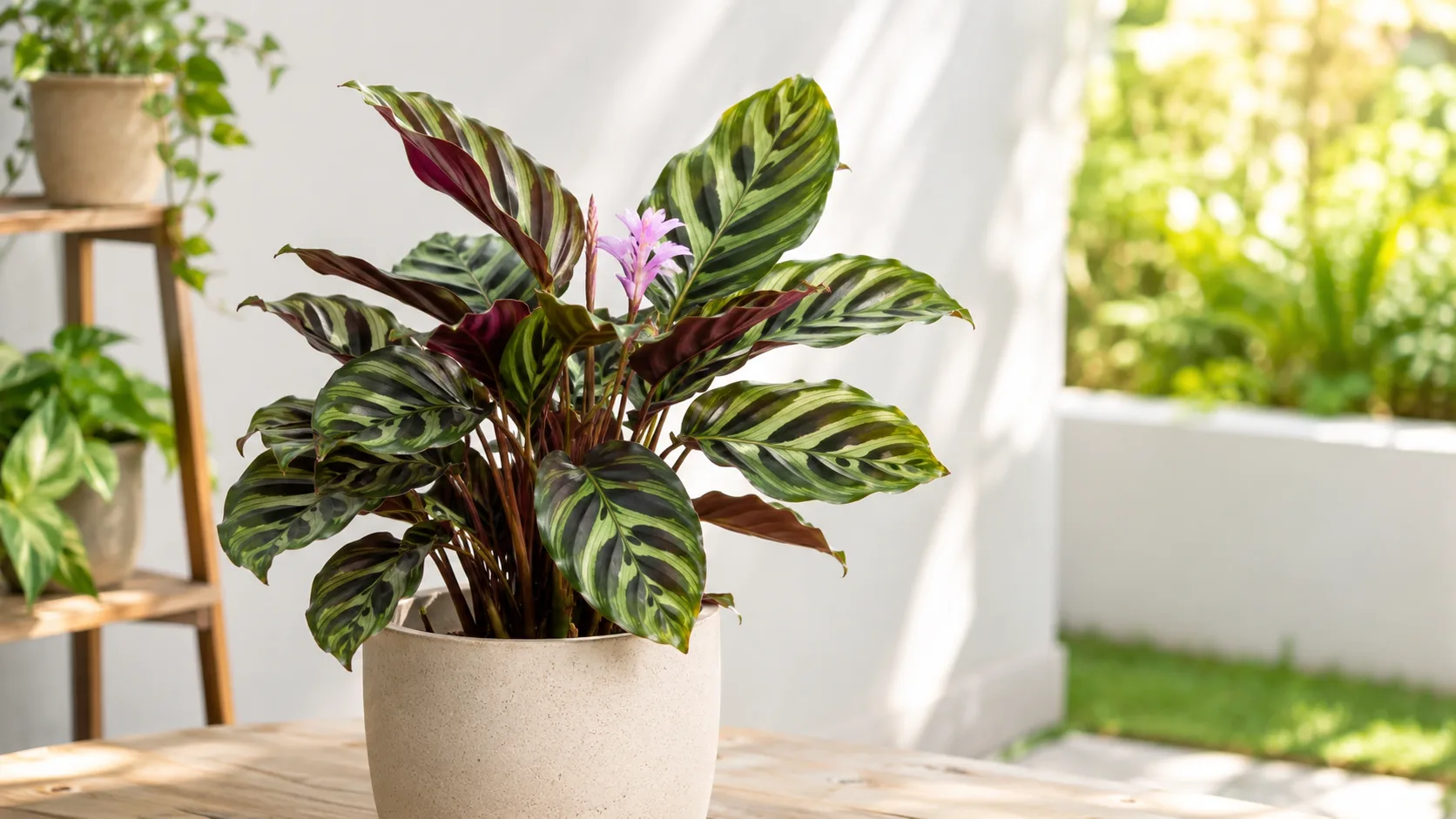
Calathea varieties turn a shelf into a living pattern book—round silver disks, rattlesnake blotches, pinstripes in pink, mosaic tiles, and velvet feathers that fold up at night like hands in prayer. The mistake most buyers make is choosing by leaf photo alone. A White Fusion calathea in a dry, sunny window will brown and stall while a Calathea Medallion in the same spot can look polished for years with half the drama.
This guide covers 42 calathea varieties worth knowing—species, cultivars, and trade names grouped by look and difficulty so you can shortlist before you shop. Every entry notes mature size, pattern type, and care temperament. Where LeafyPixels has a full care hub, you will find a /plants/ link for deeper light, watering, and troubleshooting pages. For culture that applies to every type on this list, see the Calathea care guide.
What Calathea Means Today (Goeppertia and Prayer Plants)
Botanists split many former Calathea species into Goeppertia after a 2012 molecular phylogeny in Systematic Botany by Borchsenius et al. (DOI 10.1600/036364412X656445; the study reclassified the bulk of the roughly 60 historical calathea species). Nursery tags still print “Calathea” on almost everything in this article—and care did not change when the Latin name did. The RHS Calathea growing guide groups prayer-plant houseplants across Goeppertia, Ctenanthe, and Stromanthe under the calathea umbrella because they share the same indoor culture: warm air, high humidity, bright indirect light, and evenly moist but never soggy potting mix.
Historically, botanists recognized roughly 60 calathea species across tropical Americas, now tracked and verified against POWO (Plants of the World Online, Kew) for accepted names. Only a fraction appear regularly in houseplant shops; the rest are collector species, outdoor landscape plants in frost-free zones, or mislabeled look-alikes. All belong to Marantaceae, the prayer-plant family, alongside true prayer plant (Maranta leuconeura) and several Ctenanthe species that nurseries sell as calatheas.
The prayer plant nickname comes from nyctinasty—leaves lie more open by day and rise or fold at night. Most calatheas on this list move; the notable exception is Goeppertia veitchiana (medallion), whose stiff, heavily marked leaves barely fold. If a calathea stops moving, check light, temperature, and watering before assuming it is dying. Movement is normal; stillness is a stress signal for the folding types.
Every calathea on this list is non-toxic to cats and dogs per the ASPCA Calathea listing, which keys the genus-level entry to Calathea spp. (covering the reclassified Goeppertia houseplants sold under that name). Chewing foliage can still upset a pet’s stomach and wreck the plant, so keep pots out of reach if you have nibblers.
How to Pick the Right Calathea in Three Steps
Calatheas evolved on humid rainforest floors. Most varieties want 60% relative humidity or higher—the RHS notes that dry air browns leaf tips and edges before anything else fails, and NC State Extension species pages repeat the 60%+ preference for G. kegeljanii, G. rufibarba, and G. makoyana. A bathroom with bright filtered light, a pebble tray, or a small humidifier beats daily misting, which wets leaves briefly without raising room humidity.
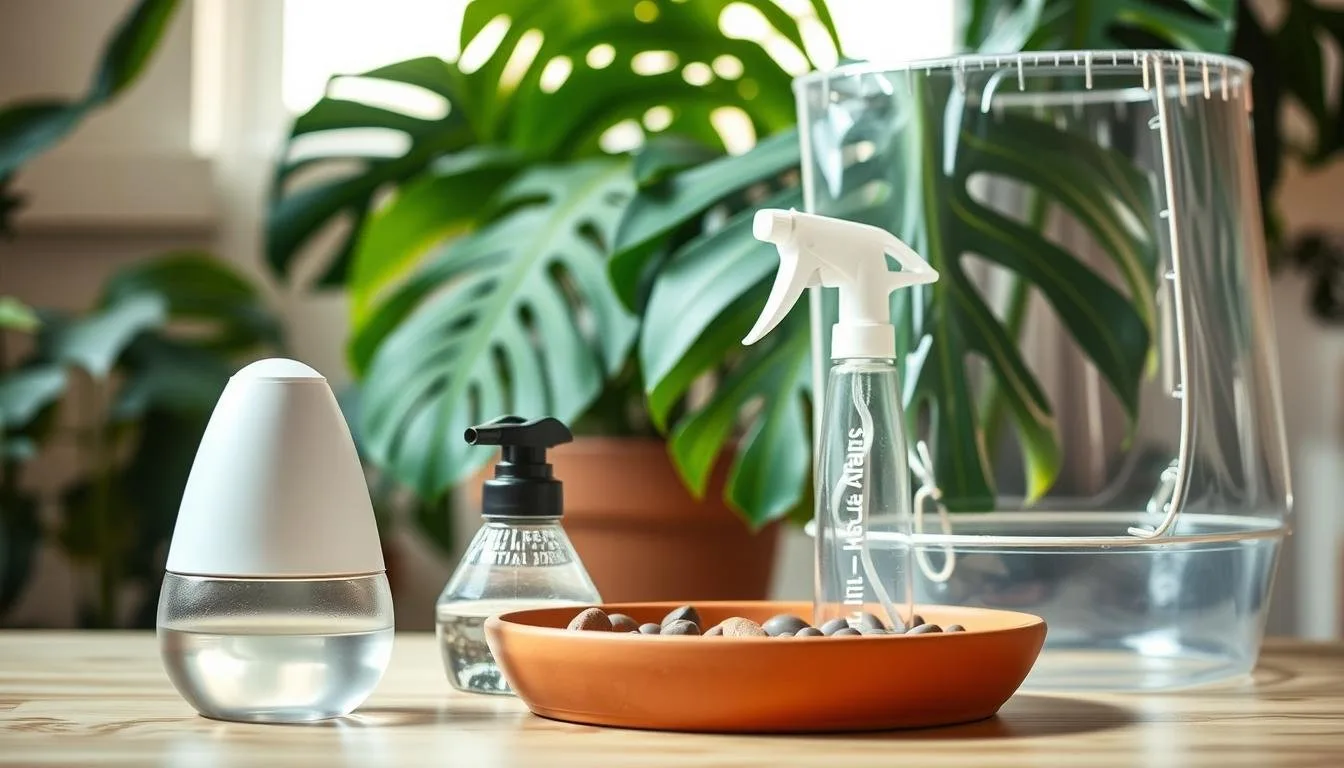
If your winter heating runs below 40% RH and you will not add humidity, skip pinstripe, white-variegated, and mosaic types first. Choose rattlesnake, medallion, or zebrina instead—they still want moisture but forgive dry air slightly better than ornata or White Fusion.
Bright indirect light is the default for nearly every entry below. East-facing windows, bright north exposures, or south/west windows behind sheer curtains work. Direct afternoon sun bleaches patterns and scorches tissue within days. Large-leaved types—orbifolia, warscewiczii, cigar plant (G. lutea)—need more floor space and dry out slower in low light. Small cultivars like White Fusion and undulata fit shelves but punish inconsistent watering faster because tiny root balls swing between wet and dry quickly.
Beginner tier: Medallion, rattlesnake, zebrina, Freddie, and peacock—widely available, well-documented, and recover from one bad week if you correct water and humidity. Intermediate tier: Ornata, roseopicta cultivars, network, orbifolia, rufibarba, warscewiczii, crocata—need stable humidity, filtered water, and honest light assessment. Collector tier: White Fusion, fucata, anulque, dressleri, stromanthifolia, and most wild-type species—rare in shops, sensitive to tap-water salts, or large enough to outgrow typical apartments.
42 Calathea Varieties — Quick Comparison Table
Use this table to narrow your list. Difficulty reflects typical indoor performance in a humid, bright room—not outdoor landscape ease. Mature sizes are indoor ranges drawn from RHS and NC State species pages where available.
| Common name | Botanic name (current) | Pattern / look | Mature size (indoor) | Difficulty |
|---|---|---|---|---|
| Rose-painted calathea | Goeppertia roseopicta | Painted green edge, purple underside | ~18 in. | Intermediate |
| Dottie | G. roseopicta ‘Dottie’ | Deep green with pink edge | ~18 in. | Intermediate |
| Rosy | G. roseopicta ‘Rosy’ | Green border, cream-pink center | ~18 in. | Intermediate |
| Corona / Eclipse | G. roseopicta cultivars | Rose-painted variants | ~18 in. | Intermediate |
| Calathea leopard | G. bachemiana | Pointed leaves, stripe pairs | ~18 in. | Intermediate |
| Zebra plant | G. zebrina | Bold dark green stripes | to 24 in. | Beginner |
| Picturata | G. picturata | Silvery center, green border | to 24 in. | Intermediate |
| White star | G. majestica | Green with white ribbing | to 5 ft | Intermediate |
| Brazilian star | G. spp. (star flower type) | Elongated leaves, pink flowers | to 4 ft | Collector |
| Variegated prayer type | G. spp. (mixed tags) | Yellow-spattered dark green | ~18 in. | Intermediate |
| Shadow plant | G. leopardina | Bold light/dark green contrast | to 30 in. | Intermediate |
| Silver stripe | G. micans | Green with pale striping | to 31 in. | Intermediate |
| Rattlesnake plant | G. insignis | Wavy lance leaves, oval blotches | to 24 in. | Beginner |
| Lasiostachya | G. lasiostachya | Long thin green leaves | to 24 in. | Collector |
| Jungle velvet | G. warscewiczii | Velvety dark green, red underside | to 6+ ft | Intermediate |
| Silver plate | G. spp. ‘Silver Plate’ | Pale silver-green, pink ribs | ~18 in. | Intermediate |
| Red zebrina | G. ecuadoriana | Velvety green, burgundy underside | ~18 in. | Intermediate |
| Round-leaved calathea | G. orbifolia | Large round silver-striped disks | to 38 in. | Intermediate |
| White fusion | G. lietzei ‘Fusion White’ | White-green marbled variegation | ~6 in. | Collector |
| Rattle shaker | G. crotalifera | Green leaves, yellow inflorescence | ~18 in. | Collector |
| Pinstripe calathea | G. ornata | Dark green with pink stripes | ~18 in. | Intermediate |
| Pink aurora | G. spp. ‘Pink Aurora’ | Silvery pink accents | ~18 in. | Intermediate |
| Fucata | G. fucata | Silver with green stripes | ~18 in. | Collector |
| Furry feather | G. rufibarba | Narrow wavy leaves, fuzzy texture | to 24 in. | Intermediate |
| Undulata | G. undulata | Dark green with silver midrib lines | ~12 in. | Intermediate |
| Peacock plant | G. makoyana | Peacock-feather variegation | to 30 in. | Beginner |
| Eternal flame | G. crocata | Bluish-green; orange flowers | to 24 in. | Intermediate |
| Latifolia | G. latifolia | Large green, burgundy accents | to 30 in. | Collector |
| Network / mosaic | G. kegeljanii | Tile-like mosaic pattern | to 24 in. | Intermediate |
| Marantifolia | G. marantifolia | Green, cream bracts | to 7 ft | Collector |
| Albertii | G. albertii | Green with dark markings | ~18 in. | Intermediate |
| Gymnocarpa | G. gymnocarpa | Plain green Central American type | to 24 in. | Collector |
| Fasciata | G. fasciata | Shiny green with dark stripes | to 24 in. | Intermediate |
| Variegata | G. spp. variegated | Stark white-green stripes | ~18 in. | Intermediate |
| Cigar plant | G. lutea | Large plain green paddles | to 13 ft | Intermediate (space) |
| Macrosepala | G. macrosepala | Green, summer flowers | to 4 ft | Collector |
| Anulque | G. anulque | Plain green Ecuador/Colombia type | 24–34 in. | Collector |
| Elliptica ‘Vittata’ | G. elliptica ‘Vittata’ | Striped elliptic leaves | ~16 in. | Intermediate |
| Helen Kennedy | G. dressleri | Green collector species | ~12 in. | Collector |
| Medallion | G. veitchiana | Silver medallion rings | to 30 in. | Beginner |
| Ice blue / fishbone | G. burle-marxii | Fishbone pattern, light/dark green | to 60 in. | Intermediate |
| Stromanthifolia | G. stromanthifolia | Oblong patterned leaves | ~16 in. | Collector |
| Freddie | G. concinna ‘Freddie’ | Compact striped green blades | ~12 in. | Beginner |
Best Calathea Varieties for Beginners
Start here if this is your first prayer plant or your last one died from dry air and tap water.
Medallion, Rattlesnake, Zebrina, and Freddie
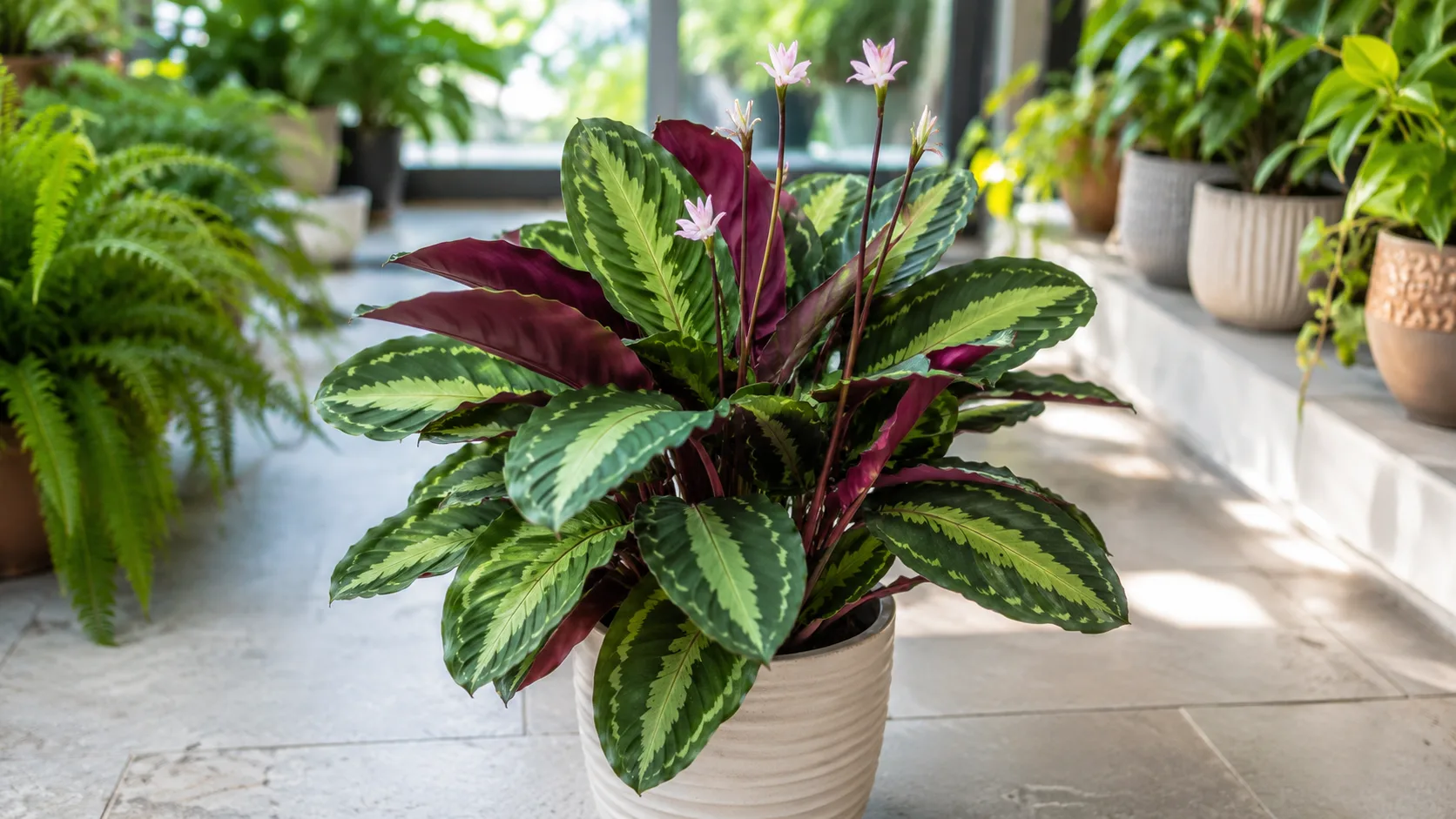
Calathea medallion (Goeppertia veitchiana) is the variety most shops stock in quantity—and for good reason. Silver-green medallion rings on bright green, with burgundy undersides, read clearly from across a room. NC State and the RHS both describe it as a clumping perennial that prefers bright indirect light, moist well-drained mix, and warm humid air. It is more forgiving of minor humidity dips than ornata or White Fusion, though it still hates drafts and chlorine-heavy water. Full hub: Calathea Medallion.
Unlike most calatheas, medallion leaves are stiff and barely fold at night—do not read that stillness as a stress signal the way you would for a rattlesnake plant.
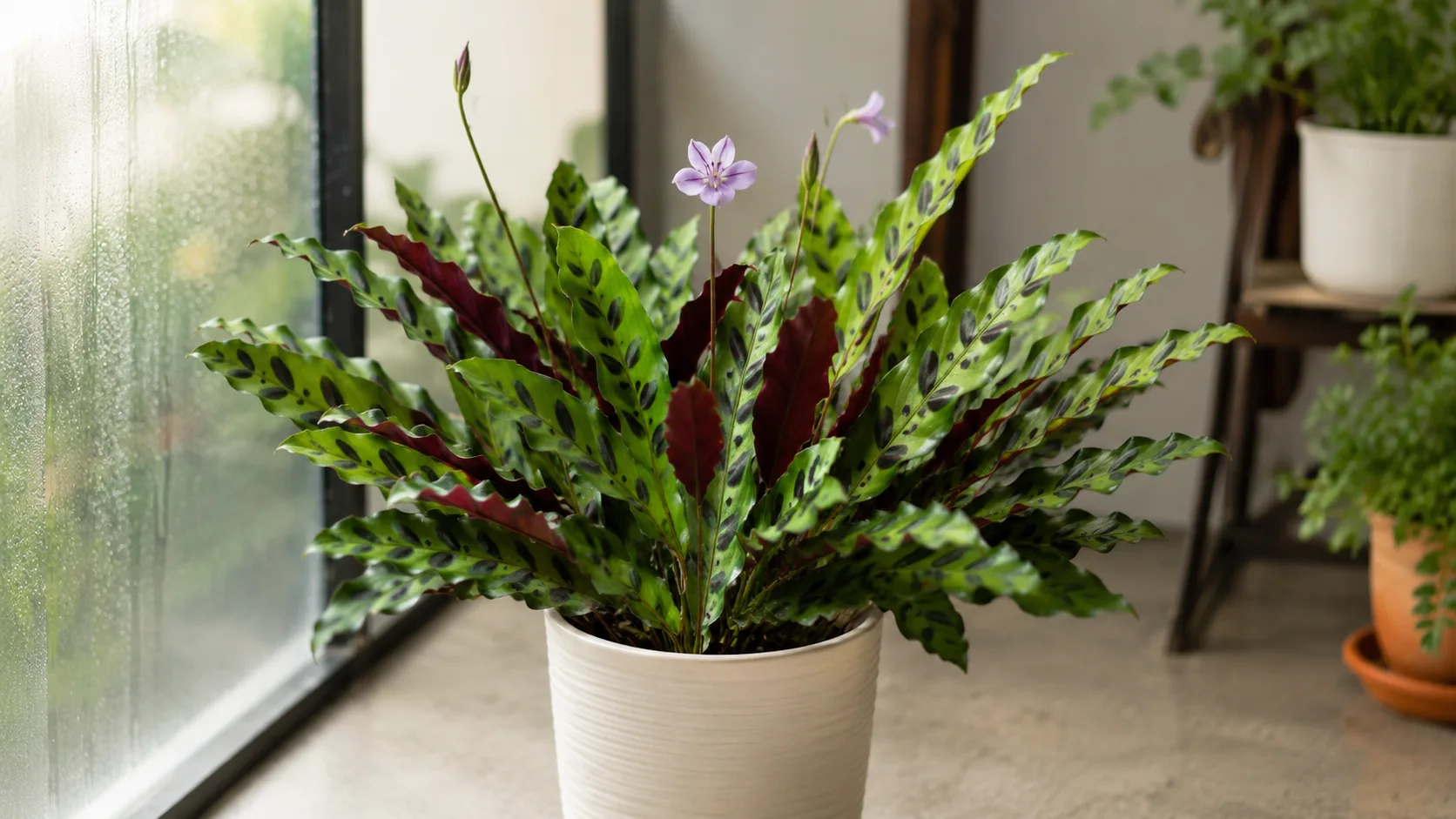
Rattlesnake plant (G. insignis, still sold as C. lancifolia) is the wavy lance-leaf with dark green ovals on light green and purple undersides. It is one of the most popular calatheas worldwide and handles typical indoor conditions better than variegated cultivars when humidity stays near 60%. See the dedicated rattlesnake plant guide and Calathea Rattlesnake hub for watering rhythm and brown-tip fixes.
Zebra plant (G. zebrina) delivers oversized paddle leaves with high-contrast stripes—instant graphic impact without the white-variegation fussiness. Leaves can reach 12 inches long on a 2-foot plant. Pair with the Calathea Zebrina hub for soil and repot timing.
Calathea Freddie (G. concinna ‘Freddie’) is a compact striped type often grouped with zebrina for beginners: bright green blades with darker stripes, moderate size, and steady growth when humidity and water stay consistent. Hub: Calathea Freddie.
If you want peacock-pattern drama with similar temperament, add peacock plant (G. makoyana)—feathery light-and-dark green markings with purple undersides. Calathea Peacock covers the full care loop.
Round-Leaved and Orbifolia Types
Round leaves signal a different silhouette—sculptural disks instead of upright lances.
Orbifolia, Albertii, and Silver Plate
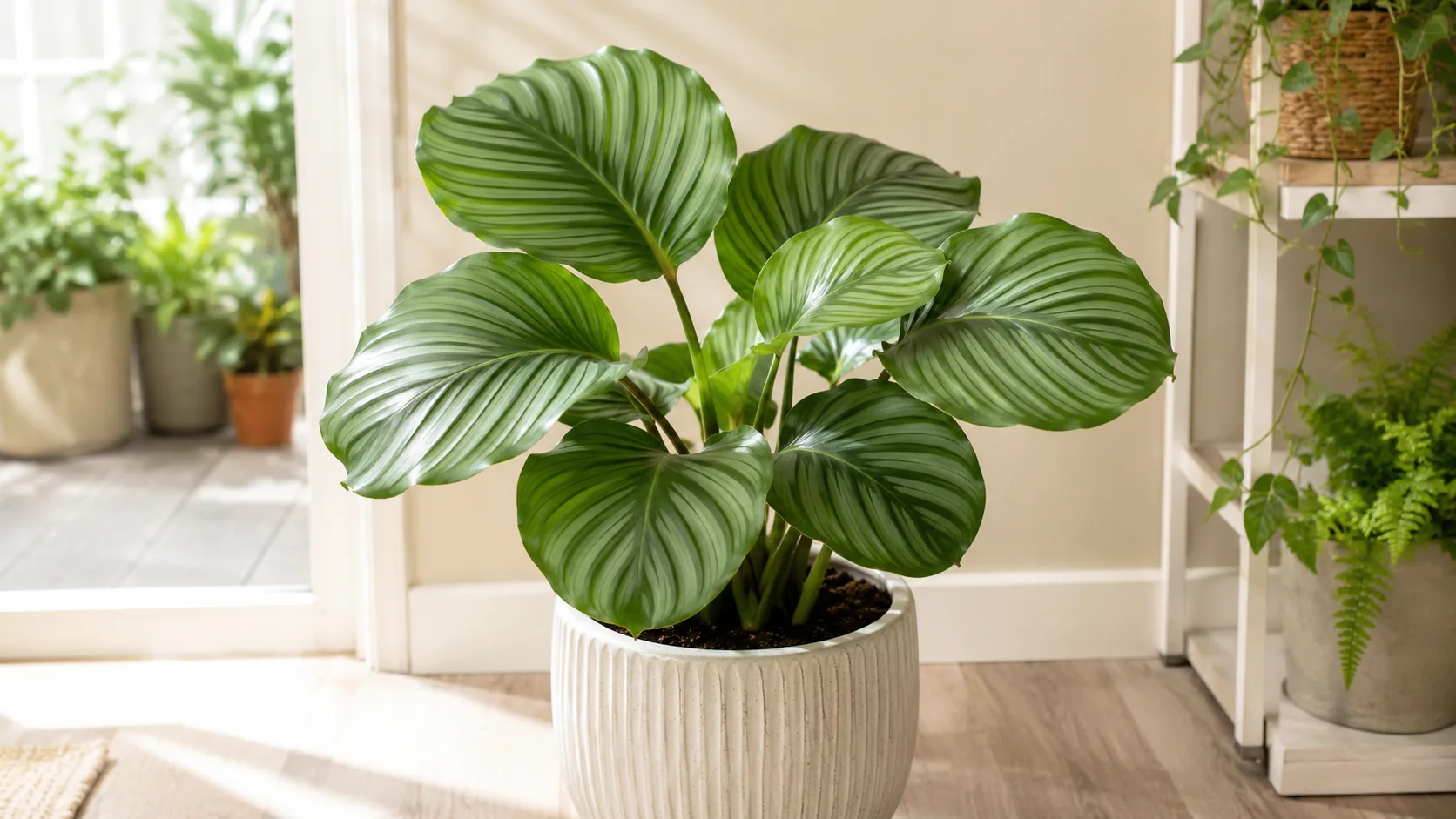
Round-leaved calathea (G. orbifolia) is the statement round-leaf species most collectors mean when they say “orbifolia.” Silvery-gray stripes cross broad, nearly circular blades that can span 10 inches across on a 3-foot plant. It needs space, stable humidity, and careful watering because large leaves transpire heavily yet the root ball still rots if the pot sits wet. Calathea Orbifolia breaks down light, soil, and repot cues.
Calathea albertii shares the roundish, dark-marked look in a more compact 18-inch frame—common in plant shops but still fussy about dry air. Treat it like orbifolia with less floor space.
Silver plate is a pale silver-green cultivar with pinkish ribbing and purple undersides—more subtle than orbifolia but equally sensitive to direct sun, which washes the silver to dull green.
Stripe, Zebra, and Pinstripe Varieties
Striped calatheas reward humidity with crisp lines; dry air melts pinstripes into brown paper.
Ornata, Vittata, Network, and Stripe Cultivars
Pinstripe calathea (G. ornata) is the elegant dark-green leaf with thin pink stripes and red-purple undersides—often the plant that converts people to calatheas and then breaks their hearts in winter. Stripes fade and tips brown when humidity drops below 60% or tap water salts accumulate. Use filtered water, a humidifier, and bright indirect light; avoid calling it “easy” just because it is common.
Elliptica ‘Vittata’ (G. elliptica ‘Vittata’) offers striped elliptic leaves on a 16-inch frame—similar pinstripe energy with a narrower blade. Calathea Vittata covers its specific watering rhythm.
Network calathea (G. kegeljanii, sold as C. musaica) is the mosaic tile species—intricate dark green pattern on light green that reads like stained glass. NC State describes it as native to Brazilian rainforests with high humidity needs and moderate indoor size to 2 feet. It is not a beginner plant, but it is easier than White Fusion for most growers who run a humidifier. Hub: Calathea Musaica.
Silver stripe (G. micans) and fasciata (G. fasciata) add shiny green leaves with paired dark stripes—fasciata in particular shows red undersides as new leaves unfurl. Both need moist mix and warm air but lack the white-variegation meltdown risk.
Variegata types with stark white stripes (often sport mutations) need brighter indirect light than solid-green types to hold white—but never direct sun. Reversion to green is common in low light.
Painted, Pink, and Rose-Painted Cultivars
Pink calatheas are Instagram bait—and humidity tests.
Roseopicta, Dottie, Rosy, and Pink Aurora
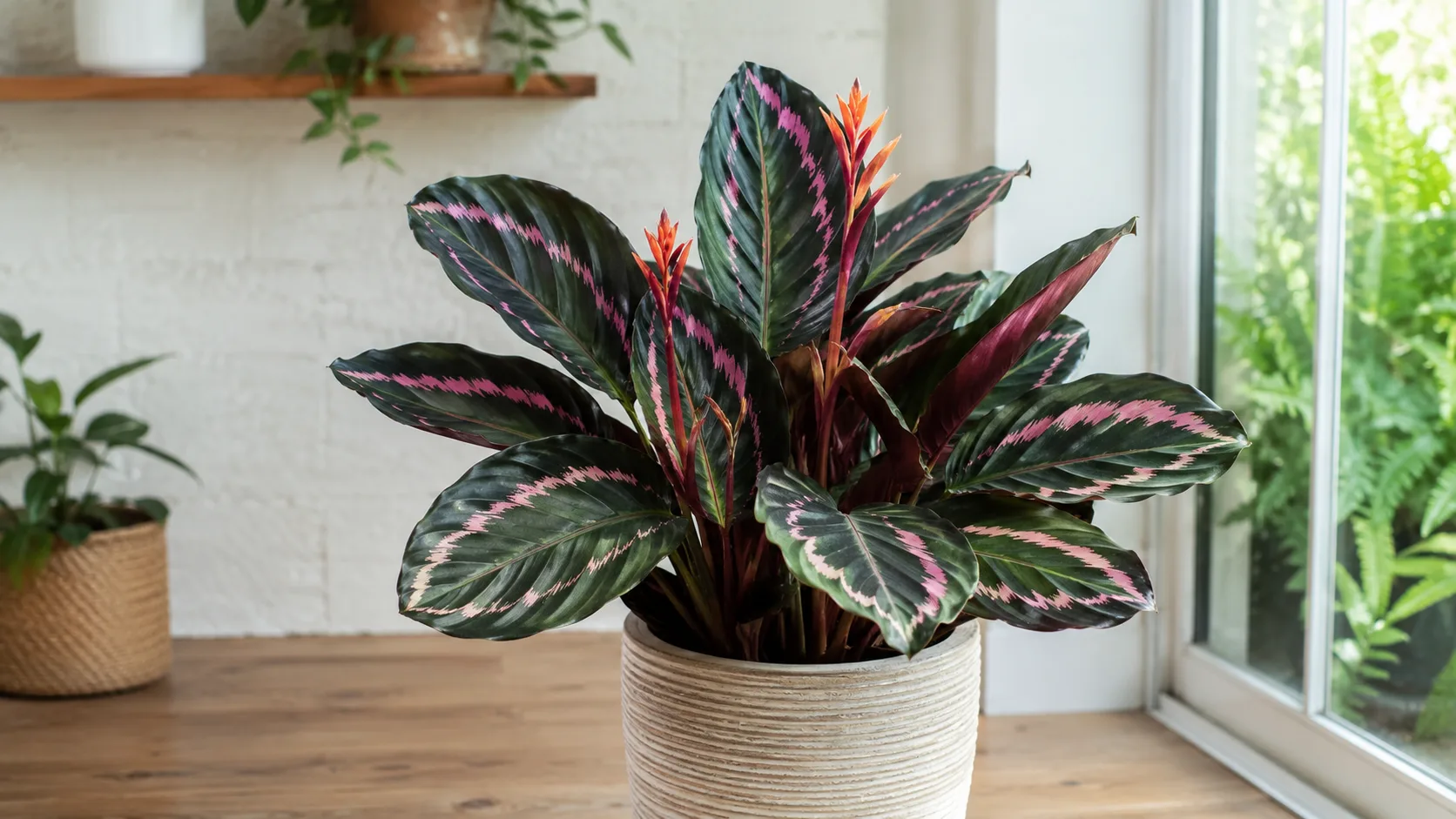
Rose-painted calathea (G. roseopicta) is the parent species behind many pink cultivars: light green centers, dark green brushed edges, and purple undersides that look hand-painted. Cultivars Corona and Eclipse are common roseopicta selections with slightly different edge contrast.
Dottie (G. roseopicta ‘Dottie’) is the deep green oval leaf with fuschia-pink outline—one of the most recognizable cultivars in trade. Pink stays sharper in bright indirect light; dim corners fade it to muddy green. Calathea Dottie covers fertilizer and propagation limits.
Rosy differs from the species with feathered pink and cream in the leaf center. Pink aurora pushes silvery-pink tones—both need the same humidity and filtered water as Dottie.
The Calathea Roseopicta hub applies to all roseopicta cultivars on this list.
Peacock, Mosaic, and Intricate Pattern Plants
These are the varieties people photograph—and the ones that expose weak humidity fastest.
Makoyana, Musaica, White Fusion, and Leopard Types
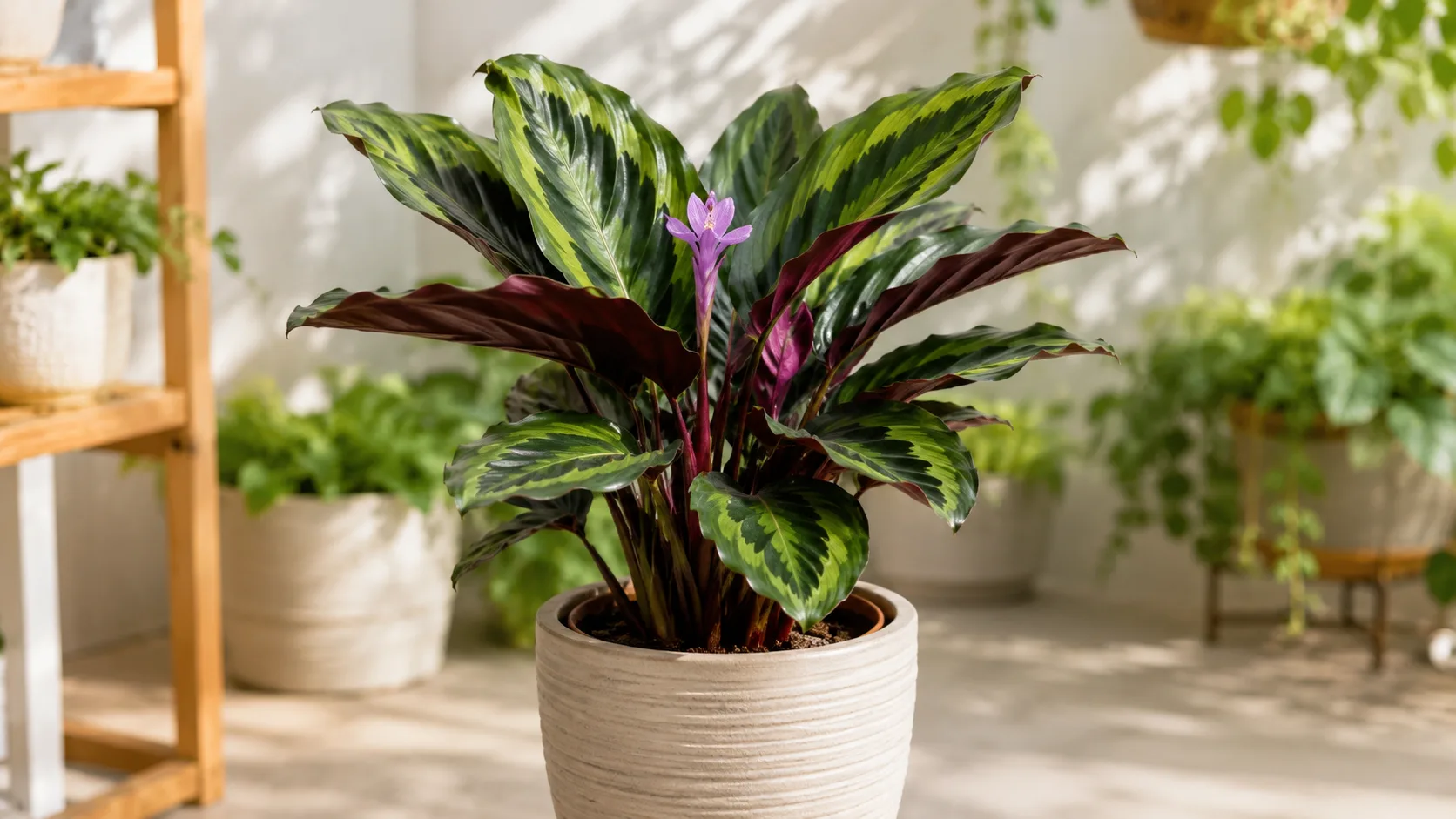
Peacock plant (G. makoyana) earns its name with feathery dark-green markings on light green, like tail eyes—denser foliage than many lance-leaf types. NC State notes its southeastern Brazil origin and preference for warm, shaded, humid conditions. It belongs in the beginner group when you can keep humidity above 60%.
Network / mosaic (G. kegeljanii) is covered above; treat musaica tags as the same species.
White fusion (G. lietzei ‘Fusion White’, often mislabeled C. wiotii) is small—roughly 6 inches—with marbled white-green variegation. It is beautiful and notorious: brown crispy patches, slow growth, and sensitivity to fluoride and low humidity make it a collector-tier plant, not a first calathea. Calathea White Fusion documents realistic expectations.
Leopard types—G. bachemiana (calathea leopard) and G. leopardina (shadow plant)—share pointed leaves with high-contrast light and dark green patterning. Shadow plant runs taller (to 30 inches) with bolder stem contrast. Both need the same filtered light and moist mix as makoyana.
Velvet, Feather, and Textural Leaves
Not every calathea is flat and glossy—some trade pattern for touch.
Rufibarba, Warscewiczii, and Ecuadoriana
Furry feather calathea (G. rufibarba) breaks the mold with long, narrow, wavy leaves and a fuzzy texture on the undersides. Young leaves show strong green contrast that softens with age; petioles and undersides run reddish-purple. NC State describes its Brazilian rainforest origin and preference for moist—but not soggy—mix in bright shade. It is a conversation piece that still needs humidity.
Jungle velvet (G. warscewiczii) has thick velvety dark green blades with burgundy undersides and can produce white flowers in perfect conditions—though indoor bloom is rare. It is one of the largest common houseplant calatheas and needs floor space. Calathea Warscewiczii covers size management.
Red zebrina (G. ecuadoriana) and ice blue / fishbone (G. burle-marxii) emphasize undersides and linear patterning over paint-splash variegation. Burle-marxii can reach 5 feet indoors with fishbone striping—plan headroom.
Collector-grade species—fucata, anulque, dressleri (Helen Kennedy), stromanthifolia, gymnocarpa, lasiostachya, and crotalifera (rattle shaker)—rarely appear at big-box stores but show up in swaps and botanical gardens. Anulque from Ecuador and Colombia may tolerate slightly drier cycles than mosaic types; verify moisture by feel, not calendar. If a seller labels a pot only “calathea mix,” assume intermediate care until you identify the species.
Flowering and Oversized Statement Calatheas
Most calatheas are foliage plants indoors—but a few flower or outgrow typical shelves.
Crocata, Lutea, Majestica, and Latifolia
Eternal flame (G. crocata) is grown for orange-yellow bracts that torch above bluish-green foliage when light, humidity, and feed align. Flowers are more reliable than most calatheas but still not guaranteed on a windowsill.
Cigar plant (G. lutea) is the hardy outlier—a large paddle-leaf species native to the Caribbean and tropical Americas that can hit 13 feet outdoors and still grow big indoors. It is not a desk plant; treat it like a tropical foliage shrub in a floor pot.
White star (G. majestica) and Brazilian star types push height to 4–5 feet with elongated leaves and star-shaped flowers in ideal greenhouse conditions. Indoors they function as vertical statement plants if you have ceiling clearance.
Latifolia, maranthifolia, and macrosepala are landscape-scale species with cream or purple flower bracts—stunning in botanical gardens, rarely seen as houseplants except in collector greenhouses.
Shared Calathea Care Across All Varieties
Every variety above shares the same cultural backbone.
Light: Bright indirect or filtered; east windows excel. No hot direct sun.
Water: Use filtered, distilled, or rainwater when possible—calatheas show brown tips on chlorinated or fluoride-heavy tap water. Water when the top inch of mix begins to dry; keep moist in active growth, slightly slower in winter. Never let the pot sit in saucer water.
Humidity: Target 60% RH or higher. Humidifier beats misting. Kitchens and bathrooms work if light is adequate.
Temperature: Steady 65–80°F (18–27°C); cold drafts and heat vents cause overnight curl.
Soil: Peaty, well-draining houseplant mix with perlite or bark—dense garden soil retains too much water.
Feed: Half-strength balanced liquid fertilizer monthly in spring and summer; pause or reduce in winter.
Propagation: Division at repot time is the reliable method—calatheas do not propagate from leaf cuttings in water.
Pests: Spider mites attack dry plants first. Raise humidity and inspect leaf undersides weekly in winter.
When one plant struggles, fix environment before buying another cultivar. Most “black thumbs” with calatheas are really dry-air, tap-water, or overwatering problems wearing a new cultivar name.
Decision Checklist Before You Buy
- Measure your room humidity for a week; if it sits below 50% RH in winter, budget a humidifier or pick from the beginner tier only.
- Check your water: if it is chlorinated or fluoride-heavy, switch to filtered or rainwater before buying ornata or White Fusion.
- Match mature size to space: orbifolia, warscewiczii, burle-marxii, lutea, and marantifolia outgrow shelves and small apartments.
- Confirm light: east or bright north windows suit most varieties; south/west needs a sheer curtain.
- If you have pets, remember “non-toxic” per the ASPCA does not mean “safe to chew”—place pots out of reach.
- Start with one beginner-tier plant and stabilize its care for a month before adding a collector-tier variety.
Conclusion
Forty-two calathea varieties sounds overwhelming until you match pattern to room reality: start with medallion, rattlesnake, zebrina, Freddie, or peacock if you are new; graduate to ornata, roseopicta cultivars, network, and orbifolia when humidity stays above 60%; save White Fusion and wild collector species for when you already run a humidifier and use filtered water. Every type here is pet-safe per the ASPCA, most fold their leaves at night (medallion is the exception), and all reward boring consistency over heroic rescue. Pick two or three from the comparison table, follow the Calathea care guide for shared culture, and drill into the linked /plants/ hubs once you know which pattern you cannot live without.