Calathea Vittata Care Guide: Light, Water & Humidity
Goeppertia elliptica
Calathea Vittata pinstripe care: medium to bright indirect light, at least 60% humidity, filtered water, and consistently moist well-draining soil.
Calathea Vittata Care Guide: Light, Water & Humidity
Start with wateringThe most common care mistake for Calathea VittataWatering guide →Calathea Vittata care essentials
Light
medium to bright indirect light, low indirect light
Water
Every 5–7 days spring and summer (top 2 cm beginning to dry). 7–10 days winter. filtered, rainwater, or overnight-stood tap water.
Soil
Well-draining but moisture-retentive mix. pH 6.0–7.5. Peat or coco coir base with perlite.
Humidity
above 60% RH; pinstripes crisp at the margins when air is chronically dry
Temperature
18–24°C (65–75°F)
Fertilizer
Feed lightly during active growth.
About Calathea Vittata
Calathea Vittata has a upright growth habit.
| Detail | Information |
|---|---|
| Growth habit | Upright |
| Scientific name | Goeppertia elliptica |
Calathea Vittata Care Guide: Light, Water & Humidity
Calathea Vittata Care Guide — Pinstripes, Humidity, and Filtered Water
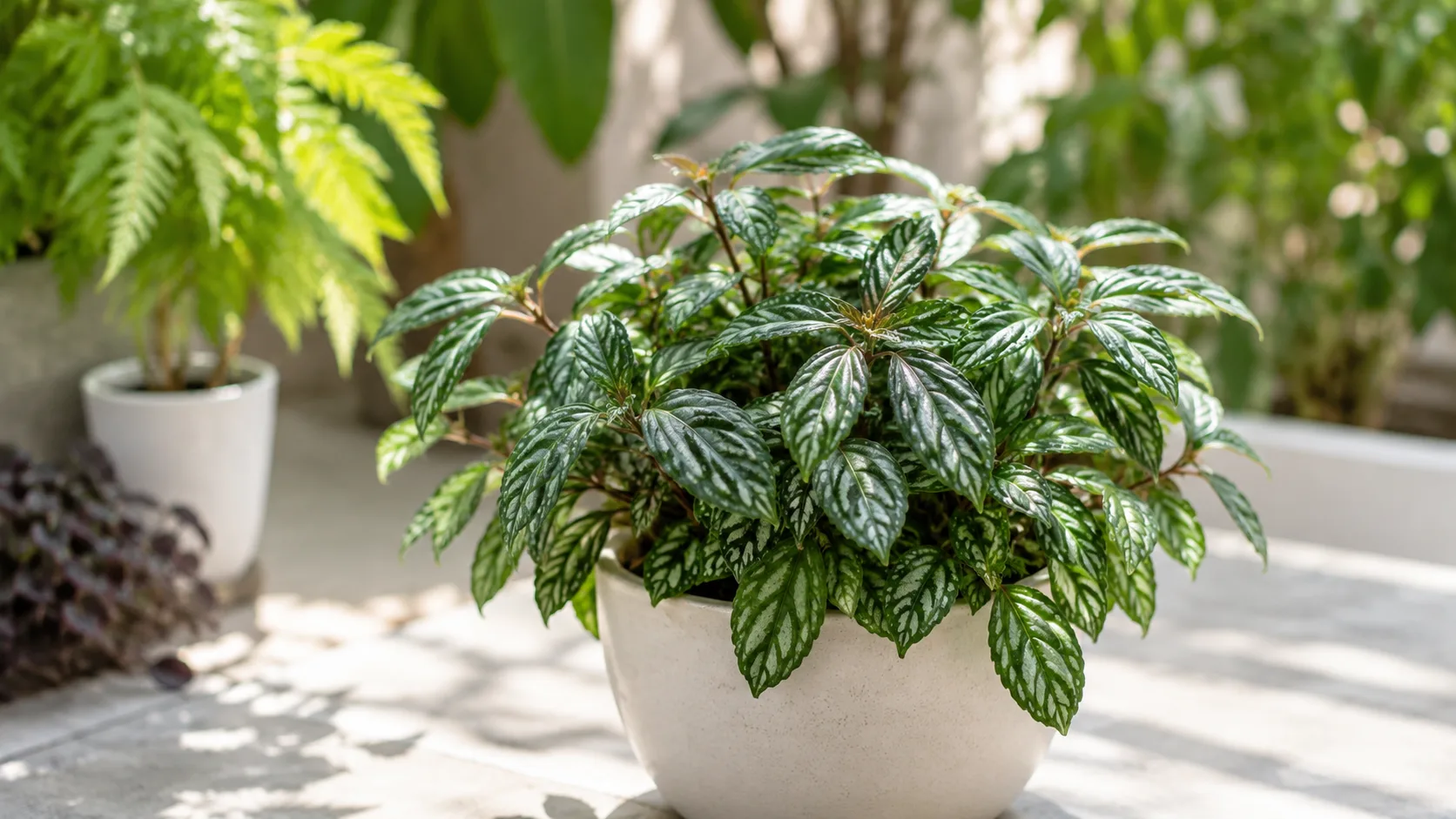
Calathea Vittata is a compact prayer plant sold for elongated, dark green leaves traced with fine white pinstripes — a pattern that looks crisp in a humid shop and often softens within weeks in an ordinary living room. Botanically it is Goeppertia elliptica, a clumping Marantaceae species from Brazilian rainforest understory now grouped with other calatheas under the resurrected genus Goeppertia after the 2012 molecular phylogeny in Systematic Botany. Nurseries still label the pot Calathea Vittata, and care advice written for the wider calathea group applies — but Vittata has its own weak points: thin white stripe tissue, moderate humidity demand, and a tendency to stay more compact indoors than the pink-striped pinstripe calathea (Goeppertia ornata) it is often confused with.
Treat Vittata as a humidity-and-water-quality plant first and a decorative foliage plant second. Medium to bright indirect light, evenly moist but airy soil, at least 60% relative humidity, and filtered or rainwater are the baseline. Change one variable at a time when stripes fade or edges crisp; stacking repotting, fertilizer, and a window move on the same weekend erases the diagnostic signal.
What Is Calathea Vittata?
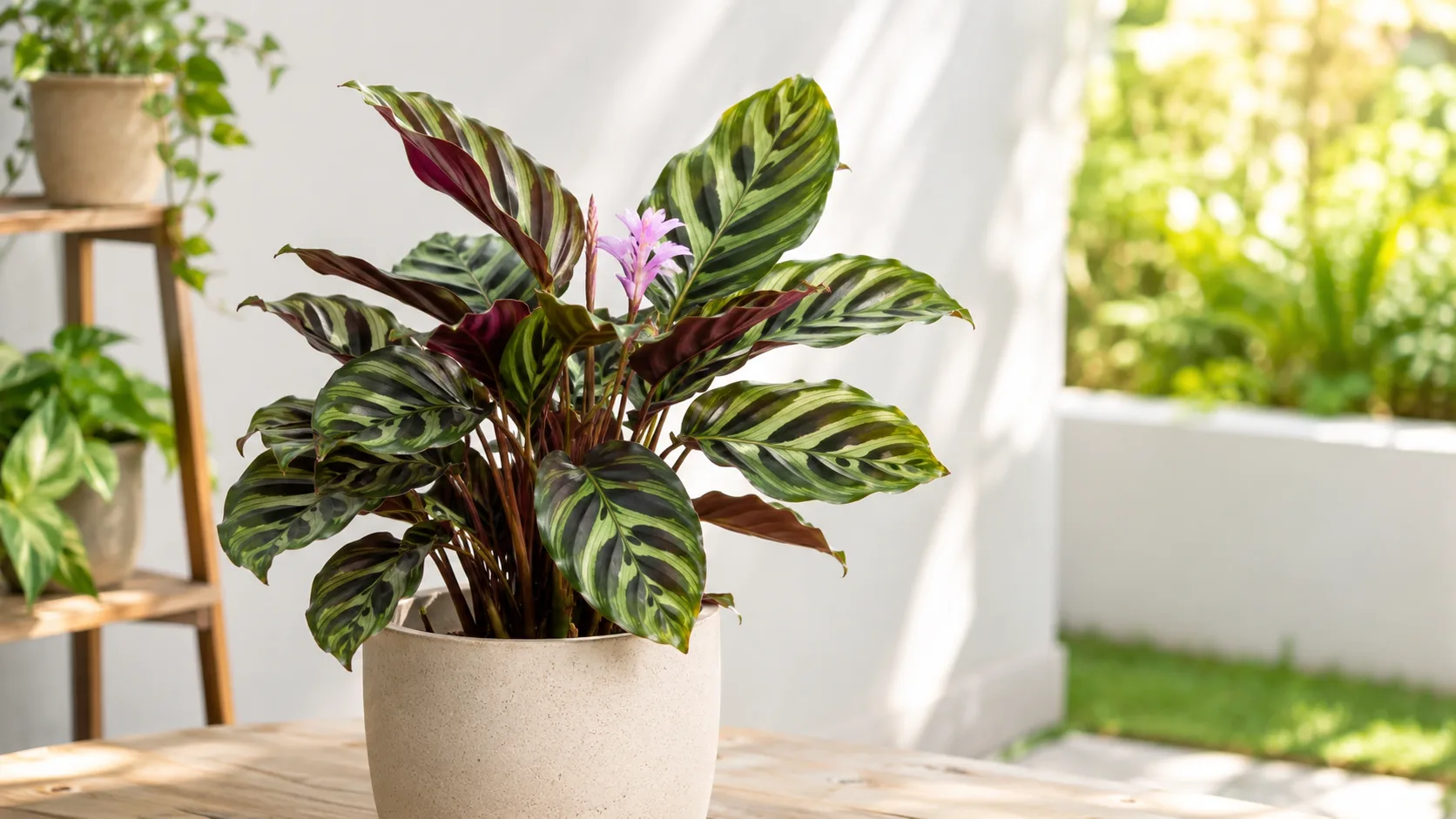
Calathea Vittata is a cultivar or trade selection of Goeppertia elliptica — an evergreen, rhizomatous perennial in the family Marantaceae (the prayer plant family). Like other goeppertias, it grows as an upright clump of leaves on thin petioles, folds foliage upward at night (nyctinasty), and is grown almost exclusively for patterned foliage rather than flowers indoors. The RHS Goeppertia profile describes related elliptica/mediopicta types as clump-forming plants with glossy leaves to about 20 cm (8 in) on short stalks, olive to deep green with a central pale stripe — a useful size reference for Vittata indoors.
In home culture, Vittata’s signature is narrower, elongated blades with delicate white lines on a deep green field. Those lines are not paint; they are zones of modified leaf tissue that lose contrast when light is too dim or too harsh and when tap-water minerals accumulate. That makes Vittata a moderate-difficulty houseplant — easier to keep than highly variegated fusion types, but less forgiving than a rattlesnake calathea once humidity and water chemistry slip.
Goeppertia elliptica and the retail Calathea label
If your plant tag says Calathea and your research tab says Goeppertia elliptica, both refer to the same retail lineage. The 2012 reclassification moved most popular “calatheas” into Goeppertia without changing how you water or light them. Search both names when troubleshooting pests or propagation. The ASPCA and most shops still index the group under Calathea, which matters for pet-safety lookups even though botanists use Goeppertia for this species.
How Calathea Vittata Differs from Ornata and Other Calatheas
Vittata is frequently shelved beside Goeppertia ornata (pinstripe calathea) because both show pinstriped leaves. They are not interchangeable in a dim bathroom corner. NC State Extension notes that ornata — native to Colombian and Venezuelan rainforest understory — carries pinkish-white stripes on dark green with purplish leaf undersides and can reach a more open, upright habit under ideal conditions. Vittata’s stripes read white, the leaf blade is often slimmer and more elongated, and mature indoor plants commonly stay slightly more compact than a vigorous ornata in the same window.
White pinstripes vs pink pinstripes
On ornata, chronic brown margins often trace to humidity or watering rhythm. On Vittata, growers frequently see white stripe tissue brown first when municipal water contains fluoride or when humidity chronically sits below the plant’s comfort band. The RHS calathea growing guide recommends rainwater and notes that tap water left to stand 24 hours reduces chlorine — helpful, but standing does not remove fluoride, which is why filtered or rainwater is the safer long-term choice for Vittata’s pale markings.
Compact indoor growth habit
Where ornata can look leggy as it searches for light, Vittata often maintains a tighter rosette when placement is correct — typically 12–18 inches (30–45 cm) tall in a standard indoor pot over time, depending on light and repotting frequency. Do not interpret compact growth as “slow and easy.” It still transpires through thin leaf tissue and still reacts to dry heating-season air faster than a pothos on the same shelf.
Growth Habit, Leaf Pattern, and Mature Size Indoors
Vittata grows from underground rhizomes, sending up new leaves in rolling spears that unfurl from the center of the clump. Healthy new foliage opens with sharp white lines and a firm blade; stressed new foliage arrives smaller, paler, or with blurred patterning. Old lower leaves yellow and die naturally — one or two at a time on an otherwise stable plant is normal senescence, not an emergency.
Pattern intensity is a live diagnostic. Stripes that wash out toward yellow-green usually mean too much direct sun or too little light, depending on whether bleaching or etiolation is driving the change. Judge by the last two new leaves, not by scars on older blades that will never recover their original contrast.
Light: Medium to Bright Indirect for Sharp Pinstripes
Calathea Vittata needs medium to bright indirect light — the brightness of a room where you can read comfortably by day without a lamp, but where midday sun does not strike the leaves. The RHS recommends a bright spot out of direct sunlight, with an east-facing window ideal in summer and a filtered south exposure more workable in winter when intensity drops.
Direct sun bleaches white pinstripes and scorches thin tissue within days. Deep shade produces smaller leaves, weaker stripes, and soil that stays wet too long because the plant uses less water — a setup that invites root stress even when you water conservatively. For detail on windows, grow lights, and warning signs, see the Calathea Vittata light guide.
Watering Rhythm and Water Quality
Water Vittata when the top 2 cm (about 1 inch) of mix is beginning to dry and the pot feels lighter — often every 5 to 7 days in active spring and summer growth and every 7 to 10 days in cooler winter months, though your room always overrides the calendar. Soak until excess drains, then empty the saucer. The goal is even moisture without saturation: roots should never sit in stale water, and the mix should not cycle between brick-dry and soggy.
When fluoride hits white stripe tissue first
Prayer plants in the Marantaceae family are widely reported as sensitive to tap-water minerals. On Vittata, watch the white pinstripe zones for early browning when chlorine, fluoride, or hard-water salts are in play. Rainwater, distilled water, reverse-osmosis water, or a household filter that removes fluoride is the practical fix when edges brown despite sound timing and humidity. If you must use tap water, overnight standing helps chlorine dissipate but is not a complete solution for fluoride or chloramine in every municipal supply. Full watering mechanics, seasonal shifts, and over/underwatering signs live in the Calathea Vittata watering guide.
Soil Mix, Drainage, and Pot Choice
Vittata roots want a well-draining but moisture-retentive mix — airy enough for oxygen, spongy enough to buffer moisture between waterings. A reliable indoor recipe is peat or coco coir base with perlite, targeting roughly pH 6.0 to 7.5. Water should percolate through in seconds, not pool on the surface for minutes. Every pot needs a drainage hole; cachepots are fine only if you lift the grow pot to discard runoff.
Oversized pots are a common silent killer: extra mix holds water the small root system cannot use. Upsize one pot size at repotting when roots circle the drainage holes or water runs straight through without absorbing. Mix recipes, compaction signs, and DIY vs bagged choices are covered in the Calathea Vittata soil guide.
Humidity and Temperature Targets
A practical indoor target for Vittata is at least 60% relative humidity, with the understanding that many heated or air-conditioned homes sit near 30–40% for parts of the year. The RHS calathea guide suggests bathrooms and kitchens where vapor is naturally higher, plus pebble trays with the pot bottom above the water line. A humidifier near the plant is the most dependable fix; misting alone gives a brief surface wetting, not a sustained humidity rise.
Keep temperatures roughly 65–75°F (18–24°C) and avoid cold drafts from winter windows or hot dry air from radiators blowing across leaves. Margin crisping with “acceptable” humidity on a meter often traces to air movement desiccation — a heater, fan, or fireplace drying leaf edges faster than roots can replace moisture.
Fertilizing During Active Growth
Vittata is not a heavy feeder. During active spring-through-early-fall growth, a balanced liquid houseplant fertilizer at one-quarter to one-half label strength every four to six weeks on already-moist soil is enough. The RHS suggests monthly balanced feeding in the growing season for calatheas — a useful ceiling that prevents salt buildup on sensitive leaves.
Pause fertilizer when growth slows in winter, within four to six weeks after repotting, or while the plant recovers from root damage, division, or shipping stress. Fertilizer cannot fix faded pinstripes caused by low light or fluoride. See the Calathea Vittata fertilizer guide for dilution detail and burn signs.
Repotting and Root-Zone Refresh
Repot Vittata roughly every one to two years, or when roots circle the pot, mix compacts, or watering rhythm becomes unstable. Early spring at the start of active growth is the best window. Choose a pot only one size larger, maintain the same planting depth — do not bury the crown — and water lightly for the first week while cut root hairs heal.
Do not repot on day one after purchase unless the mix is clearly failing or pests are obvious. Most edge damage is environmental. Repot when the root-zone system — drainage, compaction, pot volume — is the limiting factor. Step-by-step timing and post-repot care are in the Calathea Vittata repotting guide.
Propagation by Rhizome Division
The standard home method for Vittata is division, not leaf cuttings or water propagation. At repotting, separate natural shoots that each carry leaves plus a share of healthy roots and rhizome. Pot divisions snugly, keep humidity at the upper end of your normal range, and withhold fertilizer until new growth confirms roots are working. Weak divisions taken from a stressed parent fail at high rates. Full timing and aftercare are in the Calathea Vittata propagation guide.
Nyctinasty: Night Folding vs Daytime Stress Curl
Like other Marantaceae prayer plants, Vittata raises leaves in the evening and lowers them by day in response to light and temperature cues — normal nyctinasty, not wilting. First-time owners often panic at upright night posture on an otherwise firm plant.
Distinguish healthy rhythm from stress: night folding with daytime reopening on firm blades is expected. Rolling or drooping through the day, especially with dry soil, cold exposure, or a heavy wet pot, signals thirst, root problems, or draft damage. If night movement stops entirely, check for 24-hour grow-light schedules or very dim placement disrupting the circadian pattern.
Common Calathea Vittata Mistakes
The failures that repeat on Vittata are predictable. Watering on a calendar without checking the top 2 cm leads to winter overwatering in dim rooms. Using unfiltered tap water browns white pinstripe tissue while growers chase humidity fixes alone. Placing the pot for aesthetics in a dark corner keeps soil wet and stripes soft. Repotting, fertilizing, and moving windows in the same week destroys troubleshooting clarity. Misting instead of humidifying in dry winters produces brief leaf wetting without raising ambient moisture. Ignoring pests on undersides — spider mites thrive in dry, still air — allows damage that mimics water stress.
When brown tips or yellow leaves appear, fix one condition — usually light, moisture at root depth, water source, or humidity — and read the next two new leaves before making another change.
Buying Healthy Plants and the First Month Home
Choose Vittata with firm new spears, clean leaf undersides, and mix that does not smell sour or feel brick-hard. Be cautious of pots with collapsed crowns, sticky residue, or wet soil in poor light — weak roots matter more than a torn older leaf edge.
After purchase, quarantine from other tropicals, learn how fast your pot dries in your actual window, and keep care boring while the plant acclimates. Skip day-one repotting unless necessary. Watch new growth, not old cosmetic damage, as the verdict on your setup.
Pet Safety and Responsible Placement
The ASPCA lists Calathea spp. as non-toxic to dogs, cats, and horses. Plants botanically classified as Goeppertia, including Vittata, share that non-toxic profile in retail and veterinary references indexed under the Calathea name. Non-toxic does not mean edible — chewing leaves can still cause mild stomach upset from plant fiber. Keep pots out of reach of heavy chewers if you want intact pinstripes and undisturbed roots.
Seasonal Care at a Glance
Spring is the window for repotting, division, and placement adjustments as growth resumes — match watering to faster drying and begin light feeding if new leaves are emerging. Summer is peak transpiration; check soil more often in heat and filter any stronger sun that appears as curtains open. Fall demands gradually reduced water and fertilizer as growth slows. Winter prioritizes stability: fewer interventions, a humidifier if heating air is dry, filtered water, and patience with slower new leaves — allow the surface to dry slightly before rewetting without letting the entire root ball desiccate.
Conclusion
Calathea Vittata rewards growers who treat it as a Brazilian understory prayer plant with white pinstripe foliage, not as a generic easy tropical. Goeppertia elliptica care boils down to medium bright indirect light, even moisture checked at the top 2 cm, at least 60% humidity, filtered or rainwater, and a well-aerated, moisture-retentive mix in a properly sized pot. What separates Vittata from the pink-striped ornata pinstripe is often compact habit, elongated leaves, and white stripe tissue that shows water-quality stress early.
Read night leaf folding as healthy rhythm. Read fading pinstripes as a light or water-chemistry signal. Read yellow leaves as a moisture-and-light diagnostic before reaching for fertilizer. Propagate by division when the plant is genuinely healthy and actively growing. Open the sibling guides below when you need depth on one variable rather than another pass through this overview.
When to use this page vs other Calathea Vittata guides
- Calathea Vittata hub — Species landing page with quick facts and cluster navigation.
- Calathea Vittata watering — Open when soil moisture rhythm, water type, or brown tips persist after light and humidity look correct.
- Calathea Vittata light — Open when pinstripes fade, leaves bleach, or growth stretches toward the glass.
- Calathea Vittata soil — Open when water runs straight through, the mix smells sour, or pots stay wet too long.
- Calathea Vittata propagation — Open when you are ready to divide a healthy clump at repotting.
Related Calathea Vittata guides
How to care for Calathea Vittata?
How much light does Calathea Vittata need?
medium to bright indirect light, low indirect light
- medium to bright indirect light, low indirect light - medium to bright indirect light, low indirect light.
When should you water Calathea Vittata?
Every 5–7 days spring and summer (top 2 cm beginning to dry). 7–10 days winter. filtered, rainwater, or overnight-stood tap water.
- Check top 2 inches - Every 5–7 days spring and summer (top 2 cm beginning to dry).
- Drain excess water - filtered, rainwater, or overnight-stood tap water.
What soil works best for Calathea Vittata?
Well-draining but moisture-retentive mix. pH 6.0–7.5. Peat or coco coir base with perlite.
- Well-draining mix - Well-draining but moisture-retentive mix.
Grower notes for Calathea Vittata
What matters most with Calathea Vittata
Calathea Vittata is part of the fussy foliage group where leaf movement, crisping, and humidity stress can look dramatic before the plant is truly lost. Judge the newest rolled leaves and root moisture before reacting to every old edge mark. In practice, the care checkpoint is simple: medium to bright indirect light, low indirect light. Pair that with well-draining but moisture-retentive mix; pH 6.0–7.5. Peat or coco coir base with perlite, and avoid changing water, pot size, and placement all at once.
Best placement in a real home
Calathea Vittata belongs where medium to bright indirect light, low indirect light is realistic for most of the day, not only where the pot looks good. Every 5–7 days spring and summer (top 2 cm beginning to dry). 7–10 days winter. filtered, rainwater, or overnight-stood tap water. If the pot stays wet longer than expected, move the plant into better light or reassess the mix before watering again. Humidity target: above 60% RH; pinstripes crisp at the margins when air is chronically dry. Temperature comfort zone: 18–24°C (65–75°F).
Before you buy this plant
Choose Calathea Vittata with firm new growth, clean leaf undersides, and soil that does not smell sour or feel compacted. Be cautious if you see brown-tips, sticky residue, collapsed crowns, or a pot that is wet in poor light. Cosmetic old-leaf damage is less worrying than weak roots or active pests.
First month after bringing it home
Do not repot Calathea Vittata on day one unless the mix is failing or pests are obvious. Quarantine it, learn how fast the pot dries, and keep care boring while it adjusts. Watch especially for brown-tips and yellow-leaves. If problems appear, correct the condition first rather than stacking fertilizer, repotting, and pruning together.
Safety note for Calathea Vittata
Calathea Vittata is not a plant to keep within reach of pets or children. Treat it as an inaccessible display plant. Use gloves if sap or plant tissue is irritating, and pick a pet-safe alternative for floor pots or low shelves.
How to tell Calathea Vittata is settling in
If you plan to multiply it later, common methods include Division. If yellow-leaves shows up early, inspect light, watering, and roots before assuming the plant is permanently weak.
Is it pet safe?
Calathea Vittata is generally considered pet safe.
Watering Calathea Vittata
Every 5–7 days spring and summer (top 2 cm beginning to dry). 7–10 days winter. filtered, rainwater, or overnight-stood tap water.
Soil & potting for Calathea Vittata
Well-draining but moisture-retentive mix. pH 6.0–7.5. Peat or coco coir base with perlite.
Humidity & temperature for Calathea Vittata
Calathea Vittata prefers above 60% RH; pinstripes crisp at the margins when air is chronically dry, though normal home humidity is usually fine. Keep temperatures around 18–24°C (65–75°F).
| Detail | Information |
|---|---|
| Humidity | above 60% RH; pinstripes crisp at the margins when air is chronically dry - normal home humidity is fine. |
| Ideal temperature | 18–24°C (65–75°F) |
Fertilizer & pruning for Calathea Vittata
Use feed lightly during active growth. for Calathea Vittata.
| Detail | Information |
|---|---|
| Fertilizer type | Feed lightly during active growth. |
Common problems on Calathea Vittata
Yellow Leaves
MediumLikely cause: Common on this plant type; confirm with recent watering, light, and root checks.
Quick fix: Inspect the plant and correct the most likely care stressor before stacking treatments.
Full fix guide →Brown Tips
MediumLikely cause: Common on this plant type; confirm with recent watering, light, and root checks.
Quick fix: Inspect the plant and correct the most likely care stressor before stacking treatments.
Full fix guide →Root Rot
MediumLikely cause: Common on this plant type; confirm with recent watering, light, and root checks.
Quick fix: Inspect the plant and correct the most likely care stressor before stacking treatments.
Full fix guide →Overwatering
MediumLikely cause: Common on this plant type; confirm with recent watering, light, and root checks.
Quick fix: Inspect the plant and correct the most likely care stressor before stacking treatments.
Full fix guide →Underwatering
MediumLikely cause: Common on this plant type; confirm with recent watering, light, and root checks.
Quick fix: Inspect the plant and correct the most likely care stressor before stacking treatments.
Full fix guide →Spider Mites
MediumLikely cause: Common on this plant type; confirm with recent watering, light, and root checks.
Quick fix: Inspect the plant and correct the most likely care stressor before stacking treatments.
Full fix guide →Mealybugs
MediumLikely cause: Common on this plant type; confirm with recent watering, light, and root checks.
Quick fix: Inspect the plant and correct the most likely care stressor before stacking treatments.
Full fix guide →Aphids
MediumLikely cause: Common on this plant type; confirm with recent watering, light, and root checks.
Quick fix: Inspect the plant and correct the most likely care stressor before stacking treatments.
Full fix guide →Leggy Growth
MediumLikely cause: Common on this plant type; confirm with recent watering, light, and root checks.
Quick fix: Inspect the plant and correct the most likely care stressor before stacking treatments.
Full fix guide →Slow Growth
MediumLikely cause: Common on this plant type; confirm with recent watering, light, and root checks.
Quick fix: Inspect the plant and correct the most likely care stressor before stacking treatments.
Full fix guide →Wilting
MediumLikely cause: Common on this plant type; confirm with recent watering, light, and root checks.
Quick fix: Inspect the plant and correct the most likely care stressor before stacking treatments.
Full fix guide →Drooping Leaves
MediumLikely cause: Common on this plant type; confirm with recent watering, light, and root checks.
Quick fix: Inspect the plant and correct the most likely care stressor before stacking treatments.
Full fix guide →Low Humidity
MediumLikely cause: Common on this plant type; confirm with recent watering, light, and root checks.
Quick fix: Inspect the plant and correct the most likely care stressor before stacking treatments.
Full fix guide →Not Enough Light
MediumLikely cause: Common on this plant type; confirm with recent watering, light, and root checks.
Quick fix: Inspect the plant and correct the most likely care stressor before stacking treatments.
Full fix guide →Fungus Gnats
MediumLikely cause: Common on this plant type; confirm with recent watering, light, and root checks.
Quick fix: Inspect the plant and correct the most likely care stressor before stacking treatments.
Full fix guide →Mold on Soil
MediumLikely cause: Common on this plant type; confirm with recent watering, light, and root checks.
Quick fix: Inspect the plant and correct the most likely care stressor before stacking treatments.
Full fix guide →