Wilting on Calathea Vittata: Pinstripe Wilt vs Prayer Fold
Quick answer
Wilting on Calathea Vittata is rapid turgor loss—elongated pinstriped blades hang limp with soft petioles, often within hours of soggy roots, a bone-dry pot, dry air above 60% RH, or a cold draft—not from normal nighttime prayer folding. First step: lift the pot and press your finger into the top 2 cm of mix before you pour another drink.
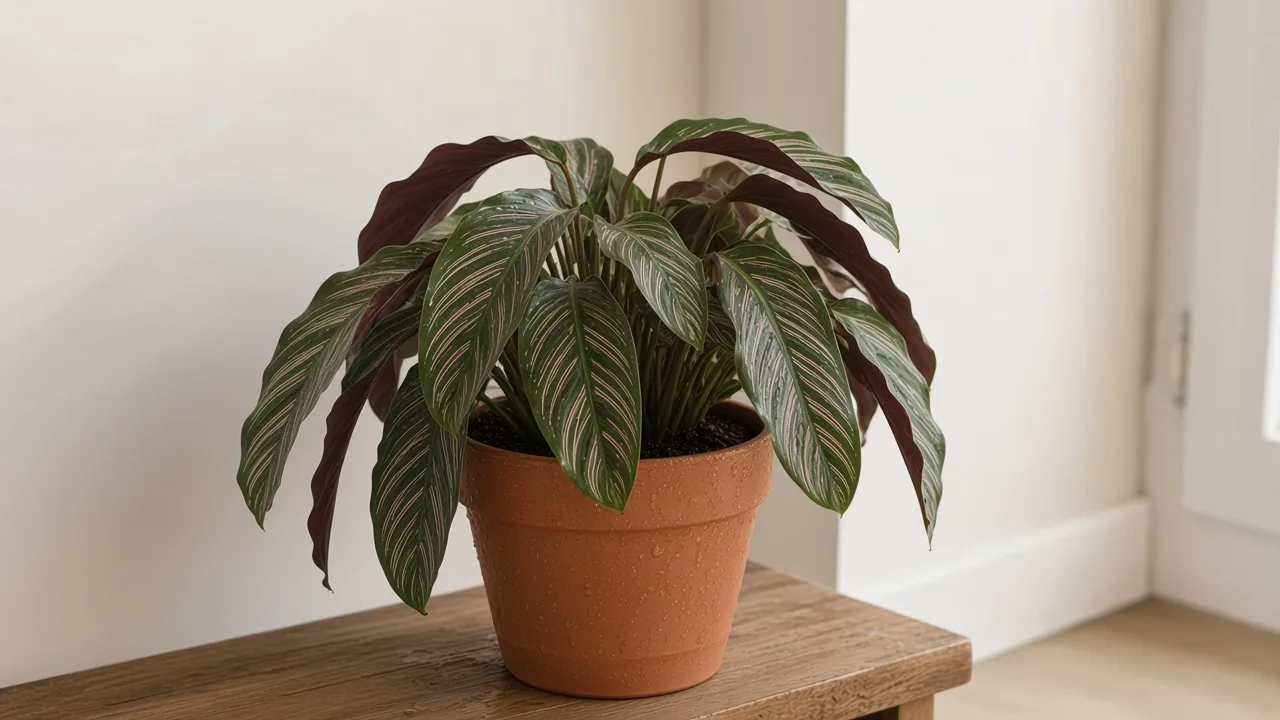
Wilting on Calathea Vittata: Causes, Checks & Fixes
This guide covers wilting on Calathea Vittata. See also the general Wilting guide, watering, and light pages for this plant.
Wilting on Calathea Vittata: Causes, Checks & Fixes
Quick answer
Wilting on Calathea Vittata (Goeppertia elliptica) is fast turgor failure—elongated deep-green leaves with delicate white pinstripes hang limp from soft petioles instead of holding their usual upright arch. That is sharper than the gradual sag in the drooping leaves guide and different from normal nighttime leaf folding on prayer plants. For how wilting works when roots lose water uptake in general, see our wilting symptom hub. On Vittata, lift the pot and test the top 2 cm of mix before you water.
First step: lift the pot and press your finger into the top 2 cm (first knuckle) of mix while you note whether the container feels heavy or light. Heavy and damp with limp leaves means stop watering and check drainage—not thirst. Light and dry with firm rhizomes at the soil line calls for a measured rehydration per the Calathea Vittata watering guide. Mushy stems on wet mix means escalate to root rot today.
When to use this page vs other Vittata guides
- Drooping leaves — slower petiole bend over days; this page covers collapse within hours or whole-clump limpness
- Overwatering — chronic wet mix, yellow lower leaves, and fungus gnats before collapse
- Underwatering — dry mix, light pot, daytime limp without recovery after a soak
- Low humidity — crisp white stripe margins and wilt in dry heated air despite correct watering
- Root rot — sour smell, mushy crown, wilt that worsens on wet soil
- Problems hub — browse every Vittata issue in one place
What wilting looks like on Calathea Vittata
Healthy Vittata forms an upright clump of elliptic blades, each with crisp white pinstripes on deep green and a purple underside. Wilting changes that silhouette quickly—and the pattern tells you which branch to follow.
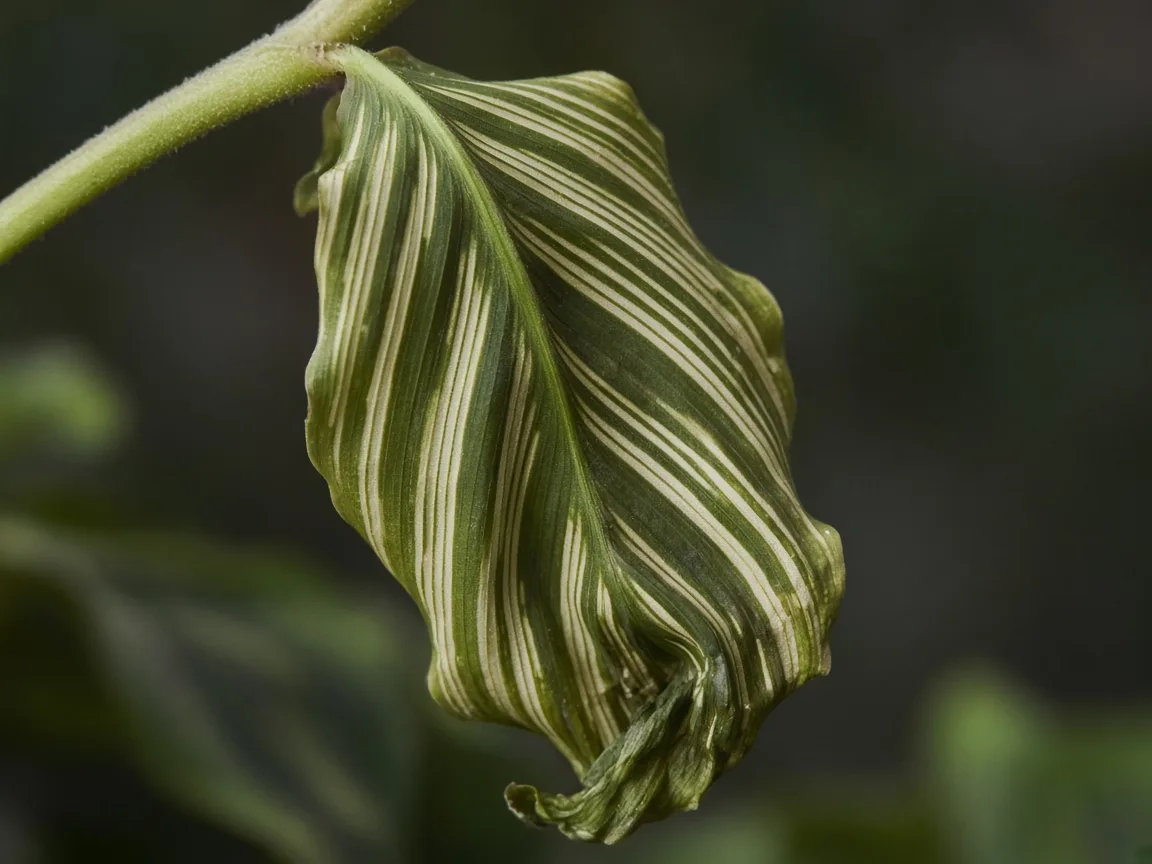
A limp Vittata leaf beside a firmer one—compare pinstripe sharpness and petiole stiffness at the soil line before you treat.
Wet-soil wilt is the most dangerous misread on this species. Multiple leaves hang limp while the mix stays dark, cool, and heavy. Yellowing often starts on the oldest lower leaves. White pinstripes may look washed out to flat green-gray. You may see fungus gnats when you disturb the surface or standing water in a cachepot. Wilting with moist soil often means roots cannot take up water—the classic prayer-plant trap after loving it with too many drinks.
Dry-soil wilt shows limp or curled blades on a lightweight pot. The top 2 cm feels crumbly and pale. Leaves may feel thin but petioles stay firm—not mushy. Vittata’s compact root ball in a small nursery pot can dry within a few days under bright east light or above a running radiator, faster than a large calathea in the same room.
Humidity wilt appears when air is dry but the mix is actually moist: leaves collapse during the afternoon in a heated living room while the pot still feels moderately heavy. Low humidity makes leaves transpire faster than roots can replace water, which is why bathrooms and grouped plants recover faster than isolated shelf specimens. On Vittata, thin white stripe tissue often crisps before the whole blade collapses.
Cold-draft wilt hits overnight: the clump looks fine at bedtime, then every leaf is limp by morning beside a leaky winter window or AC vent. Goeppertia prayer plants are sensitive to overwatering and cold, both of which cause drooping leaves.
| What you see | Likely cause | Urgency | First action |
|---|---|---|---|
| Limp leaves, heavy wet pot, no sour smell yet | Early overwatering | Medium | Stop watering; empty cachepot; improve airflow |
| Limp leaves, wet pot, yellow lower leaves, gnats | Root stress / advancing rot | High | Inspect roots; see root rot |
| Limp leaves, light dry pot, firm soil-line rhizome | Underwatering | Low–medium | Thorough drink; drain fully |
| Afternoon limpness, moist soil, dry heated air | Low humidity | Medium | Humidifier or pebble tray; group plants |
| Whole-clump flop after cold night | Draft or sub-16 °C (61 °F) exposure | Medium–high | Move off glass; warm stable spot |
| Upright folded leaves at night, open by morning | Normal nyctinasty | None | No treatment—observe daytime posture |
Night prayer-fold vs acute wilt on Vittata
Goeppertia species fold leaves in response to darkness—nyctinastic “prayer” movement—and calathea leaves also open wider in morning light. On Vittata, healthy folding looks organized: blades point upward along the stem, purple undersides show cleanly, and petioles stay stiff. White pinstripes stay visible on the green field.
True wilt looks disheveled by day: leaves hang outward or downward, pinstripe contrast dulls, and the clump does not regain posture after the sun hits the window. If you only notice limpness after sunset, check again at 10 a.m. before treating. If it is still collapsed at midday, you are in wilt territory—not normal prayer behavior.
Pinstripe contrast: Vittata’s early wilt signal
Vittata’s elongated blades carry thin white stripes that disappear in too-dim light—but during acute stress they often fade or gray out while petioles are still partly firm. That is different from not enough light, where stripes vanish slowly on upright leaves without rubbery petioles.
When several leaves lose stripe sharpness and go limp together, treat it as a water-delivery or humidity problem first. When only the newest unfurling spear wilts with brown edges on the white stripes while older leaves stay upright, suspect filtered or overnight water and dry air before you flood the pot—fluoride and chlorine hit the pale stripe tissue before the rest of the blade.
The top-2-cm and pot-lift split
Vittata is often sold in a compact pot, so owners water on a weekly calendar meant for larger houseplants. The fix is always this pot in your room, not a generic interval.
- Lift the pot — heavy long after the last watering means saturated mix; light means dry-down.
- Top 2 cm finger test — matches the watering guide dry threshold: water when that layer just begins to dry, not when the surface still feels cool and clings.
- Rhizome press — gently press where petioles emerge. Firm rhizome tissue with a dry pot confirms thirst; firm rhizome with a wet pot means root uptake failure; soft tissue means rot.
Do not pour water onto a wet, wilting Vittata—that deepens oxygen loss in fine roots. Roots standing in water easily rot, and Vittata needs moist but well-drained mix per the soil guide, not a swamp.
Why Calathea Vittata wilts
Overwatering and root failure (most serious common cause)
Prayer plants want evenly moist mix in growth season, but soil should stay moist and well-drained, not wet or soggy. Plastic cachepots, oversized containers, and dense peat without perlite keep Vittata’s small root zone anaerobic. Roots stop absorbing; leaves wilt anyway.
Underwatering in a fast-drying small pot
Calatheas prefer soil moist at all times but not waterlogged. A Vittata on a bright windowsill can cross from evenly moist to too dry in a few days, especially in summer. One deep wilt episode can damage fine roots, so recovery takes longer than a single watering fixes.
Low humidity and transpiration mismatch
Vittata’s grower baseline targets above 60% RH; pinstripes crisp at the margins when air is chronically dry. When heated winter air drops, leaves can wilt if water leaves the foliage faster than roots absorb it—even when you watered yesterday.
Cold, drafts, and sudden temperature swings
RHS guidance keeps calatheas at 16–21 °C (61–70 °F) away from radiators and draughts. Vittata near a winter window or a cold car ride can flop without any soil change.
Pests and hidden sap loss
Spider mites and mealybugs can cause localized wilt on new spears before webbing is obvious. Check leaf undersides and leaf axils on the newest growth; follow spider mites or mealybugs if you see stippling, honeydew, or cottony patches.
First fix for Calathea Vittata
Lift the pot, test the top 2 cm, and match exactly one correction—do not water and mist and repot the same afternoon.
- If the pot is heavy and damp: stop watering immediately. Empty the saucer and any cachepot. Set Vittata in bright indirect light with gentle airflow. Recheck in 48 hours. If limpness spreads on still-wet mix, slide the root ball out and inspect for brown mushy roots per root rot.
- If the pot is light and the top 2 cm is dry: water thoroughly with room-temperature rainwater, filtered water, or overnight-stood tap water until excess drains, then empty standing water. Wait 24 hours before judging leaf recovery.
- If the mix is moist but air is dry: run a humidifier or place the pot on a pebble tray (pot above the water line) and group with other plants. Fix light placement so you are not compensating for dim corners with extra water.
- If wilt followed a cold night: move off the glass, eliminate the draft, and hold watering until you know whether the mix actually dried—cold stress and wet soil together rot rhizomes fast.
Hold fertilizer until new growth looks stable for two weeks. Do not repot a wilting Vittata unless roots are visibly failing or the mix has collapsed into hydrophobic dry pockets—see repotting for timing after recovery.
Recovery timeline
Mild dry wilt often shows firmer petioles within 24–48 hours after one proper drink. Wet-soil wilt may take one to three weeks of corrected watering before new spears emerge; older yellow leaves may not re-green. Rhizome division after repot can add one to two weeks of transplant limpness even when you did everything right—keep humidity high and avoid direct sun.
Judge recovery by new unfurling leaves with visible white pinstripes, not by every older blade standing at attention again.
What not to do
- Do not water a heavy, wet, wilting pot “because the leaves look thirsty.”
- Do not mist wilted leaves as your only humidity fix—water on Vittata foliage evaporates quickly in dry air; use a humidifier or pebble tray instead.
- Do not place a collapsed plant in direct sun to “perk it up”—that bleaches pinstripes and worsens transpiration loss.
- Do not fertilize, repot, and prune heavily in the same week on a stressed clump.
How to prevent wilting next time
Anchor care to Vittata’s rhythm: check the top 2 cm on a 5–7 day summer / 7–10 day winter inspection schedule, not autopilot pouring. Use airy, moisture-retentive mix in a pot only slightly larger than the rhizome clump. Keep humidity at or above 60% where possible, use filtered or overnight water if unfurls brown on the stripes, and park the plant away from heating vents and winter glass. After travel or a new purchase, quarantine and learn dry-down speed before changing pot or soil.
Related Calathea Vittata guides
- Calathea Vittata overview — species hub and baseline care
- Watering — top-2-cm checks and seasonal rhythm
- Light — medium to bright indirect without scorch
- Yellow leaves — often precedes wet-soil wilt
- Brown tips — stripe-edge burn from dry air or minerals
- Problems hub — full symptom list for this plant
Conclusion
Wilting on Calathea Vittata is the plant telling you turgor failed—usually because roots in soggy mix cannot drink, the small pot went too dry, dry air pulled water from pinstriped leaves faster than roots replaced it, or a cold draft hit overnight. Separate that from healthy prayer folding at night, lift the pot, and fix one cause at a time. Most Vittata clumps recover when watering, humidity, temperature, and pot size align; the leaves that prove success are the new crisp spears with white pinstripes, not every older blade that already went limp.
Related tool
Use the Plant Watering Calculator to narrow causes for wilting on this plant before changing multiple variables at once.