Prayer Plant Care & Growing Guide
Grow Maranta leuconeura indoors with bright indirect light, evenly moist soil, 50%+ humidity, and filtered water—plus fixes for yellow, brown, and curling leaves.
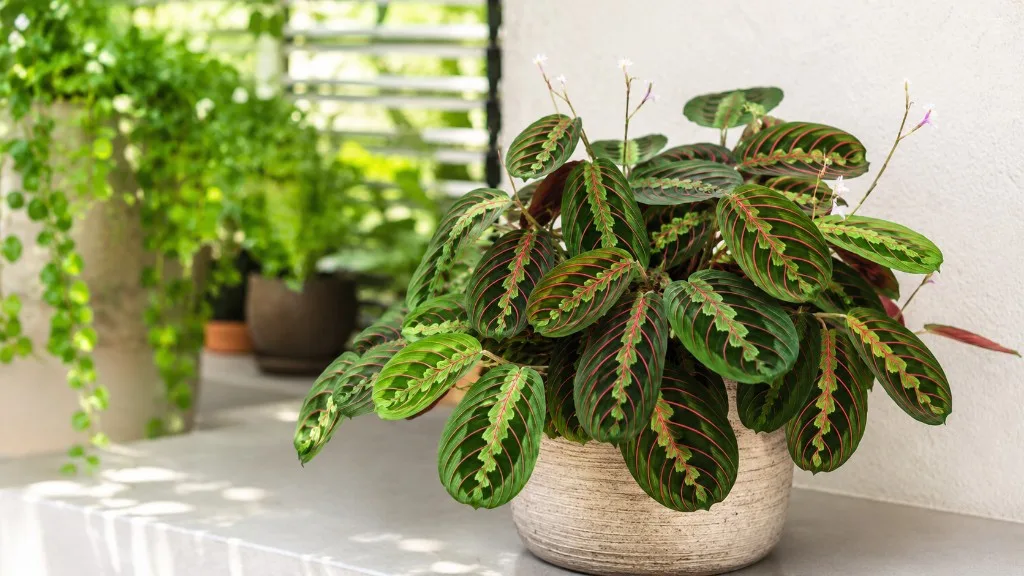
A prayer plant (Maranta leuconeura) earns its name every evening when broad, patterned leaves lift and fold like hands at rest—a daily show that makes it one of the most recognizable tropical houseplants on a windowsill. Under that charm sits a Brazilian understory plant that wants steady moisture, soft light, and humid air, not the “water once a week and forget it” treatment many sellers imply. Get those three pillars aligned and a prayer plant stays compact, pet-safe, and vividly marked for years. Miss one—especially humidity or water quality—and the same plant develops crispy edges, washed-out patterns, or leaves that stop moving at night.
This guide covers Maranta leuconeura indoors: light, soil, watering rhythm, humidity that survives winter heat, varieties you will actually see in shops, propagation by division, and a troubleshooting path for the leaf symptoms that send most owners searching again. For species-specific schedules, the Maranta leuconeura hub breaks care into watering, light, soil, fertilizer, repotting, propagation, and problem pages when one factor—not the whole plant—needs attention.
Prayer Plant Quick Reference
Use this table before you change anything. If something looks wrong, match the symptom column to the troubleshooting section instead of guessing with more water.
| Factor | Indoor target | Watch for |
|---|---|---|
| Light | Bright to medium indirect | Bleached or brown patches = too much sun |
| Water | Evenly moist; top inch dry before refill | Soggy mix, gnats = too wet |
| Soil | Moisture-retaining but fast-draining | Heavy wet peat in low light = rot |
| Humidity | 50–60%+ when possible | Crispy margins in dry rooms |
| Temperature | 65–80°F (18–27°C) | Below 60°F slows growth; drafts shock |
| Fertilizer | Half-strength monthly spring–fall | Skip or reduce in winter |
| Pets | Non-toxic to cats and dogs | ASPCA lists prayer plant as safe |
| Size indoors | About 6–12 in. tall and wide | Slow grower; spreads by rhizomes |
| Hardiness | USDA 11–12 outdoors | Everywhere else: houseplant |
Missouri Botanical Garden notes that prayer plants perform best in bright indoor light without strong direct sun, with consistently moist soil during the growing season and reduced moisture and fertilizer from autumn through late winter. (Missouri Botanical Garden) ASPCA classifies prayer plant as non-toxic to dogs, cats, and horses—a real advantage in pet-friendly homes, though chewing any plant can still cause mild stomach upset. (ASPCA)
What Makes Prayer Plants Special
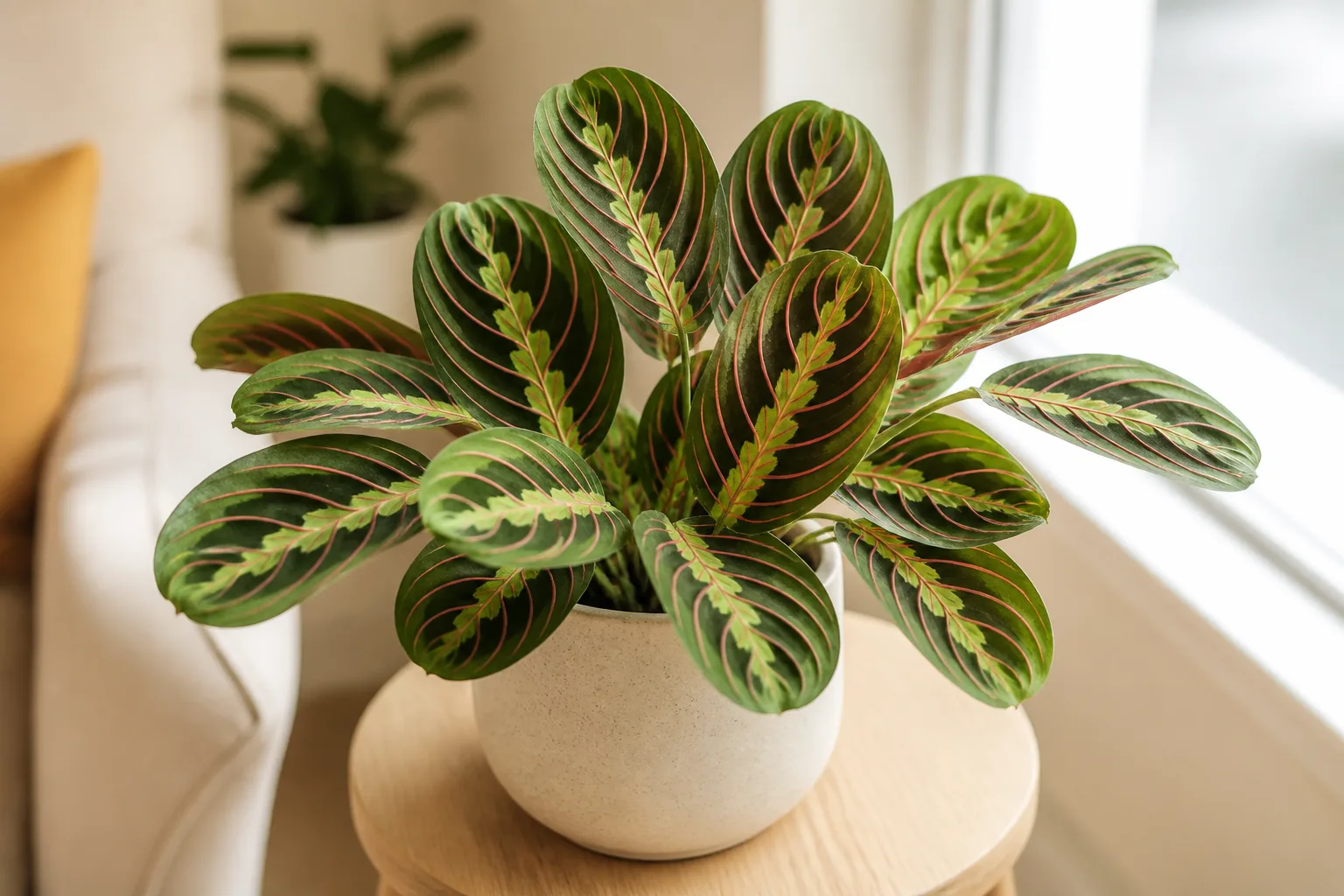
Prayer plants belong to Marantaceae, the arrowroot family that includes close relatives often sold as “calatheas.” They are low, rhizomatous perennials from tropical forests, evolved for dappled light and steady humidity—not open windowsills in February. Missouri Botanical Garden describes M. leuconeura as an evergreen clump reaching roughly 12–15 inches tall, with oval leaves marked by herringbone veins, blotches, and white midrib lines that read as graphic art from across the room. (Missouri Botanical Garden)
That slow, creeping growth habit matters for pot choice and propagation: prayer plants spread sideways through rhizomes more than they shoot upward. A shallow, wide pot often suits them better than a deep tower meant for fiddle-leaf figs.
Nyctinasty: Why Leaves Fold at Night
Nyctinasty is the nastic movement you see when leaves lie flat by day and fold upward after dark—Gardening Know How describes it as the plant’s response to light, which also helps conserve moisture overnight. (Gardening Know How) Healthy plants should show visible movement on a normal day–night cycle. If leaves stay flat around the clock, check three things before panicking: too little light (movement weakens), temperature stress (cool drafts or hot AC blasts), or severe dehydration (the plant prioritizes survival over performance).
A plant that stopped praying but still looks plump and colored may simply need a brighter indirect location—not more fertilizer.
Maranta vs Calathea: Know What You Bought
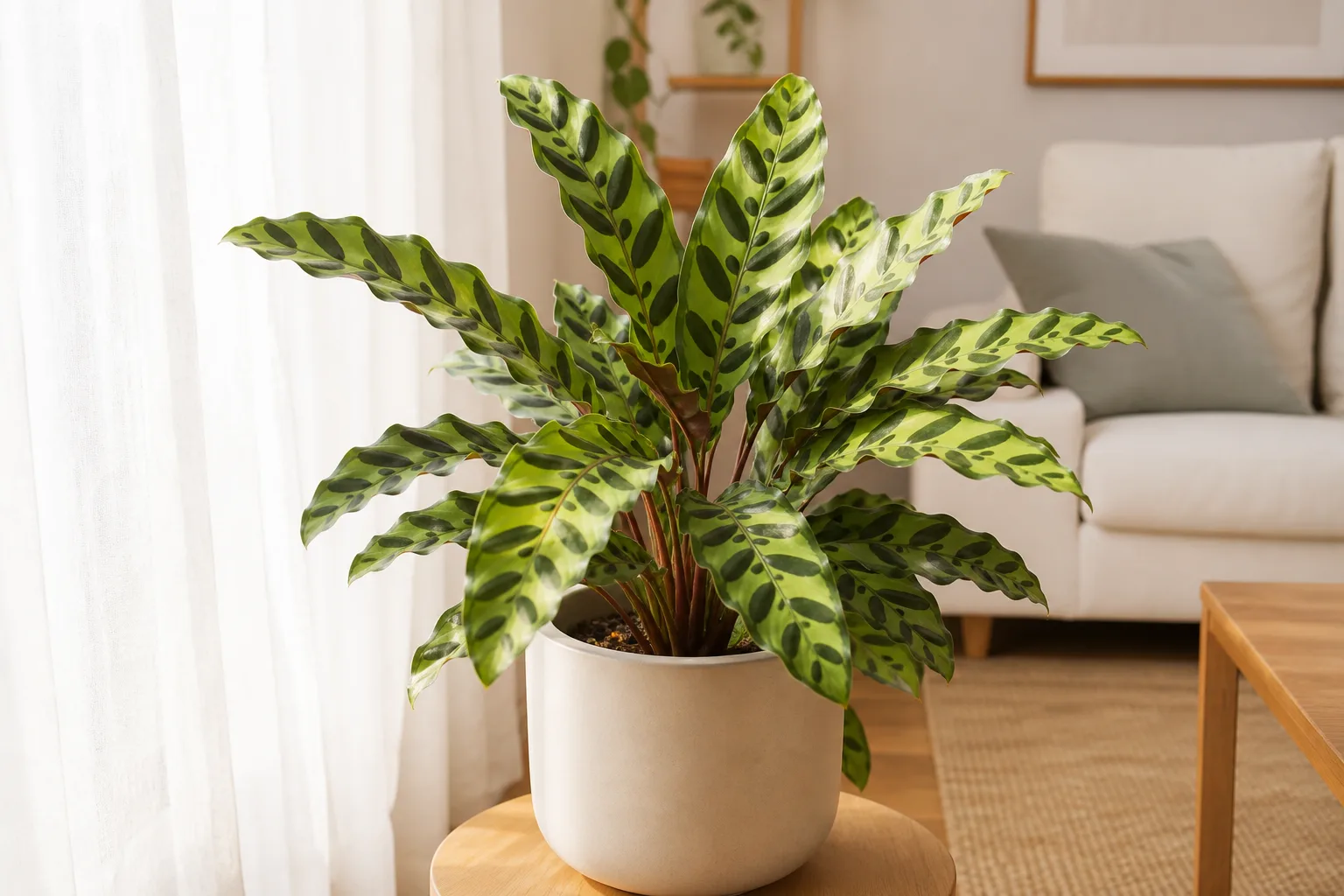
Garden centers routinely mislabel marantas as calatheas because both have patterned leaves and fold at night. True Maranta species trail and stay low; most Calathea (now often reclassified under Goeppertia) grow more upright and demand similar—but not identical—humidity. If your tag says Calathea but the plant creeps along the soil and roots from chunky rhizomes, you likely have a maranta. Compare with the Calathea hub only after you confirm the genus; care overlaps, but prayer plants tolerate slightly drier air than many calatheas and recover faster from a missed watering if caught early.
Light Requirements for Bold Foliage
Indoors, prayer plants want bright to medium indirect light—enough intensity to keep patterns sharp without bleaching pigments. Missouri Botanical Garden warns that too much sun bleaches attractive leaf colors; RHS recommends filtered light and notes marantas need high humidity under glass. (Missouri Botanical Garden) (RHS)
An east-facing window with gentle morning sun often works. North windows can succeed if the plant sits close and you accept slower growth. South and west exposures need a sheer curtain or a few feet of offset so midday rays never cook leaves. Low light tolerance exists, but stems stretch and new leaves arrive smaller and duller—a signal to move the pot or add a grow light, not to water more.
Signs you need to adjust light:
- Bleached, faded patches on the leaf face → pull back from direct sun.
- Leggy stems with wide leaf spacing → increase indirect brightness.
- Good color but no nightly folding → often light plus temperature; brighten slightly and eliminate drafts.
For window-by-window placement detail, see the prayer plant light guide.
Soil and Potting Mix
Prayer plants need moist but well-drained soil—oxymoron only until you use the right mix. Heavy all-purpose potting soil in a dim corner stays wet too long and invites root rot; pure coarse mix dries so fast that edges crisp between waterings. Missouri Botanical Garden recommends a soil-based potting mix indoors with consistent moisture and good drainage. (Missouri Botanical Garden)
A reliable blend:
- 2 parts peat-free or peat-based potting base
- 1 part perlite or coarse sand
- Optional: small handful of orchid bark for airflow in plastic pots
Always use a pot with a drainage hole. Prayer plants hate standing water at the crown—Illinois Extension and experienced growers warn that water pooling where stems meet soil causes stem rot on marantas. Water the soil surface, not the leaf whorl.
Repot every two to three years in spring when roots circle the pot or water runs straight through. Do not repot a brand-new stressed plant on day one; see the buying section below. Deeper mix recipes live on the prayer plant soil page.
Watering Prayer Plants Without Rot or Crisp
Water when the top inch of mix feels dry during active growth—often every five to seven days in bright, warm rooms, and less often in cool winter months when growth slows. Soak until water exits the drainage holes, then empty the saucer within thirty minutes. Prayer plants are drought-sensitive: leaves wilt and edges brown quickly when soil goes bone dry. They are equally sensitive to overwatering: yellow lower leaves, sour-smelling mix, and fungus gnats point to oxygen-starved roots, not thirst.
The fix for chronic overwatering is not “water less tomorrow”—it is better light, a chunkier mix, and checking moisture at depth with a finger or skewer, not calendar alerts alone. The prayer plant watering guide walks through seasonal cadence and the wilt-with-wet-soil misread that follows hidden root damage.
Water Quality and Brown Leaf Tips
If margins turn crisp while soil moisture looks correct, suspect tap water chemistry before hunger or pests. Fluoride and chloramine in municipal water accumulate in leaf tips on sensitive marantas—especially on older leaves. Switch to filtered, distilled, or overnight-set tap water for a month and watch new leaves; old damage will not heal backward.
Gardening Know How notes that yellowing tips can also reflect salt buildup from fertilizer or hard water; flushing the pot in the shower until water runs clear, then resuming with cleaner water, often restores healthy new growth. (Gardening Know How)
Temperature and Humidity
Prayer plants thrive at ordinary room temperatures between 65°F and 80°F (18–27°C). Missouri Botanical Garden lists intolerance of frost and preference for temperatures that do not dip below 60°F. (Missouri Botanical Garden) Cold window panes in winter can chill leaves even when the thermostat reads 72°F—lift pots off icy sills or add insulation.
Humidity matters as much as watering. RHS describes marantas as needing high humidity for best foliage. (RHS) Winter heating often drops indoor relative humidity below 30%, which produces brown leaf edges long before roots fail.
Raising Humidity That Actually Helps
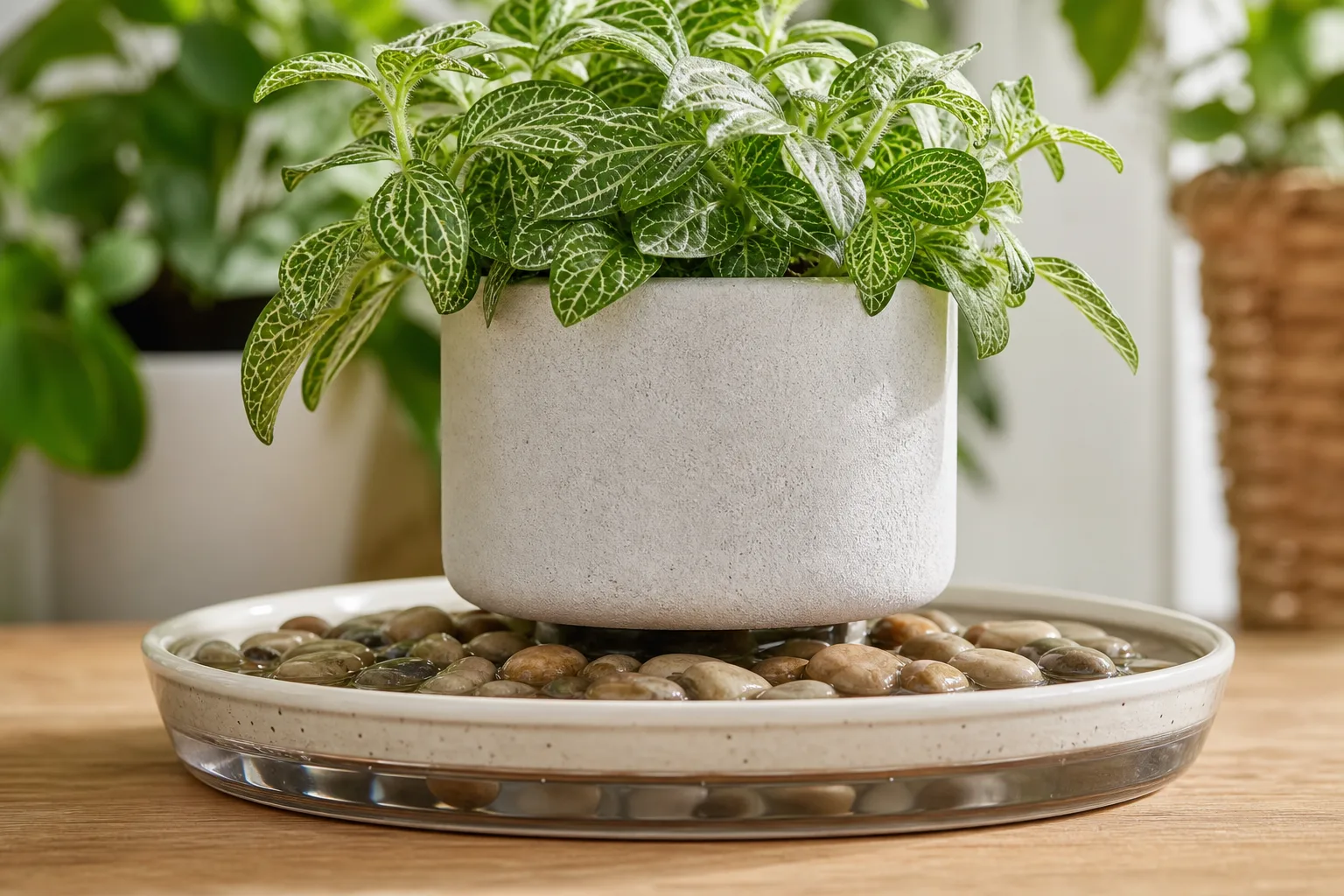
Rank methods by impact:
- Room humidifier near the plant grouping—most reliable fix in dry climates.
- Grouping plants to share transpired moisture in a bright bathroom or kitchen.
- Pebble tray under the pot—raises humidity in a small pocket if water sits below stone tops so roots never touch standing water.
- Misting—temporary bump only; fine for dusting leaves, not a humidity strategy alone.
For measured targets and hygrometer use, see the houseplant humidity guide. If edges brown despite good watering, also read low humidity on prayer plant before buying another gadget.
Fertilizing Through the Seasons
Feed prayer plants monthly from early spring through fall with balanced houseplant fertilizer diluted to half the label strength. Missouri Botanical Garden recommends monthly feeding during the growing season and substantially reduced applications from autumn to late winter. (Missouri Botanical Garden) Over-fertilizing burns roots and shows up as crisp margins—mirroring water-quality damage—while under-fertilizing slows an already slow plant.
Skip fertilizer on sick, newly repotted, or drought-stressed plants until new growth resumes. Never double-dose to “ perk up” yellow leaves without ruling out water and light first.
Popular Prayer Plant Varieties
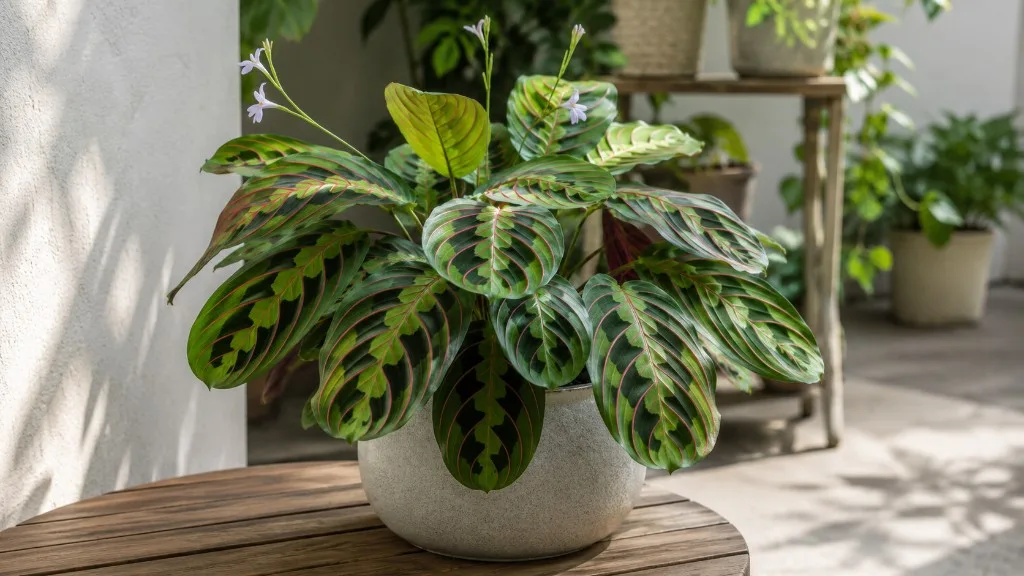
Most shops stock cultivars of Maranta leuconeura, not separate species. Learn the patterns so mislabeled pots do not surprise you:
- Red herringbone / tricolor (M. leuconeura var. erythroneura): deep green leaves with red veins and pale green midsections—the classic “red prayer plant.”
- Rabbit’s tracks (M. leuconeura var. kerchoveana): mostly green with splotches rather than bold red veins.
- Green vein / lemon lime (M. leuconeura var. erythroneura ‘Marisela’ and similar): lime or white veins instead of red—often sold as lemon-lime maranta.
- Black / silver (M. leuconeura var. massangeana): darker leaf faces with silvery patches along the midrib.
All share the same core care; vein color does not change watering math. Cultivar-specific notes appear on Maranta leuconeura and related cluster pages when a variety behaves differently in practice.
Buying a Healthy Plant at the Shop
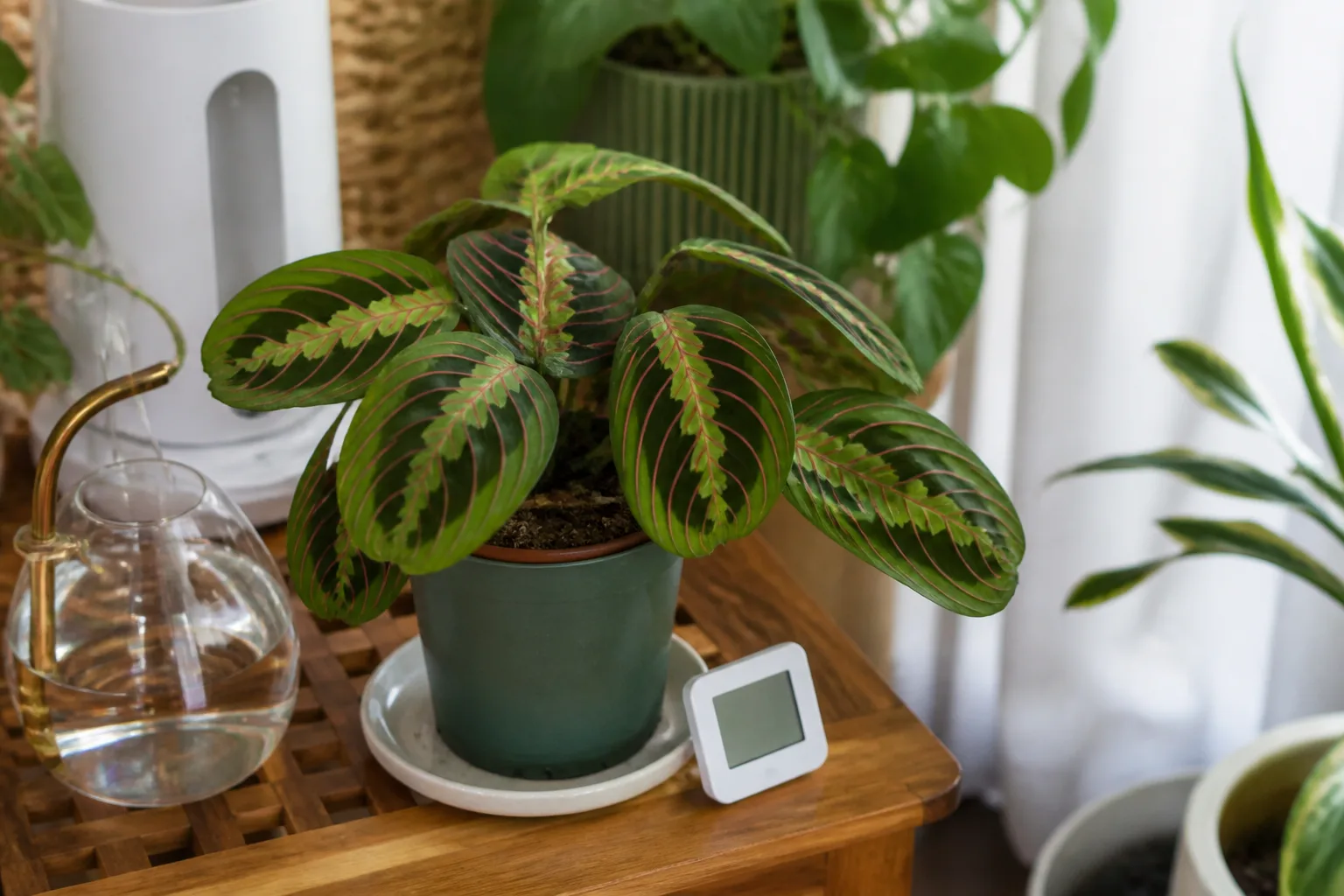
Before checkout, inspect:
- Undersides of leaves for webbing (spider mites) or cottony clusters (mealybugs).
- Newest unfolding leaf for firmness and color—wilted central leaves suggest root trouble.
- Soil smell at the drain hole—sour odor means rot already started.
- Label genus—confirm Maranta if you wanted prayer-plant movement and pet-safe status.
At home, quarantine new plants for two weeks away from your main collection. Keep care boring: bright indirect light, even moisture, no repot, no fertilizer. Most post-purchase collapse comes from moving to a darker spot and overcompensating with water. The first month checklist on the prayer plant overview aligns with what Missouri Botanical Garden describes as steady moisture without waterlogging during establishment. (Missouri Botanical Garden)
Pruning for a Bushier Shape
Prayer plants do not require regular pruning, but long creeping stems can look sparse over time. Trim leggy sections with clean scissors just above a leaf node in spring or summer when growth is active. Remove fully brown or yellow leaves at the base— they will not green up again. Pruning plus brighter light encourages bushier side shoots without hormone sprays.
Avoid heavy pruning in winter unless removing diseased tissue; recovery is slow in low light.
Propagating Prayer Plants by Division
The easiest propagation method is division at repot time:
- Water the day before so rhizomes bend instead of snap.
- Slide the plant out and gently tease soil from rhizomes.
- Separate clumps so each division has roots and several stems.
- Pot divisions into shallow containers with fresh mix; water thoroughly and drain.
- Keep warm, humid, and in bright indirect light; maintain even moisture while roots settle—usually two to four weeks.
Missouri Botanical Garden lists propagation by cuttings or division as standard for marantas. (Missouri Botanical Garden) Stem cuttings in moist perlite also work but take longer than division. Step-by-step photos and timing live on the prayer plant propagation guide.
Common Pests on Prayer Plants
Missouri Botanical Garden lists spider mites, mealybugs, and thrips as the main pests, with root rot in poorly drained conditions. (Missouri Botanical Garden) Mites thrive in dry air—another reason humidity helps prevention, not just aesthetics.
Spider mites: fine webbing under leaves, stippled yellowing, crispy edges despite moist soil. Rinse foliage, increase humidity, and treat with insecticidal soap or horticultural oil on a two-week schedule until gone.
Mealybugs: white cottony masses in leaf axils. Dab with alcohol on a swab for small outbreaks; scale up to soap or oil for spread.
Fungus gnats: usually a symptom of overwatering, not a primary attack—dry the top inch longer between waterings and address soggy mix before spraying adults.
Isolate infested plants immediately so pests do not migrate to Calathea or Pothos neighbors on the same shelf.
Troubleshooting Yellow, Brown, and Dropping Leaves
Start with the newest leaves—they tell you what today’s care is doing. Old bottom leaves yellow and drop naturally in small numbers; mass yellowing is a system problem.
Yellow leaves
- Overwatering / root rot: yellow lower leaves, soft base, gnats → stop watering, check roots, repot into fresh mix if mushy roots smell sour. See root rot on prayer plant.
- Underwatering: wilt plus dry, light pot weight → soak and adjust schedule.
- Too much direct sun: bleached yellow patches on exposed side → move back from glass.
- Too little light: uniform pale yellow on older leaves → increase indirect brightness.
Brown leaves and crispy edges
- Low humidity or drafts: brown margins with otherwise green tissue → humidifier first.
- Underwatering: crispy tips progressing inward → water more consistently.
- Fluoride / salt: tip burn on older leaves with good turgor → change water; flush mix.
- Pests: mites mimic drought → inspect undersides before watering again.
Dropping leaves suddenly
- Temperature shock: near HVAC vents, hot radiators, or cold doors.
- Recent repot or division: transient shock if roots were damaged— stabilize moisture and wait.
- Severe drought or waterlogging: fix the underlying water issue before fertilizing.
For curling without color change, read prayer plant curling leaves—curl often precedes crisping when humidity or water swings are the trigger.
Conclusion
Prayer plant care rewards consistency more than clever hacks: bright indirect light, evenly moist well-drained soil, humidity above dry-room defaults, and gentle water without fluoride buildup. Watch nightly leaf movement as a free health dashboard—when folding stops or edges crisp, adjust environment before reaching for fertilizer or repotting. Link your daily habits to the prayer plant cluster for watering, light, soil, and propagation depth, or the Maranta leuconeura hub for species-specific problem pages when a single symptom persists. Get those pillars steady and Maranta leuconeura stays one of the few houseplants that looks alive even after dark—pet-safe, patterned, and worth the extra humidity.