Jade Plant Care Indoors: Complete Growing Guide
Learn jade plant care indoors: choose the right light, water by soil dryness, prevent root rot, prune, repot, propagate, and fix common problems.
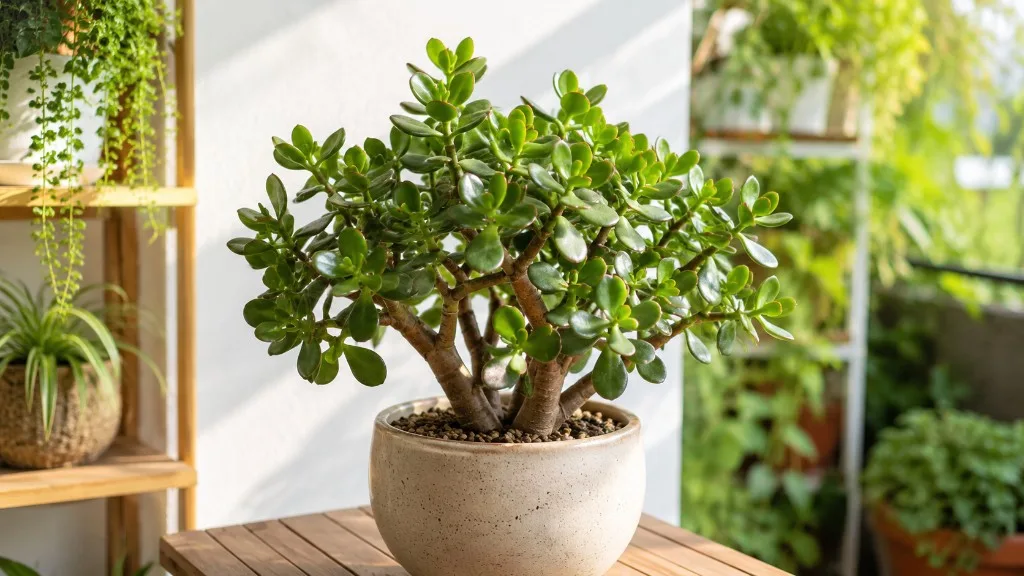
Jade plant care indoors is mostly a light-and-water problem. Give Crassula ovata enough bright light to build sturdy stems, then let its fast-draining mix dry before watering again. The fleshy leaves store water; the roots still need air.
Jade is a long-lived South African succulent with woody stems and oval leaves. It can survive an occasional missed watering, but repeated wet soil, dim light, abrupt sun exposure, or cold drafts can slowly undo an otherwise easy-care plant. The Wisconsin Horticulture profile and RHS cultivation guidance both support the same basic approach: bright light, porous soil, deep watering followed by a dry period, and much less water during winter rest.
Quick care checklist for a healthy jade plant
For a healthy indoor jade, aim for four or more hours of direct sun after the plant has acclimated, or give it the brightest indirect light available. Use a pot with a drainage hole and a gritty succulent mix, then water thoroughly only when the mix is dry well below the surface.
Keep the plant in a stable, frost-free spot away from heating and cooling blasts. Feed lightly during active growth, rotate the pot so one side does not stretch toward the window, and treat red margins as a clue to inspect the light—not an automatic sign that the plant is damaged.
The first-week routine for a new plant is simple: check for pests, confirm the pot drains, place it in bright but not suddenly intense light, and wait to water until you have checked the soil. A nursery plant may have been grown under shade cloth, so putting it immediately in harsh afternoon sun can scorch leaves even when the eventual destination is a sunny window.
Choose light that keeps growth compact
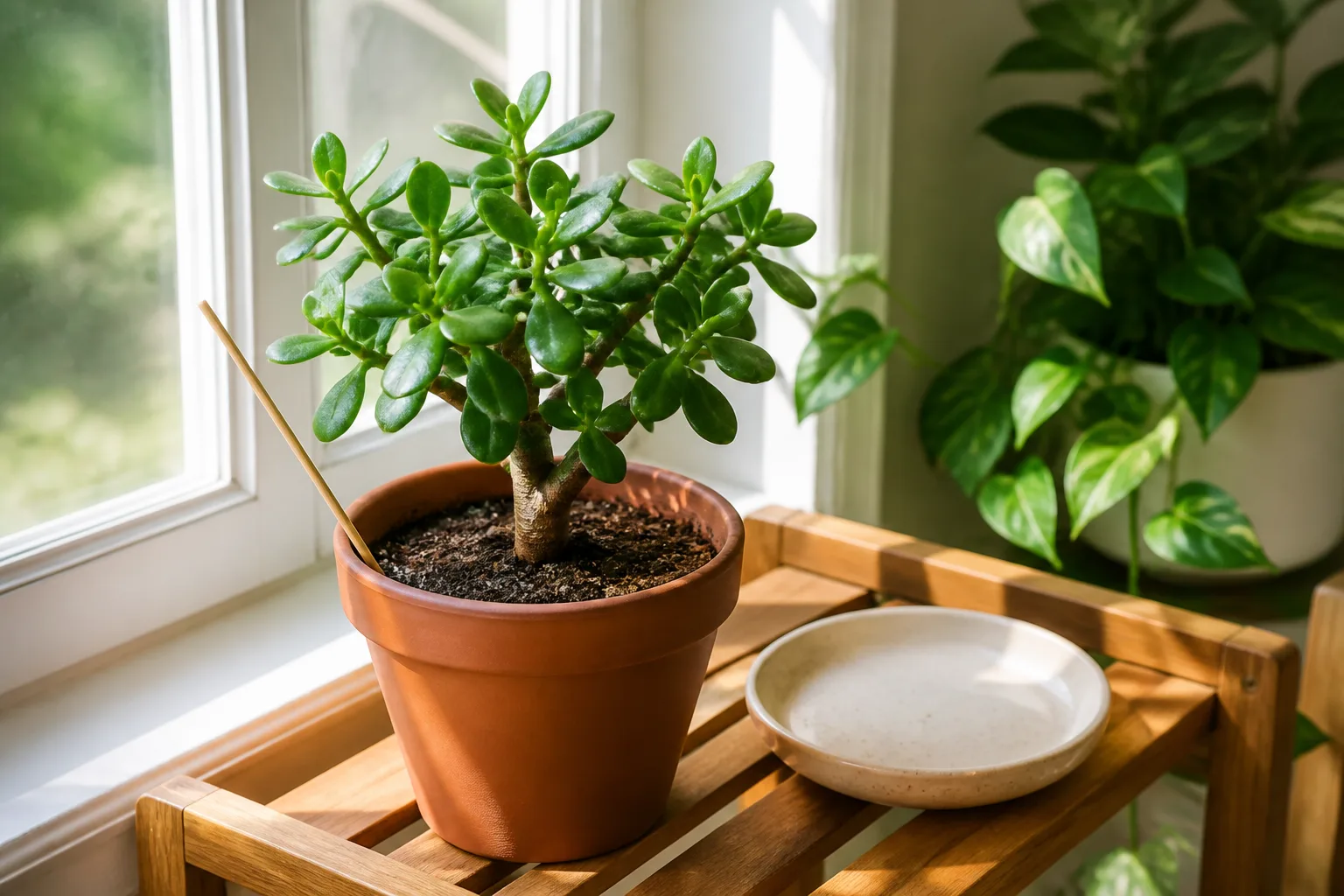
Jade plants grow best in a bright window with several hours of direct sun. An unobstructed south- or west-facing window is often the strongest indoor choice in the Northern Hemisphere; an east-facing window gives gentler morning sun. A few feet of bright indirect light can keep a jade alive, but low light usually produces wider gaps between leaves, thinner stems, darker green foliage, and a plant that leans toward the glass.
The University of Illinois Extension care note and Wisconsin Extension both describe four or more hours of direct sun as a useful benchmark, while also acknowledging that jade tolerates bright indirect light. Treat that as a starting point rather than a timer: window direction, season, glass, shade from buildings, and distance from the window all change the light that reaches the leaves.
A jade that is receiving strong light may develop red or burgundy edges, especially on cultivars that color readily. That pigment can be a normal high-light response. Move the plant back or filter the light if you see bleaching, tan crispy patches, sudden widespread shriveling, or leaves that feel scorched; do not move it solely because a healthy margin turned red.
Acclimate a jade plant before stronger sun or outdoor light
When moving a jade from a shop, dim room, or winter windowsill into direct sun, increase exposure gradually over about one to two weeks. Start with bright indirect light or gentle morning sun, then add stronger exposure in small increments while watching for pale patches and heat stress.
The same rule applies before putting a houseplant outside for summer. Wisconsin Horticulture recommends gradual acclimation to higher outdoor light and bringing the plant back indoors before frost. A covered patio or bright morning position is a safer first stop than an exposed south-facing wall.
If your home has no bright window, a grow light is more useful than repeated window moves. Place the light according to its instructions, keep a consistent daily schedule, and judge success by compact new growth rather than by the color of one older leaf.
Pick a pot and soil that let roots breathe
Use a container with at least one open drainage hole. A decorative cachepot is fine as an outer cover, but the jade should sit in a draining nursery pot inside it, and the outer pot should be emptied after watering. A heavy terracotta or ceramic pot helps stabilize a tall, top-heavy specimen; terracotta also dries faster, which is helpful in a cool or dim room but means you should still check the mix instead of watering by habit.
Choose a commercial cactus or succulent mix that stays open after watering. If a standard indoor mix is all you have, increase its air space with a mineral component such as perlite or pumice. The goal is not a particular brand or pH number; it is a root ball that drains promptly and does not collapse into a dense, wet block.
Do not put a thick layer of gravel in the bottom of a pot as a substitute for a drainage hole. That raises the saturated zone inside the pot rather than creating a magically drier root ball. A better setup is a correctly sized pot, a free drainage hole, and a mix with enough coarse material throughout.
Keep the soil line below the rim so water can soak the whole root ball without spilling over. Do not bury the woody stem deeply, and do not leave the pot standing in a full saucer; both choices keep the crown and roots wetter than the plant can tolerate.
Water by dry-down, not by calendar
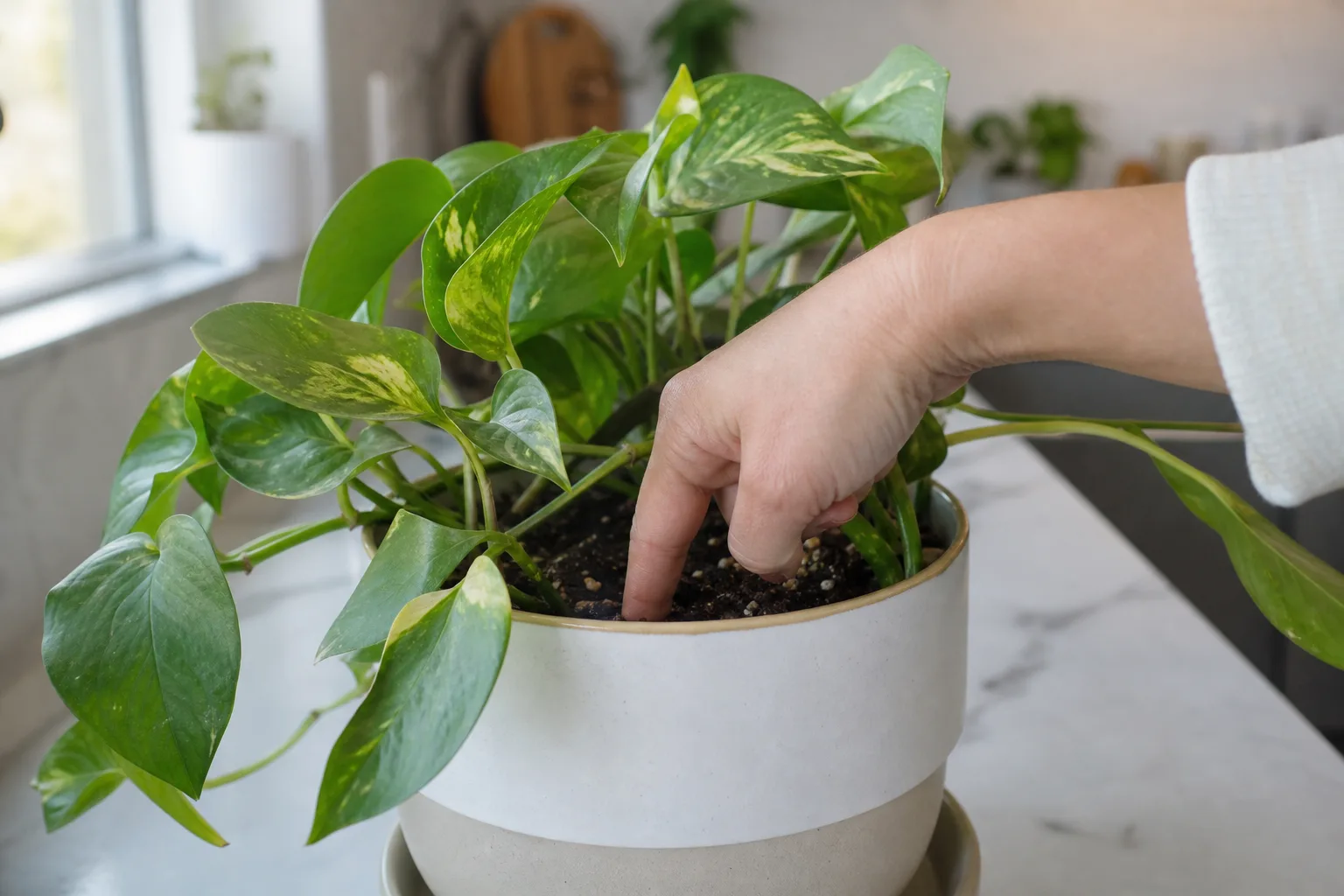
Water a jade when the potting mix has dried through most of the root zone, not simply when the top looks dry. Push a finger or wooden skewer several inches into the mix, lift the pot to learn its dry weight, and check the drainage hole if you can. If the lower mix is still cool and damp, wait; if the soil is dry and the leaves are beginning to lose firmness, it is time to water.
When watering, soak the mix evenly until water runs from the drainage hole. Let the pot drain fully, then empty the saucer or cachepot. This is different from giving a small splash every few days: shallow sips wet only the upper mix, encourage uneven roots, and make it harder to tell when the bottom of the pot has dried.
There is no reliable universal schedule. A small jade in a warm, bright terracotta pot may dry in a week or two, while a large jade in a dim room and moisture-retentive mix may stay damp much longer. Clemson Extension identifies poor drainage and overly frequent watering as the main route to root rot, while Wisconsin Extension warns that drought can also cause leaf drop and decline; the correct interval is the one your plant and pot actually demonstrate.
Adjust the routine for seasons, light, and pot material
In spring and summer, brighter light and active growth usually shorten the dry-down interval. In fall and winter, shorter days, cooler rooms, and slower growth mean the same amount of water can remain in the pot for much longer, so extend the interval and check more carefully before each drink.
Do not water on a winter calendar just because a month has passed. A jade in a warm grow-light setup may use more water than one in a cold north-facing room. Conversely, a plant with shriveled leaves is not automatically thirsty: roots damaged by rot cannot take up water, so inspect the soil and root zone before adding more.
Avoid misting as a substitute for watering. Jade does not need wet leaves to thrive, and repeated moisture on foliage in a cool, poorly ventilated room can leave spots or worsen an existing problem. Water the root ball, keep the leaves as dry as practical, and improve light and airflow instead.
Manage temperature, humidity, and airflow
Normal household humidity is usually adequate for jade. It does not need a pebble tray, daily misting, or a humidifier positioned beside it. Stable conditions matter more than chasing a particular humidity percentage: keep the plant away from radiators, forced-air vents, drafty doors, and glass that becomes very cold at night.
Jade tolerates a fairly broad temperature range, but freezing is a hard boundary. Bring an outdoor plant in before frost, and avoid leaving it against a cold window or in a garage that can freeze. BBC Gardeners’ World gives about 10°C/50°F as a practical lower winter temperature for indoor growing; treat that as a warning line, not as a target for a wet plant.
Cool, wet, low-light conditions are especially risky because the plant uses water slowly. In that combination, stretch the dry-down interval, increase usable light, and make sure air can move gently around the foliage.
Fertilize for steady growth
Feed only when the plant is actively growing and the soil is already slightly moist. A balanced liquid houseplant fertilizer diluted to half strength every six to eight weeks in spring and summer is a conservative routine for an indoor jade; a slower schedule is reasonable in dim light or a small pot.
Never fertilize a bone-dry, recently repotted, sun-stressed, or root-rotted plant. Salts can accumulate in a small container and burn roots when the plant is already struggling. Clemson Extension advises waiting after repotting before feeding, and its broader point is the useful one: fertilizer supports healthy roots; it cannot compensate for poor light or wet soil.
Prune and shape without weakening the plant
Pruning is optional, but it helps a mature jade hold a balanced canopy. Make clean cuts just above a leaf pair or side branch, remove weak or crossing stems, and step back often so you do not strip too much foliage at once. Spring or the beginning of active growth is the easiest time to reshape because the plant has more light and warmth for new shoots.
Correct the light before pruning a leggy plant. Cutting stretched stems can improve the outline, but the new growth will stretch again if the window is still too dim. Let cut surfaces dry, and use healthy trimmings as stem cuttings rather than putting them straight into wet soil.
Large jades become top-heavy because their water-filled leaves sit on woody branches. A heavy, stable pot and a broad base are more useful than staking every branch; if the trunk cannot support the canopy, prune gradually and let new growth thicken before adding more height.
Repot only when the root zone needs it
Repot every two to three years for a young or actively growing plant, or sooner when the mix has broken down, drains poorly, roots circle densely, or the plant repeatedly tips over. A mature jade can remain somewhat root-bound without an emergency move, so do not repot solely because roots are visible at the drainage hole.
Choose a pot only one or two sizes larger, preferably just a little wider than the root ball. An oversized pot holds more unused wet mix around a relatively small root system and makes watering errors harder to recover from. For a tall specimen, prioritize weight and stability over a large jump in diameter.
Repot when the mix is dry and new growth is beginning. Slide the root ball out, remove loose old mix, and inspect the roots. Healthy roots are firm and light; brown, soft, collapsing roots or a sour smell point toward rot. Trim only damaged tissue with clean tools, use fresh porous mix, and keep the plant at the same depth.
After repotting, let the plant settle rather than automatically giving it a large drink. If roots were cut or the new mix is already slightly moist, wait several days and then water lightly; if the plant is badly dehydrated but the roots are healthy, a careful thorough watering may be appropriate. The goal is to avoid combining root disturbance with a long period of saturation.
Propagate jade plants from cuttings
Jade is unusually cooperative from both stem and whole-leaf cuttings. The choice is practical: use a healthy stem cutting when you want a new plant with a visible trunk sooner, and use leaves when you have fallen or spare foliage and can tolerate a slower, less predictable result.
Take cuttings from a vigorous, pest-free parent. Propagation is not a rescue plan for every dying plant: if the base is rotting, first cut back to firm, clean tissue and keep only sections with healthy stems and leaves.
Stem cuttings are the best starting point
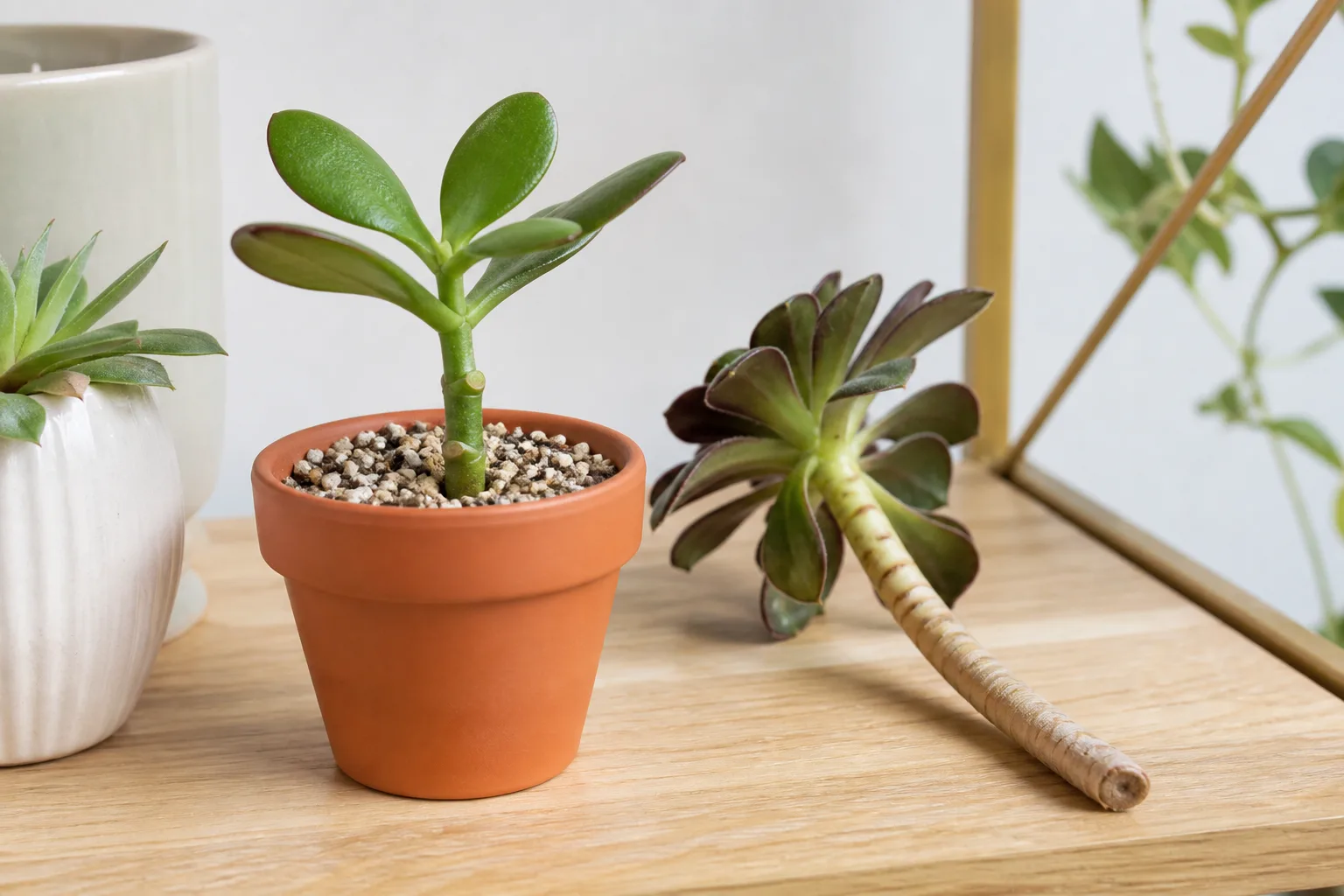
- Cut a 3- to 5-inch section just below a leaf joint, keeping several leaves near the tip.
- Remove leaves from the lower section that will sit in the medium.
- Set the cutting in a warm, dry place for a few days until the cut end feels dry and sealed.
- Insert it into a small pot of barely moist, gritty mix, or place it on the surface with the cut end touching the medium.
- Put it in bright indirect light. Begin normal soak-and-dry watering only after roots or new growth show that the cutting has restarted.
The University of Maine Extension propagation bulletin lists jade among plants that root from stem-tip and whole-leaf cuttings and notes that cuttings commonly begin forming roots in several weeks. Rooting hormone is optional for jade; callusing, air space, restrained moisture, and patience do more to prevent rot than a powder does.
Water propagation can work, but it is not required. Roots formed in water may need a careful transition into a solid, airy medium, so a callused cutting in gritty mix is often the simpler route for a succulent beginner.
Leaf cuttings are slower but useful
Choose a firm, healthy leaf and twist it off cleanly so the base is intact. Let it callus for a few days, then lay it on dry or barely moist succulent mix with the base touching the surface. Do not bury the whole leaf or keep misting it every day.
Roots usually appear before a new plantlet, and the small plant may take much longer to become substantial than a stem cutting. Once the new roots and leaves are established, pot it gently and begin treating it like a small jade: bright light, a draining mix, and water only after dry-down.
Diagnose common jade plant problems
Start with the root zone and the recent change in conditions rather than treating the first visible symptom. Ask, in order: Is the mix dry or wet? Does the pot drain? Has the light changed? Has the plant moved near a vent, cold window, or outdoor sun? Are there insects at leaf joints or on the undersides?
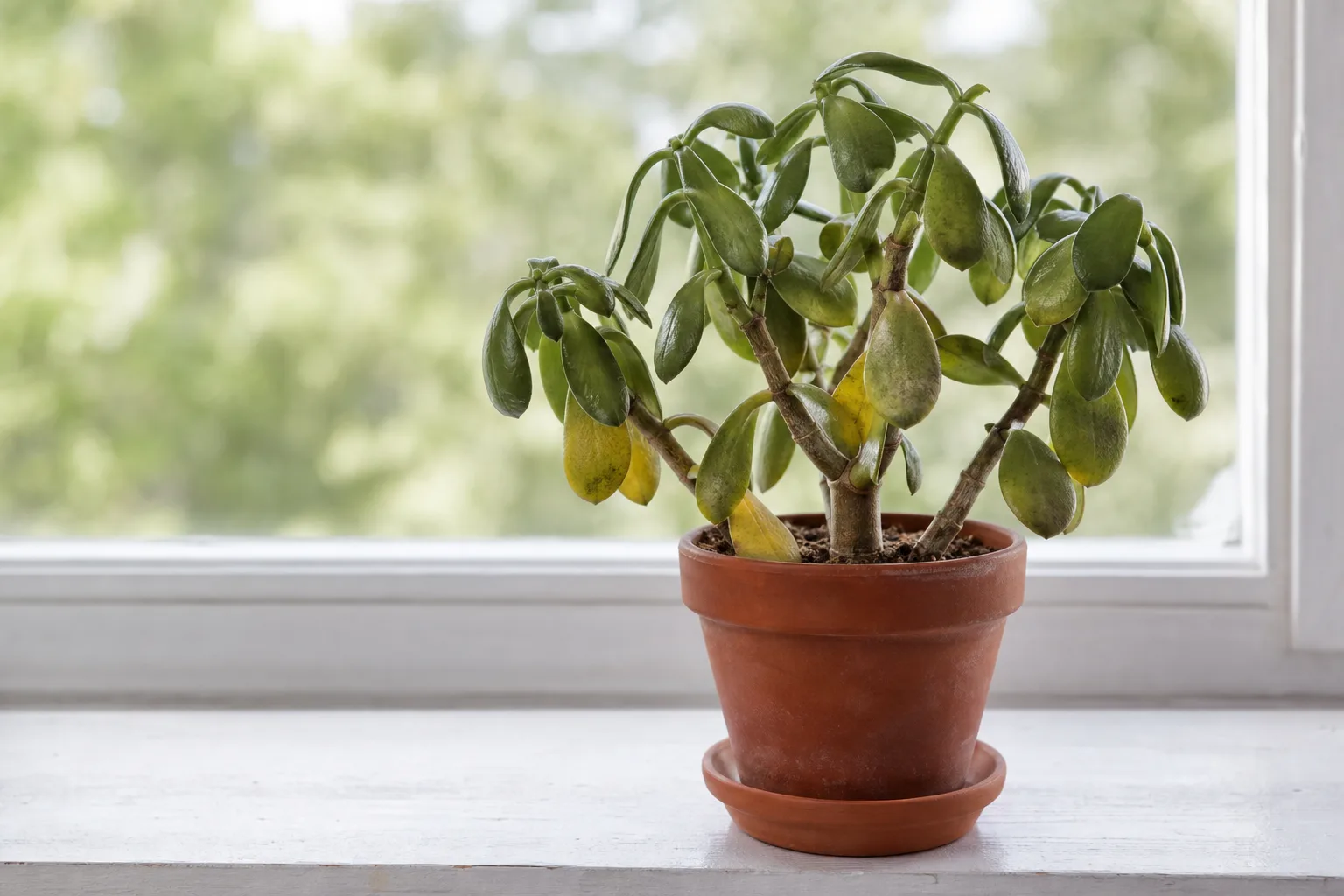
Yellow leaves, soft stems, and sudden leaf drop
One old yellow leaf can be normal, but several yellow leaves together usually deserve a watering and root check. If the soil is wet, the leaves are soft, or the lower stem feels mushy, stop watering and unpot the plant; Clemson Extension identifies root rot as a common result of poor drainage or overly frequent watering.
Remove rotten roots and soft stem tissue with a clean blade, keep the remaining plant out of the old wet mix, and repot into fresh porous medium. If only a healthy top section remains, let the cut callus and root it as a stem cutting. Do not keep pouring water onto a collapsing plant in the hope that drooping means thirst.
Sudden leaf drop can also follow a sharp move from shade to sun, a cold draft, a major watering swing, or a severe light shortage. If the soil is dry and the roots are sound, water thoroughly and correct the environment; if the soil is wet, solve the drainage problem first.
Wrinkled leaves, red edges, and leggy growth
Wrinkled, thin, or limp leaves usually mean the plant’s water reserves are low, but the diagnosis depends on the pot. Dry mix plus firm roots calls for a thorough drink and a longer observation period; wet mix plus limp leaves suggests root damage, not a need for more water.
Red leaf margins can be a normal response to strong light, particularly on certain cultivars. Pale, bleached, tan, or crispy areas are more concerning and point to sudden high light or heat. Move the plant only as far as needed, then re-acclimate it rather than placing it in deep shade.
Long gaps between leaves, thin stems, and a one-sided canopy are classic low-light clues. Move the jade closer to a bright window, rotate it weekly or biweekly, and prune after the new light is stable. Fertilizer cannot turn stretched internodes back into compact growth.
Raised translucent blisters that later become tan and corky may be edema rather than a contagious fungus. Wisconsin’s Plant Disease Diagnostics Clinic explains that edema is favored when roots take up water faster than leaves can lose it—often in wet soil, low light, cool air, or high humidity. Improve light and airflow, let the mix dry more between waterings, and avoid spraying an unidentified lesion automatically.
Mealybugs, scale, and white spots
Mealybugs look like white cottony flecks, often tucked where a leaf meets a stem. Scale appears as firm raised bumps, while a thin crust on the leaf surface may be dried mineral residue. Inspect both sides of leaves and the branch joints before deciding that every white mark is a pest.
Isolate an infested plant, remove visible mealybugs with a cotton swab or tissue, and repeat the inspection over the next several days. Jade leaves can be sensitive to oils and some insecticides, so spot-test any product, keep it out of harsh sun while wet, and follow the product label rather than improvising a concentration. RHS lists mealybugs, vine weevils, and aphids among possible pests, while Wisconsin Extension also notes spider mites.
Pet safety, flowers, and long-term care
Jade plants are not pet-safe if chewed. The ASPCA identifies jade as toxic to dogs, cats, and horses, with reported signs including vomiting, depression, and incoordination. Put the plant where animals cannot reach fallen leaves, and contact a veterinarian or an animal poison service promptly if a pet eats part of it.
Indoor jades may flower, but mature size alone does not guarantee blooms. Strong light, a cooler and drier autumn rest, and naturally shorter nights can help initiate flowers, but trying to force a bloom by severe dehydration or cold exposure is not worth sacrificing the plant. Keep the plant healthy first; treat flowers as a bonus.
A well-kept jade can live for many years and become tree-like. The long-term routine is intentionally boring: keep the light strong, let the root ball dry between deep waterings, refresh the mix when it breaks down, prune for structure, and change one condition at a time when diagnosing stress.
Conclusion: build the routine around light and dry roots
The most reliable jade plant care indoors is not a strict calendar. It is a repeatable check: give the leaves enough light, confirm the soil is dry before watering, soak thoroughly, let the pot drain, and adjust the interval when the season or room changes.
When a jade struggles, inspect the roots before guessing from the leaves alone. Correct light and drainage first, use pruning and propagation as tools rather than emergencies, and keep the plant out of reach of pets. That small set of decisions is enough to keep Crassula ovata compact, stable, and growing for years.



