8 Cascading Flowers Perfect for Container Gardens or Hanging Baskets
Compare eight cascading flowers for containers and hanging baskets by sun, moisture, bloom season, and maintenance so you can choose the right spiller.
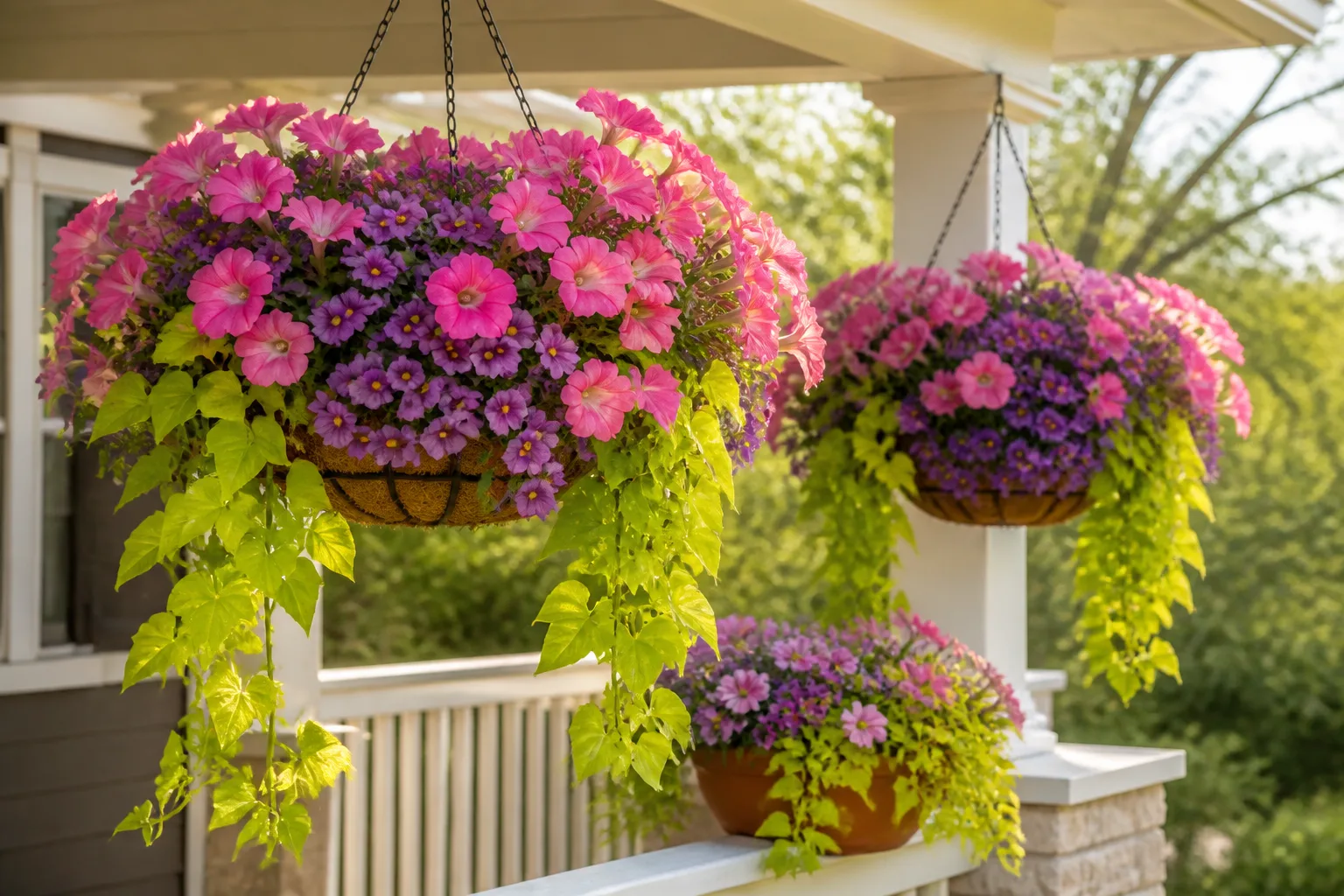
A good spiller does more than hang over a pot rim. It has to keep growing in a shallow, exposed root zone, tolerate the light hitting the side of the container, and recover when the basket dries faster than the garden bed. The most reliable choice is therefore the flower that fits your site and your routine—not simply the one with the longest stems at the nursery.
The eight cascading flowers below cover different jobs. Trailing petunias, calibrachoa, lantana, and verbena suit bright containers; lobelia and fuchsia are better when the basket gets cooler light; creeping phlox brings a spring cascade; and sweet potato vine supplies fast, dramatic foliage. Use the care notes as a filter before you buy.
Start with the site, not the flower list
Match the cascade to the light
Count direct sun where the basket will hang, not where the plant looked good at the garden center. A south- or west-facing porch, pale wall, glass railing, or paved balcony can add reflected heat that makes a basket behave like a hotter site than the air temperature suggests. A covered porch can have bright ambient light but too little direct sun for heavy flowering.
As a starting point, choose petunia, calibrachoa, lantana, verbena, or sweet potato vine for a bright spot. Choose lobelia or fuchsia for morning sun, bright filtered light, or a location protected from hot afternoon rays. Fine Gardening’s hanging-basket guidance makes the same broad distinction while warning that the hotter the summer, the more shade and irrigation even sun-loving plants may need. (Fine Gardening)
Watch the basket for a week after hanging it. Stretching stems and sparse flowers point to insufficient light; bleached foliage, brown patches, or an afternoon wilt that does not resolve overnight point to excess heat, dry roots, or sun scorch. Move the basket or add afternoon protection before changing fertilizer, because feeding a light-starved plant will not make it bloom.
Use a container that can carry the root system
Small baskets create the most dramatic watering problems. The mix is exposed on all sides, crowded roots use moisture quickly, and a coir liner loses water through its walls. A 12- to 14-inch basket with three to five small plants is a forgiving starting point; use fewer plants when the variety is vigorous, the basket is shallow, or you cannot check it most days.
Use a lightweight commercial potting mix made for containers. Garden soil and topsoil compact in a pot, while a suitable mix gives roots a more workable balance of air and water. The container needs drainage holes, and a saucer or cachepot should not hold runoff against the base for hours.
The familiar thriller-filler-spiller formula is optional. In a basket viewed from below, an upright thriller may block the trailing plants or make the container top-heavy. A single vigorous spiller or a mix of low, mounding, and trailing plants can look fuller and stay healthier if every plant shares the same light and moisture needs.
The eight best cascading flowers
1. Trailing petunias
Trailing and spreading petunias are the safest first choice for a sunny basket when you want large, obvious flowers and a long summer display. They grow quickly over the rim, come in a wide range of colors, and include both older types that need grooming and newer cultivars that shed spent blooms more cleanly. NC State Extension describes cascading petunias as especially suited to hanging baskets and containers, with full sun to partial shade and light, well-drained soil. (NC State Extension Plant Toolbox)
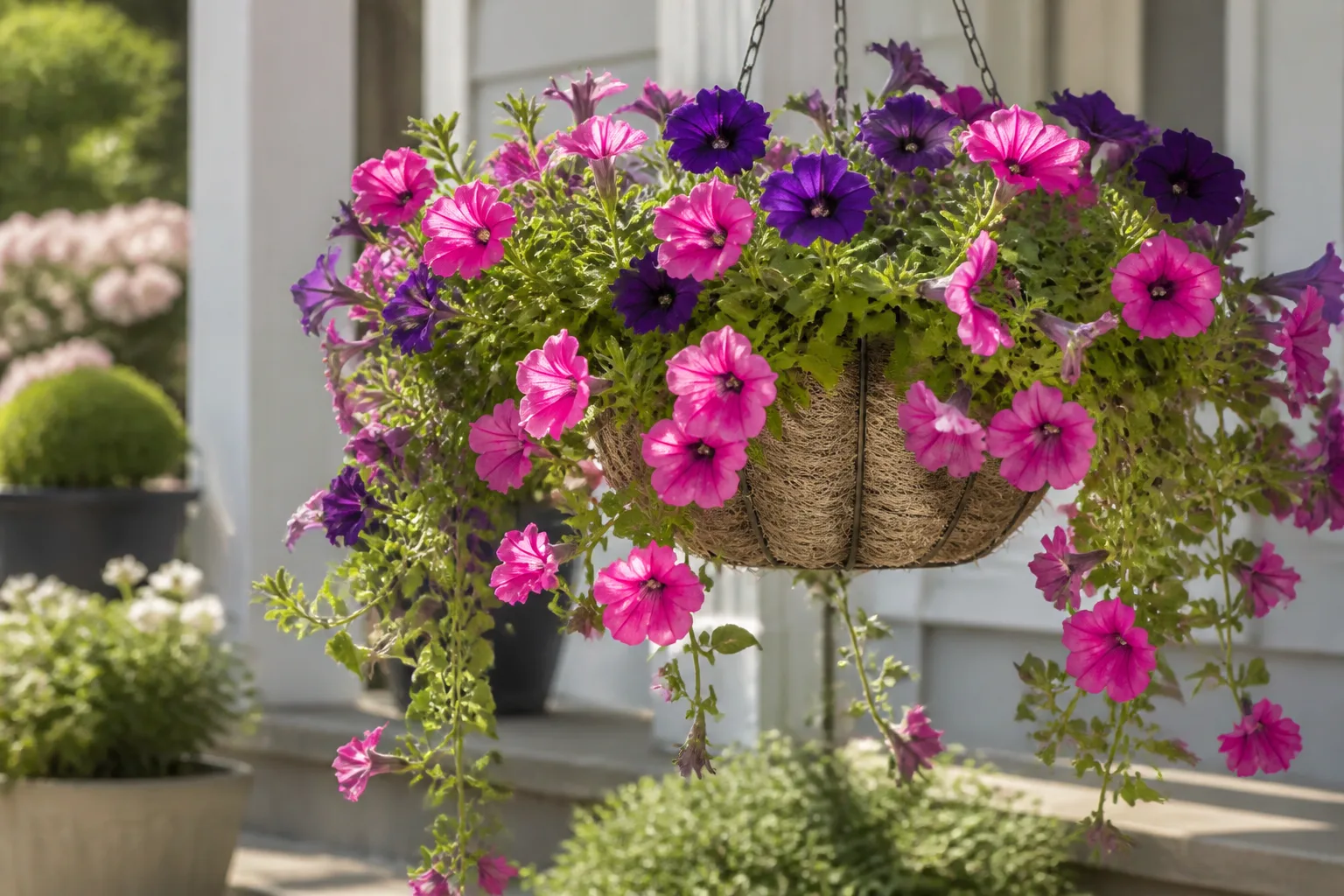
Give petunias at least several hours of direct sun, with afternoon shade in an exceptionally hot balcony microclimate. They like regular moisture but not saturated roots, so water thoroughly when the mix is dry near the surface and let excess drain. A vigorous trailing type may require daily checking in hot weather even if a patio pot nearby does not.
Choose a spreading or trailing series when the job is to cover a basket edge. Compact or mounding petunias are better for a mixed planter where they should fill the center without taking over. If long stems become bare near the middle, trim the longest growth by about one-third after watering and recovery; a smaller, branching plant will usually rebuild a better cascade than an uncut plant with flowers only at the tips.
2. Lobelia
Trailing lobelia (Lobelia erinus) makes a fine-textured waterfall of blue, violet, white, or pink flowers. Its scale is useful in a small basket or as the soft edge around a larger central plant, and it can work in morning sun or bright partial shade where a heat-loving petunia would fade.
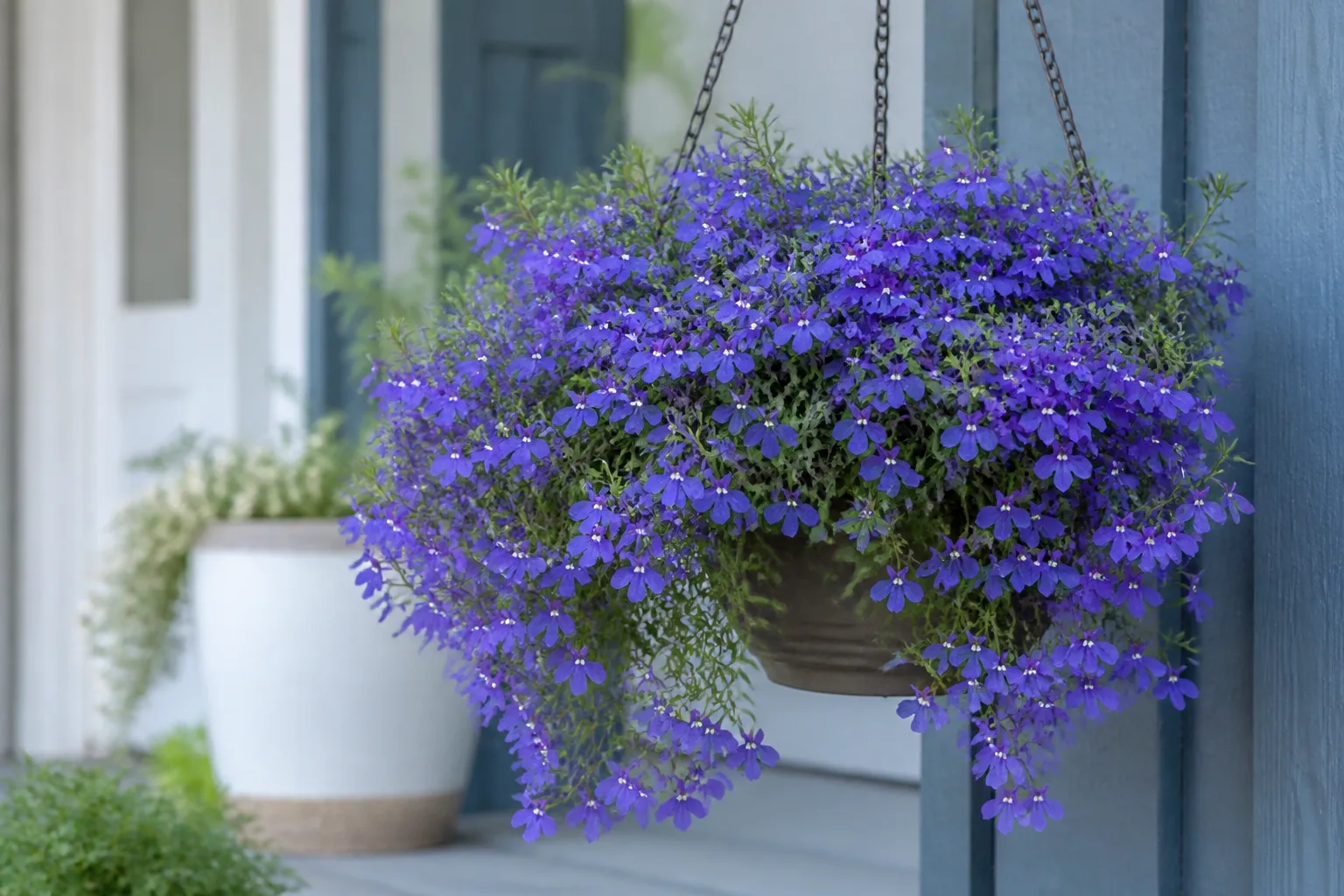
Do not confuse annual trailing lobelia with cardinal flower (Lobelia cardinalis). Cardinal flower is a tall, moisture-loving perennial, while the compact trailing lobelia sold for baskets prefers a consistently moist but well-drained mix and often slows down when exposed to intense heat or drought. In a hot summer, give it morning sun and afternoon protection rather than placing it beside a west-facing wall.
Lobelia is a useful partner for fuchsia, begonias, or other plants with similar moisture needs. It is not a good match for a dry-soil succulent basket. When the cascade stops in midsummer, check heat and moisture first; cutting it back may help tidy the plant, but no pruning can compensate for a root ball that repeatedly dries to the point of collapse.
3. Million bells (calibrachoa)
Million bells are hybrid calibrachoas, not miniature petunias, even though the flowers look related. The plants form a low, spreading mound with masses of small blooms, making them excellent for hanging baskets and the front edge of a mixed container. NC State Extension notes that calibrachoa performs best in full sun and moist, organically rich, well-drained soil, tolerates drought, and generally does not need deadheading. (NC State Extension Plant Toolbox)
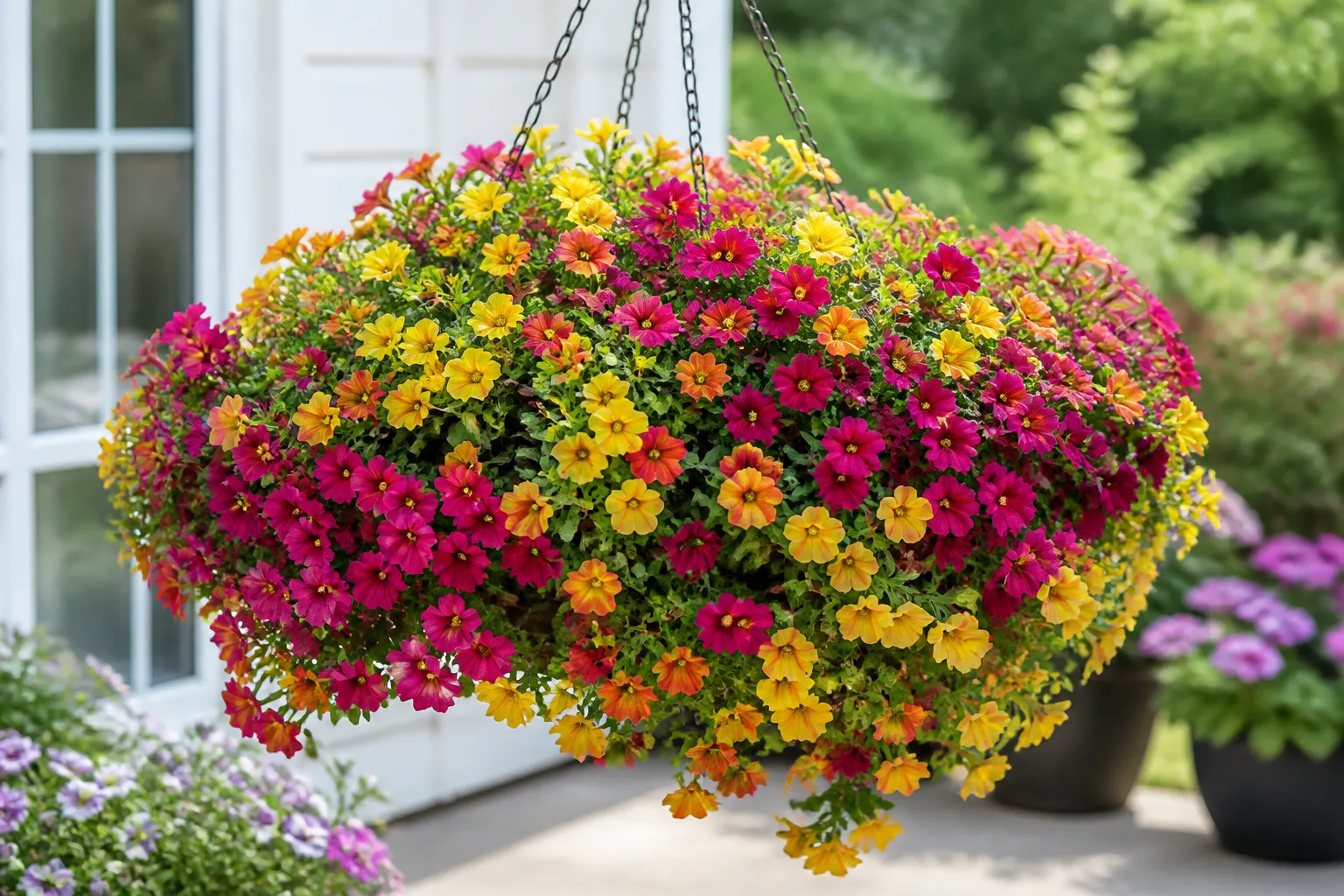
Calibrachoa is a strong choice when you want a self-cleaning display and do not want to pick off individual faded flowers. It still needs water: drought tolerance means it can handle a short dry interval better than some basket plants, not that it can live in a tiny pot without checks. Use a fast-draining mix, especially if rain reaches the basket and the pot stays cool and wet afterward.
Its compact habit suits a 10- to 14-inch basket, but the exact number of plants depends on the cultivar and the size of the transplants. Give each root ball room to expand instead of packing the basket solid on planting day. If the leaves pale or growth stalls, inspect roots, light, and the fertilizer program before adding more feed; excessive fertilizer can damage the same confined roots you are trying to support.
4. Trailing lantana
Trailing lantana brings clusters of warm-colored flowers to a hot, bright container and is one of the better choices for a gardener who wants a tougher plant than lobelia or fuchsia. Look for a genuinely trailing or spreading cultivar rather than assuming every lantana will drape. In warm, frost-free climates it may behave as a perennial; elsewhere, treat it as a seasonal container plant or protect it before frost.
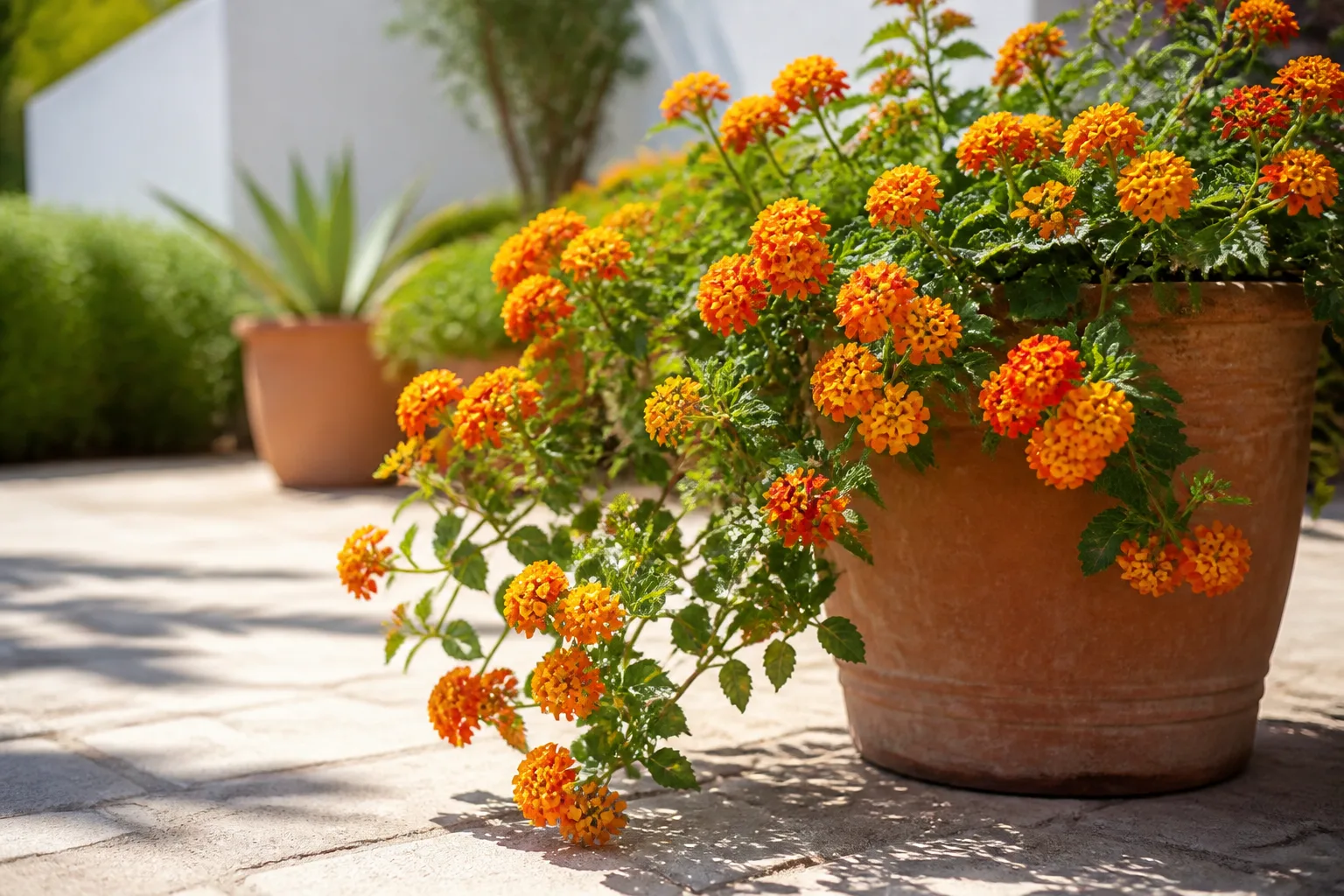
Lantana prefers full sun, well-drained mix, and moderate watering. UC Statewide Integrated Pest Management describes lantana as suitable for pots, hanging baskets, and window boxes, and cautions that excessive water or fertilizer can reduce flowering. (UC IPM) Let the surface dry slightly between thorough waterings, but do not allow a small basket to remain bone-dry through a hot afternoon.
Use lantana when the basket receives strong light and you can provide drainage. It combines well with a fine-textured grass or a compact upright, but its coarse growth can overwhelm a delicate companion. Pinch long stems early to encourage branching, and check local planting guidance before moving lantana into the landscape if it is known to spread in your region.
5. Verbena
Trailing verbena produces rounded clusters of flowers on stems that spill over the edge, giving a basket a dense, colorful outline. It is a good full-sun option for a warm porch or patio, especially when you want more heat tolerance than lobelia can offer. Cultivar labels matter: some verbenas mound, some trail, and some are grown as perennials only in warm climates.
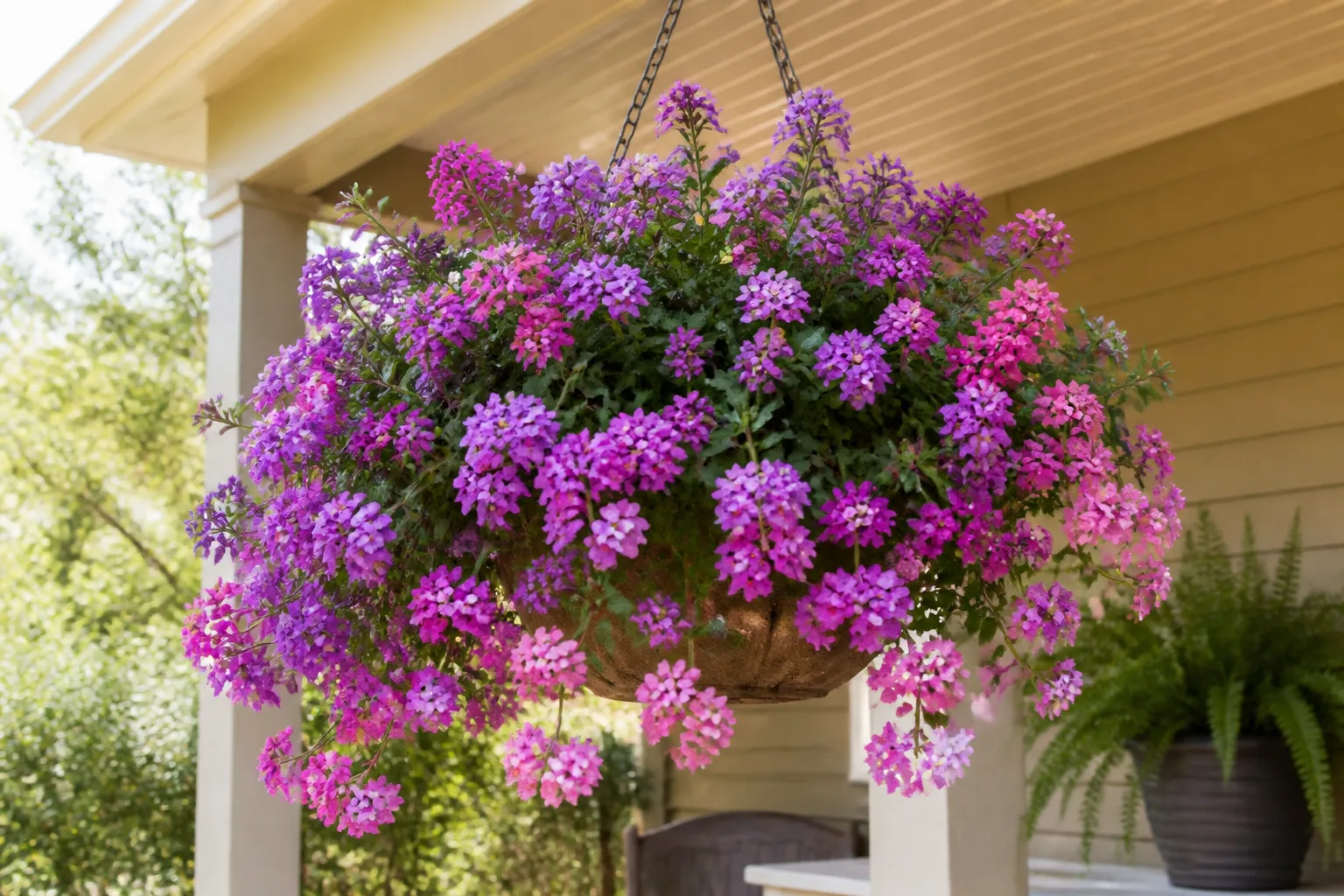
Verbena likes a well-drained mix and tolerates the surface drying slightly between waterings. That is not permission to use a tiny pot and ignore it; exposed roots can still dry quickly, and a drought-stressed plant may shed buds before it recovers. Water to the depth of the root ball, then wait until the upper mix has dried rather than keeping it constantly soggy.
Deadhead varieties that hold spent flower clusters, and give a lanky plant a light trim when the cascade becomes thin. Cut above a leaf joint and avoid removing every flowering stem at once. Verbena can share a sunny basket with petunia or lantana only when the pot is large enough for their combined water demand and the arrangement has enough airflow.
6. Creeping phlox
Creeping phlox (Phlox subulata) is the outlier in this list. It forms a low mat that can tumble over the edge of a trough, bowl, or elevated pot, but its main flower show arrives in spring rather than continuing at peak intensity through the hottest part of summer. After bloom, its evergreen or semi-evergreen foliage can still soften a container, which makes it useful for a seasonal display rather than a nonstop annual basket.
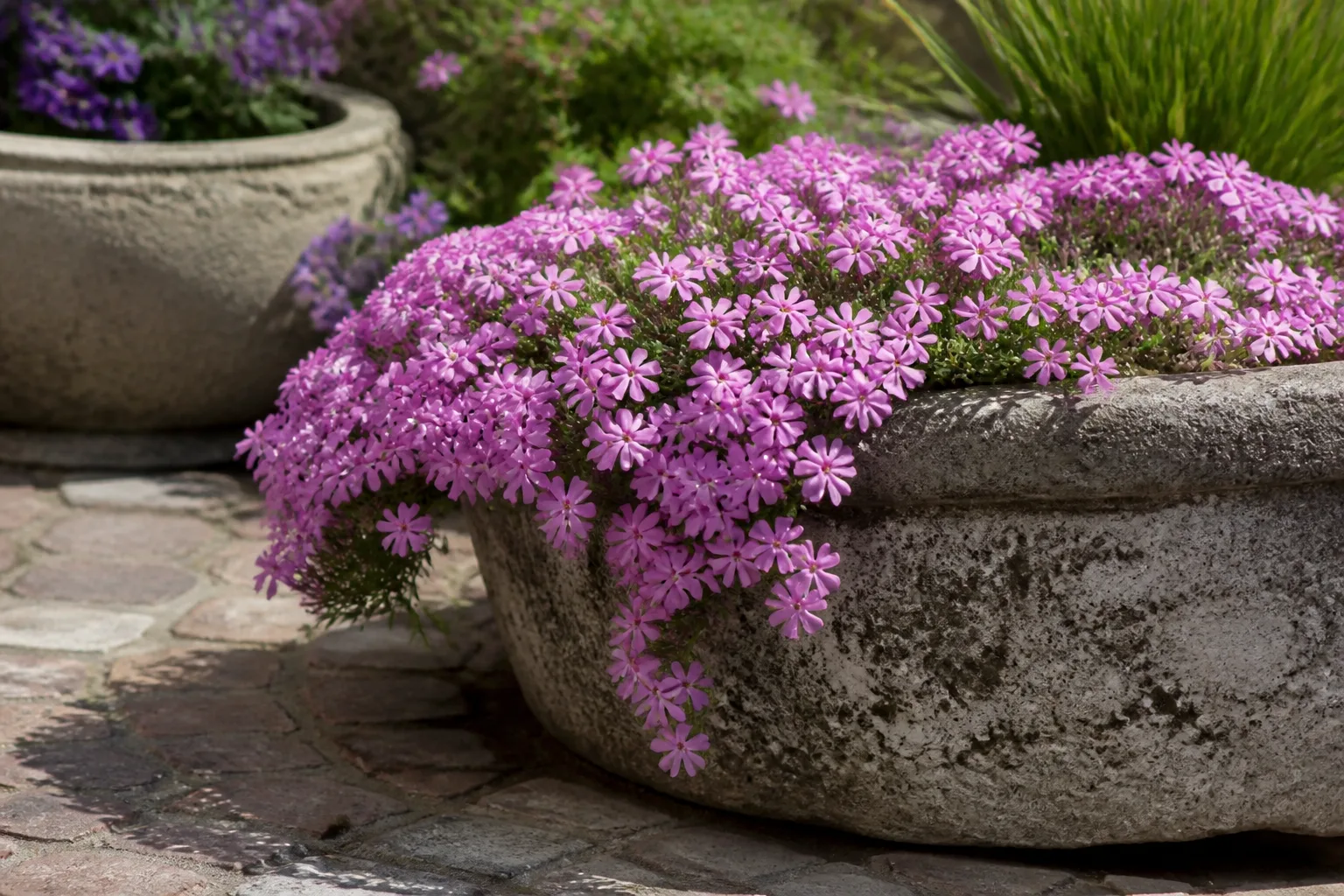
Give creeping phlox full sun and a sharply draining mix. It is a poor choice for a basket that stays wet after rain, and it is less forgiving of winter root exposure in a container than it is in the ground. In a cold climate, use a substantial frost-resistant pot, move it to a sheltered location, or treat the plant as a seasonal display rather than assuming its in-ground hardiness transfers perfectly to an elevated pot.
Do not buy tall garden phlox expecting it to behave like creeping phlox. Tall garden phlox forms upright clumps and needs more root room; the low, mat-forming species is the one that creates a true rim-softening cascade. Pair creeping phlox with spring bulbs in a wide container if you want the foliage to hide fading bulb leaves, but keep the mix open enough for air movement.
7. Sweet potato vine
Ornamental sweet potato vine (Ipomoea batatas) is the foliage specialist of the group. Chartreuse, bronze, purple, and near-black cultivars send long, fast-growing stems over the sides of a pot and create contrast beside flowering plants. The value is color and movement in the leaves; do not choose it if the main goal is a basket filled with flowers.
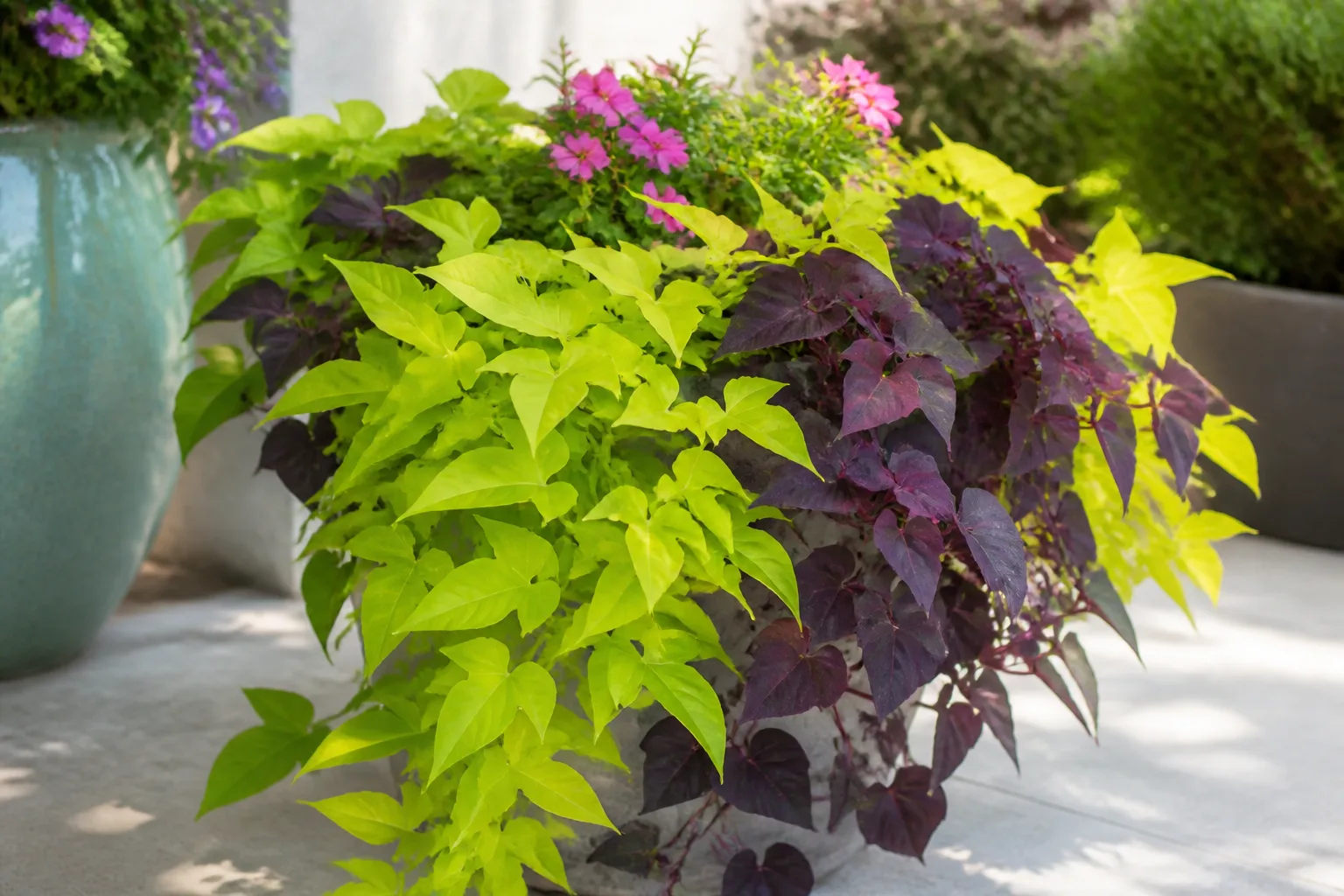
It grows in full sun to partial shade, although leaf color and vigor vary by cultivar and light. In a hot site it appreciates regular moisture, yet its rapid growth can quickly use the water in a small basket. Give it a roomy container and pinch or redirect stems before they smother the petunia, calibrachoa, or verbena planted beside it.
One sweet potato vine can become the dominant plant in a mixed basket. Use it as the spiller with a restrained central plant, or plant it alone for an easy foliage display. In frost-free climates it can persist; in colder regions, plan to replace it seasonally or take cuttings only if the cultivar and local conditions make overwintering worthwhile.
8. Trailing fuchsia
Trailing fuchsia is the choice for an elegant basket in partial shade. Its pendant flowers look especially good when viewed from below, and the plant can bloom heavily when it receives bright light without hot afternoon exposure. Fine Gardening lists fuchsia among shade-oriented hanging-basket annuals and tender perennials, while noting that lobelia can occupy an intermediate sun-to-shade position. (Fine Gardening)
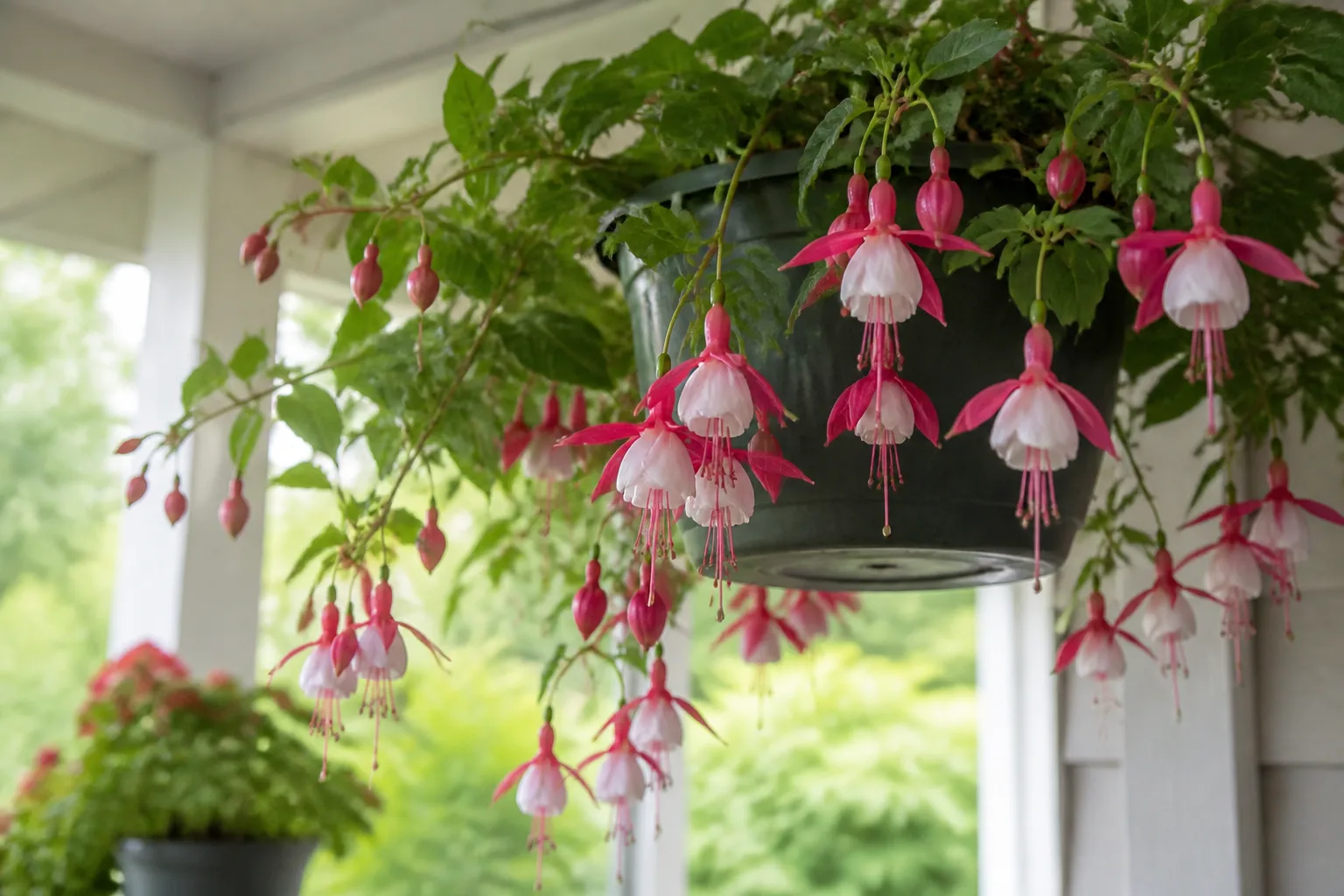
Keep fuchsia’s mix evenly moist but well drained. A dry root ball can cause a fast wilt, while constantly saturated roots can fail just as dramatically. Morning sun, bright filtered light, cool temperatures, and protection from drying wind usually produce a better result than a full-sun porch.
Fuchsia is a demanding choice for a gardener who forgets to water or lives with long, hot summers. If the plant is healthy but flowering weakly, move it out of harsh afternoon light and check that the basket is not drying before midday. Remove faded flowers and trim only lightly during bloom; a deeper reset is better saved for after the main flush.
How to plant a spiller for a full season
Water deeply, then check before watering again
Water a new basket slowly until runoff leaves the drainage holes. Pause and water again if the mix has settled or the root balls remain dry. This first soak closes air gaps around the roots and reveals whether water is flowing through the center or simply racing down the sides of a dry, shrunken root ball.
After planting, check the mix near the center of the basket with a finger rather than judging by the outer liner alone. In hot, sunny, or windy weather, a basket may need water daily or even more often; in cool, cloudy, or rainy weather, the same basket may stay wet for several days. The National Gardening Association recommends saturating the entire pot rather than watering only the edges, and notes that crowded containers can need water once or twice a day in hot, dry weather. (National Gardening Association)
Let excess water drain fully. If the mix dries so far that it repels water, take the basket down if safe, wet it in several slow passes, and let it drain; do not leave it sitting in a tub or saucer. A self-watering basket can reduce missed-water risk, but it does not make a water-loving and drought-loving plant combination compatible.
Water the mix instead of repeatedly soaking flowers and foliage. Morning watering gives leaves time to dry, reduces the chance of a basket remaining wet overnight, and lets you see whether the plant recovers before the hottest part of the day.
Feed and trim according to the cultivar
Container plants have a small nutrient reserve, and repeated watering can carry soluble nutrients out of the pot. Start with one fertilizer program: either a labeled slow-release product mixed into the potting mix or a diluted liquid feed applied during active growth. Fine Gardening recommends liquid feeding at roughly weekly intervals for full-sun hanging baskets and less often for shade, but the product label, plant vigor, weather, and root volume should control the final schedule. (Fine Gardening)
More fertilizer is not a shortcut to more flowers. A pale basket may be hungry, but it may also be waterlogged, root-bound, shaded, or too cold. Check light and moisture first, then feed at the label rate; stacking a slow-release product with frequent strong liquid fertilizer can burn confined roots and leave salt buildup in the mix.
Deadhead only where it helps. Many calibrachoas and some modern petunias are self-cleaning, while verbena, fuchsia, older petunias, and some other annuals look better when spent flowers are removed. When deadheading, cut the flower stem above a healthy leaf joint rather than stripping random foliage.
Pinch young trailing plants once or twice if you want branching, then trim tired growth after a major flush. Take no more than about one-third at a time, water if the plant is dry, and delay hard pruning during extreme heat or drought. The goal is a denser plant with new flowering points—not a bare basket that must rebuild its entire canopy.
Fix the most common container failures
Use the foliage and the mix together to diagnose a failing basket. A drooping plant is not automatically thirsty, and a yellow plant is not automatically hungry.
| What you see | First check | Better next step |
|---|---|---|
| Wilts by afternoon, perks up after watering | Dry mix, hot wall, wind, small basket | Water slowly to runoff, move it from the harshest exposure, and check again the next morning. |
| Wilts while the mix is wet | Drainage, sealed liner, damaged roots | Stop adding water, inspect the root zone, and improve drainage or repot if roots are failing. |
| Long stems with flowers only at the tips | Too little light or no pinching | Move toward brighter light if suitable, then trim lightly above leaf joints. |
| Lots of leaves but few flowers | Shade, excessive nitrogen, heat stress, or wrong cultivar | Correct light and feeding before pruning; choose a bloom-focused variety next time. |
| Flowers fade in a few days | Heat, drought swings, rain damage, or natural short bloom cycle | Check moisture and afternoon exposure; remember that creeping phlox is mainly a spring bloomer. |
| Yellow lower leaves and soft stems | Soggy mix or root stress | Let the mix drain, remove standing water, and check roots before fertilizing. |
| Sticky leaves, holes, or distorted new growth | Aphids, chewing insects, or other pests | Inspect undersides and growing tips, identify the pest, and use the least disruptive control appropriate for that pest and product label. |
Overhead watering, crowded foliage, and poor airflow can increase foliar disease pressure. Remove badly damaged leaves, avoid wetting flowers late in the day, and do not reuse a diseased root ball in a fresh basket without cleaning the container. If a basket collapses suddenly after a period of wet soil, treat root damage as a serious possibility rather than trying to revive it with more water.
Finally, accept that some baskets are seasonal by design. Replace a spent lobelia after a heat wave, move fuchsia to a cooler position, let creeping phlox finish its spring role, or remove an overgrown sweet potato vine before it overwhelms its neighbors. A timely plant swap is often more successful than forcing a mismatched plant through the rest of the season.
Conclusion
Choose the basket’s light and watering reality first, then pick the cascade. Trailing petunias and calibrachoa are strong sunny-basket starters; lantana and verbena suit heat; lobelia and fuchsia reward cooler shade; creeping phlox offers spring interest; and sweet potato vine supplies fast, high-contrast foliage.
Plant fewer specimens than your first impulse suggests, use a well-drained container mix, and keep the basket within reach of your watering can. With the right match, a spiller softens the pot edge, fills empty space, and keeps the entire container looking intentional long after the nursery blooms have passed.