Sweet Potato Care Guide: Light, Water and Soil
Ipomoea batatas
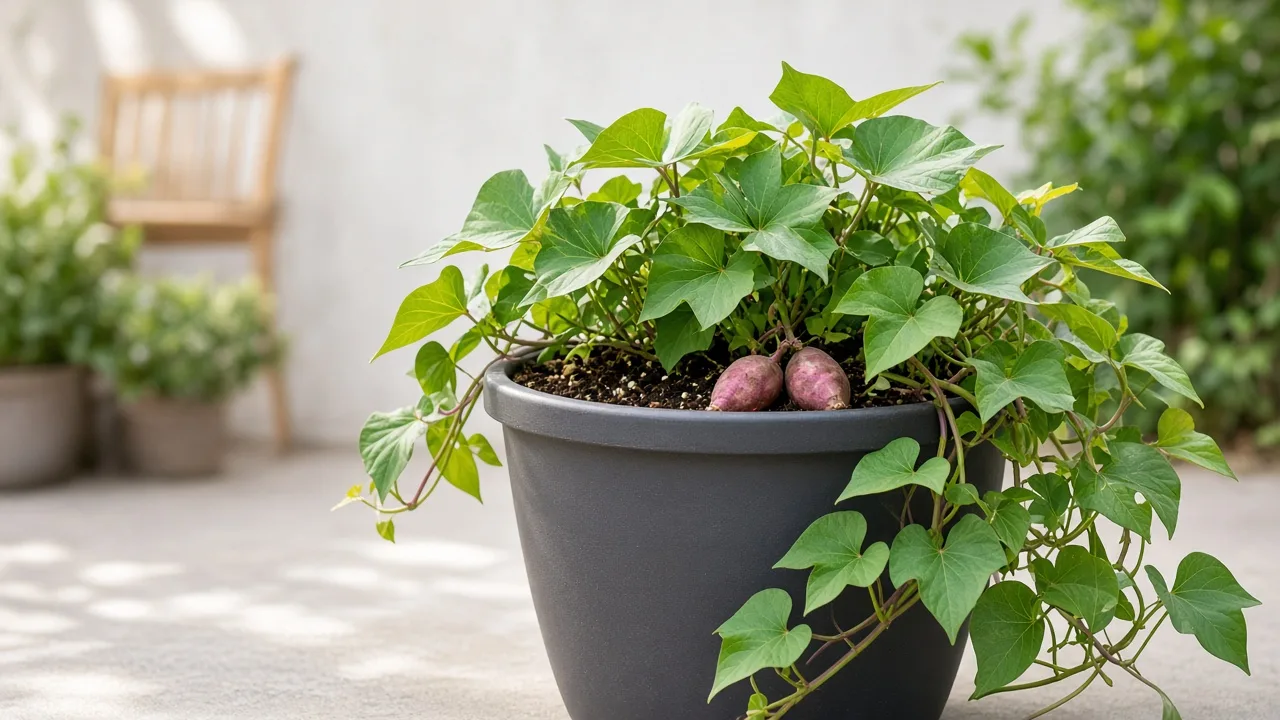
Grow sweet potatoes from slips in full sun with loose, well-drained soil, steady warm-season moisture, and 90–120 days for tubers to size up.
Sweet Potato Care Guide: Light, Water and Soil
Start with wateringThe most common care mistake for Sweet PotatoWatering guide → →Sweet Potato care essentials
Light
Water
Keep soil evenly moist while slips establish and tubers are forming, but never waterlogged. After establishment, aim for steady moisture—roughly 2.5 cm (1 inch) of water per week in warm, dry weather—and let the surface dry slightly between deep waterings in containers.
Soil
Loose, well-drained loam or sandy loam rich in organic matter. pH 5.8–6.5 is ideal. Heavy, compacted, or constantly wet soil restricts tuber development.
Humidity
Temperature
Fertilizer
About Sweet Potato
Sweet Potato is native to Central and South America, typically reaches Vines commonly 1–2 m long in containers and 2–3 m or more in open beds; tuber size varies by cultivar and season length indoors, with fast vine growth in warm weather; most edible cultivars need about 90–120 days after planting slips before tubers size up growth. Sweet Potato has a herbaceous perennial vine (frost tender); usually grown as a warm season annual for roots growth habit and part of the Convolvulaceae family. It is also known as Shakarkandi, Kumara, and Sweet potato vine.
| Detail | Information |
|---|---|
| Also known as | Shakarkandi, Kumara, Sweet potato vine |
| Native region | Central and South America |
| Mature size | Vines commonly 1–2 m long in containers and 2–3 m or more in open beds; tuber size varies by cultivar and season length |
| Growth rate | Fast vine growth in warm weather; most edible cultivars need about 90–120 days after planting slips before tubers size up |
| Growth habit | Herbaceous Perennial Vine (Frost Tender); Usually Grown As A Warm Season Annual For Roots |
| Scientific name | Ipomoea batatas |
| Family | Convolvulaceae |
Sweet Potato Care Guide: Light, Water and Soil
Sweet potato care starts with a simple decision: are you growing edible storage roots (shakarkandi) or a trailing ornamental vine? Ipomoea batatas is a fast, frost-tender morning-glory relative—not a white potato (Solanum tuberosum) and not a crop you reliably start from true seed for kitchen harvests. Success on a terrace or warm-season bed depends on warm soil at planting, full sun, loose well-drained mix, and slips set in a deep, final container or bed.
This overview covers identity, vine habit, mature size, light/water/soil summaries, slip planting logic, harvest timing, India-friendly season notes, common mistakes, pet handling, and where to go next in the Sweet Potato plant hub. Open sibling guides when one variable—light, water, soil, feed, propagation, or pruning—needs a deeper fix.
Sweet potato care at a glance
Give sweet potato at least six to eight hours of direct sun, soil that drains freely, and steady moisture while vines establish and tubers bulk. Plant only after nights are mild and soil at planting depth stays warm—extension-style guidance often cites about 18°C (65°F) minimum, with several degrees warmer safer for home-propagated slips.
Use a large, deep pot or loose raised bed because tubers form on spreading roots below the vine. Favor lower-nitrogen, higher-phosphorus fertility at planting rather than repeated high-nitrogen feeds that push leaves over roots. Plan roughly 90–120 days of frost-free growth for many edible cultivars, then taper water before harvest to limit splitting.
What sweet potato is—and what it is not
Sweet potato is a herbaceous perennial vine in the Convolvulaceae family, usually grown as a warm-season annual where frost kills tops. The RHS growing guide notes it is a close cousin of morning glory and only distantly related to traditional potatoes. Garden plants are started from slips (shoots from a storage root), not from tuber “eyes” like white potato.
That botanical habit explains the care pattern: sprawling stems, heat appetite, and roots that rot in soggy, compacted mix. Treat it like a sun-loving tropical vine with an underground crop, not like a shade-tolerant foliage houseplant.
Edible tubers versus ornamental vines
Edible cultivars are bred for sweet storage roots and predictable maturity windows. Ornamental sweet potato vine selections are bred for leaf color and trailing form; they may produce tubers, but those roots are often poor kitchen quality and the plant’s value is visual. Match the cultivar to your goal before you invest in a deep grow bag or trellis.
If you only want cascading purple or chartreuse foliage in a mixed planter, ornamental types can succeed with less emphasis on harvest timing. If you want shakarkandi for the kitchen, choose named edible varieties and give them the depth, season length, and feeding discipline root crops need.
Shakarkandi and regional context
In much of India, sweet potato is known as shakarkandi and valued as a warm-season root crop. Lowland growers typically use the main hot-season window after cool nights have passed; hill or short-season sites need the sunniest pocket available and earlier-maturing cultivars where possible. The crop is a strong fit for sunny balconies, terrace grow bags, and raised beds that stay frost-free through the growing months—not for cool, shaded rooms or shallow decorative pots.
Growth habit, size, and season length
Stems trail or climb and easily reach 1.5 m (5 ft) or more in favorable warmth, with some garden references citing even longer runs in open ground. NC State’s plant profile describes spread up to several feet with rapid ground-cover growth when not trained upward. In containers, expect vigorous extension unless you choose bush-type cultivars marketed for tighter spaces.
Most edible types need about 90–120 frost-free days after planting before tubers size well, though early cultivars can mature nearer 90 days in good heat and light. The RHS harvest note of four to five months in cool-temperate greenhouses aligns with the same biology: yield depends on warmth, sun, moisture, and uninterrupted root space more than on a decorative pot label.
Light and warmth requirements
Sweet potato is a full-sun crop. NC State lists full sun or partial shade for the species, but root-focused growers should treat six to eight hours of direct sun as the practical minimum; Bob Vila’s growing guide recommends eight to ten hours daily for vigorous tuber crops. Weak light produces thin vines and poor root development.
Warmth matters as much as brightness. The RHS notes best cropping around 21–26°C (70–80°F) air temperatures. Cold soil at planting stalls growth and invites rot on tender slips. If your planting mix or bed still feels cool in the morning, wait—especially after an unseasonable rain spell. See the Sweet Potato light guide for window direction, heat-wave moisture balance, and signs of too little light.
Watering rhythm for vines and tubers
Water thoroughly after planting slips and keep the root zone evenly moist during establishment. Once vines run, aim for steady moisture without waterlogging—about 2.5 cm (1 inch) of water per week in warm dry weather is a useful benchmark, adjusted for pot size and wind on terraces. The RHS emphasizes that short drought during tuber swelling limits size, while constant saturation invites rot.
Check 3–5 cm below the surface (or the equivalent depth in a grow bag) and soak until excess drains from holes. Empty saucers so roots do not sit in stale water. In the last three to four weeks before harvest, reduce irrigation; Bob Vila notes that late heavy watering can split tubers. The dedicated Sweet Potato watering guide walks through finger checks, monsoon wet spells, and wilt diagnosis.
Soil, depth, and root space
Target loamy, well-drained soil rich in organic matter. Bob Vila specifies pH 5.8 to 6.5 and quick drainage—moist but never soggy. Heavy clay or constantly wet mix produces misshapen, stunted, or rotting roots; NC State’s profile stresses high organic, well-draining loam for healthy growth.
Depth and aeration matter because tubers expand underground on lateral roots. A practical container blend mirrors field advice: roughly half quality potting mix or sandy loam, 30% mature compost, and 20% perlite or coarse sand, with every vessel at least ~30 cm deep for a serious tuber crop. Shallow planters may grow pretty vines but rarely reward you with full roots. Mix recipes, compaction fixes, and drainage tests live in the Sweet Potato soil guide.
Slips, planting, and spacing
Start from healthy slips—your own sprouts from a sound storage root or purchased plants from a reputable source. The RHS explains that sweet potatoes begin from cuttings/slips, unlike white potato tubers. Set slips after frost risk has passed and soil is warm; bury several stem nodes so roots form along the buried length.
Space plants about 30 cm (12 in) apart in beds or one strong slip per large deep container, following the RHS spacing guidance for at least 30 cm between plants. Water generously for the first week to ten days while roots establish. Propagation timing, water-rooting slips, and failure modes are covered in the Sweet Potato propagation guide.
Feeding for storage roots, not foliage alone
Work mature compost into the planting mix and use a low-nitrogen, higher-phosphorus fertilizer—Bob Vila suggests 5-10-10 worked in before planting rather than repeated high-nitrogen feeds that favor leaves. Container crops may need light, periodic feeding during summer if the mix is lean; stop heavy feeding as harvest approaches.
Leaves are edible in many cuisines, but repeated leaf stripping on plants grown for roots diverts energy from tubers. If your vine is lush and green yet roots stay pencil-thin, suspect excess nitrogen, shade, or overcrowded roots before adding more feed. See the Sweet Potato fertilizer guide for dilution, organic options, and warning signs.
Containers, spacing, and vine control
Sweet potato can grow in pots, grow bags, or raised mounds as long as drainage and depth are honest. Bush-type cultivars suit tighter balconies better than rampant runners. Train long stems up a trellis or contain them within the bed to save floor space; the RHS notes you can tie stems on supports or trim overly vigorous shoots—cooking tender tips like leafy greens—without treating the plant like a permanent indoor vine.
There is no routine repotting mid-season: slips should go into their final deep container at planting because disturbing roots later sets back tuber formation. If slips were started in small trays, move them once into the finishing pot when weather is reliably warm—not in cool, wet weeks. The Sweet Potato repotting guide explains final pot sizing and why mid-season moves fail.
Harvest, curing, and storage basics
Harvest when leaves yellow and die back or when your cultivar’s maturity range has passed—often near 100 days for many types, with some varieties maturing closer to 90 or 130 days. Lift roots carefully with a fork or by tipping a container; skins bruise easily. The RHS advises harvesting before frost and handling tubers gently.
Cure freshly dug sweet potatoes warm and humid for about two weeks, then store cool, dry, and dark—not in the refrigerator, which damages texture and flavor. Because cured tubers have limited shelf life compared with white potato, harvest in stages if you have several plants. Heavy vine pruning for tuber crops is usually counterproductive; see the Sweet Potato pruning guide for foliage versus root goals.
Growing sweet potato in India and similar climates
Use the warmest frost-free months your location offers. Plant slips when night temperatures stay mild and beds or bags warm quickly after irrigation. In hot lowlands, afternoon heat is less limiting than cold snaps, waterlogged mix, or shade from surrounding structures—prioritize the sunniest station and open drainage holes before monsoon peaks.
Short-season hill gardens may need early cultivars and black plastic or raised mounds to warm soil, accepting that extremely cool nights will still slow bulking. Where winters are frost-free and bright, sweet potato can behave as a longer-lived vine, but most kitchen growers still plan around one main root harvest per planting.
Monsoon wet soil and peak summer heat
During heavy rains, elevate grow bags, refresh coarse drainage material in the mix, and pause irrigation until the root zone breathes again. Persistent wetness yellows leaves and softens storage roots. In peak dry heat, containers on concrete may need daily moisture checks, while in-ground beds benefit from mulch that keeps soil evenly moist without sealing the surface.
Common mistakes and warning signs
Most failures trace to planting too early in cool soil, dense wet mix, or choosing an ornamental vine for a root harvest. Watch for midday wilting with dry mix (underwatering in heat), yellow leaves with soggy soil (overwatering or poor drainage), and lush vines with tiny tubers (shade, excess nitrogen, or shallow pots).
Frost on exposed foliage ends the season—harvest or protect before nights drop toward freezing. If slips rot at the base, suspect cold, saturated planting mix and restart with warm, bright propagation conditions rather than pushing the same stems deeper into wet soil.
Pets and food-crop safety
LeafyPixels classifies sweet potato vine as non-toxic to cats and dogs per ASPCA guidance cited on the plant hub. That does not mean pets should dig up grow bags or eat large amounts of raw tuber. Stabilize containers on railings and contact a veterinarian if a pet shows persistent vomiting, diarrhea, or lethargy after eating plant material.
When to use this page vs other Sweet Potato guides
Stay here when you need the whole picture: edible versus ornamental goals, season length, sun/soil/water basics, slip planting, harvest logic, and first troubleshooting.
Open a sibling guide when one topic dominates:
- Light — sun hours, balcony orientation, heat stress
- Watering — dryness checks, monsoon rhythm, wilt diagnosis
- Soil — mix recipes, pH, compaction
- Fertilizer — root-focused feeding, nitrogen excess
- Propagation — slips from tubers, timing, failures
- Repotting — final container depth, why mid-season moves fail
- Pruning — vine control versus tuber yield
Related Sweet Potato guides
Build the cluster as your season progresses:
- Hub: Sweet Potato
- Care: light, watering, soil, fertilizer, repotting, propagation, pruning
Start with light and watering on a newly planted slip; add soil and fertilizer detail if growth stalls despite good sun; open propagation when you need more plants; use pruning only after you know whether leaves or roots are the priority.
Conclusion
Sweet potato rewards growers who respect its vine biology and warm-soil timing: choose edible or ornamental cultivars deliberately, plant slips into deep, loose, draining mix in full sun, keep moisture steady while tubers form, and taper water before harvest. Match feeding to roots rather than foliage alone, give stems room or support on balconies, and plan roughly three to four months of frost-free growth for kitchen harvests. Nail those decisions here, then use the dedicated guides when light, water, soil, feeding, propagation, or pruning needs a finer adjustment.
How to care for Sweet Potato?
When should you water Sweet Potato?
Keep soil evenly moist while slips establish and tubers are forming, but never waterlogged. After establishment, aim for steady moisture—roughly 2.5 cm (1 inch) of water per week in warm, dry weather—and let the surface dry slightly between deep waterings in containers.
- Feel 3–5 cm below the surface - After establishment, aim for steady moisture—roughly 2.5 cm (1 inch) of water per week in warm, dry weather—and let the surface dry slightly between deep waterings in containers.
- water when that layer is beginning to dry - After establishment, aim for steady moisture—roughly 2.5 cm (1 inch) of water per week in warm, dry weather—and let the surface dry slightly between deep waterings in containers.
- then soak until excess drains from the pot - After establishment, aim for steady moisture—roughly 2.5 cm (1 inch) of water per week in warm, dry weather—and let the surface dry slightly between deep waterings in containers.
- Drain excess water - Keep soil evenly moist while slips establish and tubers are forming, but never waterlogged.
What soil works best for Sweet Potato?
Loose, well-drained loam or sandy loam rich in organic matter. pH 5.8–6.5 is ideal. Heavy, compacted, or constantly wet soil restricts tuber development.
- 50% quality potting mix or sandy loam - Loose, well-drained loam or sandy loam rich in organic matter.
- 30% mature compost
- 20% perlite, coarse sand, or similar aeration material - Loose, well-drained loam or sandy loam rich in organic matter.
Grower notes for Sweet Potato
Grow from slips, not seed
Sweet potato is propagated vegetatively from slips—shoots sprouted from a storage root—not from true seed for kitchen harvests. Start slips in warm, bright conditions several weeks before you plan to plant, or buy healthy slips from a reputable source. Ornamental vine cultivars are bred for foliage color, not dependable edible tubers, so match the plant to your goal.
Wait for warm soil
This morning-glory relative is cold-sensitive. Plant slips only after nights stay mild and soil at planting depth is consistently warm—about 18°C (65°F) minimum, with 21–24°C (70–75°F) safer for tender homegrown slips. In hot lowlands, use the main warm-season window; cool soil stalls growth and invites rot.
Give roots room and loose mix
Tubers form underground on spreading roots, so depth and aeration matter as much as sun. Use a large, deep container with drainage holes or loose garden soil in raised mounds. Compact mix produces stringy or stunted roots. Bush-type cultivars suit tighter spaces better than long-running vines.
Full sun fuels vine and tuber growth
Position plants where they receive at least 6–8 hours of direct sun daily. Strong light supports the leafy vines that feed developing tubers. In extreme heat, ensure moisture stays even; chronic drought during tuber bulking reduces yield and can cause cracking when water returns.
Feed for roots, not just leaves
Work compost into the planting mix and favor lower-nitrogen, higher- phosphorus fertility (for example 5-10-10) at planting rather than repeated high-nitrogen feeds that push foliage over storage roots. Stop heavy feeding as harvest approaches. Leaves are edible in many cuisines, but repeated leaf harvest diverts energy from tubers on plants grown for roots.
Pet-aware note for Sweet Potato
ASPCA lists sweet potato vine (Ipomoea batatas) as non-toxic to cats and dogs, and tubers are a common human food. That does not mean pets should dig up containers or eat large amounts of raw tuber. Keep grow bags stable and contact a veterinarian if a pet shows vomiting, diarrhea, or lethargy after eating plant material.
Safe for cats and dogs
ASPCA lists sweet potato vine (Ipomoea batatas) as non-toxic to cats and dogs. Prevent pets from digging containers or eating large amounts of raw tuber.
ASPCA classifies Ipomoea batatas (sweet potato vine) as non-toxic to cats, dogs, and horses. Edible tubers are human food; unsupervised pet access to soil, vines, or large raw portions can still cause digestive upset.
Watering Sweet Potato
For Sweet Potato, feel 3–5 cm below the surface; water when that layer is beginning to dry, then soak until excess drains from the pot and water check every 2–3 days in hot Indian summers; less often in cool or rainy weather once vines are established. Increase frequency during peak heat and active vine growth; taper irrigation in the last 3–4 weeks before harvest to reduce tuber splitting.
| Detail | Information |
|---|---|
| How often | Check every 2–3 days in hot Indian summers; less often in cool or rainy weather once vines are established |
| How to check | Feel 3–5 cm below the surface; water when that layer is beginning to dry, then soak until excess drains from the pot |
| Seasonal changes | Increase frequency during peak heat and active vine growth; taper irrigation in the last 3–4 weeks before harvest to reduce tuber splitting |
Signs of overwatering
- persistently wet soil with yellowing leaves
- soft or darkened storage roots
- wilting despite saturated mix
Signs of underwatering
- midday wilting that does not recover overnight
- dry soil pulling from container edges
- small or cracked tubers after irregular watering
Soil & potting for Sweet Potato
Use a mix of 50% quality potting mix or sandy loam, 30% mature compost, 20% perlite, coarse sand, or similar aeration material for Sweet Potato. Excellent drainage is essential; sweet potato roots rot in soggy soil and tubers become misshapen in dense clay. Target soil pH around 5.8–6.5. Repot no routine repotting—set slips in their final deep container or bed at planting time because the crop needs uninterrupted root space, ideally in plant slips after frost risk has passed and soil is consistently warm (about 18°C / 65°F or higher at planting depth).
| Detail | Information |
|---|---|
| Recommended mix | 50% quality potting mix or sandy loam, 30% mature compost, 20% perlite, coarse sand, or similar aeration material |
| Drainage | Excellent drainage is essential; sweet potato roots rot in soggy soil and tubers become misshapen in dense clay |
| Soil pH | 5.8–6.5 |
| Repotting frequency | No routine repotting—set slips in their final deep container or bed at planting time because the crop needs uninterrupted root space |
| Best season to repot | Plant slips after frost risk has passed and soil is consistently warm (about 18°C / 65°F or higher at planting depth) |
Signs it needs repotting
- slips were started in trays too small for the season
- roots circle a nursery pot before warm planting weather arrives
- the container is shallower than about 30 cm for a full tuber crop