How to Grow Sweet Potatoes for a Better Harvest
Learn how to grow sweet potatoes in beds or containers, start slips, avoid common problems, and cure roots for storage.
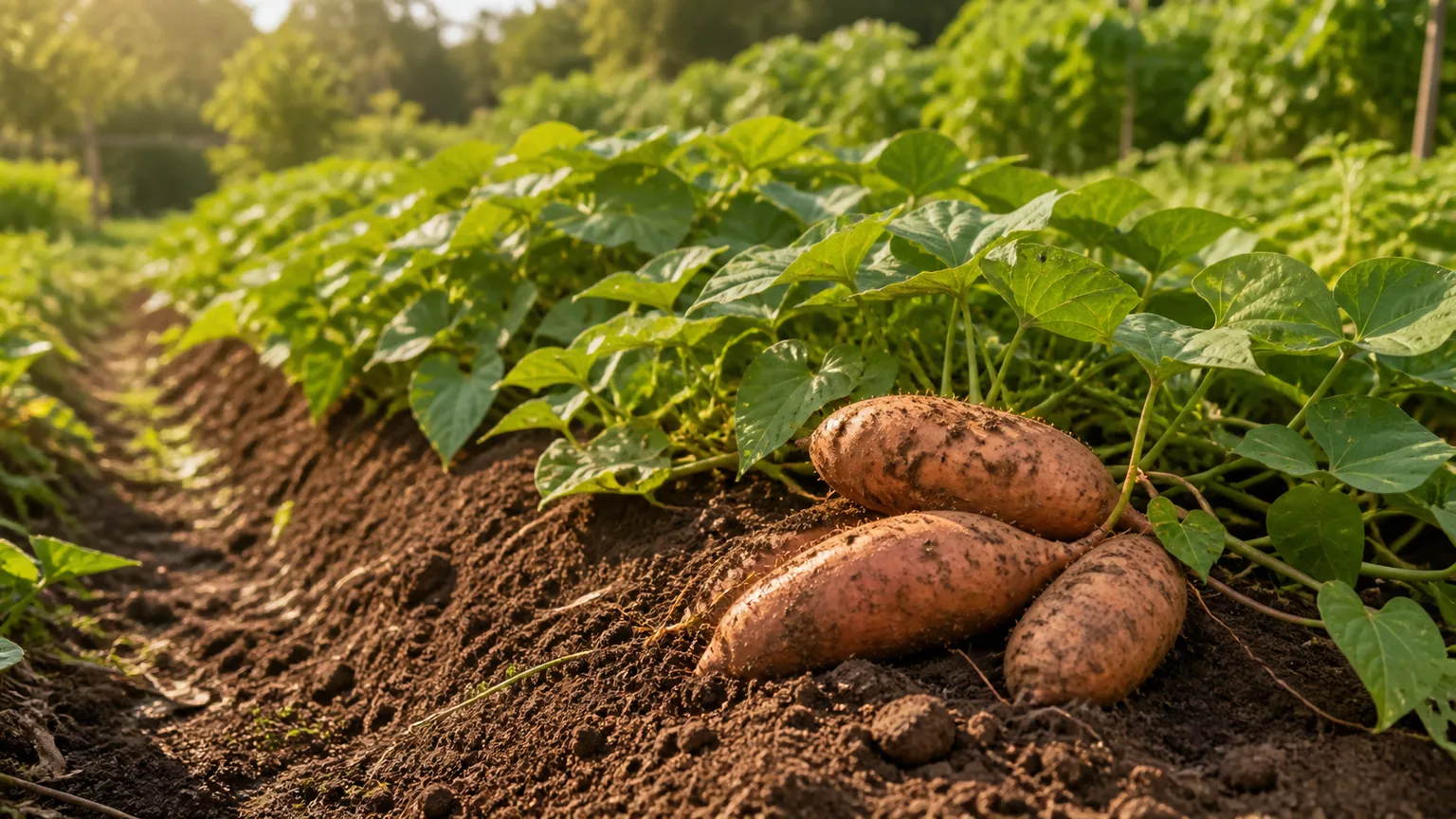
Sweet potatoes grow best when you give them a long, warm season, loose soil, and a head start as rooted slips. In most home gardens, plant slips after frost danger has passed and the soil is near 70°F; then allow roughly 90 to 120 days for many common varieties to make storage roots. The exact harvest date depends on the cultivar and your weather, so use the seedling’s maturity estimate as a planning guide, not a guarantee.
The practical sequence is simple: select an edible variety, start or buy healthy slips, wait for warm soil, keep the young plants moist while they establish, and dig the crop before frost. Sweet potatoes are not planted like white potatoes: the edible roots form from slips, which are shoots taken from a mature sweet potato plant. This guide covers the decisions that make that process work in an in-ground bed, raised bed, or large container.
Build a crop calendar around your last frost
Count backward from the first fall frost, not forward from the first warm spring day. Many edible varieties need about three to four months from planting slips to harvest, and some cultivars or cool growing conditions take longer. For a short-season garden, compare the variety’s days to maturity with the frost-free time actually available after the soil warms; a 100-day variety planted into cold ground does not get a useful head start.
Your planting window begins after the last expected spring frost and once soil at planting depth reaches about 70°F. University of Georgia Cooperative Extension uses 70°F as the planting threshold, while Savvy Gardening describes 65°F as a workable lower threshold. If you have a short season, the warmer target is the safer choice because tender slips establish slowly in chilly ground. A soil thermometer is more reliable than a calendar date or a sunny afternoon air temperature.
As a rule, leave a margin of several weeks between the expected maturity date and your typical first frost. Use the supplier’s estimate for the exact cultivar, since “90 days” usually starts when a rooted slip is planted outdoors, not when a root first sprouts indoors. For a more detailed maturity and harvest timeline, see our guide to how long sweet potatoes take to grow.
Choose edible slips and a variety that fits the season
Sweet potato slips are young shoots that can root and grow into new plants. Buy slips labeled for edible sweet potatoes from a garden center, seed supplier, or local grower when you want the most predictable crop. The supplier can tell you the cultivar and often the expected maturity window, which matters more in a northern or high-elevation garden than a general promise that sweet potatoes grow widely.
Do not assume every sweet potato vine sold in a mixed planter will produce a useful food crop. Many ornamental sweet potato cultivars are selected for colorful foliage or a compact habit, not for large, well-shaped edible roots. NC State Extension notes that ornamental cultivars rarely make good edible roots; choose a food variety if you want to harvest dinner, not simply decorate a pot.
Varieties vary in maturity, flavor, skin and flesh color, and vine size. UGA Extension’s home-garden guidance lists ‘Centennial’ at about 90 days, ‘Beauregard’ at about 105 days, ‘Porto Rico’ at about 110 days, and ‘Jewel’ at about 120 days in its Georgia guidance. Those are regional estimates, not universal promises, but they offer a useful comparison: short-season gardeners should prioritize early maturity, while small-space growers may want a bushier type such as ‘Porto Rico’.
| Variety | Approximate maturity in UGA guidance | Useful consideration |
|---|---|---|
| ‘Centennial’ | 90 days | Earlier option when the season is tight |
| ‘Beauregard’ | 105 days | Common orange-fleshed variety with a midrange season |
| ‘Porto Rico’ | 110 days | Compact or “bunch” habit can suit a smaller plot |
| ‘Jewel’ | 120 days | Allow a longer warm season |
Use the table to compare, then follow the maturity information supplied with your slips. Seed companies may use different strains or regional trials, and a plant’s time in cold, saturated, or shaded soil can slow it down. If you are choosing between two varieties for a short summer, the one that matures sooner is usually a better bet than a late cultivar with a larger advertised harvest.
Buy slips or start your own
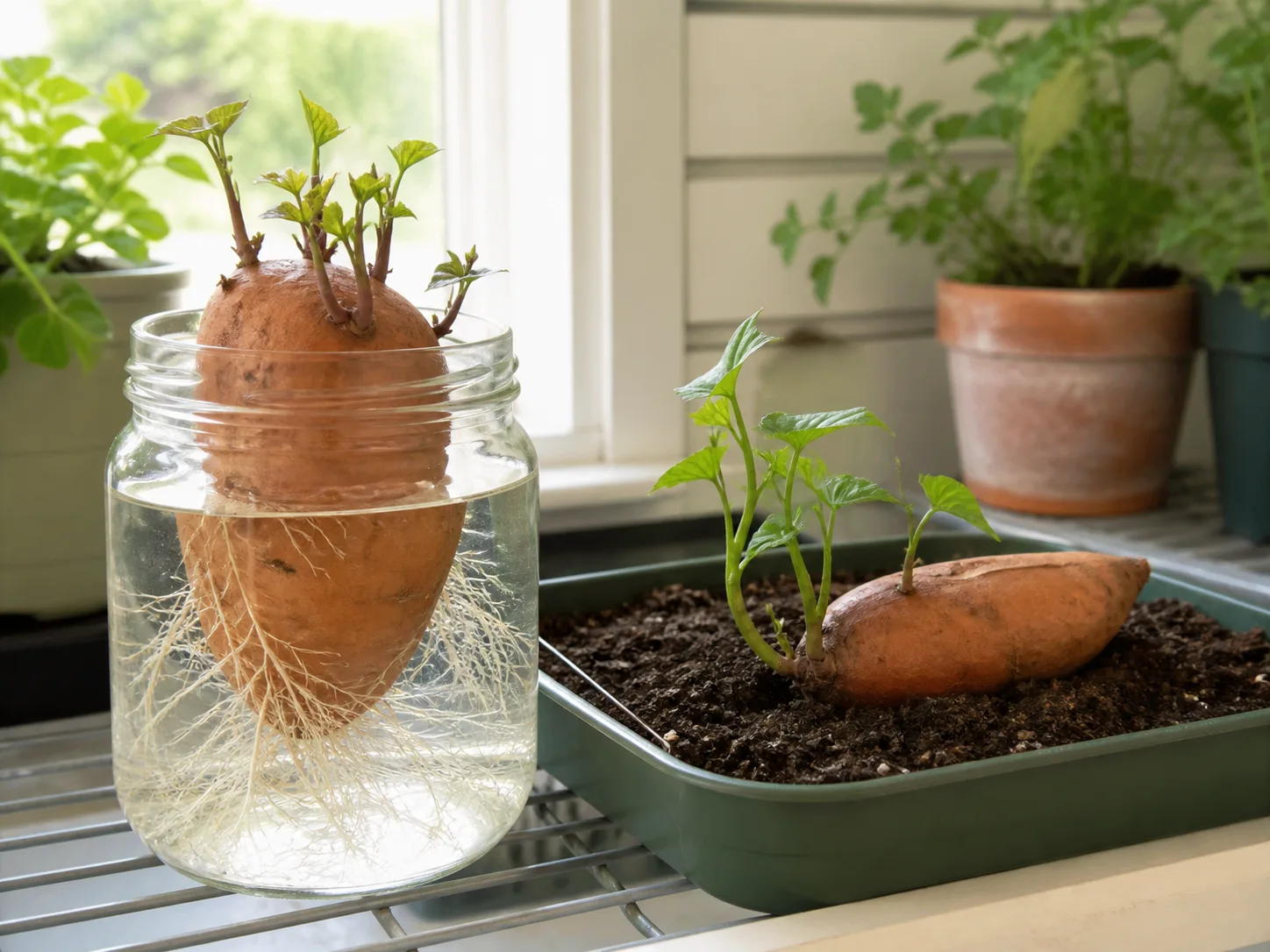
Starting slips at home is economical and useful when you want a variety that is hard to find locally, but it takes planning. Begin about six to eight weeks before your outdoor planting window. A sweet potato needs warmth to sprout, so a root started too late can leave you waiting for shoots after the garden is already ready.
Use a sound, firm sweet potato from a known edible variety if you have one. A store-bought root can work, but its cultivar and disease history may be unknown, and some roots are slow or fail to sprout. Starting a few extra shoots or ordering a small backup bundle protects the season if your first root rots or produces weak growth.
Two methods work: stand the root with its lower end partly in water, or lay it in a shallow tray of moist potting mix. Keep it warm and bright; do not keep the medium soggy. The soil method avoids leaving a whole root submerged, while the jar method makes it easy to see emerging roots and change stale water. Savvy Gardening’s slip-starting guide describes both options and recommends starting well ahead of transplant time.
When shoots are roughly 6 to 10 inches long, twist or cut them away from the mother root. Root each shoot in a clean jar of water with the lower stem submerged, or place it directly in moist potting mix. UGA’s sweet-potato guide says slips often develop roots within a few days; discard any that become slimy, black, or limp rather than expecting them to recover.
Root and harden slips before planting
A slip with several healthy roots is easier to establish than a bare shoot, especially in hot or windy weather. If you start with unrooted cuttings, keep the lower portion in water and change it regularly. Plant when the roots are short and fresh; leaving them in a jar until they form a tangled mass makes transplanting harder and can break them.
Before moving indoor-grown slips outside, harden them off over about four to seven days. Put them outdoors in a sheltered, shaded place for a short period at first, then gradually increase their exposure to sun and wind. Bring them back inside if nights turn cold or frost is possible. A tender slip that has grown in a warm room can scorch or wilt when placed directly in full sun.
If purchased slips arrive before the soil is warm, keep the roots damp and the shoots out of intense sun. For a delay of more than a few days, temporarily plant them in a well-drained potting mix and keep them in bright light. Avoid leaving the roots submerged for long stretches; stale water and oxygen-starved roots can turn a healthy order into a rotting bundle.
Prepare a loose, sunny bed
Choose the sunniest practical part of the garden, ideally with eight or more hours of direct light. Sweet potatoes tolerate some partial shade, but a shaded bed produces less energy for enlarging the roots and can keep the soil cooler. In a very hot, dry climate, light afternoon shade may reduce stress, but avoid a location shaded for most of the day.
The soil should be loose, well-drained, and deep enough for roots to expand. Sandy loam or a friable garden loam is a good fit; dense clay holds water and can leave roots small or misshapen. If the bed is compacted, loosen the planting area at least 6 to 8 inches deep and remove stones or hard clods. A raised bed or broad ridge can help warm and drain the root zone in a cool spring.
Sweet potatoes are not heavy feeders. A modest amount of finished compost can improve soil structure, but do not turn the bed into a rich, nitrogen-heavy mix. Excess nitrogen encourages lush leaves and runners at the expense of storage roots. If you are unsure about fertility or soil pH, get a soil test before adding fertilizer or lime; UGA Extension places the preferred pH around 6.0 to 6.5.
In a cool climate, black plastic mulch can warm the soil and reduce early weeds, but it can make the root zone too hot in an already warm region. Wait for the soil to reach the planting temperature before deciding whether you need it, and make sure irrigation can reach the plants under the cover. Organic mulch is easier to adjust later; apply it after the soil has warmed and the slips have begun to grow.
Plant slips in warm soil
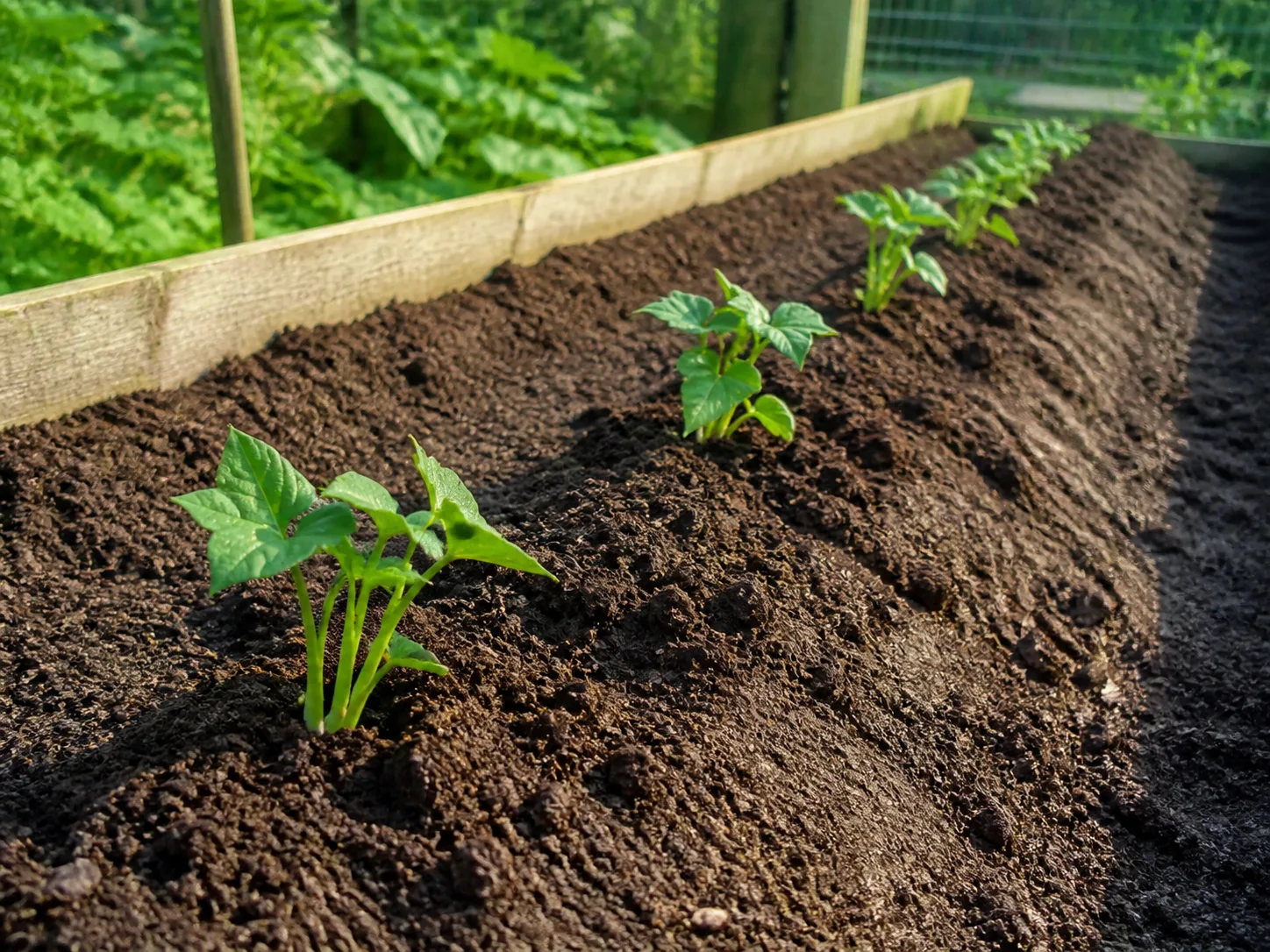
Plant on a mild, calm day after frost danger has passed and soil at the root zone is close to 70°F. If you cannot measure soil temperature, wait for a settled stretch of warm weather rather than planting at the first frost-free date. Warmth helps the slips root quickly; cold, wet soil can stall them for weeks or rot them before they establish.
Water the slips before planting if their roots look dry. Dig a hole or furrow about 4 to 6 inches deep, set the rooted end downward, and cover the roots and lower stem while leaving the leaves and growing tip above the soil. Press the soil gently around the plant so the roots make contact without packing the bed hard. Water the row thoroughly after planting.
Plant deep enough and space for vines
Space slips about 12 to 18 inches apart within a row, leaving roughly 3 feet between rows if you have room. The vines spread widely, so narrow paths quickly disappear under foliage. Closer spacing can make more medium-sized roots in a limited bed; wider spacing gives each plant more room and may produce fewer, larger roots. These are tendencies, not guarantees, because variety and soil also matter.
If the bed is heavy or shallow, plant in a low ridge or mound of loose soil. A ridge gives roots a larger, warmer, better-drained zone and makes digging easier later. Do not hill soil over the leaves after planting; only the stem and roots should be buried.
The newly planted slip may droop at midday for a few days, particularly during hot or windy weather. Keep the root zone evenly moist while it establishes, and consider a light row cover if a cold snap or drying wind is forecast. Remove or open the cover once the plants are growing steadily and temperatures are consistently warm.
Grow sweet potatoes in containers
You can grow sweet potatoes in a pot or grow bag when a bed is not available, but the container needs enough room for the roots and enough volume to stay moist between waterings. Use a large container at least about 12 inches deep and 2 feet wide for one plant, with drainage holes or breathable fabric sides. Epic Gardening’s container guide gives those dimensions as a practical baseline; a larger container gives you more buffer against heat and drying.
Fill the pot with a loose, well-drained vegetable potting mix. Avoid garden soil alone, which may compact in a container, and avoid mixes or fertilizers that are strongly nitrogen-rich. Plant one rooted slip per large pot so the root zone is not crowded. If a slip fails, replace it early; do not keep multiple plants competing in the same small container all season.
Place the container where it receives full sun and can be watered easily. Pots warm and dry faster than beds, so check the soil more often during hot weather. Water deeply until excess drains through, then let the upper layer begin to dry before watering again. Constantly saturated mix can rot roots; repeated severe drying can stunt the plant and limit the harvest.
Container crops usually produce less than plants in deep, loose garden soil, and the roots can be smaller or less uniform. Their advantage is control: you can use clean mix, move the pot for sun, and dump the container over a tarp at harvest rather than searching through a large bed. In regions with cool autumns, container soil can also chill faster than ground soil, so monitor temperatures and harvest before the potting mix stays cold.
Water, weed, and feed for roots
Watering is most important during the first one to two weeks, while a slip is making new roots. UGA Extension recommends watering newly planted slips daily for the first week and every other day during the second week as establishment guidance. Rain, soil texture, wind, and heat change how often your bed actually needs water, so check the soil instead of following the schedule mechanically.
After establishment, aim for even moisture rather than constant wetness. About an inch of water a week from rain or irrigation is a useful starting point in a garden bed; sandy soil, a heat wave, and a container may need more frequent checks. Water at the soil line when possible and let excess drain. The plant can tolerate some dry weather once it is established, but prolonged drought can reduce root size.
Keep weeds under control while the vines are small. Once the canopy spreads, it shades much of the bed, but early weeds compete for water and make it harder to inspect the plants. Hand weed or shallowly cultivate close to the slips so you do not disturb developing roots. Mulch can conserve moisture and suppress weeds, but keep it from holding wet material against the young stems.
Fertilize only when the soil test or bed history indicates a need. Avoid repeated high-nitrogen feeding: if the vines are enormous but the crop is poor, more fertilizer is unlikely to fix the problem and can make the foliage-to-root imbalance worse. Finished compost worked in before planting is often enough for a home bed with reasonable fertility.
Redirect vines without routine pruning
Sweet potato vines are supposed to sprawl. Their leaves capture energy that the plant uses to grow roots, so do not prune healthy runners simply because the bed looks full. If a vine is crossing a path or lawn edge, gently redirect it back into the bed rather than clipping large lengths of foliage.
The nodes along a vine can root where they touch moist soil, but that does not mean every rooted node will make a full-size storage root. Keep the main crown and foliage healthy, and avoid pulling or repeatedly lifting the vines. If you do need to trim a damaged or diseased section, use clean pruners and remove only the affected growth.
Troubleshoot low yield, splitting, and pest damage
A large canopy with few useful roots usually points to conditions that favored leaf growth or delayed establishment. Common causes include excess nitrogen, cold soil at planting, too much shade, overcrowded plants, heavy compacted soil, or a shortened season. Review those conditions before changing fertilizer; the most helpful correction may be an earlier-maturing variety, warmer planting window, more sun, or a looser bed next year.
Small, forked, or irregular roots often grow in hard, stony, or waterlogged soil. Improve drainage and loosen the bed before planting rather than trying to reshape roots during the season. If plants look weak and roots later show knots or tunnels, note the pattern and rotate to a different plant family next season. UGA Extension identifies wireworms and root-knot nematodes as recurring home-garden problems.
Cracked roots may follow uneven moisture or very wet conditions late in the season. Keep water consistent while plants establish and grow, but avoid leaving the bed saturated. Some local guidance recommends reducing irrigation in the final weeks; treat that as a reason to avoid unnecessary watering, not as permission to leave plants wilting during hot, dry weather.
Inspect the bed when you weed and look for chewed leaves, damaged stems, or burrows. A few holes in foliage do not automatically mean the roots are ruined, but tunnels or feeding scars on the roots can limit storage life. Use certified, disease-free slips when possible, remove diseased crop debris, and rotate sweet potatoes away from the same bed rather than replanting them in the same soil every year.
If a late spring cold snap follows planting, protect young slips with a breathable row cover overnight and uncover them when the weather warms. If vines are hit by frost near harvest, dig the crop promptly; damaged foliage no longer protects the roots, and cold soil can shorten storage life. In short seasons, choosing the variety and planting date well is more reliable than trying to rescue a late crop in autumn.
Harvest before frost with a test dig
Start checking the crop near the variety’s maturity estimate, often around 90 to 120 days after planting slips. Yellowing vines can be a late-season clue, but they are not a dependable clock by themselves; drought, waterlogging, pests, or disease can also change foliage color. Look at the forecast as well as the plant, and do not wait for a hard frost to prove that the crop is mature.
When the timing looks right, make a careful test dig near one plant. Move the vines aside, then use a garden fork to loosen soil well outside the crown before working inward. Lift a few roots by hand and judge whether they are close to the size you want. If the sample is still small and the weather remains warm, cover the roots and wait another week or two; if the roots are usable and frost is approaching, harvest the bed. Fine Gardening describes a similar test-dig approach for gardeners who do not want to wait for a specific leaf or calendar signal.
Choose a dry day when the ground is workable. Sweet potato skins are thin at harvest, so avoid driving a fork close to the stem or pulling roots roughly from hard soil. Loosen the soil gradually, lift the plant, and search for roots by hand. Brush away loose soil, but do not scrub or scrape the skin.
Separate roots with deep cuts, bruises, soft spots, or signs of rot from sound roots intended for storage. Use damaged roots first because wounds invite decay and reduce keeping quality. Leave healthy roots unwashed for curing; wash only the roots you plan to cook soon.
Cure and store the crop
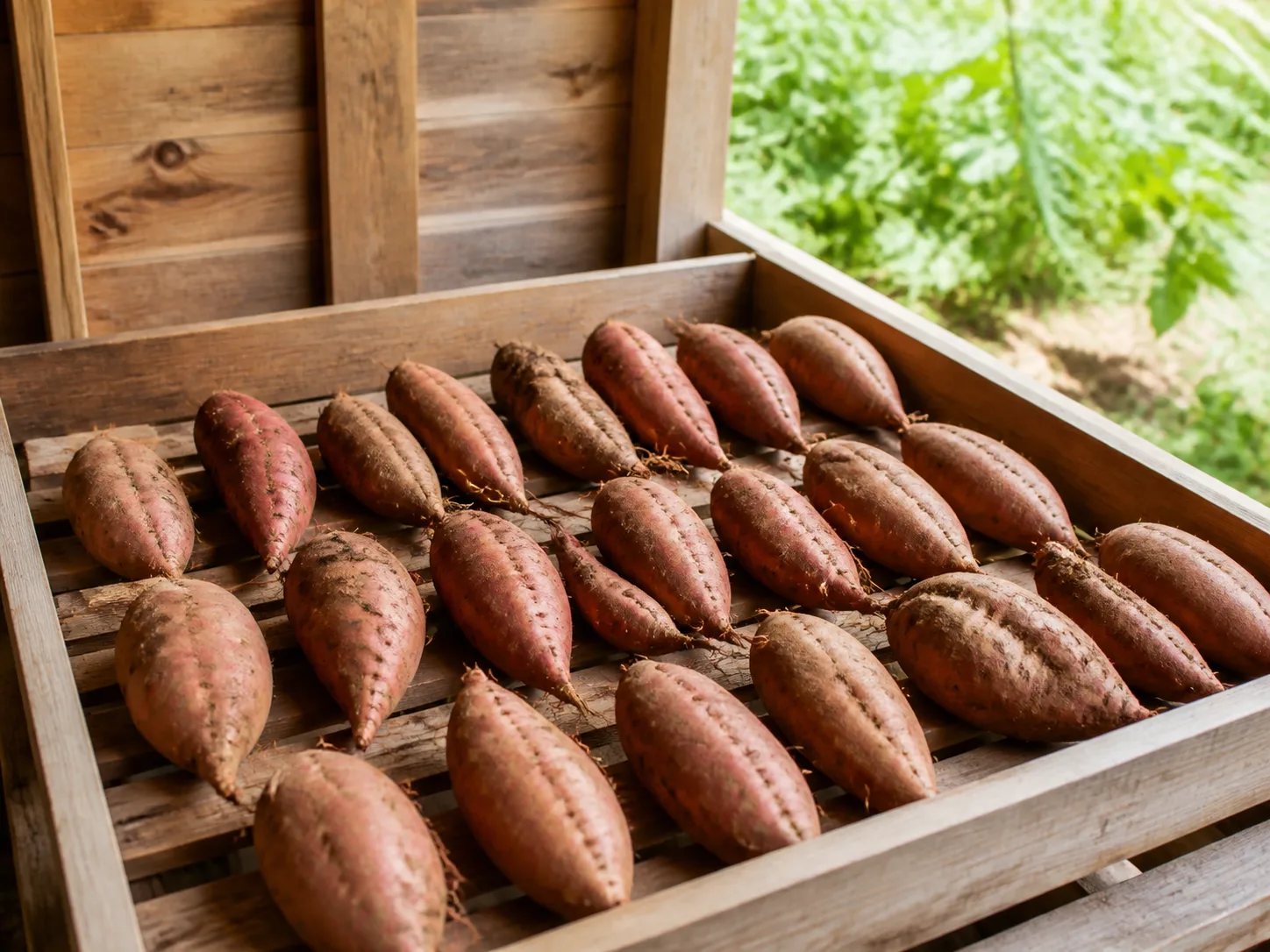
Curing helps the freshly dug roots heal small surface injuries and improves flavor as starches convert to sugars. Spread sound, unwashed roots in a single layer in a warm, shaded place with good airflow. UGA Extension recommends air-drying them for several days at about 80 to 85°F; Epic Gardening describes a warmer, humid cure of roughly 4 to 7 days. A home gardener may not be able to control humidity closely, so aim for warmth, shade, and ventilation rather than sealing roots in a damp room.
Do not cure roots in direct sun, in a closed plastic bag, or in a space where condensation collects. A small fan can help move air, but do not point a strong fan directly at the crop for days, which can dry it too quickly. If your curing room is cooler than the recommended range, allow more time and expect the roots may not store as long. Do not use an oven or other heat source unless it is specifically designed to hold a safe, stable temperature and humidity.
Keep curing and storage temperatures separate
Curing is warm; long-term storage is cooler. After curing, move sound roots to a dark, dry, ventilated place around 55 to 60°F. A pantry, insulated basement, or cool closet may work if the temperature stays steady. UGA Extension notes that properly stored roots can keep for up to about six months; inspect them regularly and remove any that soften or decay.
Do not refrigerate raw sweet potatoes. A household refrigerator is colder than the recommended storage range and can damage their texture and flavor. Keep them away from damp concrete, sealed bins, and temperature swings. If you have only a few roots and cannot maintain a stable storage space, cook or use the crop sooner rather than promising yourself a winter’s supply.
Conclusion
To grow sweet potatoes successfully, begin with an edible variety and healthy slips, then wait for frost-free weather and warm soil before planting. Give each plant loose, sunny ground, room for its vines, and steady moisture while it establishes. Avoid excess nitrogen and standing water, which can produce impressive foliage but disappointing roots.
Use the cultivar’s maturity estimate to decide when to start checking, then test-dig a plant and harvest before frost. Handle the roots gently, cure them warm and shaded, and store them cool and ventilated. That sequence gives you the best chance of turning a long summer of vines into a useful harvest.



