Sweet Potato Repotting Guide: Containers & Timing
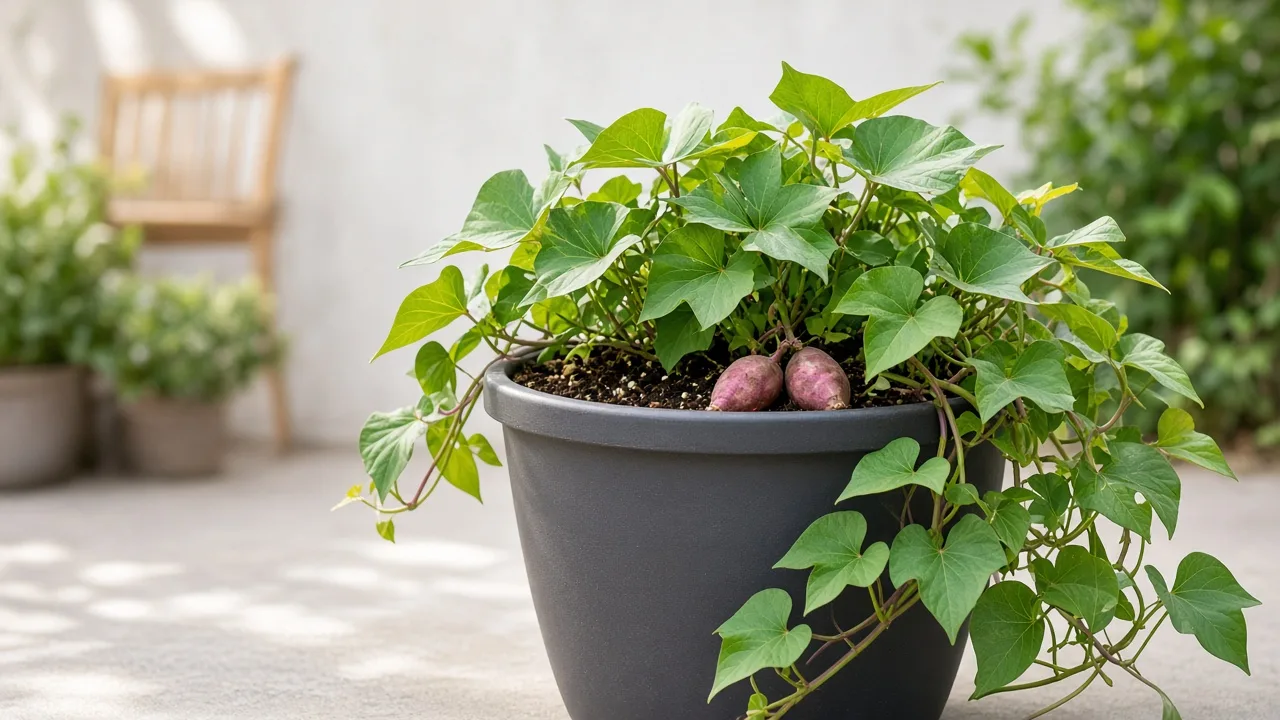
Sweet Potato Repotting Guide: Containers & Timing
Sweet Potato Repotting Guide: Containers & Timing
If you searched sweet potato repotting after caring for a pothos or peace lily, you are already mixing two jobs. Ipomoea batatas is a warm-season vine grown either for kitchen storage roots (shakarkandi) or for trailing ornamental foliage—not a permanent indoor perennial you upsize every spring for aesthetics alone. For edible crops, the practical task is to set slips in a deep, final container or bed at planting and avoid disturbing roots while tubers form. For ornamental vines kept year to year, a careful spring repot into the next pot size is sometimes appropriate.
The RHS growing guide treats sweet potato as a frost-tender vegetable started from slips or cuttings, planted into warm soil with generous spacing. NC State’s plant profile describes rapid, ground-hugging vine growth with spread up to several feet when conditions suit—roots and tubers follow that running habit underground. This page explains final pot sizing, the one allowed slip transplant from a nursery tray, ornamental-vine repotting, post-move watering, and why mid-season “houseplant style” upsizing usually backfires on a terrace tuber crop.
Sweet potato repotting: the quick answer
For shakarkandi and other edible types, do not plan on repotting mid-season. Plant healthy slips into the finishing grow bag, barrel, or raised bed once nights are mild and soil at planting depth stays warm—extension-style guidance often cites about 18°C (65°F) minimum, with warmer soil safer for home-propagated slips. Aim for at least ~30 cm (12 in) of usable mix depth for a serious tuber harvest in containers, with honest drainage holes and loose, compost-rich soil as summarized on the Sweet Potato overview.
If slips rooted in a shallow tray while you waited for heat, move them once into the final deep pot when weather is reliably warm—not during a cool, wet spell. For ornamental sweet potato vine kept in the same decorative pot for years, repot in spring when temperatures stay above roughly 10°C (50°F), moving up one to two pot sizes, as practical advice from Get Busy Gardening’s vine care guide describes for long-lived container plants.
Why sweet potato is not repotted like a houseplant
Houseplant repotting assumes a perennial root ball that recovers over weeks in slightly more soil volume. Sweet potato for the kitchen completes one productive cycle per planting: vines expand, lateral roots swell into storage roots, then tops senesce. Disturbing roots during active tuber bulking breaks fine roots, stalls uptake, and wastes the short warm window many Indian growers rely on for balcony shakarkandi.
Tubers form on roots that follow the vine through the soil. Gardening Know How’s container sweet potato article notes that the plant’s root system trails along the vine, with some roots thickening into harvestable storage roots. Lifting the plant to swap pots exposes those developing roots, invites wilting, and rarely improves yield the way choosing the right depth up front does.
Edible shakarkandi vs ornamental sweet potato vine
Edible cultivars are bred for sweet roots and predictable maturity—often 90–120 frost-free days after planting slips. They need depth, warmth, and uninterrupted root space more than periodic decorative upsizing. Ornamental sweet potato vine selections are bred for leaf color and trailing form; tubers may form but are often poor kitchen quality. Those vines may live in mixed planters for a single summer without any repotting, while overwintered tubers or multi-year pots can need a spring refresh into slightly larger soil volume—still not the same rhythm as hilling or mid-season tuber-crop moves.
Match the cultivar to your goal before you invest in container size. See the Sweet Potato propagation guide for slip timing and the Sweet Potato overview for edible versus ornamental trade-offs.
Signs you need a bigger container—or one careful move
Read the container, slip size, and soil line before you touch roots.
- Slips are root-bound in a nursery cup with roots circling the bottom—schedule one move into the finishing pot when heat is stable, not a series of upsizes.
- The grow bag is shallower than ~30 cm of usable mix for a tuber-focused crop—note it for next season; mid-season lifting rarely fixes undersized depth.
- Mix dries within hours on a hot terrace because the pot is too small for a running vine—often a volume problem, not a thirst problem; see Sweet Potato watering.
- Water runs down the inside wall without wetting the centre because mix pulled away from the rim—top-dress and water slowly, or replant into a proper-depth bag next cycle.
- Ornamental vine has filled the pot with roots for several years and growth stalls despite good light—consider a spring repot one to two sizes up per Get Busy Gardening.
Yellow leaves with constantly soggy mix point to drainage or overwatering, not pot size alone. Fix moisture rhythm and soil structure on the Sweet Potato soil page before assuming you need a bigger home.
Choose the final container before you plant slips
Treat container choice as part of planting, not a mid-crop upgrade. Opaque or thick-walled grow bags reduce heat on roots; fabric bags drain well on terraces if you elevate them during monsoon puddles. Gardening Know How recommends clay or similar breathable pots with four or more drainage holes, avoiding non-draining plastic saucers that hold stale water.
For edible crops, favor bush-type cultivars with shorter vines in tight spaces—examples often cited for pots include Vardaman and Puerto Rico in that same container guide. Rampant runners can succeed in large beds but overwhelm small balconies without trellising described on the Sweet Potato pruning guide.
Grow bags, barrels, and terrace planters
Wide grow bags on wheeled trays help Indian growers shift pots out of pounding afternoon sun while keeping depth. Pair placement with the Sweet Potato light guide. If you use a decorative outer cachepot, grow inside a drilled inner bag you do not lift mid-season.
Minimum depth and width for tuber crops
Depth matters because tubers expand on lateral roots below the vine. LeafyPixels plant data and field-style guidance converge on at least ~30 cm of usable mix for a meaningful tuber crop in pots—shallower planters may grow pretty vines but rarely full shakarkandi. Width matters too: one strong slip per large deep container mirrors the RHS spacing guidance of about 30 cm between plants in rows—give roots horizontal room, not a tall narrow tube that dries unevenly.
Planting slips in the final pot (your real “repot”)
Your one-time “repot” for kitchen sweet potato happens at planting. Set slips after frost risk has passed and soil is warm; bury several stem nodes so adventitious roots form along the buried stem, as the RHS describes for slip planting in vegetable culture.
Fill the finishing container with loose, compost-enriched, well-draining mix—roughly half quality potting mix or sandy loam, 30% mature compost, and 20% perlite or coarse sand aligns with hub guidance on the Sweet Potato soil guide. Work a low-nitrogen, higher-phosphorus fertilizer into the planting zone rather than chasing lush leaves alone; Bob Vila’s sweet potato guide suggests 5-10-10 at planting as a balanced example for root crops.
Water thoroughly after planting and keep the root zone evenly moist during establishment—the first week to ten days are critical while new roots grow into the surrounding mix. Position the bag in full sun (at least six to eight hours) so vines can feed developing tubers later in the season.
When slips need a single transplant from a small pot
Sometimes you root slips indoors or buy small nursery cups while nights are still cool. That is normal. The rule is one gentle move into the finishing container when weather is reliably warm—think stable nights and soil that no longer feels chilly when you irrigate.
Do not stair-step through three progressively larger decorative pots across the warm season. Each move sets back tuber formation. Transplant in the cool morning, keep the same soil line on the stem, and water immediately. Shade the pot for several days on a hot terrace if leaves wilt, then return to full sun as roots grip the new mix.
If slips are still pale and leggy in tiny cups, harden them off with brighter light before the move—weak stems snap when you bury nodes in a deep bag.
Ornamental vine repotting (different rules)
Most ornamental sweet potato vines are grown as annual summer colour in mixed planters; they never need repotting because the plant is discarded or composted at season’s end. Get Busy Gardening notes that multi-year container plants eventually need repotting: wait until spring when temperatures stay above about 10°C (50°F), shift to a pot one to two sizes larger, water thoroughly, and keep the plant bright and warm while it recovers.
That repot is about renewing root room and refreshing tired mix for foliage—not about lifting tubers mid-bulk. Prune lightly after repotting if stems were damaged, using the Sweet Potato pruning guide for ornamental shaping goals rather than heavy leaf removal on edible crops.
Step-by-step: transplant slips into the finishing container
- Pre-moisten compost-blended mix in the finishing grow bag so it is evenly damp, not mud-wet.
- Check drainage holes and elevate the bag if monsoon puddles collect on the terrace.
- Dig a planting pocket deep enough to bury several nodes on each slip while leaving healthy top growth in the open.
- Ease the slip out of the nursery cup with minimal root tear; if roots circle heavily, loosen the outer layer gently with your fingers.
- Set the plant at the same depth it grew in the cup, then backfill and firm lightly—do not pack mix like concrete.
- Water until excess drains, then empty any saucer beneath the bag.
- Hold fertilizer for a week unless plants were starved in the cup; resume light feeding per the Sweet Potato fertilizer guide once new growth appears.
Water and feed after you move or plant
Container sweet potatoes dry faster than in-ground rows on a windy balcony. After planting or a one-time slip move, prioritize even moisture without waterlogging—saturated mix rots stems and storage roots, a risk Get Busy Gardening highlights for containerized Ipomoea batatas. Check 3–5 cm below the surface and soak until water exits drainage holes, matching the rhythm on Sweet Potato watering.
Fresh mix is often lower in nutrients than what leaches out over summer; a dilute, balanced feed after recovery can help, but avoid repeated high-nitrogen doses that favour leaves over roots. Taper irrigation in the last three to four weeks before harvest to limit tuber splitting when dry soil suddenly gets a monsoon soak.
When not to repot or upsize mid-season
Skip root disturbance when vines are actively running and tubers are sizing, during heat waves when recovery is slow, or when the only issue is leggy stems that need trellis or light adjustment—not more soil volume. Do not upsize because leaves wilt at midday on concrete; address shade timing and moisture first.
Avoid repotting into cool, wet mix after unseasonal rain—cold-sensitive slips stall and rot at the crown. If tubers are the goal, never treat sweet potato like a foliage houseplant you refresh for aesthetics in monsoon weeks.
Sweet potato containers on Indian terraces and in monsoon weather
In hot lowlands, plant slips in the main warm-season window when nights stay mild and bags warm quickly after watering. Hill stations and short-season sites should still prioritize the sunniest, deepest container you can manage, because cool soil delays growth more than a slightly larger pot mid-year would fix.
During heavy rains, raise grow bags, clear blocked holes, and pause irrigation until the root zone breathes again—persistent wetness yellows leaves and softens storage roots. In peak dry heat, deep bags on concrete may need daily moisture checks; shallow planters fail first. Match seasonal rhythm to the Sweet Potato overview India notes.
If you must rescue a tipped or cracked grow bag
When a bag tips or splits late in season, slide the root mass intact into a same-depth replacement with pre-filled mix rather than bare-rooting tubers. Work quickly in cool morning hours, water immediately, and accept some yield loss. Starting a new slip planting in a correctly sized bag next season is often less stressful than repeated rescues.
If drainage failed because holes sealed with silt, drill fresh openings and top-dress with coarse perlite rather than lifting the entire crop unless stems are already rotting at the base.
Refreshing containers after harvest
When leaves yellow and you lift shakarkandi, dump spent mix—do not reuse it immediately for another sweet potato crop without composting and rotating, to reduce disease carryover. Scrub the bag, dry it, and store until the next warm season.
Refill with fresh, airy blend per the soil guide; plant new slips. That between-season reset is the closest analogue to “repotting” for edible sweet potato—far more important than any mid-season shuffle.
When to use this page vs other Sweet Potato guides
Use this page for final container depth, planting slips in the finishing pot, one-time slip transplant, ornamental spring repot, and post-harvest container refresh. Use Sweet Potato watering for daily moisture checks and wilt diagnosis. Use Sweet Potato soil for mix recipes, pH, and compaction fixes. Use Sweet Potato fertilizer for NPK timing during vine and tuber growth. Use Sweet Potato light for sun hours on terraces. Use Sweet Potato propagation for slip production and variety choice. Start at the Sweet Potato overview if you have not yet chosen edible versus ornamental goals or season length.
Related Sweet Potato guides
- Sweet Potato overview — slips, season fit, edible vs ornamental goals
- Sweet Potato watering — even moisture while tubers bulk
- Sweet Potato soil — loose mixes, depth, and drainage tests
- Sweet Potato fertilizer — feeding for roots, not just leaves
- Sweet Potato light — full sun without heat stress
- Sweet Potato propagation — slips, timing, and failures
- Sweet Potato pruning — trellis, ornamental shaping, leaf harvest trade-offs
Conclusion
Sweet potato repotting is choosing a deep final home at planting, optionally moving slips once from a small cup when heat is stable, and refreshing the entire container after harvest—not lifting a tuber crop mid-season like a houseplant. Match RHS slip-planting logic and ~30 cm spacing thinking, give edible types at least ~30 cm of usable mix depth, and keep ornamental vines on a spring upsize schedule only when they are truly multi-year container plants. Respect warm-soil timing, protect drainage through monsoon weeks, and treat any late-season bag rescue as damage control. That rhythm fits how Ipomoea batatas actually forms roots and keeps shakarkandi harvests fuller with less stress than repeated mid-season repotting.