Sweet Potato Pruning Guide: Vines, Leaves & Tuber-Safe Trims
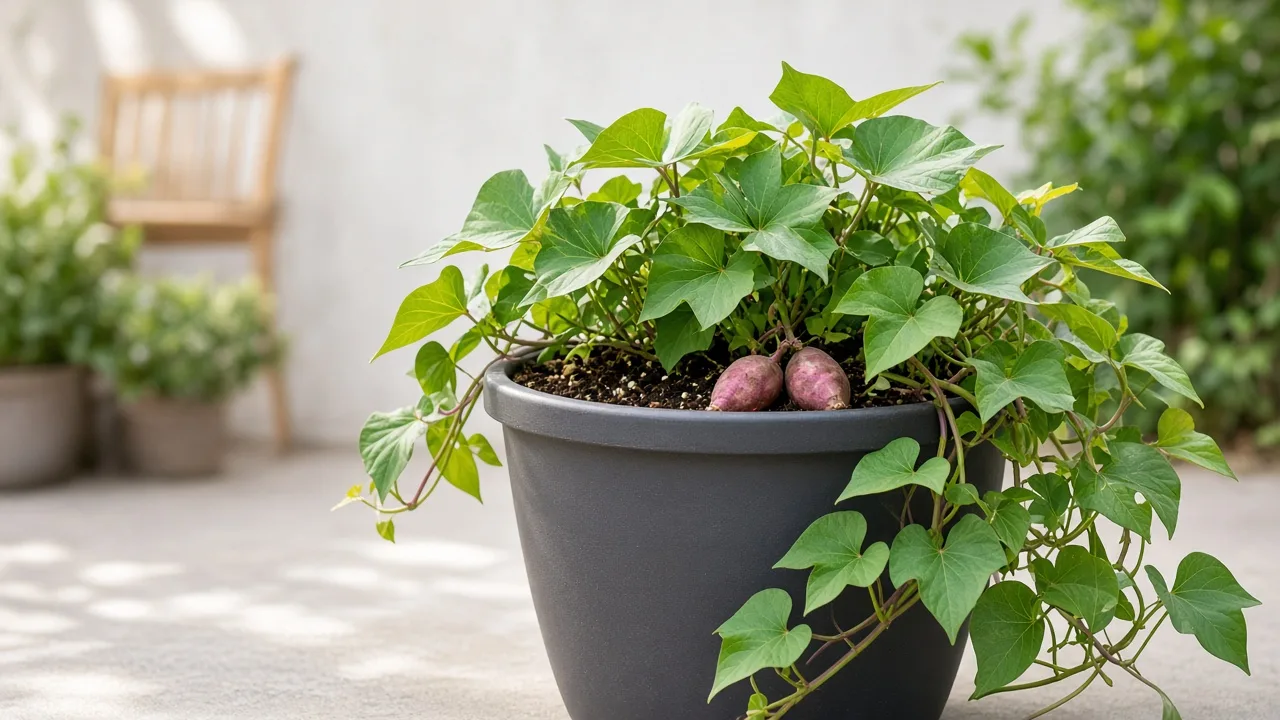
Sweet Potato Pruning Guide: Vines, Leaves & Tuber-Safe Trims
Sweet Potato Pruning Guide: Vines, Leaves & Tuber-Safe Trims
First, cut out only dead, diseased, or clearly broken vine sections with clean scissors or pruners—snip into firm green tissue and remove the debris from the bed or pot. Do not shorten healthy runners, harvest lots of leaves, or shape the canopy until you know whether you are growing edible tubers or an ornamental trailing vine. For slips, depth, and harvest timing, see the Sweet Potato overview.
Quick answer
Sweet potato (Ipomoea batatas) is a fast warm-season vine, so “pruning” means foliage and runner management, not woody branch shaping. NC State Extension describes a herbaceous perennial vine usually grown as an annual root crop; leaves above ground feed tubers forming on lateral roots below. Your first cut is always sanitation—yellow, diseased, or damaged tissue. Mid-season, contain sprawling stems with light tip trims or trellis training; the RHS notes you can tie stems to supports or trim overly vigorous shoots, using tender tips like leafy greens, without treating the plant like a permanent houseplant vine. For storage-root harvests, keep healthy foliage intact while tubers bulk—heavy defoliation shrinks yield more often than it helps. Ornamental cultivars respond to tip pruning above nodes for bushier growth (Epic Gardening). Near harvest, let leaves yellow naturally or clip only what blocks digging; pair any trim with steady watering and full sun.
What pruning does for sweet potato
Growers arrive at this page with different goals:
Sanitation removes diseased, pest-stripped, or rotting leaves so problems do not spread across a terrace bed. Containment shortens runners that escape grow bags, block paths, or shade neighbors. Greens harvest takes young leaves or shoot tips for cooking—valid in small amounts but costly on tuber crops. Ornamental shaping keeps colorful Ipomoea batatas selections compact in baskets and planters.
Unlike shrubs, sweet potato does not need a permanent framework. New shoots emerge from nodes—the slightly swollen joints where leaves attach—and vines root easily where stems touch moist soil. Epic Gardening explains that cutting just above a pair of leaves can encourage a stem to fork for denser ornamental coverage. Pruning cannot fix cool soil, shade, or excess nitrogen; those issues need light and fertilizer corrections before structural trimming will matter.
Tuber crop versus ornamental vine
| Goal | Pruning role | How aggressive | What to expect |
|---|---|---|---|
| Edible shakarkandi / storage roots | Keep canopy; light containment only | Minimal—tips and damaged tissue | Larger tubers when leaves stay abundant in sun |
| Ornamental basket or ground cover | Shape and control spread | Regular tip pruning in warm months | Fuller, shorter stems; tubers may be secondary |
| Leafy greens harvest | Repeated tip or leaf picks | Moderate, ongoing | Tasty shoots; smaller or delayed roots on the same plant |
| Disease or pest cleanup | Remove affected vines | Surgical, immediate | Slower spread; may not save advanced infections |
Match the cultivar to the goal before you size the container—ornamental selections bred for leaf color rarely repay deep grow bags with kitchen-quality roots.
When to trim sweet potato vines
Mid-season maintenance
Scout every few days during rapid summer growth on Indian terraces and monsoon-adjacent beds where leaves stay wet. Remove yellowing lower leaves that touch soggy soil or harbor fungal spots. NC State Extension lists full sun to partial shade for the species; root growers should still treat six to eight hours of direct sun as the practical minimum so recovered foliage can feed tubers.
For ornamental vines, Epic Gardening notes pruning is most needed in spring and summer when stems lengthen fastest, though light cleanup can happen whenever you see damage.
Containment without starving roots
When a runner crosses a railing or smothers a neighbor pot, shorten the soft tip back to a node outside the bed footprint—roughly 15–30 cm (6–12 in) per stem per week is a safe containment pace on tuber crops. The RHS approach—train on supports or trim vigorous shoots—fits balconies better than letting vines sprawl across the floor. Avoid hedge-trimming the entire plot during active bulking.
End-of-season foliage
Harvest timing follows vine senescence, not a dramatic pre-harvest shave. Bob Vila’s growing guide ties maturity to roughly 90–120 days after planting slips for many cultivars, often when leaves begin yellowing. Clip stems only if they block lifting roots from a container; natural dieback is enough in open beds. Reduce watering in the last three to four weeks before harvest to limit tuber splitting rather than stripping green leaves for aesthetics.
What you can remove anytime
Fully brown, frost-nipped, hail-torn, or insect-defoliated sections can go as soon as you see them. Emergency disease removal should happen immediately—even in wet weather—followed by tool washing before you touch healthy stems.
What to check before cutting
Walk the row or container with four inspections:
- Stem firmness: Mushy bases near soil point to rot—remove affected tissue and correct drainage (soil guide) before cosmetic trimming.
- Leaf color pattern: Uniform pale new growth with long internodes signals weak light; fix exposure before chasing a “bushier” look with scissors.
- Tuber stage: If vines are young and roots are still sizing, photosynthesis still matters. Heavy leaf harvest or canopy shearing during bulking often produces lush vines with pencil-thin tubers.
- Cultivar intent: Ornamental purple or chartreuse vines tolerate shaping; named edible cultivars need leaf area through the warm season.
If every stem looks wilted despite wet mix, pause pruning and diagnose watering stress first.
The first cut to make
Identify the worst single section—yellow, water-soaked, or broken mid-stem. Trace it toward the base until tissue turns firm and green, then cut one node below the last healthy leaf. Bag or trash that material instead of composting it when you suspect fungal leaf spots or bacterial soft rot.
Only after damaged vines are gone should you pinch soft tips for shape or harvest a handful of tender leaves for the kitchen. If the plant is heat-stressed or newly transplanted from a small slip tray, limit yourself to sanitation that day.
How to prune sweet potato step by step
1. Sanitize tools
Wipe bypass pruners or scissors with 70% isopropyl alcohol before you start and when moving between plants, especially after disease cuts.
2. Contain a runner (tuber crop)
Grasp the escaping tip. Cut ¼ inch above a leaf node where you want growth to stop outward spread. Leave at least several healthy leaves on the main stem so the plant can keep feeding roots. Repeat on other escapees over the week—not all at once.
3. Shape an ornamental vine
For baskets and planters, shorten long stems above a node with two healthy leaves so buds can branch (Epic Gardening). Rotate the pot weekly so pruning does not always happen on the same side.
4. Harvest greens (optional)
Snip young leaves and soft tips sparingly on plants you still want to dig for roots. Repeated stripping diverts energy from tubers—the same trade-off noted on the overview for kitchen harvests versus foliage picks.
5. Redirect instead of shear
On terraces, loop stems onto a trellis or tuck them back into the grow bag before you reach for pruners. RHS guidance favors training and selective trims over removing large leaf canopies.
Where to cut
- Above a node when shortening a stem so latent buds can break.
- At the base of a petiole when removing a single yellow leaf—avoid peeling bark on the main runner.
- Never through the crown where multiple slips were planted; cut lateral runners instead.
- Avoid wounding exposed tubers if soil has pulled away—hill or top up mix (repotting and planting depth) rather than slicing roots while trimming vines.
Sweet potato vines also root at nodes that touch soil; if you want fewer accidental anchors, lift stray stems before you cut.
How much is safe to remove
Use these limits during active warm-season growth:
- Disease or damage: Only infected stems plus one healthy node margin—never half the plot in one afternoon unless abandoning the crop.
- Tuber crop containment: Soft tips totaling well under one-third of leaf area per plant per month; when in doubt, train instead of cut.
- Ornamental shaping: More frequent tip pinching is acceptable, but avoid leaving bare runners with no leaves unless restarting from propagation cuttings.
- Greens harvest: A few tips per plant per week; not daily large leaf stripping on the same vine.
- Pre-harvest: Prefer natural yellowing; manual removal is for access, not yield boosting.
If tubers are still sizing and foliage looks deep green, err on keeping leaves.
What not to cut
- Healthy mid-season canopy on root-focused plants solely for appearance.
- All leaves on a single slip while roots are still establishing after transplant.
- Stems during a cold snap when regrowth will stall and wounds stay wet longer.
- Flowering shoots unless they block trellis work—blooms are uncommon on many edible cultivars and are not required for tuber formation.
Do not confuse sweet potato with white potato (Solanum tuberosum); they are unrelated crops with different pruning logic.
Using pruned material
Soft stem tips root quickly in water and make excellent propagation material when you already have clean cuts. Take four-inch (10 cm) sections with a few leaves removed from the lower end, as described for sweet potato vine cuttings (Epic Gardening). Tender trimmed tips can also cook like greens when you know the plant was not sprayed with pesticides.
Aftercare following trims
After any cut:
- Keep soil evenly moist but not waterlogged so nodes can push new shoots (watering guide).
- Maintain full sun for recovery on outdoor crops.
- Pause high-nitrogen feed briefly after heavy cleanup; resume balanced nutrition only when new leaves look firm (fertilizer timing).
- Watch for new yellow spots—secondary infections often show within a week in humid weather.
Minor containment trims rarely need extra care beyond normal rhythm. Season-ending yellowing means harvest and curing are next, not foliar recovery.
Recovery and signs pruning helped
Sanitation: Lesions stop climbing stems; healthy upper leaves stay rigid; neighboring pots stay clean.
Containment: Runners stay inside bed boundaries; tubers continue sizing when leaf area remains high in sun.
Ornamental tip pruning: Stems fork at nodes within one to two weeks in warm weather; baskets look fuller rather than leggy.
Signs you cut too much or too early: Wilting despite moist soil, stalled tuber growth, bare runners with no new buds, or repeated need to shear because light is still too weak.
Mistakes to avoid
- Shearing tuber crops like hedges during bulking—leaves feed roots.
- Harvesting large leaf batches weekly on the same plant you plan to dig for shakarkandi.
- Composting obviously diseased trimmings in the same bin as clean garden waste.
- Pruning into cool, wet weather right after transplanting slips.
- Ignoring trellis options on balconies while blaming size on “too many leaves.”
- Using dull, dirty tools that tear hollow stems and spread sap-borne issues.
When not to prune
Delay cosmetic work when slips are newly planted, heat-stressed, or sitting in waterlogged mix—let them stabilize first. Skip aggressive shaping during peak tuber bulking unless runners create a safety or access hazard. Do not strip green leaves immediately before harvest hoping to “hurry” maturity; taper water instead (Bob Vila). If frost is forecast, harvest or protect tubers rather than manicuring foliage.
Tools, sanitation, and pet-aware handling
Use sharp bypass pruners or scissors on hollow vines. Sanitize between plants as noted above. ASPCA lists sweet potato vine as non-toxic to cats and dogs, but keep pets from digging grow bags and eating large amounts of raw tuber. Bag trimmings on pet-accessible terraces if animals treat vines as toys.
Related Sweet Potato guides
- Sweet Potato overview — slips, cultivar choice, and harvest stages
- Light — sun hours for sturdy vines and better tuber fill
- Watering — even moisture after foliage loss; taper before harvest
- Soil — loose deep mix that supports root expansion
- Fertilizer — when to ease nitrogen before harvest
- Repotting and planting depth — final container size and why mid-season moves fail
- Propagation — rooting tip cuttings from pruning debris