Sweet Potato Soil Guide: Mix, pH and Drainage
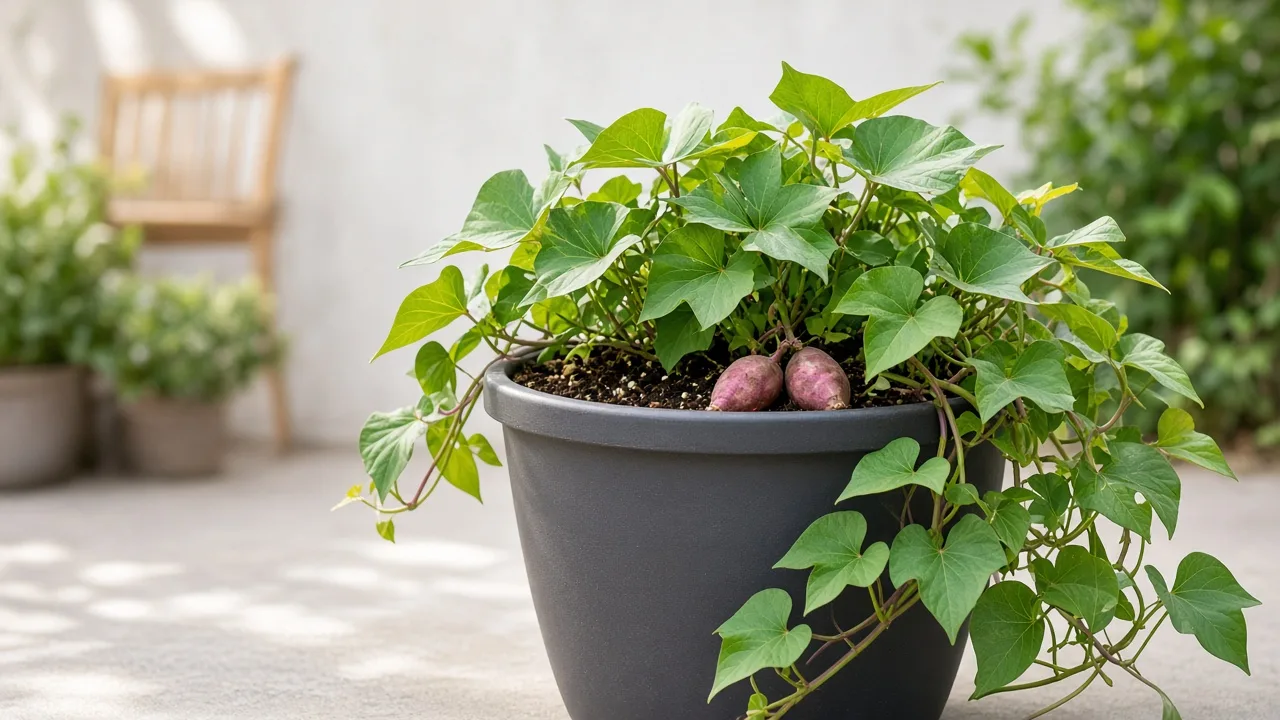
Sweet Potato Soil Guide: Mix, pH and Drainage
Sweet Potato Soil Guide: Mix, pH and Drainage
Sweet potato (Ipomoea batatas)—shakarkandi in many Indian kitchens—is not asking for “any potting soil.” You are building a temporary underground chamber where lateral roots swell into sweet storage tubers while vines run in full sun above. The mix must stay moist enough for steady bulking, yet open enough that roots never stew after irrigation or monsoon rain. Heavy clay, shallow planters, or constantly wet compost produce rot, cracks, or vines with almost nothing worth digging.
This page covers texture, pH, container recipes, bed preparation, drainage tests, and warm-soil timing—not how often to water. For moisture rhythm, use the Sweet Potato watering guide. For the full seasonal picture, start with the Sweet Potato overview.
Quick answer: the soil sweet potato roots want
Target sandy to loamy soil with high organic matter, good aeration, and excellent drainage. NC State Extension describes Ipomoea batatas in loamy, well-draining soil high in organic matter. Crop guides commonly place pH between about 5.8 and 6.5 for home plots (Bob Vila), while commercial references note a wider tolerance from pH 5 to 7 with optimum near 6 (Wikifarmer). On a terrace, a practical container blend is roughly half quality potting mix or sandy loam, 30% mature compost, and 20% perlite or coarse sand, in a vessel at least about 30 cm deep with open drainage holes—matching the hub mix on the Sweet Potato plant page.
Texture and organic matter in one sentence
Think loose, crumbly, and fast-draining after a soak, not a dense, water-holding houseplant block.
What sweet potato roots need from soil
Sweet potato is a warm-season morning-glory relative that forms tubers on spreading roots below the vine. Unlike a shallow-rooted succulent, it needs depth and pore space so new roots can explore without hitting a hard pan or saturated layer. Wikifarmer advises sandy to loamy, moderately deep soils with proper aeration and drainage, and warns that fields with high clay, fine silts, and high water tables should be avoided because the crop is sensitive to excess moisture and water-soaked conditions.
That biology is the filter for every decision. Fertility supports the leafy canopy that feeds tubers, but structure comes first. Compact mix at “correct” pH on paper still yields stringy, stunted, or rotting roots.
Why tubers punish compacted or soggy mix
When air pores collapse, roots lose oxygen. Wet, anaerobic zones invite soft, darkened storage roots and base rot on young slips—especially if soil is still cool at planting. The top may wilt even while the mix feels wet, which tempts more watering and deepens the problem. Fix drainage and warmth before you chase fertilizer.
How this differs from ornamental vine culture
Ornamental sweet potato vine cultivars are bred for trailing foliage in baskets; they may survive leaner or slightly heavier mix because you are not sizing kitchen tubers. Edible shakarkandi needs the same loose profile field growers use. If you chose an ornamental plant for a root harvest, soil quality will not rescue the mismatch—see cultivar notes in the overview.
The practical pH window for Ipomoea batatas
Home guides cluster around pH 5.8–6.5 (Bob Vila), which aligns with LeafyPixels hub data for this species. Broader crop references allow pH 5–7 with optimum near 6 (Wikifarmer). Sweet potato is not a white potato (Solanum tuberosum) acid specialist; you do not need the very low pH potato growers use against scab.
Treat published ranges as starting targets, then follow a local soil-test report for lime or sulphur—especially on alkaline terrace fills or red laterite that test above 7.0.
Reading a soil test on terraces and beds
A cheap pH probe or lab test on the actual planting mix beats guessing from tap-water hardness. For grow bags, sample from mid-depth after compost is blended, not only the dusty top. In ground, test where slips will sit, not a distant corner of the yard.
When not to chase lime or sulphur blindly
If drainage is poor, pH tweaks rarely fix yellow leaves and soft tubers. Open the profile first—perlite, coarse sand, raised height, cleared outlets—then adjust acidity if tests still sit outside the 5.8–6.5 comfort zone for your cultivar.
Container and grow-bag mix recipes
Containers fail more often from shallow depth and sealed bases than from missing miracle additives. NC State’s ornamental profile still underscores well-draining loam with organic matter (NC State Extension); edible crops need that same openness plus volume.
A 50/30/20 blend that matches field advice
A reliable starting blend:
- 50% quality potting mix or light sandy loam
- 30% mature, well-rotted compost
- 20% perlite, coarse sand, or similar aeration material
Blend dry, then moisten evenly before planting. Compost supplies organic matter Wikifarmer recommends for field prep; perlite or sand keeps monsoon surges from turning the core into mud.
Depth, volume, and drainage holes
Plan at least ~30 cm of mix depth (RHS growing guide) for a serious tuber crop on a terrace—shallower planters may grow pretty vines but rarely full shakarkandi. Drill or punch multiple large holes; elevate bags on bricks so water exits freely. Saucers are for catching runoff briefly, not for long-term soaking. If you are sizing the final home for slips, pair this page with Sweet Potato repotting guidance on planting depth and spacing.
Garden beds, mounds, and terrace plots
In open ground, raised mounds or berms help on heavy native soil. Wikifarmer suggests plowing or digging one to two months before transplanting slips, incorporating residues and weeds, then fine tilling without large clods that distort developing roots.
Preparing ground one to two weeks before planting
Work compost or well-rotted manure through the top 20–30 cm rather than a fertile hole surrounded by hard pan. On alkaline plots, adjust lime only per test—do not copy potato sulphur programs. A low-nitrogen, higher-phosphorus starter belongs in the fertility plan at planting; see Sweet Potato fertilizer for rates, not repeated high-nitrogen feeds that favour leaves over tubers.
Warming soil before slips go in
Sweet potato is cold-sensitive. Plant slips only after nights stay mild and soil at planting depth holds about 18°C (65°F) or warmer, with several degrees safer for home-propagated slips—as stressed in the overview. Cold, wet planting mix stalls roots and invites stem rot. Black plastic mulch or raised beds can warm the root zone in short seasons (Wikifarmer); remove or vent plastic when heat builds so roots do not overheat.
Drainage tests you can run today
Before slips arrive, prove the mix drains.
Empty-bag and post-rain bed checks
Fill an empty grow bag with your proposed blend, water until it runs from the base, and watch whether the surface stays soupy for days. In beds, inspect after a deep soak or storm: puddles that linger for hours mean add organic matter and coarse grit, or raise the planting zone, before you plant.
Press a finger into the mix 3–5 cm down after watering. The top may dry while deeper soil stays cool and slightly moist—that is healthy. If the whole column stays muddy, add aeration material to the next planting, not another layer of fine compost alone.
Monsoon wet soil and elevated grow bags
During heavy rains, lift bags off paving, clear blocked holes, and pause irrigation until the root zone breathes again. Persistent wetness yellows leaves and softens storage roots—the same saturation risk Wikifarmer flags for field plantings. Pair structural fixes with the watering guide so you are not adding water to an already saturated profile.
Warning signs your sweet potato soil is wrong
Persistently wet mix with yellowing leaves often means drainage failure or cold, soggy planting—not “hunger.” Midday wilting with dry, pulling-away mix points to underwatering in heat, but confirm drainage first so you are not cycling between flood and drought. Lush vines with small or cracked tubers frequently trace to shallow pots, shade, or excess nitrogen; still check whether roots hit a dense layer at the container base.
Misshapen or stunted roots commonly follow clay or compaction. Soft, dark storage roots at harvest mean rot weeks earlier—usually wet, airless soil. If slips rot at the collar, suspect cool, saturated mix and restart propagation in warm, bright conditions per Sweet Potato propagation.
Sweet potato soil vs white potato soil
White potato likes cooler seasons and more acidic soil for scab control; sweet potato wants warm, loose, moderately acid to near-neutral loam and a long frost-free window. Do not reuse a dense, water-retentive “potato bag” recipe without extra sand and perlite. Do not plant sweet potato slips in cold, wet spring soil meant for rabi aloo. Light needs differ in timing too—both crops want strong sun on tops, but sweet potato ties soil warmth to planting date; see Sweet Potato light for placement.
DIY blends vs store potting mix
DIY blending lets you tune sand and compost for monsoon terraces. Quality vegetable or general potting mix plus extra perlite and compost is fine if it stays crumbly when squeezed. Avoid moisture-control crystals and heavy peat blocks that stay wet in humid climates unless you cut them sharply with grit.
Buy pasteurized compost when possible to limit weed and pathogen load. Reject bags that smell sour or steam in the sun—that organic matter is not stable for root crops.
When to refresh mix instead of repotting mid-season
Sweet potato is usually planted once into its final deep container or bed for the season. If you discover poor drainage after planting, you cannot easily lift mature vines. Prevention beats rescue: test empty bags first. Minor top dressing of compost mid-season is not a substitute for fixing a shallow or sealed pot at the start.
When to use this page vs other Sweet Potato guides
Use this soil page when choosing mix ratios, pH targets, bed prep, or drainage fixes before slips go in. For how often to water once mix is right, read watering. For hours of sun on the same terrace, see light. For slip timing and rooting, use propagation. For planting depth and container size at set-out, see repotting. For feeding without pushing leaves over tubers, open fertilizer. For vine trimming trade-offs, see pruning.
Related Sweet Potato guides
The overview ties warm soil, sun, and harvest timing together. After you lock in loose mix, align watering with fast drainage, start from healthy propagation slips, and keep fertility tuned in fertilizer so leaves in full sun feed roots below.
Conclusion
Good sweet potato soil is loose, organic-rich, moderately acidic, and deep enough for spreading roots—in a grow bag or a raised bed. Test drainage before planting, match pH to the 5.8–6.5 home window unless your soil test says otherwise, and wait for warm soil before slips go in. Your first action is simple: soak an empty bag or inspect the bed after rain and watch how fast water leaves. That test tells you whether to add aeration, raise the root zone, or plant into mix that is already fit for shakarkandi.