Sweet Potato Light Needs: Full Sun Hours Guide
Sweet Potato Light Needs: Full Sun Hours Guide
Sweet Potato Light Needs: Full Sun Hours Guide
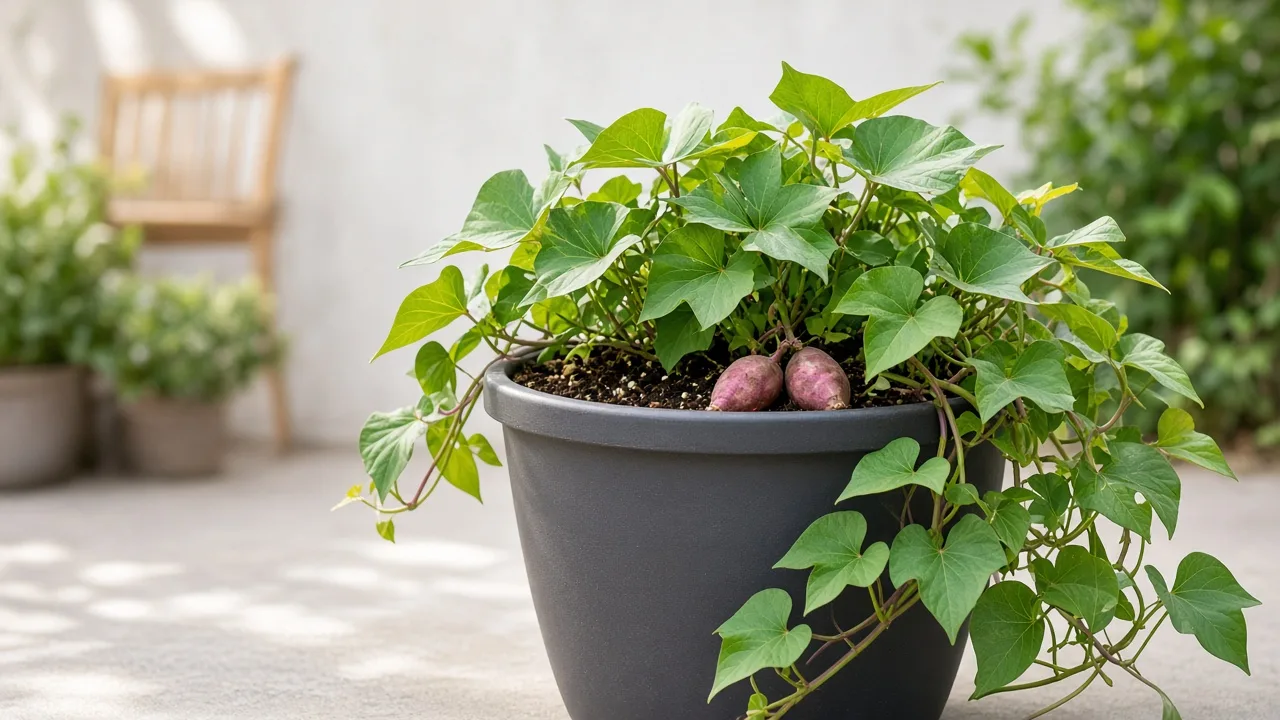
Sweet potato (Ipomoea batatas)—shakarkandi on many Indian tables—is a fast, frost-tender morning-glory vine grown for sweet storage roots or, in other cultivars, for trailing ornamental foliage. It is not a shade-loving houseplant. Tubers size up only when warm roots meet full sun on the leaf canopy for most of the day. NC State Extension lists Ipomoea batatas for full sun (six or more hours of direct sunlight daily) and also notes partial shade (about two to six hours of direct sun)—a flexibility that helps ornamental ground covers, but a poor default if you want kitchen harvests.
For slips, soil depth, and the full warm-season calendar, start with the Sweet Potato overview. This page covers how much sun sweet potatoes need, where to place vines on terraces and grow bags, lighting for slips indoors, and the first fixes when growth looks weak.
Quick Answer: Hours of Sun Sweet Potatoes Need
Plan for at least six hours of unobstructed direct sun on the leaf canopy each day as a working minimum—the same “full sun” threshold NC State Extension uses for this species. For dependable edible tubers on home terraces, aim higher: eight to ten hours of direct sun on the brightest pocket you have, matching common home-garden guidance for sweet potato plots (Bob Vila). Partial shade may keep purple or chartreuse ornamental sweet potato vines attractive in hanging baskets, but shakarkandi grown for roots usually needs the sunniest site you can offer—then steady watering to match fast transpiration in heat.
How Much Light Sweet Potatoes Actually Need
Sweet potatoes are warm-season vegetables with a tropical origin. Purdue Consumer Horticulture notes they produce best with warm days and warm nights and a long frost-free season—light and heat work together, not as separate checkboxes. The RHS describes Ipomoea batatas as liking heat, full sun, and regular watering, cropping best around 21–26°C (70–80°F) when moisture stays even.
Extension Definition of Full Sun
“Full sun” means six or more hours of direct sunlight hitting the leaves, not merely a bright room. On a clear day, check the planting spot at mid-morning, noon, and mid-afternoon. If a sharp hand shadow falls on soil or pot surface for most of those checks, you are in full-sun territory. Reflected glare from light-colored parapets helps, but it does not replace hours of direct rays on the upper leaf surface.
Eight to Ten Hours for Heavy Tuber Crops
Vines can survive on six hours, but tuber yield tracks total photosynthesis across the season. Bob Vila recommends a sunny plot with eight to ten hours of sunlight daily for garden sweet potatoes. On an open Indian rooftop, that target is often met from late winter through pre-monsoon; in a north-facing courtyard that never sees direct sun, you may keep a vine alive while roots stay small or stringy. Match expectations before you invest in deep soil and a 90–120 day season.
Why Strong Light Fuels Vines and Underground Tubers
Unlike leafy greens that you harvest from the crown, sweet potato stores energy in swollen roots fed by the canopy above. Every leaf acts as a solar panel; shade forces the plant to allocate less carbohydrate to tubers and more to searching for light—longer internodes, thinner leaves, fewer storage roots.
Leaves Supply the Carbohydrates Behind Root Swelling
During active growth, photosynthates move from leaves to fibrous roots that later thicken into tubers. Heavy leaf harvest for greens (common in some cuisines) can reduce tuber size on plants grown for shakarkandi. If your goal is roots, keep the canopy broad and sun-exposed; save leaf picking for ornamental pots or dedicated foliage plants. Fertilizer cannot replace missing light—high nitrogen in shade mainly produces pretty vines with disappointing roots.
Ornamental vs edible cultivars: NC State Extension warns that foliage cultivars rarely make good edible roots, while vegetable cultivars lack showy leaves. Both need brightness, but only the food types reward eight-plus hours with harvestable tubers. A purple “Blackie” basket in partial shade may look fine; a Covington-type slip in the same dim corner will not repay your season.
Best Sun Placement on Terraces, Grow Bags, and Beds
Think in three dimensions. Sweet potato stems run 1–2 m or more in containers and farther in open beds. The sunniest square foot at the pot rim means little if a parapet wall throws the upper trellis into shade by afternoon.
Rooftop Sun Maps vs Walled Courtyards
On terraces, place grow bags or raised mounds on the outer sunward rail—often south or west exposure on the plains—away from water tanks, clothes lines, and neem trees that cast long shadows. Walled courtyards may receive a bright noon strip while morning and evening stay dim; cumulative hours can still fall below six. Walk the space on a sunny day and note shadow edges; move the bag before slips root deeply, because sweet potato dislikes disturbance once vines run (repotting is a plant-once crop).
Loose, elevated planting helps roots stay warm as well as bright. Mounded rows and deep bags catch more sun on the soil surface and improve drainage—pair full sun with the aerated mix described in the soil guide.
Partial Shade: When Foliage Looks Fine but Tubers Disappoint
NC State Extension allows partial shade for this species, which is why ornamental sweet potato vine sells so well for part-day sun beds and window boxes. For edible crops, treat partial shade as a yield tax: vines may stay green while tubers stay small, forked, or slow to swell.
If you only have four to five hours of direct sun, choose bush-type cultivars suited to containers, keep fertility modest, and view the project as experimental. Do not expect market-sized shakarkandi from a permanently shaded balcony without supplemental lighting—there is no cultivar magic that replaces photons.
Seasonal Light in India and Other Tropical Climates
Sweet potato is planted after soil warms—about 18°C (65°F) at planting depth or higher—so the season naturally aligns with long days and strong sun on most of the subcontinent. Lowland growers use the main warm window; hill stations must watch cool nights that slow growth even when days look bright.
Pre-Monsoon Sowing and Long Bright Days
February–April plantings on the plains often ride long, clear days before peak summer haze. Vines establish while light integrals are high; tubers bulk when canopy cover is full. Ensure watering keeps pace—full sun on black grow bags heats roots quickly.
Monsoon Cloud Cover and Slower Bulking
During heavy monsoon weeks, diffuse light may keep vines lush while daily photosynthesis drops. Growth looks “healthy” but harvest dates slip. Resist shading the crop further; instead improve drainage, scout for rot, and accept that dim weeks extend the season. If monsoon shade from trees worsens, trim overhanging branches outside your property only where legal and safe—never strip the vine’s own leaves unless you are growing purely for tubers and understand the yield trade-off (pruning).
Light for Sweet Potato Slips Before Plant-Out
Slips are leafy shoots rooted from storage roots—not seeds. They need warm, bright conditions weeks before outdoor planting. The RHS advises keeping young plants warm, in good light, with consistently moist compost until they move to the final sunny site.
Bright Windows, Propagators, and Grow Lights
A south- or west-facing windowsill that stays above roughly 18°C can work for slip development if leaves look deep green and compact. Weak winter light produces pale, stretched slips that struggle after transplant. A clear propagator lid increases warmth and humidity but does not replace photons—vent daily to prevent mold.
Hardening Slips Into Terrace Glare
Outdoor full sun is harsher than indoor glass. Over seven to ten days, move slips to filtered morning sun, then to full terrace exposure once nights are reliably mild. Skipping hardening invites scorched young leaves even on a plant that loves sun. Time this transition with propagation notes on your cultivar’s maturity window.
Containers, Trellises, and Keeping the Canopy in Sun
Container sweet potatoes should sit where the entire vine, not just the pot, receives direct sun. Bob Vila stresses warm placement with full sun for potted plants and even moisture without waterlogging. Train long stems up a trellis or railing so upper leaves capture light instead of sprawling into shade under benches.
Depth matters as much as brightness: shallow pots heat and dry unevenly; deep grow bags let roots explore while the canopy stays in sun. If space is tight, bush types reduce lateral sprawl but still need the same hour count on the leaves that remain.
Too Little Light: Warning Signs on Sweet Potato
Chronic shade shows up on new growth, not old leaves from the nursery. Watch for long internodes and stems leaning toward the brightest direction—classic leggy growth on a vine that should be stocky near the crown. New leaves may stay lighter green or smaller than earlier leaves. Tubers, if any, finish small, thin, or sparse after a full season.
First fix: move the container or remap the bed before mid-season root swelling. Rotate grow bags weekly on terraces so all sides of the canopy see sun. Do not compensate with extra nitrogen; that deepens leafy shade at the soil line.
Too Much Sun and Heat Stress on Ipomoea batatas
Established sweet potatoes tolerate hot, bright weather when roots have moisture—this is a tropical crop. Problems appear when heat, drought, and reflected tile combine: midday wilting, leaf edges crisping, or new growth burning after a sudden move from shade to blistering afternoon sun on west-facing parapets.
Distinguish sun scorch (bleached or crisp patches on exposed leaves after a placement jump) from underwatering (wilting with dry soil several centimetres down). Scorch calls for brief afternoon shade cloth during hardening only, not a permanent move to dim corners. Underwatering calls for deeper watering while keeping the site sunny.
Grow Lights When Outdoor Sun Is Limited
If slips must start indoors or balconies lack six hours of direct sun, use full-spectrum LED grow lights positioned 15–30 cm above foliage for roughly 12–14 hours daily. Keep nights warmer than cool windowsills—sweet potato stalls in chill. Transplant outdoors once weather matches hub guidance on warm soil; lights are a bridge, not a substitute for terrace sun through tuber bulking.
Sweet Potato Light vs White Potato Light
White potato (Solanum tuberosum) is a cool-season nightshade tuber; sweet potato is a warm-season morning-glory root. Their calendars and soil temperatures differ, but both need strong light for top growth that feeds underground storage. The practical mistake is treating sweet potato like a crop for short winter days or deep shade under taller vegetables. Give sweet potato the open, sunniest bed on your rotation, not the leftover corner after corn or okra shade it out.
When to Use This Page vs Other Sweet Potato Guides
Use this light page when choosing where to place grow bags, whether a balcony is bright enough, or how to light slips before planting. For how often to water in full sun, read watering. For mix and pH, see soil. For slip timing and rooting, use propagation. For planting depth and container size, see repotting. For feeding without pushing leaves over tubers, open fertilizer. For vine trimming trade-offs, see pruning.
Related Sweet Potato Guides
The overview ties light, warmth, and harvest timing together. After you lock in sun placement, align watering with fast-draining soil, start from healthy propagation slips, and keep fertility tuned in fertilizer so leaves in full sun feed roots below.
Conclusion
Sweet potato rewards open, all-day sun on a warm, deep root zone—not a permanently shaded balcony or a dim indoor corner. Aim for at least six hours of direct light on the canopy, with eight to ten hours ideal for shakarkandi crops on terraces. Start slips warm and bright, harden them into terrace glare, and move containers when new growth stretches or pales. When vines stay stocky, leaves deep green, and soil warmth matches the season, light is doing its job; when stems run thin and tubers stall, fix sun placement first before you change anything else.