Sweet Potato Watering Guide: Schedule & Soil Checks
Sweet Potato Watering Guide: Schedule & Soil Checks
Sweet Potato Watering Guide: Schedule & Soil Checks
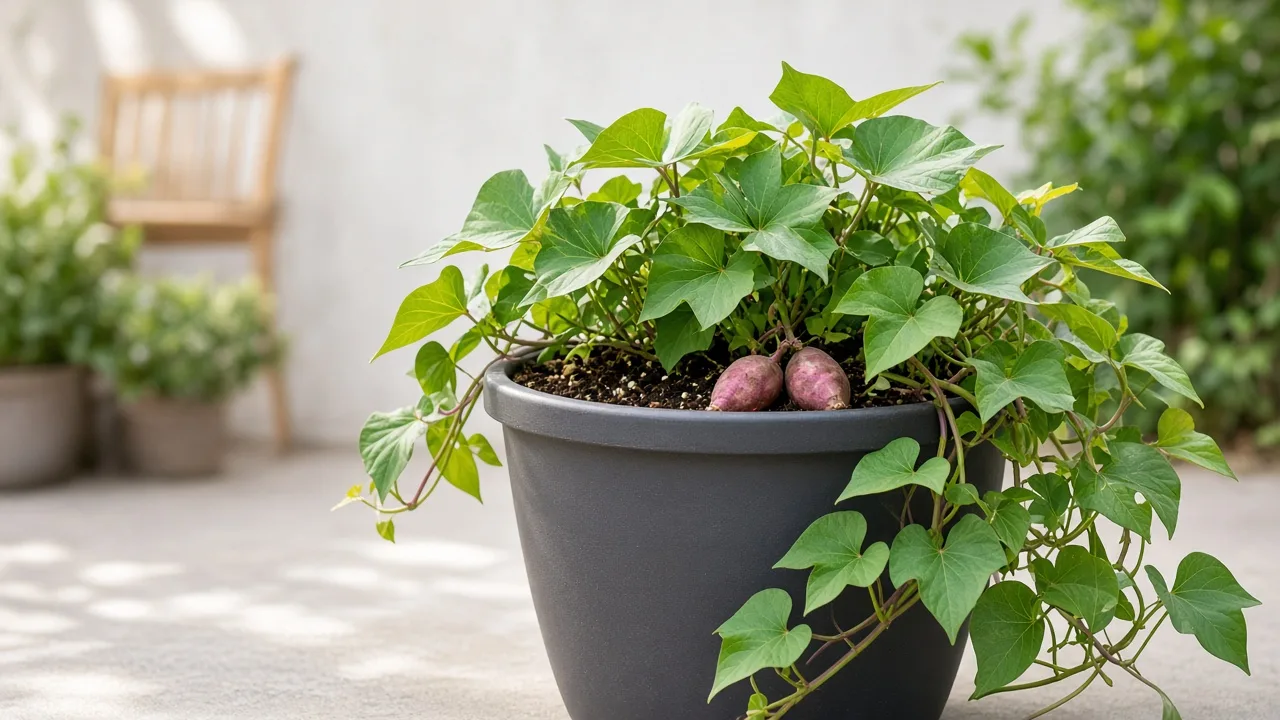
A sweet potato vine can look dramatic at 3 p.m. on a terrace while the mix below is still damp—or stay perky at dawn while the root zone has already gone too dry for tubers to swell. Sweet potato watering starts with what is happening under the sprawling stems, not with a fixed “every Tuesday” reminder. Ipomoea batatas—shakarkandi in many Indian kitchens—is a heat-loving morning-glory relative that forms harvestable storage roots on spreading underground stems. Those roots need steady, airy moisture while they size up, but they rot quickly in soggy, compacted mix.
This guide explains how to check dryness at 3–5 cm depth, how often to irrigate from slip planting through harvest taper, how grow bags on concrete differ from raised beds, and what to do first when leaves yellow or tubers crack. For light placement and warm-soil planting timing, pair this page with the Sweet Potato overview and light guide.
The quick answer
Water sweet potatoes when the soil 3–5 cm below the surface begins to feel dry, then soak until excess drains from the container or infiltrates the bed—never leave roots sitting in a full saucer. During active growth in warm dry weather, plan on roughly 2.5 cm (1 inch) of water per week from rain and irrigation combined as a benchmark, not a blind schedule. The RHS describes sweet potatoes as thirsty plants that need regular watering in dry weather, especially in pots, and notes that tubers will not swell if plants go short of water.
Check every two to three days on hot Indian terraces while vines run; daily checks may be needed in peak heat even when you water less often. In the last three to four weeks before harvest, reduce irrigation so skins set and late surges do not split tubers—a risk home guides often tie to heavy late watering (Bob Vila). Your finger, pot weight, and recent rain decide whether today is a watering day.
Why moisture matters for vines and tubers
Sweet potato is grown for fast leafy vines and, in edible cultivars, sweet storage roots that form along underground stems. Leaves photosynthesize in strong sun; roots take up water and minerals to feed tuber expansion. When soil swings between dust and flood, vines may still look acceptable while roots stay small, knobby, or cracked when rain finally arrives.
NC State Extension notes that sweet potato tolerates drought and dry soil in ornamental ground-cover use, but that resilience is not the goal when you want kitchen-sized tubers. For harvest crops, think evenly moist, well-drained loam high in organic matter—the same profile NC State recommends for healthy growth—rather than alternating neglect with drowning.
The RHS stresses consistent moisture in compost or soil, especially during hot weather when container plants may need daily watering. Short dry spells during tuber swelling limit size; constant saturation invites rot and misshapen roots. Watering and soil structure are one system: loose mix drains after a soak; heavy wet clay never dries evenly and punishes sweet potato more than a forgiving ornamental vine.
How to check soil dryness before you water
Surface color lies on peat- or coir-heavy mixes. A pale, cracked top can hide damp soil near roots, especially in deep grow bags where vines shade the rim. Use at least one of these checks before every irrigation pass.
Finger or knuckle test: Push into the mix 3–5 cm deep, a few centimetres away from the main stem. If that layer feels cool and clings to your skin, wait. If it feels dry and crumbly, water deeply. In shallow decorative pots for ornamental vines only, you may check slightly shallower; for shakarkandi in 30 cm or deeper bags, prioritize depth over the top inch alone.
Pot weight: Lift the bag after a full soak and again daily. A noticeably lighter container usually needs water if the finger test agrees. Weight reflects the whole column better than a quick surface touch.
Drainage and saucers: After watering, empty saucers within an hour so roots do not re-absorb stale water. Blocked holes and cachepots without drainage are the fastest route to soft tubers.
Morning checks beat reactive afternoon watering. Midday wilt on a hot terrace is not always a call to soak; if mix is moist and stems recover overnight, another drink may reduce oxygen at the roots. Combine touch, weight, and overnight recovery rather than reacting to one limp leaf at peak heat.
Watering schedule through the growing season
Frequency follows growth stage, container volume, and weather—not a calendar app. Use the stages below as a decision frame; always confirm with the dryness checks above.
After planting slips
Water generously immediately after planting slips so settled mix contacts roots, matching the establishment rhythm in the Sweet Potato overview. Keep the root zone evenly moist for the first seven to ten days while new roots form—do not let fresh slips bake in dry mix, but do not keep soil swampy in cool weather. The RHS advises keeping young plants in consistently moist compost while they establish in warm, bright conditions (RHS sweet potato growing guide).
If nights are still cool or soil was planted too early, excess water plus cold soil stalls growth and invites decay on tender stems. Fix timing via repotting and planting depth guidance before you chase the problem with more irrigation.
During tuber bulking
Once vines run in full sun, transpiration rises. This is when short drought hurts yield even if leaves recover visually. Maintain steady moisture without waterlogging—about 2.5 cm of water per week in warm dry spells is a useful planning total, split into deep soakings when your 3–5 cm check says dry.
Container growers on sun-baked concrete often need more frequent checks than in-ground beds; the RHS notes that pots may need daily watering in hot weather (RHS sweet potato growing guide). In-ground rows with mulch hold moisture longer; still verify depth after windy weeks that strip surface water away.
Avoid light sprinkles that wet only the top inch. One slow soak that wets the full root zone, then a dry-down period with oxygen, matches how sweet potato roots explore loose mix. Pair irrigation with the fertilizer guide so high nitrogen does not push leaves while roots starve for steady water.
Before harvest
When leaves begin yellowing or your cultivar’s 90–120 day window approaches, taper irrigation over the final three to four weeks. Skin set and sugar development benefit from slightly drier soil; late heavy watering can split tubers that were sizing in dry mix (Bob Vila). Do not stop water abruptly while vines are still fully green and actively growing unless you are lifting a test root and leaving the rest to mature.
Lift and cure harvested tubers gently; bruised skin lets rot enter regardless of how carefully you watered earlier.
Containers, grow bags, and open beds
Grow bags and large pots dry faster than in-ground plantings and heat quickly on terraces. Use drainage holes, elevate bags slightly, and favor deep containers (about 30 cm or more for serious tuber crops) so moisture does not sit in a shallow saucer layer while the top looks dry.
Raised mounds and loose beds hold more water volume and benefit from organic mulch to reduce evaporation—the RHS recommends mulch in the ground to hold moisture and suppress weeds (RHS sweet potato growing guide). Clay that stays wet for days still rots tubers; fix structure in the soil guide instead of irrigating more often.
Ornamental vines in mixed planters may share space with thirstier partners; adjust so sweet potato is not the only plant sitting wet while neighbors dry out. Edible shakarkandi in dedicated bags is simpler: one root zone, one check depth, one soak rhythm.
Watering on Indian terraces and during monsoon
Lowland shakarkandi fits the main warm-season window after cool nights pass. In pre-monsoon heat, plan morning checks every one to two days on exposed rooftops; afternoon shade from parapets can trick you into thinking soil is cooler than it is. Water in the early morning when possible so foliage dries and you catch real dryness before peak evaporation.
During monsoon weeks, your job is often to withhold irrigation while improving drainage. Pause routine watering when rain keeps the root zone moist. Clear blocked holes, divert roof spill into drains, and refresh coarse amendments if mix has compacted. Resume only when a 3–5 cm finger test dries despite humid air—sheltered bag lips often shed rain while the center stays soggy.
Hill and short-season sites face the opposite risk: cool nights slow drying, so fewer soakings may still maintain moisture. Match frequency to your bag weight and finger test, not to a coastal monsoon calendar.
How to irrigate: depth, timing, and technique
Apply water slowly until it moves through the full profile and exits drainage holes. For in-ground plantings, the RHS suggests sinking a small pot beside each plant and watering into it so moisture travels straight to roots under sprawling foliage (RHS sweet potato growing guide)—a useful trick when vines hide the row.
Prefer rainwater where practical; flush occasional salts in city water by letting excess drain. On hot days, morning or evening irrigation reduces instant evaporation, though the deeper win is wetting roots, not misting leaves. Sweet potato foliage is not the primary water target.
If water runs down the sides of a dry peat mix, pause and repeat a slow pass minutes later, or bottom-soak once, then repair structure before the next cycle. The goal is one thorough wetting per dry-down, not ten teacup splashes that never reach tuber-forming roots.
Overwatering warning signs
Chronic wetness shows up before tubers are lifted. Watch for yellowing leaves beyond a few old lowers, wilting despite wet mix, sour or musty smell from the bag, and soft darkened storage roots when you probe carefully at the edge. Fungus gnats and algae on the surface often mean mix never dries.
NC State Extension links sweet potato health to well-draining soil; saturation in heavy clay mimics overwatering even when you irrigate “normally.” If several signs appear together, stop watering, improve drainage, empty saucers, and let the root zone begin to breathe before the next deep soak—only after a genuine dry check.
Overwatering during cool planting weather is especially damaging to new slips. Pair with warm-soil planting rules in the overview rather than compensating with more water on cold mix.
Underwatering warning signs
Dry stress appears as midday wilting that recovers overnight when soil was genuinely dry, mix pulling away from bag walls, and small or cracked tubers after irregular watering. Leaves may look dull or thinner before roots fail entirely.
A single dry day rarely kills established vines; sweet potato tolerates dry soil better than flooding (NC State Extension). Chronic drought during bulking is the yield killer—the RHS is explicit that shortage of water stops tubers from swelling (RHS sweet potato growing guide). Rehydrate with one deep soak, drain fully, then return to check-based intervals.
If wilt persists with wet soil, suspect overwatering or poor drainage, not thirst. The fix is opposite: dry down, inspect roots, and adjust mix per the soil guide.
Ornamental sweet potato vine vs edible shakarkandi
Both are Ipomoea batatas, but goals differ. Ornamental cultivars bred for leaf color may never produce dependable kitchen tubers; they still need regular drinks in baskets, yet a missed week stresses foliage more than a national harvest. Edible shakarkandi selections need uninterrupted deep root space and even moisture through bulking for usable roots.
Do not copy houseplant advice (“let it dry completely”) from succulents onto a full-sun root crop. Do not copy field-flood irrigation onto a 25-litre bag without drainage. Match cultivar to container depth and watering effort before you propagate more slips in the propagation guide.
When to use this page vs other Sweet Potato guides
Stay here when irrigation timing, dryness checks, wilt diagnosis, monsoon pauses, or harvest taper are the variables in question. Open the overview for the full season picture—slips, harvest length, and cultivar choice. Use light when vines are pale, leggy, or shaded despite good moisture. Use soil when water pools on the surface or drains straight through. Use fertilizer when leaves are lush but tubers stay small. Use propagation for slip timing and water-rooting starts. Use pruning only after you decide whether leaves or roots are the priority crop.
Related Sweet Potato guides
- Sweet Potato plant hub — cluster index and quick profile
- Overview — slips, season length, and first troubleshooting
- Light — sun hours, terrace placement, slip grow lights
- Soil — mix, pH, and drainage fixes
- Fertilizer — feeding roots without excess nitrogen
- Repotting — final container depth and warm planting timing
- Propagation — slips, water rooting, and aftercare
- Pruning — containing vines without starving tubers
Conclusion
Sweet potato rewards growers who treat water as a root-zone rhythm, not a decorative vine misting habit. Check 3–5 cm down, soak deeply when dry, drain fully, and keep moisture steady through tuber bulking in full sun. Taper in the final weeks before harvest, pause during monsoon saturation, and fix drainage and soil when wilt and wetness disagree. Nail those habits here, then use sibling guides when light, mix, or feeding—not timing alone—still limit your shakarkandi harvest.