Sweet Potato Fertilizer Guide: When and How to Feed
Sweet Potato Fertilizer Guide: When and How to Feed
Sweet Potato Fertilizer Guide: When and How to Feed
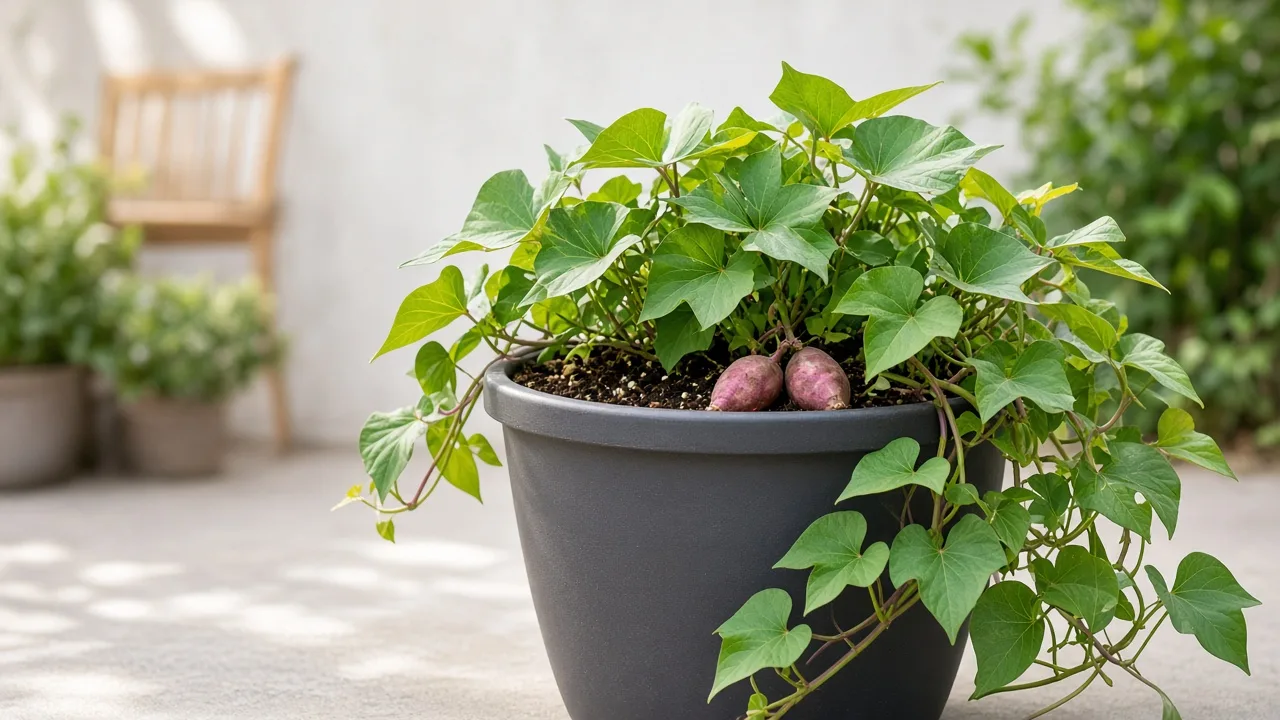
Sweet potato (Ipomoea batatas) is grown for sweet storage roots—shakarkandi on Indian terraces and in warm lowland beds—not for a permanent leafy houseplant display. That goal changes every fertilizer decision. The vines you see above ground only matter because their leaves feed the roots swelling below; pour on high-nitrogen feed the way you might for spinach or methi, and you often get the classic root-crop failure: rank foliage, forked or hairy roots, and a disappointing harvest.
Before you choose a bottle, read what the root zone already holds. Mature compost worked into the bed, the mix in a deep grow bag, and last season’s amendments all release nitrogen slowly. The Sweet Potato soil guide covers loose, well-drained loam near pH 5.8–6.5; this page assumes drainage and warmth are already sensible, because fertilizer cannot fix cold, waterlogged soil or a pot too shallow for tubers to expand.
Why sweet potato feeding targets storage roots
Unlike morning-glory cousins grown purely for flowers, edible sweet potato partitions growth between running stems and underground storage roots. Nutrition should follow that split: enough nitrogen while slips establish and leaves expand, then emphasis on phosphorus and especially potassium as roots thicken. Crop guides for sweet potato consistently describe lower nitrogen demand than many vegetables but relatively high potassium need to support tuber development rather than endless vine extension (ICL Growing Solutions — sweet potato crop nutrition).
The “going to vine” problem with excess nitrogen
Gardeners call it “going to vine”: dark green, vigorous stems that cover a trellis while lifted roots stay pencil-thin or bizarrely branched. Excess nitrogen is the usual driver, especially when stacked on fresh manure, lawn fertilizer, or repeated high-first-number soluble feeds. Bob Vila’s sweet potato growing guide recommends working a low-nitrogen, high-phosphorus fertilizer such as 5-10-10 into soil before planting slips—an analysis that keeps the first number modest while supporting root-oriented nutrition. UF/IFAS Gardening Solutions adds a blunt warning: applying too much fertilizer can prevent tubers from forming. Treat that as a ceiling, not a challenge to feed harder.
Build fertility before slips go in
Long before slips leave their rooting tray, improve the planting zone. Sweet potatoes reward loose, aerated soil rich in organic matter—the same structure that lets you slip tubers out without snapping them at harvest. A practical home mix mirrors the plant hub: roughly half quality potting mix or sandy loam, about 30% mature compost, and 20% perlite or coarse sand for drainage in containers.
Compost, aged manure, and soil tests
Fully aged compost or well-rotted manure incorporated before planting supplies slow nitrogen, improves moisture retention, and feeds soil biology better than a single soluble dump at slip planting. Avoid fresh or hot manure against slips; it can burn tender roots and skew salts while pushing soft top growth. Where laboratory soil testing is available, use it—especially for phosphorus and potassium in reused beds. Without a test, assume compost-heavy terrace mix is already nitrogen-rich and keep bottled feeds light until you see pale new growth in full sun.
What N, P, and K do for sweet potatoes
The three numbers on a fertilizer label are percentages of nitrogen, phosphate, and potash in that product, not a report of what your soil already contains (Gardening Know How — fertilizer numbers). Two bags labelled “vegetable fertilizer” can differ sharply in concentration; dose must follow your label and container size, not a neighbour’s field rate.
Nitrogen early, potassium as roots swell
Nitrogen fuels leaf and stem expansion while slips root in and vines run in warm weather—useful when plants are pale and establishing in the Sweet Potato light they need (roughly 6–8 hours of direct sun). After vines cover their space and roots begin to swell, continuing a nitrogen-heavy program often trades tuber weight for more stem. Phosphorus supports early root establishment on slips planted deep; potassium becomes increasingly important as starches move into storage roots—a reason many sweet potato programs emphasize higher third-number (K) products in mid-season if soil is sandy or leached (ICL Growing Solutions — sweet potato crop nutrition). Field research on Ipomoea batatas confirms that combined N, P, and K application raises storage-root yield compared with omitting any one macronutrient, with phosphorus omission among the most yield-limiting deficits in some trials (PMC — NPK effects on sweetpotato yield). Home gardeners should still interpret that as “balanced but low-N overall,” not permission for weekly high-nitrogen doses.
Choose a low-nitrogen ratio you can measure on the label
Shop for products you can measure and dilute accurately. For in-ground rows or raised mounds, working 5-10-10 (or similar low-first-number vegetable blends) into the top few inches before slips go in matches widely repeated home guidance (Bob Vila — how to grow sweet potatoes). Some growers prefer a liquid or water-soluble feed at planting, then every four to six weeks during active warm-season growth, stopping as harvest approaches—again per Bob Vila’s seasonal rhythm.
Synthetic granules vs organic amendments
Granular low-N blends scratched in lightly and watered thoroughly suit beds and large bags. Organic paths combine compost with bone meal (phosphorus), kelp meal, or modest wood ash (potassium) to approximate a low-N, higher-K profile without a single synthetic ratio—use sparingly in alkaline soils and never substitute guesswork for a soil test on reused beds. Slow-release granules mixed into potting soil at planting can reduce leaching in hot weather, but count them before adding soluble feed on top; Penn State Extension’s container vegetable guidance notes that containers often need slow-release at planting plus periodic soluble feed, adjusted to label rates and visible growth.
When to fertilize from planting to harvest
Align feeding with warm active growth after soil at planting depth stays consistently warm—about 18°C (65°F) or higher—because cold, wet slips stall regardless of fertilizer (Sweet Potato overview).
At slip planting: Incorporate compost and, if needed, a measured pre-plant dose of low-N granular fertilizer into the root zone, not piled against stems. Water thoroughly after planting and keep moisture even while roots establish (Sweet Potato watering guide).
Three to four weeks after planting: If vines are pale in full sun and soil was not heavily composted, a light side-dress or half-strength soluble feed can support establishment—skip this if leaves are already deep green and rank.
Mid-season (roughly six to eight weeks after the first feed, or when vines begin running strongly): A modest potassium-forward side-dress may help sandy or leached soils as roots swell; many compost-rich home beds need no mid-season bottle if vines look healthy.
Mid-season feeds and when to stop
Stop heavy feeding three to four weeks before you plan to harvest, or when you begin tapering irrigation for final root sizing. Late nitrogen plus a sudden return of heavy water can encourage split or cracked roots. UF/IFAS Gardening Solutions ties excess fertility to poor tuber formation; late feeds rarely fix a crop you are about to lift and can complicate curing and storage quality.
Containers, grow bags, and terrace grower routines
Terrace shakarkandi in deep grow bags (ideally 30 cm or more of usable depth) concentrates every salt molecule in a small root zone. Irrigation that drains freely—essential per the watering guide—also washes nutrients out. That means containers often need more frequent, lighter feeding than a large composted bed, but never high-nitrogen lawn products. Mix slow-release vegetable granules at planting if your potting label lacks them, then use half-strength soluble feed only when new growth pales after the last dose. If leaf margins brown or white crust forms on soil, pause feeding, flush with plain water until it runs from drainage holes, and resume at lower strength only after new growth looks hungry again (Penn State Extension — container vegetables).
Fertilizing sweet potatoes in India’s warm seasons
On Indian plains, slips usually go out in the main warm-season window when nights stay mild—often after cool winter passes and before extreme pre-monsoon heat if your microclimate allows. Coastal and lowland growers may plant earlier; hill stations must wait for soil warmth. Monsoon weeks leach soluble fertilizer from raised beds and pots; favour compost structure and pause concentrated feeds while media stays waterlogged. A pale vine after prolonged rain may need a single light balanced feed once soil drains—not repeated nitrogen while roots sit saturated. Match slip timing and depth to the Sweet Potato propagation guide and set plants in their final large container at planting per the Sweet Potato repotting guide—sweet potato does not tolerate mid-season root disturbance for a tuber crop.
Warning signs of over-feeding and nutrient gaps
Over-feeding often shows before harvest: extremely lush vines, delayed or small storage roots, forked or hairy roots, brown leaf edges from salt burn in pots, or crusted fertilizer on the soil surface. Under-feeding on depleted mix appears as pale, yellowing older leaves in full sun, stunted vines despite good moisture, or small roots after a long season—confirm light and watering first. UF/IFAS Gardening Solutions reminds growers that too much fertilizer can block tuber formation—the signal to stop and reassess, not to switch brands blindly.
Side-dressing and liquid feeds without burning roots
For granular side-dressing, apply in a shallow band roughly 30–45 cm (12–18 in.) away from the main stem, scratch lightly into the top centimetre of soil, and water in immediately so salts move to the root zone without scorching surface roots (ScienceInsights — fertilizing sweet potatoes). Keep concentrated granules off stems and leaves. Liquids—diluted kelp, fish emulsion, or label-directed vegetable feeds—should wet soil, not coat foliage in humid weather. Pair any feed with steady moisture; drought during bulking shrinks yield regardless of NPK.
Ornamental vine cultivars vs edible shakarkandi
Purple, lime, or tricolour ornamental sweet potato vines are bred for foliage colour, not dependable edible tubers. They may need less deliberate tuber-focused feeding if you are growing them as trailing basket plants—but they still resent fresh manure burns and chronic over-feeding in small pots. For edible cultivars, keep the low-N, root-first program even if leaves are also harvested in cuisine; repeated leaf stripping diverts energy from roots on plants grown primarily for shakarkandi. Heavy foliage pruning for tuber crops is generally discouraged; see the Sweet Potato pruning guide for canopy management that protects yield.
When to use this page vs other Sweet Potato guides
Use this page to decide whether, when, and how much to fertilize from slip planting through harvest taper. Use the Sweet Potato watering guide when wilting, saucer water, or split tubers trace to moisture swings—water moves fertilizer salts. Use the Sweet Potato soil guide for mix, compost, pH, and drainage before stacking products. Use Sweet Potato light when vines stretch or stay pale in shade.
For slips, spacing, and planting depth, see Sweet Potato propagation and Sweet Potato repotting. Canopy training and harvest cuts live in Sweet Potato pruning. Fertilizer cannot fix cool soil, a shallow pot, or an ornamental cultivar chosen for leaves instead of roots.
Related Sweet Potato guides
- Sweet Potato overview — season length, slip basics, and the full warm-season picture.
- Sweet Potato soil — compost-rich mixes, pH, and bed prep before feeding.
- Sweet Potato watering — even moisture for tuber quality without waterlogging.
- Sweet Potato light — full sun for vines that feed developing roots.
- Sweet Potato propagation — slips, timing, and establishment before feed schedules matter.
Conclusion
Good sweet potato nutrition is modest, low-nitrogen, and timed to root swelling—not a weekly high-N habit borrowed from leafy greens. Build fertility with mature compost and a measured 5-10-10-style pre-plant program where soil is lean, add only light mid-season potassium-forward feeds if vines pale on sandy or leached media, and stop concentrated feeding weeks before harvest while you taper water.
Your first action this week is to look at vine vigour versus root goal, not the calendar. If stems are deep green and rampant but you have not lifted a sized tuber by mid-season, cut nitrogen and confirm sun, depth, and moisture before buying another bag. If slips are pale in full sun on exhausted mix, a half-strength, low-N complete feed after the root zone drains beats repeated high-nitrogen rescue doses.