10 Best Fall Container Plants for Your Porch
Build a better fall porch planter with 10 plants matched to light, water, container role, frost tolerance, and overwintering potential.
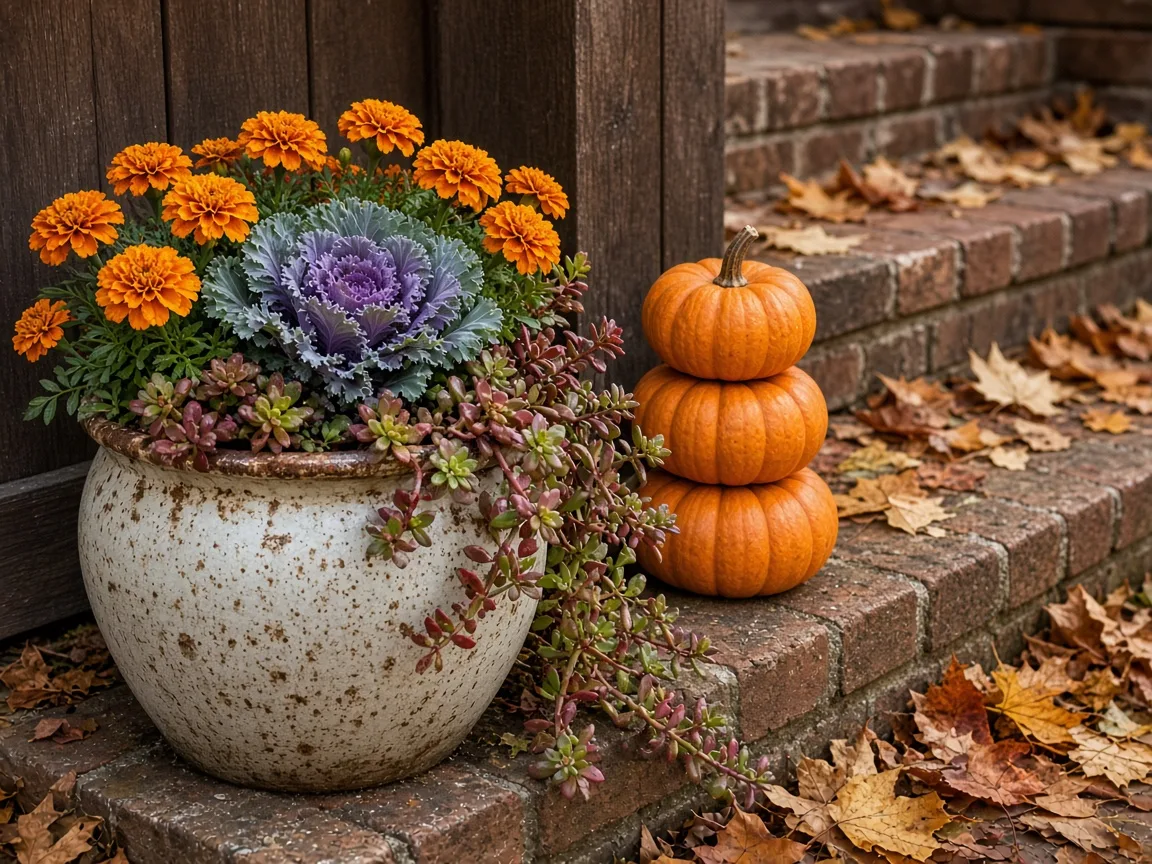
The best fall porch planter is not the one with the most colors. It is the one whose plants agree about light, moisture, and the next cold snap. Before buying anything, stand where the pot will sit and note how many hours of direct sun it receives, whether a roof keeps off rain, how quickly the container dries, and whether you can move it when temperatures drop.
That quick assessment changes the list. A sunny, exposed stoop can support sedum, chard, asters, or a compact grass; a shaded, sheltered porch gives croton and false aralia a better chance to look rich instead of scorched. Tender plants can still be excellent fall choices, but only if you treat them as temporary color or have a plan to bring them indoors.
Start with your porch conditions, not the color palette
Morning sun and afternoon sun are not interchangeable. An east-facing porch may give a plant several gentle hours of light, while a west-facing wall can add reflected heat and dry a small pot quickly. A north-facing porch may be bright but offer little direct sun, which suits foliage plants better than sun-hungry peppers or flowering perennials.
Measure the light at the height of the leaves, not at the edge of the steps. A deep overhang, railing, neighboring tree, or pale wall can change the plant’s experience by midday. If you are unsure, use a plant that tolerates a range—such as false aralia or a foliage-forward croton in bright shade—rather than forcing a full-sun plant into dim conditions and blaming the season when it becomes thin.
Container moisture is equally important. Pots dry faster than garden beds because they have less soil volume and more exposed surface area; unglazed terracotta dries faster still. The RHS advises that large containers are generally easier to maintain, while good drainage holes are essential and winter waterlogging can damage roots (RHS container-growing guidance).
Use a simple check before watering: push a finger into the mix, lift the pot if it is small enough, and look at the leaves together with the soil. Water thoroughly when the root zone has begun to dry, allowing excess to drain, then empty a saucer that keeps the pot standing in water. Do not let a fall watering schedule continue unchanged as light and temperatures decline.
Choose a container role before you choose a plant
The familiar thriller, filler, spiller formula is useful because it describes shape, not a mandatory shopping list. A thriller supplies height—false aralia, a compact ornamental grass, or a tall pepper. Fillers occupy the middle—chard, coneflower, croton, or sedum. Spillers soften the rim—sweet potato vine, velvet plant, or a low sedum.
Not every pot needs all three. A wide bowl can look better with one low sedum repeated in three color forms, while a narrow entry urn may need one upright grass and no trailing plant at all. The reliable design rule is to combine one dominant silhouette, one contrasting leaf texture, and one repeated color; that keeps the display intentional when individual flowers fade.
Plant at the same depth as each nursery root ball and keep the finished mix slightly below the rim so water can soak in instead of running down the sides. Resist the urge to cram a large number of small plants into a pot for instant fullness. Crowding raises humidity around leaves, increases watering competition, and makes it harder to remove one declining plant without disturbing the rest.
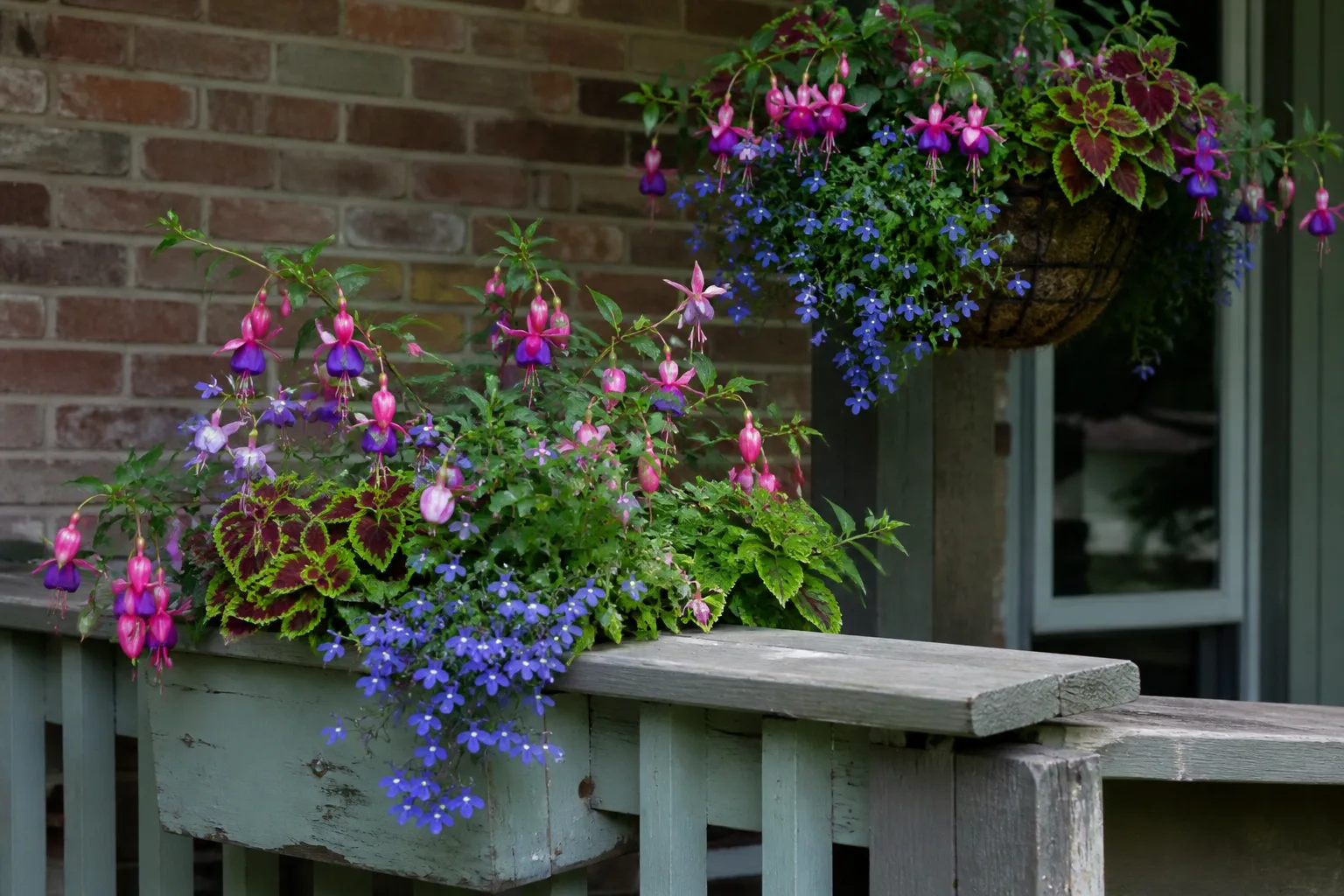
The 10 fall container plants worth growing
The ten choices below cover the major fall porch jobs: late flowers, dramatic foliage, edible color, drought tolerance, vertical structure, and fast spillers. Their most important difference is not flower color. It is what happens when the season turns colder.
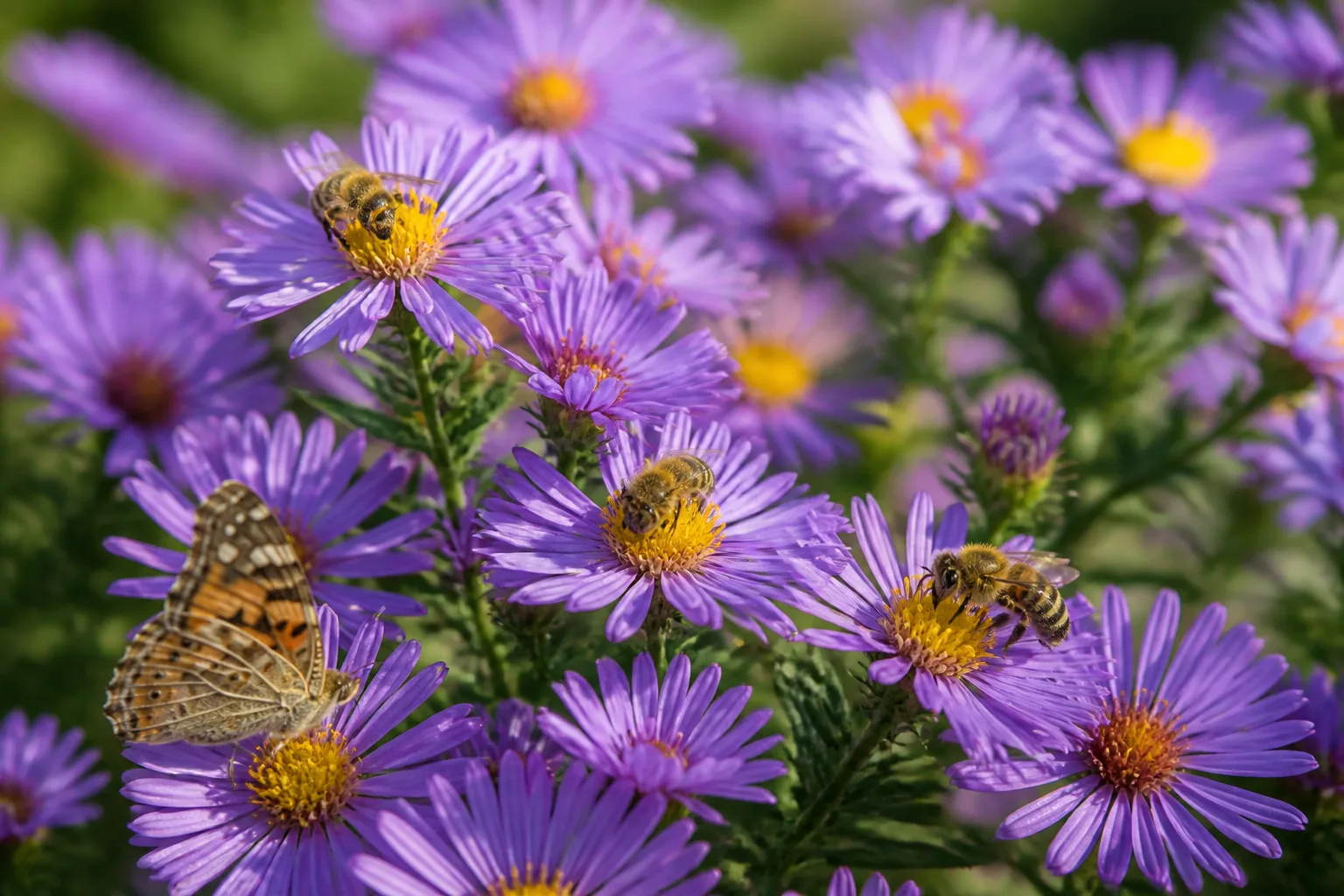
Asters bring late-season flowers and pollinators
Asters—often sold as Symphyotrichum—are a strong choice for a sunny porch when you want flowers that still look like autumn rather than leftover summer. Purple, pink, blue, and white blooms combine easily with silver foliage, bronze grasses, or a rusty pot. Compact cultivars are better for containers than a vigorous garden selection that quickly becomes top-heavy.
Give asters full sun to light afternoon shade, a free-draining mix, and consistent moisture while they establish. Letting a small pot swing from bone dry to saturated can shorten the show, even though established plants in the ground may tolerate more stress. Their flowers provide late nectar; a University of Minnesota Extension list of pollinator-friendly annuals also emphasizes that container-friendly flowers can contribute useful nectar when chosen for the site (University of Minnesota Extension).
An aster can be a seasonal porch purchase or a perennial investment. In-ground hardiness does not guarantee survival in an exposed pot because roots experience colder, faster temperature changes above ground. If you want to overwinter it, use a large container, protect the pot from wind, and move it to an unheated sheltered space before the root ball repeatedly freezes and thaws.
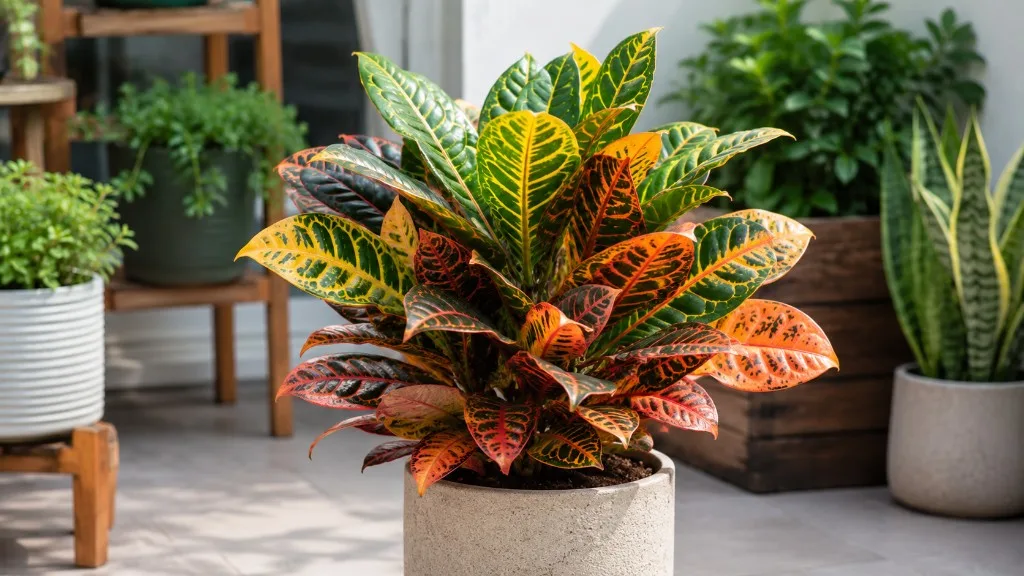
Crotons deliver tropical leaf color
Croton is the foliage showstopper for a sheltered porch. Its leathery leaves can carry green, yellow, orange, red, and burgundy at the same time, so one plant can supply the whole fall palette without flowers. It works best as a thriller or the back plant in a mixed pot, where its upright shape and strong color have room to read from the sidewalk.
Place it in bright light, ideally with some protection from harsh afternoon sun while it acclimates. Croton wants a well-drained mix that stays lightly and evenly moist; a dry root ball followed by a heavy drench can trigger leaf drop, while cold wet soil is just as damaging. Do not move a nursery croton straight from low indoor light to a bright exposed porch without a gradual transition.
Croton is a tender tropical, not a frost-tolerant fall perennial. Bring it inside before frost and before nights become consistently chilly, inspect leaf undersides for pests, and give it a bright window. Expect some adjustment when light and humidity change; the goal is to preserve a healthy growing point, not to keep every outdoor leaf forever.
Coneflowers bridge summer and fall
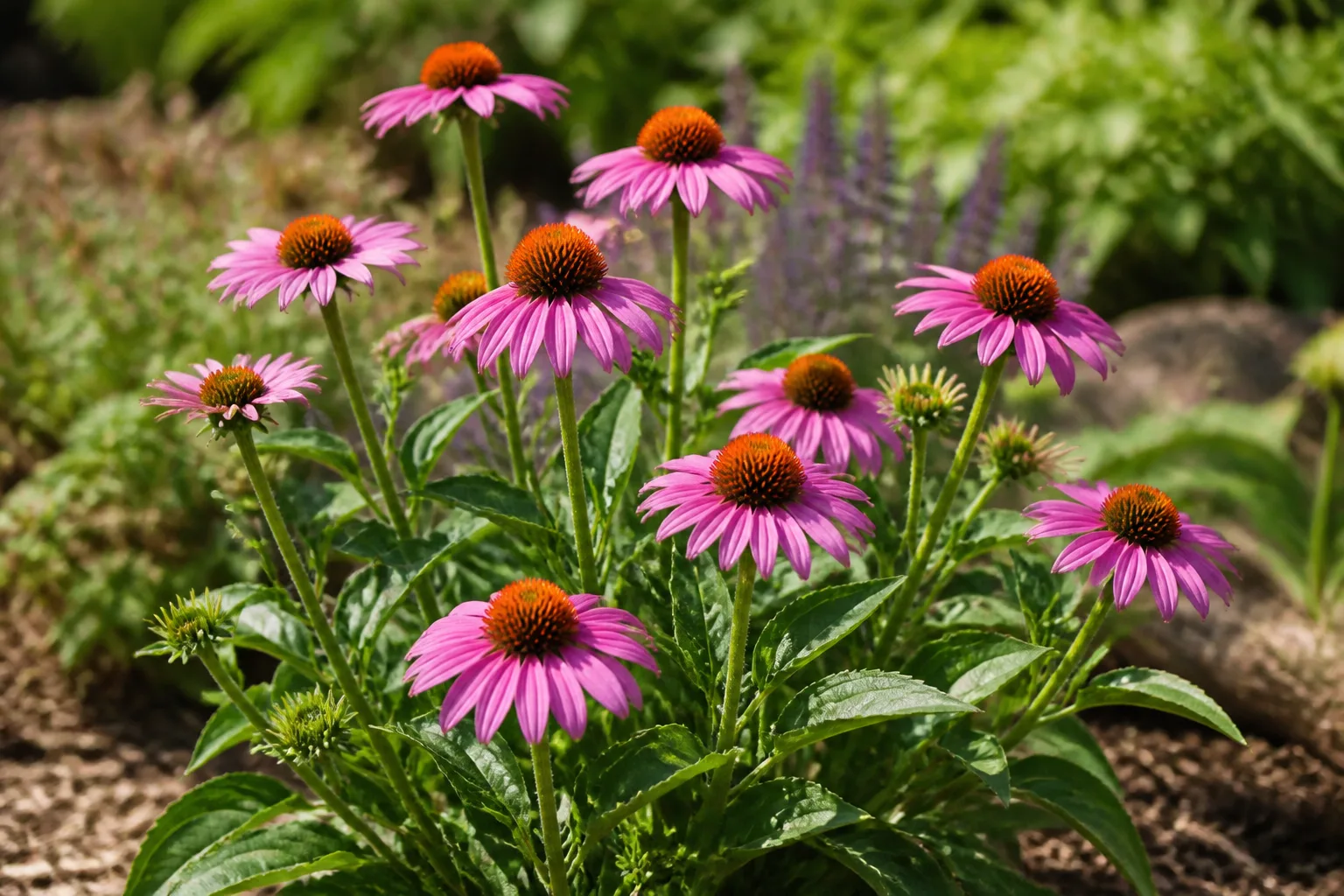
Coneflowers, or Echinacea, earn a place in a porch pot when you want a flowering perennial with a strong silhouette. Their raised central cones keep the plant visually interesting after petals fade, and compact cultivars can stand alone in a generous pot or share space with aster and sedum. They are especially effective in a sunny, naturalistic arrangement rather than a tightly clipped formal urn.
Use a well-drained mix and let the surface begin to dry between deep waterings. Coneflowers dislike a pot that stays saturated, but a newly planted division or nursery plant still needs regular checks while roots move into fresh mix. Full sun produces sturdier stems and more flowers; too much shade can leave the plant reaching toward the door.
You can deadhead to keep the pot tidy, or leave some seedheads standing for texture and seed-eating birds. If the plant is intended to return next year, choose a compact cultivar and protect the container’s root zone. If you only need a short fall display, treat it as the anchor plant and replace it after the show rather than expecting an oversized perennial to remain happy in a cramped pot.
Ornamental peppers make a compact color statement
Ornamental peppers are small-space color machines. Their upright fruit can shift through green, yellow, orange, purple, and red, often making a single plant look different each week. They suit a sunny porch, a small pot by the door, or the center of a mixed container where their fruit supplies a punctuation mark among softer foliage.
Give them full sun, warm conditions, and a potting mix that drains quickly without drying to dust. They are usually grown as annuals where frost occurs. Once a freeze damages the foliage, the display declines quickly, so do not choose this plant for a low-maintenance pot that must remain outside unattended.
Treat nursery-grown ornamental peppers as display plants, not as a guaranteed food crop. Fruit can be extremely hot, and plants sold for decoration may have received products not intended for edible harvest. If children or pets investigate the porch, place the pot out of reach and follow the nursery label rather than assuming colorful fruit is harmless.
Velvet plants add a fuzzy purple spill
Velvet plant, commonly sold as Gynura aurantiaca or purple passion plant, brings a texture that flowers cannot imitate. Its leaves are covered in fine purple hairs, and flexible stems can trail over the rim of a pot or weave through a mixed display. The color looks particularly good beside orange pepper fruit, chartreuse foliage, or pale silver plants.
Give it bright filtered light or gentle morning sun, airy potting mix, and moderate moisture. Hot, exposed afternoon light can scorch the leaves, while dense shade dulls the purple and encourages weak growth. Pinching the growing tips keeps the plant bushier; many gardeners also remove the small orange flowers because their scent can be unpleasant indoors.
This is another tender plant for a fall porch, not a plant to leave out through frost. Take cuttings or move the parent plant indoors while nights are still mild, inspect carefully for pests, and acclimate it to indoor light. If you want a display that requires no move, choose sedum or a hardy grass instead.
Swiss chard is a useful edible foliage plant
Swiss chard earns its place in a front-porch planter because it is both ornamental and useful. The stems can be pink, yellow, orange, red, or white, while the leaves form a full mound that fills the center of a pot. It is a smart choice for a sunny entry where you want color after summer flowers tire, but do not want to discard the plant at the end of the season.
Use a rich, moisture-retentive potting mix with reliable drainage and give chard full sun to part shade. Harvest the outer leaves first, leaving the center to keep producing. Water when the mix begins to dry rather than waiting for the leaves to collapse; repeated drought makes the leaves tougher and can reduce the ornamental effect.
Chard is among the better choices for a cool-weather display and can handle light frost, though a container is still more exposed than a garden bed. If your porch gets hard freezes, move the pot to a protected wall or cover it overnight. Keep edible chard separate from ornamental plants treated with non-food products, and follow the seed or nursery label for harvest guidance.
False aralia supplies a tall, fine-textured accent
False aralia, often sold under Plerandra elegantissima or the older name Schefflera elegantissima, has narrow, deeply cut leaves that give a porch arrangement a lacy vertical shape. It is useful when a pot needs height without the coarse, solid mass of a shrub. Pair it with broad-leaved croton or low sedum so the contrast in leaf scale does the design work.
Choose bright indirect light or part shade and a protected location away from strong wind. Keep the mix moderately moist but never permanently wet; thin foliage loses its charm quickly when a root ball stays cold and saturated. Because false aralia grows slowly compared with a seasonal annual, one healthy specimen can be moved indoors and used as a houseplant after the porch display ends.
Expect a transition when it changes locations. Check for insects before bringing it inside, move it in before frost, and place it near bright light without placing it against a heater or drafty door. It is a good choice for a roofed porch only if you can provide that indoor handoff.
Sedum handles missed waterings
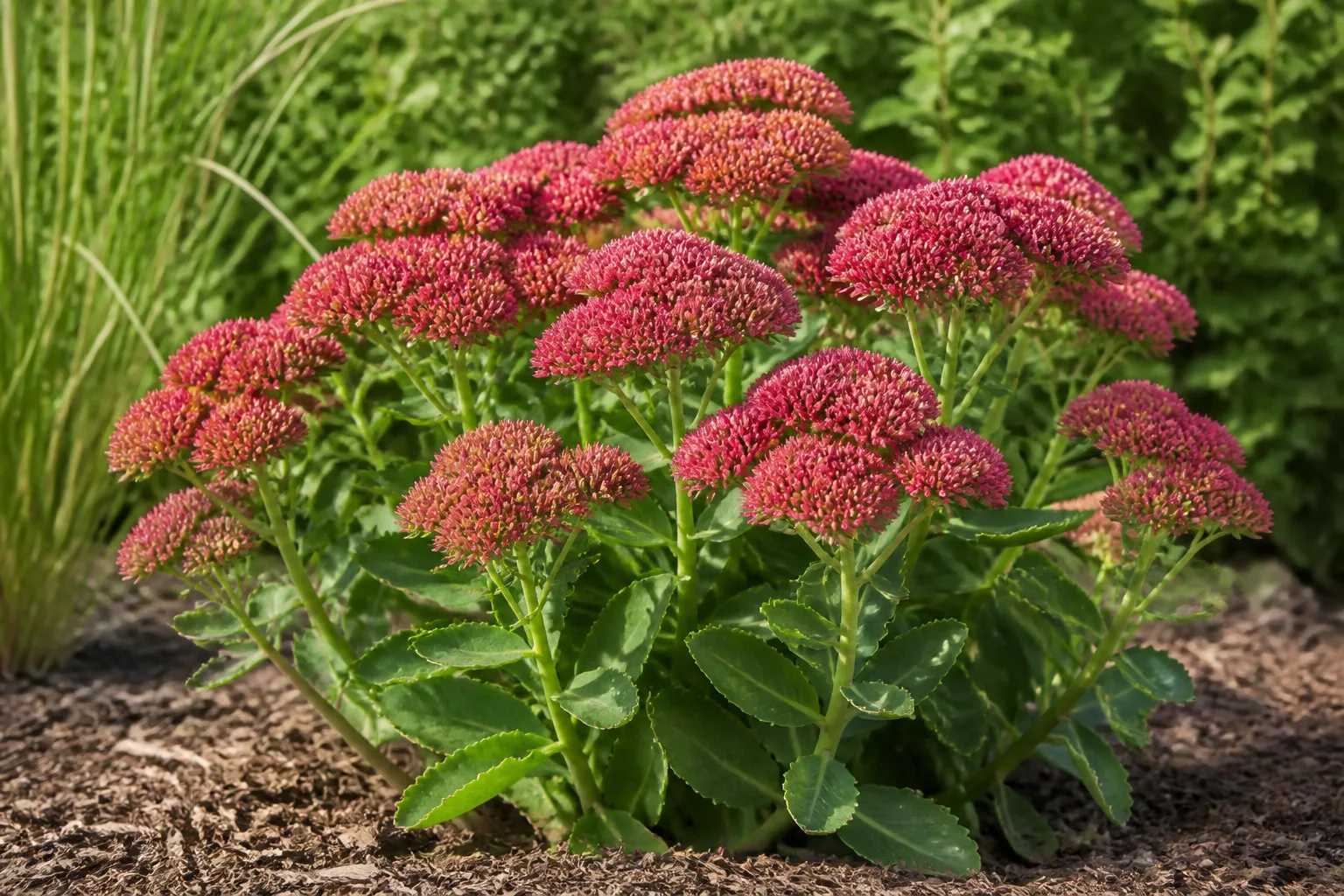
Sedum, including upright stonecrop types sold as Hylotelephium, is the practical answer for a sunny porch that sometimes gets forgotten. Fleshy leaves store water, and the flat flower clusters age from pink to coppery tones that continue to look good after peak bloom. A compact sedum can be the filler in a large pot, the only plant in a shallow bowl, or the spiller at the edge of a mixed arrangement.
Use a gritty, free-draining mix and water deeply only after the mix has dried substantially. “Drought tolerant” does not mean “never water,” especially in a small black pot against a warm wall. It means the plant has more recovery margin than a thin-leaved annual when you miss a day or two.
Full sun gives the best form and flower color. Avoid pairing sedum with plants that demand constantly moist soil, because the plant combination will force you to overwater the succulent or underwater its neighbors. Leave spent flower heads for structure, or cut them when they collapse; either approach can work as long as the pot never becomes a cold, wet reservoir.
Sweet potato vine fills the rim quickly
Sweet potato vine, Ipomoea batatas, is the fast spiller for a fall planter that needs volume. Chartreuse, bronze, purple, and near-black cultivars can cascade over a pot edge and visually connect several containers on a porch. It also roots readily from cuttings, which makes it useful for extending a favorite display before cold weather ends it.
Give it sun to part shade and regular water in a well-drained mix. It grows quickly in warm weather, so trim stems that cover neighboring plants or trail into a walkway. A small plant can look sparse at purchase and then overwhelm a narrow pot within weeks; allow room for that behavior instead of planting several vines together.
Frost is the limiting factor. The vine may look excellent well into autumn in a mild climate, but one hard freeze can finish the foliage. Bring a container indoors only if you have bright enough light and space for a vigorous vine; otherwise, take cuttings early or compost the seasonal display when it declines.
Ornamental grasses add movement and structure
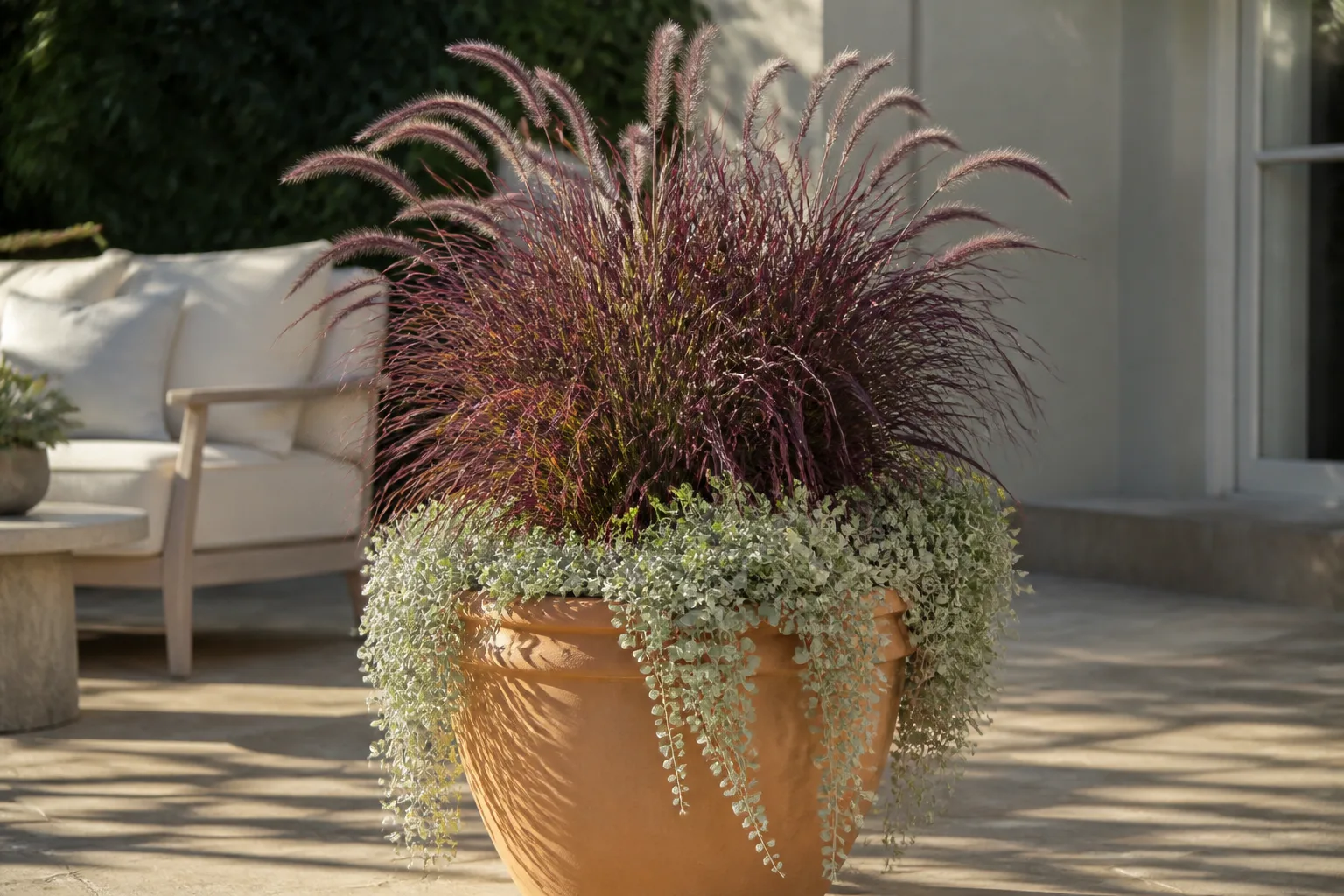
Ornamental grasses are valuable because they keep the planter interesting when flowers pause. Black mondo grass supplies dark, strap-like foliage for a part-sun or lightly shaded pot; blue fescue makes a compact, cool-toned mound for full sun; and purple fountain grass offers arching leaves and plumes where the climate is warm enough. Match the grass to the porch rather than treating all grasses as equally hardy.
Use a compact or dwarf selection so the plant does not turn a narrow entry into a wind sail. In the thriller position, an upright grass can frame lower chard, sedum, or coneflower. Fine foliage also catches low autumn light, and seedheads can provide structure beyond the last flower. BBC Gardeners’ World Magazine uses grasses with rudbeckia, asters, and other autumn plants for contrast in container combinations (BBC Gardeners’ World autumn containers).
Check the label before expecting winter survival. Blue fescue and black mondo may tolerate cold better than purple fountain grass, but container roots still need more protection than roots in the ground. If the grass is tender, enjoy it as a seasonal accent; if it is hardy for your climate, leave the foliage standing until spring unless it becomes damaged or diseased.
Build the planter so the display lasts
Start with a container that has an actual drainage hole and enough volume for the selected root balls. A large pot dries more slowly and is less likely to tip when a grass or false aralia catches wind. Terracotta is attractive but porous and prone to faster drying; plastic retains moisture longer and is lighter, while metal can heat and cool quickly. The container material is part of the care plan, not just a decorative finish.
Use a quality potting mix rather than garden soil dug from a bed. The RHS distinguishes short-term multi-purpose peat-free composts from heavier soil-based mixes suited to longer-term plantings, and recommends choosing the mix for the plants and duration of the display (RHS potting-compost guidance). Do not bury the pot in a layer of rocks to compensate for a blocked hole; keep the drainage opening clear and raise the pot on feet if rain collects beneath it.
Refresh a tired summer pot without creating root trouble
A summer container does not always need a complete reset. Keep healthy plants that still have compact growth, remove spent flowers and weak stems, and scrape away a little exhausted surface mix before adding fresh potting mix. This is a good time to inspect for circling roots, salt crust, sour smells, or a mix that has collapsed into a dense mass.
Replace more of the mix when the old plants were diseased, the pot has stayed waterlogged, or you are changing from a thirsty summer annual to a drought-adapted sedum. In a mixed container, remove the declining plant with as little root disturbance as possible, then match its replacement to the existing watering needs. A fall refresh should simplify care, not create a pot where one plant wants a daily drink and another wants a dry-down.
Fertilize lightly, if at all, according to the plant label. A tender annual that is still actively growing may benefit from a modest feed, but a perennial preparing for dormancy does not need a heavy push of soft new growth before cold weather. Epic Gardening’s seasonal container advice likewise emphasizes light feeding for active plants and restraint with perennials as growth slows (Epic Gardening fall container makeovers).
Protect the pot when frost is on the forecast
The first frost decision is made by plant type, not by how attractive the pot still looks. Move croton, velvet plant, false aralia, sweet potato vine, and tender ornamental grasses before frost threatens. Inspect them, rinse dust from foliage if needed, and keep new indoor arrivals away from established houseplants for a short observation period.
For hardy perennials and cool-season plants, move the container against a protected wall, group pots together, and keep them out of drying wind. Wrap the container—not the wet foliage—with breathable material if your local conditions call for it, and never let a saucer trap winter water beneath the pot. A covered porch can reduce rain and wind, but it does not make a tender plant frost-proof.
Avoid major pruning immediately before a freeze. Remove damaged or diseased material, but leave healthy foliage on perennials that still need it for energy and protection. Seasonal container displays are meant to change; when a tender plant reaches the end of its run, replacing it with chard, sedum, a hardy grass, or a winter bedding plant is often more successful than trying to force summer growth through winter.
Conclusion
Choose the plant that fits the porch you actually have. Asters and coneflowers bring late flowers, chard and sedum handle cool conditions with useful resilience, grasses create height, and croton, velvet plant, false aralia, ornamental pepper, and sweet potato vine supply vivid seasonal drama when you can move or replace them.
The most durable fall container is built around a drainage hole, a suitable potting mix, a realistic watering routine, and a first-frost plan. Once those basics are right, the color palette becomes the easy part: repeat one warm or cool tone, contrast leaf shapes, and let the plants carry the autumn display rather than burying them under decorations.



