32 Best Flowers for Hanging Baskets for Sun and Shade
Find 32 flowers for hanging baskets by sun, shade, heat, and care needs, with trailing picks, reliable combinations, watering guidance, and pet-safety notes.
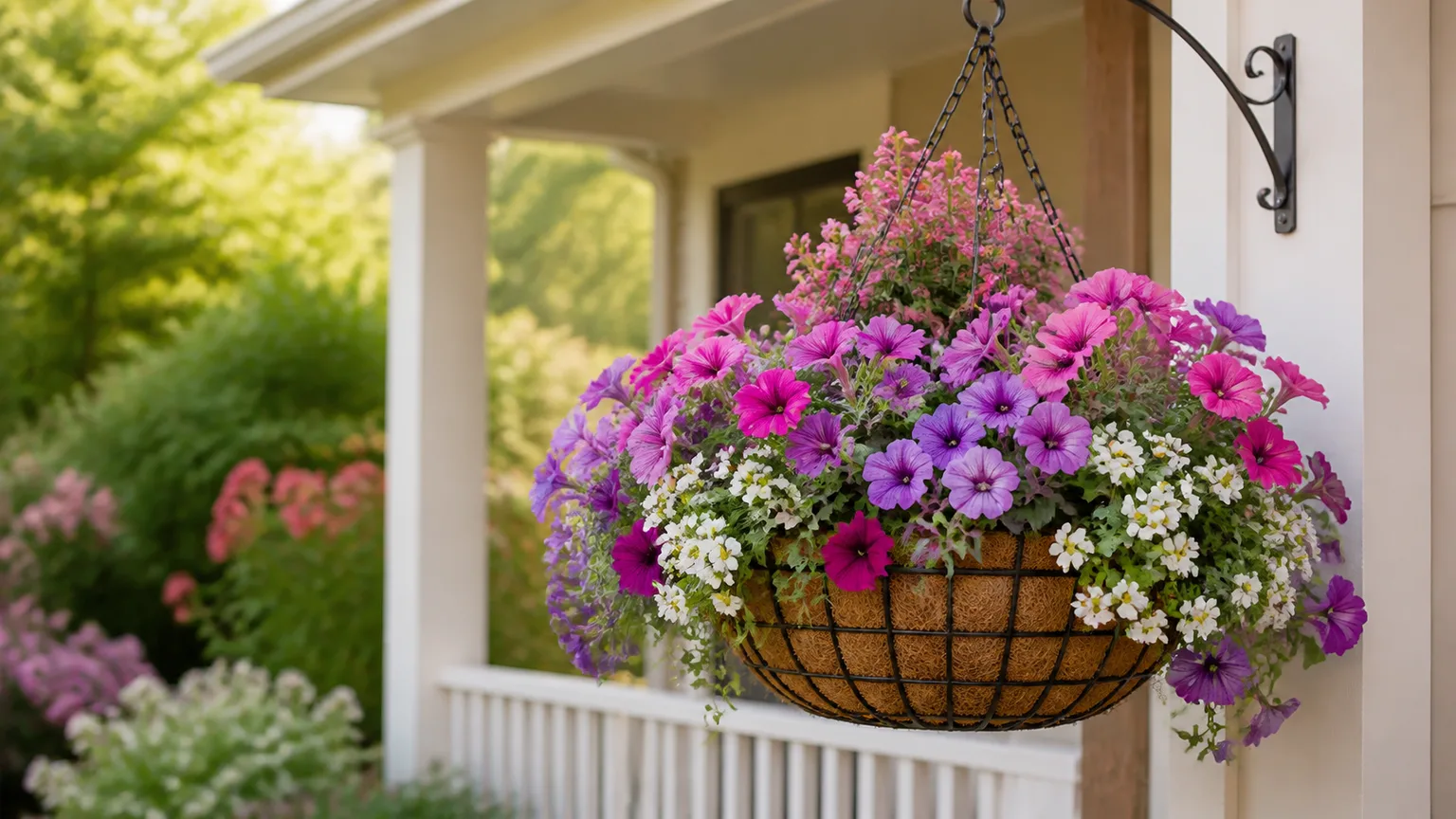
The best hanging basket is not necessarily the one with the most plants. It is the one whose flowers suit the light and heat at the place you will hang it, share similar watering needs, and have enough room to trail or mound without smothering each other. A basket on a west-facing porch can bake in late-afternoon sun; one under a deep roof may get bright shade all day but almost no direct light.
Use the picks below as a menu, not a shopping list. Choose a few compatible plants for your basket’s conditions, or grow one vigorous spiller on its own. Some entries are grown mainly for their foliage rather than their flowers; they earn a place because a strong foliage accent can make a flowering basket look fuller and more balanced.
Quick picks for common basket conditions
| Basket condition | Reliable choices to start with | Watch for |
|---|---|---|
| Hot, sunny, exposed | Angelonia, calibrachoa, scaevola, portulaca, verbena, annual vinca | All baskets still need water; small coir baskets can dry fast |
| Morning sun, afternoon shade | Fuchsia, New Guinea impatiens, tuberous begonia, torenia | Avoid placing tender plants outside before nights are warm |
| Cool spring or fall | Pansy, lobelia, nemesia, snapdragon, sweet alyssum | Heat shortens the display for cool-season flowers |
| Fragrant or edible accent | Heliotrope for scent; nasturtium for edible leaves and flowers | Confirm plant identity and pesticide history before eating |
| Long cascading stems | Trailing petunia, ivy geranium, bacopa, sweet potato vine, black-eyed Susan vine | A vine needs room and sometimes support; check pet and local invasive-plant concerns |
Choose for the basket’s actual site
Judge the light where the basket will hang, not where a plant looks attractive at the nursery. A porch roof, tree canopy, neighboring building, or reflective wall can shift a site from sunny to shady or intensify afternoon heat. As a useful starting point, a spot with roughly six hours of direct light suits many sun flowers; part shade gets less direct sun or receives morning sun followed by afternoon shade. The strength and timing of that light matter as much as the daily total.
Next, consider heat and wind. An exposed basket loses moisture from its sides, and a small hanging pot contains little soil to buffer hot air. Iowa State University Extension and Outreach notes that drier-soil-adapted plants tend to fare better in sunny or windy basket locations, while shade-loving plants can suffer in full sun and sun lovers may bloom poorly in shade (Iowa State’s basket guide). If you can’t water often, choose a larger plastic basket with drainage and a heat-tolerant plant rather than a small, unlined wire basket packed with thirsty flowers.
Finally, group by moisture and growth rate. A petunia and bacopa can both be excellent basket plants, but a drought-tolerant portulaca should not share a constantly moist mix with a plant that wilts as soon as the surface dries. A fast, vigorous sweet potato vine can shade slower bloomers. Compatibility is more important than the familiar “thriller, filler, spiller” formula: the formula helps with shape, but it does not make mismatched plants thrive together.
Best flowers for sunny hanging baskets
Sun baskets give many flowering annuals their best bloom, but “full sun” is not the same as tolerating reflected heat beside a hot wall. If the basket gets relentless afternoon sun, start with the heat-adapted selections here and use a deeper container. For a breezier or milder site, petunias, geraniums, and other classic bloomers give you a wider color range.
Dependable bloomers for summer heat
1. Angelonia. Upright flower spikes add height without making a basket feel heavy, and the narrow foliage keeps the center from crowding trailing plants. Angelonia handles summer heat well and suits a bright, open spot. Use one or two plants as the center accent in a medium basket, then surround them with a compatible spiller such as verbena. It is a better choice for a sunny basket than a deeply shaded porch.
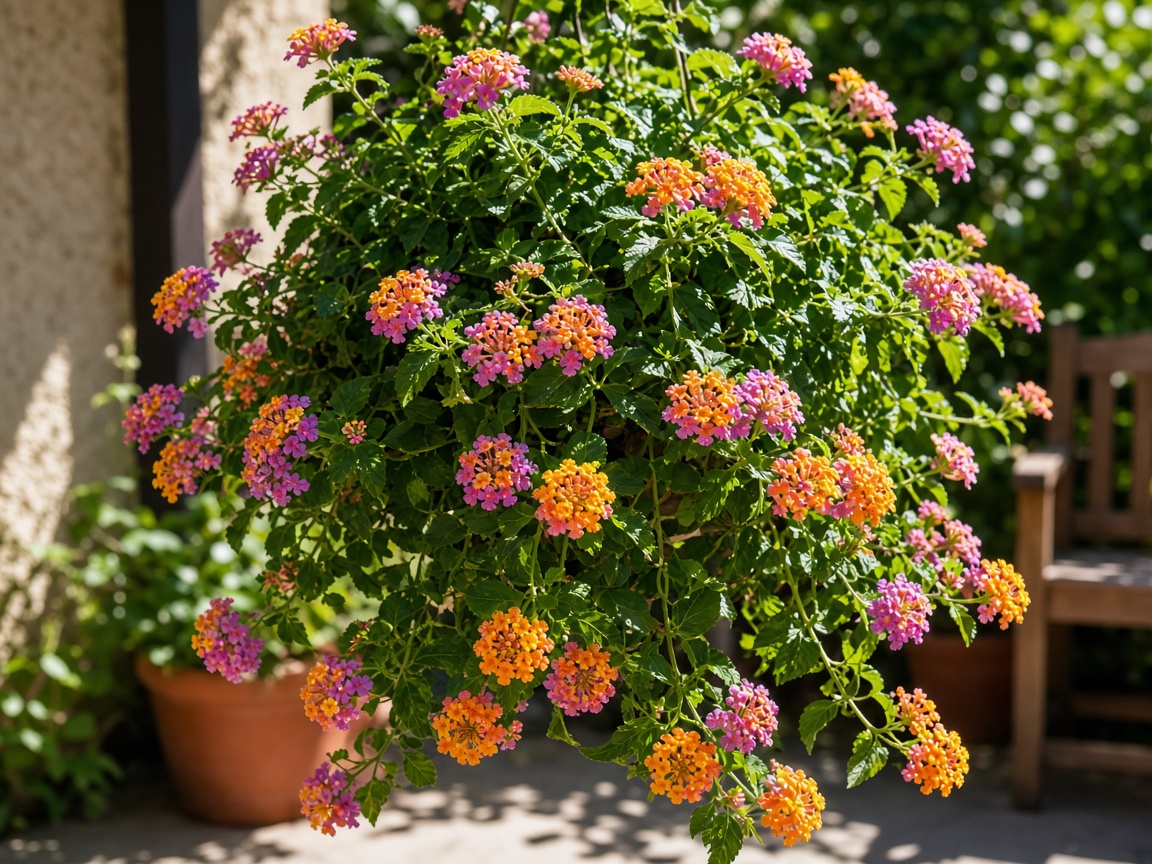
2. Lantana. Compact or trailing lantana produces long-lasting clusters of small flowers and copes well with heat and dry spells after it is established. Choose a named basket-size cultivar rather than a vigorous shrub type, and trim long stems before they become woody. Lantana is toxic to cats and dogs according to the ASPCA’s plant guide. In Florida, the UF/IFAS Assessment treats common nonnative lantana as invasive and recommends avoiding it; check local guidance and use a locally approved sterile or native alternative where appropriate (UF/IFAS lantana guidance).
3. Calibrachoa (million bells). Its small, petunia-like blooms cover a cascading plant, often without the sticky spent flowers that make petunias tedious to groom. Give it sun, free-draining potting mix, and regular moisture; “heat tolerant” does not mean it should dry hard in a shallow basket. It is particularly useful along the rim or planted alone when you want a curtain of color. The University of Illinois Extension profile lists full sun and moist, well-drained soil.
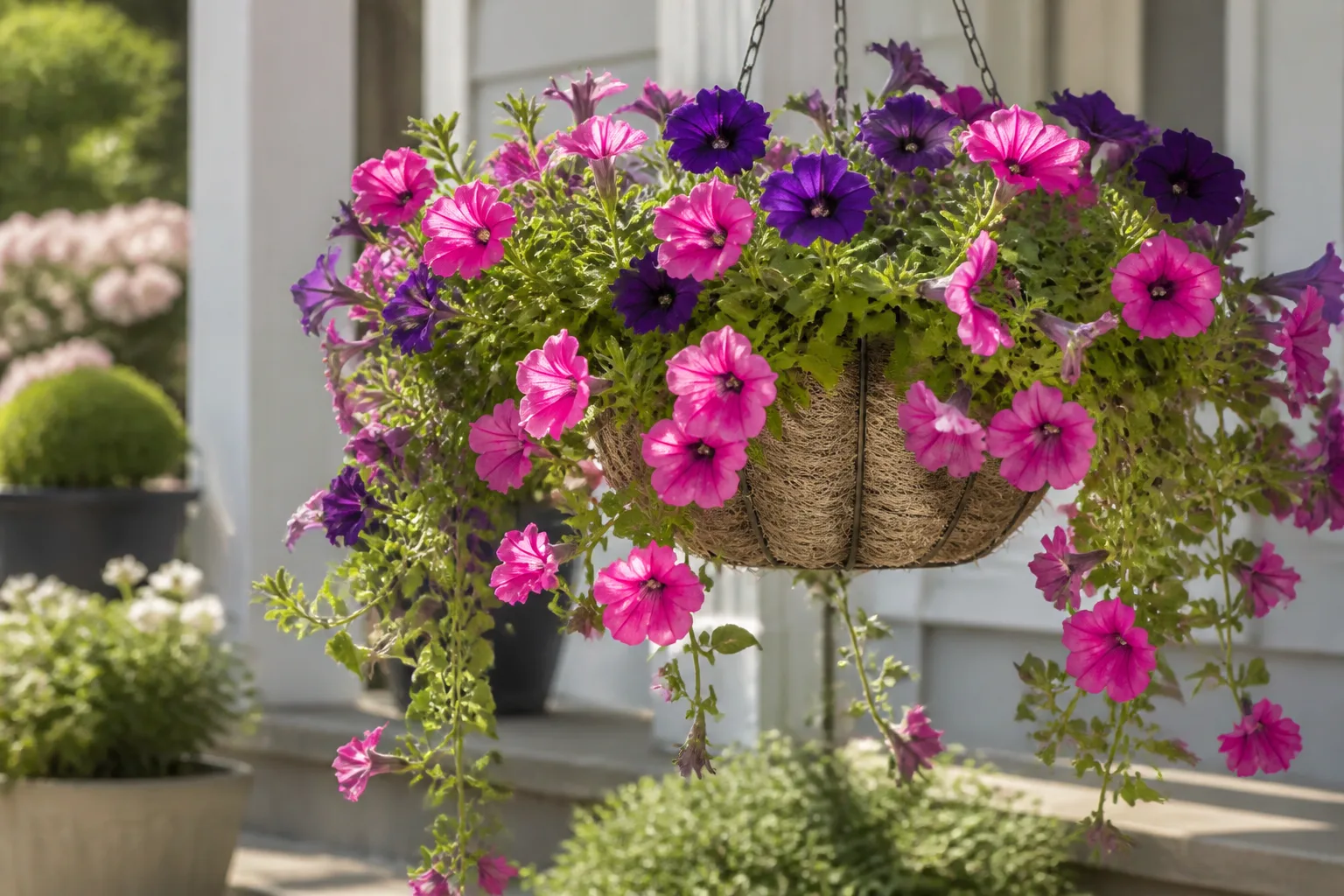
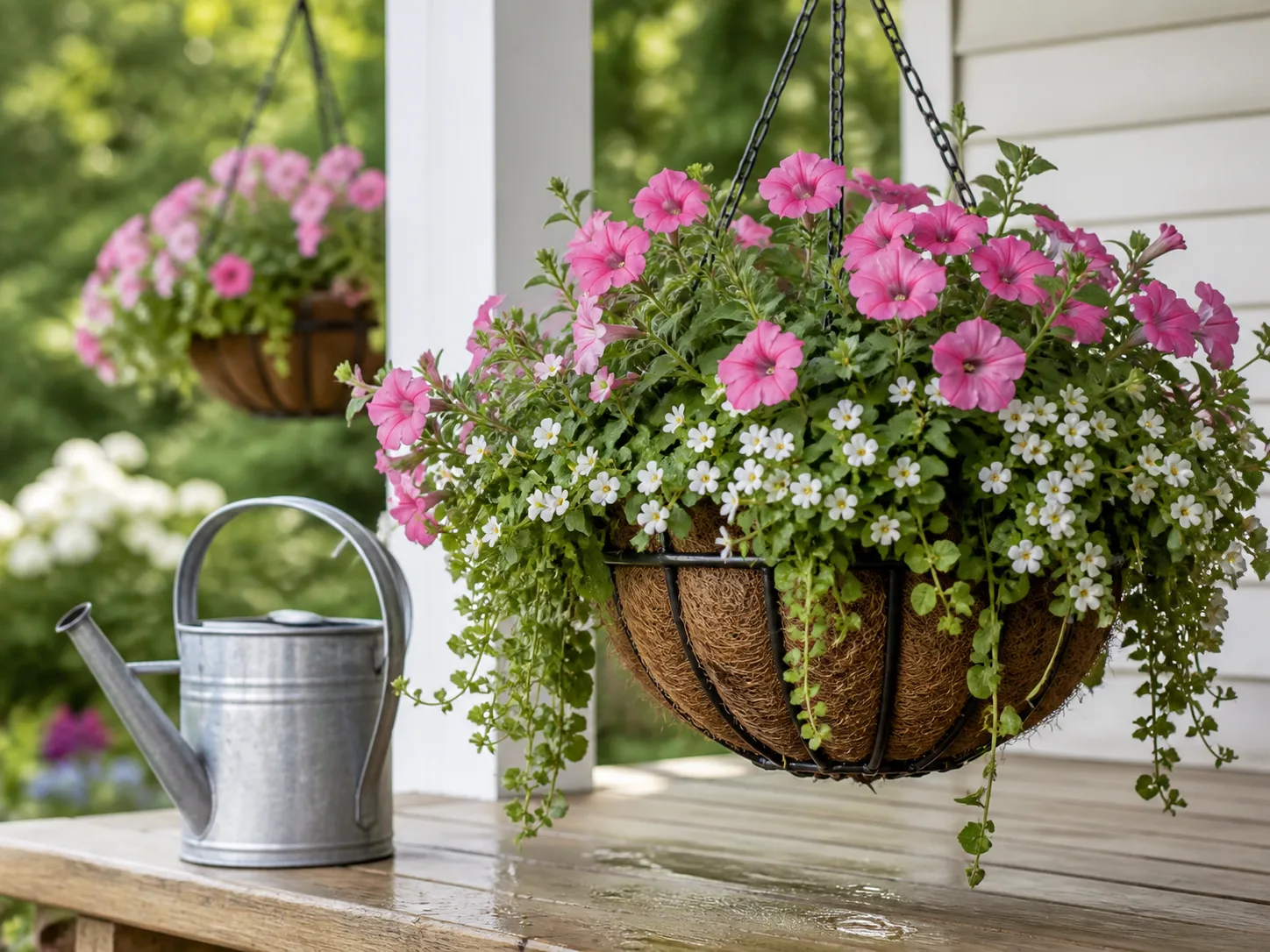
4. Petunia. Petunias remain one of the most versatile spillers because their flower size, color, and growth habit vary so widely. Select a trailing or spreading variety for the basket edge; a compact mound will not cascade as much. Large double blooms can look spectacular but may need more grooming and can be less tidy after heavy rain. If stems stretch or the basket thins by midsummer, trim them back and feed according to the label. BBC Gardeners’ World describes petunias as a core basket plant and highlights trailing forms such as the Tumbelina series (hanging-basket plant guide).
5. Verbena. Trailing verbena throws clusters of smaller blooms over the rim and is a useful partner for petunias or calibrachoa in a sunny basket. Choose a spreading basket cultivar rather than a tall bedding type. It flowers best with good light and air movement; avoid squeezing it between dense plants or letting old stems become a tangled mat. Shear a tired, leggy plant lightly to encourage fresh branching, then water it well as new growth develops.
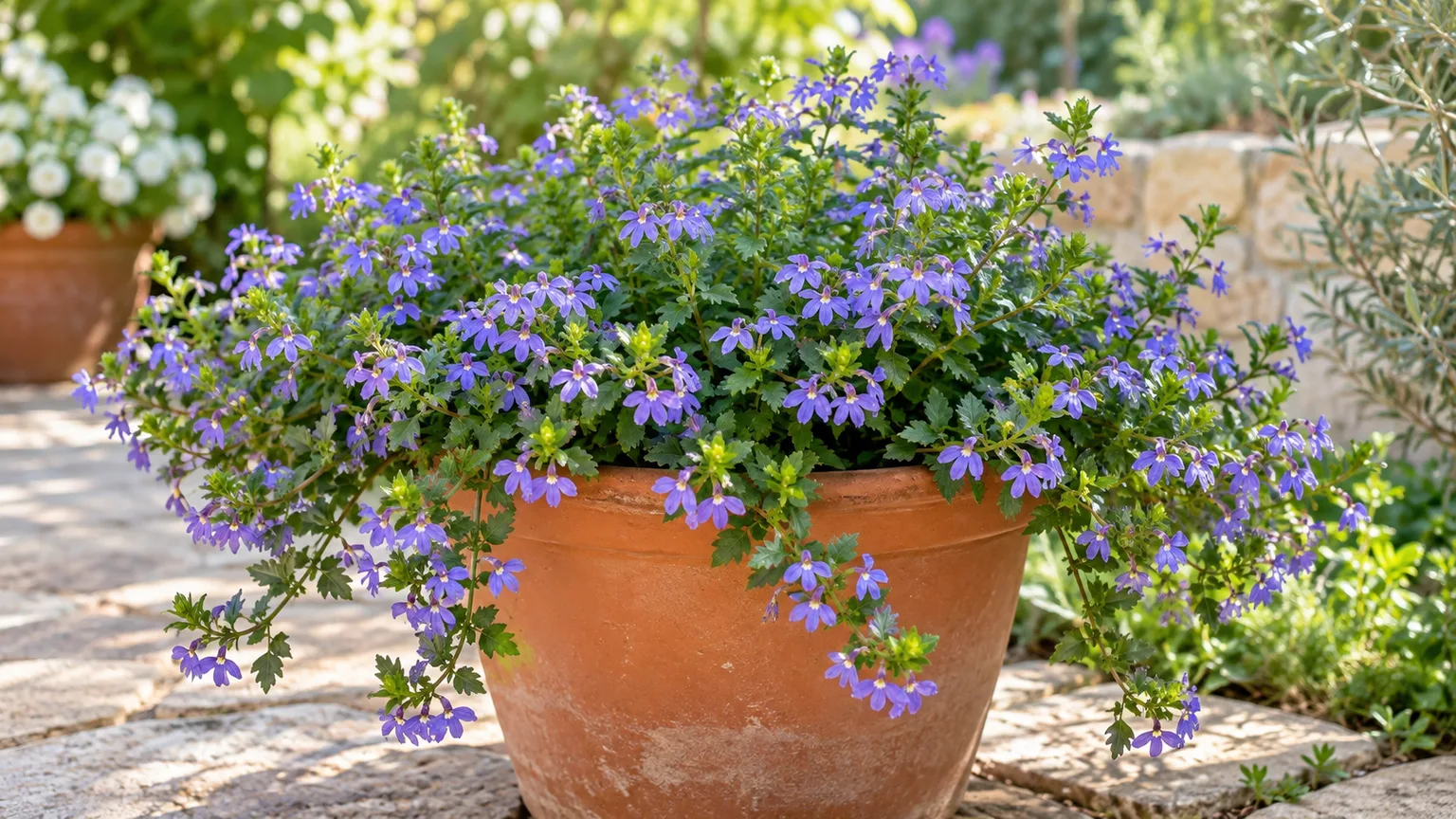
6. Scaevola (fan flower). The asymmetrical, fan-shaped flowers create a distinctive spill and usually keep coming without routine deadheading. Scaevola is a strong option for hot, bright baskets and can handle some light shade, although bloom is usually heavier with more sun. It pairs well with calibrachoa or angelonia because it adds a different flower shape and trails cleanly. Give the basket drainage and do not crowd the plant with an upright that will shade its stems.
7. Portulaca (moss rose). Choose portulaca for the hottest, sunniest position and the lowest-water end of this list. Its succulent leaves store moisture, and its flowers open most fully in bright sunlight; blooms may close when the sky is dull or the basket sits in shade. Use a sharply draining mix, and do not pair it with thirsty impatiens or bacopa. This is a sensible single-species basket for a sunny railing where other plants dry too quickly.
8. Annual vinca (Catharanthus roseus). This heat-tolerant, mounding flower gives a basket steady color in hot weather and is often easier to keep presentable than a large-flowered petunia. It is usually grown as a warm-season annual in cooler regions. Choose a compact cultivar for the top of the basket, then add a modest trailer if you want more movement. Do not keep its roots soggy; drainage matters even when the weather is humid.
9. Ivy geranium (Pelargonium peltatum). Unlike upright zonal geraniums, ivy geranium has flexible stems that cascade, making it a classic choice for sunny window baskets and balconies. It flowers best with bright light, drainage, and enough space around its foliage for air to circulate. In very hot, humid weather it may pause or look tired, so a location with morning sun and some late-day relief can be more reliable than a scorching wall.
10. African daisy (Osteospermum). The daisy-like flowers add a crisp, open face to a sunny spring or early-summer basket. Use compact, mounding cultivars near the center or rim rather than expecting every variety to trail. Many African daisies slow their flowering during hot spells, so treat them as a cool-to-mild-weather component, not a guaranteed all-summer choice in the hottest regions. They can resume growth when temperatures ease if the plant remains healthy.
11. Texas primrose (Calylophus). A compact selection such as ‘Ladybird’ brings yellow flowers and a looser, spreading habit to a hot-sun basket. It is a useful alternative when you want something less conventional than petunia and are willing to let the plant’s natural form show. Give it drainage and a bright position; in a small basket, check moisture before the soil becomes bone dry, especially while roots are establishing.
12. Sweet alyssum. Fine stems spill over the edge with many small, honey-scented flowers, making alyssum a good softening plant beside larger blooms. It performs best in mild weather and may thin or become shaggy during heat. Trim it back when it gets leggy rather than trying to keep every old stem, and let new growth fill in. A small amount around the rim can add fragrance without overwhelming the other plants.
13. Heliotrope. Heliotrope earns space for its vanilla-like fragrance and dense clusters of purple or white flowers. It works as a compact centerpiece in a generous basket or a stand-alone plant, especially where you can enjoy its scent at close range. It prefers warmth and bright light but can struggle in oppressive heat; afternoon shade in a hot climate helps. Keep the mix evenly moist but not waterlogged, and do not mistake its upright habit for a trailing one.
14. Nasturtium. Compact and trailing nasturtiums offer bright flowers, round leaves, and a peppery flavor in both the flowers and foliage. They are often more floriferous in sun and less lush when overfed; excess nitrogen can favor leaves over blooms. Let stems spill freely or guide a climbing type around the hanger. The UF/IFAS nasturtium guide confirms that the leaves and flowers can be eaten and advises avoiding pesticides on or near plants grown for food. Nursery ornamentals may have been treated, so ask how a plant was grown before harvesting it.
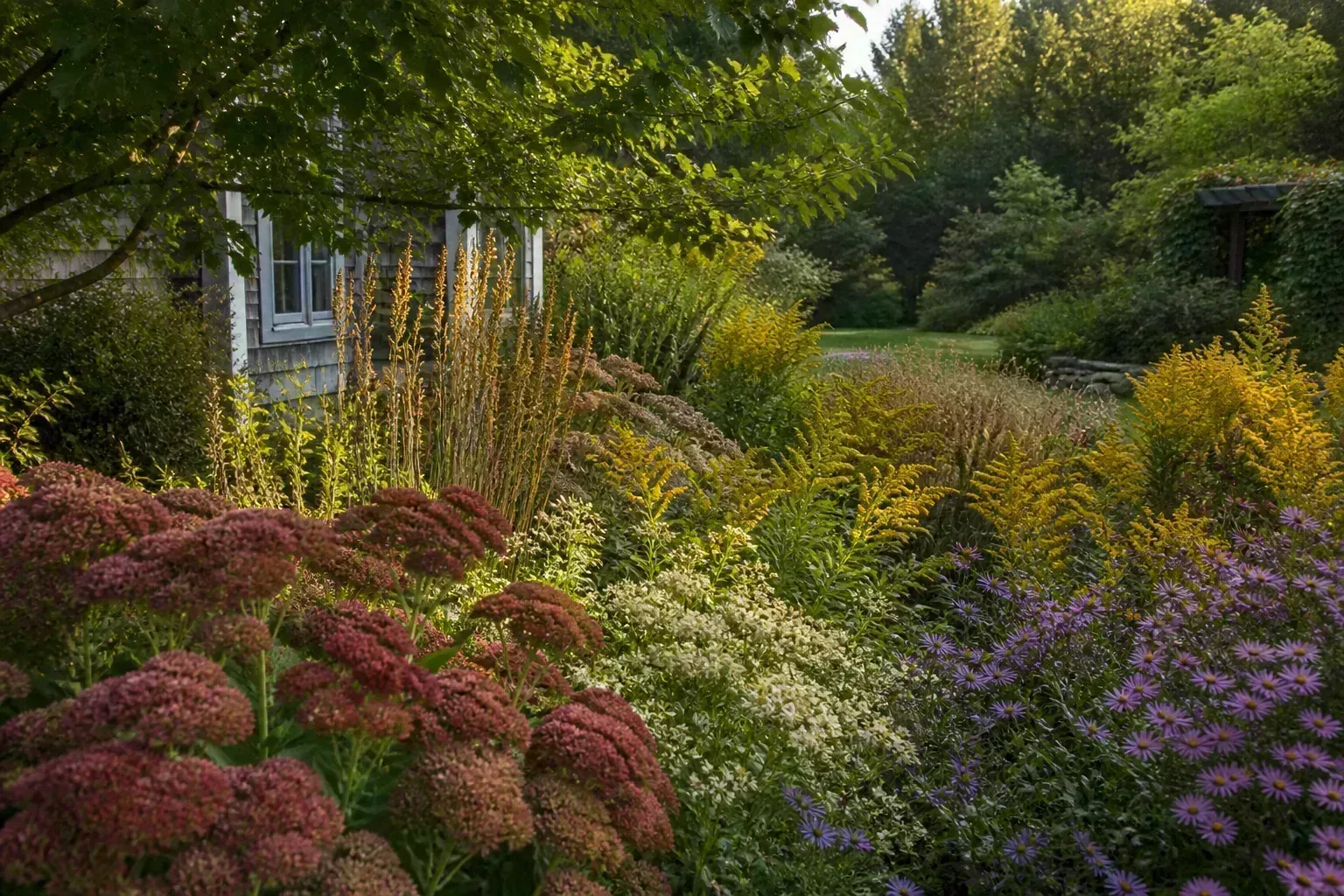
15. Lotus vine (Lotus berthelotii). Its narrow, silvery foliage and curved orange-red flowers give a sunny basket a fine-textured, unusual look. It needs strong light and a freely draining mix, but it should not be treated as a desert succulent that never needs water. Use it as a featured trailing plant or combine it with similarly sun-loving, moderate-water companions. Protect it from frost; in many climates it is grown as an annual or overwintered indoors.
16. Sweet potato vine. This is primarily a foliage spiller, with chartreuse, bronze, purple, or variegated leaves rather than showy flowers. One plant can fill a basket quickly, so select a compact cultivar and prune it before it covers neighboring blooms. It works in sun or part shade depending on cultivar and climate, but its vigorous growth and thirst can make it a poor partner for small, slower-growing flowers. Treat it as a foliage accent, not one of the basket’s main bloomers.
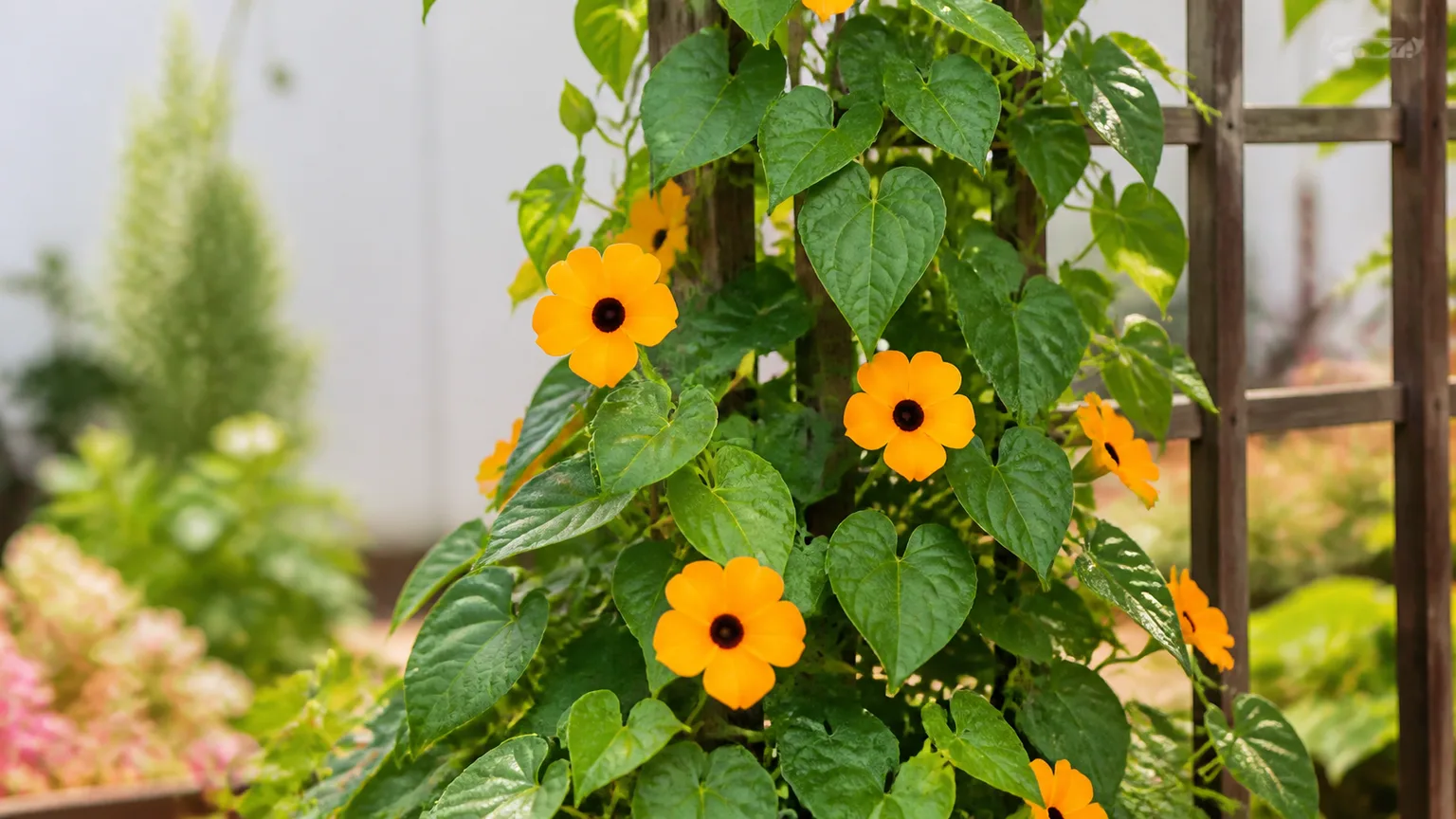
17. Black-eyed Susan vine (Thunbergia alata). This twining vine carries bright, dark-centered flowers and looks best when its stems can drape or wrap around a support. Train it around the basket’s chain or a small hoop instead of letting long stems tangle into nearby baskets. It appreciates warmth, sun to light shade, and regular water during active growth. Identify every vine by its botanical name before placing it where pets can reach fallen leaves or seeds; common names can refer to unrelated plants.
18. Diamond Frost euphorbia. This airy cultivar produces clouds of tiny white bracts that make a useful filler around bolder flowers. It tolerates heat and sun, but its visual effect is texture and lightness rather than a large, colorful bloom. Give it a well-drained mix and room to branch; one centered plant may be enough for a medium basket. Like other euphorbias, its milky sap can irritate skin and eyes; Poison Control recommends protective clothing and eye protection when working closely with spurges (sap safety guidance). Wear gloves when cutting stems and keep trimmings away from children and pets.
Sun, part-sun, and cool-season choices
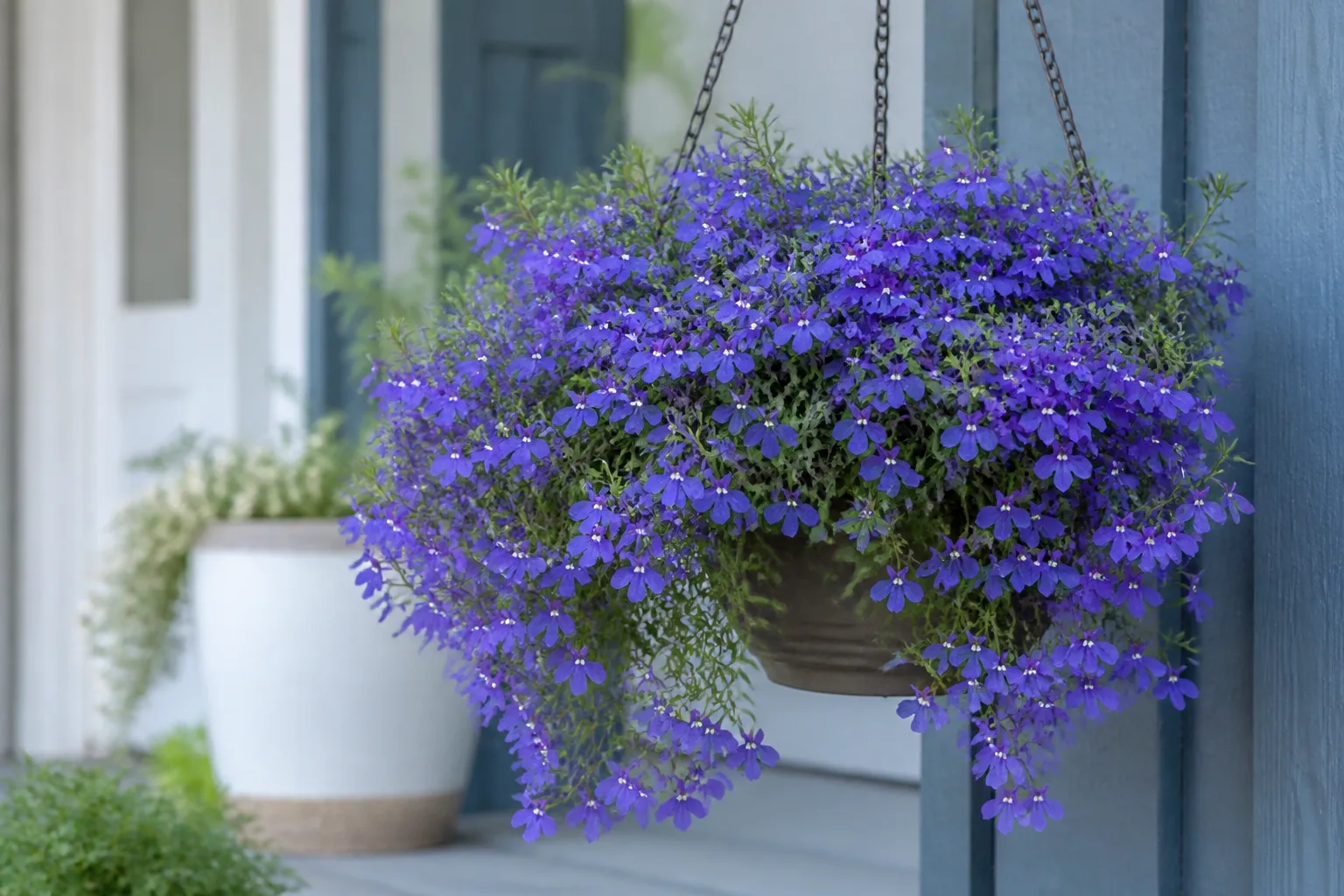
19. Lobelia. Trailing lobelia is prized for saturated blue, violet, or white flowers, but it is most dependable in cool spring weather. It wants steady moisture and can falter when hot summer nights arrive. Plant it in its own early-season basket or pair it with other cool-weather plants, then replace it with a heat-tolerant spiller if the display fades. Forcing a heat-stressed lobelia to recover in midsummer often takes more work than making a seasonal swap.
20. Pansy. Pansies bring clear faces and strong color to a spring or fall basket. Choose a spreading or trailing series if you want the stems to soften the rim; standard bedding pansies form a mound. They tolerate cool weather better than summer heat, and blooming often slows as temperatures climb. Keep the root ball evenly moist, remove spent flowers if they begin setting seed, and switch to warm-season plants when nights and days turn hot.
21. Nemesia. Nemesia gives a dense, colorful display with a slightly trailing habit and can add fragrance, depending on cultivar. It is most useful in mild spring weather or climates with cool summers, where heat-sensitive types can keep flowering. Look for compact basket-ready plants and protect them from hot afternoon exposure. If the plant becomes straggly after its first flush, a light trim and consistent moisture may prompt fresh growth, but extreme heat is a sign to change plants.
22. Snapdragon. Dwarf snapdragons can add upright flower spikes to a basket, while trailing cultivars are better suited to cascade over the rim. Choose the growth habit on the label rather than assuming all snapdragons will trail. They prefer cooler weather and bright light; heat can shorten the show. Deadhead or cut spent spikes to keep the basket tidy and encourage side shoots, then replace the plant once summer temperatures become consistently high.
Best flowers for shade and part shade
A shady basket can flower well, but “shade” is not the same as a dark corner with no daylight. Many flowering plants need bright indirect light or a few hours of gentle morning sun. If the basket receives no direct sun, choose plants sold for shade and position them where the open sky is visible. Water regularly, but do not compensate for low light with fertilizer; too much feeding can create soft leaves without fixing weak bloom.
Shade bloomers that like steady moisture
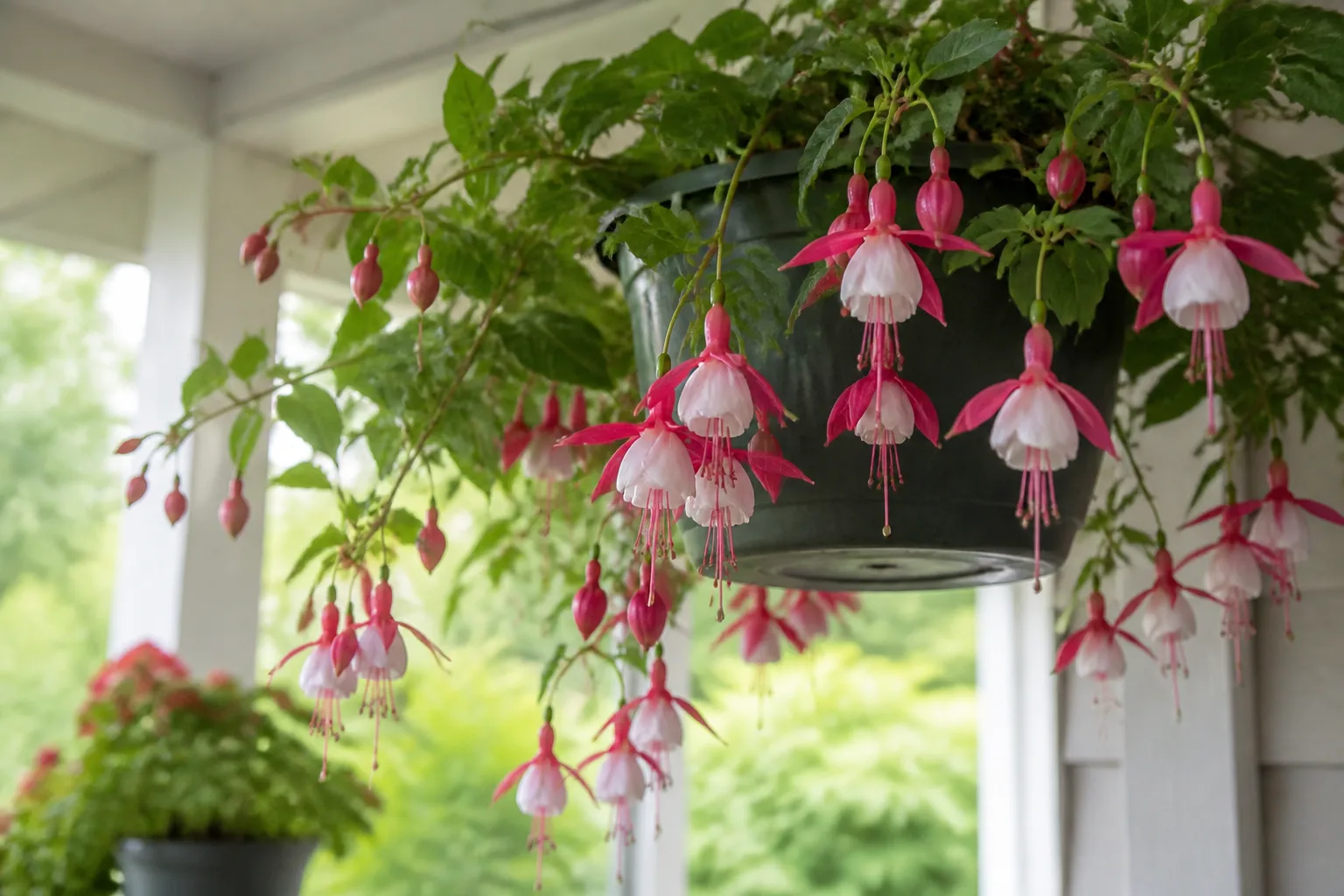
23. Fuchsia. A trailing fuchsia is one of the most recognizable shade-basket plants, with pendant, often two-tone flowers that hang below the foliage. Choose a basket or trailing cultivar; upright fuchsias will not produce the same cascading outline. Give it bright shade or gentle morning sun, shelter from hot afternoon rays, and steady moisture. In cool-summer regions it can be spectacular; in very hot climates, even a shade position may not prevent heat stress.
24. Tuberous or trailing begonia. “Begonia” covers a large group, so choose the form for your basket: tuberous begonias have large, showy blooms, while boliviensis and other trailing types spill naturally. Most prefer filtered light or part shade, rich but draining mix, and consistent moisture. They are not interchangeable with every foliage begonia at the garden center. Protect tender types from cold and avoid waterlogged soil, which can rot roots and tubers.
25. New Guinea impatiens. New Guinea impatiens have larger flowers and sturdier foliage than many common bedding impatiens, and compact cultivars can brighten a part-shade basket. They appreciate regular water and protection from the hottest afternoon sun, though sun-tolerant selections exist. Check the plant tag for the exact exposure rather than assuming every impatiens is a full-shade plant. A single cultivar can make a clean, colorful basket without a separate filler.
26. Browallia. Also called bush violet, browallia offers vivid blue, purple, or white flowers on a soft, mounding plant. It works well in bright shade or part shade and can spill slightly over the edge of a basket. Use it where petunias would stretch for light, and keep the mix evenly moist. In cold climates it is treated as an annual; its tropical origin means a late cold snap can damage young plants.
27. Wishbone flower (torenia). Torenia is a reliable choice for a basket that gets shade or filtered light, with small two-tone blooms and a trailing edge. It appreciates moisture and warmth but generally avoids the brittle, scorched look that some shade flowers develop under strong midday sun. Use it alone for a simple display or pair it with a shade begonia. In hot, dry conditions, a deeper plastic pot is easier to keep evenly moist than an exposed moss-lined basket.
28. Plectranthus ‘Mona Lavender’. This plant provides deep green leaves and upright lavender-purple flower spikes, making it a useful vertical accent in bright shade or morning sun. Its habit is more mounding than trailing, so leave room for it in the center and use a softer spiller around the edge. It is a tender perennial, not a frost-proof basket plant. Move it indoors before cold weather if you want to try to keep it from year to year.
29. Spiderwort (Tradescantia zebrina). Spiderwort’s striped purple-and-silver leaves do most of the visual work; the three-petaled flowers are smaller and usually short-lived. Use it as a foliage spiller in bright shade or gentle morning sun, especially when a basket needs color between bloom cycles. Pinch stems to encourage branching and keep it from becoming sparse. It grows quickly, so give it a basket of its own or trim it before it crowds slower flowers.
30. Candytuft. Compact candytuft forms a low mound covered in spring flowers, usually white, though pink and other colors are available. It is not the longest trailer on this list; choose a compact cultivar and place it near the edge where its flowers can be seen. Good drainage and sun to light shade help it stay tidy. Because it is more perennial and shrubby than a bedding annual, confirm its mature size before combining it with fast-filling annuals.
Best cascading flowers and vines
A hanging basket does not need every plant to spill. One or two well-chosen trailers can frame the container while upright flowers provide height and fuller leaves conceal the liner. A basket hung high and seen from below can use mostly cascading varieties; a basket near eye level often looks better with flowers across the top as well as the sides. Illinois Extension lists petunias, bacopa, scaevola, sweet potato vine, verbena, calibrachoa, and other trailing plants as options for this use (Illinois Extension’s hanging-basket guidance).
Flowering trailers and foliage accents
31. Bacopa. Bacopa trails in fine green stems dotted with small flowers, usually white, pink, or blue. It is a graceful filler for a basket that receives sun or part shade, but it needs reliable moisture and may drop flowers after a hard dry-out. It is self-cleaning, so it does not need routine deadheading. Pair it with another plant that likes similar moisture, such as a shade fuchsia or a moderately watered petunia, rather than a drought-adapted portulaca. BBC Gardeners’ World notes bacopa’s long flowering and trailing habit (bacopa growing guide).
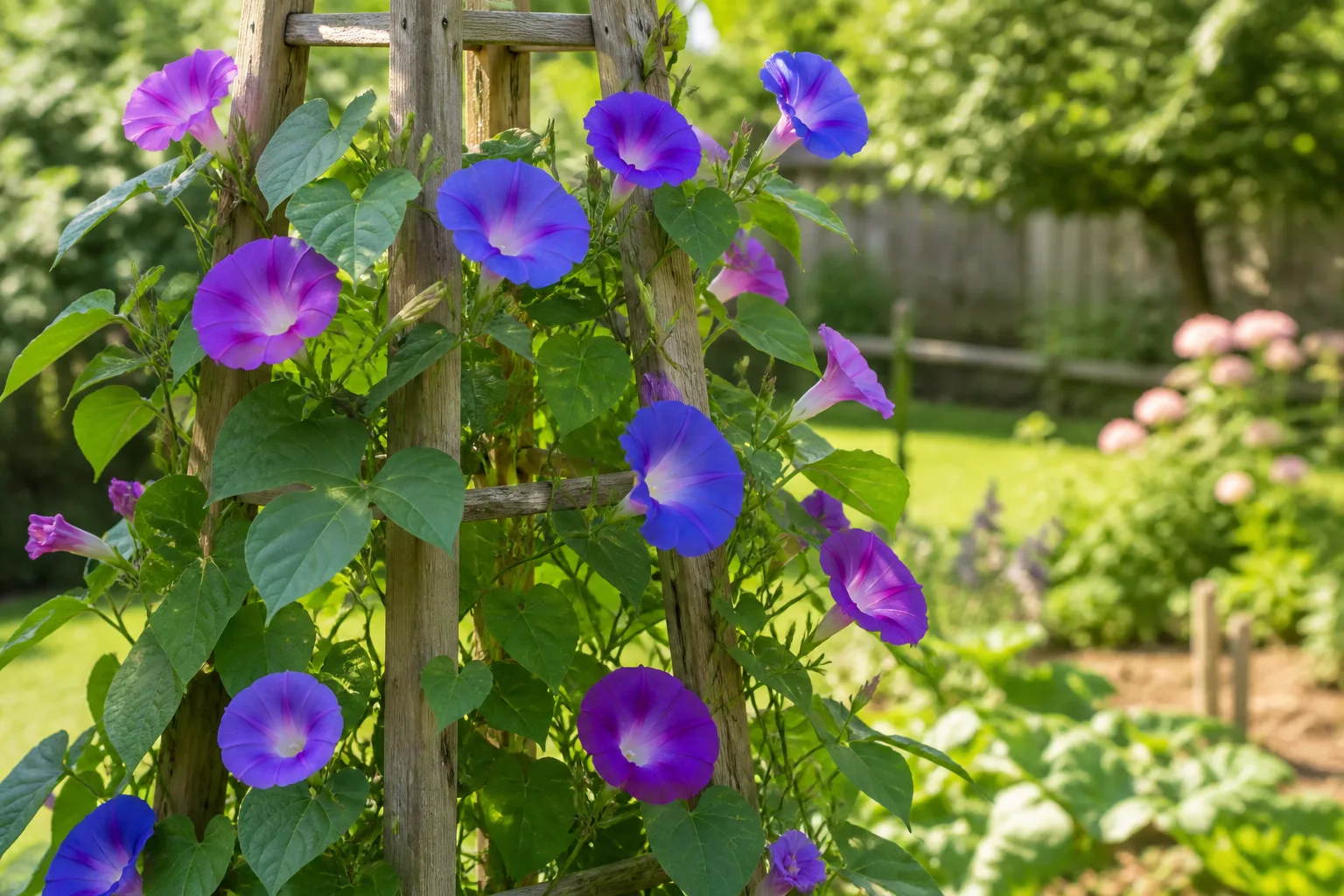
32. Morning glory (Ipomoea purpurea). Morning glory can trail or twine from a basket and produces large, trumpet-shaped flowers that open in sun. It needs a support if you want a deliberate shape; otherwise, the stems can become a loose tangle. It is a vigorous annual vine, so keep it separate from compact basket flowers. Morning glory is toxic to dogs and cats according to the ASPCA plant list; hanging it overhead does not prevent dropped leaves or seeds from reaching pets.
This list includes two plants grown largely for foliage—sweet potato vine and Tradescantia—and several plants that form a mound rather than a true cascade. That distinction matters when buying: if you want flowers to drape below the basket, look for “trailing,” “spreading,” “cascade,” or “basket” on the label. A compact upright flower can still be valuable as the centerpiece, but it will not replace a spiller.
Combine plants that can share a basket
Start with the site, then select plants that like similar moisture and grow at compatible speeds. A basket with a heat-loving center plant and a water-hungry trailer can work only if you are prepared to manage their different needs; otherwise, the faster-growing or thirstier one will dictate care for the whole container. The recipe below uses plants with overlapping conditions and leaves room for cultivar differences.
Four combinations matched to exposure
- Hot, sunny basket: Angelonia in the center with calibrachoa and scaevola around the rim. Use a roomy pot, let excess water drain, and check it daily during heat waves.
- Bright shade basket: A trailing fuchsia with torenia and bacopa. Keep it protected from late-day heat and do not let the mix dry completely.
- Early spring basket: Pansies, lobelia, and sweet alyssum. These cooler-weather plants can share a moist, bright site; plan to replace them when sustained heat arrives.
- Edible accent basket: Nasturtium alone or with another food-safe plant that has the same sun and watering needs. Do not use ornamental pesticide-treated flowers for food.
These are starting recipes, not fixed formulas. A named cultivar may be more vigorous or more sun-tolerant than the species generally described. Read the nursery tag, leave room for each plant’s mature spread, and choose the simpler single-species basket if your site or watering schedule is difficult.
Planting density and timing
Plant after the last frost for tender warm-season flowers, but do not rush because a garden center is selling full baskets. Cold soil and chilly nights slow tropical annuals and tender perennials; they may sit without growing until conditions improve. Cool-season pansies, lobelia, and nemesia can go out earlier when the weather is mild, but protect them from hard freezes if they are already in a small container.
Avoid the impulse to squeeze every available cell into the basket. Iowa State Extension’s general starting point is three to five plants in a 12- to 14-inch basket and five to seven in a 16- to 18-inch basket, with fewer needed for vigorous varieties (Iowa State planting guidance). Check the mature spread and whether you intend to plant through the liner sides. Overplanting looks lush for a week, then creates crowded roots, poor airflow, and a basket that needs water constantly.
Use a lightweight, well-drained potting mix rather than garden soil, and make sure the basket has drainage holes. A coir or moss liner is attractive and lets stems trail or be planted through the sides, but it loses water faster than a solid plastic pot. Pre-moisten dry potting mix, fill close to the rim while leaving a shallow watering lip, position the plants at the same depth they were growing in their nursery pots, and soak the basket until water drains freely.
Keep hanging baskets blooming
A hanging basket exposes roots and potting mix to moving air on all sides, so it can dry faster than a container sitting on the ground. Expect to check it often, especially in a small wire basket, full sun, or windy spot. If daily watering is not realistic, move the basket to a less exposed position or choose a larger reservoir-style pot; the plant list cannot overcome an unsuitable watering routine.
Water by checking the root zone
Check the potting mix with a finger rather than relying on a calendar. If the top layer is dry and the basket feels light, water slowly over the whole surface until water runs from the drainage holes. A peat-based mix that has dried hard may repel water; apply water in two passes a few minutes apart, or lower the basket into a tub briefly so the root ball can re-wet, then let it drain before rehanging.
On hot, sunny, or windy days, a basket may need water once or more than once. UConn Extension notes that large container plants and hanging-basket materials such as fuchsia can need watering more than twice a day in hot or windy weather (UConn container-gardening guide). Treat that as a signal to check the basket, not a fixed schedule for every plant. Persistent wetness, a sour smell, or wilting while the mix is still damp points to drainage or root trouble rather than a need for more water.
Feed, trim, and deadhead selectively
Frequent watering carries nutrients out of a small basket, so use a controlled-release fertilizer in the mix or a diluted liquid feed according to the product label and plant needs. Do not double-dose a pre-fertilized potting mix. Excess fertilizer can produce abundant leaves with fewer flowers or salt buildup around roots. Extension recommendations vary by mix and plant, so follow the label rather than copying a weekly feeding schedule from another climate.
Deadhead plants that retain spent flowers or begin setting seed, but do not waste time pinching every self-cleaning variety. Illinois Extension explains that many annuals, including some begonias, petunias, impatiens, and vinca, drop old flowers naturally; pinching a leggy petunia can restore a fuller shape (Illinois annual-care advice). Trim a few long shoots at a time, not the whole basket at once, and remove any stem that is shading its neighbors or tangling around the hanger.
Fix common basket problems and consider pet safety
If flowers fade, check light and temperature before adding fertilizer. Lobelia that stops blooming in midsummer may be reacting to heat; a petunia in deep shade may be stretching for sun; portulaca in shade may keep its buds closed. Move a basket if possible, or replace a seasonally mismatched plant. Changing a plant is often more effective than repeated feeding or pruning.
If the basket wilts in the afternoon, feel the mix before watering. Dry soil suggests a thirsty root ball; damp soil with limp leaves can mean heat stress, poor drainage, or root damage. Make sure water can escape, remove dead leaves, and reduce exposure during the hottest part of the day while the plant recovers. A basket that repeatedly dries out within hours needs a larger container, a less windy location, or a different plant choice.
For households with pets, identify every plant by its botanical name and check it against an authoritative toxic-plant resource before hanging it within reach. The ASPCA identifies lantana and morning glory as toxic to cats and dogs. A basket can still shed leaves, flowers, or seeds, so height alone is not a complete safety measure. If a pet may have eaten a plant, contact a veterinarian or the ASPCA Animal Poison Control Center promptly rather than waiting for symptoms.
Conclusion
Choose flowers for hanging baskets by matching the plant to the exact light, heat, and watering conditions—not by color alone. For blazing sun, start with calibrachoa, scaevola, portulaca, angelonia, or a compact verbena; for bright shade, try trailing fuchsia, begonias, torenia, or New Guinea impatiens; for spring, enjoy pansies, lobelia, nemesia, and alyssum before switching when the weather warms. Use trailing varieties where you want a cascade, pair plants with compatible moisture needs, and leave enough soil volume to keep roots from drying too quickly. A well-matched basket needs routine checks, but it rewards you with a longer, fuller display and fewer avoidable failures.



