Morning Glory Care Guide: Sun, Water, Soil, and Vines
Ipomoea spp. (ornamental climbing species)
Grow ornamental morning glory vines with the right sun, watering, soil, trellis, seed-starting, and pet-safety guidance for common Ipomoea types.
Morning Glory Care Guide
Start with wateringThe most common care mistake for Morning GloryWatering guide →Morning Glory care essentials
Light
Full sun, ideally at least 6 hours daily, for the strongest flowering
Water
Keep newly sown seed and young vines evenly moist, but never waterlogged. Once established, water when the upper soil begins to dry and rain has not supplied enough moisture. A roughly 1-inch weekly total is a useful starting point during active growth, not a fixed schedule; containers and hot, dry weather need more frequent checks.
Soil
Use ordinary, moderately fertile soil that holds some moisture but drains freely. Morning glory tolerates a range of soil types; very rich soil can drive leafy growth at the expense of flowers.
Humidity
Temperature
Fertilizer
About Morning Glory
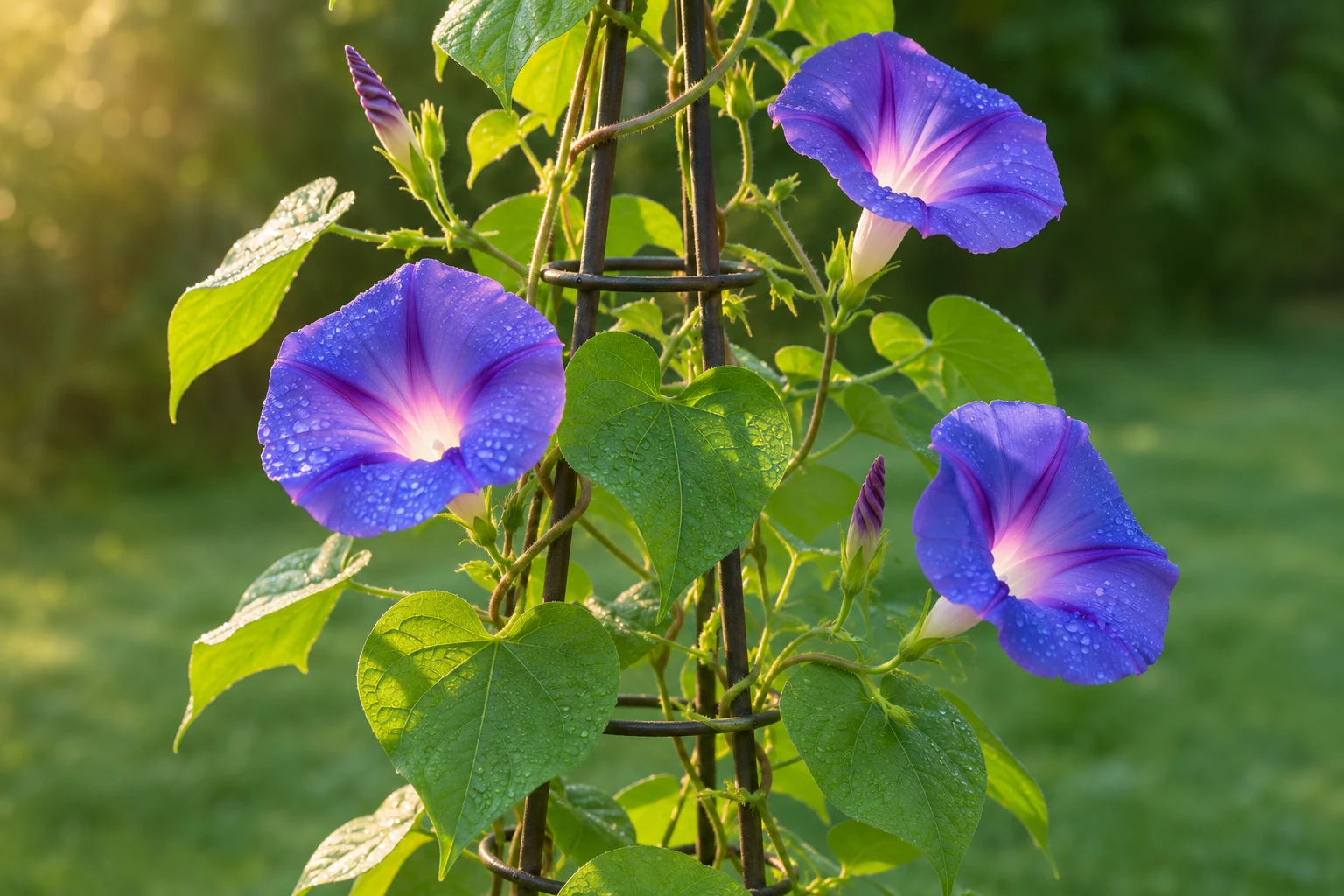
Morning Glory is native to Tropical and subtropical regions; the common garden species covered here are chiefly native to the Americas, typically reaches Common climbing types often reach 6–15 ft (1.8–4.6 m) in a season; final height depends on species, cultivar, climate, and support indoors, with fast in warm weather once seedlings establish growth. Morning Glory has a twining flowering vine, usually grown as a warm season annual in frost prone climates growth habit and part of the Convolvulaceae family. It is also known as Common Morning Glory, Purple Morning Glory, and Garden Morning Glory.
| Detail | Information |
|---|---|
| Also known as | Common Morning Glory, Purple Morning Glory, Garden Morning Glory |
| Native region | Tropical and subtropical regions; the common garden species covered here are chiefly native to the Americas |
| Mature size | Common climbing types often reach 6–15 ft (1.8–4.6 m) in a season; final height depends on species, cultivar, climate, and support |
| Growth rate | Fast in warm weather once seedlings establish |
| Growth habit | Twining Flowering Vine, Usually Grown As A Warm Season Annual In Frost Prone Climates |
| Scientific name | Ipomoea spp. (ornamental climbing species) |
| Family | Convolvulaceae |
How to care for Morning Glory?
How much light does Morning Glory need?
Full sun, ideally at least 6 hours daily, for the strongest flowering. Light afternoon shade in hot climates. Bright conditions with some dappled shade. direct sun
- Full sun, ideally at least 6 hours daily, for the strongest flowering - Full sun, ideally at least 6 hours daily, for the strongest flowering.
- Light afternoon shade in hot climates - Light afternoon shade in hot climates.
- Bright conditions with some dappled shade - Bright conditions with some dappled shade.
- direct sun - direct sun.
When should you water Morning Glory?
Keep newly sown seed and young vines evenly moist, but never waterlogged. Once established, water when the upper soil begins to dry and rain has not supplied enough moisture. A roughly 1-inch weekly total is a useful starting point during active growth, not a fixed schedule; containers and hot, dry weather need more frequent checks.
- Feel the soil below the surface rather than judging by wilt alone. Water the root zone when the upper 1–2 inches are dry - Once established, water when the upper soil begins to dry and rain has not supplied enough moisture.
- do not leave a pot standing in a saucer of water - Once established, water when the upper soil begins to dry and rain has not supplied enough moisture.
- Drain excess water - Keep newly sown seed and young vines evenly moist, but never waterlogged.
What soil works best for Morning Glory?
Use ordinary, moderately fertile soil that holds some moisture but drains freely. Morning glory tolerates a range of soil types; very rich soil can drive leafy growth at the expense of flowers.
- For containers, use a quality potting mix with open drainage holes. - Use ordinary, moderately fertile soil that holds some moisture but drains freely.
- Avoid heavily enriched mixes and standing water
- excess fertility can favor foliage over blooms - Morning glory tolerates a range of soil types; very rich soil can drive leafy growth at the expense of flowers.
Grower notes for Morning Glory
Know which morning glory this guide covers
Morning glory is a common name used for many plants. This profile covers ornamental, twining Ipomoea vines, especially common morning glory (Ipomoea purpurea) and cultivars such as Heavenly Blue (often Ipomoea tricolor). Moonflower (Ipomoea alba) is a related night-blooming vine, and sweet potato (Ipomoea batatas) is a food crop; neither should be treated as identical in every care detail.
Put the support in place before sowing
Twining stems climb readily and may reach well beyond a small plant label's estimate. Set a sturdy trellis, arch, or fence before seedlings start running, and give the vine a dedicated space so it does not wind through neighboring plants. A container also needs a firm support or a safe place for the vine to trail.
Give it sun for more flowers
Full sun supports the most reliable flowering. The trumpet-shaped blooms open in the morning and usually close later in the day, so a bright placement matters even when the foliage looks healthy in partial shade. In very hot climates, light afternoon shade can reduce heat stress.
Water to the weather, not the calendar
Keep seedlings from drying out, then use the soil surface and recent rain to decide when to water. Around an inch of water weekly is a practical reference during active growth, but a pot in heat may need checking much sooner. Let extra water drain instead of keeping the roots saturated.
Keep feeding and soil fertility moderate
Morning glory grows vigorously without a heavy feeding routine. The Spruce and Gardening Know How caution that too much nitrogen or exceptionally fertile soil can produce lush leaves with fewer flowers. If growth is healthy, focus on adequate light, a climbable support, and steady moisture.
Manage self-seeding and protect pets from seed
Common morning glory can drop seed and return in later seasons; remove unwanted seed pods before they mature and follow local rules where the vine is considered invasive. ASPCA lists Ipomoea species as toxic to cats, dogs, and horses, with seeds a particular concern. Keep seed packets and plant material out of reach of pets.
Is Morning Glory safe for pets?
ASPCA lists Morning Glory (Ipomoea spp.) as toxic to cats, dogs, and horses. It names indole alkaloids and notes vomiting; large amounts of seeds may cause hallucinations. Keep vines and seed packets out of reach, and contact a veterinarian or animal poison control if a pet chews the plant. BBC Gardeners' World reports no horse toxicity for I. purpurea, but the genus-level ASPCA warning and NC State's horse-risk tag support following the more cautious primary-source guidance for horses.
The ASPCA Morning Glory entry identifies Ipomoea spp. and lists toxicity to cats, dogs, and horses. It names indole alkaloids and lists vomiting, with hallucinations possible after large seed ingestion. This is a conservative genus-level warning for the ornamental morning-glory vines covered here; it does not provide a dose or a species-by-species assessment. BBC Gardeners' World marks I. purpurea as having no reported horse toxicity, while the ASPCA genus-level entry and NC State's horse-risk tag point the other way; the primary-source warning is used here for horse-access decisions.
Watering Morning Glory
For Morning Glory, feel the soil below the surface rather than judging by wilt alone. Water the root zone when the upper 1–2 inches are dry; do not leave a pot standing in a saucer of water. and water check the soil every few days during warm, dry weather. Water deeply when the top 1–2 inches begin to dry, then let excess drain. Reduce supplemental water during cool or rainy spells. Water more consistently as seedlings establish and while the vine is actively climbing and blooming. Rain often supplies enough for garden beds, while pots dry faster. In cool weather or during persistent rain, check drainage and avoid adding water to already-wet soil.
| Detail | Information |
|---|---|
| How often | Check the soil every few days during warm, dry weather. Water deeply when the top 1–2 inches begin to dry, then let excess drain. Reduce supplemental water during cool or rainy spells. |
| How to check | Feel the soil below the surface rather than judging by wilt alone. Water the root zone when the upper 1–2 inches are dry; do not leave a pot standing in a saucer of water. |
| Seasonal changes | Water more consistently as seedlings establish and while the vine is actively climbing and blooming. Rain often supplies enough for garden beds, while pots dry faster. In cool weather or during persistent rain, check drainage and avoid adding water to already-wet soil. |
Signs of overwatering
- Soil stays wet for several days or water sits in the pot or bed.
- Leaves yellow or the vine wilts while the root zone is still wet.
- Roots soften or rot in poorly drained soil.
Signs of underwatering
- Leaves droop while the root zone is dry, especially in hot weather.
- A container dries quickly between checks.
- New growth stalls during a prolonged dry spell.
Soil & potting for Morning Glory
Use a mix of For containers, use a quality potting mix with open drainage holes., Avoid heavily enriched mixes and standing water; excess fertility can favor foliage over blooms. for Morning Glory. Good drainage is essential; avoid persistently soggy beds and pots without drainage holes. Target soil pH around Tolerates a broad range; near-neutral to slightly acidic soil is suitable. Repot usually grown from seed as a seasonal vine, so routine repotting is not needed. In a frost-free climate, repot an overwintered container plant only when roots crowd the pot or the growing mix has broken down., ideally in sow or refresh container mix after frost danger has passed and the soil is warm. Repot an overwintered vine just before active spring growth if needed.
| Detail | Information |
|---|---|
| Recommended mix | For containers, use a quality potting mix with open drainage holes., Avoid heavily enriched mixes and standing water; excess fertility can favor foliage over blooms. |
| Drainage | Good drainage is essential; avoid persistently soggy beds and pots without drainage holes |
| Soil pH | Tolerates a broad range; near-neutral to slightly acidic soil is suitable |
| Repotting frequency | Usually grown from seed as a seasonal vine, so routine repotting is not needed. In a frost-free climate, repot an overwintered container plant only when roots crowd the pot or the growing mix has broken down. |
| Best season to repot | Sow or refresh container mix after frost danger has passed and the soil is warm. Repot an overwintered vine just before active spring growth if needed. |
Signs it needs repotting
- Roots circle the pot or emerge from drainage holes.
- The container dries unusually quickly after a thorough watering.
- The vine is top-heavy and the pot or trellis cannot support it securely.