Heart-Shaped Leaf Plants: 20 Picks for Home & Garden
Compare 20 plants with heart-shaped leaves, from indoor vines to shade perennials and trees, with practical notes on light, moisture, mature size, and safety.
A heart-shaped leaf can be a small, crisp silhouette on a hanging vine or a broad canopy leaf several feet across. The best choice depends less on the shape than on where the plant must live: a bright room, a cool shady border, a trellis, or a yard with space for a tree.
This list separates those jobs. It includes easy indoor vines, foliage plants that need more attentive conditions, hardy shade perennials, seasonal tropicals, and trees. For each one, look at the mature habit and moisture needs as well as the leaf; a plant that looks perfect on a nursery bench can be a poor match for a dry, sunny window or a narrow bed.
What botanists mean by heart-shaped leaves
A botanist calls a heart-shaped leaf cordate. The simplest clue is the notch where the leaf blade meets its stalk, with two rounded lobes at the base and a point at the opposite end. Real leaves are rarely perfect valentines: some are asymmetrical, elongated, scalloped, patterned, or divided as they mature. The botanical label helps you spot the shape, but a plant’s growth habit determines whether that outline appears in a pot, on a wall, or high in a tree canopy. A few leaves may also look quite different from the nursery photo after the plant settles into your light.
That last detail matters when you shop. Monstera leaves change dramatically as a plant ages, while an elephant ear can look more like an arrow or shield than a neat heart. Several plants on this list are grown as much for their flowers, autumn color, or dramatic scale as for a textbook outline.
Indoor heart-leaf plants
For indoor growing, consider light and watering habits first. A trailing vine that tolerates a range of household conditions is a different commitment from a slow Hoya or a cool-season flowering tuber.
Trailing and climbing houseplants
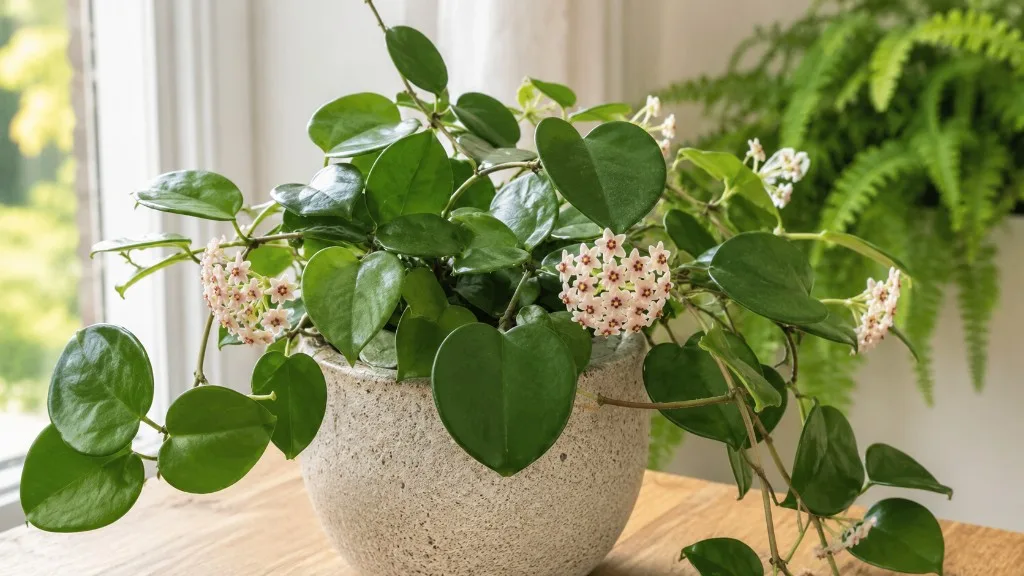
1. Heart-shaped hoya (Hoya kerrii). This slow-growing tropical vine carries thick, succulent-like leaves along climbing or trailing stems. It is often sold as one rooted heart-shaped leaf; unless the cutting includes a viable stem node, it may stay a single leaf rather than develop into a vine. Buy a multi-leaf cutting with visible stem growth if your goal is a plant that will climb, and give it bright light and a free-draining mix. Penn State Extension explains the single-leaf Hoya issue, and NC State Extension describes Hoya kerrii.
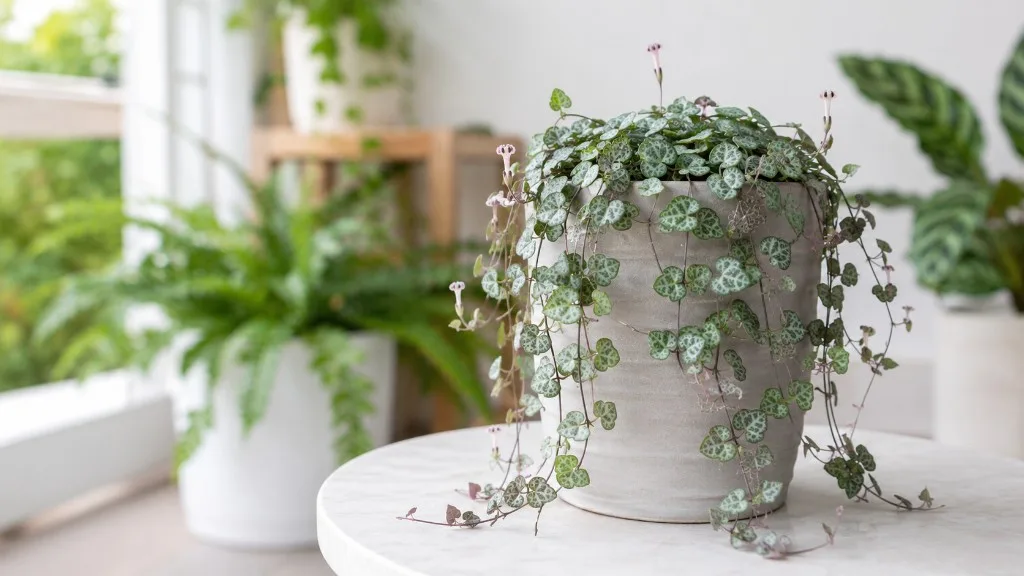
2. String of hearts (Ceropegia woodii). This delicate, cascading succulent has small paired leaves with gray-green marbling, often flushed pink or purple underneath. Hang it where the long stems will not be brushed constantly, and provide bright indirect light with some gentle morning sun; let the potting mix dry substantially before watering again. It is a better choice for someone who remembers that trailing succulents need air and a dry-down between drinks than for a person who waters every plant on the same schedule. Iowa State Extension includes it among heart-shaped foliage plants.
3. Heartleaf philodendron (Philodendron hederaceum). Glossy, pointed leaves line flexible vines that can trail from a shelf or climb a support. It accepts medium or lower indirect light, although growth becomes thinner and leaves smaller when the plant is too dim; water after the upper mix begins to dry rather than keeping the root ball constantly wet. Philodendron is toxic to cats and dogs if chewed, so place it beyond reach in pet households. NC State Extension covers its growth and care, and ASPCA lists heartleaf philodendron as toxic to pets.
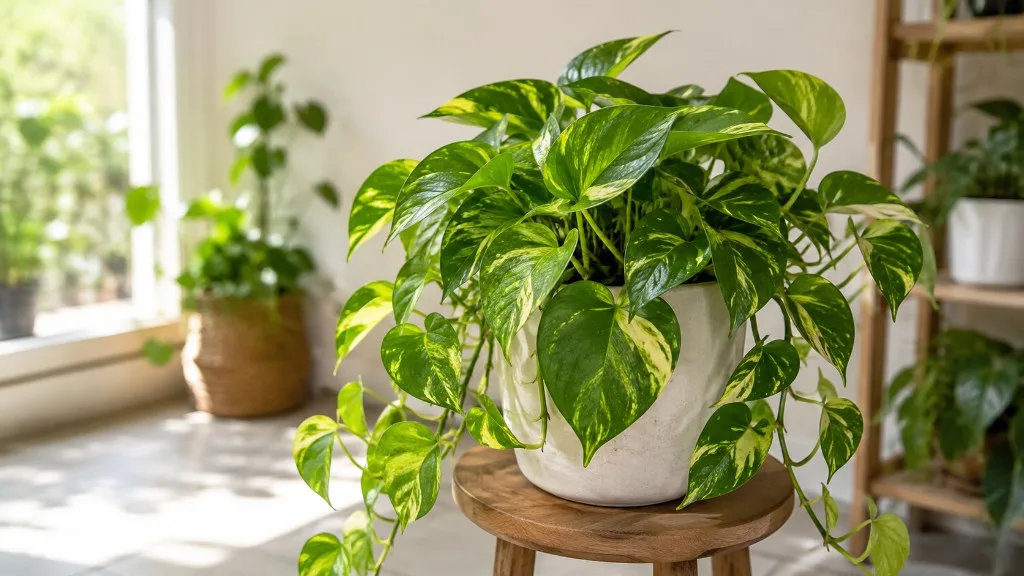
4. Pothos (Epipremnum aureum). Golden, jade, and several variegated pothos forms have broad, waxy heart-shaped leaves. It is forgiving of imperfect indoor conditions, but “tolerates low light” does not mean low light is ideal: variegated leaves can lose contrast and stems stretch toward a brighter window. Let the mix partly dry between waterings, prune a long vine above a leaf node to encourage branching, and remember that pothos is toxic to cats and dogs. NC State Extension distinguishes pothos from heartleaf philodendron.
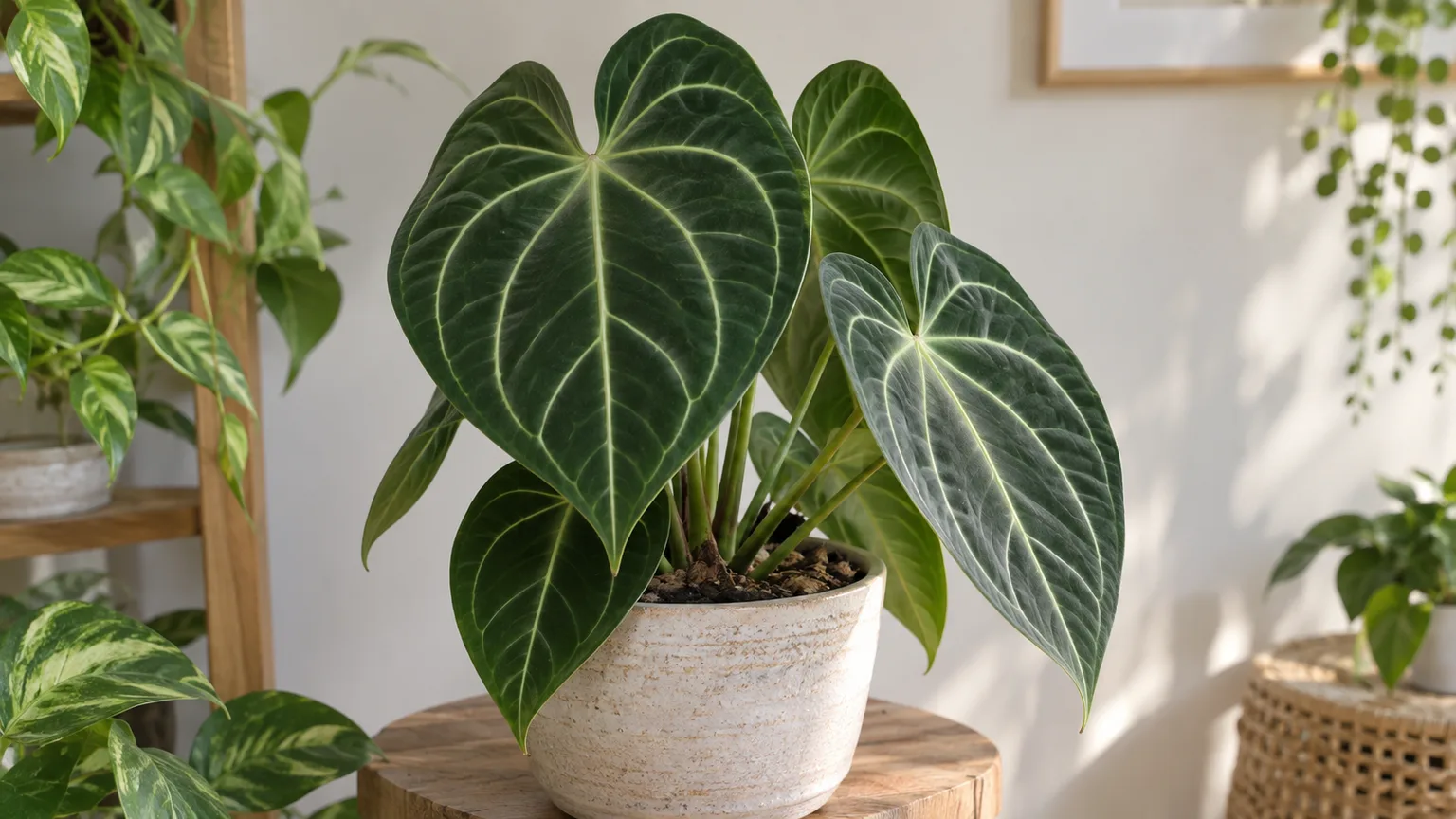
5. Velvet-card Anthurium (Anthurium clarinervium). If you want a foliage plant rather than another trailing vine, this species has broad, dark, velvety leaves traced with pale veins. It prefers warm conditions, bright filtered light, and an airy, evenly moist root zone; a dense, waterlogged pot is a more common problem than a lack of humidity gadgets. Do not confuse the leaf with the colored, leaf-like spathe of florist anthuriums. Anthuriums can irritate the mouth if chewed, so keep them away from pets and small children. NC State Extension identifies the foliage and notes ingestion concerns.
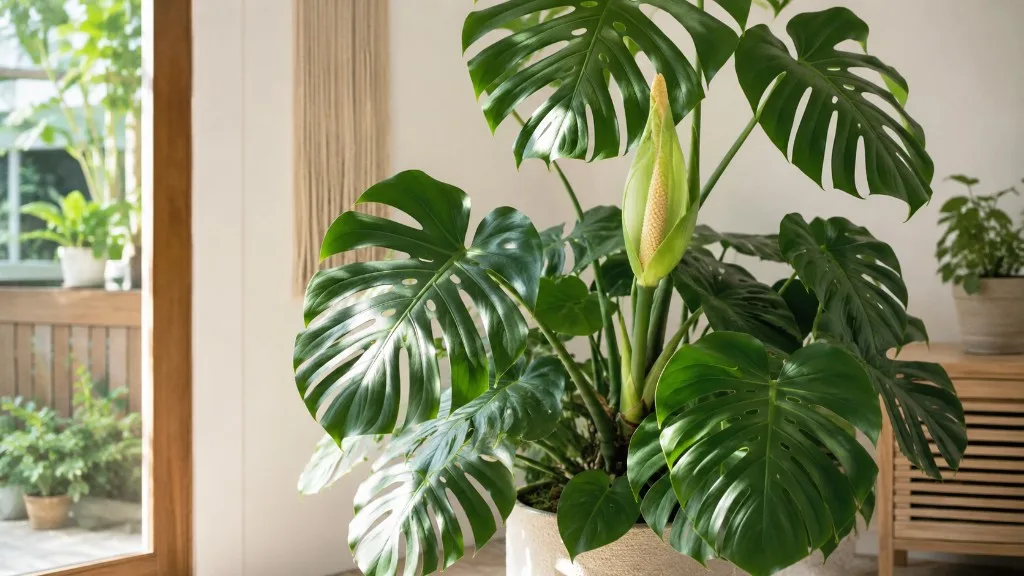
6. Swiss cheese plant (Monstera deliciosa). Young Monstera leaves start as large, solid hearts; mature leaves develop characteristic splits and holes. Give it bright indirect light, a sturdy support, and more floor space than a small starter pot suggests, because an indoor plant can become a substantial climbing specimen. If you want an unbroken heart outline for years, choose a compact vine instead: fenestration is part of Monstera’s normal mature form, not a disease. NC State Extension describes Monstera’s climbing growth.
7. Persian cyclamen (Cyclamen persicum). Its rounded, often silver-marbled leaves are heartlike, and the swept-back blooms provide winter color. This is a cool-season flowering plant, not a tropical foliage vine: keep it in bright filtered light away from hot, dry air, water while it is actively growing, then reduce watering as the leaves die back into dormancy. The tuber is not edible, and the plant should be kept away from pets that may chew it; ASPCA lists cyclamen as toxic to cats and dogs. Outdoor hardy cyclamen are different species and need a suitable climate and planting site. The RHS covers C. persicum’s indoor culture and dormancy.
Shade perennials and groundcovers
These plants belong in outdoor beds in climates where they are hardy. Their leaves may be seasonal, and the most reliable results come from matching the soil moisture and shade to the species rather than assuming every heart-leaf plant wants a dark corner.
Choose by leaf texture and spread
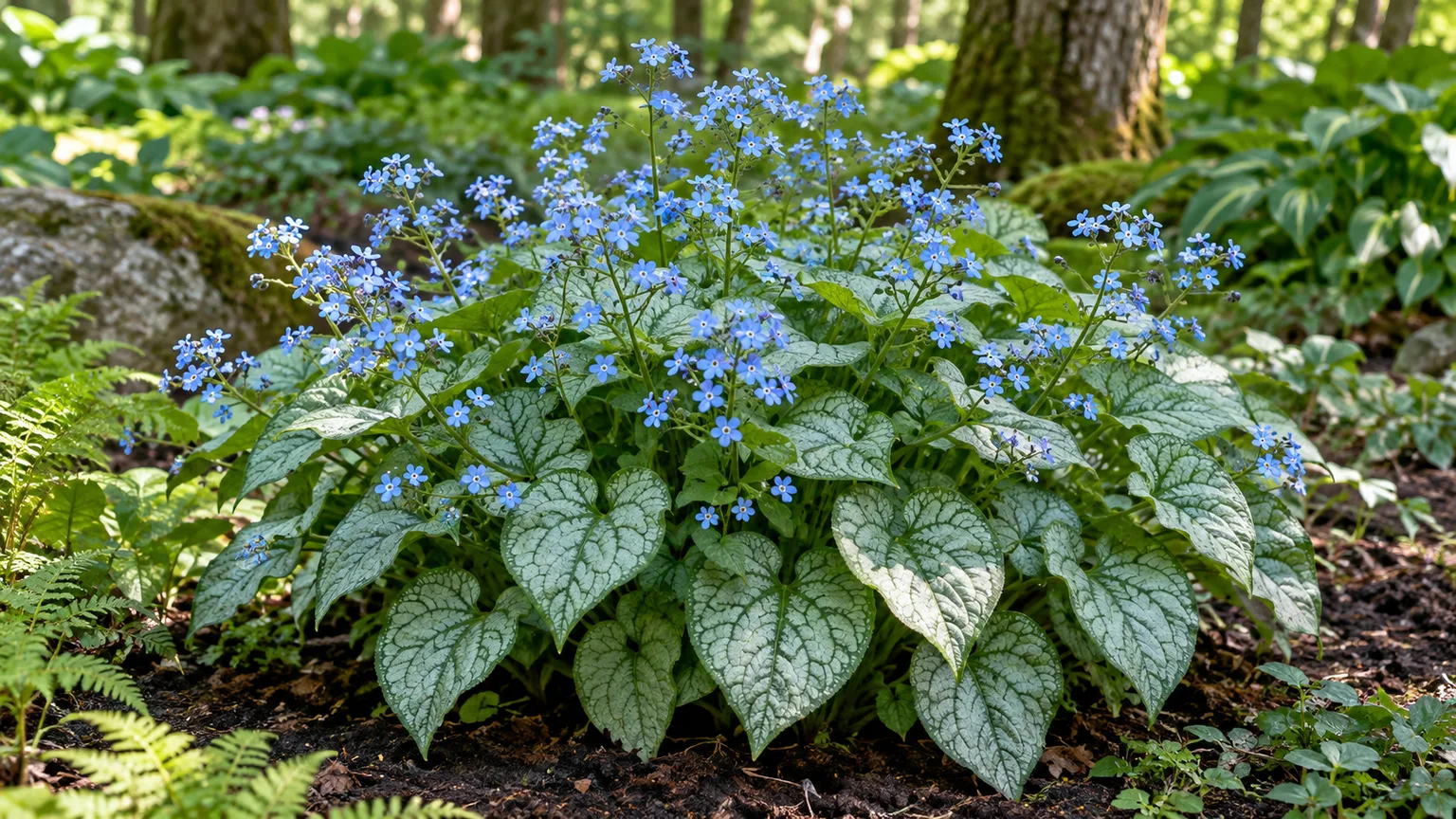
8. Siberian bugloss ‘Jack Frost’ (Brunnera macrophylla). Its silvered, heart-shaped foliage lights up a cool, shaded border, while blue spring flowers add a second season of interest. Plant it in moisture-retentive, well-drained soil and protect the leaves from hot afternoon sun, which can scorch them; it is not a fix for a bone-dry site under thirsty tree roots. The cultivar spreads into a clump rather than racing across a bed. Missouri Botanical Garden’s plant finder and BBC Gardeners’ World’s grow guide describe its shade-garden use.
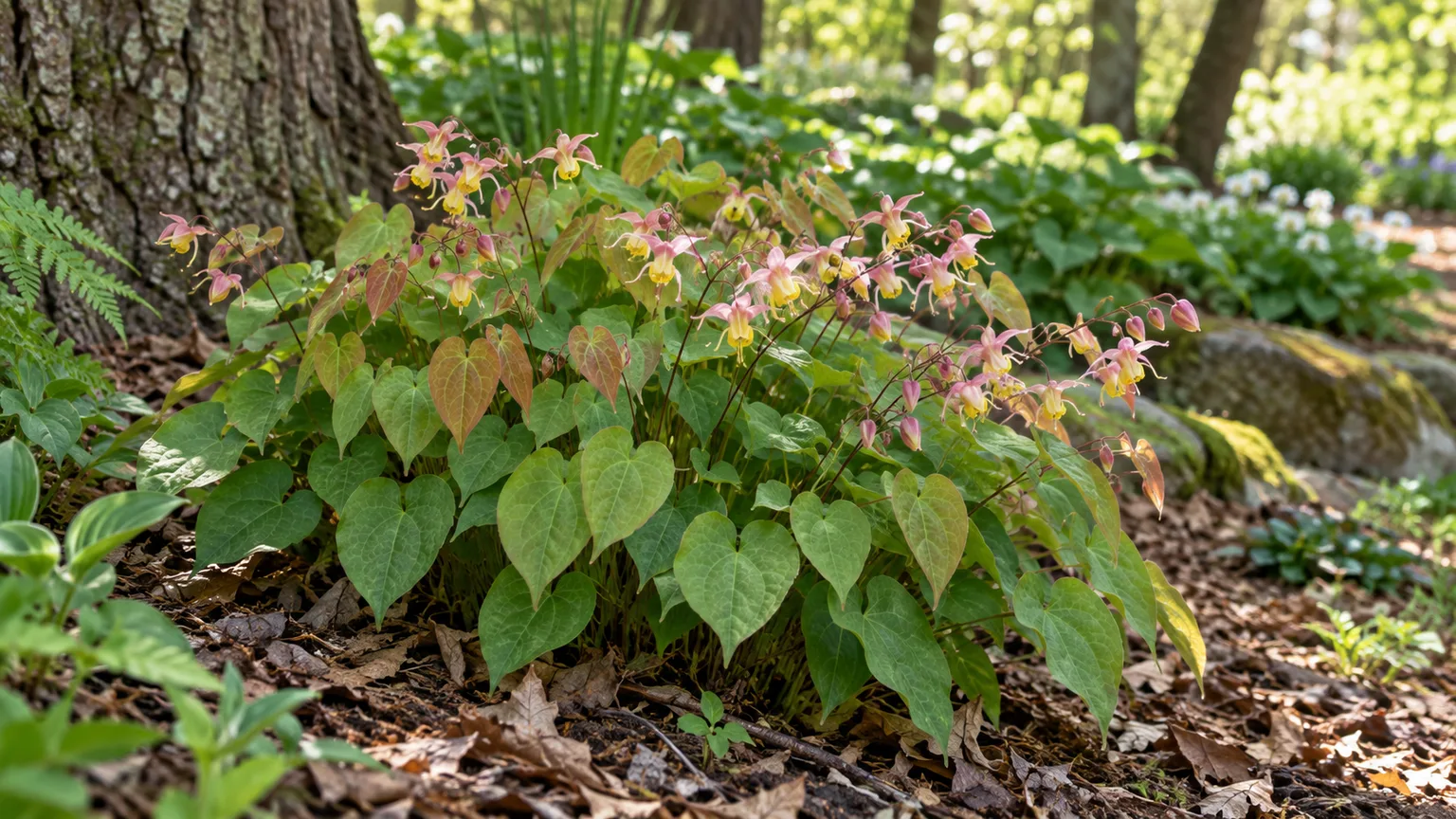
9. Bicolor barrenwort (Epimedium × versicolor ‘Sulphureum’). Barrenwort’s heart-shaped parts are leaflets on divided leaves, which gives the plant a finer texture than Hosta or Brunnera. It makes a low, slow-spreading groundcover for partial to full shade, with small yellow spring flowers and foliage that can redden in fall. Established plants can handle drier shade better than many broad-leaved perennials, but new plantings still need regular water while roots settle in. Missouri Botanical Garden describes the cultivar’s clumping habit and shade use.
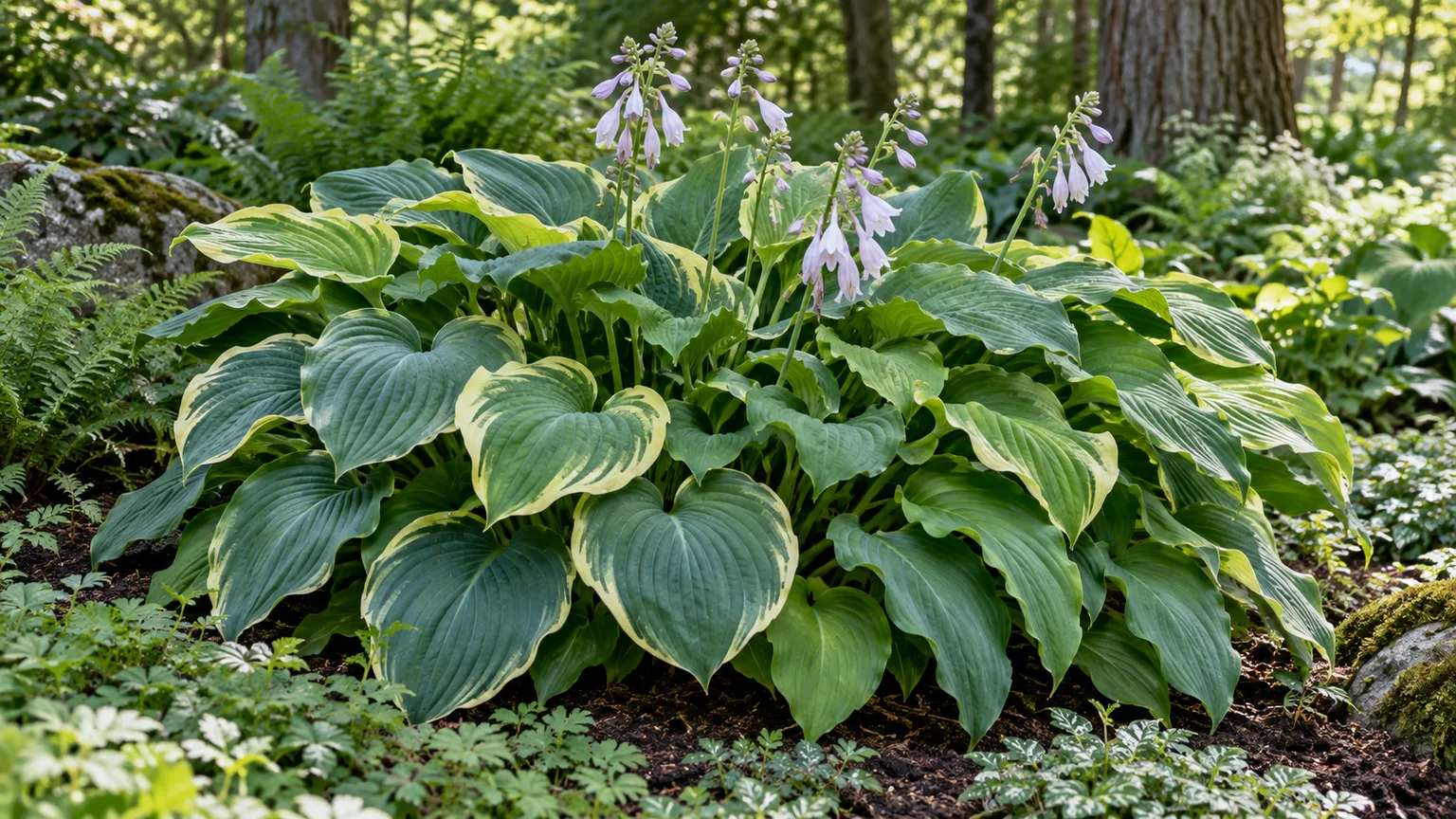
10. Hosta ‘Frances Williams’. This broad-leaved perennial has a blue-green center and a wide gold margin, with leaves that form a bold clump in light or partial shade. It needs fertile soil that stays evenly moist but drains well; prolonged drought and strong sun can scorch the foliage, while slugs and snails may leave ragged holes. Give the cultivar room for its eventual spread, and protect it from pets because Hostas are toxic if eaten. Fine Gardening’s Hosta guide covers heart-shaped foliage and site care, and ASPCA lists Hosta as toxic to pets.
11. Variegated butterbur (Petasites japonicus ‘Variegatus’). The huge, pale-centered leaves create a tropical-looking effect in a cool, damp garden, but the plant’s rhizomes can spread forcefully. Treat this as a contained feature: use a large pot or a site with a physical root barrier, and do not put it beside a natural area or a bed where you cannot remove runners. The white pattern may be attractive, but it does not make an aggressive plant self-limiting. Check local invasive-plant guidance before buying any butterbur; British Columbia’s invasive-species alert explains how Japanese butterbur spreads by roots.
Vines for walls, fences, and trellises
A large climbing plant can cover a surface quickly once established, so choose the support and final size before planting. Keep woody vines away from weak fences, gutters, and trees that should not be covered.
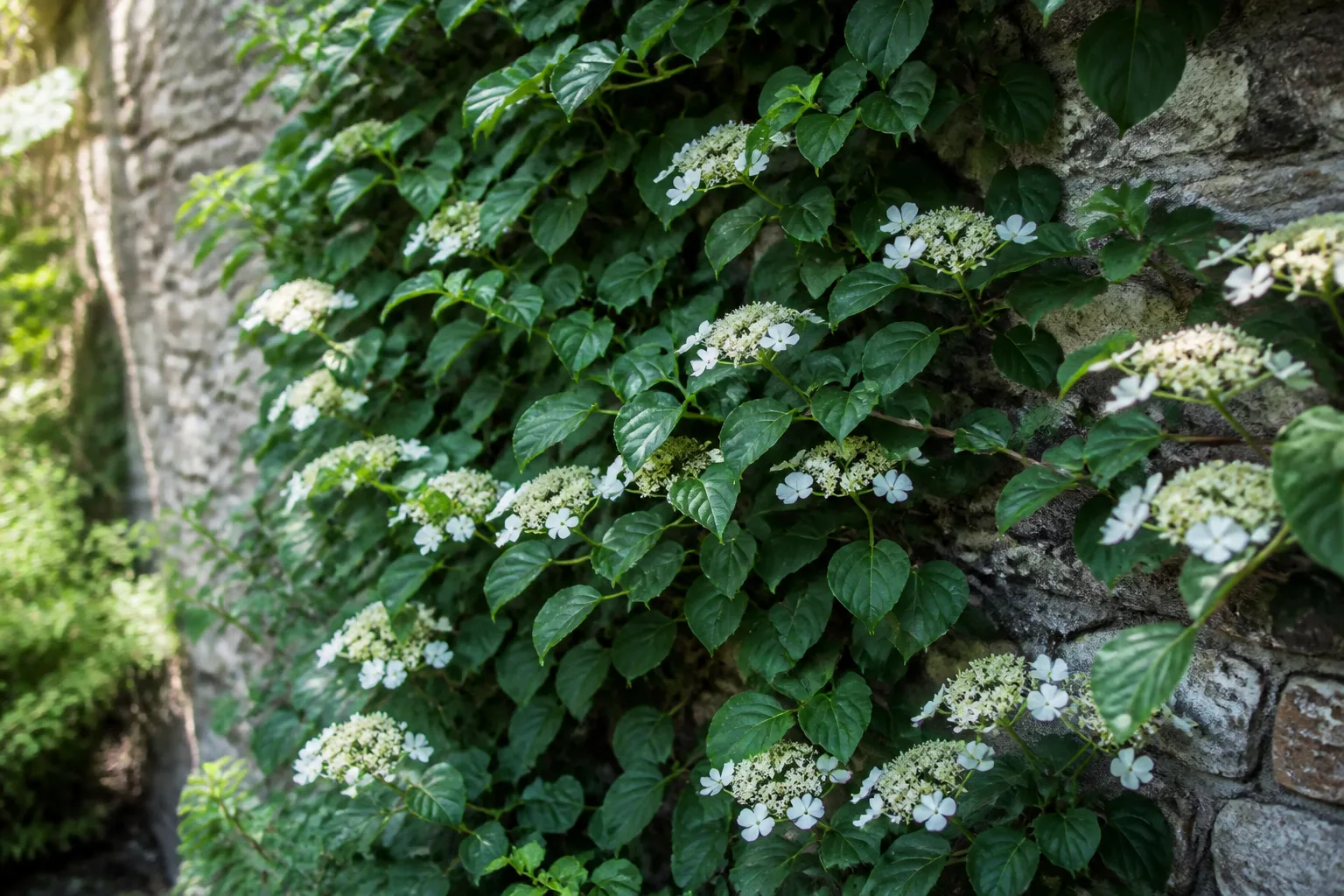
12. Climbing hydrangea (Hydrangea anomala subsp. petiolaris). This hardy, self-clinging vine has rounded heart-shaped leaves and white summer flower clusters. It often takes time to establish, then becomes heavy and vigorous, so start it on a sound wall, fence, or trellis and keep the soil from drying out during establishment. Prune after flowering if size control is necessary; trimming at the wrong time can remove next year’s flowers. The RHS recommends sturdy support and explains its shade tolerance.
13. Dutchman’s pipe (Aristolochia macrophylla). Native to eastern North America, this vigorous woody vine has broad leaves that overlap into a dense green screen. It suits a strong arbor or fence in a moist, partly shaded site and supports pipevine swallowtail caterpillars, which may eat conspicuous portions of the foliage without permanently harming an established vine. It is toxic if ingested and has high flammability, so avoid planting it close to the house; use it only where its size, wildlife role, and safety constraints fit. NC State Extension provides its native range, host-plant value, and cautions.
14. Morning glory (Ipomoea purpurea and related annuals). These fast-growing annual vines have soft, pointed heart-shaped leaves and trumpet-shaped flowers in several colors. Give them full sun and a support, sow after frost in warm soil, and expect self-seeding in favorable conditions; check your local guidance if volunteers become a nuisance. Seeds and plant parts can be toxic to pets, and large seed ingestion is especially concerning, so do not grow them where animals can reach seed heads. ASPCA’s morning glory entry lists pet toxicity.
Bold foliage from seasonal tubers
Caladium and elephant ear give a garden or patio oversized, patterned leaves, but their growing season is tied to warmth. In cold-winter regions, plan ahead for lifting or storing tubers, or treat them as seasonal container plants rather than permanent perennials.
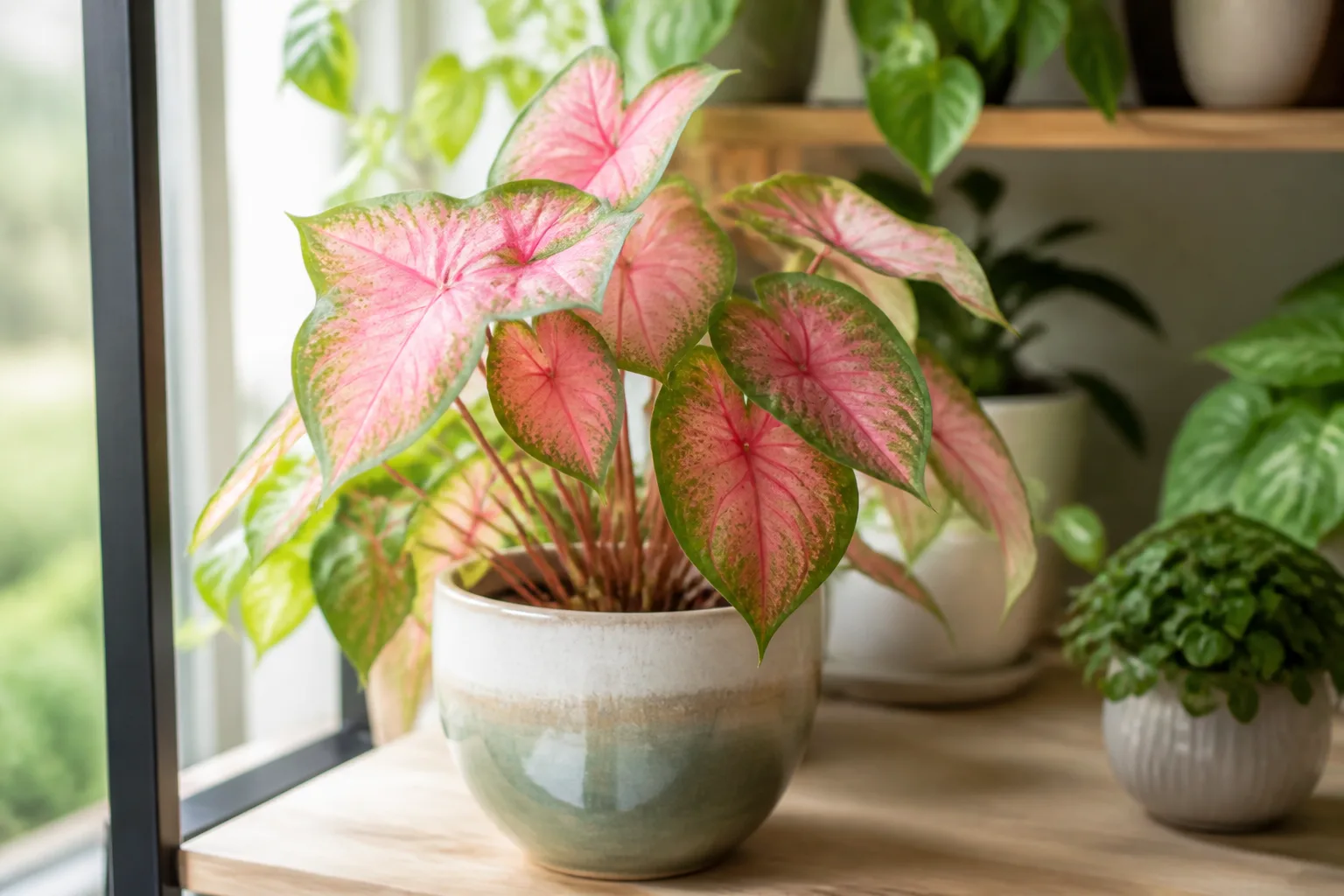
15. Caladium (Caladium cultivars). Caladium leaves are thin, often translucent-looking hearts splashed or veined with white, pink, red, or green. Plant tubers only when the soil is warm, then keep them in a warm spot with bright shade and consistent moisture; cold soil and excess water can rot them before they start. In frost-prone areas the foliage dies back, and the tubers need appropriate winter storage if you want to keep them. Caladium is toxic if chewed, so plan its placement accordingly. NC State Extension details its tubers and seasonal use.
16. Elephant ear (Colocasia esculenta). Colocasia produces enormous, often downward-pointing heart-shaped leaves on tall stalks, making it a dramatic choice for a warm, moist garden or large container. It needs rich soil and dependable moisture, and it may need winter protection or tuber storage where freezes occur. Although taro is grown as food, raw plant parts contain irritants; never eat ornamental material without correct food-crop identification and preparation. Colocasia can also escape into wetlands in some regions, so check local restrictions before planting near waterways. NC State Extension explains its cultivation, raw-plant hazard, and regional spread.
Trees and shrubs with cordate leaves
If you choose a tree for its leaves, use mature height and spread—not the nursery plant’s current pot size—to decide whether it belongs in your yard. The four choices below range from flowering shrubs to canopy trees, and their seasonal interest differs.
Smaller garden trees and shrubs
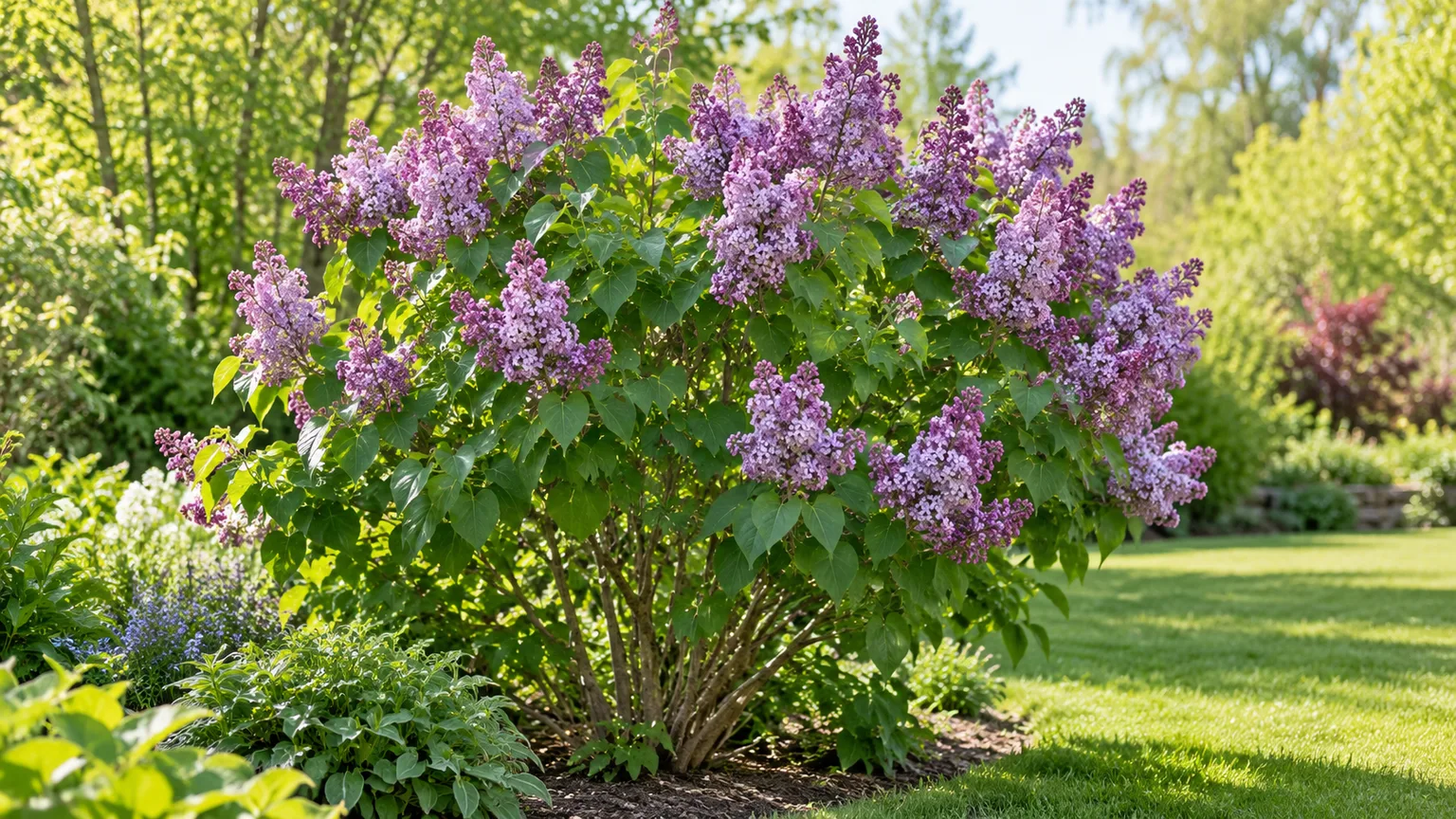
17. Common lilac (Syringa vulgaris). Lilac’s opposite leaves are broadly heart-shaped, but the fragrant spring flower panicles are usually the reason to plant it. It needs sun, good drainage, and a winter cool enough for flower buds to develop; in warm-winter climates, choose a low-chill cultivar rather than expecting every traditional lilac to bloom well. Allow for a multi-stemmed shrub that can reach several feet in both height and width, and remove rootstock suckers from grafted plants. NC State Extension lists its leaf shape and climate needs.
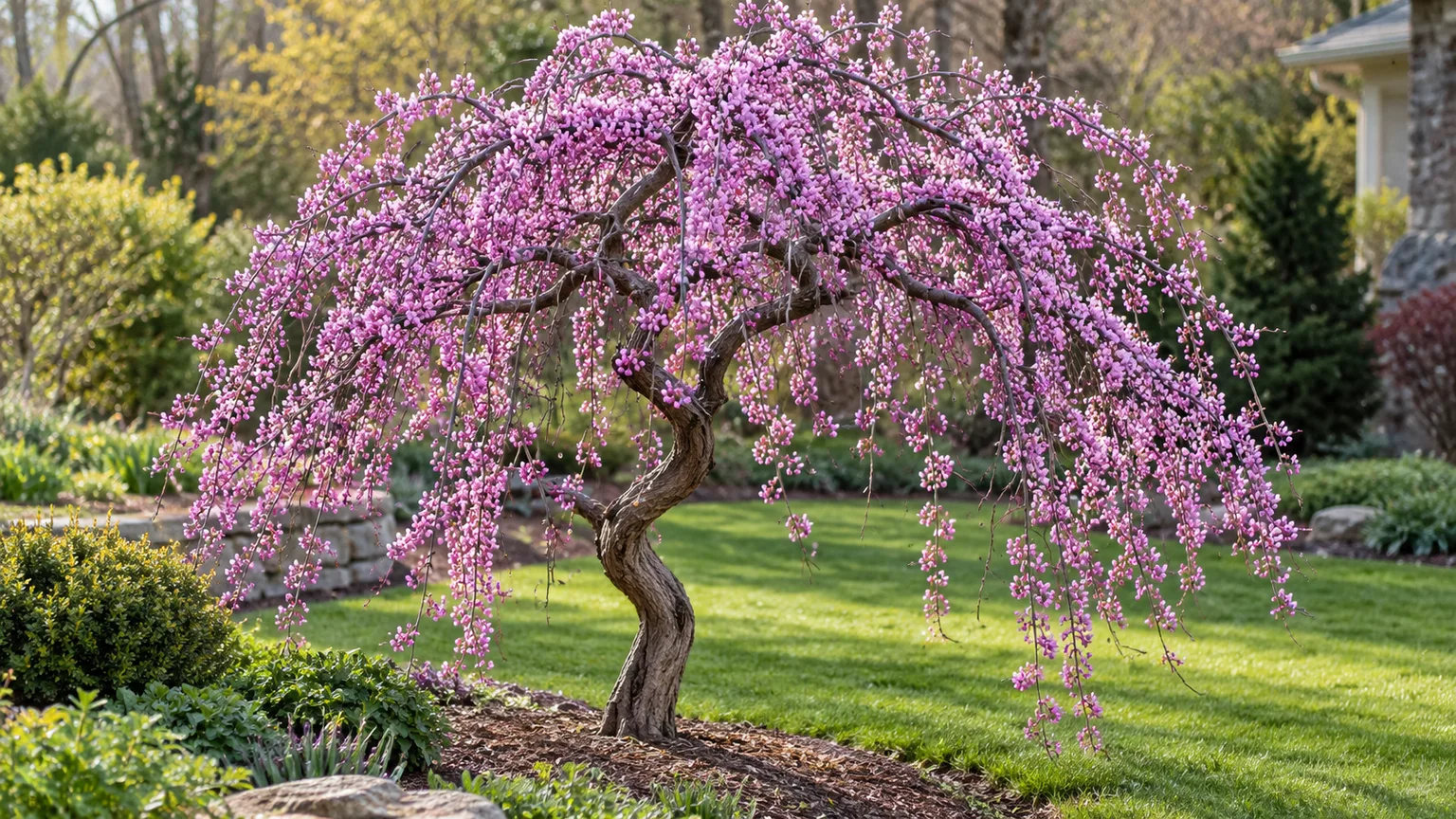
18. ‘Forest Pansy’ eastern redbud (Cercis canadensis). This small native tree pairs clusters of pink-purple flowers on bare branches with rounded, heart-shaped leaves that emerge reddish-purple and mature toward burgundy-green. It works as a specimen or understory tree, but it dislikes waterlogged soil, prolonged drought, and repeated root disturbance; choose its permanent site before planting and water while it establishes. Leaf color is often less dramatic in deep shade, so balance the cultivar’s foliage effect against the tree’s need for a suitable amount of light. NC State Extension explains redbud’s site limits and wildlife value.
Large trees need room
19. Katsura tree (Cercidiphyllum japonicum). Katsura carries rounded heart-shaped leaves that shift from bronze or purple tones in spring to green, then yellow, orange, and pink in fall. Falling leaves can smell faintly of burnt sugar, a seasonal detail that makes the tree memorable up close. It prefers reasonably moist, well-drained soil and is not a fit for a small courtyard if the selected cultivar will outgrow it; check the mature dimensions locally and keep young growth protected from late frost. The RHS plant profile describes its foliage and mature scale.
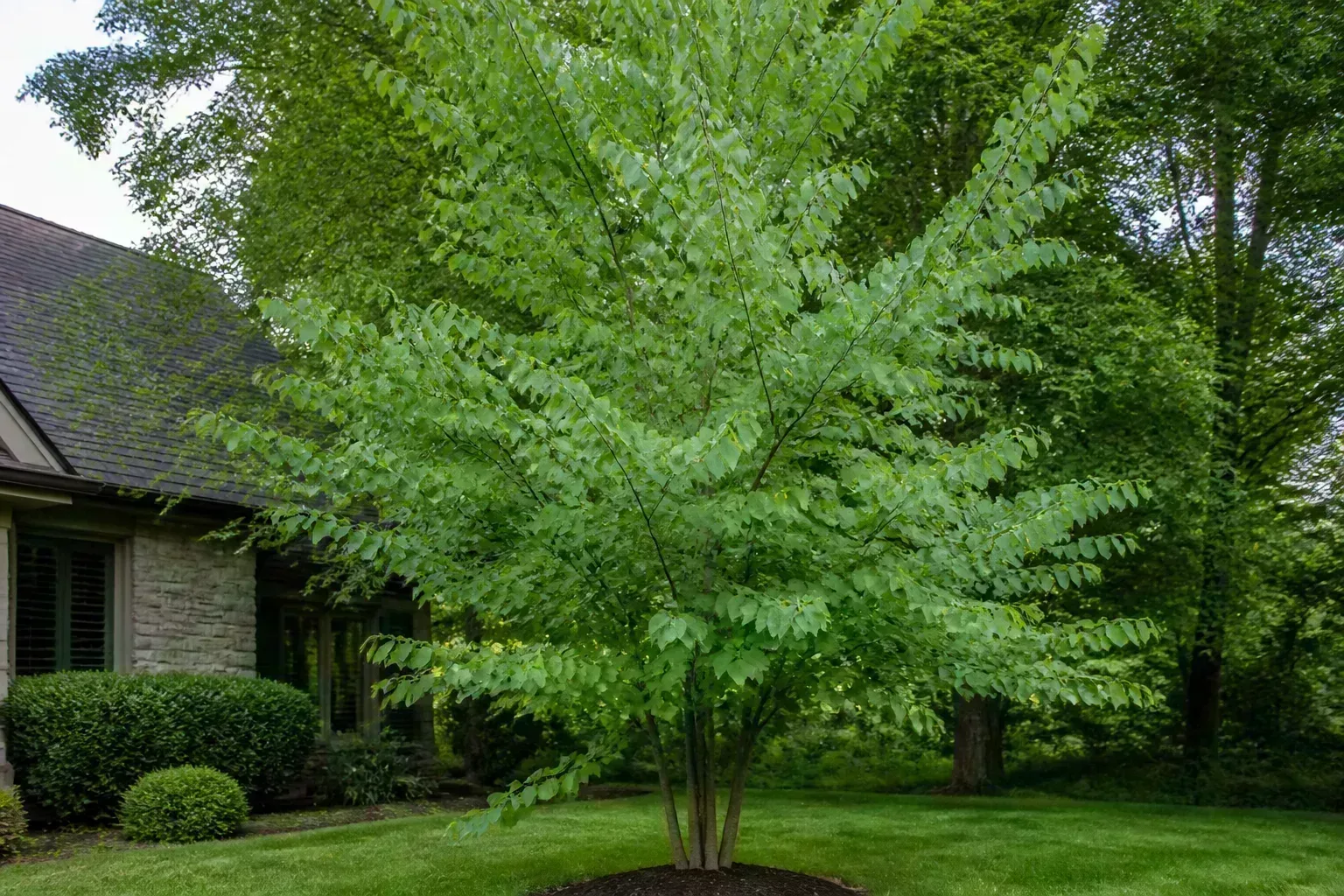
20. Littleleaf linden (Tilia cordata). This large deciduous shade tree has small, toothed, heart-shaped leaves and fragrant summer flowers that attract pollinators. It is a long-term choice for a spacious yard, parkway, or avenue rather than a compact bed, and mature size varies with cultivar and growing conditions. Check overhead wires, sidewalks, and the tree’s eventual canopy before buying; also ask local extension staff about Japanese beetle pressure, which can be severe in some areas. NC State Extension’s littleleaf linden profile covers its size and regional pest concern.
A large-leaved tree sometimes sold for quick impact is princess tree (Paulownia tomentosa). It is not one of the recommended choices here: it is invasive in parts of the United States, especially across portions of the East, so confirm local status before planting and choose a suitable native tree instead. The USDA Forest Service species review documents its spread and invasive behavior.
Choose by light, water, and available space
Start with the conditions you can offer, then narrow the list. If you have a bright room and want a long trailing display, compare string of hearts, pothos, and heartleaf philodendron; if you want one iconic leaf in a pot, buy Hoya kerrii with a stem node rather than assuming a rooted leaf will grow into a vine. For a plant that flowers indoors in winter, consider cyclamen, but only if you can give it a cool, bright season and tolerate summer dormancy.
In a shady border, choose Brunnera for patterned leaves and spring flowers, Hosta for a larger clump, and Epimedium for a lower, finer-textured carpet. Butterbur is best reserved for a contained spot because it spreads. For a wall or fence, compare the eventual weight and reach of climbing hydrangea and Dutchman’s pipe; morning glory is a seasonal annual option, but it needs sun and can reseed.
If the site is sunny, warm, and reliably moist, caladium or Colocasia can provide tropical foliage for the growing season. In a yard, redbud suits many smaller landscapes better than katsura or linden, while lilac needs enough winter chill to flower reliably. The princess tree’s enormous leaves are not worth the ecological risk where it is invasive.
Match the plant to your site
Do not use hardiness zones as the only test. Sun exposure, drainage, winter wet, summer heat, wind, and the plant’s ability to go dormant can matter just as much. A shaded apartment window is not the same as outdoor woodland shade, and a warm patio can bake a pot faster than the surrounding garden soil dries.
For uncertain local status or cultivar size, check a nearby extension service or botanical garden before ordering. Read the label for the exact species and cultivar, then compare its mature size with the actual bed, wall, or container you have. When the site is borderline, choose the plant whose needs you can meet most consistently rather than the one with the most dramatic foliage.
Care that keeps heart-shaped foliage healthy
Indoor watering and light
Bright indirect light is a safe starting point for most tropical foliage plants, but it does not mean putting every pot directly against a hot, sunny pane. Move a plant gradually when increasing light, rotate vines so growth stays balanced, and check the mix before watering. Thick Hoya and string-of-hearts leaves store more water than the leaves of philodendron, so they generally need a longer dry-down; an Anthurium likes more even moisture, but still needs air around its roots.
A practical watering test is to lift the pot and feel the mix a finger or two below the surface. If it remains heavy and damp, wait; if it has dried to the depth appropriate for that species, water thoroughly until excess drains. Empty decorative cachepots and saucers so roots do not sit in standing water. When leaves yellow or stems stretch, check light and root-zone moisture before adding fertilizer.
Outdoor establishment and containment
Plant hardy perennials and trees at the season recommended for your climate, then keep the root zone consistently moist during establishment without leaving it saturated. Mulch reduces rapid drying, but leave a little space around crowns and trunks so damp mulch does not press against stems. A tree that wilts in its first summer may need deeper, slower watering rather than frequent splashes on the surface.
For caladium and Colocasia, decide how you will handle the first cold spell before planting: some gardeners lift and store the tubers, while others accept them as seasonal foliage. Do not assume an indoor winter is effortless; a large container needs light, room, and an appropriate watering adjustment while growth slows. Seasonal planning prevents healthy summer foliage from turning into an unexpected winter problem.
For vigorous vines and rhizomatous groundcovers, set boundaries before planting. Use a sturdy support for mature woody climbers, inspect the edge of a contained butterbur planting, and remove unwanted seed heads or seedlings before they establish. If a plant is invasive or restricted in your area, choose a native substitute with similar leaf shape instead of trying to manage it indefinitely.
Pet safety and plants that spread
A heart-shaped leaf is not a sign that a plant is harmless. ASPCA lists heartleaf philodendron, pothos, morning glory, and hosta among plants toxic to pets; caladium, elephant ear, cyclamen, and several Anthuriums also warrant careful placement or species-specific checking. Toxicity and symptoms differ by species and the part eaten, so verify the exact botanical name against a current veterinary or poison-control source before bringing a plant into a home with pets or young children.
Also check the setting beyond your property line. Princess tree is invasive in parts of the United States, Colocasia has escaped into Gulf Coast wetlands, and butterbur can spread aggressively by rhizomes. A responsible choice accounts for the mature plant, its reproduction, and the local ecosystem—not only the leaf that caught your eye.
Conclusion
The most useful heart-shaped leaf plant is the one that fits your light, watering habits, climate, and available space. Choose a forgiving trailing vine for a shelf, a shade perennial for a woodland border, a seasonal tuber for warm-weather color, or a tree only when you can give it room to mature. Check the plant’s exact name before buying, pay attention to pet and spread cautions, and the foliage will be a lasting feature rather than a short-lived novelty.



