How to Grow and Care for Morning Glory
Learn how to grow morning glory from seed, choose a strong support, manage watering, prevent reseeding problems, and keep vines blooming all summer.
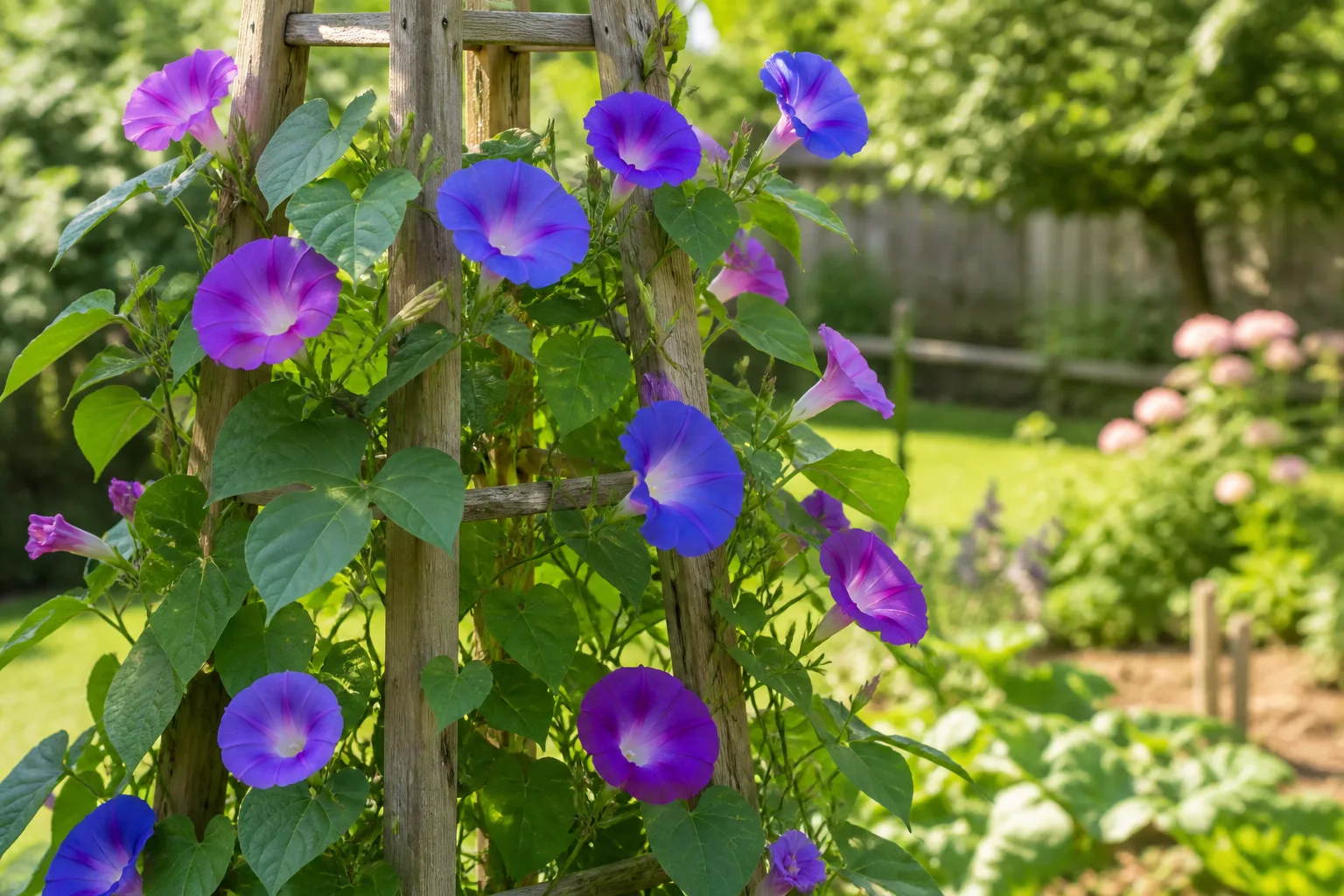
Morning glory (Ipomoea purpurea) is one of the quickest ways to cover a sunny trellis with heart-shaped leaves and trumpet flowers. It is also a plant that can outrun a small plan: a few vines can reach 6 to 10 feet in one season, and dropped seed may appear where you did not intend to grow it. The reliable approach is simple: give it a support before planting, wait for warm soil, keep the root zone evenly supplied with water while it establishes, and remove unwanted seed pods before they split.
The name usually means common morning glory, but seed packets may also contain related Ipomoea species. Check the botanical name before you buy. Common morning glory is generally grown as a warm-season annual in cold climates and can behave as a short-lived perennial in frost-free regions. NC State Extension describes it as a twining vine for sunny sites, while Missouri Botanical Garden notes that vigorous vines need room and management. The same family includes sweet potato, moonflower, and cardinal climber, but they are not interchangeable in bloom time, size, or garden behavior.
Decide Whether Morning Glory Fits Your Garden
Morning glory earns its place when you need quick vertical color, screening for one season, or a vine that is easy to raise from seed. It is less suitable beside small shrubs, on a delicate railing, or in a bed where you cannot monitor seed drop. The stems twine around narrow supports rather than attaching with adhesive roots, but that does not make every support safe: a weak trellis can bend under a mature canopy, and stems can wind into neighboring plants.
What the common morning glory is
Common morning glory has heart-shaped leaves and flowers that open in strong morning light, often closing later in the day or in cloudy weather. Flower colors include blue, purple, pink, and white. The plant is not a cut-and-come-again perennial in most temperate gardens; frost ends the season, and next year’s plants usually come from purchased seed or self-sown seed. Treat any volunteer as a choice, not a promise.
Choose a Site and Support Before Sowing
Choose the support first, then plant at its base. Full sun means about six to eight hours of direct light; more morning and midday light generally produces tighter growth and more flowers than a shaded afternoon corner. Place a trellis, obelisk, fence panel, or taut net where air can move around the foliage. A support 6 to 8 feet tall is a practical starting point for a seasonal screen, but strong vines can climb higher if they find a nearby fence, shrub, or roofline.
Anchor the lower support firmly. Do not expect a few decorative stakes pushed into loose soil to carry a heavy vine after rain. Keep the vine away from gutters, electrical wires, and trees that you do not want it to cover. If you are growing in a container, choose a pot with drainage and install the trellis before the roots fill the container; adding one later can tear the root ball and disturb young stems.
Time Planting by Frost and Soil Temperature
Direct-sow after the danger of hard frost has passed and the soil is reliably warm—about 64°F (18°C) is a useful target. Cold, saturated ground slows germination and encourages seed rot. In zones with short summers, sow indoors four to six weeks before the last frost, but handle seedlings gently and transplant promptly because morning glory dislikes root disturbance.
In warm regions, planting is governed less by a calendar than by heat and moisture. Avoid sowing into the hottest, driest part of summer unless you can irrigate consistently. In frost-free climates, check local guidance before allowing the vine to reseed; a plant that is manageable as a summer annual elsewhere can become a persistent volunteer in a warm garden.
Prepare Morning Glory Seeds for Faster Germination
Morning glory seeds have a hard coat. Germination may still happen without preparation, but scarification can make emergence more even. Rub each seed lightly between two pieces of fine sandpaper until a small dull patch appears; do not grind through the seed. Then soak the seeds in room-temperature water overnight and sow them the next day.
Fine Gardening and Gardeners’ World both treat warm direct sowing and a prepared support as the practical starting point for these vines; the exact date still depends on local frost and soil conditions.
This treatment is optional, not a license to soak seeds for days. A seed that has swollen is ready for soil. Label cultivars before soaking, because seedlings of different varieties look similar until they flower. Store extra seed in a cool, dry, sealed packet and keep it away from children and pets; the seeds are the part most often associated with poisoning.
Direct-Sow Morning Glory Step by Step
- Clear weeds and loosen the top 4 to 6 inches of soil near the support.
- Water the bed once so the soil is evenly moist but not muddy.
- Sow prepared seeds about 1/4 inch deep, with a few inches between seeds. Thin later rather than burying seed deeply.
- Firm the soil gently and mark the row so you do not disturb it while waiting.
- Keep the surface consistently moist until seedlings emerge, usually within a week or two under warm conditions.
- Once seedlings have several true leaves, thin crowded plants and guide the strongest stems toward the support.
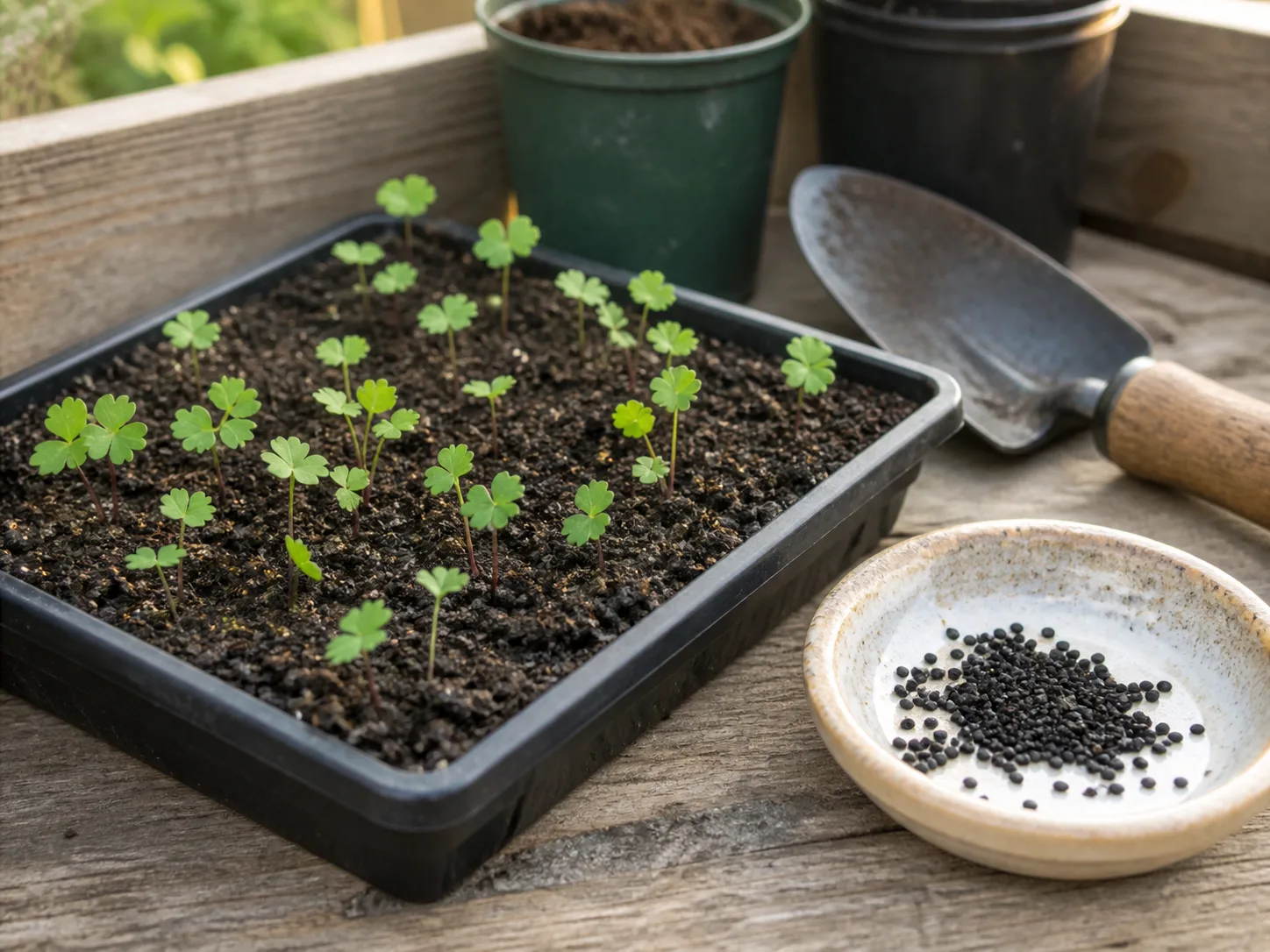
The most common direct-sowing mistake is allowing the seedbed to cycle from wet to bone-dry. Small roots cannot reach deep moisture yet. Water gently with a fine rose or a slow trickle, and use a thin layer of mulch after emergence—kept off the stems—to slow evaporation without burying the seedlings.
Start Seeds Indoors Only When You Need a Head Start
Use small individual cells rather than a communal flat. Fill them with a sterile seed-starting mix, sow one or two seeds about 1/4 inch deep, and provide bright light immediately after emergence. A sunny window may be enough, but a grow light kept close to the foliage produces sturdier seedlings than a dim windowsill.
Harden plants outside over about a week. Begin with a sheltered hour or two, then increase outdoor exposure while protecting them from cold nights and strong wind. Transplant with the root ball intact when soil is warm. If a seedling is already wrapping around itself, unwind it carefully or cut the support rather than pulling the vine apart.
Give Vines Full Sun and a Safe Climb
Morning glory may grow leaves in partial shade, but bloom is usually weaker and stems stretch toward the brightest opening. If a vine is lush but flowerless, check light before adding fertilizer. A site that receives direct sun only late in the day may produce the least satisfying display because flowers open in response to light and may be closing by the time you see them.
Guide young stems toward the support while they are short. Once the vine reaches the trellis, it will twine, but a loose tie can prevent a stem from falling into a neighboring plant. Use soft ties and never cinch them around a fast-growing stem. Inspect the top of the support every week; redirecting a 10-inch runner is easy, while removing a tangled mass later can damage leaves and flowers.
Water for Roots, Not Just Leaves
Keep newly sown beds evenly moist. After roots establish, morning glory can tolerate short dry spells, but growth, flowering, and leaf quality suffer when the plant repeatedly wilts. Water deeply at the soil line when the upper inch or two feels dry, then allow excess water to drain. About an inch of water per week is a starting point, not a fixed prescription; sandy soil, containers, heat, wind, and rainfall change the interval.
Water early in the day and avoid frequent overhead wetting late in the evening. A layer of organic mulch helps stabilize moisture, but do not pile it against stems. Containers may need checking daily during hot weather because a large leaf canopy can empty a small pot quickly. Conversely, a pot that stays wet for days needs better drainage or a lighter mix, not more water.
Feed Lightly and Avoid Excess Nitrogen
Morning glory does not need rich soil to become enormous. Excess nitrogen can produce a wall of leaves with few flowers and soft growth that is harder to support. Incorporate a modest amount of finished compost before sowing if the soil is poor, then use a balanced, dilute fertilizer only if growth is pale or the container mix is depleted.
Do not switch automatically to a high-phosphorus product to force blooms. Flowering depends first on light, temperature, maturity, and cultivar. Correct the site and watering pattern before feeding. A soil test is more useful than repeated fertilizer applications when a bed has been heavily amended or fertilized in previous seasons.
Manage Growth Without Fighting the Vine
Pruning is optional. Pinching the tip of a young vine can encourage branching, but it also delays the plant’s climb. Remove broken, diseased, or unwanted stems with clean pruners. If the vine reaches a place it should not, redirect the newest growth or cut it back to a healthy junction rather than ripping it from the support.
Deadheading is not required for continued flowering, but removing spent flowers before they become dry seed pods helps keep a contained planting from reseeding. Wear gloves if you are handling a large amount of plant material and wash hands afterward. At season’s end, remove the entire vine after frost and dispose of mature seed pods according to local rules rather than scattering them into a compost pile that will be spread around the garden.
Select Morning Glory Types for Your Space
Ipomoea purpurea cultivars such as ‘Heavenly Blue’, ‘Star of Yelta’, and ‘Kniola’s Black’ offer different flower colors and contrast. I. tricolor cultivars can have especially large blue flowers. Moonflower (I. alba) is a different species with white flowers that open at night, while cardinal climber (I. × multifida) has smaller red flowers and finely divided leaves.
Read the seed packet for mature height, bloom timing, and whether the selection is described as a species or hybrid. If you need morning color beside a patio, choose a compact support and a variety with a predictable height. If you want a privacy screen, build the structure first and plant enough seedlings to cover it without crowding the base.
Troubleshoot Leaves, Flowers, and Vigor
Leaves but few flowers: Start with light. Next check whether the plant was overfed with nitrogen, is still immature, or is being kept too wet. Moving an established vine is usually more disruptive than improving the support and reducing excess fertilizer, so correct the cause in place when possible.
Long, thin stems: The plant is likely reaching for stronger light, especially if leaf spacing is wide. Redirect it to a sunnier support and avoid pruning away all its foliage at once.
Yellow lower leaves: A few older leaves can age naturally. Widespread yellowing with wet soil points to poor drainage or overwatering; yellowing with dry, lightweight soil points to drought stress. Check the root zone before adding either water or feed.
Seedlings disappear: Slugs, birds, crusting soil, and a drying surface can all cause losses. Inspect at dawn, protect the seedbed if needed, and reseed shallowly in warm soil rather than burying seeds deeper.
Prevent Pests, Disease, and Wet-Soil Problems
Aphids, spider mites, and leaf miners may appear, especially on stressed vines. First inspect the undersides of leaves and the newest growth. A strong water spray can dislodge aphids; repeat checks matter more than one treatment. For any pesticide or horticultural oil, follow the product label, test a small area, and avoid spraying open flowers when pollinators are active.
Root rot is more often a site problem than a morning glory problem. Improve drainage, avoid planting in a low pocket that stays saturated, and water the soil rather than keeping foliage wet overnight. Powdery mildew is more likely where air is stagnant and foliage stays humid. Give vines room, remove badly affected leaves, and do not compost diseased material unless your municipal or home compost system reaches temperatures appropriate for plant pathogens.
Control Reseeding and Tell Morning Glory From Bindweed
Letting a few pods mature can provide next year’s volunteers, but uncontrolled reseeding can turn a decorative vine into a recurring chore. In small gardens, remove pods while they are green or just as flowers fade. Pull unwanted seedlings when the soil is moist and young roots are easiest to remove. In warm climates, ask your local extension service about invasive status before planting or allowing it to spread.
Bindweed is a different, more persistent weed. Morning glory typically has broad heart-shaped leaves and larger showy flowers; field bindweed often has smaller funnel-shaped flowers and arrowhead or triangular leaves. Leaf shape alone is not a perfect identification, so compare the whole plant and consult a local extension office if the vine is spreading aggressively through beds and lawn. Never assume that a desirable seed packet name makes every volunteer safe to keep.
Understand Toxicity and Safe Garden Placement
Morning glory seeds can be toxic if eaten, and the ASPCA lists morning glory as toxic to dogs, cats, and horses. Colorado State University’s poisonous-plant resource also flags the seeds and their hallucinogenic compounds as a risk. Keep seed packets, saved seed, and harvested pods away from children and pets, and avoid placing the vine where a curious animal can easily chew a heavy crop of pods.
Toxicity is not a reason to panic over a planted vine, but it is a reason to plan. Do not use morning glory as edible garnish, do not encourage children to handle seeds, and contact a veterinarian or poison-control resource promptly if an animal may have ingested them. Local poison-control and veterinary guidance should take priority over internet gardening advice.
Prepare for Frost and Next Season
The first frost usually ends a temperate-season planting. Before then, decide whether you want seed. Save only fully mature, dry pods from correctly identified plants, label them with cultivar and year, and store them dry. If you do not want volunteers, remove pods and pull the vine before seeds fall.
In zones where the species can persist through winter, do not assume a frost-free climate makes it harmless. Check local invasive-plant guidance, keep the vine on its support, and inspect nearby soil for seedlings. Container plants can be cut back after flowering and monitored, but overwintering is only worthwhile where light, warmth, and space make sense.
Conclusion
To grow morning glory well, make the support and sunlight decisions before you sow. Scarify and soak the hard-coated seed if you want faster, more even germination; plant shallowly in warm soil; keep seedlings moist until roots establish; and guide the twining stems while they are still easy to handle. If flowering disappoints, check light, nitrogen, water, and maturity in that order. Finally, treat seed pods as a management decision, not an afterthought, and keep seeds away from pets and children. With those guardrails, this fast annual vine can deliver a long season of color without taking over the part of the garden you meant to keep.