How to Grow and Care For Petunias
Grow fuller, longer-blooming petunias with clear advice on timing, soil, container care, deadheading, leggy growth, and recovery after summer stress.
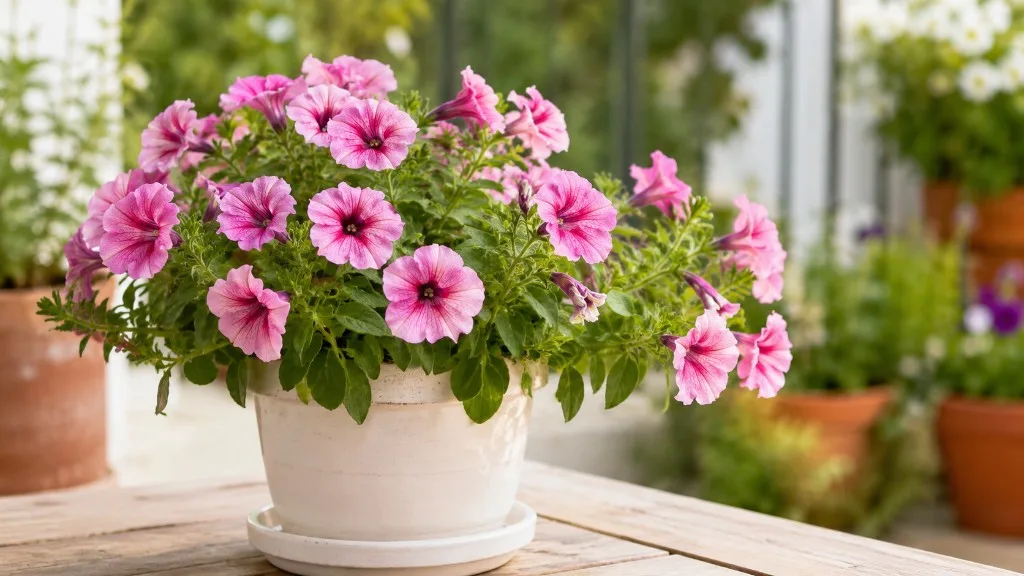
Petunias earn their place in a garden by flowering generously, but they are not maintenance-free. A plant that receives too little usable light becomes loose and leafy; one kept constantly wet may wilt even when the soil looks damp; and a petunia that has spent its energy on long stems can look finished until it is cut back and given a chance to branch.
The most reliable approach is to match the petunia’s growth habit to the space, plant after frost in fast-draining soil, water deeply when the root zone begins to dry, and treat midseason trimming as renewal rather than punishment. The guide below applies to common Petunia hybrids grown as seasonal bedding plants, containers, baskets, and short-lived perennials in frost-free climates.
Choose the Petunia Type for Your Space
Petunia labels describe more than flower size. They predict how much room the plant needs and how it will respond when summer weather arrives.
Grandiflora types carry large, showy flowers on a more upright plant. They are excellent where the flowers are viewed close up, but large blooms can look battered after heavy rain. Multiflora types produce smaller flowers in greater numbers and usually make a sturdier bedding display. Floribundas sit between those habits.
Milliflora petunias stay compact and carry many small blooms, which makes them useful in smaller containers. Spreading or trailing types are better for baskets, window boxes, and the edge of a raised bed; their stems are meant to run, so cutting every long stem short defeats their form. Some modern spreading series are sold as self-cleaning, meaning spent petals drop more readily, but seed capsules and tired stems can still reduce the display.
Before buying, measure the mature width rather than judging the nursery pot. A crowded container dries unevenly and shades its own lower leaves. If you want one compact mound, use a compact type. If you want spillover, select a true trailing type instead of trying to force an upright petunia to cascade.
Plant Petunias After Frost and Into Drained Soil
Plant outdoors after the local last-frost risk has passed and the soil has warmed. Petunias are warm-season plants; a late freeze can blacken tender leaves and stems even when the forecasted afternoon feels mild. A useful planting cue is soil near 60°F, but the forecast matters more than one warm afternoon.
Choose a site with soil that drains within a reasonable time after watering. Petunias prefer fertile, slightly acidic soil, but the critical distinction is between soil that stays evenly moist and soil that remains saturated around the roots. In a bed, loosen compacted ground and mix in mature organic matter without creating a rich, water-holding pocket. In a container, use a quality potting mix rather than garden soil.
Set transplants at the same depth they occupied in their nursery containers. Burying the stem does not make a petunia sturdier; it can keep the crown too wet. Water the root ball after planting so it contacts the surrounding soil, then let the surface begin to dry before watering again.
Beds, pots, and hanging baskets need different spacing
Use the plant tag as the starting point because cultivars vary widely. Compact types may be comfortable 4 to 6 inches apart, while upright and spreading forms need more room. In a 12-inch container, two or three compact plants can fill out over time, but a vigorous trailer may need the whole pot to itself.
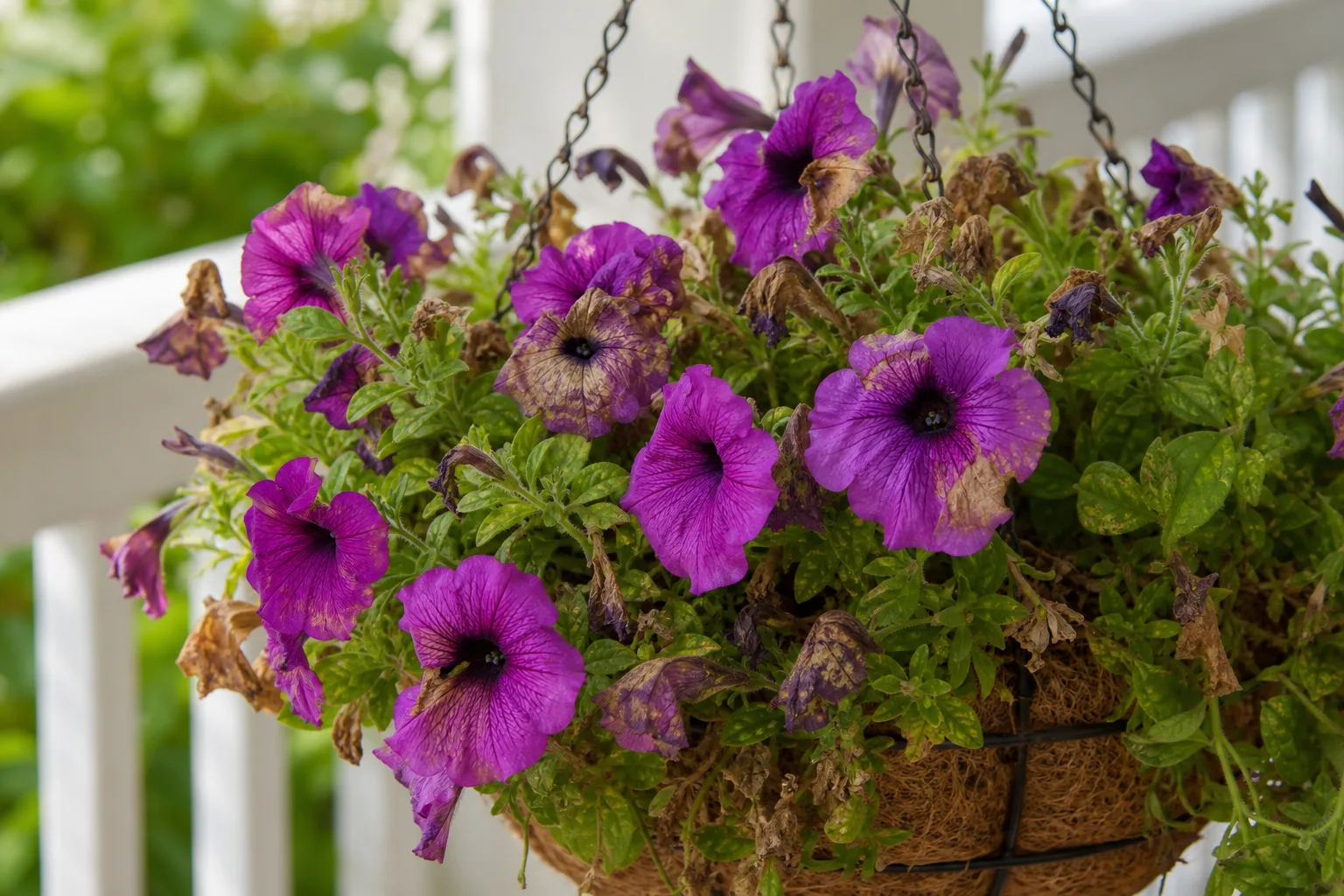
Hanging baskets lose water from all exposed sides and can dry much faster than a bed. A pot in direct afternoon sun also heats its root zone. Check moisture at the root depth rather than assuming a basket is wet because the foliage still looks firm.
Give Petunias the Light That Produces Flowers
Most petunias flower best with at least six hours of direct sun. Strong light supplies the energy needed for branching and repeated flower production; a bright-looking porch that receives only reflected light can still produce long gaps between leaves and fewer buds.
In very hot regions, morning sun with protection from the harshest afternoon exposure can be a better compromise than baking a container all day. This is not the same as putting petunias in deep shade. Watch the plant: if stems lengthen rapidly and flowering drops, light is probably insufficient; if leaves scorch on a recently moved plant, acclimate it gradually and check whether the pot is overheating or drying too quickly.
Place containers where foliage gets air movement but is not constantly battered by a hot wall or a drying wind. Rotate a pot every few days if one side stretches toward the light. Do not move a flowering plant repeatedly in response to each wilt; first determine whether the root ball is dry, hot, or waterlogged.
Water the Root Zone, Not the Calendar
Water when the top inch or two of mix has begun to dry, then wet the entire root ball until water exits the drainage holes. Empty a saucer so the pot does not stand in runoff. In beds, water slowly enough to soak the root zone rather than wetting only the surface.
Frequency changes with pot size, sun, wind, temperature, and root density. A small basket in a hot, exposed position may need checking daily, while a large bed after rain may need no water for several days. A fixed weekly schedule is less reliable than lifting a container, pushing a finger into the mix, and inspecting leaves together.
Wilt is not proof of thirst. A petunia in saturated soil can wilt because damaged roots cannot supply water. If the mix is wet and the plant continues to droop, pause watering, improve drainage, and inspect the crown and roots before pruning healthy stems. Water on flowers and dense foliage also keeps surfaces wet longer, which raises disease pressure in humid weather.
Feed for Continuous Flowering Without Forcing Weak Growth
Start with fertile soil or a measured complete fertilizer at planting, then feed according to the product label while the plant is actively growing. Container petunias often need more regular feeding than bed-grown plants because repeated watering carries nutrients out of the pot.
A liquid fertilizer formulated for flowering plants can be useful during a long growing season, but more is not better. Excess fertilizer can produce soft, leafy growth, salt buildup, or root injury. If the potting mix develops a crust or watering becomes difficult, flush the container with plenty of plain water and let it drain; do not immediately add another dose.
Do not use fertilizer as the first answer to a plant with few flowers. Check light, root-zone moisture, temperature, and whether the plant is carrying a mass of old seed capsules. Feeding cannot replace sun or repair roots damaged by stagnant water.
Keep Petunias Bushy From the Start
Young petunias can be pinched when they are healthy and actively growing. Remove the soft tip just above a leaf pair, leaving enough foliage for the plant to continue photosynthesizing. This interrupts the leading shoot and encourages side branches from lower nodes, producing a fuller plant.
If a seedling is already short and stocky, pinch only the tip. If it is tall and thin, remove more of the soft stem, but do not strip a weak transplant down to bare stalks. Wait until the plant has settled after planting if it is wilted, chilled, or root-bound.
Pinching is a shaping step, not a cure for poor light. If new shoots immediately stretch again, move the plant to brighter conditions before making more cuts. The same principle applies to spreading varieties: allow their natural side growth to develop instead of repeatedly shearing them into a mound.
Deadhead According to the Variety
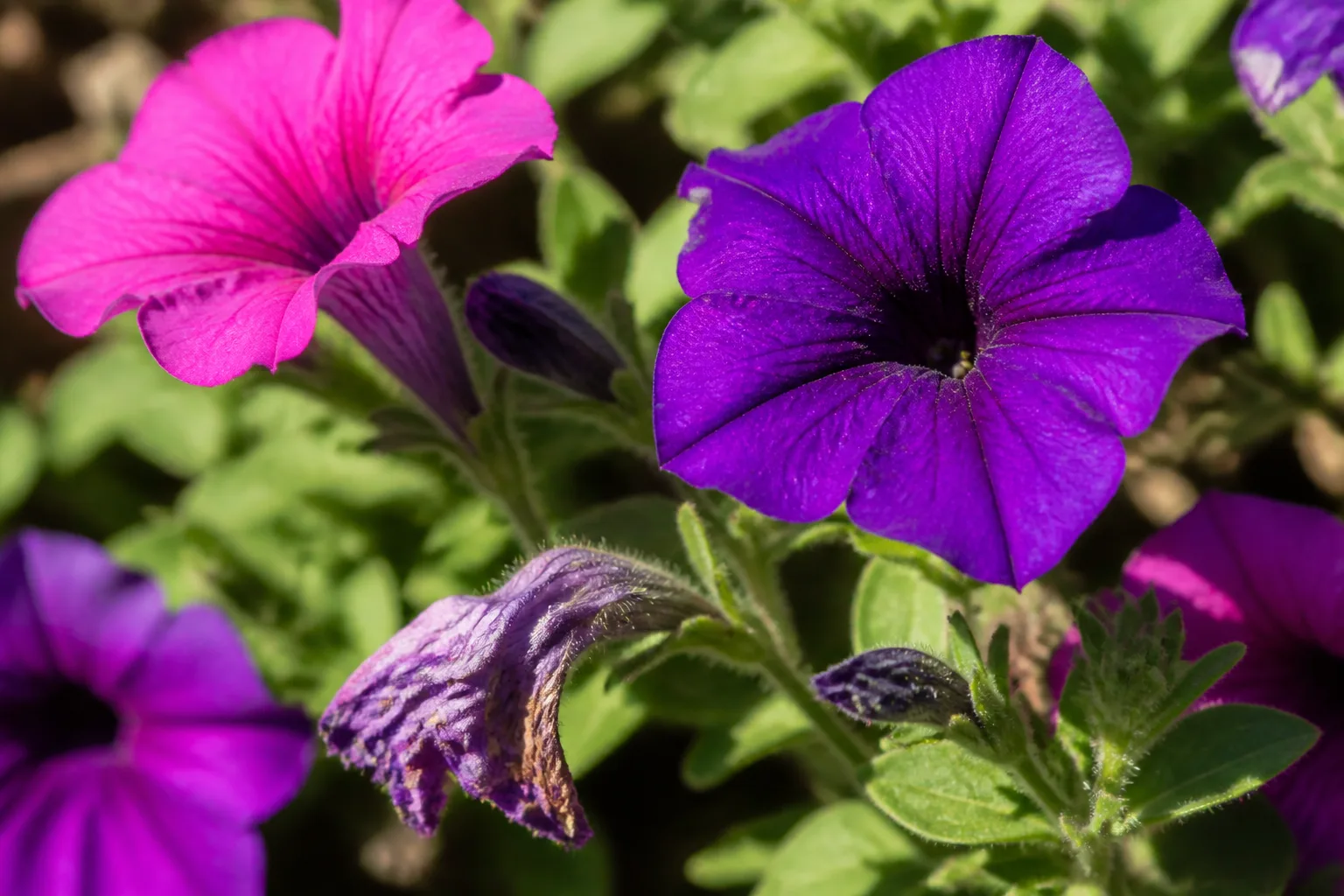
For older or non-self-cleaning petunias, remove spent flowers before they form large seed capsules. Follow the flower stalk down to the first strong leaf or branching point and snip there. Pulling only the petal can leave a developing ovary behind, while removing a long section of healthy stem wastes potential flowering sites.
Self-cleaning types may not need daily deadheading, but inspect them when the display looks tired. Remove sticky fallen petals, damaged flowers, and seed-filled stems that are shading fresh buds. Deadheading does not create light, fix root problems, or guarantee continuous flowering; it simply keeps the plant from investing as much energy in mature seed and keeps the canopy open.
Prune Leggy or Heat-Stressed Petunias in Stages
When a petunia becomes long, bare in the center, and flowers only at the ends, first correct the cause: improve light, check watering, and make sure the roots are not confined in a dry or waterlogged pot. Then cut back the longest stems in stages rather than shearing the entire plant without inspection.
Use clean, sharp scissors and cut just above a healthy leaf pair or side shoot. Remove no more than about one-third of the green growth in one session on a stressed plant. A vigorous, well-watered plant may tolerate a stronger renewal cut, but it still needs enough leaves to rebuild energy. Trailing cultivars can be shortened selectively at the points where they have outrun the container, while upright cultivars can be reduced to a few inches of leafy stem when midseason renewal is genuinely needed.
Do not cut into brown, leafless stems and expect guaranteed regrowth. Petunias respond best when remaining nodes are green and viable. Do not combine a major prune with repotting, hard root disturbance, and a move into harsh sun unless there is an urgent drainage or stability problem. Give the plant several days of even moisture and suitable light after trimming, then wait for new shoots before feeding heavily.
Help Petunias Through Heat, Rain, and Wind
Petunias may pause flowering during extreme heat even when foliage remains alive. Move a container to morning sun and afternoon protection, water the root zone deeply when it dries, and remove only damaged flowers or collapsing stems until temperatures moderate. Cutting a heat-stressed plant hard can add another demand at the wrong time.
After heavy rain, inspect whether the container drained and whether dense foliage is staying wet overnight. Remove fallen petals and obviously rotting flowers, but do not strip healthy leaves simply because they are damp. Improve spacing and air movement for the next planting; a plant cannot be pruned into good drainage.
Wind can break long stems and dry baskets quickly. Make clean cuts below breaks, support or relocate the container, and check the mix again later because a wind-dried plant can go from firm to collapsed in a few hours. When a plant has been badly flattened, restore it gradually rather than tying every stem tightly into a dense bundle.
Solve Yellow Leaves, Wilt, and Few Flowers
Yellow lower leaves are often old, shaded, or stressed by inconsistent watering. Remove leaves that are fully yellow and declining, then inspect the pattern. Widespread yellowing with wet soil points toward root stress; pale new growth with otherwise good conditions may suggest a nutrient or pH issue; yellowing on the sun-facing side after a move may be scorch rather than hunger.
Few flowers usually come down to inadequate light, excessive nitrogen, drought, waterlogged roots, heat, or a plant that has become a mass of old stems. Correct one limiting factor at a time. If the mix is dry, water thoroughly. If it is saturated, pause and improve drainage. If stems are long and the window or garden bed is shaded, move the plant before pruning it.
Wilted leaves in a damp pot deserve caution. Check roots if the problem persists: healthy roots are generally firm, while collapsed dark roots indicate a root-zone problem that pruning alone cannot solve. Remove only clearly dead tissue, correct the potting conditions, and accept that recovery may take longer than a fresh transplant.
Manage Pests and Wet-Weather Disease
Aphids cluster on new growth, budworms chew buds, and slugs or snails may feed on low foliage. Inspect leaf undersides and growing tips before assuming a fertilizer deficiency. A strong water spray can dislodge some soft-bodied pests; for persistent problems, use a product labeled for the plant and pest and follow its directions exactly.
Gray mold and other fungal problems are more likely when petals and foliage stay wet, air is stagnant, or damaged tissue accumulates. Remove diseased material with clean tools, discard it away from the compost pile if the disease is unknown, water at the soil surface, and increase spacing. Sanitizing scissors between plants is especially important when moving from a visibly diseased specimen to a healthy one.
Grow Petunias From Seed or Cuttings
Starting from seed is economical for open-pollinated selections, but many named petunias are hybrids, so saved seed may not reproduce the parent’s flower color or habit. Sow tiny seeds on the surface of moist seed-starting mix because light helps germination; keep them warm and evenly moist without burying them.
Seedlings need strong light after emergence. When they have several true leaves, transplant them carefully and pinch only once they are growing strongly. Weak, stretched seedlings need more light before they need a haircut.
Healthy, non-patented plants can also be propagated from green stem cuttings. Take a supple section, remove lower leaves, and place it in a clean, lightly moist rooting medium under bright indirect light. Keep the cutting humid but not waterlogged. Treat propagation as a way to preserve a favorite plant or refresh a tired one, not as a guarantee that every hybrid will root equally well.
Decide Whether to Overwinter Petunias
In most temperate gardens, petunias are grown as annuals because frost ends the outdoor season. In frost-free climates they can behave as short-lived perennials, although heat, pests, and declining vigor may make replacement simpler than rescue.
Before the first frost, take healthy cuttings if the cultivar is worth saving, or bring a container indoors only if you can provide strong light and a pest-free location. Remove declining flowers and inspect the plant before it joins houseplants. A dark room and wet winter soil usually produce a stretched, unhappy plant rather than a useful second season.
A Simple Weekly Petunia Care Routine
Once a week, inspect the root-zone moisture, lift a container to notice weight changes, and look at the newest growth. Remove spent flowers when the variety needs it, pick off broken or diseased material, and check under leaves for pests. Rotate containers if growth leans, and record the weather when a plant suddenly wilts or stops flowering.
Every few weeks during active growth, assess whether the plant has outgrown its pot, whether fertilizer salts are accumulating, and whether stems need selective pinching. Make one meaningful correction at a time. Petunias respond more predictably to a sequence of small, well-timed adjustments than to a single day of hard pruning, repotting, heavy feeding, and relocation.
Conclusion
Growing petunias well is mostly a matter of keeping the root zone balanced while preserving enough light and leafy growth to support flowers. Choose the habit that fits the space, wait until frost danger has passed, plant into drained soil, water when the mix begins to dry, and feed modestly during active growth. Deadhead non-self-cleaning types, pinch young plants before they stretch, and renew leggy plants only after correcting the condition that made them leggy.
The best petunia care is observant rather than rigid. A basket in hot sun, a bed after three days of rain, and a sheltered container in a cool climate will not need the same schedule. Check the plant, make the smallest useful correction first, and give it time to show whether the change worked.