Calathea Dottie Care Guide
Goeppertia roseopicta 'Dottie'
Calathea Dottie care: bright indirect light, 60%+ humidity, filtered or rainwater, evenly moist soil, and division at repotting. Pet safe.
Calathea Dottie Care Guide
Start with wateringThe most common care mistake for Calathea DottieWatering guide →Calathea Dottie care essentials
About Calathea Dottie
Calathea Dottie has a upright growth habit. It is also known as Calathea 'Dottie' and Rose-painted calathea Dottie.
| Detail | Information |
|---|---|
| Also known as | Calathea 'Dottie', Rose-painted calathea Dottie |
| Growth habit | Upright |
| Scientific name | Goeppertia roseopicta 'Dottie' |
Calathea Dottie Care Guide
Calathea Dottie (Rose-Painted Calathea) Care: Quick Answer
Calathea roseopicta - the rose-painted calathea - is worth buying only when its newest leaves show clean pink, cream, or silver brushstroke patterns on deep green. Unlike rattlesnake calathea, where a few crisp tips barely matter, edge damage on rose-painted leaves ruins the whole display. Give Calathea Dottie overview bright indirect light (see the dedicated light guide), evenly moist well-draining soil (watering and soil pages), 60% or higher humidity, warm stable room temperatures, and rainwater or distilled water when tap water causes brown margins. Divide the rhizome in spring to propagate. The ASPCA lists Calathea species as non-toxic to cats and dogs - a genuine advantage for pet owners who still need to discourage chewing.
Author: sai-ananth · Reviewed by: LeafyPixels Review Board · Reviewed: 2026-06-15
For related Calathea Dottie care, see Aphids on Calathea Dottie.
What Is Calathea Dottie? Identification and Cultivars
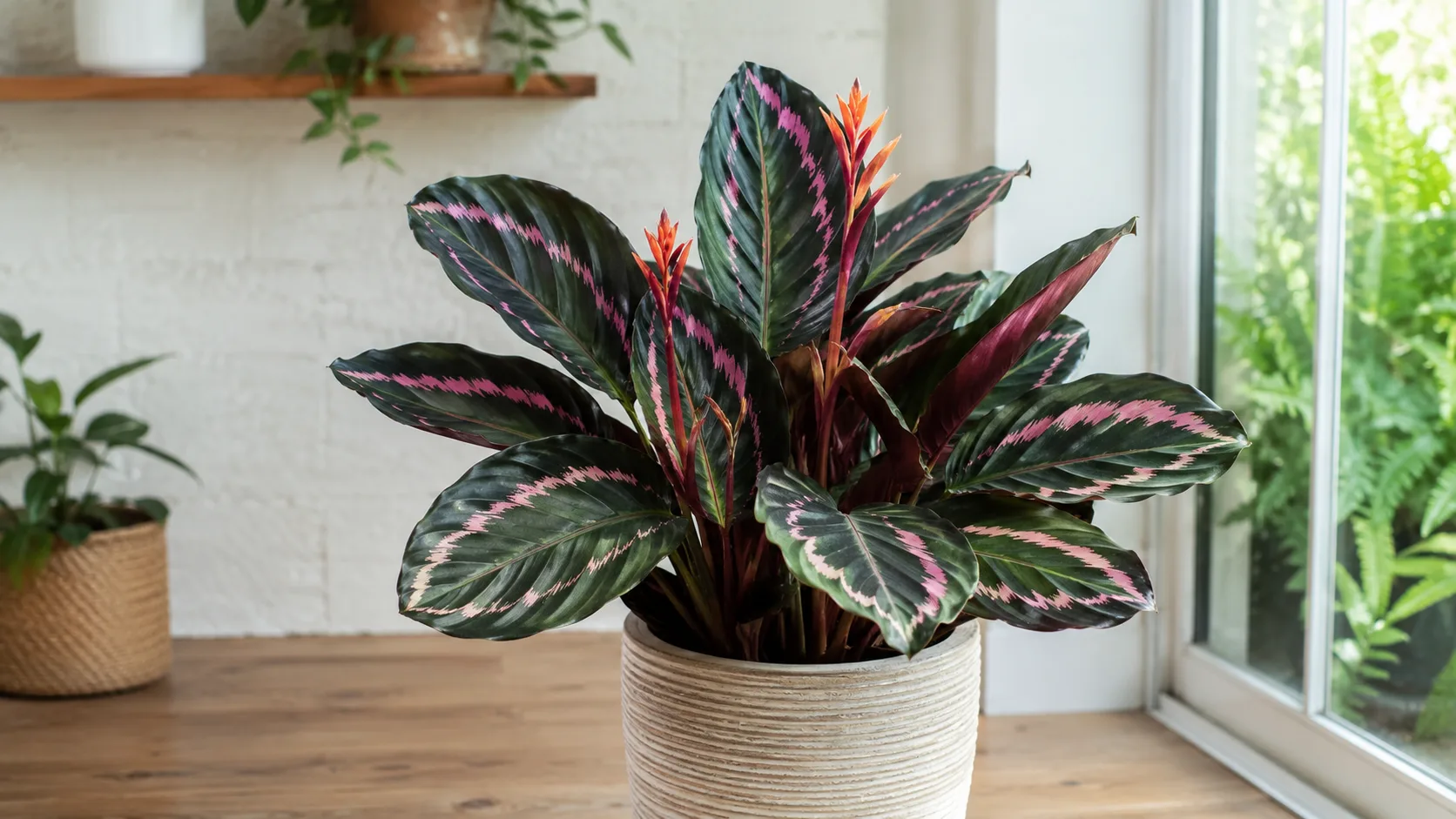
Calathea roseopicta is an evergreen tropical perennial in the Marantaceae (prayer plant) family, valued for glossy elliptical leaves that look hand-painted with pink, cream, or silver along the midrib and veins. Indoors it typically forms a compact clumping mound 12 to 24 inches (30 to 60 cm) tall and wide, with reddish-purple leaf undersides that add depth when leaves lift in the evening. It is a slow to moderate grower in most homes and behaves as a rhizomatous perennial, not a vine or tree-form houseplant.
The Missouri Botanical Garden describes Goeppertia roseopicta as a compact rhizomatous evergreen with elliptic leaves 6 to 10 inches long, glossy dark green above with a rose-colored midrib and irregular feathering of rose markings between midrib and margins - the visual signature that separates roseopicta from peacock or rattlesnake calatheas at the nursery bench.
Botanical Names on the Nursery Tag
Botanists now place this species in Goeppertia based on floral and genetic differences, so the accepted scientific name is Goeppertia roseopicta. Retail tags often still read Calathea roseopicta or occasionally Maranta roseopicta. All three labels refer to the same plant; compare leaf pattern and cultivar name, not genus spelling on the sticker. The specific epithet roseopicta means “zebra-striped” and refers to the striped, painted foliage appearance rather than any rose fragrance, per NC State Extension.
Like other Marantaceae members, Calathea roseopicta displays nyctinasty - leaves fold upward in the evening and reopen in the morning, driven by a pulvinus at the leaf base that responds to light and temperature. Nighttime folding is healthy. Daytime curl usually means dry air, incorrect watering, or cold stress - a distinction that saves you from drowning a plant that actually needs humidity.
Popular Cultivars at a Glance
NC State Extension lists these common roseopicta cultivars. Use the best indoor placement column when you are deciding where each clone belongs - Rosy and Dottie punish hot windows fastest; Cynthia tolerates slightly dimmer spots if contrast expectations stay modest.
| Cultivar | Upper leaf look | Underside | Pattern retention | Best indoor placement |
|---|---|---|---|---|
| Dottie | Dark green with pink central vein and pink feathering | Reddish-purple | High contrast; pink fades in low light or harsh sun | East window or 3–5 ft from filtered south/west |
| Medallion | Silver-striped dark green, round leaves | Purple | Often mislabeled at retail; verify pattern before buying | Bright north or east; avoid afternoon sun on broad leaves |
| Rosy | Bright pink with green edges | Reddish-purple | Most color-forward; scorches fastest in direct sun | East only, or south behind sheer curtain - never hot sill |
| Cynthia | Dark green with pale silver-gray midrib and edges | Reddish-purple | Subtle silver banding; tolerates slightly lower contrast expectations | Medium-bright north or east; not a dark-corner plant |
| Surprise Star | Dark green to maroon with pink midrib and edges | Reddish-purple | Compact; occasional small pink-white flowers on mature plants | Tabletop near bright indirect light; same humidity rules |
Among popular calatheas, roseopicta sits in the middle of the difficulty range - often less dramatic than Calathea ornata (pinstripe) in humidity demands for some growers, but more sensitive to tap water and dry air than Calathea lancifolia (rattlesnake). The painted bands mean small edge damage is visible immediately; rattlesnake can carry a few crisp tips and still look fine. Roseopicta works best as a display specimen on a side table near filtered light, not as a far-corner background plant where pattern and moisture both fail unpredictably.
Native Habitat and Why It Matters Indoors
Rose-painted calathea is native to the tropical rainforests of western South America and western Brazil - including Colombia, Ecuador, Peru, and parts of Brazil - where it grows as an understory plant beneath a closed canopy. The Missouri Botanical Garden notes habitat along the upper Amazon in northwestern Brazil, Peru, and Colombia. That origin explains nearly every indoor requirement: warm temperatures, high humidity, filtered light, and evenly moist but never waterlogged soil.
Your home is not a rainforest floor. Winter heating drops humidity to 30–40% in many rooms. Municipal tap water adds fluoride and chlorine that NC State Extension links to brown foliage. South windows throw heat and direct beams that fade pink bands before the whole leaf scorches. Treat roseopicta as a system - light, water, soil, humidity, and water quality together - rather than a checklist you can satisfy halfway.
When to choose roseopicta over siblings: Pick roseopicta if you want compact painted foliage for a tabletop display and can run a humidifier or keep the plant in a naturally humid bright room. Choose peacock calathea (Goeppertia makoyana) for a wider feathered green mound with softer contrast demands. Choose rattlesnake (Goeppertia lancifolia) if your air runs dry and you want a more forgiving prayer plant - at the cost of losing the pink brushstroke effect entirely.
Should You Buy This Plant? Honest Fit Check
Rose-painted calathea is not a beginner “set and forget” plant like pothos or snake plant. It rewards growers who can supply stable humidity above 60%, filtered water, and bright indirect light without afternoon sun on the leaves. It is a strong fit if you enjoy watching new leaves unfurl at close range, you already own or will buy a humidifier, and you want pet-safe foliage without calcium oxalate toxicity.
Skip it or wait if your only bright spot is a hot south window without a sheer curtain, you refuse to check soil moisture and plan to water weekly on autopilot, or your winter bedroom humidity stays below 40% with no plan to raise it. Cosmetic old-leaf damage at the nursery will not repair - if the newest leaves already show brown margins or washed-out pink, walk away.
Nursery Buying Checklist for Rose-Painted Leaves
- Inspect the newest leaves first - they tell you whether current light, water, and humidity at the shop were adequate.
- Verify cultivar identity - “Medallion” is frequently mislabeled at big-box retail because round-leaf prayer plants share shelf space; match leaf shape and silver banding to the table above, not the sticker alone.
- Check undersides for fine pale stippling (early spider mites) or white cottony clusters (mealybugs).
- Lift the pot - it should feel moderately heavy, not waterlogged-soggy or feather-light.
- Reject pots with widespread edge burn on fresh growth; one old yellow lower leaf is normal senescence.
- Confirm drainage holes - roseopicta in sealed cachepots at the store often arrives already stressed.
Best Light for Pink and Cream Pattern Retention
Calathea roseopicta needs bright, indirect light - strong ambient daylight without harsh direct sun on the leaves for extended periods. NC State Extension lists bright, indirect light and partial shade (direct sun only part of the day, roughly two to six hours). Indoors that usually means an east-facing window, a bright north exposure, or a filtered south or west window with a sheer curtain.
Direct midday or afternoon sun bleaches pink and cream brushstrokes and browns colored margins first - the damage pattern that makes roseopicta harder than peacock in sunny rooms. Too little light produces smaller new leaves, weaker contrast, and slower drying, which increases overwatering risk if you keep a summer watering rhythm year-round. For window placement detail, grow-light distance, and faded-pattern troubleshooting, see the full Calathea Dottie light guide.
The RHS calathea growing guide recommends a bright spot out of direct sunlight, with a north- or east-facing window ideal in summer and a brighter position in low winter light - the same seasonal shift roseopicta owners should apply when pink bands dull in December.
Temperature and Humidity Targets
Calathea roseopicta prefers stable indoor temperatures between 65 and 75°F (18 and 24°C). NC State Extension gives the same range. The RHS recommends draught-free conditions and a constant temperature of at least 16°C (61°F). Avoid cold drafts below about 60°F (15°C), winter glass chill, and hot dry air from heating vents.
Humidity above 60% is the threshold NC State Extension recommends for good foliage quality. Ideal active-growth range is 60–80%. Below about 50%, expect crispy margins, daytime leaf roll, and spider mite pressure even when watering is correct. For humidifier placement, bathroom culture, and brown-tip diagnosis tied to dry air, see the low humidity problem guide.
Raising Humidity Without Wasting Effort
A small humidifier near the plant is the most reliable fix. Secondary help includes grouping humidity-loving plants, a pebble tray with the pot elevated above water (not sitting in it), or a bright bathroom - provided light is still adequate. NC State Extension also notes a wet pebble tray when a humidifier is unavailable.
Misting leaves adds only minutes of elevated humidity and can encourage leaf spot if water sits overnight - treat misting as cosmetic, not structural. The goal is changing the air volume around the plant, not wetting foliage on a schedule.
Soil Mix and Drainage
Use a moisture-retentive but well-draining potting mix with high organic matter and added perlite or bark. NC State Extension describes peaty potting mix with slightly acidic pH, amended with vermiculite or perlite so soil stays moist but not soggy. A workable home recipe is roughly two parts quality houseplant mix, one part perlite, and one part orchid bark or coco chips - adjust toward more perlite in warm bright rooms.
Target slightly acidic to neutral pH around 6.0–7.5; structure and salt management matter more than exact pH for hobbyists. Always use a pot with a drainage hole. For mix ratios, pH notes, and compaction troubleshooting, see the Calathea Dottie soil guide.
Dottie-specific humidity and water quality
Calathea Dottie is a Marantaceae prayer plant, so 60%+ rh; humidifier recommended in heated or air-conditioned rooms and filtered, rainwater, or overnight-stood tap water — fluoride causes pink-edged brown tips on new leaves. Misting alone rarely holds humidity long enough — use a humidifier, pebble tray, or grouped tropical placement. If new leaves open with brown edges while soil moisture looks correct, switch water sources before changing your watering schedule.
Watering Rhythm and Water Quality
The general rule: keep soil evenly moist during active growth - never bone dry and never soggy. Water when the top 1 inch (2–3 cm) of mix is beginning to dry and the pot still feels slightly heavy - roughly every 5–7 days in spring and summer and every 7–10 days in winter for many homes, but always check first. Water thoroughly until a little runs from the drainage hole, then empty the saucer.
NC State Extension recommends rainwater or distilled water and warns that fluoride in tap water causes foliage to brown. The RHS growing guide notes calatheas prefer rainwater; tap water left to stand 24 hours can reduce chlorine, but fluoride remains a roseopicta-specific problem. Flush the pot with plain water every few months to wash accumulated salts.
Do not treat daytime curl as an automatic signal to water - curl from low humidity will not fix itself with extra soil moisture and may worsen rot risk. Pair symptoms with a moisture check and humidity reading. Full seasonal rhythm, saucer discipline, and mistake patterns live in the watering guide.
Feeding During Active Growth
Calathea roseopicta does not need heavy feeding. NC State Extension recommends once-a-month fertilizer during spring through summer. Use a balanced water-soluble houseplant fertilizer at one-quarter to one-half label strength on already-moist soil. Hold feed in winter, after repotting until new growth appears, and during pest or root recovery. Salt buildup mimics fluoride tip burn - flush and pause feeding if margins crisp despite good humidity and filtered water. See the fertilizer guide for NPK choices and pause triggers.
Repotting and Root Health
Repot roughly every one to two years, or when roots circle drainage holes, mix breaks down and stays wet too long, or water runs straight through without soaking in. Best timing is early to mid-spring as active growth resumes. Choose a pot only one size larger - typically 1–2 inches (2.5–5 cm) wider - because oversized pots hold excess wet mix and trigger post-repot rot on shallow rhizomes.
Tease circling roots gently, remove only mushy tissue, and replant at the same depth. Keep humidity high after repotting. Do not repot a plant wilting from overwatering until roots are inspected. Step-by-step timing and rescue logic are in the repotting guide.
Propagation by Rhizome Division
The standard home method is rhizome division in spring, not leaf cuttings or water propagation. Each division needs its own rhizome section, several healthy leaves, and roots. NC State Extension lists division of rhizomatous roots as the best propagation method. Unpot, identify natural crowns connected by thick horizontal rhizomes, cut with a sterilized knife, and pot into the same moist mix as the parent. Place in bright indirect light with humidity above 60%. Expect minor transplant shock; new growth confirms success. Full division walkthrough: propagation guide.
Common Problems: Yellow Leaves, Brown Tips, and Pests
Most roseopicta problems are environmental, not mysterious diseases. Read moisture, humidity, light, and water quality before reaching for pesticide or extra fertilizer.
Yellow leaves often mean overwatering, underwatering, low light, natural aging, or recent repotting. Soft yellow leaves with wet mix suggest overwatering or root rot; crisp yellow with a light pot suggests underwatering. One yellow lower leaf on an otherwise healthy plant is often normal - remove it and watch new growth.
Brown tips and edges usually point to low humidity, fluoride or chlorine in tap water, salt buildup, or slight chronic underwatering. Fix humidity first, switch to filtered or rainwater, and judge success by new leaves emerging without damage - old brown tips will not green up. See brown tips for the full decision tree.
Daytime curl suggests dry air, cold, or root stress; night folding alone is healthy nyctinasty. Faded pink bands mean light is wrong before fertilizer will help - see not enough light.
Watch for spider mites (fine webbing, stippling on pink leaves), mealybugs (white cotton in axils), scale (immobile bumps), and aphids on new growth - all listed by NC State Extension for this species. Dry winter air favors mites; catch infestations early with weekly underside checks. Spider mites and mealybugs have dedicated fix pages.
Fungus gnats signal overly wet surface mix - let the top layer dry slightly and review the watering guide. Remove spent leaves that decay against damp soil. For cosmetic trimming of damaged foliage, see pruning.
Light, Humidity, and Water Triage
When multiple symptoms appear at once, use this table before you change everything at once:
| What you see | Most likely cause | First fix |
|---|---|---|
| Daytime curl, dry leaf feel, pot still heavy | Low humidity | Humidifier to 60%+; do not add water yet |
| Daytime curl, light pot, dusty dry top inch | Underwatering | Deep soak; empty saucer; check again in 5–7 days |
| Faded pink on Dottie/Rosy, long petioles | Too little light | Move to brighter filtered spot; see light guide |
| Bleached pink, crisp colored margins | Too much direct sun | Pull back from window or add sheer curtain |
| Brown tips only, humidity under 50% | Dry air or fluoride | Humidifier + filtered water; judge new leaves |
| Yellow lower leaves, wet mix smell | Overwatering / rot risk | Stop watering; inspect roots; see root rot |
| Leaves fold at night, flat by morning | Healthy nyctinasty | No fix needed - monitor for daytime curl instead |
Pet Safety
Calathea roseopicta is non-toxic to cats and dogs according to the ASPCA listing for Calathea species. Goeppertia reclassification does not change the practical pet-safety profile for home growers - prayer plants in this family lack the insoluble calcium oxalate crystals that make pothos or dieffenbachia dangerous.
Non-toxic does not mean intended for eating. The ASPCA notes consumption of any plant material can cause mild gastrointestinal upset. Discourage chewing, especially on recently treated plants. If a pet eats a large amount and shows persistent vomiting or lethargy, contact your veterinarian or the ASPCA Animal Poison Control Center at (888) 426-4435.
Seasonal Care Calendar
| Season | Light | Watering | Humidity | Feeding | Key tasks |
|---|---|---|---|---|---|
| Spring | Brightest filtered window; acclimate to any move | Resume 5–7 day checks as growth accelerates | Target 60–80% | Start monthly dilute feed | Repot or divide if needed |
| Summer | Filter harsh afternoon sun; rotate for even pattern | Most frequent; never soggy saucers | Humidifier on if AC dries air | Continue monthly feed | Wipe dust from broad leaves |
| Fall | Maximize window light as days shorten | Gradually stretch interval | Watch heating-air drop | Taper feed by late fall | Bring outdoor plants in before chill |
| Winter | Supplement with grow light if growth stalls | 7–10+ days; check top inch dry | 60% minimum; humidifier essential | Pause unless actively growing | Keep away from cold glass and heat vents |
Spring is the window for division and repotting. Winter fails most often when summer watering rhythm continues in lower light - the mix stays waterlogged and yellow leaves follow within two to three weeks. Match calendar reminders to pot weight and soil checks, not autopilot weekly dates.
FAQs
Why is my Calathea Dottie losing pink color?
Pink loss on Dottie usually means insufficient light, too much direct sun, or chronic low humidity - not a missing nutrient. Move the plant to bright indirect light without hot afternoon beams on the leaves, confirm humidity stays above 60%, and use filtered or rainwater if tap water causes edge burn. Judge recovery by new leaves opening with strong pink feathering; older faded leaves will not regain their original contrast.
Is Medallion the same plant as Calathea roseopicta?
Medallion is a cultivar of Calathea roseopicta (Goeppertia roseopicta), not a separate species - UF/IFAS lists C. roseopicta ‘Medallion’ among commonly produced interiorscape calatheas. It is recognized by round, silver-striped dark green leaves with purple undersides. Retail tags sometimes misapply the Medallion name to other prayer plants, so verify the leaf pattern against a trusted reference before you buy. Care requirements match roseopicta generally, though Medallion’s broad leaves show humidity stress quickly at the margins.
Can I mist my rose-painted calathea instead of using a humidifier?
Misting raises humidity only for minutes and can leave water on leaves overnight, which may encourage leaf spot in stagnant air. For roseopicta, which needs sustained humidity above 60%, a small humidifier near the plant is far more effective. Pebble trays and plant grouping help at the margins. Use misting only as a minor supplement, not your primary humidity strategy.
Should I buy a Calathea roseopicta with brown edges on the oldest leaves only?
Brown on one or two lower old leaves is often acceptable senescence if the newest leaves are clean and the crown is pushing fresh growth. Reject plants where the newest leaves already show edge burn, washed-out pink, hard cupping, or stippling on undersides - those signal current stress that will not self-correct after you bring the pot home. Roseopicta is worth buying only when the painted pattern on new foliage is intact.
How is rose-painted calathea different from peacock or rattlesnake calathea?
Roseopicta is the most color-forward of the three, with pink, cream, or silver brushstrokes that disappear when light or humidity fails. Peacock calathea (Goeppertia makoyana) emphasizes feathered green patterning on a wider mound and is often more forgiving of minor tip damage. Rattlesnake calathea (Goeppertia lancifolia) tolerates drier air and harder water better but lacks the rose-painted display. Choose roseopicta when you can supply humidifier-level air and filtered water for a tabletop specimen.
Conclusion
Calathea roseopicta (Goeppertia roseopicta) pays you back in living brushstroke foliage when you treat it as a display plant with stable humidity, filtered water, and bright indirect light - not as a background filler that tolerates neglect. Buy it when newest leaves are clean, place it where you can see each unfurling leaf, and wire the basics through the watering, light, and humidity guides before chasing fertilizer or repotting.
When something looks wrong, read the leaves in context: night folding is normal; daytime curl is a warning. Faded pink on Dottie or Rosy means light first. Brown tips mean air or water quality before nutrients. Yellow leaves mean root-zone moisture before panic. Winter is the silent failure season - lower light slows uptake while the same weekly watering schedule keeps the rhizome zone wet, so yellowing often appears three weeks after the first cold snap even though humidity felt “fine.” Stretch intervals, confirm the top inch dries, and pause feed until spring growth returns. Fix the environment, then trim old damage after new growth arrives clean - that is how rose-painted calathea becomes a reliable, pet-safe centerpiece instead of a recurring frustration.
When to use this page vs other Calathea Dottie guides
- Calathea Dottie overview - Canonical hub for this species - care topics and problems branch from here.
- Calathea Dottie problems - Symptom-first path when you already know something is wrong.
Related Calathea Dottie guides
- Calathea Dottie watering
- Calathea Dottie light
- Calathea Dottie soil
- Calathea Dottie propagation
- Calathea Dottie fertilizer
- Calathea Dottie repotting
- Calathea Dottie pruning
- Brown Tips on Calathea Dottie
- Yellow Leaves on Calathea Dottie
- Root Rot on Calathea Dottie
- Overwatering on Calathea Dottie
- Underwatering on Calathea Dottie
How to care for Calathea Dottie?
When should you water Calathea Dottie?
Every 5–7 days spring and summer (top 2 cm beginning to dry). 7–10 days winter. Rainwater, distilled, or filtered water only.
- Check top 2 inches - Every 5–7 days spring and summer (top 2 cm beginning to dry).
- Drain excess water - Rainwater, distilled, or filtered water only.
What soil works best for Calathea Dottie?
Well-draining but moisture-retentive mix. pH 6.0–7.5. Peat or coco coir base with perlite.
- Well-draining mix - Well-draining but moisture-retentive mix.
Grower notes for Calathea Dottie
What makes Dottie different
Dottie is a Goeppertia roseopicta cultivar with dark green leaves, a vivid pink central vein, and pink feathering along the midrib — NC State lists it among the most dramatic rose-painted selections. The dark leaf base makes pink contrast the first stress signal: veins wash out in low light, bleach in direct sun, or crisp when humidity or water quality slips.
Pink veins, light, and humidity
Give bright indirect light or partial shade — never direct sun that scorches dark foliage. Run a humidifier for 60%+ RH; misting alone rarely holds moisture through unfurl. Temperature 18–24°C (65–75°F). Pink-edged brown tips on new leaves usually mean fluoride in tap water or dry air, not just thirst.
Best placement in a real home
East windows or filtered south/west light 1–2 m from glass. Bathrooms and kitchens work when humidity stays high and drafts are absent. Water when top 2 cm dries. Keep above 16°C and away from heating vents.
Before you buy this plant
Choose firm new spears, clean undersides, and evenly moist — not wet — mix. Avoid plants with widespread pink-edge crisping, collapsed crowns, or pots sitting in stale water. Cheap starts with weak pink veining often stall in dry retail displays.
First month after bringing it home
Quarantine, learn dry-down speed, skip day-one repot. Watch for pink margins browning during unfurl (humidity or water), yellow lower leaves on wet mix, and leaf curl at dusk (underwatering or dry air). Change one variable at a time.
Safety note for Calathea Dottie
Dottie is non-toxic to cats and dogs per ASPCA Calathea listings and NC State — one of the few bold dark-leaved statement plants that is fully pet-safe. Sap may irritate skin; wear gloves when dividing. Chewing can still cause mild stomach upset.
Is it pet safe?
Calathea Dottie is generally considered pet safe.
Watering Calathea Dottie
Every 5–7 days spring and summer (top 2 cm beginning to dry). 7–10 days winter. Rainwater, distilled, or filtered water only.
Soil & potting for Calathea Dottie
Well-draining but moisture-retentive mix. pH 6.0–7.5. Peat or coco coir base with perlite.
Humidity & temperature for Calathea Dottie
Fertilizer & pruning for Calathea Dottie
Common problems on Calathea Dottie
Yellow Leaves
MediumLikely cause: Common on this plant type; confirm with recent watering, light, and root checks.
Quick fix: Inspect the plant and correct the most likely care stressor before stacking treatments.
Full fix guide →Brown Tips
MediumLikely cause: Common on this plant type; confirm with recent watering, light, and root checks.
Quick fix: Inspect the plant and correct the most likely care stressor before stacking treatments.
Full fix guide →Root Rot
MediumLikely cause: Common on this plant type; confirm with recent watering, light, and root checks.
Quick fix: Inspect the plant and correct the most likely care stressor before stacking treatments.
Full fix guide →Overwatering
MediumLikely cause: Common on this plant type; confirm with recent watering, light, and root checks.
Quick fix: Inspect the plant and correct the most likely care stressor before stacking treatments.
Full fix guide →Underwatering
MediumLikely cause: Common on this plant type; confirm with recent watering, light, and root checks.
Quick fix: Inspect the plant and correct the most likely care stressor before stacking treatments.
Full fix guide →Spider Mites
MediumLikely cause: Common on this plant type; confirm with recent watering, light, and root checks.
Quick fix: Inspect the plant and correct the most likely care stressor before stacking treatments.
Full fix guide →Mealybugs
MediumLikely cause: Common on this plant type; confirm with recent watering, light, and root checks.
Quick fix: Inspect the plant and correct the most likely care stressor before stacking treatments.
Full fix guide →Aphids
MediumLikely cause: Common on this plant type; confirm with recent watering, light, and root checks.
Quick fix: Inspect the plant and correct the most likely care stressor before stacking treatments.
Full fix guide →Leggy Growth
MediumLikely cause: Common on this plant type; confirm with recent watering, light, and root checks.
Quick fix: Inspect the plant and correct the most likely care stressor before stacking treatments.
Full fix guide →Slow Growth
MediumLikely cause: Common on this plant type; confirm with recent watering, light, and root checks.
Quick fix: Inspect the plant and correct the most likely care stressor before stacking treatments.
Full fix guide →Wilting
MediumLikely cause: Common on this plant type; confirm with recent watering, light, and root checks.
Quick fix: Inspect the plant and correct the most likely care stressor before stacking treatments.
Full fix guide →Drooping Leaves
MediumLikely cause: Common on this plant type; confirm with recent watering, light, and root checks.
Quick fix: Inspect the plant and correct the most likely care stressor before stacking treatments.
Full fix guide →Low Humidity
MediumLikely cause: Common on this plant type; confirm with recent watering, light, and root checks.
Quick fix: Inspect the plant and correct the most likely care stressor before stacking treatments.
Full fix guide →Not Enough Light
MediumLikely cause: Common on this plant type; confirm with recent watering, light, and root checks.
Quick fix: Inspect the plant and correct the most likely care stressor before stacking treatments.
Full fix guide →Fungus Gnats
MediumLikely cause: Common on this plant type; confirm with recent watering, light, and root checks.
Quick fix: Inspect the plant and correct the most likely care stressor before stacking treatments.
Full fix guide →Mold on Soil
MediumLikely cause: Common on this plant type; confirm with recent watering, light, and root checks.
Quick fix: Inspect the plant and correct the most likely care stressor before stacking treatments.
Full fix guide →