47 Plants With Red and Green Leaves (Care Guide)
Forty-seven red-and-green houseplants grouped by light, humidity, and skill—with care tables, fading fixes, pet notes, and room picks.
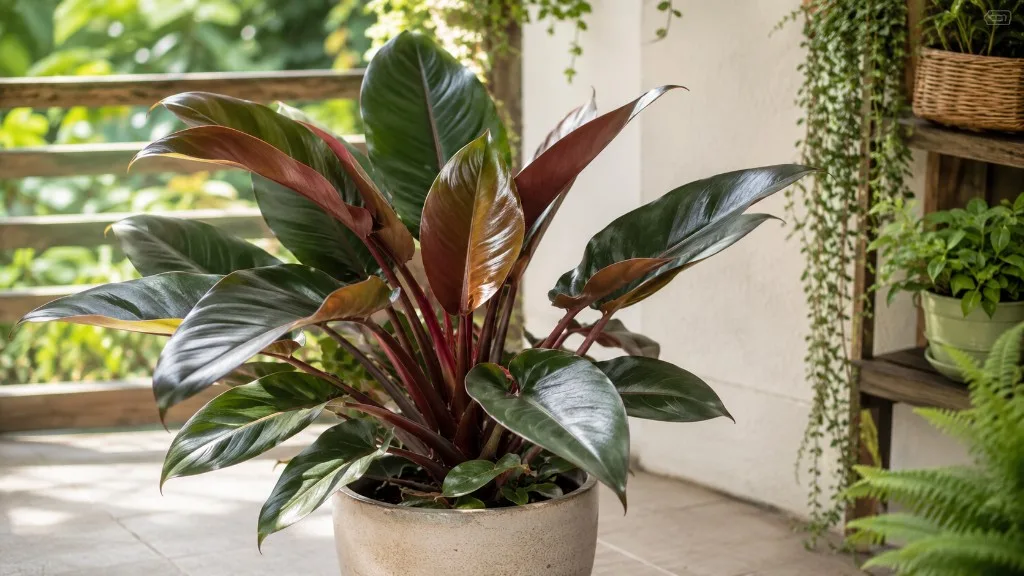
Red-and-green houseplants sell themselves at the nursery—then quietly disappoint on a bookshelf three feet from the window. The problem is not the plant list; it is that red shows up for different reasons on different species. Some cultivars are bred for permanent pink-red splashes. Others unfurl scarlet leaves that mature green within weeks. Succulents only blush when light is strong enough to trigger protective pigments. Shop without knowing which mechanism you are buying, and you will blame your watering can for a light problem.
This guide groups forty-seven red-green options by how color actually works indoors, then ranks the easiest wins by room light, humidity, and skill. Use it to pick one plant that will still look like the photo six months from now.
Quick Verdict: Match Red-Green Plants to Your Room
Before you add anything to cart, answer three questions: How bright is the spot? How humid is the air at leaf height? How often will you check soil moisture?
Bright, filtered indirect light is the baseline for most tropical red-green foliage. A dim hallway may keep the plant alive while new growth comes out mostly green. Direct afternoon sun through glass scorches prayer plants and calatheas but is exactly what painted echeveria and jelly bean sedum need for sharp red tips.
Humidity matters for marantas, stromanthes, fittonia, and caladium. Misting for five seconds does not replace steady moisture in the air. Aim for 50–60% household minimum on most tropical picks and 60%+ if you want forgiving margins on calatheas and nerve plants.
Start here if you are new: Aglaonema Red King or Lady Valentine, Peperomia Rosso, or tradescantia Nanouk in a bright room. Upgrade when you already keep ferns alive: Stromanthe Triostar, rex begonia, or philodendron Imperial Red. Reserve croton, calathea Dottie, and carnivorous pitchers for growers who can stabilize light, humidity, and water quality year-round.
When shopping, inspect newest leaves, not just the showiest mature ones. Fresh growth tells you whether your home light will maintain color. Skip plants with soggy soil, widespread brown tips, or fine webbing on leaf undersides—stressed plants lose red faster and import pests.
Why Leaves Show Red and Green Together
Red in leaves usually comes from anthocyanins—pigments that sit alongside chlorophyll and protect tissue from strong light or mark young leaves before they photosynthesize efficiently. Green remains where chloroplasts dominate. That is why the same plant can look burgundy on new growth and solid green six weeks later without anything “going wrong.”
Permanent Patterns vs New-Growth Blush vs Sun Stress
Permanent patterns include cultivars bred for red veins, maroon undersides, or pink-red splashes that persist on mature leaves—think fittonia, Stromanthe Triostar, calathea Dottie, and many aglaonemas. New-growth blush is common on self-heading philodendrons: Imperial Red, Rojo Congo, Black Cardinal, and Royal Queen unfurl deep red or burgundy, then harden off greener as leaves expand. Sun stress color appears on succulents—echeveria nodulosa, sedum rubrotinctum, kalanchoe luciae, crassula capitella Red Pagoda, and sempervivum cultivars—when direct light is strong enough to trigger anthocyanin along margins and tips.
Bracts and Blooms That Look Like Red Leaves
Anthurium and poinsettia display red on modified leaves (spathes or bracts), not on everyday foliage. The glossy green leaves stay green; the red “flower” is a showy bract surrounding tiny true flowers. Bromeliads such as guzmania and earth star cryptanthus use colorful bracts or striped rosette leaves—both read as red-green combos in a display but need different care than a philodendron.
The RHS guide on how plants use light notes that when light is insufficient, plants produce weak, pale growth because photosynthesis drops—variegated and red-accented leaves often revert toward green first because the plant prioritizes chlorophyll production.
Red-Green Houseplant Care at a Glance
Use this table as a starting point. Always confirm moisture with your finger or a meter; pot size and season shift timing.
| Plant group | Red shows as | Light | Water rhythm | Humidity | Difficulty | Pet notes |
|---|---|---|---|---|---|---|
| Aglaonema Red King / Lady Valentine | Pink-red splashes on green | Medium to bright indirect | Top dry slightly | 40–50%+ | Beginner | Toxic if chewed (Araceae) |
| Philodendron Imperial Red / Rojo Congo | Red unfurl, green mature leaf | Bright filtered indirect | Top 1–2 in dry | 50%+ | Moderate | Toxic if chewed |
| Stromanthe Triostar | Pink-red marbling + green | Bright indirect; no hot sun | Top 1 in dry | 60%+ | Advanced | Treat as caution; check ASPCA lists |
| Maranta red prayer plant | Red stripes on green | Medium to bright indirect | Evenly moist, not soggy | 60%+ | Moderate | Generally safer; verify species |
| Calathea Dottie / Rosy | Pink-red leaf faces or edges | Bright filtered; no direct sun | Top 1 in dry | 60%+ | Advanced | Many calatheas listed toxic |
| Peperomia Rosso / Ripple Red | Burgundy undersides | Bright indirect | Top 1 in dry | 40–50% | Beginner | Generally considered low risk |
| Fittonia red nerve plant | Red veins on green | Indirect; terrarium OK | Evenly moist | 60–80% | Beginner | Generally considered non-toxic |
| Croton | Red, orange, green splashes | Very bright indirect | Evenly moist | 50%+ | Advanced | Toxic; croton drops leaves if moved |
| Coleus | Red-green patterns | Bright indirect | Surface dry | 40–50% | Beginner | Mild irritant |
| Caladium | Red-centered or red-veined leaves | Bright filtered | Evenly moist | 50–60% | Moderate | Toxic if ingested |
| Painted echeveria / jelly bean sedum | Red stripes or tips | Several hours direct sun | Fully dry between | Low | Beginner | Mild irritant if ingested |
| Anthurium red | Red spathe, green leaves | Bright indirect | Top 1–2 in dry | 60–80% | Moderate | Toxic (calcium oxalate) |
Philodendrons That Unfurl Red, Then Green
Self-heading philodendrons are the classic “red becomes green” story. Imperial Red (Philodendron erubescens ‘Imperial Red’) opens heart-shaped leaves in bright red and copper, then shifts to glossy green on the blade while keeping reddish petioles. Rojo Congo (Philodendron tatei ‘Rojo Congo’) pushes large green leaves from burgundy stems with a red flush on unfurling foliage. Black Cardinal darkens new leaves to near black-red before they mature deep green. Royal Queen runs burgundy to almost black on new growth, then olive green. Moonlight is mostly lime-green but wraps new leaves in red cataphylls—a subtle red-green moment. Micans stays velvety green in low light but picks up copper-red tones when bright filtered light is consistent.
Care pattern: loose, airy potting mix; water when the top inch or two dries; bright filtered light without hot midday sun. Overwatering in dim corners causes root rot; underwatering in bright windows crisp edges. If new leaves emerge all green, move the pot gradually closer to the light source over two weeks. See our Imperial Red philodendron care guide for repotting and support stakes.
Chinese Evergreens and Other Easy Color Hits
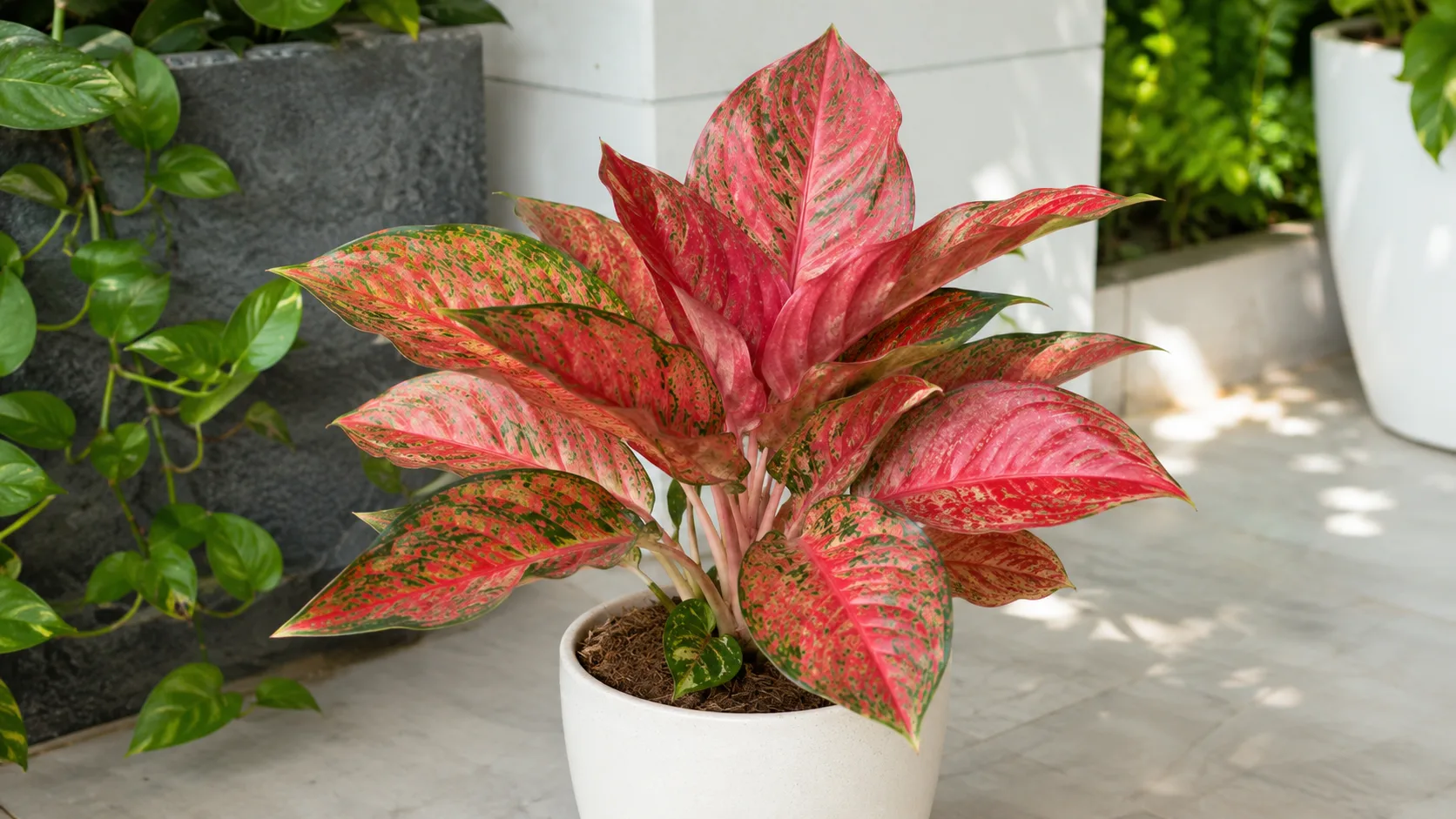
Aglaonema Red King and Lady Valentine deliver deep pink-red splashes on green leaves with less fuss than most prayer plants. They tolerate medium light better than calatheas, though color is strongest in bright, indirect exposure. Water when the surface dries slightly; avoid cold drafts below 60°F (15°C). Red twist peperomia (Peperomia verticillata) pairs green tops with red-tinged undersides on compact stems—forgiving if you let the top half of the mix dry between soaks.
Our Chinese evergreen growing guide covers cultivar differences and winter slowdown. For apartment growers who want color without a humidifier, aglaonemas and peperomias usually outperform calatheas on the same windowsill.
Prayer Plants, Calatheas, and Maroon Undersides
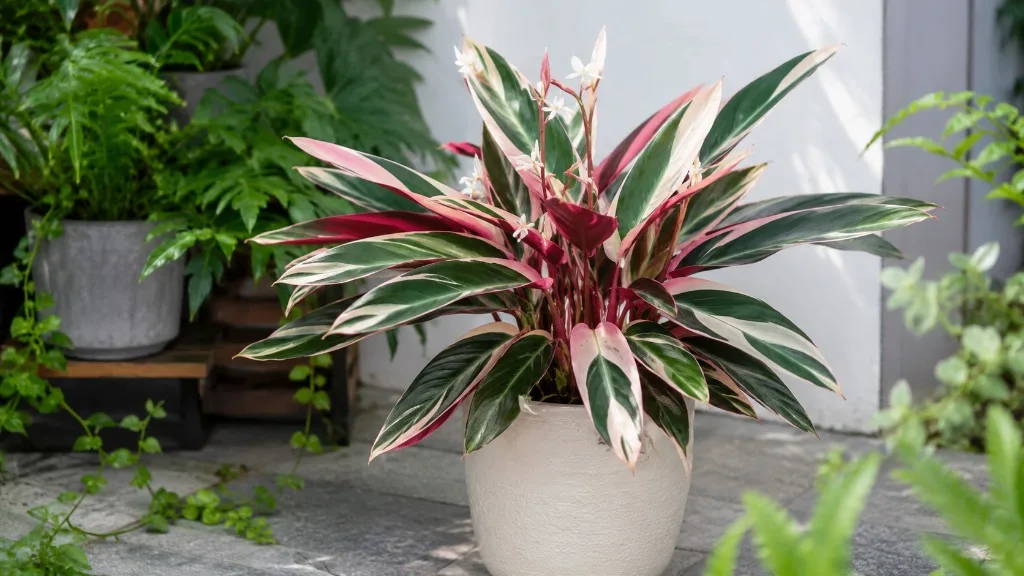
Stromanthe Triostar (Stromanthe sanguinea ‘Triostar’) marbles white, pink-red, and green on the face with purple undersides—one of the showiest red-green combinations indoors when humidity stays near 60%. Red prayer plant (Maranta leuconeura) stripes herringbone red against light and dark green; leaves fold slightly at night. Calathea fasciata (Goeppertia fasciata) emphasizes red-purple leaf backs. Calathea Dottie and Rosy (Calathea roseopicta cultivars) push pink-red leaf color toward the center or edges with dark green margins.
These plants punish inconsistent watering and dry heating vents with brown tips and faded pink. Use filtered east or north light; never blast them with south-window afternoon sun. Group pots or run a small humidifier in winter. If stripes wash out but edges stay crisp, increase light slightly; if edges brown first, fix humidity and water quality (many growers switch to filtered water). Our grow Calathea indoors guide and maranta prayer plant guide walk through troubleshooting in more detail.
Peperomias With Burgundy Backs and Ripple Texture
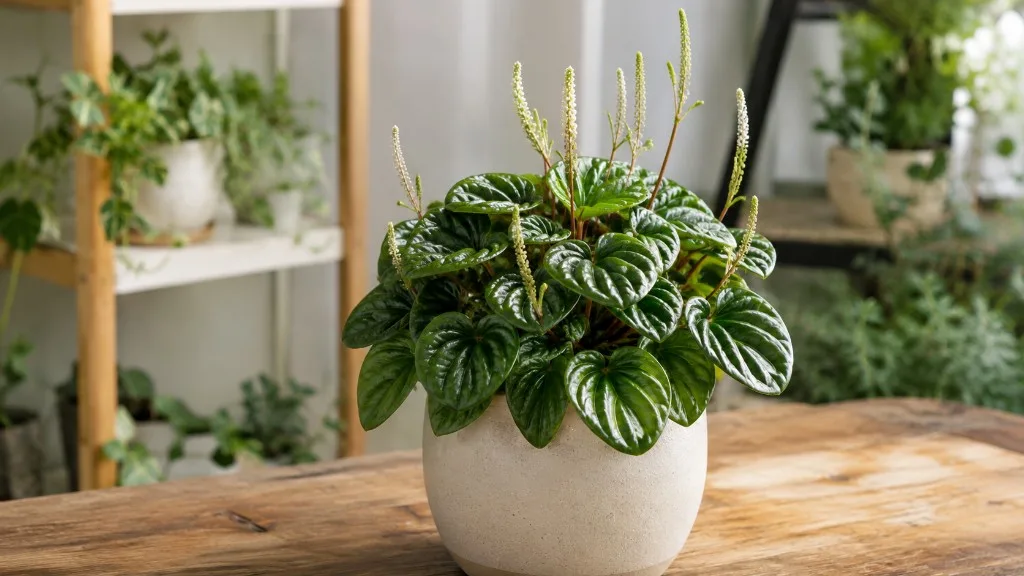
Peperomia Rosso and Ripple Red (Peperomia caperata cultivars) keep bright red-purple leaf undersides on wrinkled green tops—compact enough for desks and open shelves. Peperomia jelly (Peperomia clusiifolia ‘Jelly’) develops red margins on cream-and-green variegation when light is adequate. All prefer bright indirect light, pots with drainage, and watering when the top inch dries. They rot quickly in heavy, soggy mix. See Peperomia caperata care for repotting and leaf-loss fixes.
Begonias, Fittonia, and Polka Dot Accents
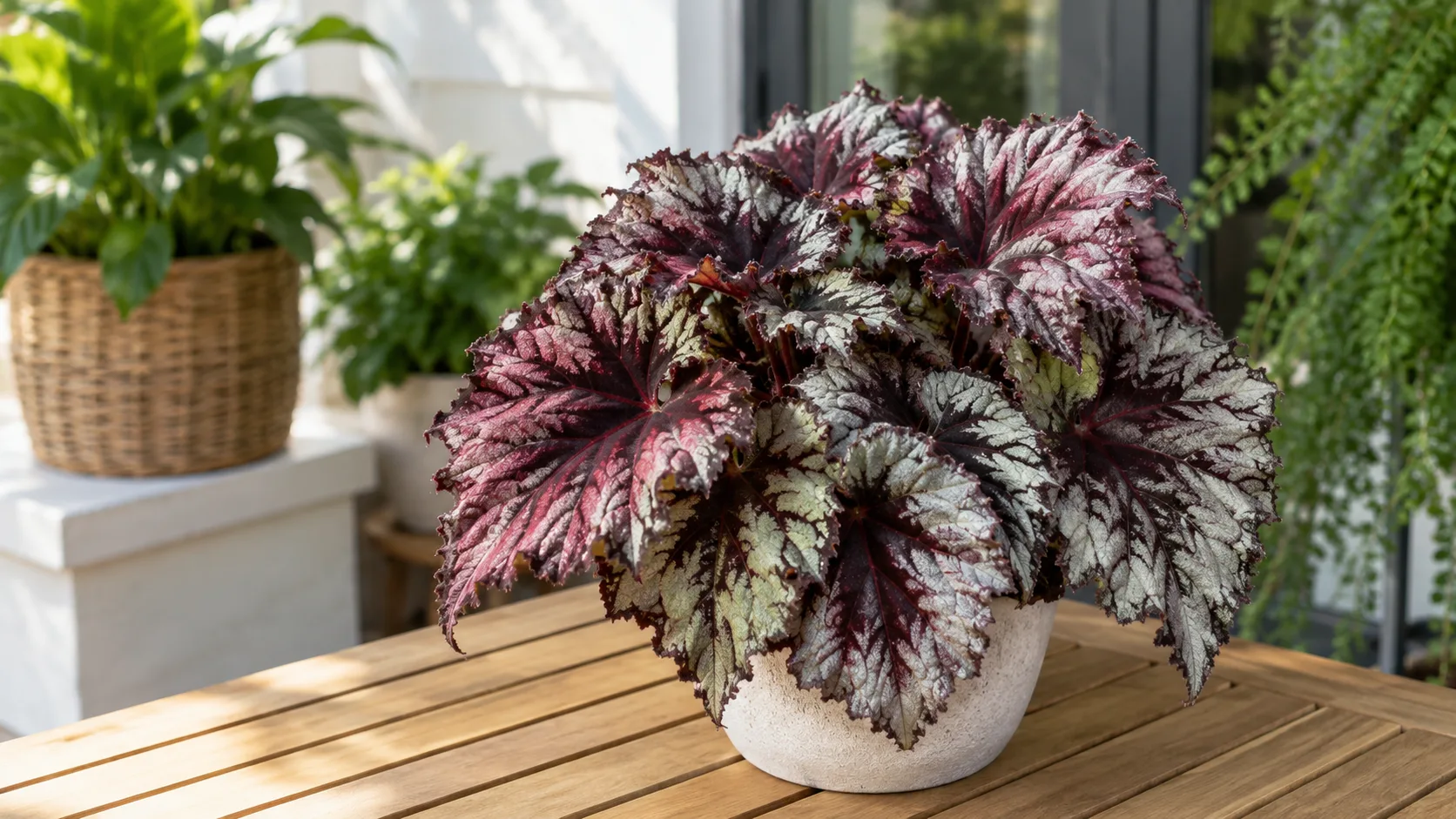
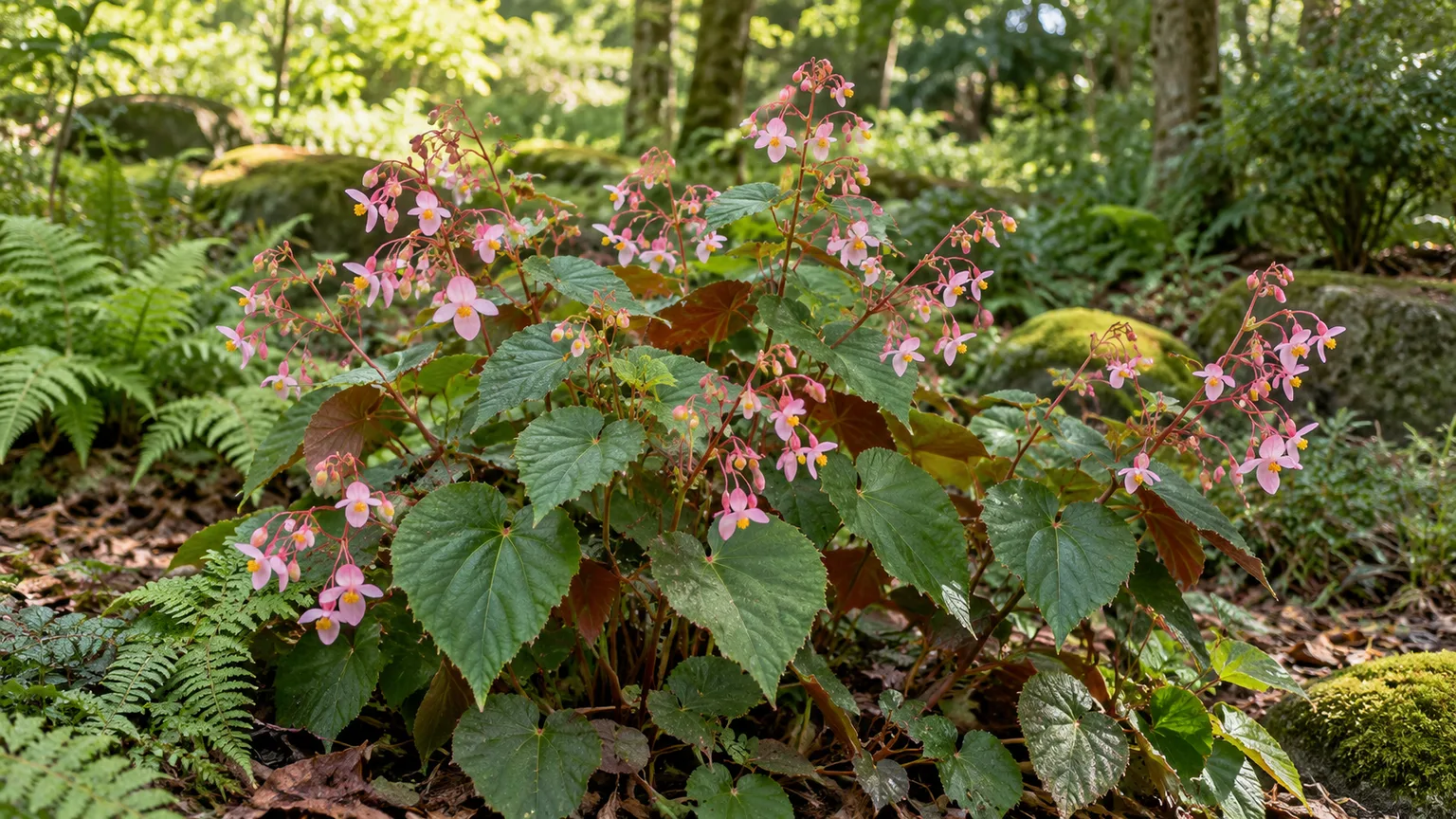
Rex begonia (Begonia rex-cultorum) mixes red, green, silver, and purple in painted patterns—moderate humidity and no wet leaves overnight. Polka dot begonia (Begonia maculata) shows green wings with white dots and red leaf backs when conditions are right. Red fittonia (Fittonia albivensis) maps thin red veins across tiny green leaves; it collapses dramatically when dry, then revives after a soak—ideal for terrariums and bright bathrooms. Red polka dot plant (Hypoestes phyllostachya ‘Carmina’) splashes red on dark green; without enough light, new speckles shrink. Wikipedia’s Hypoestes profile notes its native rainforest understory habit—copy that with indirect light and steady moisture, not a sunny sill.
Maximum Color: Croton, Coleus, and Caladium
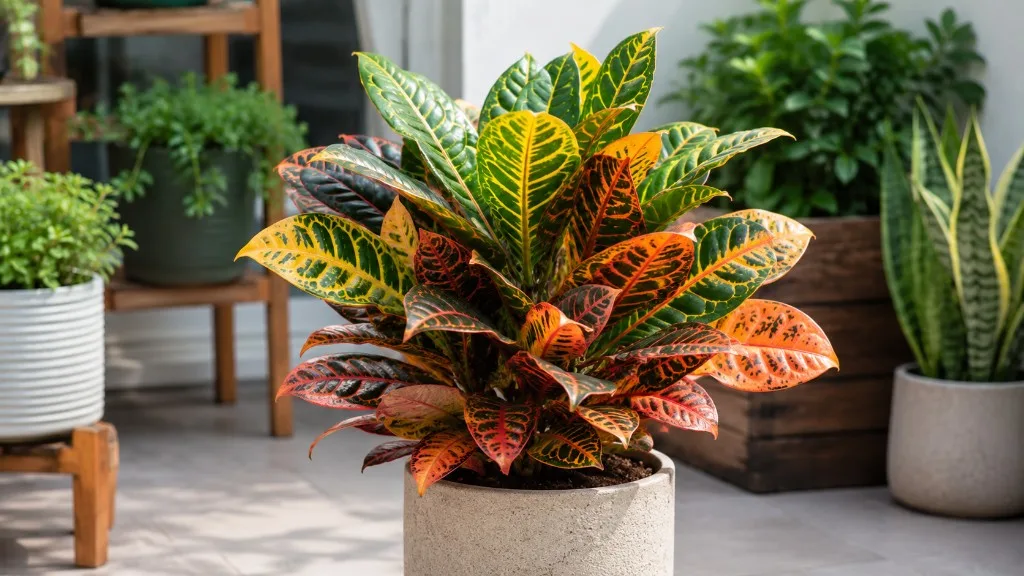
Croton (Codiaeum variegatum) packs red, orange, yellow, and green on one plant—but it is honest about disliking change. Drafts, repotting, or a move from greenhouse to dry living room can trigger mass leaf drop even when care is technically correct. Give it the brightest indirect spot you have, keep soil evenly moist (not waterlogged), and avoid relocating once it acclimates. Coleus (Plectranthus scutellarioides) is the outdoor bedding plant that doubles as a bright windowsill annual; pinching tips keeps red patterns dense. Red caladium (Caladium bicolor cultivars like Red Flash, Brandywine, and Creamsicle) pushes arrowhead leaves with red centers or veins; tubers need warm soil and humidity—many growers treat them as seasonal showpieces.
Rubber Trees, Ti Plant, and Vertical Accents
Burgundy rubber tree (Ficus elastica ‘Burgundy’) and Tricolor rubber plant show red tones in new growth and leaf undersides on tall, structural silhouettes. Madagascar dragon tree (Dracaena marginata) edges sword-like green leaves with pink-red margins when light is adequate. Ti plant (Cordyline fruticosa) runs red, pink, or purple streaks on arching leaves but wants consistent moisture and humidity—dry air browns tips fast. These are statement plants: give them floor space, rotate the pot monthly, and wipe dust off broad rubber leaves so light reaches the tissue that holds color.
Succulents That Blush Red in Bright Light
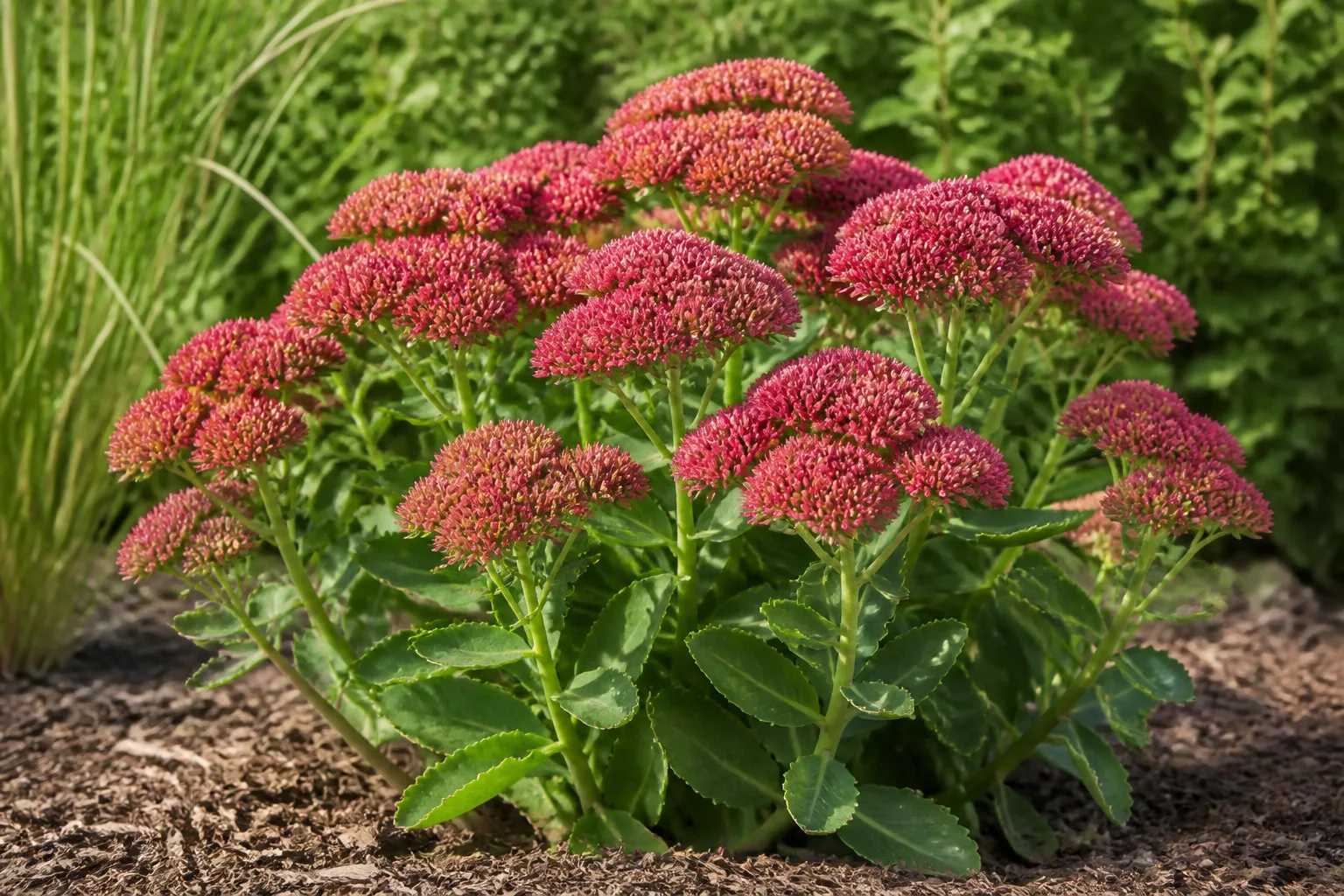
Succulent red is light-dependent, not permanent variegation. Painted echeveria (Echeveria nodulosa) needs several hours of direct sun indoors (south or west window) to keep red stripes vivid; winter often requires a grow light. Red pagoda jade (Crassula capitella ‘Red Pagoda’), jelly bean plant (Sedum rubrotinctum), flapjack plant (Kalanchoe luciae), and red-tipped hen and chicks (Sempervivum cultivars) all intensify red margins when direct sun is strong and soil dries fully between waterings. Without enough light, they revert to mostly green and stretch toward the window. Use gritty cactus mix and never let pots sit in saucer water.
Anthurium, Bromeliads, Carnivores, and Seasonal Stars
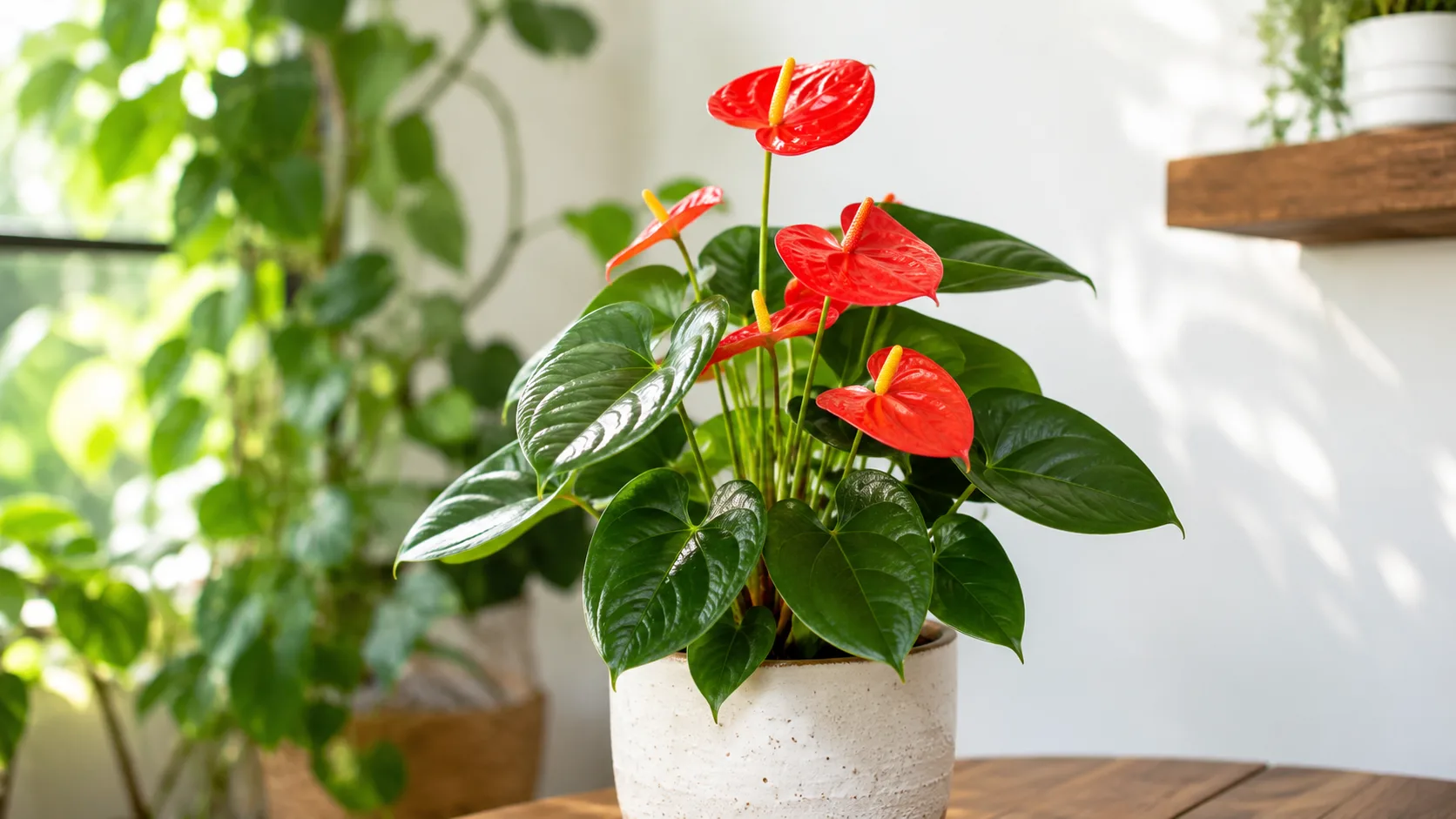
Red anthurium (Anthurium andraeanum hybrids) keeps green foliage year-round while red spathes carry the display—bright indirect light, warm room, 60–80% humidity, and watering when the top inch dries. Bromeliads and red star cryptanthus (Cryptanthus bivittatus) use rosette color or bracts; keep central cups topped with fresh water in dry homes. Pitcher plants (Nepenthes cultivars like Bloody Mary) and Venus flytrap pair green leaves with red traps—use rainwater or distilled water and never let carnivores dry out completely. Poinsettia (Euphorbia pulcherrima) is the holiday red-bract classic; reblooming indoors is possible but tedious—most growers enjoy them as seasonal color and compost after March unless you want a project.
Trailing and Climbing Red-Green Vines
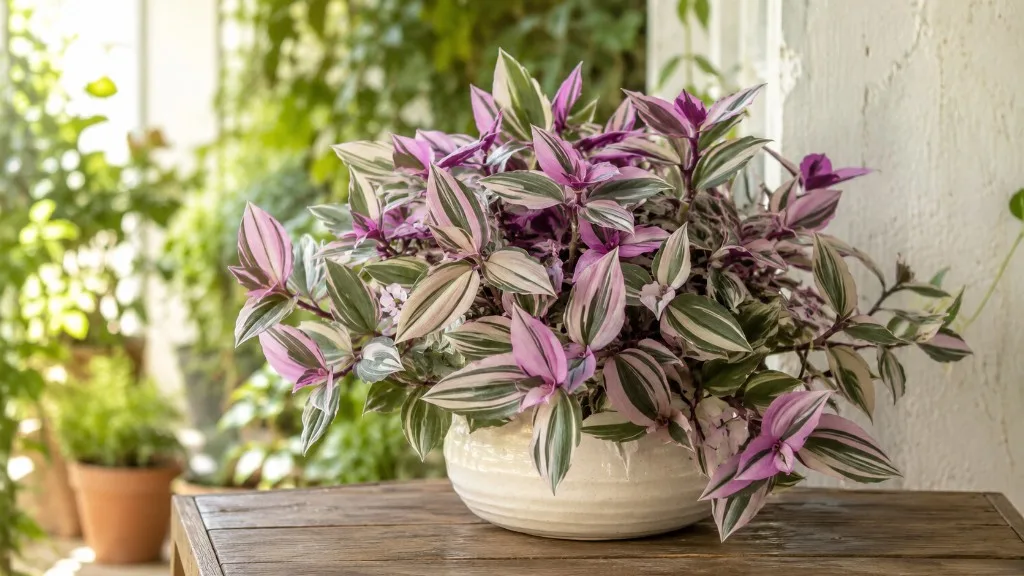
Tradescantia Nanouk stripes green, cream, and deep pink-red—pinch leggy stems to keep color dense near the pot. Pink syngonium (Syngonium ‘Neon Robusta’) blushes copper-red on light green arrow leaves when light is bright enough. Krimson Princess hoya (Hoya carnosa ‘Rubra’) and Hoya Rosita show red-pink stress tones on variegated foliage in strong indirect light while staying drought-tolerant between soaks. Alocasia Red Secret (Alocasia cuprea ‘Red Secret’) keeps metallic green tops with burgundy undersides in warm, humid, bright conditions. Iron cross oxalis (Oxalis tetraphylla ‘Iron Cross’) marks lime-green squares with maroon centers—goes dormant occasionally; dry soil while resting is normal. Rhoeo Tricolor (Tradescantia spathacea) stripes pink and green with magenta undersides on a compact rosette.
Beginner vs Advanced: Choose Your Difficulty Level
Beginner-friendly red-green: Aglaonema Red King, Lady Valentine, Peperomia Rosso, coleus on a bright sill, tradescantia Nanouk, red polka dot plant, jelly bean sedum in a sunny window. Moderate: Philodendron micans, burgundy rubber tree, rex begonia, caladium in summer, red anthurium, polka dot begonia. Advanced: Stromanthe Triostar, calathea Dottie and Rosy, fittonia without a humidifier, croton after acclimation, Nepenthes pitchers, poinsettia rebloom projects.
Match difficulty to your weakest link—usually humidity or light—not to how much you want the plant. A Triostar in a dry, north-facing room will always look worse than a Rosso peperomia in the same spot.
Room Placement for Strong Red Color
East windows are the most forgiving default for tropical red-green foliage: bright morning sun, gentler afternoon. West windows work with sheer curtains for prayer plants and philodendrons. South windows suit succulents and coleus; filter tropicals with a light curtain. North rooms can grow aglaonema and some peperomias, but expect less red and more green on variegated cultivars.
Place humidity lovers away from heating vents and group pots to raise local moisture. Rotate weekly so both sides get light—especially important for self-heading philodendrons that lean toward the window.
Pet Safety Before You Buy
Red color does not correlate with pet safety. Many showy Araceae—philodendrons, aglaonemas, anthuriums, syngonium—contain calcium oxalate crystals that irritate mouths if chewed. Caladium and dieffenbachia relatives are similarly risky. Fittonia and some marantas are often listed as lower concern, but any plant can cause stomach upset. Keep risky pots on shelves or in closed rooms, and consult the ASPCA toxic plant list before bringing a new cultivar home. When in doubt, treat colorful tropicals as not pet-safe.
Common Mistakes That Wash Out or Burn Red
Buying for the mature leaf while ignoring new growth. If the freshest leaf is mostly green, your room is already diluting color. Chasing red on a calathea in a dark corner. Move the plant or pick an aglaonema instead. Overwatering after red fades. Fading is usually light or humidity; extra water rots roots. Moving crotons weekly. Stability matters as much as moisture. Giving succulents only indirect light and wondering why red tips disappeared—they need direct sun to stay blushy. Misting instead of humidifying prayer plants in winter—misting lifts humidity for minutes; a humidifier or pebble tray changes the leaf environment for hours.
Conclusion
Plants with red and green leaves are not interchangeable décor. Permanent variegation, red unfurling philodendron leaves, succulent sun blush, and anthurium spathes each answer to a different window and watering rhythm. Start with the quick table, pick a group that matches your light and humidity, and inspect new growth at the nursery before you checkout. When red slips, adjust light or air moisture before you change fertilizers or pots—color almost always talks about environment first. Keep one plant thriving in strong color, and the forty-six others on this list become easier to choose with confidence.